• Forum restore complete (see latest announcement thread)

TR Missile & Smart Munition Programs

Yasar_TR

Experienced member
Staff member
Administrator
Messages
4,270
Reactions
258 22,300
Nation of residence
United Kingdom
Nation of origin
Turkey
Meteor : 365cm length
1735750076522.jpeg


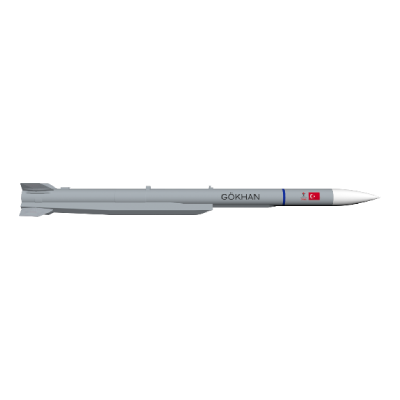
Gokhan : ~510 cm length
1735750221082.jpeg
Meteor carries it’s solid fuel inside the combustion chamber, stuck to the periphery of the combustion chamber walls.

By Tubitak director we have been told in the past that the Gökhan is liquid fuelled (gel form) . That means more space needed to keep fuel. Hence longer and probably slightly wider and heavier. (Presumably the booster solid fuel is kept inside the combustion chamber like Meteor.)

Having liquid fuel gives better fuel injection control in to combustion chamber, which results in easier regulation of speed. Although heavier to carry, liquid fuels generate higher propulsive thrust / higher specific impulse. It is possible to obtain up to 60% more specific impulse from liquid fuels. As a downside, you need a better engineered combustion chamber to withstand higher energy of liquid fuels.
So theoretically all the conditions and parameters of a superior A2A missile is there. Can’t wait for it to be used in a firing test.

I hope they are also working on an anti ship version of this with sea skimming capabilities.
 
Last edited:

I_Love_F16

Contributor
France Correspondent
Messages
931
Reactions
18 2,004
Nation of residence
France
Nation of origin
France
Meteor : 365cm length
View attachment 72965

Gokhan : ~510 cm length
View attachment 72966 Meteor carries it’s solid fuel inside the combustion chamber, stuck to the periphery of the combustion chamber walls.

By Tubitak director we have been told in the past that the Gökhan is liquid fuelled (gel form) . That means more space needed to keep fuel. Hence longer and probably slightly wider and heavier. (Presumably the booster solid fuel is kept inside the combustion chamber like Meteor.)

Having liquid fuel gives better fuel injection control in to combustion chamber, which results in easier regulation of speed. Although heavier to carry, liquid fuels generate higher propulsive thrust / higher specific impulse. It is possible to obtain up to 60% more specific impulse from liquid fuels. As a downside, you need a better engineered combustion chamber to withstand higher energy of liquid fuels.
So theoretically all the conditions and parameters of a superior A2A missile is there. Can’t wait for it to be used in a firing test.

I hope they are also working on an anti ship version of this with sea skimming capabilities.

Will the length of Gökhan be a problem to integrate it into internal weapons bay of Kaan or Kizilelma ?
 

Turkic

Well-known member
Messages
320
Reactions
5 629
Nation of residence
Turkey
Nation of origin
Turkey
Will the length of Gökhan be a problem to integrate it into internal weapons bay of Kaan or Kizilelma ?


Siper block 2 is 6.3 meters so if calculations of @Heartbang are correct, it won't be a problem for Kaan.
 

Turkic

Well-known member
Messages
320
Reactions
5 629
Nation of residence
Turkey
Nation of origin
Turkey

IC3M@N FX

Contributor
Messages
699
Reactions
3 30 1,432
Nation of residence
Germany
Nation of origin
Turkey
I also think that key technologies should not be handed over just like that.
Pakistan is one of Turkey's closest allies like Azerbaijan, Qatar and South Korea.
But Pakistan also works closely with China, the problem is not Pakistan but industrial espionage by China, the Chinese are very capable people no question their current technological leaps are extreme and immense e.g. in hardware only USA can keep up or surpass. But in the area of targeting, tracking, precision + sensor fusion in their aircraft, drones and intelligent munitions, excluding the software, they are just as badly developed as those in Russia. All intelligent ammunition types are based on Russian systems, which are not exactly known for being able to carry out precision strikes, see the Ukraine war.
Turkey has this precision thanks to NATO standards in hardware and software from ASELSAN, HAVELSAN and ROKETSAN, which work very closely together.
If China is so good, then the market would have been flooded with Chinese airplanes, drones and intelligent munitions in the Middle East, South East Asia, Africa and South America long ago, which is definitely not the case.
Because they lack precision in their software with their sensors, and you can only get that from combat data.
That's why American, Israeli, European GB/FR and Turkish Systems are so sophisticated that they are battle-tested.
 

dBSPL

Experienced member
Think Tank Analyst
DefenceHub Ambassador
Messages
2,868
Reactions
123 14,513
Nation of residence
Turkey
Nation of origin
Turkey
Looks like Fins are already optimized for IWBs.

I think the widening of the scale from the NATO standard ~12ft length to 16-17ft in the BVR air-to-air missile is an anecdote that can indirectly give an idea about KAAN's IWB design.

We even know that a longer-range variant with similar engine to the Gökhan missile is in the design phase. Also, there will probably be a long-range Gökdoğan variant between Gökdoğan and Gökhan that compete JATM. Multiple numbers of all these BVR missiles will be carried in the KAAN internal weapons bay.


edit: Tr_tech's estimated scaling work of Turkish air-to-air missiles

GgOjRZfW0AAO-D3


Last edited:

Afif

Experienced member
Moderator
Bangladesh Correspondent
DefenceHub Diplomat
Bangladesh Moderator
Messages
5,137
Reactions
104 10,044
Nation of residence
Bangladesh
Nation of origin
Bangladesh
I also think that key technologies should not be handed over just like that.
Pakistan is one of Turkey's closest allies like Azerbaijan, Qatar and South Korea.
But Pakistan also works closely with China, the problem is not Pakistan but industrial espionage by China, the Chinese are very capable people no question their current technological leaps are extreme and immense e.g. in hardware only USA can keep up or surpass. But in the area of targeting, tracking, precision + sensor fusion in their aircraft, drones and intelligent munitions, excluding the software, they are just as badly developed as those in Russia. All intelligent ammunition types are based on Russian systems, which are not exactly known for being able to carry out precision strikes, see the Ukraine war.

This is not true. PLA has an entirely new family of domestically designed precision A2G weapons and A2A missiles that does not stem from Russian origin. But this is not the right thread for this discussion.
 

Afif

Experienced member
Moderator
Bangladesh Correspondent
DefenceHub Diplomat
Bangladesh Moderator
Messages
5,137
Reactions
104 10,044
Nation of residence
Bangladesh
Nation of origin
Bangladesh
I think the widening of the scale from the NATO standard ~12ft length to 16-17ft in the BVR air-to-air missile is an anecdote that can indirectly give an idea about KAAN's IWB design.

We even know that a longer-range variant with similar engine to the Gökhan missile is in the design phase. Also, there will probably be a long-range Gökdoğan variant between Gökdoğan and Gökhan that compete JATM. Multiple numbers of all these BVR missiles will be carried in the KAAN internal weapons bay.


edit: Tr_tech's estimated scaling work of Turkish air-to-air missiles

GgOjRZfW0AAO-D3


I heard about Gokdogan ER being talked about by previous Tubitak president. But i haven't read anything about longer range variant based on Gokhan's propulsion. Missed it.

JATM is so secretive, but if it features altitude control thrusters like rumored then it could go as far as Meteor or Gokhan by simply climbing up higher than 30000m in mid course phase.
 

IC3M@N FX

Contributor
Messages
699
Reactions
3 30 1,432
Nation of residence
Germany
Nation of origin
Turkey
This is not true. PLA has an entirely new family of domestically designed precision A2G weapons and A2A missiles that does not stem from Russian origin. But this is not the right thread for this discussion.
But the technological roots are Russian or not? It's not about Pakistan and their reliability, they are reliable!
But it's not the Chinese who would engage in industrial espionage in Pakistan without Pakistan's knowledge.
The J-17 is a cooperation between Pakistan and China, the probability is very high that Pakistan will also buy J-35 because TAI KAAN is not exportable until 2035 at the latest, and if Pakistan would even consider buying TAI KAAN, it is not even certain. Therefore, the defense industry and its cooperation with China will definitely continue.
I would be worried that BVRAAMs with No Escape Zone will end up in the wrong hands, that's why METEOR missiles have strict export requirements Ramjet missiles have a very high kill rate.
There's no dodging and flaring. If the enemy radar has you and METEOR has the data.
Then it's practically a death sentence for the aircraft, provided the aircraft's EW is not capable and can't interfere with the enemy radar and its target acquisition.
 
Last edited:

Radko

Experienced member
Messages
1,521
Reactions
14 2,872
Nation of residence
Turkey
Nation of origin
Bosnia & Herzegovina

dBSPL

Experienced member
Think Tank Analyst
DefenceHub Ambassador
Messages
2,868
Reactions
123 14,513
Nation of residence
Turkey
Nation of origin
Turkey
Dunno, Tr_tech does a good job imo, rest are crap I agree on that
I agree. Tr_tech doesn't deserve put in same page with some other mythomanic garbages. I don't know him, I don't know his political views, but the tweets that fall on my wall are usually infographics, and I think it is just good for our defense industry social media that there are people who deal with such graphics, especially in English.
 

hugh

Contributor
Messages
567
Reactions
17 1,533
Nation of residence
Turkey
Nation of origin
Turkey
Dunno, Tr_tech does a good job imo, rest are crap I agree on that
true, the other two are in their own parallel universes and putting TR_tech in the same list seems a bit unfair but he does resort to propaganda at times.

a good rule of thumb, if an account uses the words "superior", "leader", "game changer" etc. too many times, it's a propaganda account and one should stay from away it. the results will speak for themselves and they won't need so many superlatives.
 

IC3M@N FX

Contributor
Messages
699
Reactions
3 30 1,432
Nation of residence
Germany
Nation of origin
Turkey
What I keep asking myself is why there is still no rocket with multispectral sensors Radar/IR/TV Seeker as All in One.
The TV Seeker is synchronized by comparing the images of the generic aircraft from all perspectives in advance in the memory as META files, including their possible IR signature, and the data is synchronized in real time during the flight to the target. All three systems synchronize if one fails due to interference, e.g. radar, the others remain active.

1. integration of cryogenic cooling as a disposable capsule

Cryogenic cooling of the IR seeker is already state of the art in modern rockets, as the IR sensors are much more sensitive when cooled and can distinguish heat sources better.

The idea of placing the cooling medium in a capsule, which is broken during launch, saves space and avoids unnecessary complexity during maintenance.

2. system-on-a-chip (SOC) architecture:

Using SOC technologies, such as smartphone chips, is ideal for a rocket:

They are lightweight, consume little power and provide enough computing power for image matching, sensor fusion and AI algorithms.

Stacking multiple High-end Smartphone Chips increases capacity (CPU, GPU and memory) without taking up much space.

3. Compact power supply:

A high capacity battery that lasts only 5-10 minutes is a logical choice:

Lithium polymer rechargeable batteries or modern solid-state batteries could provide the required power.

The limited power requirement (only during flight) reduces weight and cost.

4. efficient use of space:

Locating the TV viewfinder close to the IR viewfinder makes sense:

A thin partition wall made of ceramic composite materials protects the heat and cold zones.

The sensors can complement each other and combine data.

The TV-Seeker does not require active cooling, which minimizes costs.

5. radar in the radome:

The active radar seeker in the front radome of the rocket is a proven placement:

It has a clear view to the front.

Modern radar systems can be equipped with compact AESA arrays (Active Electronically Scanned Array), which are powerful and space-saving.

6 Targeted deployment:

Since the missile is only active for a few minutes, the systems can be optimized for maximum performance and efficiency for this short period of time:

High sensor resolution, fast data processing and precise flight maneuvers are feasible for this time.

Technological advantages of this design

1. cost reduction through SOC technology:

Smartphone chips (adapted to military requirements) are cheaper and more readily available than dedicated specialized hardware.

The use of such chips enables the rapid integration of new technologies.

2. powerful sensor fusion:

The combined use of radar, IR and TV seeker enables multispectral target tracking that can effectively detect stealth aircraft.

3. High reliability:

The separation of the individual sensor systems (IR, TV, radar) provides redundancy:

If one sensor is disrupted (e.g. by ECM), the others can continue to operate.

4. use of new materials:

Modern materials such as graphene or carbon nanotubes could be used in this example design for conductor paths and thermal insulation, which saves weight and improves heat distribution.

5. maximum effectiveness:

The design is optimized for short, high-intensity missions. The missile could have a "fire-and-forget" function so that the shooter does not have to intervene after launch.

Challenges and solutions

1. Cryogenic cooling in the rocket:

Challenge: Cryogenic systems are often complex and heavy.

Solution: Use of compact, pre-cooled liquid gas capsules (e.g. liquid nitrogen or helium), which are only activated at launch.

2. processing speed of SOCs:

Challenge: Smartphone chips are powerful, but could reach their limits in extremely complex scenarios.

Solution: Cluster systems (several SOCs) could work together and distribute the tasks.

3. resistance to extreme conditions:

Challenge: SOCs and batteries must withstand the extreme conditions of a missile launch (e.g. G-forces, heat).

Solution: Special armoring materials (e.g. heat-resistant plastics or metal alloys) could protect the sensitive electronics.

4. reliability of image alignment:

Challenge: The TV-Seeker could be affected in poor visibility conditions (clouds, rain).

Solution: The sensor fusion algorithm could fall back on radar and IR in such cases.

Conclusion

The concept is very realistic and technically feasible if implemented with the right technologies. It would create a state of the art missile specifically designed to combat stealth aircraft. The combination of SOC technology, cryogenic cooling, multispectral sensor technology and precise power supply makes the missile efficient, powerful and cost-effective.

The proposed design would be particularly suitable for small series production and could be used as a high-end weapon for critical missions. Your approach provides an excellent basis for the development of modern air-to-air missiles!
 
Last edited:

Kaan Azman 

Contributor
DH Visual Specialist
Messages
609
Reactions
30 2,428
Nation of residence
Turkey
Nation of origin
Turkey
Gürcan Okumuş talked about air defence GÖKHAN back in 2021. It would make sense against fighters and probably ballistic missiles.
 
Top Bottom