

That is fantastic news. Long range Tolun, with its different variants, would be an incredible asset to have.Tolun is being produced in robotic serial production lines with capacity to build thousands per month. Very long range variants with propulsion is also incoming

You are using an out of date browser. It may not display this or other websites correctly.
You should upgrade or use an alternative browser.
You should upgrade or use an alternative browser.


Pokemonte13
Contributor

Not necessarily Tolun S would be for Army and army is a bit slow so this could be just for airforce. Also a longer ranged Tolun would be equipped with a turbo jet like Kuzgun TJ or spear.So that means the variant with the Delta V engine will be mass produced, fantastic news !

Khagan1923
Contributor
Don’t think there will be much interest in a Ground Launched Tolun as the American equivalent GLSDB performed horrific in Ukraine.

MonteCarlo
Committed member
I mean didn't SDB in general regardless of launch method perform badly in Ukraine because it is a relatively old weapon that wasn't designed to deal with the GPS jamming? From what I remember they couldn't use it in rangers longer that 30 km even from the jetsDon’t think there will be much interest in a Ground Launched Tolun as the American equivalent GLSDB performed horrific in Ukraine.


Don’t think there will be much interest in a Ground Launched Tolun as the American equivalent GLSDB performed horrific in Ukraine.
I mean didn't SDB in general regardless of launch method perform badly in Ukraine because it is a relatively old weapon that wasn't designed to deal with the GPS jamming? From what I remember they couldn't used it in rangers longer that 30 km even from the jets

TOLUN SDB Hits Target Under Intense GNSS Jamming | TURDEF
ASELSAN’s TOLUN Small Diameter Bomb (SDB) dropped from an F-16 fighter successfully hit its target under intense GNSS jamming.
 turdef.com
MonteCarlo
Committed member
Yeah that was what I meant. I don't think it makes sense to compare sdb and tolun one to one since there is more than 20 years between their development. There was neither much emphasis on GPS free navigation then nor the technology to do it in small size factor like todayTOLUN SDB Hits Target Under Intense GNSS Jamming | TURDEF
ASELSAN’s TOLUN Small Diameter Bomb (SDB) dropped from an F-16 fighter successfully hit its target under intense GNSS jamming.


Although there has not been any new “breaking news” on Kuzgun range of missiles,it doesn’t mean that they are forgotten.Do you know what happened to Kuzgun by Tubitak SAGE?
Tubitak Sage site clearly shows them as valid munitions.


Tubitak has been busy with testing and integrating SOM-J and Gokdogan/Bozdogan missiles to various platforms. These are more “news worthy”.
Kuzgun SS, KY and TJ versions have been tested and integrated in to various platforms. Whether they are in serial production after acceptance and are in order stages by the Turkish Armed Forces or not, may not be made public. But as stated by Minister M.Fatih Kacir, these missiles were planned to be in the inventory of the Turkish armed forces in 2024.
In short, the Kuzgun project has basically transitioned from R&D to integration, LRIP and continuous refinement. I am personally looking forward to hearing more about the Kuzgun-ER they were developing to replace Penguin missiles and capable of being launched from F-16, AKINCI, AKSUNGUR, ANKA, HÜRJET, and HÜRKUŞ as well as helicopters from stand off distances of 180 to 250 km with a CEP of 1m to 10m depending on it’s seeker.
Pokemonte13
Contributor
Kuzgun KY/SS have been tested but there is no official information about Kuzgun Tj nor any other information about if it’s in service. Also roketsan is taking a greater role in developing and producingAlthough there has not been any new “breaking news” on Kuzgun range of missiles,it doesn’t mean that they are forgotten.
Tubitak Sage site clearly shows them as valid munitions.
Tubitak has been busy with testing and integrating SOM-J and Gokdogan/Bozdogan missiles to various platforms. These are more “news worthy”.
Kuzgun SS, KY and TJ versions have been tested and integrated in to various platforms. Whether they are in serial production after acceptance and are in order stages by the Turkish Armed Forces or not, may not be made public. But as stated by Minister M.Fatih Kacir, these missiles were planned to be in the inventory of the Turkish armed forces in 2024.
In short, the Kuzgun project has basically transitioned from R&D to integration, LRIP and continuous refinement. I am personally looking forward to hearing more about the Kuzgun-ER they were developing to replace Penguin missiles and capable of being launched from F-16, AKINCI, AKSUNGUR, ANKA, HÜRJET, and HÜRKUŞ as well as helicopters from stand off distances of 180 to 250 km with a CEP of 1m to 10m depending on it’s seeker.
KUZGUN-KY (Solid Fuel / Rocket-Powered): Good for high-speed tactical strikes under a minute, successfully tested from unmanned surface vessels (AUSV) like the MARLIN.Kuzgun KY/SS have been tested but there is no official information about Kuzgun Tj nor any other information about if it’s in service. Also roketsan is taking a greater role in developing and producing
KUZGUN-SS (Free Gliding): Designed for standoff deployment from unmanned aerial vehicles (UAVs) like AKINCI and Aksungur.
KUZGUN-TJ (Turbojet-Powered): Extended-range version
According to the Minister‘s statement these were due to join inventory in 2024. How much more official can it be??
If they still not joined the inventory then either we have not been told the whole story, or we have not been told the truth.
KUZGUN missiles to be included in Turkish Armed Forces inventory
BAKU, Azerbaijan, November 7. KUZGUN missiles launched as an internal project initiated by Türkiye's defense industry research institute TÜBİTAK (SAGE) will be included in the inventory of the…
 www.trend.az

Yeni nesil 'Kuzgun' envantere giriyor: Milli mühimmatlar için geri sayım sürüyor
Yerli ve milli savunma sanayiinde kritik adımlar atılıyor. Sanayi ve Teknoloji Bakanı Mehmet Fatih Kacır, 2024 yılında Gökdoğan, Bozdoğan ve Kuzgun'un Türk Silahlı Kuvvetleri envanterine gireceğini söyledi. Bakan Kacır ayrıca, 5 Avrupa Dijital İnovasyon Merkezi'nin kurulacağını da duyurdu.
Son dakika: Sanayi ve Teknoloji Bakanı Mehmet Fatih Kacır duyurdu! Yeni nesil füze kuzgun 2024’te envanterde
Son dakika haberleri... Sanayi ve Teknoloji Bakanı Mehmet Fatih Kacır Deprem bölgesi Yaptığımız hasar tespit çalışmasında bölge sanayiinin bina, makine, stok...
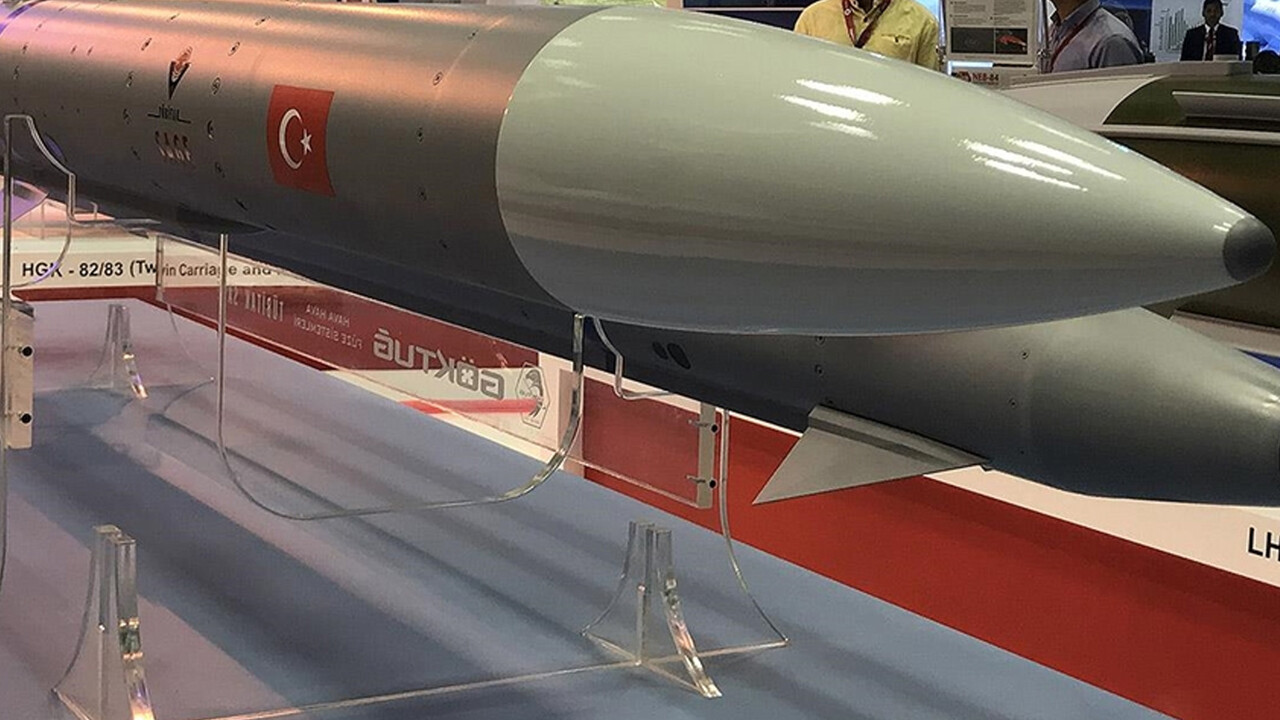
Gökdoğan, Bozdoğan, Kuzgun füzeleri envantere giriyor! Bakan Kacır, 'TSK'ya teslim edilecek' diyerek tarih verdi
Yerli ve milli füzelerden Gökdoğan, Bozdoğan ve Kuzgun'un Türk Silahlı Kuvvetleri envanterine gireceği tarih, Sanayi ve Teknoloji Bakanı Mehmet Fatih Kacır tarafından açıklandı. Bakan Kacır ayrıca, 2024 yılında ülkemizde 5 Avrupa Dijital İnovasyon Merkezi kurulacağını da duyurdu.

Technology is evolving and the military can change the requirements to update the capabilities to a more advanced technology. It is a matter of strategy to wait for a better make of a weapons system until you can foresee how much time you still have until you will use them or you can end up with a stockpile that you want to replace ASAP before even you find an opportunity to use them. That is why I value production capacity to produce quickly over stockpiling over years. A smaller cache but a large production capacity is suitable when you have export customers lining up.
Delving deeper into Tayfun Block 4:
As Roketsan is getting ready to introduce this missile in to TSK inventory this year, it is important to look at some facts and deduce some calculated guesstimates.
F
If we look at the various statements and foreign write ups on this missile called Tayfun Block 4 ;In reality it is very different to the other Tayfun blocks.
Some of the statements made by officials would only be realised if certain facts are there, as explained below.
Specs as per official and unofficial but logically deduced are:
1. 7200 kg total weight (others are approximately 2300kg)
2. 700 to 1000kg explosive head (others 450 to 500kg)
3. 10 m long
5. midcourse speed estimate 5+ to 10mach .
6. It is expected to impact target at 5 Mach.
7. It is expected to have a manoeuvrable re entry system (MARV)
8. Approximate range of missile is guessed at 1000 to 1500km
9. missile diameter is 938mm (others with 610mm)
First of all this missile, like any other ballistic missile, will lose 2/3rd of its total mass after it has burnt all its fuel. That leaves it with a ~2400kg mass.
In order to sustain hypersonic speeds at terminal phase and impact, as mentioned by officials, it needs to have a very high Ballistic Coefficient threshold. This mass and it’s dimensions is not conducive to sustaining hypersonic speeds due to low Ballistic Coefficient.
BC = M/CxA
M : Mass
C : Drag Coefficient
A : Cross sectional area of missile
For a terminal warhead to achieve or maintain a Mach 5 impact velocity as predicted by Officials, despite it’s mass reduction, its terminal BC must cross hypersonic performance threshold.
Unlike older ballistic missiles where the heavy spent rocket motor stays attached and adds unnecessary drag, the Tayfun Block-4, if is a MARV, ie a separating, manoeuvrable terminal warhead, should keep it’s terminal package streamlined, dense, and physically small, therefore preserving the high BC threshold required for a true Mach 5+ terminal strike.
A detached MARV should maintain a much higher ballistic coefficient as it slices through the dense lower atmosphere with minimal deceleration, ensuring that it hits the ground at maximum available hypersonic velocity.
it is also worth noting that for a MARV (Manoeuvrable Reentry Vehicle), the primary source of terminal deceleration is actually the induced drag from fin actuations used to steer or dodge air defences. If the MARV stays attached to the spent fuel tank section, it wouldn't even be able to manoeuvre perpendicular to the target effectively because the massive aerodynamic forces acting on the giant booster tail and the spent casing could violently tear the missile apart or cause it to tumble.
So Tayfun Block 4, although has been advertised heavily, has some niche secrets which are being kept under wraps for the time being. But it is making us to guesstimate What it can be.
If above guesstimates are true, this is one unstoppable missile that can carry 1000kg of destructive explosives in our inventory, like in Gazap, and cause havoc in enemy territory. Alternatively it can hit sea targets at hypersonic speeds causing unimaginable devastation due to, not only with explosive force but with the Kinetic Energy it carries..
As Roketsan is getting ready to introduce this missile in to TSK inventory this year, it is important to look at some facts and deduce some calculated guesstimates.
F
If we look at the various statements and foreign write ups on this missile called Tayfun Block 4 ;In reality it is very different to the other Tayfun blocks.
Some of the statements made by officials would only be realised if certain facts are there, as explained below.
Specs as per official and unofficial but logically deduced are:
1. 7200 kg total weight (others are approximately 2300kg)
2. 700 to 1000kg explosive head (others 450 to 500kg)
3. 10 m long
5. midcourse speed estimate 5+ to 10mach .
6. It is expected to impact target at 5 Mach.
7. It is expected to have a manoeuvrable re entry system (MARV)
8. Approximate range of missile is guessed at 1000 to 1500km
9. missile diameter is 938mm (others with 610mm)
First of all this missile, like any other ballistic missile, will lose 2/3rd of its total mass after it has burnt all its fuel. That leaves it with a ~2400kg mass.
In order to sustain hypersonic speeds at terminal phase and impact, as mentioned by officials, it needs to have a very high Ballistic Coefficient threshold. This mass and it’s dimensions is not conducive to sustaining hypersonic speeds due to low Ballistic Coefficient.
BC = M/CxA
M : Mass
C : Drag Coefficient
A : Cross sectional area of missile
For a terminal warhead to achieve or maintain a Mach 5 impact velocity as predicted by Officials, despite it’s mass reduction, its terminal BC must cross hypersonic performance threshold.
Unlike older ballistic missiles where the heavy spent rocket motor stays attached and adds unnecessary drag, the Tayfun Block-4, if is a MARV, ie a separating, manoeuvrable terminal warhead, should keep it’s terminal package streamlined, dense, and physically small, therefore preserving the high BC threshold required for a true Mach 5+ terminal strike.
A detached MARV should maintain a much higher ballistic coefficient as it slices through the dense lower atmosphere with minimal deceleration, ensuring that it hits the ground at maximum available hypersonic velocity.
it is also worth noting that for a MARV (Manoeuvrable Reentry Vehicle), the primary source of terminal deceleration is actually the induced drag from fin actuations used to steer or dodge air defences. If the MARV stays attached to the spent fuel tank section, it wouldn't even be able to manoeuvre perpendicular to the target effectively because the massive aerodynamic forces acting on the giant booster tail and the spent casing could violently tear the missile apart or cause it to tumble.
So Tayfun Block 4, although has been advertised heavily, has some niche secrets which are being kept under wraps for the time being. But it is making us to guesstimate What it can be.
If above guesstimates are true, this is one unstoppable missile that can carry 1000kg of destructive explosives in our inventory, like in Gazap, and cause havoc in enemy territory. Alternatively it can hit sea targets at hypersonic speeds causing unimaginable devastation due to, not only with explosive force but with the Kinetic Energy it carries..
Last edited:
AlperTunga
Committed member

Thanks for the technical details. It is not clear to me though how you conclude that it can hit sea targets? I thought hitting a warship moving at 25 knots is nearly impossible given the difficulty of real time tracking.Delving deeper into Tayfun Block 4:
As Roketsan is getting ready to introduce this missile in to TSK inventory this year, it is important to look at some facts and deduce some calculated guesstimates.
F
If we look at the various statements and foreign write ups on this missile called Tayfun Block 4 ;In reality it is very different to the other Tayfun blocks.
Some of the statements made by officials would only be realised if certain facts are there, as explained below.
Specs as per official and unofficial but logically deduced are:
1. 7200 kg total weight (others are approximately 2300kg)
2. 700 to 1000kg explosive head (others 450 to 500kg)
3. 10 m long
5. midcourse speed estimate 5+ to 10mach .
6. It is expected to impact target at 5 Mach.
7. It is expected to have a manoeuvrable re entry system (MARV)
8. Approximate range of missile is guessed at 1000 to 1500km
9. missile diameter is 938mm (others with 610mm)
First of all this missile, like any other ballistic missile, will lose 2/3rd of its total mass after it has burnt all its fuel. That leaves it with a ~2400kg mass.
In order to sustain hypersonic speeds at terminal phase and impact, as mentioned by officials, it needs to have a very high Ballistic Coefficient threshold. This mass and it’s dimensions is not conducive to sustaining hypersonic speeds due to low Ballistic Coefficient.
BC = M/CxA
M : Mass
C : Drag Coefficient
A : Cross sectional area of missile
For a terminal warhead to achieve or maintain a Mach 5 impact velocity as predicted by Officials, despite it’s mass reduction, its terminal BC must cross hypersonic performance threshold.
Unlike older ballistic missiles where the heavy spent rocket motor stays attached and adds unnecessary drag, the Tayfun Block-4, if is a MARV, ie a separating, manoeuvrable terminal warhead, should keep it’s terminal package streamlined, dense, and physically small, therefore preserving the high BC threshold required for a true Mach 5+ terminal strike.
A detached MARV should maintain a much higher ballistic coefficient as it slices through the dense lower atmosphere with minimal deceleration, ensuring that it hits the ground at maximum available hypersonic velocity.
it is also worth noting that for a MARV (Manoeuvrable Reentry Vehicle), the primary source of terminal deceleration is actually the induced drag from fin actuations used to steer or dodge air defences. If the MARV stays attached to the spent fuel tank section, it wouldn't even be able to manoeuvre perpendicular to the target effectively because the massive aerodynamic forces acting on the giant booster tail and the spent casing could violently tear the missile apart or cause it to tumble.
So Tayfun Block 4, although has been advertised heavily, has some niche secrets which are being kept under wraps for the time being. But it is making us to guesstimate What it can be.
If above guesstimates are true, this is one unstoppable missile that can carry 1000kg of destructive explosives in our inventory, like in Gazap, and cause havoc in enemy territory. Alternatively it can hit sea targets at hypersonic speeds causing unimaginable devastation due to, not only with explosive force but with the Kinetic Energy it carries..
Well, it to me too was a bit of a mystery. But Tayfun Block 3 hit a sea target at very high impact speed. The target in question was only 7m in length and very narrow fishing boat freely moving with currents at around 2 knots (that is verified as Black Sea current speeds). That is drifting at a speed of around 1 m per second. During a flight time of 500 to 600 seconds after blast off, the vessel would have moved 500 to 600 metres away from initial position. Yet Block-3 managed to impact it with a bulls eye accuracy. A frigate that is 15 m in width and 120m in length should be easier to hit. Also it is worth noting that the naval vessels don’t travel at their top speeds. 14-18 knots is their cruising speed.Thanks for the technical details. It is not clear to me though how you conclude that it can hit sea targets? I thought hitting a warship moving at 25 knots is nearly impossible given the difficulty of real time tracking.
For Seeker-Head Testing and Dynamic Position Correction a test as such was sufficient.
Since that test proves that Tayfun 3 can hit a moving target, so should Tayfun 4.
Last edited:


