• Forum restore complete (see latest announcement thread)

Northrop Grumman USA

Bürküt

Contributor
Defence News Editor
Messages
1,174
Reactions
61 2,182
Nation of residence
Turkey
Nation of origin
Turkey

Northrop Grumman’s Ballistic Missile Target Successfully Launched for Aegis Weapon System Test


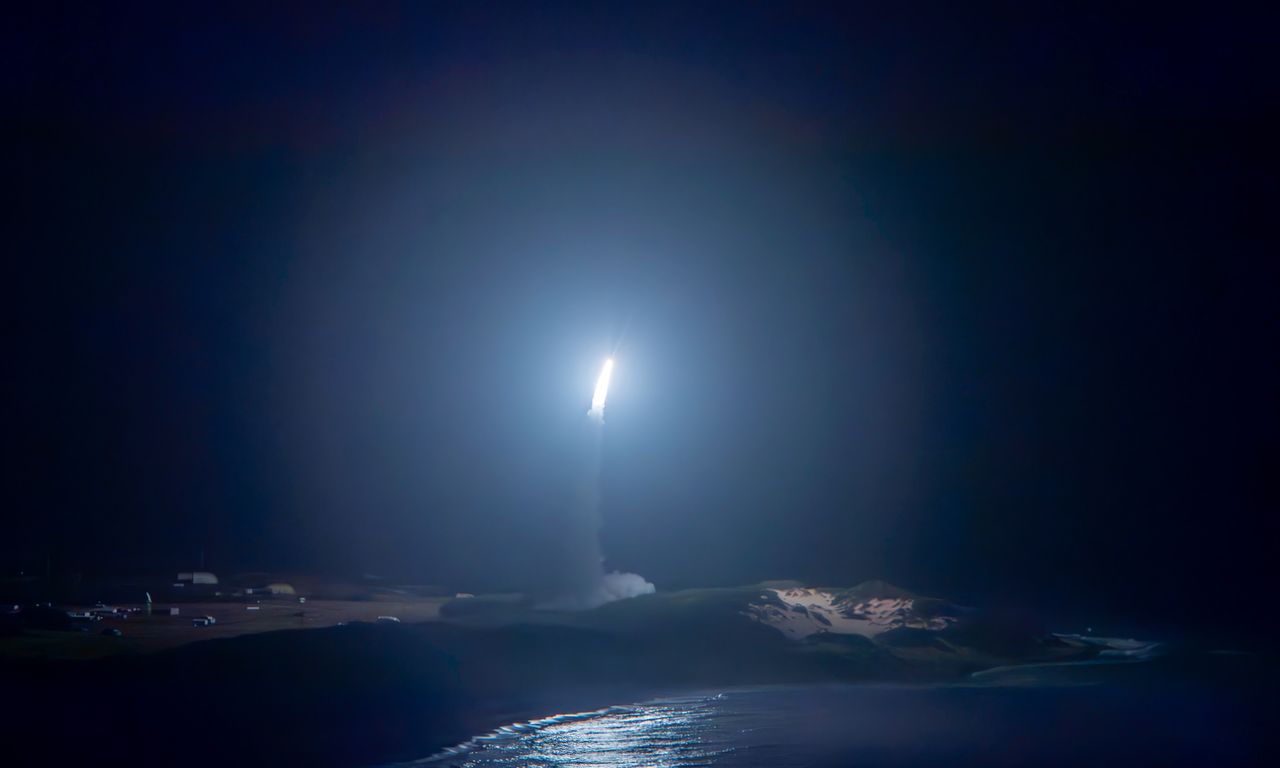
CHANDLER, Ariz. – March 29, 2024 – Northrop Grumman Corporation (NYSE: NOC) successfully launched a ballistic missile target vehicle to support the Missile Defense Agency’s Flight Test Aegis Weapon System 32 (FTM-32), in cooperation with the U.S. Navy.

  • Northrop Grumman launched the Medium-Range Ballistic Missile Type 3 Configuration 2 (MRBM T3c2) Target Vehicle, a threat-representative two-stage, solid rocket-fueled ballistic missile, from the Pacific Missile Range Facility, located on Kauai in Hawaii.
  • The successful test demonstrated the capability of a ballistic missile defense-configured Aegis ship to detect, track, engage and intercept an advanced MRBM in the terminal phase of flight, utilizing the Standard Missile-6 (SM-6) Dual II missile.
  • Northrop Grumman developed and produced three MRBM T3c2s as intercept test targets for the Aegis SM-6 and has delivered and successfully launched all three target vehicles.


Robin Heard, director of targets, Northrop Grumman: “This program capitalizes on our proven history of innovative rocket designs, executed with speed and discipline. We continue to invest in technology that delivers these vital capabilities our customers need to respond to growing threats. T3c2 is a highly complex target providing the realistic scenario needed to test and verify the Aegis Weapon System.”


Fatman17

Experienced member
Moderator
Defence News Editor
Pakistan Moderator
Messages
2,485
Reactions
18 2,057
Nation of residence
Pakistan
Nation of origin
Pakistan
Aircraft

Powerful Partnerships: Bringing MQ-4C Triton Operations to Australia through Collaboration​

Australia improves the security of its vast maritime domain with MQ-4C Triton’s persistent surveillance capabilities

August 13, 2026
TAGS: Triton, Aircraft, Naval Aviation, U.S. Navy

Summary​

The partnership between the United States Navy, Northrop Grumman, the Royal Australian Air Force and Australian industry is poised to enable Indo-Pacific maritime surveillance using MQ-4C Triton’s high-altitude, long-endurance capabilities.

Key Takeaways​

  • Northrop Grumman and the U.S. Navy tailored Triton for Australia’s maritime surveillance needs and are providing technical workforce readiness to ensure seamless integration and long-term operations from remote bases.
  • Shared data and collaboration between U.S. and Australian forces will enhance situational awareness and improve the planning and conduct of joint military operations.
Powerful Partnerships: Bringing MQ-4C Triton Operations to Australia through Collaboration

(Photo Credit: Northrop Grumman)
The MQ-4C Triton provides a persistent surveillance capability that spans a vast maritime area. It demands strategic collaboration, strong partnerships, highly skilled teams and advanced technology. That’s why the Royal Australian Air Force (RAAF) partnered with the United States Navy and Northrop Grumman to bring critical theater-level surveillance capability to Australia, one of the world’s most remote and strategically significant regions. Northrop Grumman Australia and the RAAF have collaborated to implement the Australian MQ-4C capability and enhance the Australian Defence Force’s maritime domain awareness across the vast Indo-Pacific. The Triton’s advanced sensor suite, high-altitude ceiling and data sharing are enabled by a highly skilled workforce located across Australia.
Operating in Remote Environments
The scale and complexity of Australia’s vast exclusive economic zone and key sea lanes pose unique challenges that demand persistent, surveillance capabilities and theater-level oversight. To address these needs, Northrop Grumman, the U.S. Navy and the RAAF have worked closely to tailor the Triton for Australia’s operational environment, ensuring its integration with interoperable platforms like the crewed P-8A Poseidon.
Triton is uniquely suited for this mission. It is the only autonomous high-altitude maritime aircraft capable of flying above 15,000 meters for up to 24 hours to cover up to 14 million square-kilometers in a single mission. It provides regional oversight at scale that is critical to provide situational awareness that informs operational decisions. Triton’s long-range surveillance complements crewed aircraft in the Maritime domain.
Driven by Shared Success
Operationalizing Triton in Australia involved training and equipping RAAF teams capable of maintaining, operating and sustaining Triton in remote regions to build No. 9 Squadron capability. Northrop Grumman embedded multidisciplinary experts as mechanics, avionics technicians, engineers, systems administrators and networks specialists, working side by side with RAAF and local industry partners. This collaboration accelerated workforce readiness and ensured long-term success.
As Australia and the U.S. continue to share data and technological expertise, the Triton partnership exemplifies how collaboration, innovation and teamwork come together to meet the evolving demands of maritime security in one of the world’s most strategically important regions.
Media Contact
Bree Young
619-346-0044
[email protected]
www.northropgrumman.com
 

Fatman17

Experienced member
Moderator
Defence News Editor
Pakistan Moderator
Messages
2,485
Reactions
18 2,057
Nation of residence
Pakistan
Nation of origin
Pakistan

Northrop Grumman Delivers E-2D Advanced Hawkeye's Most Significant Upgrade in Platform History​

Block II upgrade transforms E-2D software and hardware to accelerate future advancements and stay ahead of threats

August 18, 2026
TAGS: E-2D, Aircraft, U.S. Navy

Summary​

Northrop Grumman has held the critical design review for the E-2D Advanced Hawkeye Block II upgrade, enabling integration and testing of this major modernization effort, with delivery planned by the end of the decade. This upgrade significantly enhances situational awareness, crew efficiency, and fleet sustainment through a modular open systems approach.

Key Takeaways​

  • The Block II upgrade is the most significant enhancement to the E-2D platform, improving operational capabilities and future-proofing it against evolving threats.
  • The program supports long-term sustainability and cost efficiency by using commercial off-the-shelf technology and expanding upgrade capacity for both new and existing aircraft.
MELBOURNE, Fla. – Aug 18, 2026 – Northrop Grumman (NYSE: NOC) completed a key government-led critical design review for the E-2D Advanced Hawkeye’s Block II upgrade, clearing the way for integration and testing of the most significant platform upgrade in the program’s history. Northrop Grumman will immediately begin Block II integration and testing and is set to deliver Block II aircraft by the end of the decade.
  • Block II represents the most significant upgrade since E-2D’s development, dramatically improving situational awareness and crew efficiency while future-proofing the platform against evolving threats.
  • Using a modular open systems approach and commercial off-the-shelf products, Block II reduces costs and supports long-term fleet sustainment and modernization.
  • Northrop Grumman will integrate the Block II upgrade into the E-2D’s active production line for new aircraft and retrofit existing fleet aircraft, increasing upgrade capacity.


Expert:
Janice Zilch, vice president and program manager, E-2D Advanced Hawkeye, Northrop Grumman: "Completing the Block II critical design review reflects the dedication and expertise of our team and partners. This upgrade strengthens the E-2D’s suite of capabilities, enhancing situational awareness, reducing crew workload and paving the way for future technology. We are continuing to deliver unmatched capability at speed to the U.S. Navy and our international partners.”
Northrop Grumman Delivers E-2D Advanced Hawkeye's Most Significant Upgrade in Platform History

Northrop Grumman’s E-2D Advanced Hawkeye is continuously modernized to stay ahead of threats, ensuring the joint force can see and sense when it matters most. (Photo Credit: Northrop Grumman)

Details on Program:
The E-2D Advanced Hawkeye is an airborne early warning command and control platform that is purpose-built for the airborne early warning and battle management mission. The E-2D program supports over 4,000 jobs at 411 companies across 40 U.S. states, significantly contributing to the resilience of the U.S. defense industrial base and American manufacturing.
E-2D is continuously modernized to stay ahead of threats, ensuring the joint force can see and sense when it matters most. The Block II Upgrade is comprised of a comprehensive overhaul of mission system software and hardware that will sustain its relevance well into the future.
Northrop Grumman is a leading global aerospace and defense technology company. Our pioneering solutions equip our customers with the capabilities they need to connect and protect the world, and push the boundaries of human exploration across the universe. Driven by a shared purpose to solve our customers’ toughest problems, our employees define possible every day.

Media Contact
Matt Seyler
424-225-9491
[email protected]
www.northropgrummam.com
 

Fatman17

Experienced member
Moderator
Defence News Editor
Pakistan Moderator
Messages
2,485
Reactions
18 2,057
Nation of residence
Pakistan
Nation of origin
Pakistan

Northrop Grumman Opens Propulsion Innovation Center in Maryland, Expanding High-Tech Jobs​

New facility expands solid rocket motor and hypersonic propulsion capacity while growing high-tech engineering and manufacturing jobs in Elkton

September 8, 2026
TAGS: Hypersonics, Advanced Manufacturing, Events and Conferences

Summary​

Northrop Grumman opened its new Propulsion Innovation Center in Elkton, Maryland, expanding solid rocket motor (SRM) and hypersonic propulsion capacity while growing the company’s engineering workforce and supporting high-tech jobs in the state. The investment strengthens U.S. and allied defense production while expanding Maryland’s role in the nation’s advanced manufacturing and defense industrial base.

Key Takeaways​

  • The Elkton Propulsion Innovation Center expands Northrop Grumman’s SRM capacity and engineering workforce, helping strengthen the U.S. supply base for hypersonic and tactical missile propulsion.
  • Investment in Elkton supports significant workforce growth and creates opportunities for highly skilled engineering and advanced manufacturing jobs, strengthening Maryland’s economy and its role in supporting national security.

Northrop Grumman Opens Propulsion Innovation Center in Maryland, Expanding High-Tech Jobs

Maryland Gov. Wes Moore, Jenna Paukstis, vice president and general manager, weapon systems, Gordon LoPresti, senior director, propulsion solutions and controls, and Whiting-Turner Construction executives cut the ribbon at Northrop Grumman’s new Propulsion Innovation Center in Elkton, Maryland. (Photo Credit: Northrop Grumman)
ELKTON, Md. – Sept. 8, 2026 – Northrop Grumman (NYSE: NOC) today opened its new Propulsion Innovation Center, a 57,000-square-foot facility in Elkton, Maryland, that houses 250 engineers working on advanced propulsion technologies for U.S. and allied defense programs. This new facility expands the company’s solid rocket motor (SRM) capacity across its propulsion manufacturing network while creating additional opportunities for highly skilled engineering and manufacturing jobs in Maryland.

The investment strengthens the company’s ability to meet growing demand for tactical missile and hypersonic propulsion while supporting Maryland’s advanced manufacturing economy.

Maryland Governor Wes Moore joined Northrop Grumman leaders, employees, local officials and industry partners for a ribbon-cutting ceremony marking the opening of the Propulsion Innovation Center that highlights the investment not only in national security, but also in Maryland’s workforce.

“Maryland is the best place to build and hire. That's why we're proud to have important partners, like Northrop Grumman, who are choosing Maryland - because of everything our state has to offer,” said Gov. Moore. “Our administration is investing in infrastructure and workforce development to attract major players, lead the nation in innovation, and build opportunities to continue to drive our state forward. We look forward to continuing to work with Northrop Grumman as they serve our nation’s service members.”

“The Propulsion Innovation Center is a critical investment in advanced propulsion that expands the capacity and resilience of the nation’s SRM industrial base,” said Jenna Paukstis, vice president and general manager, weapon systems, Northrop Grumman. “By bringing more engineers and manufacturing capability online in Elkton, this facility accelerates delivery of survivable, solid and air-breathing hypersonic and tactical missile propulsion solutions to the warfighter.”

Expanding Capacity in Elkton

The Propulsion Innovation Center is part of a broader $100 million investment by Northrop Grumman at the company’s Elkton site to increase capacity for hypersonic air-breathing propulsion and SRMs. Combined with other new construction, modernization and infrastructure improvements underway at the 550-acre Propulsion Systems & Controls site, the new facility will increase on-site SRM design and manufacturing capacity by 25% and support more than 30% growth in staffing.

Northrop Grumman’s Elkton campus is a leading advanced propulsion manufacturing site, bringing design, development, manufacturing and testing capabilities together in one location. Along with the Northrop Grumman Applied Sciences Laboratory aerothermal research and testing facility in Ronkonkoma, New York, the Elkton team designs and manufactures solid and liquid propulsion systems and controls for some of the nation’s most complex defense and space systems.

Scaling Solid Rocket Motor Production

Northrop Grumman provides end-to-end production for SRMs and advanced propulsion systems used in hypersonic and tactical missile applications, including design, development, integration and manufacturing. Across six major production sites, the company’s solid rocket propellant capacity totals about 30 million pounds annually today and is expected to increase nearly 50 million pounds annually by 2028. Northrop Grumman’s produced approximately 13,000 motors in 2024 and plans to increase annual production to more than 25,000 by 2029.

Investing in the Defense Industrial Base

Over the past seven years, Northrop Grumman has invested more than $2 billion in munitions-related technology and facilities, including more than $1 billion in advanced manufacturing facilities across the United States to increase SRM and missile-component production. Those investments include tripling tactical solid rocket motor capacity at the company’s West Virginia production facility and plans to double production capacity at its large SRM facilities in Utah over the next five years.

With nearly 100,000 employees and more than 30 million square feet of manufacturing space, Northrop Grumman has the scale and capacity to move technologies from development into production more quickly. The company continues to invest in U.S. infrastructure, research and development, its workforce and its supply chain to meet growing national security needs across a broad portfolio of tactical missile and advanced propulsion capabilities.
Media Contact
Jordan Orris
571-546-5655
[email protected]

 

Fatman17

Experienced member
Moderator
Defence News Editor
Pakistan Moderator
Messages
2,485
Reactions
18 2,057
Nation of residence
Pakistan
Nation of origin
Pakistan
https://www.northropgrumman.com/who-we-are
Missile Defense

Northrop Grumman Introduces Raid Hunter™ for Next Generation Gun-Based Air Defense System​

New air defense system strengthens layered protection against cruise missiles, drone swarms and evolving aerial threats
3 MIN READ
August 11, 2026
TAGS: Missiles, Missile Defense

Summary​

Northrop Grumman introduced Raid Hunter™ as the official name for its new 50mm Gun-Based Air Defense (GBAD) system, a next-generation capability designed to strengthen short-range, layered air defense against increasingly complex aerial threats. Raid Hunter combines advanced battle management, proven Chain Gun® technology and precision-guided 50mm ammunition to help defend military bases, airfields and critical infrastructure from cruise missiles, drone swarms and other evolving threats while supporting the company’s kinetic solutions portfolio, Raid Defense™ Solutions.

Key Takeaways​

  • Raid Hunter is engineered to address a critical short-range air defense gap by providing warfighters with a scalable, rapidly deployable capability to defeat cruise missiles, drone swarms and other complex aerial threats.
  • As part of Northrop Grumman’s Raid Defense™ Solutions portfolio, Raid Hunter™ reinforces the company’s continued investment in counter-unmanned aerial systems (C-UAS) and integrated air and missile defense technologies that strengthen layered defense and protect critical military assets.
FALLS CHURCH, Va. – Aug. 11, 2026 – Northrop Grumman (NYSE: NOC) is unveiling Raid Hunter™: The official name for its innovative 50mm Gun-Based Air Defense System. Designed to close a critical gap in short-range layered defense, Raid Hunter provides scalable, resilient and cost-effective protection against increasingly complex aerial threats facing today’s warfighters. As adversaries continue to expand the use of cruise missiles, drone swarms and other advanced aerial threats, Raid Hunter delivers rapid, high-capacity firepower to protect military bases, airfields and other critical infrastructure.
Highlights:
  • Raid Hunter combines proven Chain Gun® technology, precision‑guided 50mm ammunition and a networked, interoperable system controller to deliver powerful protection against high-volume, mixed-threat aerial raids. It is designed to defeat a range of aerial threats including high‑priority cruise missile threats, unmanned aerial systems (UAS), and other advanced threats.
  • Raid Hunter’s guided 50mm ammunition combined with a high-rate-of-fire Chain Gun® delivers lethal, cost-considerate engagement with deep magazines and fast reloads, tackling the economic challenge of massed swarming threats.
  • Raid Hunter is built to deploy with speed and flexibility through a modular design for rapid transportation on the C-130, with future vehicle-mounted and container-based variants planned.
  • Raid Hunter is the latest product of Northrop Grumman’s continued investment in advanced counter-UAS and air defense technologies designed to meet evolving operational requirements and emerging battlefield threats.
  • As part of the company’s C-UAS integrated air and missile defense portfolio, the system supports layered defense architectures to protect critical assets across a range of operations.


Northrop Grumman Introduces Raid Hunter™ for Next Generation Gun-Based Air Defense System

Raid Hunter is Northrop Grumman’s 50mm GBAD system, engineered to counter mass, mixed raids with rapid, precise firepower and modular deployment options. (Credit: Northrop Grumman)
Expert:
Kenn Todorov, vice president and general manager, command and control & weapons integration, Northrop Grumman: “Raid Hunter addresses a critical short-range defense gap by delivering rapid, high-capacity protection against complex, mass aerial threats like cruise missiles and drone swarms. It provides warfighters with a cost-effective, flexible tool to decisively defeat evolving threats now and in the future—strengthening the security of vital bases and infrastructure.”
“War has evolved. Air Defenders need the ability to defend against large, complex raids designed to overwhelm traditional defense solutions. Raid Hunter addresses this critical need by delivering a cost effective and deep magazine solution which can be rapidly delivered to the warfighter at scale. Scalable from inception, it defeats evolving threats now and in the future – strengthening the security of vital bases and infrastructure.”
Details:
Raid Hunter is optimized to defeat large quantities of aerial threats which would traditionally saturate defense, including cruise missiles, UAS and advanced threats. Its modular palletized form factor enables rapid, versatile deployment options and future vehicle-mounted and container-based configurations will expand operational use cases.
Northrop Grumman continues to collaborate closely with government and allied partners to mature Raid Hunter’s capabilities. Planned testing throughout the year will further validate system performance and support accelerated fielding.
Raid Hunter is a key system in Northrop Grumman’s portfolio of counter-UAS and air defense capabilities, known as Raid Defense Solutions.
Raid Defense Solutions is Northrop Grumman’s advanced, scalable portfolio of layered kinetic capabilities designed to protect critical assets from increasingly complex and high‑volume aerial threats, including coordinated drone swarms. By integrating proven fielded programs, AI-enabled command and control, sensor fusion and high‑rate firepower this family of solutions will enable faster detection, smarter decision-making and coordinated engagements across a wide range of operational scenarios with future growth and adaptability opportunities.
Northrop Grumman is a leading global aerospace and defense technology company. Our pioneering solutions equip our customers with the capabilities they need to connect and protect the world and push the boundaries of human exploration across the universe. Driven by a shared purpose to solve our customers’ toughest problems, our employees define possible every day.
Media Contact
Krista Alestock
571-389-5021
[email protected]
 

Fatman17

Experienced member
Moderator
Defence News Editor
Pakistan Moderator
Messages
2,485
Reactions
18 2,057
Nation of residence
Pakistan
Nation of origin
Pakistan
https://www.northropgrumman.com/who-we-are

Advanced Weapons

U.S. Air Force and Northrop Grumman Assemble Inert Missile, Progress Toward Sentinel Flight Testing​

Sentinel on pace for 2027 flight test

September 14, 2026
TAGS: Sentinel, ICBM (Intercontinental Ballistic Missile), U.S. Air Force, Weapons, Propulsion, Digital Transformation, Digital Acceleration, Advanced Manufacturing

Summary​

The U.S. Air Force and Northrop Grumman vertically assembled a fully integrated inert Sentinel missile at Vandenberg Space Force Base in California and secured approval from the U.S. Air Force on Sentinel design maturity for flight test in 2027.

Key Takeaways​

  • These events mark crucial progress to modernize the ground-based leg of the strategic triad and accelerate initial capability of the system.
  • Northrop Grumman is acting with speed and scale to deliver this highly advanced weapon system to the Air Force.
VANDENBERG SPACE FORCE BASE, Calif. – Sept. 14, 2026 – America’s next-generation intercontinental ballistic missile moved another step closer to defending the nation when Northrop Grumman (NYSE: NOC) and the U.S. Air Force fully assembled the Sentinel missile in its operational orientation. The vertical assembly demonstrates the design and integration of the missile and is a major step toward the Sentinel missile’s design and suitability evaluation for flight test in 2027.
Sentinel is making progress toward fielding, a key part of the nation’s strategic deterrence.
  • In partnership with the U.S. Air Force, Northrop Grumman engineers have completed the safe stacking of the Sentinel missile. This proves all missile stages, propulsion elements, the shroud, and associated components have been fully integrated into a single missile configuration.
  • This milestone stacking operation is a critical step to demonstrate that every process and requirement for safely assembling the complete Sentinel missile is executable on the test pad. It validates that the team is ready to move forward to a live flight test.
  • Every step – from specialized transport and mobile crane operations to full interface verification – proved the readiness to perform this complex vertical integration process.
  • In parallel, Northrop Grumman and the U.S. Air Force’s 719th Test Squadron completed the first flight test Critical Design Review, confirming the missile’s design maturity and hardware testing meet Air Force requirements for performance, safety, and schedule for flight test in 2027.
  • As part of a rigorous four-month test event, Northrop Grumman safely transported missile components from across the country to Vandenberg Space Force Base, where the inert missile was safely stacked and de-stacked on a test pad.
  • Together, these achievements demonstrate that Sentinel is moving from design into a tangible, fully integrated system that is closer to standing alert in an operational silo.
Expert:
Amanda Davis, vice president and general manager, strategic deterrent systems, Northrop Grumman: “This vertical assembly demonstrates the momentum toward test launching Sentinel in 2027 and having missiles on alert by the early 2030s, ensuring the United States’ ground-based nuclear capabilities remain strong and reliable for decades to come.”
U.S. Air Force and Northrop Grumman assemble inert missile, progress toward Sentinel Flight Testing

Northrop Grumman and U.S. Air Force assembled the first fully integrated Sentinel missile, standing vertically atop a test launch pad at Vandenberg Space Force Base as part of the program’s Pathfinder demonstration. (Photo Credit: Northrop Grumman)
Details:
Known as Pathfinder, this dry-run exercise included the transport of missile components on specially designed vehicles from across the U.S. to VSFB, where Northrop Grumman engineers rigorously tested mechanical operations including transportation, mobile crane use and safe vertical integration while validating all interface connections on the test pad. Northrop Grumman engineers carefully coordinated every step of the process to meet the stringent Air Force requirements, including safely stacking the inert missile – a complex and precise operation critical to mission success.
The U.S. Air Force’s Sentinel program is a modernization of the nation’s ground-based leg of the strategic nuclear triad. Northrop Grumman leads a nationwide team of more than 500 partners under an engineering and manufacturing development contract to deliver an all new, advanced and highly capable ICBM weapon system that will be viable through 2075. Northrop Grumman is achieving substantial progress across the Sentinel program, advancing toward flight test in 2027 and initial capability in the early 2030s. From missile testing and infrastructure prototyping to supply chain readiness and augmented by a nationwide workforce of more than 10,000 dedicated professionals, Sentinel is accelerating development enabled by a transformed acquisition approach.
Northrop Grumman is a leading global aerospace and defense technology company. Our pioneering solutions equip our customers with the capabilities they need to connect and protect the world and push the boundaries of human exploration across the universe. Driven by a shared purpose to solve our customers’ toughest problems, our employees define possible every day.
Media Contact
John Dorrian
(571) 540-5841
[email protected]
Downloads
download

PHOTOU.S. Air Force and Northrop Grumman assemble inert...


Fatman17

Experienced member
Moderator
Defence News Editor
Pakistan Moderator
Messages
2,485
Reactions
18 2,057
Nation of residence
Pakistan
Nation of origin
Pakistan
https://www.northropgrumman.com/who-we-are
Newsroom

Advanced Weapons

Northrop Grumman to Produce the Next-Generation Precision Guidance Kit with Anti-Jamming Technology​

PGK E5 Variant includes advanced anti-jamming capabilities for GPS degraded environments

September 9, 2026
TAGS: Armaments, Precision Guidance

Summary​

Northrop Grumman is contracted to produce the PGK E5, an advanced Precision Guidance Kit with anti-jamming capabilities for GPS-degraded artillery operations, enabling enhanced accuracy and rapid deployment on existing 155 mm projectiles.

Key Takeaways​

  • PGK E5 integrates advanced anti-jam technology to maintain artillery precision in contested GPS environments without changing form or training requirements.
  • PGK E5’s compatibility with existing artillery and rapid fielding represent Northrop Grumman’s scalable, mission-focused innovation.
PLYMOUTH, Minn. – Sept. 9, 2026 – Northrop Grumman Corporation (NYSE: NOC) will produce the PGK E5, a next-generation of the M1156 Precision Guidance Kit (PGK) featuring critical anti-jam capabilities, enabling U.S. Army and allied forces to maintain artillery operations in GPS degraded environments.
  • The PGK E5 transforms existing 155 mm high-explosive projectiles into cost-effective, GPS-guided weapons, delivering precise, reliable indirect fires in current threat environments.
  • Upgraded capabilities of the PGK E5 include advanced anti-jam technology to overcome emerging electronic threats, ensuring accuracy even in contested battlefield environments, while maintaining the same trusted reliability, form factor and user experience as the current PGK.
  • In recent testing conducted in GPS-degraded environments, PGK E5 demonstrated accuracy exceeding both threshold and objective requirements. This precision reduces collateral damage and rounds per engagement, increasing warfighter survivability.
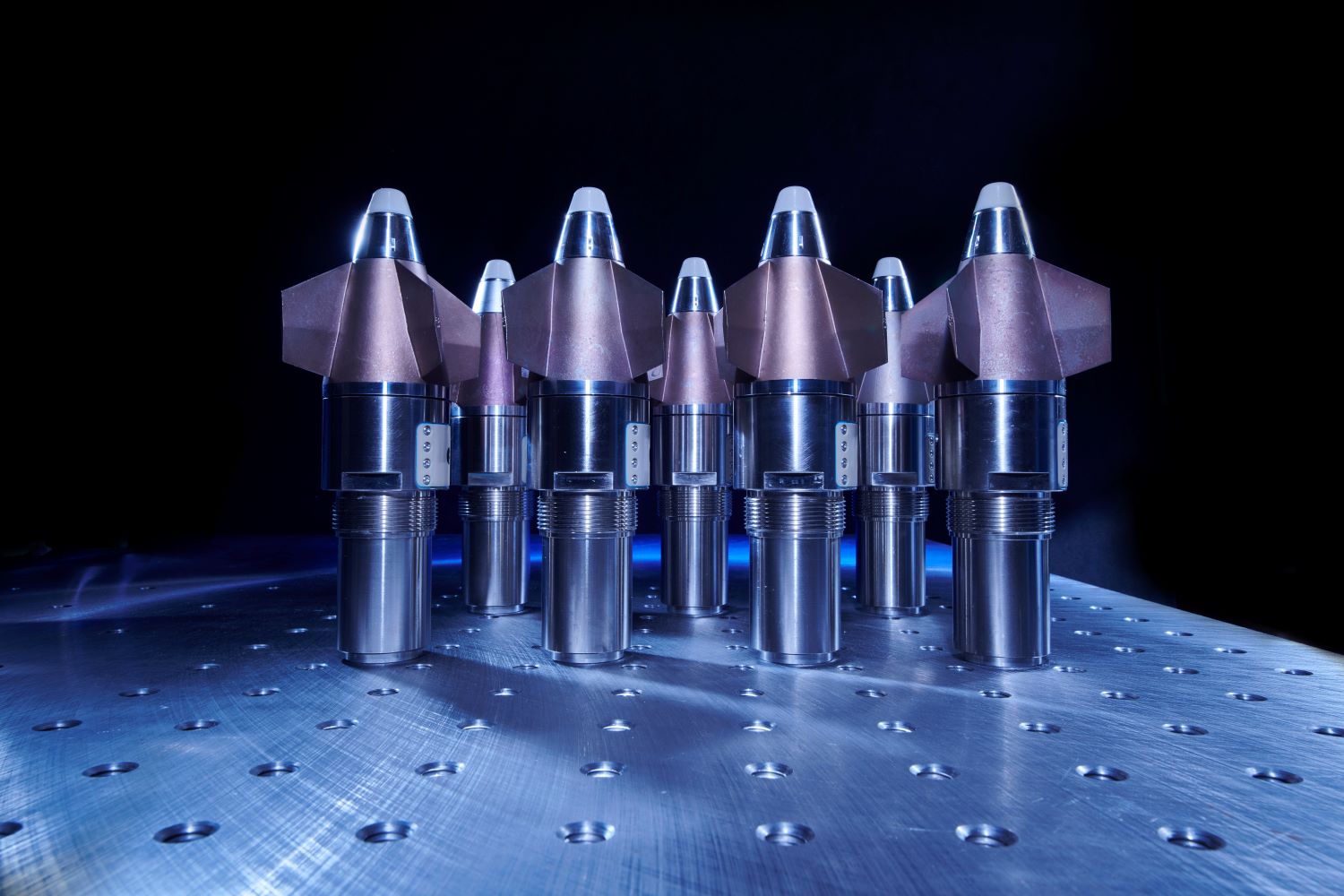
Northrop Grumman to Produce the Next-Generation Precision Guidance Kit with Anti-Jamming Technology

Trusted by the U.S. Army and allied forces, Northrop Grumman’s Precision Guidance Kit transforms artillery on battlefields across the globe. With over 145,000 delivered to date, PGK consistently exceeds the Army’s objectives in both accuracy and reliability. (Photo Credit: Northrop Grumman)
Expert:

Dave Fine, vice president, armament systems, Northrop Grumman: “Today’s threat environment demands speed and innovation and we’re working closely with the U.S. Army to ensure the PGK E5 keeps maneuver forces ready to win in GPS degraded environments. With decades of proven performance and growing production, PGK continues to deliver reliable, mission-ready technology that warfighters can count on.”

Details on the PGK E5:

As GPS jamming becomes more prevalent, Northrop Grumman has collaborated with the U.S. Army to innovate and deliver a solution for PGK, all without altering the fit, form or factor to integrate with 155mm artillery.

Production is underway at Northrop Grumman’s Plymouth, Minnesota facility with first deliveries expected in early 2028.

Compatible with existing 155 mm projectiles and fielded howitzers, the PGK E5 requires minimal retraining or system changes, enabling rapid fielding and deployment.

Northrop Grumman is a leading global aerospace and defense technology company. Our pioneering solutions equip our customers with the capabilities they need to connect and protect the world, and push the boundaries of human exploration across the universe. Driven by a shared purpose to solve our customers’ toughest problems, our employees define possible every day.
Media Contact
Elizabeth Counsman
321-451-0969
[email protected]
Downloads
download

PHOTONorthrop Grumman to Produce the Next-Generation Pr...

 
Top Bottom