The U.S. drone strike in Venezuela marks a dangerous new era
Recent history in the Middle East shows what happens when the U.S. deems a strike necessary but a nation refuses to authorize it.
Jun. 18, 2026, 5:55 PM EDT By
Retired Amb. James Story
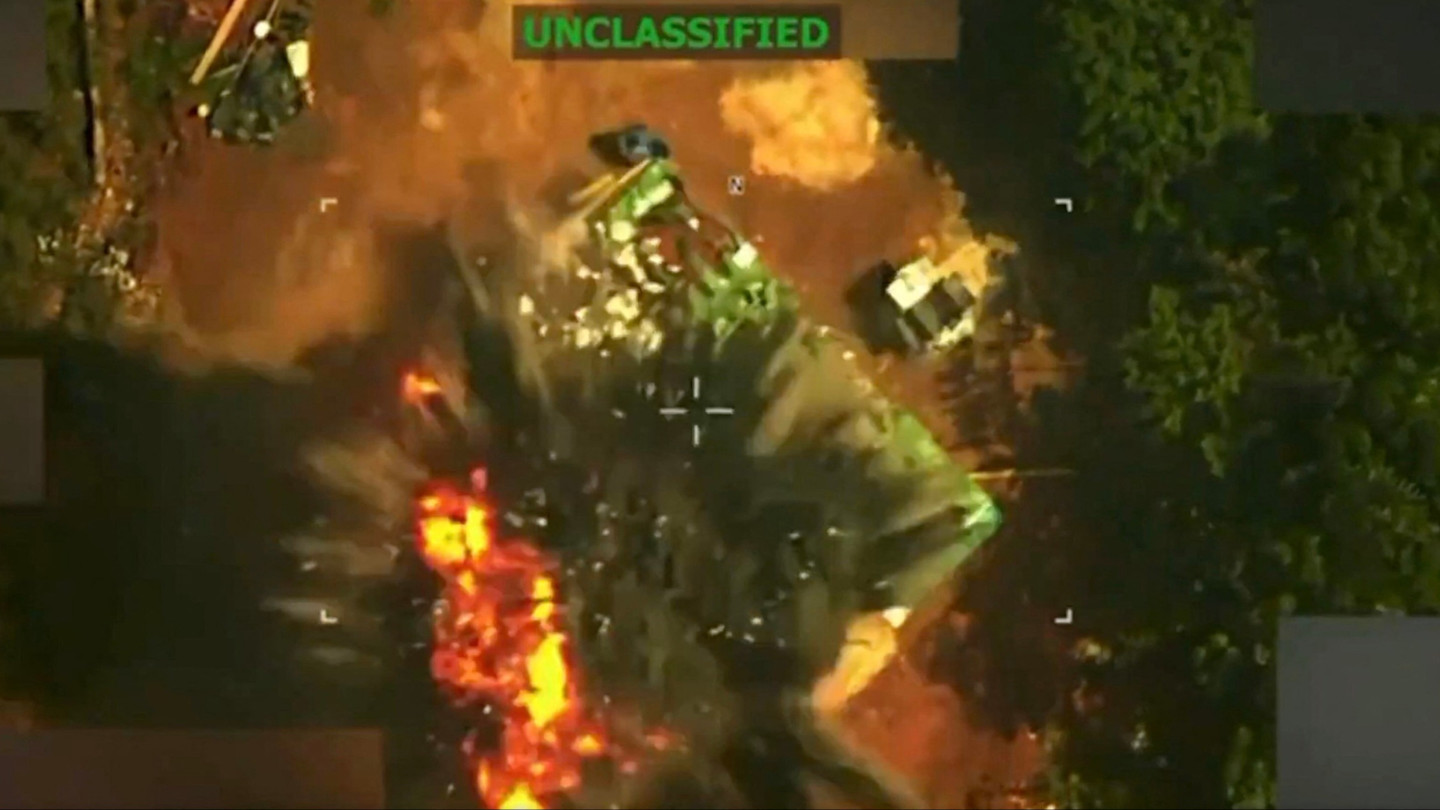
A drone strike in Bolívar state, Venezuela, last week
killed the founder of Tren de Aragua — and marked a turning point in remote warfare. The United States is now doing in its own hemisphere what it once helped partner nations and allies do for themselves. The question that should be considered is not whether the people who are killed will deserve it, it is whether the policy works — and how long our neighbors will keep taking our calls.
The use of drones to target and kill enemy combatants started in response to the terrorist attacks of 9/11 and, before this month, had always happened “over there.” On Nov. 3, 2002, a CIA Predator put a Hellfire missile into a Land Cruiser crossing the Marib desert in Yemen. It
killed Qaed Salim Sinan al-Harithi (also known as Abu Ali al-Harithi), an architect of the USS Cole bombing,
and five other Al Qaeda operatives. It was the first American drone strike outside of a conventional battlefield and the first targeted killing of the war on terror.
The United States is now doing in its own hemisphere what it once helped partner nations and allies do for themselves.
A critical detail is the authorization and signature behind the missile order: President George W. Bush had lifted the standing ban on assassinations after 9/11 and signed a finding authorizing the CIA to pursue Al Qaeda worldwide. Killing a specific man in a country where we were not at war was, in 2002, a presidential act — a decision made at the very top levels of our government and with the host government’s cooperation.
Gen. Stanley McChrystal, who ran the Joint Special Operations Command at the height of two wars, recently described on a
New York Times podcast the three great capabilities that seduce presidents toward the use of force: covert action, the surgical special-operations raid and air power. In his experience, McChrystal said, covert action
“never stays covert, and it rarely works.” He offered the January raid in which
Venezuelan leader Nicolás Maduro was seized as the epitome of the second seduction, a night of extraordinary competence after which
little on the ground actually changed. The common thread is that each capability looks like an easy answer to a hard problem — and each rarely is. That there has been
no tangible movement establishing democracy in Venezuela since the spectacular raid that captured Maduro and his wife, Cilia, underscores McChrystal’s point.
But the apparent early successes in the drone wars created their own momentum for continued use of these allegedly easy tools. In 2013 the Obama administration codified
Presidential Policy Guidance. Terms included that strikes outside active war zones required near certainty that no civilians would be injured or killed, and a preference for capture over lethal operations; sign-off was required across the national security staff, with the president as final arbiter. In 2017 that framework gave way to thinner procedures that pushed authority down to the CIA and combatant commanders, under country plans that are reviewed about once a year. In other words, the decision to kill a named individual migrated from the Oval Office to the field.
Now the instrument whose use was popularized in Afghanistan, Yemen and the tribal areas of Pakistan has arrived close to home. On June 12 a strike ordered by U.S. Southern Command
killed Héctor Guerrero Flores — “Niño Guerrero,” the man who built Tren de Aragua out of a prison yard in Venezuela. The Trump administration’s boat strikes had already brought
lethal force into nearby waters, but this was different. It was the first time the U.S. military used an airstrike to target and kill the head of a designated foreign terrorist organization in the Western Hemisphere. As happened in Marib years ago, this operation ran on CIA intelligence, in coordination with a cooperative host government, in this case the post-Maduro government of Delcy Rodríguez.
For the Americas, this U.S.-led assassination marks genuinely new territory. When I ran our country’s international narcotics and law enforcement programs in Colombia from 2010 to 2013, and later across the Western Hemisphere from 2013 to 2015, the model was different in a way that mattered. The U.S. interagency structure supplied the intelligence and training; Colombian forces acted on it. That is, the sovereign state did the striking — against high-value targets, on its own soil, under its own law and with its own guardrails and processes. Much of the work that built the capacity for our partner nations to take these actions was unglamorous and slow: the patient, yearslong business of building police, courts and military institutions strong enough to withstand the onslaught of transnational criminal organizations.
What transpired this month inverts the model with uncertain repercussions.
We also should not assume that the Guerrero strike will be a one-off. In March, at its inaugural
Shield of the Americas summit in Doral, Florida, the Trump administration proclaimed that cartels and terrorist organizations in this hemisphere should be
“demolished to the fullest extent possible,” with partner militaries trained and mobilized toward that end. Put another way, force is being installed as the organizing principle for how the United States deals with its neighbors. The rhetoric and objectives remain the same, but our active participation is changing the paradigm.
The question is whether it works. The U.S. military boat campaign has
killed more than 200 people since September. The Drug Enforcement Administration says wholesale
cocaine prices have climbed 30% to 45% per kilogram. Customs and Border Protection forces have seized more cocaine in the eight months after the strikes began than in the eight before; in November, the Coast Guard’s Atlantic commander
reported no change in drug flow, routes or purity; and street prices sit roughly where they have for years. Fentanyl, the drug actually responsible for filling U.S. morgues, is not transported in these boats — it crosses overland from Mexico. Destroying a single go-fast may feel decisive, but whether doing so meaningfully reduces the flow of drugs north is very much in doubt.
For now, the governments helping us are doing so by choice.
To be clear, I have no sympathy for the plight of drug traffickers. I spent a large part of my diplomatic career working against them. But transnational criminal organizations exist precisely because they operate across borders — which is why no single nation can defeat them alone. The answer the U.S. built for that reality sits in Key West, where the Joint Interagency Task Force South fuses intelligence from more than a dozen U.S. agencies and some 20 partner nations to trace trafficking across the entire hemisphere. That is what dismantling an organization requires: patient information sharing, sovereign-to-sovereign — not striking one boat and then the next.
For now, the governments helping us are doing so by choice. But regional elections have consequences, and today’s willing partner could demur after the next vote. Consider Mexico. President Claudia Sheinbaum has said, repeatedly, that she will not accept unilateral U.S. military action on Mexican soil —
“we are not subordinate” and
“it’s not going to happen.” What becomes of this new model when a strike we deem necessary is one a neighbor refuses to authorize? We already know what happened in the Middle East: In many countries we came to fire without meaningful consent.
There is nothing about our own hemisphere that makes us immune to that drift — only partners willing to take our calls. The question Niño Guerrero’s death should prompt is not whether he had it coming. It is how long U.S. partners keep answering our calls when the actions end with their citizens dead and cocaine still moving.
Retired ambassador James Story: For now, the governments helping us are doing so by choice. What becomes of this new model when a strike we deem necessary is one a neighbor refuses to authorize?

www.ms.now



 venezuelanalysis.com