FAAZ Way Forward

The era of modern air combat is shifting towards low observable and stealth aircraft. It is only a matter of time before such platforms are introduced into South Asia, fundamentally changing the region’s aerial warfare dynamics.
Academically speaking, the introduction of stealth aircraft challenges the conventional BVR engagement model. A long range missile with a radar based seeker may have an impressive advertised range, but against a low observable target, the real challenge is detecting, tracking, and maintaining a reliable firing solution. A 300 km engagement range means little if you cannot establish a sufficiently accurate target track.
Some military theorists believe that stealth and advanced sensors could bring a renewed emphasis on close range engagements and dogfighting. However, the future may not be a return to the classical dogfight, but rather a combination of long range engagements, passive sensors, and advanced seeker technologies.
This is where long range infrared/heat seeking missiles become particularly interesting.
The traditional limitation of infrared guided missiles has been their dependence on onboard power and seeker operating time. A missile cannot simply keep its infrared seeker active indefinitely throughout a long range flight.
Pakistan appears to have approached this challenge differently with FAAZ.
FAAZ combines a long range BVR engagement envelope with an infrared terminal seeker and a two way data link. The missile receive midcourse guidance from its launching aircraft or an external sensors, while its infrared seeker activates closer to the target and takes over terminal guidance.
In other words, the missile could fly towards its target using updated tracking information before transitioning to infrared terminal guidance.
One of the most interesting aspects of this concept is the potential reduction in radar warning cues. Unlike a conventional active radar seeker, an infrared seeker does not emit radar energy during terminal acquisition. This could make the engagement more difficult for the target aircraft to detect and respond to in time.
Yes, the reported range is around 100 km. But for an indigenous missile family incorporating such capabilities, that is significant achievement in itself.
The real significance is not just the range. It is the possibility of developing a weapon around the requirements of future air combat, where passive detection, low observability, and networked targeting will become increasingly important.
Imagine an aircraft receiving a radar warning from one direction while an infrared guided missile approaches from another. The pilot will be forced to respond to a threat that is not generating the same radar warning cues as a conventional active radar missile causing confusion and panic.
The possibilities are considerable.
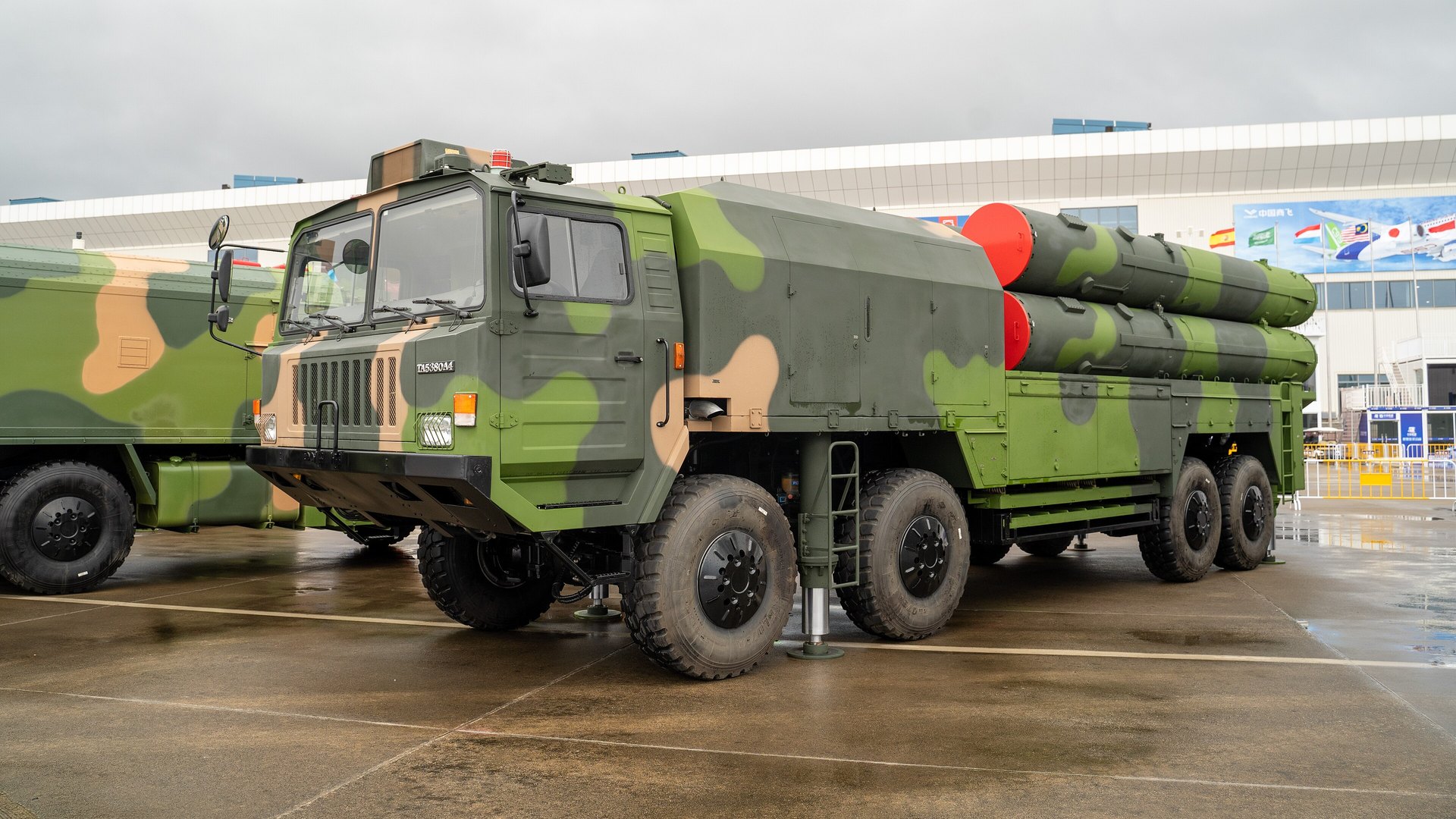
This is only the beginning. We have seen an air launched version. Could a ground launched variant eventually emerge? Could such a system contribute to a broader air defence architecture?
These are possibilities, not confirmed developments. But the underlying concept is worth watching closely.
The future of air combat will not be decided by range alone. It will be decided by who can detect, track, and engage the opponent while remaining difficult to detect themselves.