
You are using an out of date browser. It may not display this or other websites correctly.
You should upgrade or use an alternative browser.
You should upgrade or use an alternative browser.
Casual Discussion Did You Know?
- Thread starter Fatman17
- Start date


Mountain Cabins
Precision photography
For nearly 1,500 years, the Great Buddha of Bamiyan stood 55 meters (180 ft) tall in this cliffside niche in Afghanistan.
Carved in the 6th century along the Silk Road, it formed part of a vast Buddhist complex of monasteries, sanctuaries, and painted caves.
The statue was destroyed in 2001. Today, the empty niche remains—preserving the scale of what was lost.
X.com
When the James Webb Space Telescope launched in 2021, astronomers hoped to study the universe's earliest galaxies. The first observations revealed tiny red objects, unlike anything they'd expected to find. Some 1,000 of these have been found, but scientists still can't agree on whether they're massive galaxies, unusual black holes, or something else entirely.

 on.natgeo.com
It’s one of the biggest mysteries of the cosmos: What are these little red dots?
Massive galaxies? Dusty black holes? Black hole stars? Scientists have raised a lot of theories around what the crimson blobs in James Webb data might be.
on.natgeo.com
The ancient Maya adorned their teeth with jade—but some of those intricate inlays may have served more than an ornamental purpose. New evidence suggests that some were used to treat damaged teeth or ease pain, with researchers saying the procedures may have been performed by remarkably skilled dentists.

The ancient Maya may have had sophisticated dentists
The Maya adorned their teeth with jade and other gems. New evidence suggests it wasn’t just for show.
on.natgeo.com
A 25,000-year-old "drumstick" belonging to a terror bird is helping scientists revisit one of South America's most formidable predators. Arriving on the scene around 43 million years ago, terror birds were gigantic and used their speed to pursue prey on land with hatchet-like beaks and powerful legs ending in massive toe claws. Paleontologists long thought that the different species died out around the same time, but the newly discovered fossil suggests that a tiny species survived millions of years longer than their larger cousins—opening a new chapter for these flightless hunters.
 on.natgeo.com
Terror birds survived millions of years longer than previously thought
A 25,000-year-old fossilized “drumstick” is writing a new chapter for these flightless birds that terrorized the post-dinosaur world.
on.natgeo.com

Danube: Wehrmacht soldiers and WWII motorbike recovered after 80 years
The Danube is at such a low level that Second World War relics are resurfacing in Budapest: alongside a motorbike, the bodies of two soldiers have been recovered. #EuropeNews
 share.google
source: Edwards, D. (2026). Man who built $20,724 solar-powered yacht that can run forever passes 3,000 nautical miles having used zero fuel. Supercar Blondie.
X.com
How Many Soldiers Were In The Roman Army At Its Peak?
Ask how big the Roman Army got at its peak, and the honest answer is a range: somewhere between 400,000 and 500,000 soldiers by the middle of the 2nd century AD. That is the figure most historians settle on for the reigns of Trajan and Hadrian, when the empire stretched across the widest territory it would ever hold. It is a staggering number for the ancient world. But the number alone undersells what made Rome so hard to beat. The real story is how those half a million people were organized, because Rome did not just field a big army. It built a machine, and every part of it had a job.WorldAtlas
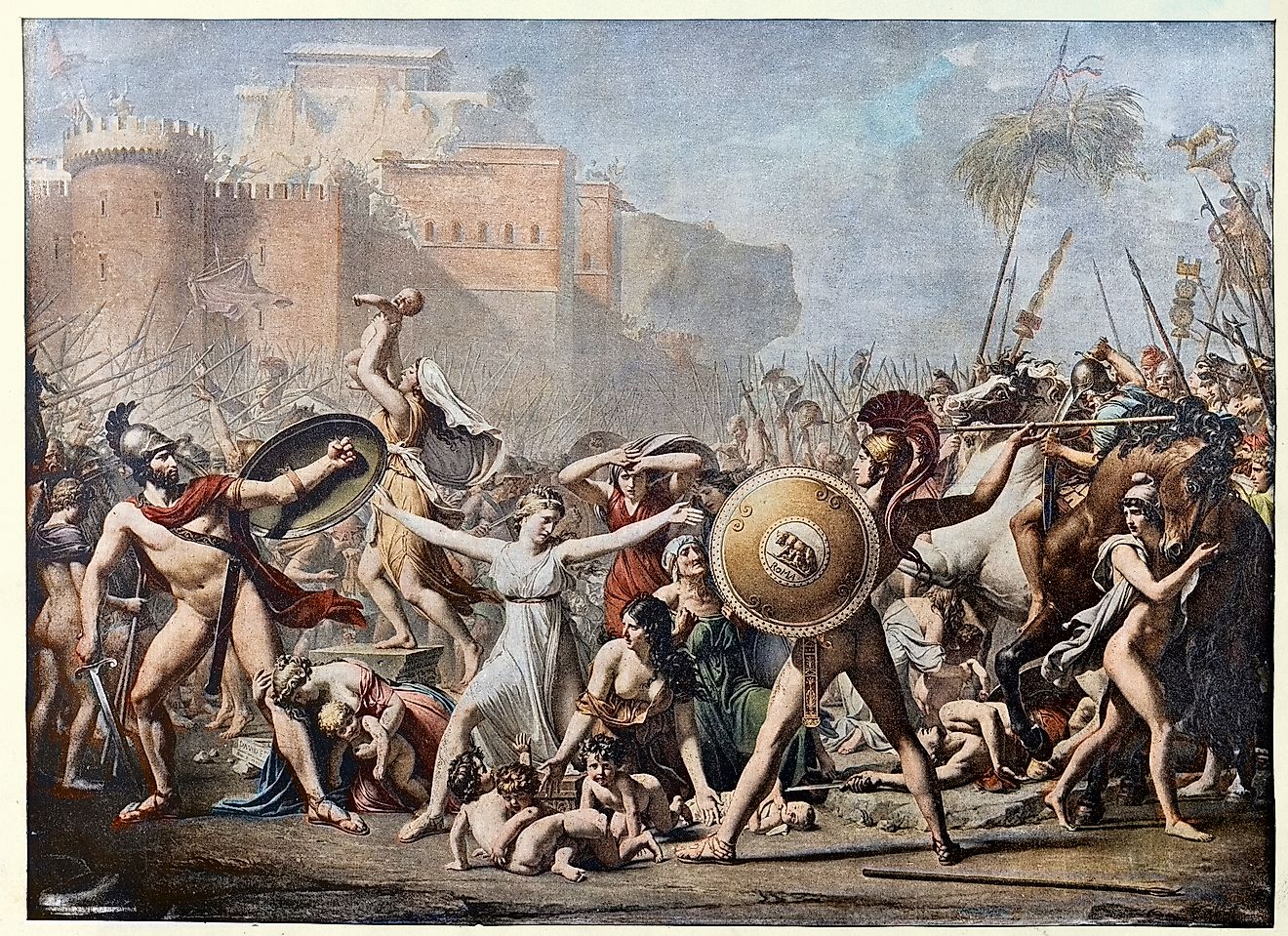
How Many Soldiers Were In The Roman Army At Its Peak?
The Roman Army peaked at 400,000 to 500,000 soldiers under Trajan and Hadrian. Here is how legions, auxiliaries, and the forces that ran Rome fit together.
 share.google


