• Forum restore complete (see latest announcement thread)

Japan Japan defence export news and updates

Saithan

Experienced member
Moderator
Denmark Correspondent
DefenceHub Diplomat
Messages
9,835
Reactions
65 21,970
Nation of residence
Denmark
Nation of origin
Turkey

Japan overhauls decades-old weapons export rules​

TOKYO​

Japan overhauls decades-old weapons export rules

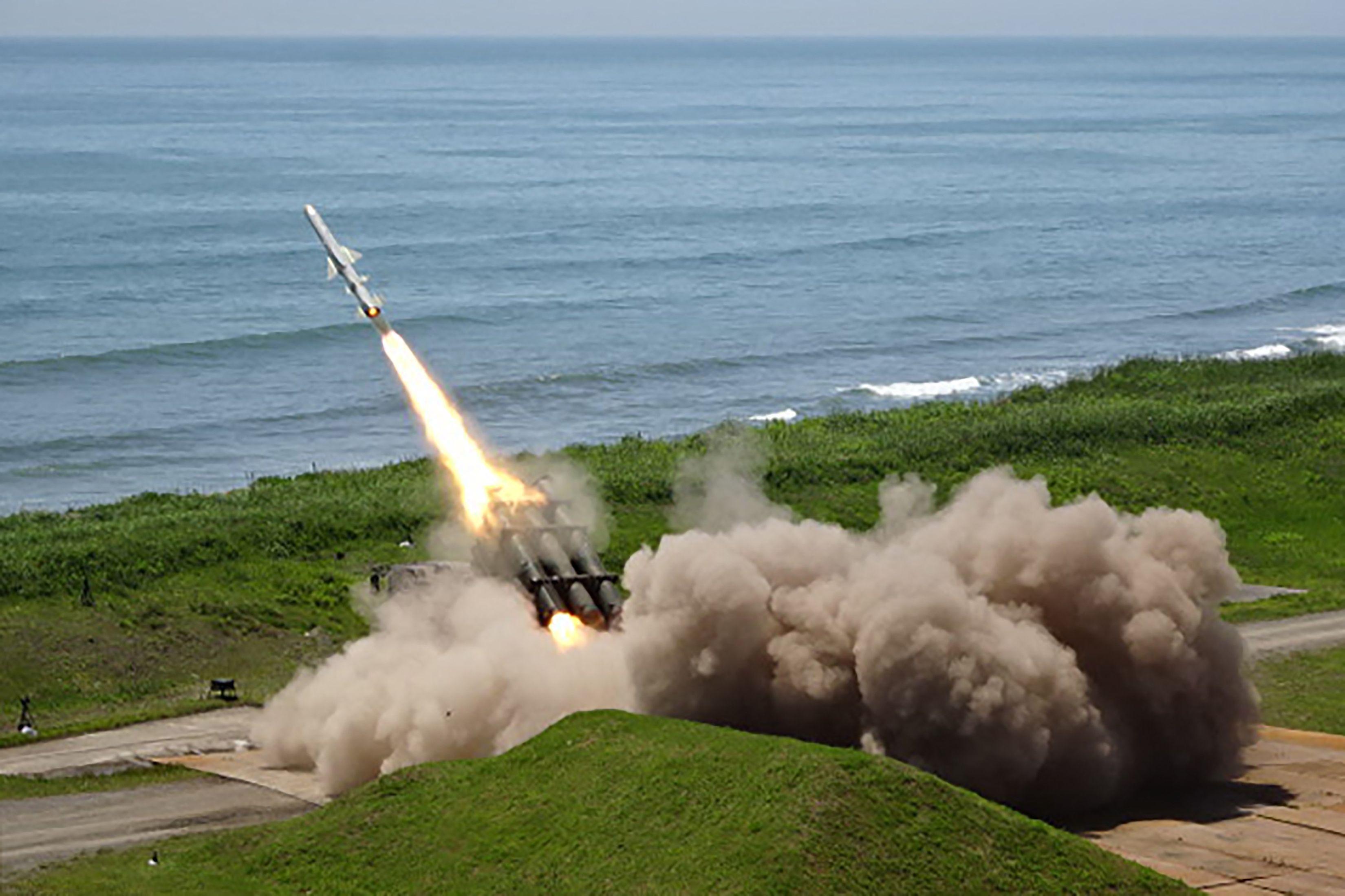
This handout photo taken on June 24, 2025 and received from the Japan Ground Self-Defense Force on June 25, 2025 shows a single "Type-88" missile being tested off the coast at the JGSDF Shizunai Anti-aircraft firing range in Shinhidaka, Hidaka district on the northern island of Hokkaido.


Japan will ease decades-old arms export rules, the government's top spokesman Minoru Kihara said on Tuesday, a policy shift that paves the way for the sale of lethal weapons overseas.


The new rules end Japan's self-imposed curb on sales of lethal arms as Tokyo seeks to enter the international arms market, hoping to bolster national defense as well as boost economic growth.

It comes as anxiety increases over China's escalating military activity in the region, as well as persistent security threats from North Korea and Russia.

"These decisions have been made at a time when changes in the security environment surrounding our country are occurring at an accelerating pace, and they serve to ensure Japan's security while contributing even more to peace and stability in the region and the international community," Kihara told a news conference.

"Today, no nation can safeguard its own peace and security by itself alone."

Exports had previously been limited to equipment classified under five categories: search and rescue, transportation, warning, surveillance and minesweeping.

However, Prime Minister Sanae Takaichi posted on X that "with this amendment, transfers of all defense equipment will in principle become possible".

Proponents of the policy shift argue that the change should further integrate Tokyo in the international defense supply chain, deepening defense, diplomatic and economic ties with partner nations as regional instability grows.

But the decision has caused unease among some members of the Japanese public, with critics accusing Takaichi of eroding the proud history of the nation's staunch pacifism.

The policy change has been approved by the Cabinet and the National Security Council, Kihara said.

The new rules are part of an incremental easing of the blanket export ban on weapons that was first introduced in 1976.

Takaichi said export "recipients will be limited to countries that pledge to use the equipment in a manner consistent with the United Nations Charter".

"There is absolutely no change in our commitment to the path and fundamental principles we have followed for more than 80 years as a pacifist nation since the end of the war," she said, referring to World War II.

However, the Japanese public appears uneasy about the prospect of exporting lethal arms.

A March survey by national broadcaster NHK showed that 53 percent of participants opposed the step, while only 32 percent supported it.

Peace activists have staged rallies across the nation over concerns that Takaichi's hawkish world views and open support for U.S. President Donald Trump could drag Japan into conflicts. Some appeared to be protesting against the easing of arms export rules.

Veteran activist Koji Sugihara warned that the change was "a historic turning point", arguing that Japan's pacifist reputation has historically aided its diplomatic and business relations.

"People do not want Japanese-made products to be used to kill people in foreign countries," Sugihara said.

Japan previously exported bullets and military supplies to boost its economy, particularly during the Korean War in the 1950s, but adopted a conditional weapons export ban in 1967 before a total bar came in a decade later.

Tokyo has made exceptions to the rules in recent decades, especially when joining international weapons development projects, before it opened the door to exports in 2014 in the five non-lethal military product categories.

Five Japanese firms — Mitsubishi Heavy Industries, NEC, Kawasaki Heavy Industries, Mitsubishi Electric and Fujitsu are among the world's top 100 arms companies, according to data from the Stockholm International Peace Research Institute.
 
Last edited:

Saithan

Experienced member
Moderator
Denmark Correspondent
DefenceHub Diplomat
Messages
9,835
Reactions
65 21,970
Nation of residence
Denmark
Nation of origin
Turkey

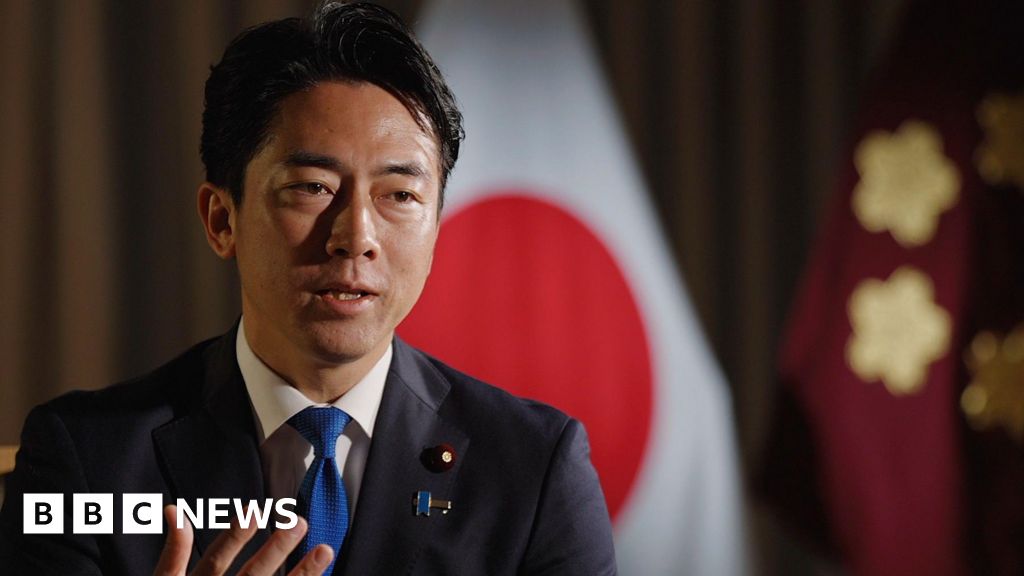
Japan ramping up defence is 'critical' to prevent war, Defence Minister Koizumi tells BBC​


Japan must "strengthen its defence capabilities", Defence Minister Shinjiro Koizumi has told the BBC, emphasising the need to revisit the pacifist posture that has defined the country since World War Two.

He said boosting defence, "reinforcing its alliance with the United States, and expanding collaboration with like-minded countries" was part of "building multi-layered deterrence critical for ensuring that no new war breaks out in this region".

He spoke of the recent changes in Japan's defence policy, such as relaxing decades-old arms export rules.

For the first time in about 50 years, Tokyo can now sell or transfer defence equipment and lethal weapons to the 17 countries with which it has signed formal agreements, including the US and the UK.

"Australia has selected Japanese war ships. Discussions are under way with the Philippines for used destroyers from Japan's Maritime Self-Defence Force. We are in deep talks with Indonesia, and New Zealand has also showed interest in acquiring Japanese destroyers," Koizumi explained in a sit-down interview at his office in Tokyo.

"This vision of trading equipment and assets throughout the Indo-Pacific is something we have never seen before."

Defence is among the top priorities for the current administration, which has committed to historic spending increases and argues these reforms are needed in what is now an increasingly tense region.

China has emerged as a formidable global player, and North Korea's nuclear ambitions, which have seen it test-fire ballistic missiles over Japan, show no signs of slowing down.

Prime Minister Sanae Takaichi, who came to power in October 2025, has also pushed for revising Article 9 of Japan's constitution, which renounces war as a sovereign right of the nation and the threat or use of force as means of settling international disputes. It also states that land, sea, and air forces, as well as other war potential, will never be maintained.

1781782204599.png

PM Takaichi, who has been advocating for stronger defence alliances, on a visit to Australia in May
Koizumi said he supported a revision to Article 9 because of how the region has changed over the past eight decades.

"Speaking not as defence minister but as a member of parliament, Japan has not amended its Constitution even once since World War Two. Given how dramatically the security environment has changed, we need to adapt to those changes if Japan is to remain peaceful," Koizumi said.

Beijing is arguably the biggest challenge, and its claims over self-governed Taiwan are the new flashpoint in an old, fraught relationship.

The southwestern Senkaku islands, which the Chinese call Diaoyu, stretch towards Taiwan and form what's called the First Island Chain. It has been described as a strategic barrier of containment between China's coastal waters and the wider Pacific. But in the past year Chinese aircraft carriers have occasionally operated beyond these islands.

Japan's Defence Ministry identified China's military moves as the "greatest strategic challenge" in its latest white paper report submitted to Cabinet. The ministry is expected to repeat the same in its upcoming annual government report.

Last month, Koizumi rebutted Beijing's claim that his country was engaging in a "new militarism" and argued it was China and its "huge arsenal" of weapons that was of "serious concern" to the international community.

But Japan is keen to keep talking to Beijing, he insisted.

"I met with my China counterpart in November of last year. Because there are areas where our views differ, I conveyed my desire that we continue engaging in dialogue," Koizumi said.

"Unfortunately, there have not been many opportunities for direct communication recently. However, as I stated at the Shangri-La Dialogue, Japan is always open to dialogue. We will continue sending that message and hope that opportunities for dialogue can be created whenever necessary."

1781782218485.png

The uninhabited Senkaku/Diaoyu Islands are the source of a territorial row between Japan and China

Takaichi is not the first Japanese leader to seek these changes. Nobusuke Kishi in the 1950s argued for Japan to have a more normal military posture. Koizumi's father, Junichiro Koizumi, who was PM in the early 2000s, also supported constitutional revision, including reconsidering Article 9.

More recently the late Shinzo Abe, Kishi's grandson, became an advocate of amending the so-called pacifist clause during his time in office.

But the shift has accelerated under Takaichi, prompting some of the country's largest anti-war protests in decades.

Koizumi, 45, also told the BBC that Japan needed to clarify the status of the SDF or Self-Defence Forces. Legally and politically, Japan doesn't call it a military - although operationally it functions as one.


"The SDF should be able to carry out its mission with pride and honour, and Japan must possess defence capabilities that remain steadfast even in today's challenging security environment," he added.

Critics have said that formally recognising or expanding the SDF could threaten the pacifist stance of Article 9. Some even argue it doesn't stand in the way of the government's objectives.

"We don't need to amend Article 9 for defensive operations against China. So it's more a political agenda than something based on military rationality," says Hirohito Ogi, a senior research fellow at the Institute of Geoeconomics, studying military strategy and defence policy.

If, for example, there was a threat to the southern islands that Japan controls but Beijing also claims, Ogi believes the current constitution is sufficient. "The attack on US bases located in Okinawa or Kyushu region should be interpreted as a direct military attack on Japan."

While his Liberal Democratic Party is pushing for it, "ultimately, the decision belongs to the Japanese people", Koizumi said.

"Here, constitutional revision is decided through a national referendum. The timing and circumstances under which the public is asked to make that decision involve major political judgements."

1781782231907.png

Koizumi and US defence secretary Pete Hegseth in Tokyo last year

But any relationship with China is also a balancing act, especially for a staunch US ally like Japan.

Established after WWII, the US-Japan security alliance remains the cornerstone of Japan's defence. Japan hosts the largest overseas deployment of US forces in the world, with 50,000 or so troops based in the country.

But more recently, US leaders, and President Trump in his second term particularly, have emphasised burden-sharing, suggesting that allies should spend more on their own defence.

"The era of the United States subsidising the defence of wealthy nations is over," Defence Secretary Pete Hegseth said last month during his keynote address at the Shangri-La Dialogue.

Takaichi, known for her hawkish national security stance, has raised defence spending to 2% of GDP, which is double the long-standing post-war benchmark.

Japan plans to invest its increased military budget in new surface-to-ship missiles and unmanned drones deployed on land and underwater.

Some analysts say Japanese industry, such as shipbuilding and electronic systems, could become increasingly competitive in the global defence market.

The emergence of true Japanese defence firms, focused at least primarily on the sector, will be critical to success, according to the Center for Strategic and International Studies.

Others say Japan needs more than larger budgets, updated strategy documents or deterrence, especially against China, and point to bolder reforms to make its forces more nimble and adaptable.

In line with the US view, Koizumi believes Japan should play a key role in maintaining security in the region.

"Japan can make contributions to the region that are uniquely Japanese - not solely through our relationship with the US, but also in our own independent role," he said.

"It's our country. We need to protect it."


Saithan

Experienced member
Moderator
Denmark Correspondent
DefenceHub Diplomat
Messages
9,835
Reactions
65 21,970
Nation of residence
Denmark
Nation of origin
Turkey
Quantum-Systems
Logo Naval News
Home
» Why Japan’s Industry is Pulling Back from the U.S. Navy Frigate Plan
Hawnha Ocean

Why Japan’s Industry is Pulling Back from the U.S. Navy Frigate Plan​

  • Published on 10/09/2026
  • By Yoshihiro Inaba
  • In Features
1789278218422.png

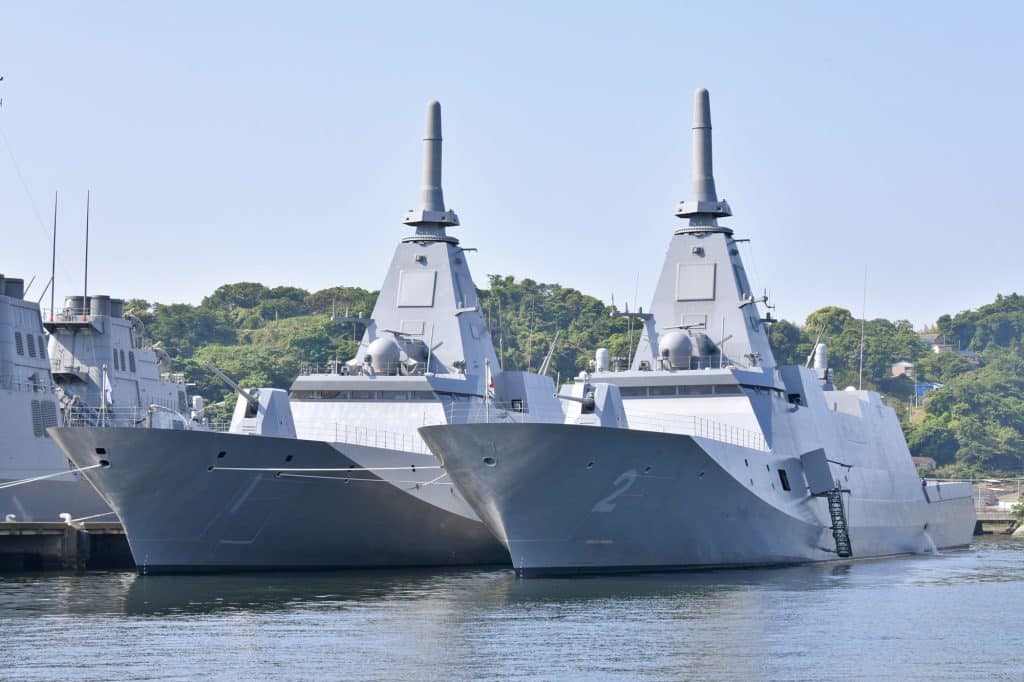
Launch of the 12th Mogami-class frigate 'Yoshii' by MHI. Photo credit: MHI
Share


Japanese defense industry stakeholders are growing hesitant over a potential U.S. Navy frigate deal, weighed down by heavy investment demands and domestic naval commitments.

On September 1, USNI News reported that the U.S. Navy is considering acquiring frigates from Japan, South Korea, and Türkiye. In Japan, however, the prospect has not generated the same level of enthusiasm.
The possibility of acquiring frigates from overseas stems from a White House memorandum issued in August. The memorandum invoked a national-security exemption to circumvent U.S. statutory restrictions that prohibit foreign-built warships from entering U.S. Navy service, thereby opening the door for the Department of Defense to consider foreign ship designs. Crucially, the directive stipulates that foreign construction is generally tied to shipbuilders that invest directly in U.S. facilities or hold a stake in American shipyards, setting the stage for deep industrial entanglements.
According to reports, the candidates under consideration include South Korea’s Chungnam-class guided-missile frigate, Türkiye’s Istanbul-class guided-missile frigate, and the Mogami-class multipurpose frigate (FFM) built by Mitsubishi Heavy Industries (MHI) in Japan.

However, given the relatively limited capabilities of the existing Mogami class, the Japanese design actually being considered is the upgraded FFM—often referred to as the New FFM—which features increased tonnage and more robust combat capabilities better suited for U.S. blue-water operations. This is the same variant already selected by the Royal Australian Navy.
Among these observers, some have expressed hopes that the Japanese FFM could ultimately be selected. The Japan-U.S. alliance is, of course, an important factor. In addition, Australia has already decided to procure the FFM in what represents Japan’s first major international warship export program.
Unlike the existing Mogami class, the upgraded FFM offers improved capabilities for blue-water operations as well as enhanced overall combat capability. There may also be a degree of confidence in the reputation of Japanese industry for adhering to delivery schedules.
In Japan, however, these expectations are accompanied by significant concerns about exporting the frigate to the United States.

The “Finland Model” and the Burden of U.S. Investment​


One major reason is that the U.S. frigate acquisition program is reportedly expected to adopt what has been described as the “Finland model.” Under this approach, the first two hulls would be constructed at a foreign shipyard, after which foreign investment would be directed toward U.S. shipbuilding facilities and infrastructure.
The concept follows the approach adopted for the U.S. Coast Guard’s Arctic Security Cutter program, under which a Finnish shipyard would build the initial hull based on a Canadian design before construction is transferred to a U.S. shipyard.
From the perspective of Japanese industry, this model presents several concerns.
First, only the first two ships—or, at most, a relatively small number of vessels—would actually be constructed in Japan. The direct economic benefits for Japanese shipyards would therefore be limited. There are also concerns about possible changes to the ship’s specifications once construction is transferred to the United States.
Above all, however, the greatest concern is the scale of investment that could be required in U.S. shipyards.
Investment in the United States is an indispensable element for the Trump administration, which has made the revitalization of the U.S. shipbuilding industry a major policy objective. Alongside the need to meet the Navy’s shipbuilding requirements, this is likely one of the principal reasons behind the adoption of the Finland model.

Structural Realities of the U.S. Industrial Base​


The challenges facing the U.S. shipbuilding industry are not simply the result of an insufficient number of shipyards, but stem from the long-term erosion of broader industrial capabilities.
Following the end of the Cold War, declining demand for naval vessels and the contraction of the commercial shipbuilding sector led to the closure and consolidation of numerous shipyards. As a result, the ability to construct major naval vessels is now concentrated in a relatively small number of yards.
This has eliminated much of the industry’s excess production capacity, creating a structural situation in which shipbuilding output cannot be rapidly increased even when the Navy seeks to expand the size of the fleet.
An even more serious issue is the shortage of skilled labor.
The shipbuilding workforce has declined over the long term, while recruiting and retaining new workers has become increasingly difficult because of issues such as wages, housing costs, and working conditions. At the same time, experienced skilled workers are retiring in growing numbers, leaving shipyards with a larger proportion of relatively inexperienced personnel.
Maintaining productivity and quality has therefore become an increasingly significant challenge.
Shipyard infrastructure itself is also aging. Constrained sites and outdated facilities make it more difficult to introduce modern production methods such as modular construction and automation, while unstable and uncertain demand has made companies cautious about committing to large-scale capital investment.
The supply chain is also fragile. Following the Cold War, many component manufacturers withdrew from the naval shipbuilding sector, leaving numerous critical components dependent on single-source suppliers.
This creates problems not only for costs and delivery schedules in peacetime, but also represents a major constraint on the ability to rapidly surge production during wartime.
In addition, while shipbuilding industries in countries such as Japan and South Korea have aggressively adopted digitalization, automation, robotics, and more efficient production-management systems, the introduction of such advanced manufacturing methods has progressed more slowly in U.S. naval shipbuilding.
In other words, the problems confronting the U.S. shipbuilding industry are structural in nature, arising from the combined effects of shipyard consolidation, workforce shortages, aging infrastructure, fragile supply chains, and delays in modernizing production technologies.
This issue was examined in detail in a report published in December 2025 by the Center for Strategic and International Studies (CSIS), a U.S. think tank.
Addressing these challenges will therefore likely require foreign investment in U.S. shipyards, the modernization and expansion of existing facilities, and the introduction of advanced shipbuilding technologies and production methods.

Japan Greenlights Major Defense Supplement to Accelerate Frigate and Submarine Construction
JS Mogami (FFM-1) and JS Kumano (FFM-2) (Credit: JMSDF)

Domestic Pipeline Pressures for Mitsubishi Heavy Industries​

For MHI, however, this presents a major dilemma.

If the company were to win the frigate competition, it would inevitably be required to commit substantial financial investment and human resources to support the revitalization of the U.S. shipbuilding industry. This would represent a significant burden for the company.

A second issue is that MHI is already committed to a sustained pipeline of warship construction for the Japan Maritime Self-Defense Force (JMSDF).

Following the Aegis System Equipped Vessels (ASEVs) now under construction, the company will need to build the upgraded FFM, new replenishment ships, and potentially a new class of Aegis-equipped destroyers.

On top of these domestic requirements, MHI will also have to support the export and construction of the FFM for Australia.

Taken together, these commitments leave the company with very limited spare capacity to provide substantial support to the United States.

As a result of these overlapping factors, there is a notably cautious, if not reluctant, mood among relevant stakeholders in Japan regarding the prospect of participating in the U.S. frigate program.

Although the possibility of a Japanese-built frigate entering U.S. Navy service may appear highly attractive from the perspective of broader Japan-U.S. defense cooperation, the industrial realities are considerably more complicated.

For Japan, the question is not simply whether its frigate design can win a U.S. Navy competition. It is whether Japanese industry can afford to commit the capital, workforce, technology, and management resources required to help rebuild part of the U.S. naval shipbuilding industrial base while simultaneously meeting rapidly growing shipbuilding requirements at home and in Australia.

That calculation may ultimately prove far more important than the technical merits of the FFM itself.

 
Top Bottom