
Latest Thread
- Bangladesh Opinion Bangladesh’s intelligence challenge
- Iran’s Long Game in Türkiye: From Political Islam to the Post-Erdoğan Era
- Open-source AI for exploiting cyber vulnerabilities
- Engineering Atomic Machines: Matter Compiler
- Breaking News Turkish and Greek defence officials meet for "Confidence Building Measures"
You are using an out of date browser. It may not display this or other websites correctly.
You should upgrade or use an alternative browser.
You should upgrade or use an alternative browser.


Even if ships move 200-300 meters after the ballistic missile is first launched, the resulting deflection nullifies the destructive effect of the ballistic missile. Here, the chosen target was a small boat. This means the boat would be much faster than a warship. Therefore, the maneuver performed in response to the updated target will also need to adapt accordingly.
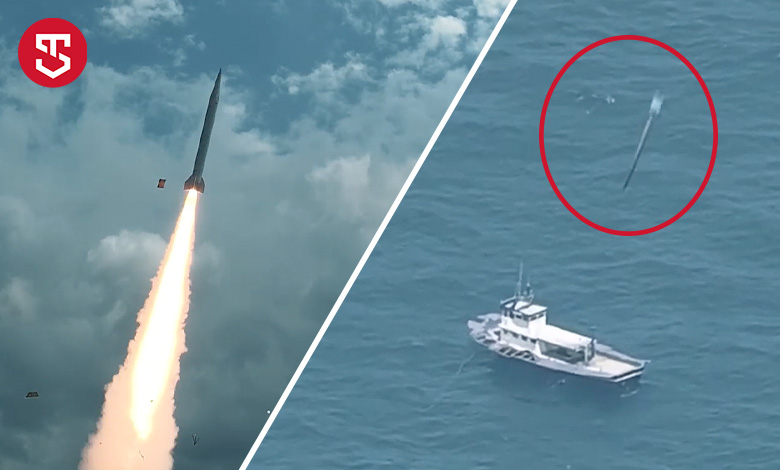
NATO'da Bir İlk: TAYFUN BLOK 3 Gemiyi Vurdu | SavunmaSanayiST
ROKETSAN'ın TAYFUN BLOK-3 Balistik Füzesi, Karadeniz'deki testte seyir halindeki deniz hedefini ilk atışta tam isabetle vurdu.
 www.savunmasanayist.com
The missile, which reached hypersonic speeds during the terminal phase, destroyed a highly maneuverable, small-sized surface target by striking it directly.
This success that TAYFUN BLOK 3 has demonstrated against mobile surface platforms,
This is contradictory to what we are seeing. That boat is not moving. It is definitely stationary. (Come to think about it, have we ever seen Atmaca hitting a ship or similar target moving at any speed?)
If they are distorting or twisting the truth with their moving target impact, I wonder how truthful they are being with the hypersonic speeds at terminal phase. (Mind you, during initial part of the terminal phase, until 15000 m altitude the missile is most likely at hypersonic speeds.)
If they are restarting engine at terminal phase to give them hypersonic impact, even for a few seconds, that is some technical feat of achievement.
Last edited:


In fact, instead of “moving target”, “moved target” is more accurate term.I think the target changed it’s location after the first launch of Tayfun and stayed still during hit.

Pokemonte13
Contributor

lets not get ahead of us this may just be the first test of many.
But overall precision is still good also is it just me or does the missile explode just before it strikes the ship.
But overall precision is still good also is it just me or does the missile explode just before it strikes the ship.
First of all, this cannot be first test, a real explosive warhead was used. Noone throw a missile with such a warhead in the first testlets not get ahead of us this may just be the first test of many.
But overall precision is still good also is it just me or does the missile explode just before it strikes the ship.
- In terms of moving target, I think it does not necessarily mean cruising here. There is no trailing seafoam, however in the middle of the sea, such a boat can float around, albeit very small moving
- It is clearly seen, missile is intact, warhead is not seperated. It may affect the range (there are a lot of factors can effect range btw, not just this one), but fins are there, it means missile can make corrections.
- That is to say, lets say a target traveling at 10 knots moves at approximately 5 meters per second, covering about 100 meters in 20 seconds. A fast warship traveling at 30 knots, moves about 300 meters in 20 seconds. So, with a terminal seeker and sufficient correction, this amount of displacement can be compensated for and 100 metres of a target can be hit, even moving
- Seeker however, is the most mysterious part. How they achieved that, is beyond me
This is a crown achievement of Roketsan. The test marks a very serious deterrence threshold for our country. It represents far more than simply "hitting a target", It demonstrates a land-based anti-access/area-denial (A2/AD) capability against naval forces. That is not something an adversary can afford to ignore, also have the potential of "changing the calculation" of those who have the bad intention towards us.

In today’s test, a small 7-meter boat(probably composite) was deliberately selected as the target. It is very difficult for the seeker head to distinguish this small boat from the sea surface due to sea clutter and a much smaller RCS. The target was moving in a free-drifting manner. Because the target’s radar signature was small, the seeker likely detected it much later than it would have a 100+-meter frigate or a 300-meter aircraft carrier. Despite this, it struck the target with perfect accuracy. I am confident that if the target had been a 100+ meter frigate or an aircraft carrier, it would have been able to hit the target much more easily, even if the target moved at high speed.
Pokemonte13
Contributor
Any idea what kind of seeker they used RF or iir?
These weapons will be a game changer for engaging enemy air defence system. During the iran/US war iranian successfully engaged enemy sam system with their relative poor accuracy. With this pin point accuracy and some maneuvers and high terminal velocity it will be a game changer for sead/dead operations without risking personal or material.
These weapons will be a game changer for engaging enemy air defence system. During the iran/US war iranian successfully engaged enemy sam system with their relative poor accuracy. With this pin point accuracy and some maneuvers and high terminal velocity it will be a game changer for sead/dead operations without risking personal or material.
Pokemonte13
Contributor

TAYFUN Block 3 Shows Anti-Ship Capability on Moving Target | TURDEF
TAYFUN Block 3 fitted with a seeker successfully hit a small-sized moving maritime target, demonstrating its capability as an Anti-Ship Ballistic Missile.
 turdef.com
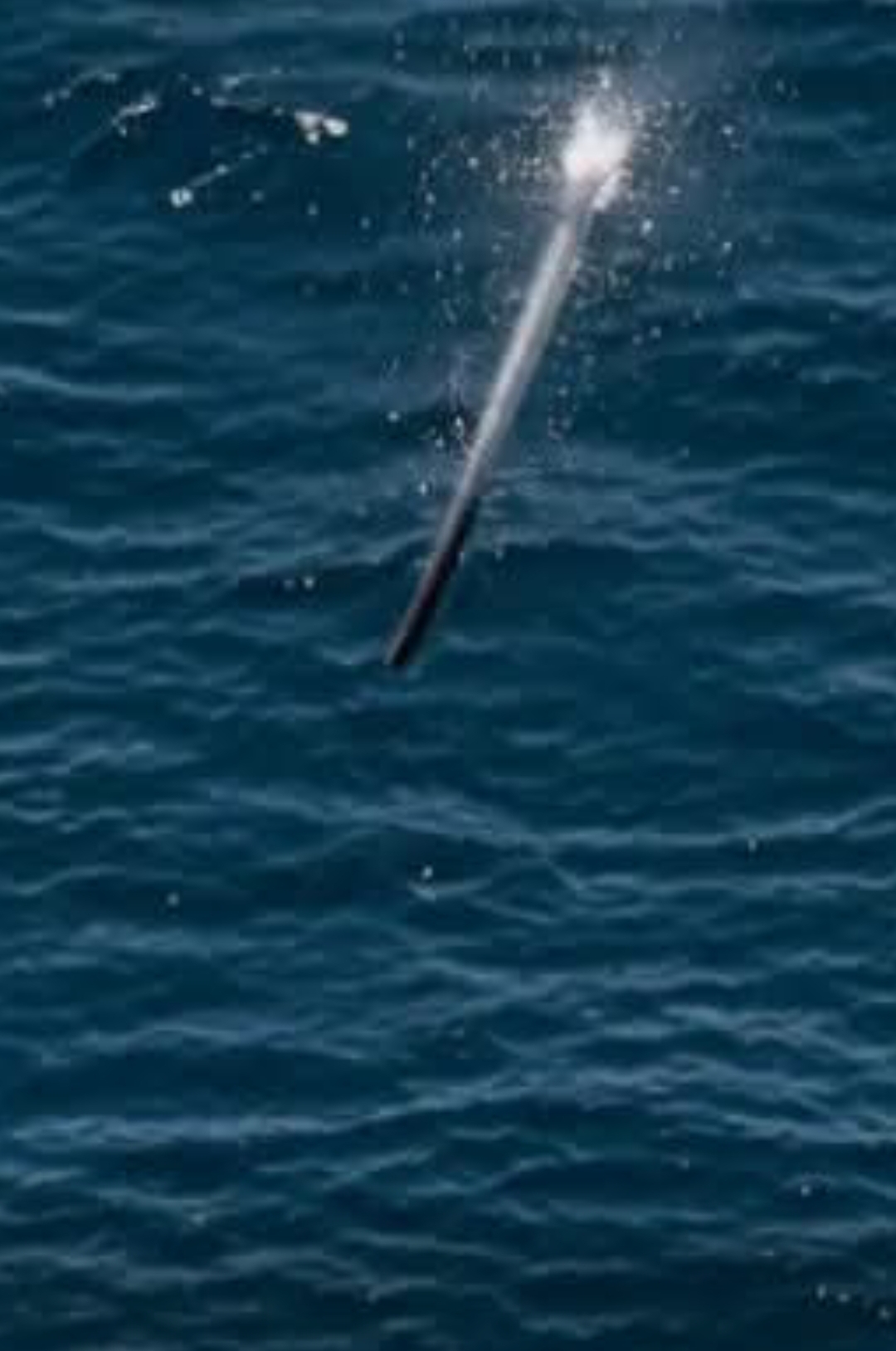
There doesn't appear to be any sensor or similar device on the nose of the missile. How it detects a target at sea is quite a mystery. I wonder if it could receive target coordinate updates from another aircraft, and—since the ionized air layer formed while the missile is traveling at supersonic speed might interfere with communications—perhaps it receives those updates through an antenna located at the rear of the missile.
Just a thought experiment.
I'm not entirely sure, but it seems as though the nose cone isn't visible here. Could it be that, during the terminal phase, the missile slows down somewhat, the heat-resistant nose cone separates, and the sensors behind it become exposed and start operating?
Just a thought.
Just a thought.

There are many lessons to be learned (hey komşu!) for those with discerning eyes!
TAYFUN Block-3 is poised to be one of the main variants within the entire TAYFUN system family that the armed forces will acquire in the highest quantities. The primary reason behind this is that the missile is not merely an independent engagement weapon, but rather fully compatible with the Turkish Armed Forces' network-centric warfare concept, possessing a technically bidirectional data link architecture. This tactical infrastructure, which can be fed by UAVs, aircraft, ships, or early warning radars, makes the missile a joint platform weapon capable of dynamic guidance even at hypersonic speeds, with surgical precision.
The real turning point in the regional equation is the high production/acquisition capacity that domestic production lines will offer. This mass production potential, achieved with full strategic autonomy, means a saturation attack capability that will cripple enemy air and missile defense umbrellas "in real means". When combined with the precision strike (MaRV) architecture, which proved its worth with the latest test, and the deployment flexibility offered by mobile land elements and naval platforms, TAF gains a true Area Access Denial/Area Exclusion (A2/AD) capability on an operational scale (with some other programs like SİPER) in the geopolitics of the region, preventing enemy naval and air elements from approaching a specific area. We are in the process of transforming potential on paper into a real and tangible factor on the ground, and this could truly be the greatest leap in military capacity in the history of the Republic. This will create a significant leverage in terms of regional geopolitics and diplomacy which we haven't had at this scale before.
Türkiye's ballistic missile program is progressing with a multi-system technological roadmap on a scale not yet fully understood by Western defense circles. First, we saw the transition from classic long-range artillery rockets to the tactical ballistic missile discipline. Then, with TAYFUN Block-1, we crossed a strategic threshold by operationally exceeding the 500-kilometer range barrier. In the TAYFUN Block-2 phase, we observed that range was maintained while optimizing the body structure and aerodynamic architecture. In parallel, the ALBM (air-launched ballistic missile) system family began to acquire operational status. In this process, tremendous progress was made not only in terms of propulsion, fuel system, aerodynamic and materials technologies, but also in the guidance accuracy of the sensitive subsystems carried by the missile, the uninterrupted data link connection in the terminal phase, and the semi-ballistic trajectory/flight profiles that shorten the reaction time.
The latest TAYFUN Block-3 test, following this accumulation of knowledge, is definitive proof that Roketsan has now brought its terminal phase guidance and MaRV capabilities closer to operational levels. Being able to hit a small, moving surface target of approximately 7 meters at hypersonic speeds is the most natural result of this step-by-step engineering chain. Roketsan has likely also demonstrated with this test that it has largely solved the problem of damping or overcoming the high-temperature plasma envelope generated at hypersonic speeds in the terminal phase using special antenna algorithms. Indeed, the nature of this ballistic program inevitably involves an evolution from short-range (SRBM) infrastructure to medium-range (MRBM) systems. Looking at this evolutionary trajectory, we can make a clear prediction: another major technological breakthrough in Türkiye's ballistic missile program will likely be the emergence of MIRV (multiple independent warhead) studies within a few years.
Turkiye also demonstrates a highly modern, holistic, and rational defense approach by addressing the need for operational diversity and scalability within the Western military ecosystem through different types of ammunition families that can work together in a shared network structure; in fact, it is one of the first countries to take action on some needs. As a result, this entire process follows a two-way, synergistic path, resulting in a highly successful model, encompassing both the force's doctrine planning and Roketsan's successful system development, as well as work in the civilian space program. We are still at a modest point, but we have built a very important infrastructure. The tangible results of this accumulation over decades will increase exponentially, not linearly, in the coming years.
TAYFUN Block-3 is poised to be one of the main variants within the entire TAYFUN system family that the armed forces will acquire in the highest quantities. The primary reason behind this is that the missile is not merely an independent engagement weapon, but rather fully compatible with the Turkish Armed Forces' network-centric warfare concept, possessing a technically bidirectional data link architecture. This tactical infrastructure, which can be fed by UAVs, aircraft, ships, or early warning radars, makes the missile a joint platform weapon capable of dynamic guidance even at hypersonic speeds, with surgical precision.
The real turning point in the regional equation is the high production/acquisition capacity that domestic production lines will offer. This mass production potential, achieved with full strategic autonomy, means a saturation attack capability that will cripple enemy air and missile defense umbrellas "in real means". When combined with the precision strike (MaRV) architecture, which proved its worth with the latest test, and the deployment flexibility offered by mobile land elements and naval platforms, TAF gains a true Area Access Denial/Area Exclusion (A2/AD) capability on an operational scale (with some other programs like SİPER) in the geopolitics of the region, preventing enemy naval and air elements from approaching a specific area. We are in the process of transforming potential on paper into a real and tangible factor on the ground, and this could truly be the greatest leap in military capacity in the history of the Republic. This will create a significant leverage in terms of regional geopolitics and diplomacy which we haven't had at this scale before.
Türkiye's ballistic missile program is progressing with a multi-system technological roadmap on a scale not yet fully understood by Western defense circles. First, we saw the transition from classic long-range artillery rockets to the tactical ballistic missile discipline. Then, with TAYFUN Block-1, we crossed a strategic threshold by operationally exceeding the 500-kilometer range barrier. In the TAYFUN Block-2 phase, we observed that range was maintained while optimizing the body structure and aerodynamic architecture. In parallel, the ALBM (air-launched ballistic missile) system family began to acquire operational status. In this process, tremendous progress was made not only in terms of propulsion, fuel system, aerodynamic and materials technologies, but also in the guidance accuracy of the sensitive subsystems carried by the missile, the uninterrupted data link connection in the terminal phase, and the semi-ballistic trajectory/flight profiles that shorten the reaction time.
The latest TAYFUN Block-3 test, following this accumulation of knowledge, is definitive proof that Roketsan has now brought its terminal phase guidance and MaRV capabilities closer to operational levels. Being able to hit a small, moving surface target of approximately 7 meters at hypersonic speeds is the most natural result of this step-by-step engineering chain. Roketsan has likely also demonstrated with this test that it has largely solved the problem of damping or overcoming the high-temperature plasma envelope generated at hypersonic speeds in the terminal phase using special antenna algorithms. Indeed, the nature of this ballistic program inevitably involves an evolution from short-range (SRBM) infrastructure to medium-range (MRBM) systems. Looking at this evolutionary trajectory, we can make a clear prediction: another major technological breakthrough in Türkiye's ballistic missile program will likely be the emergence of MIRV (multiple independent warhead) studies within a few years.
Turkiye also demonstrates a highly modern, holistic, and rational defense approach by addressing the need for operational diversity and scalability within the Western military ecosystem through different types of ammunition families that can work together in a shared network structure; in fact, it is one of the first countries to take action on some needs. As a result, this entire process follows a two-way, synergistic path, resulting in a highly successful model, encompassing both the force's doctrine planning and Roketsan's successful system development, as well as work in the civilian space program. We are still at a modest point, but we have built a very important infrastructure. The tangible results of this accumulation over decades will increase exponentially, not linearly, in the coming years.
Last edited:

During the test, a free-floating unmanned surface vessel/ship, identified as an enemy element, was engaged with a missile reaching hypersonic speeds. Using a live warhead, the target was locked onto with the seeker head and successfully destroyed. This test marked the first time a ballistic missile has targeted a free-floating unmanned surface vessel/ship at sea with complete success.
With this launch, a seeker head integration was successfully achieved for a ballistic missile – a feat of which there are only a few in the world – marking a first in Türkiye and a successful hit on a moving surface target. The unmanned surface vessel, approximately 7 meters long and representing a small fishing boat, was struck with surgical precision by the TAYFUN BLOK-3 at very high speed.
The TAYFUN missile, produced by ROKETSAN, a company specializing in rocket, missile, and ammunition technologies, is a highly reliable missile system designed to impact targets at depth.
Thanks to its hypersonic cruising speed, TAYFUN is unaffected by air defense system threats and prevents unwanted damage with its high strike accuracy.
My educated guess is that it has an RF seeker with a heat-resistant radome (Si3N4- Silicon Nitride or BN Boron Nitride ceramic) at the tip of the missile. I will be really surprised if it has an IIR seeker. Not every hypersonic moving object create air plasma that blocks RF signals. It is ok to fly around Mach 5 and what really is important for RF blackout is plasma density and flux there are various methods to control plasma density/flux around the missile. It is possible to keep out ionized air/plasma around the antennas with strong magnetic fields or aerodynamic redirection.
We don't really know if a target designator was used or not but I had suggested one could be used in close loop for moving targets in our previous discussions. It is even better if target is achieved without using a designator at all.

Bro long range hypersonic missile with IIR is almost impossible. Just RF seeker. IIR seeker would burn as hell.Any idea what kind of seeker they used RF or iir?


Bro, if a ship is cruising at 18Knots and a Tayfun is coming from 500km away, it will take Tayfun around 4 minutes to reach the target. During this time the ship will be 2.2 km away from original position. The ship would be moving at 9.2metres every second. At hypersonic speeds manoeuvering would be very difficult. If ship is not moving away from original direction of movement then the missile can calculate where the ship is going to be. But if ship makes random course corrections, then it is a high order to expect a direct hit.Even if ships move 200-300 meters after the ballistic missile is first launched, the resulting deflection nullifies the destructive effect of the ballistic missile. Here, the chosen target was a small boat. This means the boat would be much faster than a warship. Therefore, the maneuver performed in response to the updated target will also need to adapt accordingly.
But what we have seen here tells me, any ship that is stationary or at port within Tayfun’s range has no chance of staying afloat if targeted by it.
Also it is useful to know that it is a common practice to test AShMs while the target ships are stationary. These tests evaluate the missile's warhead, fuse timing, and penetration capabilities under controlled conditions
While tests on stationary targets like decommissioned old warships are cheaper and easier to monitor, it is often also quite frequent to test missiles against evasive, or moving targets as well. The specific methodology depends on what the test aims to achieve. It seems it is the previous method here.
There are two basic targeting systems for AShMs :
GOLIS : Go-Onto-Location-In-Space ; Hits stationary targets
GOT : Go-Onto-Target ; Hits moving targets
Last edited:


