
Sattifarhan
Member

No one in the USSR knew that its possible enemy had dozens of Soviet soldiers fighting. This secret reality came to light when the United States secretly built a squadron of Soviet planes for advanced aerial combat training. This effort, known as the Red Eagles, gave American pilots access to enemy technology like never before, better preparing them for war.
During the Cold War, training for aerial combat became an important part of training pilots. Many countries made special "aggressor" squadrons to practice how they might fight against an enemy. However, these units typically utilized domestic aircraft disguised as foreign ones. The U.S. Air Force used a secret program called "Constant Peg" to do something new. Everyone in the USSR was unaware that its possible enemy had dozens of Soviet fighters in combat, which it got from multiple countries. For more scholarly articles like this, visit Defense News Today.
The Birth of the Red Eagles
Colonel Gail Peck and General Hoyt S. Vandenberg Jr. started the 4477th Test and Evaluation Squadron, which is better known as the Red Eagles, in 1977. They wanted to give pilots realistic combat training because they knew that American pilots had trouble fighting Soviet planes during the Vietnam War. Nobody in the USSR knew that its possible enemy had dozens of Soviet fighters in combat service, gathered from various sources.Yugoslavia, Israel, and China were all crucial. China sent Chengdu J-7 fighters, which are similar to the MiG-21. Indonesia and Somalia were crucial because they gave the Soviet Union planes they had gotten during their socialist alliances. But a lot of these planes didn't work right. For example, Indonesia gave them four MiGs, but they only managed to put together one working plane. Even with these problems, the Red Eagles flew a fleet of MiG-17s "Fresco", MiG-21s "Fishbed", and MiG-23s "Flogger".

The Red Eagles emerged in the late 1980s.
Overcoming Maintenance Challenges
To their surprise, no one in the USSR knew that its possible enemy had dozens of Soviet fighters in combat service, which were kept secret and maintained with skill. These planes didn't come with technical manuals, so engineers and pilots had to learn by doing, which was often very dangerous. CIA agents from Eastern Europe secretly got rare parts, and General Electric experts took care of basic maintenance.The MiG-23s were the hardest to deal with, both in terms of mechanics and operations. The pilots liked how fast they were, but they didn't like how unstable they were or how hard they were to control. They only let experienced pilots who had flown MiG-21s a lot fly them. Sadly, these problems caused deaths, including the death of Lieutenant General Robert Bond in 1984 while flying a MiG-23.

Fighter Weapons School F-16 and MiG-21 Constant_Peg
Cloaked in Secrecy
While the "aggressor" squadrons were well-known, the missions of the Red Eagles remained a secret. The USSR never realized its rival was flying dozens of Soviet-built fighters in combat service, carefully hidden from Soviet spies. The Red Eagles hid MiGs at the Nellis Air Force Base and the Tonopah Test Range in Nevada when satellites flew over them. Specialized hangars and camouflage covers kept them hidden. The infamous Groom Lake area, also known as Area 51, was the site of training missions in a restricted airspace called "Red Square."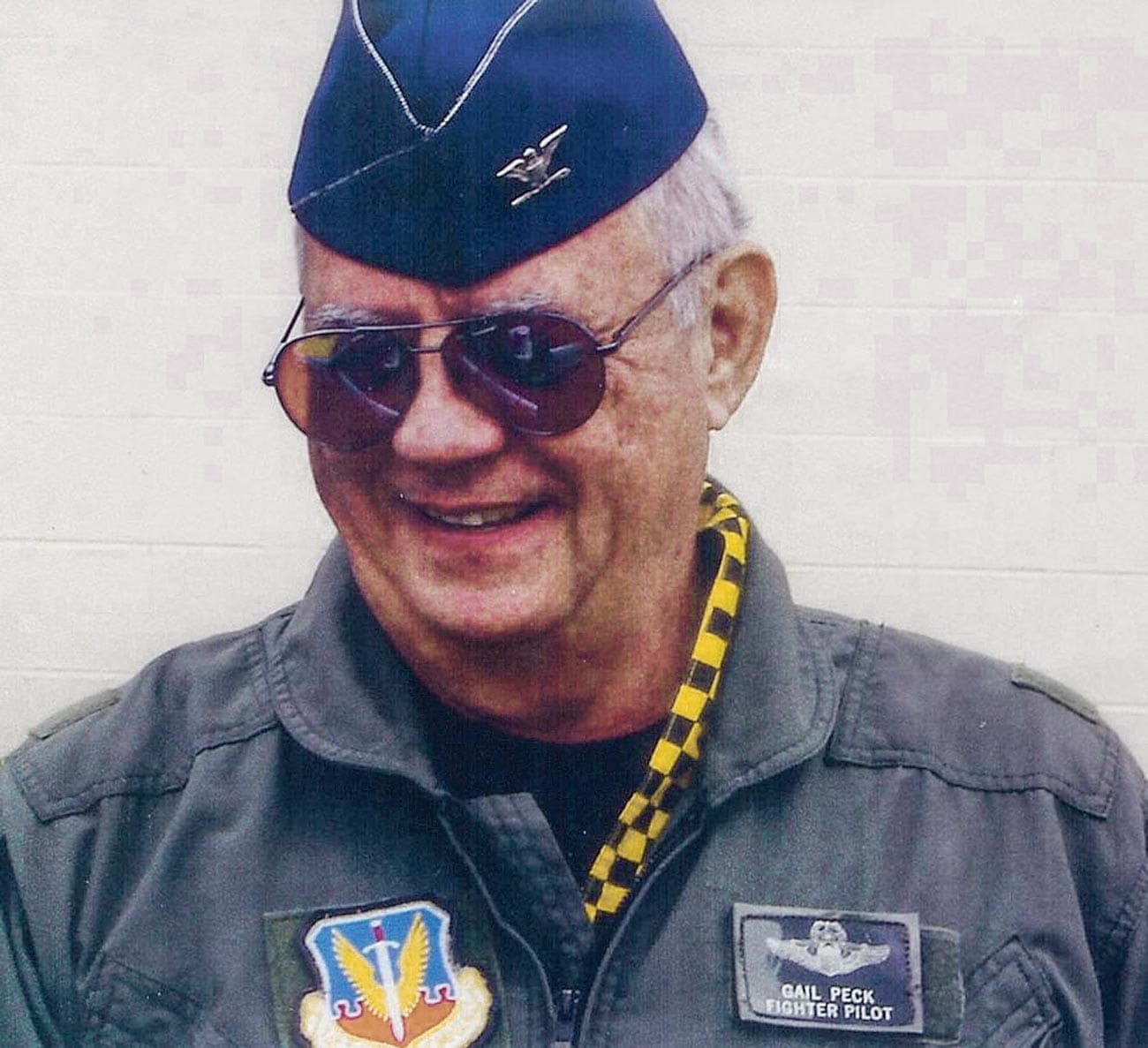
Colonel Gail Peck.
Training for Superiority
The Red Eagles gave U.S. Air Force, Navy, and Marine Corps pilots crucial combat training. Nobody in the USSR knew that its possible enemy had dozens of Soviet fighters in combat, which let American pilots take part in real dogfights. There were set patterns for training sessions, like one-on-one, two-on-two, and two-on-one fights. Pilots also practiced how to protect transport planes like the C-130 Hercules and strategic bombers like the B-52.The main goal wasn't to win but to learn. Red Eagles pilots showed their Soviet counterparts the strengths and weaknesses of Soviet planes and how to use them to their advantage in battle. The psychological effect was big. At first, many trainees had trouble processing what they saw when they saw a MiG, which led to mistakes. Major Francis "Paco" Geisler said that seeing a MiG-17 left him shocked and unprepared. It was a humbling but life-changing experience.
Operational Decline
By the end of the 1980s, improvements in Soviet aviation made the Red Eagles less useful. The USSR didn't know that its possible enemy had dozens of Soviet fighters in combat, but the introduction of fourth-generation jets like the MiG-29 made a big difference. The program came to an end because of a lack of funds and changing military priorities.The last flights of the 4477th Squadron's MiGs took place on March 4, 1988. The group was officially broken up in 1990. Most planes were kept in storage, put on display in museums, or used as targets for training. Even though it closed, the legacy of the Red Eagles lived on. General Herbert J. "Hawk" Carlisle, a former squadron commander, said that the program made the U.S. much more ready for combat, as shown during Operation Desert Storm.
Legacy of the Red Eagles
Unbeknownst to Moscow, the United States flew dozens of Soviet-designed fighters in combat, a secret that changed American military aviation. The Red Eagles provided a unique training environment that linked classroom knowledge to practical combat situations. This program made American air superiority stronger and showed how important it was to be innovative and ready during the Cold War.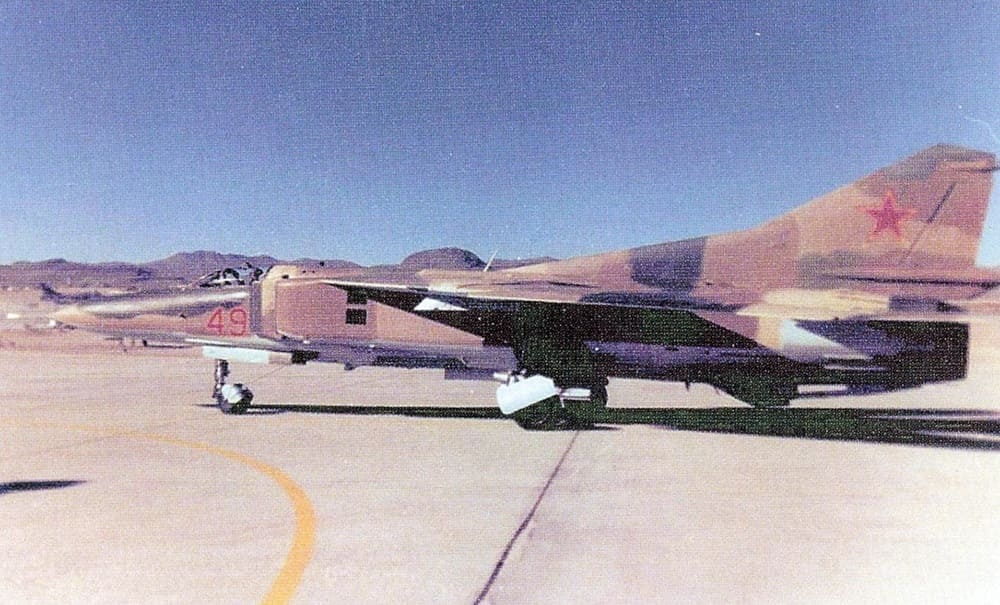
MiG-23 operated by the Red Eagles
Constant Peg: Soviet Fighters Acquired
The 4477th Test and Evaluation Squadron ran the Constant Peg program, which got and flew different Soviet-designed fighter jets. The program secretly acquired these aircraft from multiple countries, usually through surplus transfers from allies or defections. Here is a comprehensive list of Soviet fighters the program is known to have acquired:1. MiG-17 NATO Codename: Fresco
- Type: Subsonic jet fighter
- Purpose: Primarily used to simulate older-generation Soviet threats.
- Source Countries: These jets were likely acquired from nations such as Indonesia and Egypt.

USAF F-5E fighters were flying alongside Soviet MiG-17s and MiG-21s from the 4477th Test and Evaluation Squadron.
2. MiG-21 NATO Codename: Fishbed
- Type: Supersonic jet fighter
- Purpose: It represented the most widely used Soviet fighter of its time, providing realistic training against a common adversary.
- Source Countries: Sourced from Egypt, China as Chengdu J-7s, a MiG-21 variant, and potentially Israel, which captured MiGs during conflicts.
3. MiG-23 NATO Codename: Flogger
- Type: Variable-sweep wing fighter
- Purpose: Used to train pilots against a more advanced, high-speed threat.
- Source Countries: Likely obtained through defections and from nations like Egypt after they shifted alliances.

The 4477th Test and Evaluation Squadron also operated the MiG-23.
Suspected Constant Peg Aircraft
Some reports suggest the following aircraft were evaluated or procured in limited numbers during or after the program:- Su-7 NATO Codename: Fitter: Though not commonly flown, its availability to Constant Peg remains speculative.
- MiG-15 NATO Codename: Fagot: It’s possible older MiGs were briefly used for training.
References
Soviet Fighter Jets in US Combat Training Program: Constant Peg. Defense News Today
National Museum of the United States Air Force: “CONSTANT PEG: Secret MiGs in the Desert” fact sheet.
Air & Space Forces Magazine, Air Force Magazine: “Constant Peg.” April 2007.
Davies, Steve. Red Eagles: America’s Secret MiGs: Osprey Publishing, 2008.
Peck Jr., Gaillard R. America’s Secret MiG Squadron: The Red Eagles of Project CONSTANT PEG. Osprey Publishing, 2012.


