


Block 70 aircraft are the newest F-16 configuration with new avionics, a modernised cockpit, and an improved engine.
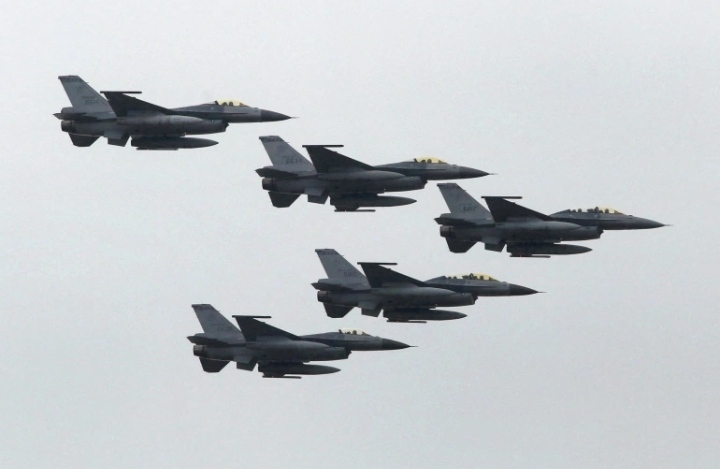
The United States is looking for ways to potentially accelerate delivery of Taiwan’s next generation of new-build F-16 fighter jets, US officials said, bolstering the Taiwanese air force’s ability to respond to what Washington and Taipei see as increasing intimidation by China’s military.
The officials, speaking on condition of anonymity, told the Reuters news agency that they have not yet come up with a solution on how to speed up delivery of Block 70 F-16s, manufactured by Lockheed Martin and equipped with new capabilities. The aircraft are currently slated to be delivered by the end of 2026.
Taiwan’s government has privately expressed its wish for a faster delivery to US President Joe Biden’s administration, a senior Taiwanese official said, as the self-ruled island’s air force scrambles jets to intercept increasingly aggressive Chinese military flights.
More missions mean more wear-and-tear on Taiwan’s aircraft.
“It’s all about risk assessment … and it’s clear where the risks are,” the Taiwanese official said, referring to tensions across the sensitive Taiwan Strait separating the island from mainland China. The F-16 is considered a highly manoeuvrable aircraft proven in air-to-air combat and air-to-surface attack.
Taiwan is on track to field one of the largest F-16 fleets in Asia once it takes delivery of 66 new-build F-16 C/D Block 70 aircraft under an $8bn deal approved in 2019. It would bring the island’s total number of F-16s, including older versions, to more than 200 by 2026.
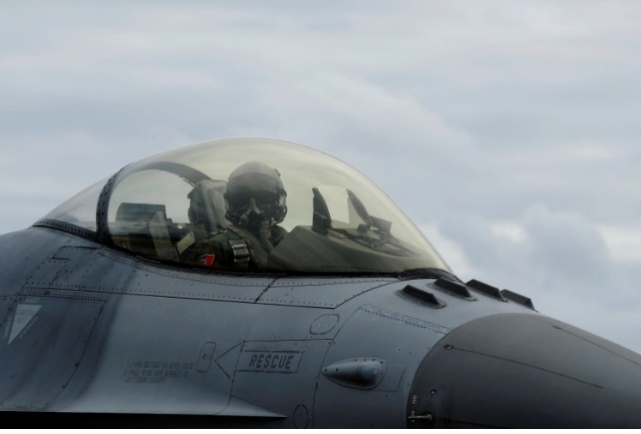
The Block 70 aircraft are the newest F-16 configuration, with new avionics, a modernised cockpit and an improved engine, according to Lockheed Martin.
A move to accelerate the aircraft delivery would be seen in Beijing in part through a political lens, according to Abraham Denmark, a former senior Pentagon official.
“It is yet another clear signal of US determination to support Taiwan’s ability to defend itself,” added Denmark, now an analyst at the Washington-based Wilson Center think-tank.
In the face of Chinese pressure, Taiwan President Tsai Ing-wen has prioritised modernising the armed forces, which are well-armed but dwarfed by China’s military.
Lockheed Martin declined to comment on any potential future requests to change the production schedule, referring queries to the US government and Taiwan’s defence ministry.
The US State Department, which oversees foreign military sales, declined to comment on any internal discussions about potential changes to the delivery timeline.
Taiwan’s Air Force did not respond to questions on potential accelerated deliveries but told Reuters in a statement that the Taiwanese military’s major weapon purchases are “rigorously planned in accordance with actual combat needs and planning schedules”.
The US sale of F-16s to Taiwan was guided by US law and “based on an assessment of Taiwan’s defence needs and the threat posed by (China), as has been the case for more than 40 years”, a Pentagon spokesperson said in a statement.
The missions to intercept Chinese aircraft are putting stress on Taiwan’s air force, which last year had several mishaps, including three fatal crashes. Over time, fuel costs, pilot fatigue and wear and tear on Taiwanese aircraft will threaten the readiness of the island’s air force if this pressure continues, Taiwanese and US military analysts said.
Last March, a senior Taiwanese official said Taiwan’s military had stopped intercepting every Chinese aircraft.
Taiwan’s air force last week suspended combat training for its entire F-16 fleet after a recently upgraded model of the fighter jet crashed into the sea in the latest of a series of accidents.
“They (the Chinese) are wearing out their opponent without firing a shot,” said Derek Grossman, a senior defence analyst at the RAND Corporation.
In 2020, Taiwan’s air force scrambled jets at least 2,972 times against Chinese aircraft at a cost equivalent to US$905m.
 www.aljazeera.com
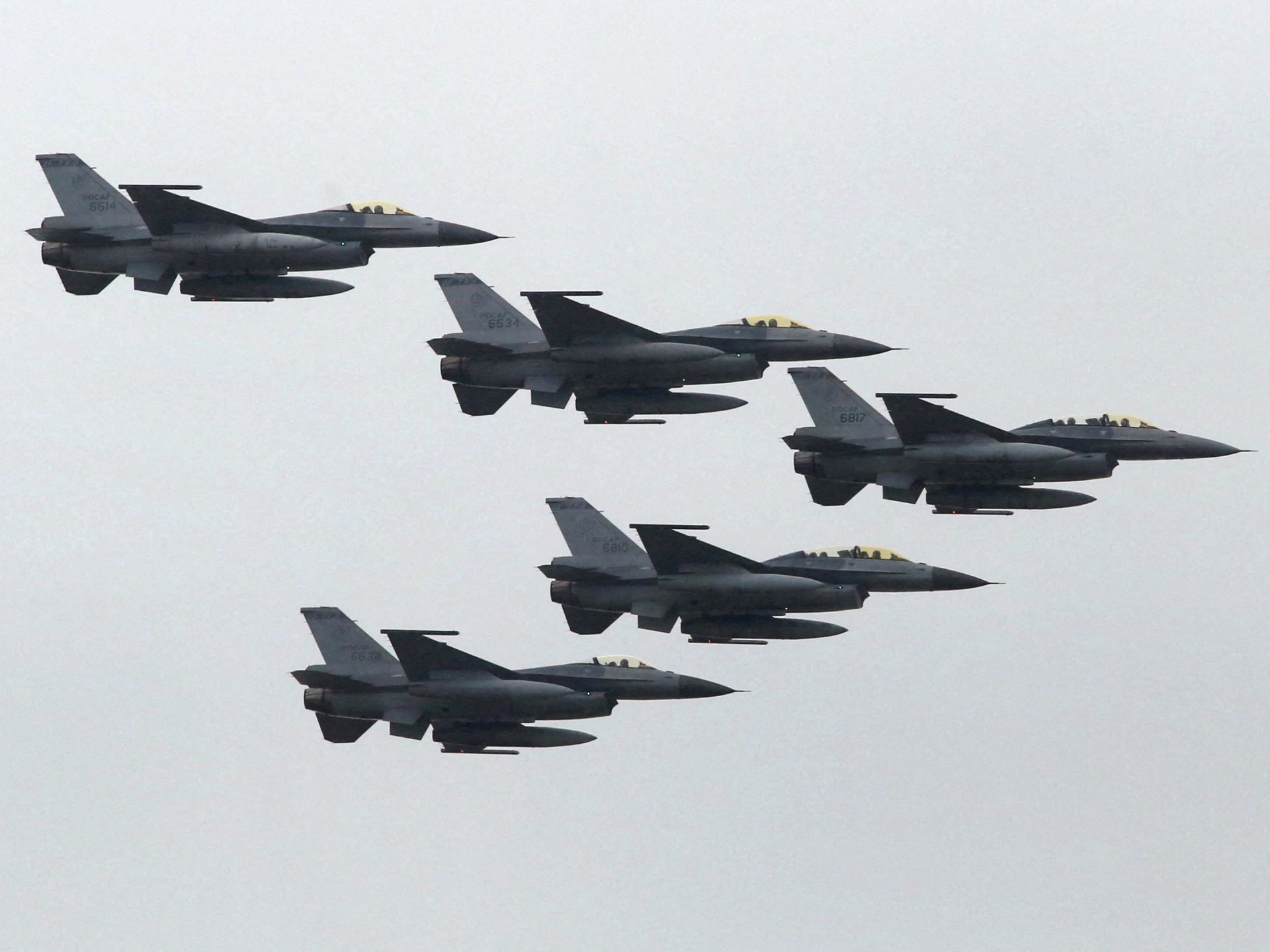
The United States is looking for ways to potentially accelerate delivery of Taiwan’s next generation of new-build F-16 fighter jets, US officials said, bolstering the Taiwanese air force’s ability to respond to what Washington and Taipei see as increasing intimidation by China’s military.
The officials, speaking on condition of anonymity, told the Reuters news agency that they have not yet come up with a solution on how to speed up delivery of Block 70 F-16s, manufactured by Lockheed Martin and equipped with new capabilities. The aircraft are currently slated to be delivered by the end of 2026.
Taiwan’s government has privately expressed its wish for a faster delivery to US President Joe Biden’s administration, a senior Taiwanese official said, as the self-ruled island’s air force scrambles jets to intercept increasingly aggressive Chinese military flights.
More missions mean more wear-and-tear on Taiwan’s aircraft.
“It’s all about risk assessment … and it’s clear where the risks are,” the Taiwanese official said, referring to tensions across the sensitive Taiwan Strait separating the island from mainland China. The F-16 is considered a highly manoeuvrable aircraft proven in air-to-air combat and air-to-surface attack.
Taiwan is on track to field one of the largest F-16 fleets in Asia once it takes delivery of 66 new-build F-16 C/D Block 70 aircraft under an $8bn deal approved in 2019. It would bring the island’s total number of F-16s, including older versions, to more than 200 by 2026.
The Block 70 aircraft are the newest F-16 configuration, with new avionics, a modernised cockpit and an improved engine, according to Lockheed Martin.
A move to accelerate the aircraft delivery would be seen in Beijing in part through a political lens, according to Abraham Denmark, a former senior Pentagon official.
“It is yet another clear signal of US determination to support Taiwan’s ability to defend itself,” added Denmark, now an analyst at the Washington-based Wilson Center think-tank.
Dwarfed by China
Despite lacking formal diplomatic ties with Taiwan, the US is the island’s main international backer and arms supplier. That defence relationship angers China, which has ramped up military and diplomatic pressure against the island that it claims as “sacred” Chinese territory.In the face of Chinese pressure, Taiwan President Tsai Ing-wen has prioritised modernising the armed forces, which are well-armed but dwarfed by China’s military.
Lockheed Martin declined to comment on any potential future requests to change the production schedule, referring queries to the US government and Taiwan’s defence ministry.
The US State Department, which oversees foreign military sales, declined to comment on any internal discussions about potential changes to the delivery timeline.
Taiwan’s Air Force did not respond to questions on potential accelerated deliveries but told Reuters in a statement that the Taiwanese military’s major weapon purchases are “rigorously planned in accordance with actual combat needs and planning schedules”.
The US sale of F-16s to Taiwan was guided by US law and “based on an assessment of Taiwan’s defence needs and the threat posed by (China), as has been the case for more than 40 years”, a Pentagon spokesperson said in a statement.
The missions to intercept Chinese aircraft are putting stress on Taiwan’s air force, which last year had several mishaps, including three fatal crashes. Over time, fuel costs, pilot fatigue and wear and tear on Taiwanese aircraft will threaten the readiness of the island’s air force if this pressure continues, Taiwanese and US military analysts said.
Last March, a senior Taiwanese official said Taiwan’s military had stopped intercepting every Chinese aircraft.
Taiwan’s air force last week suspended combat training for its entire F-16 fleet after a recently upgraded model of the fighter jet crashed into the sea in the latest of a series of accidents.
“They (the Chinese) are wearing out their opponent without firing a shot,” said Derek Grossman, a senior defence analyst at the RAND Corporation.
In 2020, Taiwan’s air force scrambled jets at least 2,972 times against Chinese aircraft at a cost equivalent to US$905m.
US seeks to speed up delivery of new F-16 fighter jets to Taiwan
Block 70 aircraft are the newest F-16 configuration with new avionics, a modernised cockpit, and an improved engine.


![RoCAF F-16C block 70 #6727 is buzzing into the sky at Greenville IAP on April 22nd, 2026. [Photo by Roger Metz]](/proxy.php?image=https%3A%2F%2Fwww.f-16.net%2Fg3%2Fvar%2Fresizes%2Ff-16-photos%2Falbum39%2Falbum32%2F6727.jpg%3Fm%3D1787567871&hash=255891ee73de452675ad2296fd9bb9b8 "RoCAF F-16C block 70 #6727 is buzzing into the sky at Greenville IAP on April 22nd, 2026. [Photo by Roger Metz]")


