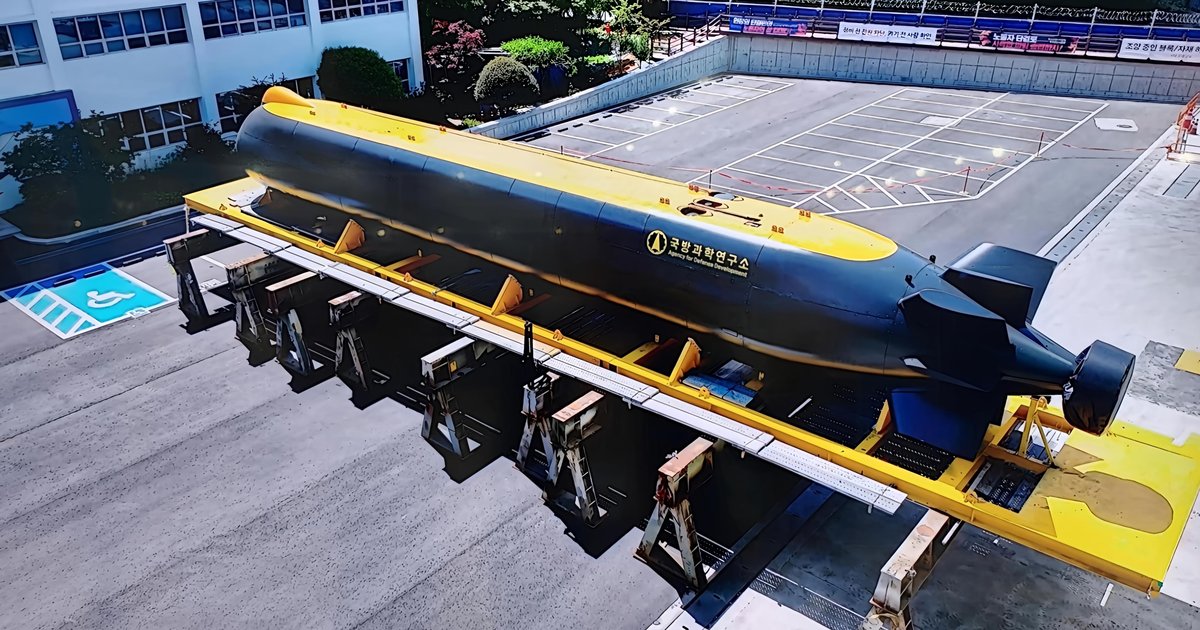
국방과학연구소(ADD)가 공개한 초대형 무인잠수정 ‘MR-X’는 길이 20m, 50톤급 규모로 적 잠수함 추적과 기뢰 부설이 가능한 미래 해상전의 게임 체인저입니다. 45일간 연속 작전이 가능한 MR-X의 핵심 기술과 개발 현황을 상세히 확인하세요.

bizhankook.com
Agency for Defense Development Unveils UUV ‘MR-X’
View attachment 81780
MR-X is a technology demonstrator model for an uncrewed underwater vehicle (UUV) that was originally referred to as the Mission-Reconfigurable Extra-Large Uncrewed Underwater Vehicle (MRXUUV), with development beginning in October 2022. Led by the Agency for Defense Development (ADD), Hanwha Ocean, Hanwha Systems, and LIG D&A participated in its production. It serves as a follow-on project to the Anti-Submarine Warfare Uncrewed Underwater Vehicle (ASWUUV), which successfully achieved its first autonomous navigation in 2022.
The defining characteristic of the MR-X lies in its size. It features a hull significantly larger than the torpedo-sized small UUVs previously produced by research institutes and corporations. Measuring approximately 20 meters in length, 3 meters in diameter, and displacing around 50 tons, it is comparable to the United States' Orca Extra-Large Uncrewed Underwater Vehicle (Orca XLUUV), which reaches a maximum length of 26 meters. Leveraging this large hull, the MR-X offers greatly enhanced capabilities and mission scalability compared to conventional UUVs—which are smaller than manned submarines and limited to specialized tasks such as mine countermeasure operations.
The core capability of the MR-X is reconnaissance. First, it is equipped with a compact long-range detection periscope capable of day and night surveillance. This allows it to infiltrate enemy territory and detect adversary vessels. Thanks to AI-based intelligence, surveillance, and reconnaissance (ISR) capabilities, it can automatically recognize targets and scan its entire surroundings very rapidly, thereby reducing the exposure time of the periscope.
Another key feature of the MR-X is its underwater reconnaissance capability using a large sonar system. The vehicle features an active sonar on its bow and passive sonars on both flanks. Using these systems, the MR-X can infiltrate high-risk enemy waters to autonomously detect high-value underwater targets, such as North Korean nuclear-powered ballistic missile submarines (SSBNs). Upon detecting an enemy submarine, the MR-X surfaces to transmit the location data to intelligence ships or ground headquarters via satellite communication, UHF radio, or LTE. By penetrating territorial waters that the adversary considers secure, it makes hiding much more difficult for enemy submarines.
The most critical function of the MR-X is its ability to equip armaments within its multi-purpose module. The forward section of the hull can accommodate additional batteries or mission equipment depending on the scenario; by loading naval mines here, it can covertly infiltrate enemy harbors, lay mines, and escape. During the recent conflict in Iran, the Iranian Navy deployed manned boats and submarines under the threat of U.S. airstrikes to lay mines. The MR-X, by contrast, enables naval blockade operations without risking human lives, offering a significant tactical advantage to the Republic of Korea Navy.
To execute these missions, the MR-X employs a multi-component propulsion system. Auxiliary thrusters allow ultra-precise low-speed maneuvering to deploy mines at exact coordinates. Power for the five-bladed propulsion propeller is supplied by hydrogen fuel cells and lithium-ion batteries—the same technology applied to the KSS-III (Dosan Ahn Changho-class) submarines. Operating on this power system, the MR-X can conduct continuous operations for approximately 45 days, enabling extended covert missions. Research and development for the MR-X is scheduled to continue through September 2027, and ADD has publicly showcased video footage of the vehicle navigating underwater at the Defense Science and Technology Fair.
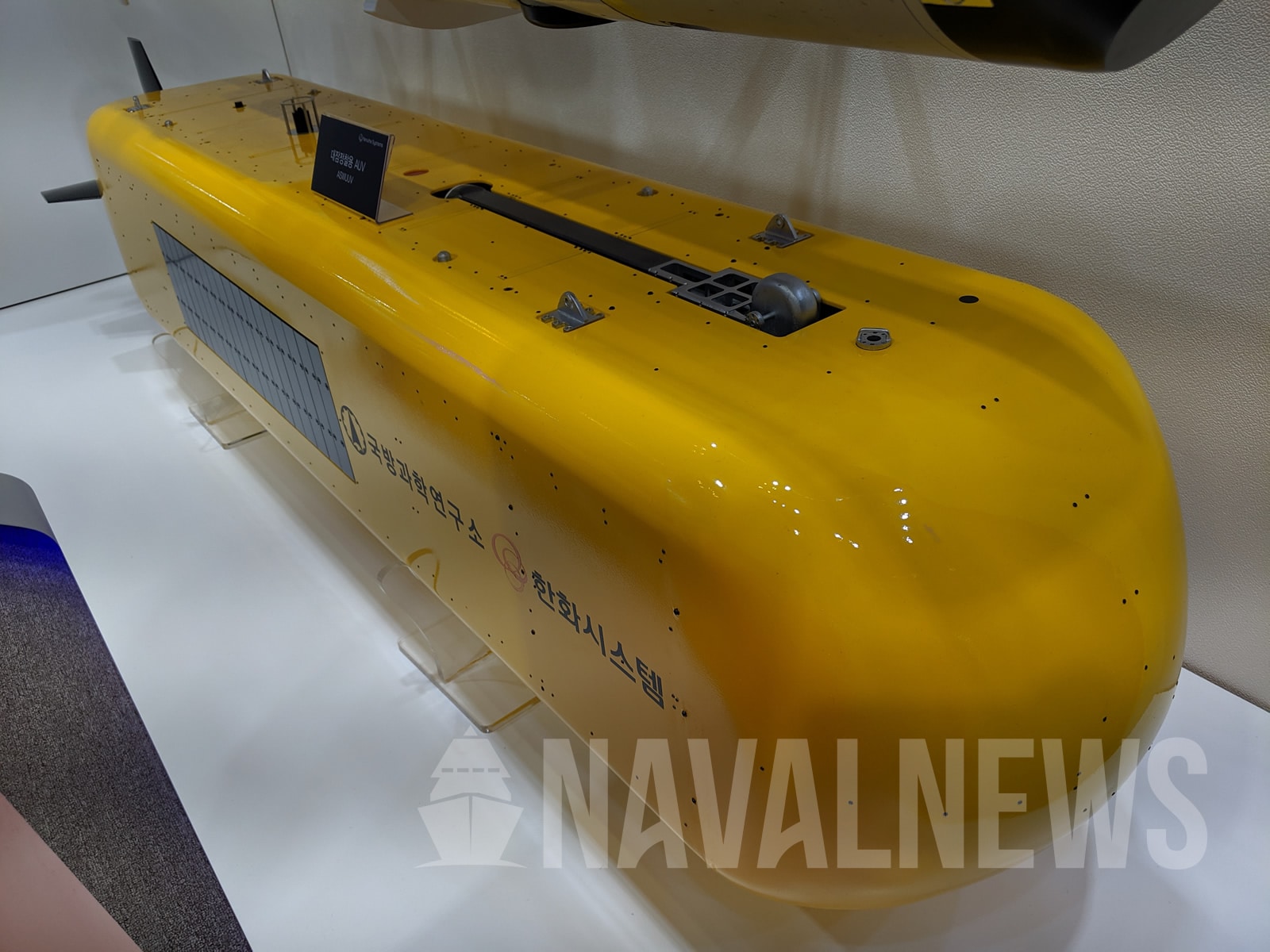
View attachment 81782
The model formerly known as MRXUUV.
South Korea’s Agency for Defense Development (ADD) announced on June 30th that it successfully conducted an “operational demonstration” of the anti-submarine warfare unmanned underwater vehicle (ASWUUV) off the coast of Tongyeong, South Korea.

www.navalnews.com
Prior to that, there was a model called ASWUUV that had been under development since 2017, but it appears to have only reconnaissance and tracking capabilities.



 www.janes.com