


Why the PAF May Not Get the J-16 — Despite Its Impressive Exercise Record.
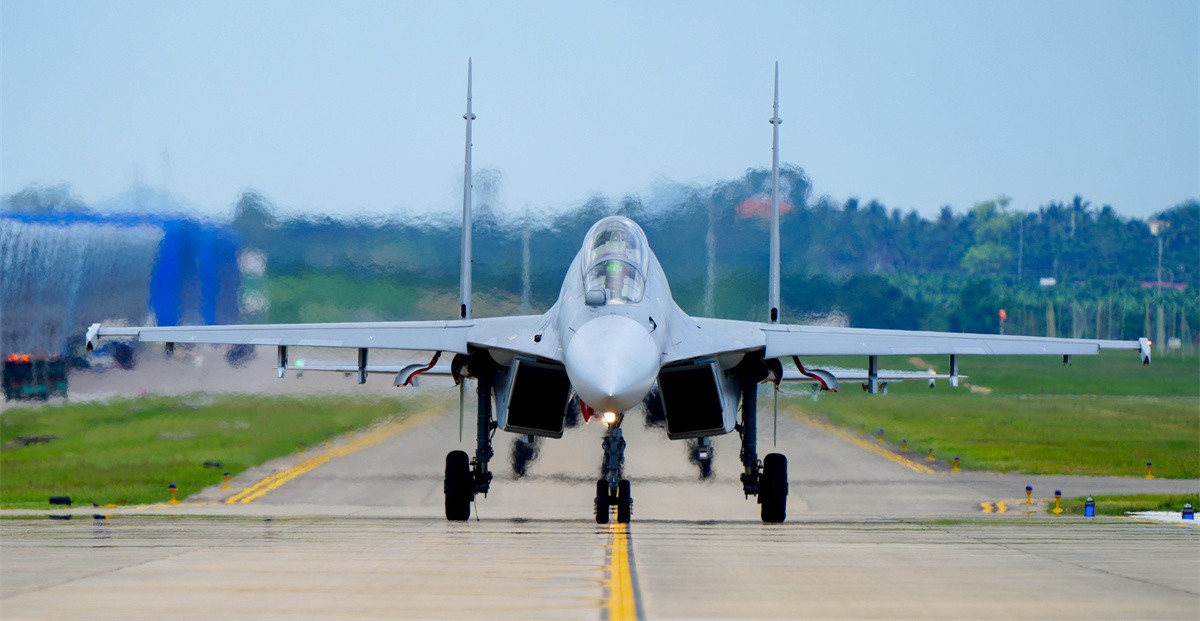
The J-16 is one of China’s most capable non-stealth combat aircraft, combining a large AESA radar, long range air to air missiles, heavy weapons carriage, electronic warfare capabilities & the range and endurance of a twin-engine heavy fighter. On paper, it looks like a natural candidate for the Pakistan Air Force. However, several technical, strategic and export-related factors could make a J-16 acquisition by Pakistan less likely.
Interestingly, the J-16 has already demonstrated why it would be such a formidable platform for the PAF. Reports surrounding the Shaheen VIII exercise in 2019 claimed that five Chinese J-16s generated 51 simulated kills during 70 sorties, with the reported targets including Pakistani JF-17s, F-7PGs and Mirage Vs, as well as Chinese J-10Cs and other aircraft. These figures have circulated widely in military aviation reporting, but the detailed exercise parameters and official kill-ratio data have not been publicly released, so they should be treated as reported exercise results rather than independently verified combat statistics.
That reported performance is particularly interesting because it suggests that the J-16's combination of long-range sensors, electronic warfare, missile capacity, endurance and networking can give it significant advantages in complex beyond-visual-range engagements. The aircraft is not simply a larger J-11; it represents a much more advanced generation of China's Flanker-derived combat aircraft.
So, if the J-16 is so capable, why wouldn't the PAF simply acquire it?
01. The Russian connection.
The J-16 belongs to China's Flanker family, whose origins can ultimately be traced back to the Russian Su-27. In the 1990s, Russia agreed to allow China to license-produce the Su-27, leading to the J-11 program. However, the original agreement reportedly allowed production of up to 200 aircraft without the right to re-export them to third countries.
China subsequently developed increasingly indigenous Flanker derivatives, including the J-11B and later the J-16. The J-16 is therefore a Chinese-designed and manufactured aircraft, but its historical lineage involves Russian-origin technology and an earlier licensing arrangement that contained third-country export restrictions.
This does not mean that Russia has publicly vetoed a potential J-16 sale to Pakistan. There is currently no solid public evidence of such a Russian prohibition specifically targeting the J-16. However, the history of Russian licensing restrictions remains relevant when discussing the export of Chinese Flanker-derived aircraft.
02. PAF already has a different force-structure philosophy.
Pakistan has invested heavily in the JF-17 program and has introduced the J-10CE as its more capable medium-weight fighter. The JF-17 Block III, J-10CE, modern BVR missiles, AEW&C aircraft, electronic warfare assets and network-centric operations provide the PAF with a force structure that does not necessarily require a large heavy fighter fleet.
Introducing the J-16 would also mean establishing another major aircraft ecosystem, with additional requirements for training, maintenance, infrastructure, logistics, spare parts and weapons integration.
The J-16's higher payload and range are major advantages, but they also come with the disadvantages normally associated with heavy twin-engine fighters: greater acquisition and operating costs and a larger logistical footprint.
03. PAF can already study the J-16 without operating it.
Pakistan's long-running Shaheen series provides an important advantage. Chinese fighters have repeatedly trained with the PAF, allowing Pakistani pilots to encounter Chinese tactics, doctrine and aircraft capabilities.
The Shaheen exercises have included platforms such as the J-10C and J-11B operating against PAF JF-17s and older fighters. During Shaheen-X, for example, Chinese J-10C and J-11B fighters participated alongside Pakistani J10Cs & JF-17s alongwith other aircraft.
This means the PAF can gain valuable operational experience against Chinese heavy-fighter tactics without necessarily having to introduce the J-16 into its own inventory.
04. But should the PAF still consider a heavy fighter?
This is where the debate becomes more interesting.
If the reported J-16 exercise performance is accurate, Pakistan should certainly continue evaluating what a heavy fighter could contribute to its future airpower architecture.
A heavy fighter could provide greater weapons carriage, longer endurance, larger radar aperture, more electrical power for advanced sensors and electronic warfare systems, and the ability to carry a larger number of long-range air-to-air missiles.
The J-16's ability to carry a substantial missile and weapons load is particularly relevant in a future environment where BVR combat, electronic warfare, sensor networking and long-range weapons are becoming increasingly important.
However, that does not automatically mean the PAF should buy the J-16.
Pakistan could instead pursue a network-centric force multiplier approach: expand the J-10CE fleet, continue upgrading the JF-17 Block III, acquire larger numbers of modern BVR missiles, strengthen AEW&C and electronic warfare capabilities, expand unmanned systems and ultimately introduce a fifth-generation fighter.
In other words, the PAF may be able to achieve many of the J-16's operational effects through a network of different platforms rather than relying on one heavy fighter.
There is also the future fifth-generation question.
If Pakistan eventually acquires a fifth-generation Chinese fighter, spending a significant portion of its limited fighter budget on a new heavy fourth-generation-plus platform could become less attractive.
The J-16 would undoubtedly provide a major capability increase, but the PAF must consider whether that investment would remain optimal over a 20-to-30-year period.
A possible alternative would be to invest the same resources into more J-10CEs and JF-17 Block IIIs, longer-range missiles, AEW&C, electronic warfare, unmanned combat aircraft and future stealth fighters.
That would create a more distributed and survivable air-combat network.
www.x.com
@Defence _IDA
The J-16 is one of China’s most capable non-stealth combat aircraft, combining a large AESA radar, long range air to air missiles, heavy weapons carriage, electronic warfare capabilities & the range and endurance of a twin-engine heavy fighter. On paper, it looks like a natural candidate for the Pakistan Air Force. However, several technical, strategic and export-related factors could make a J-16 acquisition by Pakistan less likely.
Interestingly, the J-16 has already demonstrated why it would be such a formidable platform for the PAF. Reports surrounding the Shaheen VIII exercise in 2019 claimed that five Chinese J-16s generated 51 simulated kills during 70 sorties, with the reported targets including Pakistani JF-17s, F-7PGs and Mirage Vs, as well as Chinese J-10Cs and other aircraft. These figures have circulated widely in military aviation reporting, but the detailed exercise parameters and official kill-ratio data have not been publicly released, so they should be treated as reported exercise results rather than independently verified combat statistics.
That reported performance is particularly interesting because it suggests that the J-16's combination of long-range sensors, electronic warfare, missile capacity, endurance and networking can give it significant advantages in complex beyond-visual-range engagements. The aircraft is not simply a larger J-11; it represents a much more advanced generation of China's Flanker-derived combat aircraft.
So, if the J-16 is so capable, why wouldn't the PAF simply acquire it?
01. The Russian connection.
The J-16 belongs to China's Flanker family, whose origins can ultimately be traced back to the Russian Su-27. In the 1990s, Russia agreed to allow China to license-produce the Su-27, leading to the J-11 program. However, the original agreement reportedly allowed production of up to 200 aircraft without the right to re-export them to third countries.
China subsequently developed increasingly indigenous Flanker derivatives, including the J-11B and later the J-16. The J-16 is therefore a Chinese-designed and manufactured aircraft, but its historical lineage involves Russian-origin technology and an earlier licensing arrangement that contained third-country export restrictions.
This does not mean that Russia has publicly vetoed a potential J-16 sale to Pakistan. There is currently no solid public evidence of such a Russian prohibition specifically targeting the J-16. However, the history of Russian licensing restrictions remains relevant when discussing the export of Chinese Flanker-derived aircraft.
02. PAF already has a different force-structure philosophy.
Pakistan has invested heavily in the JF-17 program and has introduced the J-10CE as its more capable medium-weight fighter. The JF-17 Block III, J-10CE, modern BVR missiles, AEW&C aircraft, electronic warfare assets and network-centric operations provide the PAF with a force structure that does not necessarily require a large heavy fighter fleet.
Introducing the J-16 would also mean establishing another major aircraft ecosystem, with additional requirements for training, maintenance, infrastructure, logistics, spare parts and weapons integration.
The J-16's higher payload and range are major advantages, but they also come with the disadvantages normally associated with heavy twin-engine fighters: greater acquisition and operating costs and a larger logistical footprint.
03. PAF can already study the J-16 without operating it.
Pakistan's long-running Shaheen series provides an important advantage. Chinese fighters have repeatedly trained with the PAF, allowing Pakistani pilots to encounter Chinese tactics, doctrine and aircraft capabilities.
The Shaheen exercises have included platforms such as the J-10C and J-11B operating against PAF JF-17s and older fighters. During Shaheen-X, for example, Chinese J-10C and J-11B fighters participated alongside Pakistani J10Cs & JF-17s alongwith other aircraft.
This means the PAF can gain valuable operational experience against Chinese heavy-fighter tactics without necessarily having to introduce the J-16 into its own inventory.
04. But should the PAF still consider a heavy fighter?
This is where the debate becomes more interesting.
If the reported J-16 exercise performance is accurate, Pakistan should certainly continue evaluating what a heavy fighter could contribute to its future airpower architecture.
A heavy fighter could provide greater weapons carriage, longer endurance, larger radar aperture, more electrical power for advanced sensors and electronic warfare systems, and the ability to carry a larger number of long-range air-to-air missiles.
The J-16's ability to carry a substantial missile and weapons load is particularly relevant in a future environment where BVR combat, electronic warfare, sensor networking and long-range weapons are becoming increasingly important.
However, that does not automatically mean the PAF should buy the J-16.
Pakistan could instead pursue a network-centric force multiplier approach: expand the J-10CE fleet, continue upgrading the JF-17 Block III, acquire larger numbers of modern BVR missiles, strengthen AEW&C and electronic warfare capabilities, expand unmanned systems and ultimately introduce a fifth-generation fighter.
In other words, the PAF may be able to achieve many of the J-16's operational effects through a network of different platforms rather than relying on one heavy fighter.
There is also the future fifth-generation question.
If Pakistan eventually acquires a fifth-generation Chinese fighter, spending a significant portion of its limited fighter budget on a new heavy fourth-generation-plus platform could become less attractive.
The J-16 would undoubtedly provide a major capability increase, but the PAF must consider whether that investment would remain optimal over a 20-to-30-year period.
A possible alternative would be to invest the same resources into more J-10CEs and JF-17 Block IIIs, longer-range missiles, AEW&C, electronic warfare, unmanned combat aircraft and future stealth fighters.
That would create a more distributed and survivable air-combat network.
www.x.com
@Defence _IDA

