


For a much more facking price.By design, if it doesn't supply energy, Rosatom doesn't get paid. And it can only supply energy to Turkey, so only way for it to make money and recoup its 25 billion dollar cost is to sell energy to Turkey. We can use other energy sources, we have a huge LNG sector and US is always ready to sell.

You are using an out of date browser. It may not display this or other websites correctly.
You should upgrade or use an alternative browser.
You should upgrade or use an alternative browser.
So no update on the second site 2 years on.Some of the key points from Minister Bayraktar’s statements are as follows:
"There is interest from Russia, South Korea, and China regarding the second and third nuclear power plants. But in addition to these, we are also in talks with the Canadian company Candu. We will choose the one that can offer us the most competitive proposal."
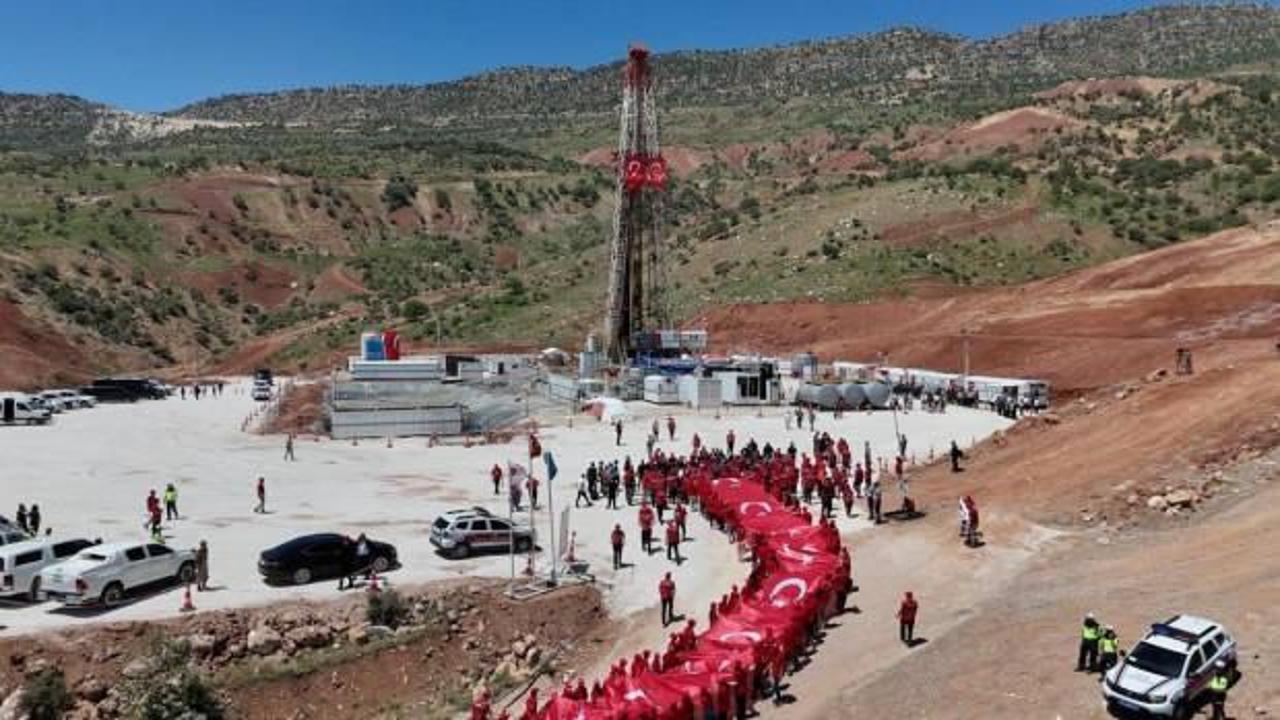
Bakan Bayraktar 'Müthiş bir şey' diyerek duyurdu! 6.1 milyar varil değerinde...
Ekonomi - ABD'li iki şirketin Diyarbakır için petrol rezervi tahminini açıklayan Bakan Bayraktar, 'Bunu henüz bir keşif olarak söylemiyoruz ama bölgede 6.1 milyar varillik bir rezerv olduğunu tahmin ediyorlar. Bu müthiş bir şey' dedi.ekonomi.haber7.com
This is very interesting however. Many possibilities there.we are also in talks with the Canadian company Candu


I bet the Canadians were courteous enough to give a little non comitted retort that our minister is exaggerating. The same could probably be said about the others.
I mean what has changed that SK and Canada would be interested in building a NPP in Türkey ?
I mean Akkuyu preliminary work started in 2010.
I mean what has changed that SK and Canada would be interested in building a NPP in Türkey ?
I mean Akkuyu preliminary work started in 2010.


BalkanTurk90
Contributor

Good news that the Akkuyu nuclear power plant's first phase will start producing electricity by the end of this year. However, we should note that it is 51% Russian, and Russia will supply the fuel and remove the waste.
My question is, since we have thousands of defense and technology projects, why don't we produce and design these nuclear power plants ourselves?
Also, the fuel—uranium or another type—that these plants use is only 10% enriched, so no one can embargo us for creating a bomb, which requires 90%+ enriched uranium. Or should we still ask for permission from superpowers to build it?
My question is, since we have thousands of defense and technology projects, why don't we produce and design these nuclear power plants ourselves?
Also, the fuel—uranium or another type—that these plants use is only 10% enriched, so no one can embargo us for creating a bomb, which requires 90%+ enriched uranium. Or should we still ask for permission from superpowers to build it?

There is development work underway about domestic nuclear reactor technology but I can not point to a web resource at the moment.Good news that the Akkuyu nuclear power plant's first phase will start producing electricity by the end of this year. However, we should note that it is 51% Russian, and Russia will supply the fuel and remove the waste.
My question is, since we have thousands of defense and technology projects, why don't we produce and design these nuclear power plants ourselves?
Also, the fuel—uranium or another type—that these plants use is only 10% enriched, so no one can embargo us for creating a bomb, which requires 90%+ enriched uranium. Or should we still ask for permission from superpowers to build it?


Isn't it 100% Russian?Good news that the Akkuyu nuclear power plant's first phase will start producing electricity by the end of this year. However, we should note that it is 51% Russian, and Russia will supply the fuel and remove the waste.
My question is, since we have thousands of defense and technology projects, why don't we produce and design these nuclear power plants ourselves?
Also, the fuel—uranium or another type—that these plants use is only 10% enriched, so no one can embargo us for creating a bomb, which requires 90%+ enriched uranium. Or should we still ask for permission from superpowers to build it?
Here is the latest news from 2 weeks ago, nuclear energy sector is in the 2030 industry and technology strategic plan. FYI FIGES has been working on molten salt reactors for more than 5 years at least already.There is development work underway about domestic nuclear reactor technology but I can not point to a web resource at the moment.
https://www.star.com.tr/ekonomi/akk...-yerli-nukleer-reaktor-geliyor-haber-1935972/
yes. it's 100% Russian, it will indefinitely be Russian. And the electricity we buy won't be cheap.Isn't it 100% Russian?
Last edited:
We are in talks with Canada.Which is why NPP should not be Russia , Chinese, SK. You want a more fair deal go with Japan or Western models.
The dumb shit says that we're going for the most competitive price in the article. Well, we know who is going to dump the price to get it. China or Russia. And you know what's going to happen that way.


The first of two reactors built by Framatom/EDF, was installed end of 2024. But the work has slowed down due to cost spiralling up. So relations between UK and France regarding the power station is strained to say the least.@Yasar_TR abi the French were building one for you Britisch,at what stage is it now?
Havent seen or heard much about it.
Original forecast was 18 billion GBP. It is at over 35billion now. And could cost 46billion.
Originally there were 3 nations involved; France, China and UK with EDF of France which was nationalised, being the major player. As UK kicked out China from the project, France had to take up the bill. But French government is totally behind the project and they are not giving up. However delivery of a working plant is going to be seriously delayed.
Last edited:
The Akkuyu NPP is 100% owned by Russia. Turkey didnt pay a single dime to Russia while building the NPP and this has both its pros and cons.However, we should note that it is 51% Russian, and Russia will supply the fuel and remove the waste.
It is reported that Turkey is willing to buy 49% of Rosatom's share in the Akkuyu NPP once it is completely built which makes sense since Turkey cant risk spending billions on a project that Turkey has no experience about and may be jeopardised at any moment during its construction phase
T
TR_123456
Guest
Reported by whome?It is reported that Turkey is willing to buy 49% of Rosatom's share in the Akkuyu NPP once it is completely built
BalkanTurk90
Contributor
yes. it's 100% Russian, it will indefinitely be Russian. And the electricity we buy won't be cheap.
The article says 49% of the shares are sold to Turkey; there is also a guarantee that Turkey will buy 70% of its energy. That means even if Turkiye dont need that much energy 70% must buy
The problen is can Rosatom/ Russia increase the energy prices if they want without asking Turkish goverment ?
This can be a big problem


This was what I said would happen last year, yet people assured me that it wouldn't.Rosatom holds the majority share of the plant with 51 percent, while the remaining 49 percent stake was to be divided among the Turkish consortium of contracting conglomerates that includes Cengiz, Kolin and Kalyon.
However, the Cengiz, Kolin and Kalyon consortium pulled out of the project, the company officials said citing the inability to agree on commercial terms in the project.
The Turkish consortium signed a draft agreement with Rosatom for the transfer of 49 percent of shares in the project last June. However, since then the sides failed to reach a final agreement.

Turkish consortium pulls out of Akkuyu nuclear project
Turkish consortium and its Russian partner Rosatom failed to reach agreement on commercial aspects, company officials say - Anadolu Ajansıwww.aa.com.tr
Turkey may be forced to pay extra money to Russia for the next 15 years, even as the global energy market is getting cheaper, thus keeping Turkey a poor country constantly in a trade deficit.If those nuclear reactors are owned, and operated by foreign companies, then there is no point in having them as all the profits are going to go to foreign countries, thus harming Turkey's economy.
Turkey needs to find a way to buy 49 per cent of the shares in Akkuyu NGS Elektrik Uretim Corp so that some of the money will stay in the country, but I doubt that the Russians will surrender those shares to Turkeys.


Akkuyu Nükleer/Sezemin: “Türk şirketler, Akkuyu’da 8 milyar dolara yaklaştı”
AKKUYU NÜKLEER A.Ş. Üretim ve İnşaat Organizasyon Direktörü Denis Sezemin, Akkuyu NGS projesindeki toplam iş hacminin yaklaşık yüzde 40’ının Türk firmalar tarafından gerçekleştirileceğini söyledi.
 www.ekonomim.com
Contribution of Turkish companies reached 7,7 billion dollars by July 2024.
I made a back of the envelope calculation and crunched some number to better understand the comparative cost situation of the power plant.
According to Wiki, for 15 years, we are obliged to buy 70% of the electricity produced by the first two reactors and 30% of the electricity produced by the last two reactors. So it's half of the powerplant's produce.
The annual electricity production will be 35 billion kWh. We will buy at least half of it, 17.5 billion kWh per year at a fixed price of $12.35 cents per kWh.
It will cost us 17.5 billions kWh x $0.1235 x 15 years = $32.4 billions.
This number is what we'll be in total in the span of 15 years.
For comparison with grid-scale solar;
The levelized cost of electricity for solar is $3.5 cents per kWh in 2025. This is expected to fall to $2.5 cents in 2035. Since we're making calculations for 15 years we should use the cost of 2032-2033, which we can extrapolate to find at $2.7 cents per kWh.
The total cost equivalent to Akkuyu Nuclear Plant's production in 15 years;
17.5 billions kWh x $0.027 x 15 years = $ 7.09 billions
Even if we included on-site battery storage into the equation it wouldn't even cross the half of what Akkuyu costs us. We would make both panels and the batteries in the country. Attracting the battery makers into producing locally would be easy considering we're throwing billions at them. It offers more grid stability as it can be ramped up and down pretty quickly as opposed to a nuclear power plant. And most importantly, and i cannot emphasize this enough, we would have no nuclear powerplant within our borders, owned and operated by fucking Russians.
So we've been shafted. We've been shafted alright.
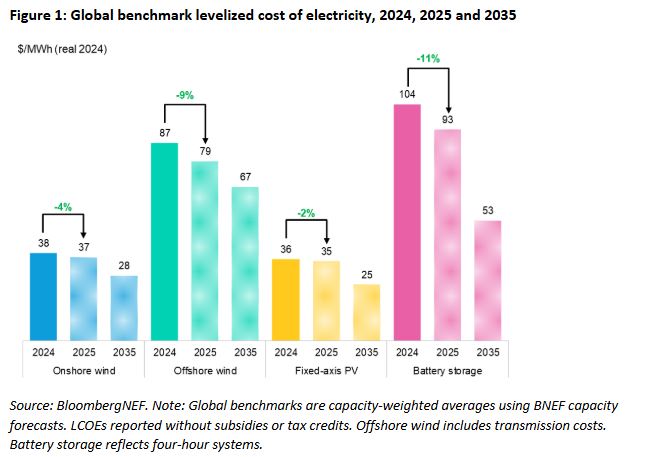
Note: Levelized cost of electricity means it includes both the production and the operating costs of the power-plant over its lifetime.
According to Wiki, for 15 years, we are obliged to buy 70% of the electricity produced by the first two reactors and 30% of the electricity produced by the last two reactors. So it's half of the powerplant's produce.
The annual electricity production will be 35 billion kWh. We will buy at least half of it, 17.5 billion kWh per year at a fixed price of $12.35 cents per kWh.
It will cost us 17.5 billions kWh x $0.1235 x 15 years = $32.4 billions.
This number is what we'll be in total in the span of 15 years.
For comparison with grid-scale solar;
The levelized cost of electricity for solar is $3.5 cents per kWh in 2025. This is expected to fall to $2.5 cents in 2035. Since we're making calculations for 15 years we should use the cost of 2032-2033, which we can extrapolate to find at $2.7 cents per kWh.
The total cost equivalent to Akkuyu Nuclear Plant's production in 15 years;
17.5 billions kWh x $0.027 x 15 years = $ 7.09 billions
Even if we included on-site battery storage into the equation it wouldn't even cross the half of what Akkuyu costs us. We would make both panels and the batteries in the country. Attracting the battery makers into producing locally would be easy considering we're throwing billions at them. It offers more grid stability as it can be ramped up and down pretty quickly as opposed to a nuclear power plant. And most importantly, and i cannot emphasize this enough, we would have no nuclear powerplant within our borders, owned and operated by fucking Russians.
So we've been shafted. We've been shafted alright.
Note: Levelized cost of electricity means it includes both the production and the operating costs of the power-plant over its lifetime.


