
Maybe it will be called as KF-35.I think that ROK has adopted an intelligent approach to developing KF-X. Design an airframe that can be converted to an IWB airframe without re-starting design from scratch, resulting in an aircraft that is very competitive cost-wise with sophisticated 4G fighters, then modify the design to give ROK air force a 5G fighter and address the 5G export market.
ROK could be selling a 4G Rafale/F-16 competitor for quite a few years and also a 5G competitor to F-35 (and KAAN and AMCA when they appear) for many more years.

Latest Thread
- Kyrgyzstan rejects European proposal to accept migrants
- Russia Project 885M nuclear-powered submarine *Novosibirsk* strikes a target at a range of 1,200 km with a Kalibr missile.
- Space Brazil ties up with India's Skyroot Aerospace to develop Satellite Launch Vehicle
- Bangladesh Opinion Bangladesh’s intelligence challenge
- Open-source AI for exploiting cyber vulnerabilities
You are using an out of date browser. It may not display this or other websites correctly.
You should upgrade or use an alternative browser.
You should upgrade or use an alternative browser.
urban mine
Contributor

Last edited:
urban mine
Contributor
Maybe it will be called as KF-35.
General RoK Air Force News & Developments
I looked up the ROKAF igloos after watching the FPV raid on a Russian air base . HAS from the USAF are also in the mix. But the Russian Air Force's losses can't be attributed solely to the lack of these hardened shelters. Who would have thought that a truck-mounted FPV could attack a strategic...
 defencehub.live
Future next-generation fighters may well be based on this testbed. Of course, the KF-21 probably won’t remain merely a 4.5-generation fighter either, but we’ll have to wait for the Air Force to make a clear statement before we can be sure.
urban mine
Contributor

한화시스템, KF-21 '전자광학 표적획득추적장비' 양산 착수
한화시스템이 개발한 한국형 전투기(KF-21) 전자광학 표적획득추적장비(EO TGP)가 지난 2024년 첫 비행 시제 출고를 앞두고 관측 및 레이저 성능 시험을 하고 있다. 한화시스템 제공 [파이낸셜뉴스] 한화시스템이 한국형 전투기 KF-21에 탑재될 '전자광학 표적획득추적장비'(EO TGP) 양산에 착수한다. 한화시스템은 한국항공우주
 v.daum.net
Hanwha Systems announced on the 20th that it has signed its first mass production contract with Korea Aerospace Industries (KAI) for the Electro-Optical Target Acquisition and Tracking System (EOTGP) to be installed on the KF-21.
The contract is valued at approximately 92 billion won, and delivery is scheduled to be completed by November 30, 2028.

Pokemonte13
Contributor


Is that a sniper pod?
No, it just looks like one. Like how Aselpod looks like Litening.Is that a sniper pod?
T
TR_123456
Guest
''Electro-Optical Target Acquisition and Tracking System (EOTGP)''Is that a sniper pod?
So,yes.
urban mine
Contributor
Here is a detailed article on the Korean Next-Generation Fighter Testbed development program.
urban mine
Contributor
View attachment 80143 View attachment 80144한화시스템, KF-21 '전자광학 표적획득추적장비' 양산 착수
한화시스템이 개발한 한국형 전투기(KF-21) 전자광학 표적획득추적장비(EO TGP)가 지난 2024년 첫 비행 시제 출고를 앞두고 관측 및 레이저 성능 시험을 하고 있다. 한화시스템 제공 [파이낸셜뉴스] 한화시스템이 한국형 전투기 KF-21에 탑재될 '전자광학 표적획득추적장비'(EO TGP) 양산에 착수한다. 한화시스템은 한국항공우주
Hanwha Systems announced on the 20th that it has signed its first mass production contract with Korea Aerospace Industries (KAI) for the Electro-Optical Target Acquisition and Tracking System (EOTGP) to be installed on the KF-21.
The contract is valued at approximately 92 billion won, and delivery is scheduled to be completed by November 30, 2028.
Block 2 is currently being tested. The EOTGP has been covered.
urban mine
Contributor
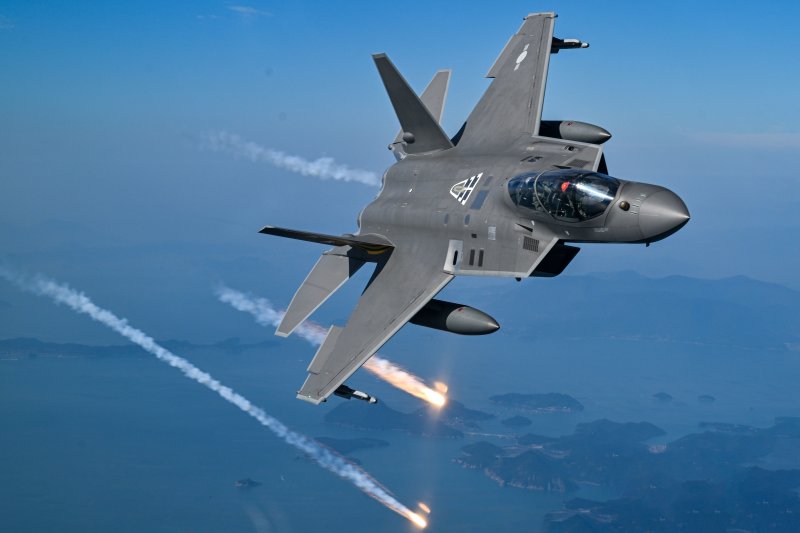
KF-21 Fighter Receives Final Combat Suitability Approval, Marking the Start of the 'Air Sovereignty' Era After Passing 13,000 Tests
Chief of Staff of the Republic of Korea Air Force Son Seok-rak is seen conducting a test flight aboard a KAI KF-21 Boramae fighter jet on Nov. 5 last year at Sacheon Air Base, during his first command flight since taking office. Provided by the Air
 en.fnnews.com
South Korea's KAI KF-21 Boramae, the fighter jet set to defend the nation's airspace, has cleared the final hurdle for operational deployment. The latest combat suitability approval carries major strategic significance, as it gives South Korea, a country that now fields a domestically developed supersonic fighter, greater autonomy in air operations in Northeast Asia. By securing independence in weapons integration, the military is expected to gain the ability to freely incorporate the systems it needs, making the aircraft a key asset in maintaining the regional balance of power.
■ More than 1,600 test flights, 13,000 test conditions fully verified
According to DAPA on the 7th, the KF-21 Boramae program has received combat suitability approval, the final gate in system development. The result follows about three years of rigorous follow-up testing after the aircraft received provisional combat suitability approval in May 2023. Since development began in 2015, the KF-21 has completed more than 1,600 flight tests and fully verified more than 13,000 demanding test conditions, including aerial refueling and weapons launches, meeting the Air Force's operational requirements.
The approval confirms all performance capabilities of the KF-21 Block I, which covers basic performance and air-to-air capability. With system development set to conclude in June this year, the first mass-produced aircraft is expected to be delivered to the Air Force in the second half of the year. It will then be deployed in stages and is expected to become a core asset in air defense.
The KF-21's design philosophy is forward-looking. In the Block I phase, it adopted a semi-conformal configuration that places weapons on the lower exterior of the fuselage, but the aircraft was reportedly designed with a fifth-generation stealth fighter concept in mind, allowing for future full internal weapons carriage. This evolutionary approach has helped position the KF-21 as more than just a 4.5-generation fighter. It is seen as a growth platform that can be upgraded into a fully stealth-capable aircraft suited to future battlefield conditions through internal weapons integration.


KF-21 production may be slowed due to rising production costs.
Time to try to close export deals for the phase 2 version (A2A and A2G capable)? That could maintain the production rate if ROK wants to slow delivery rate

 www.koreaherald.com
Time to try to close export deals for the phase 2 version (A2A and A2G capable)? That could maintain the production rate if ROK wants to slow delivery rate
Production cost increases raise risk of KF-21 rollout delay
South Korea’s plan to deploy 120 KF-21 Boramae fighter jets by 2032 may face delays as rising production costs put growing pressure on the defense budget, accor
Last edited:
urban mine
Contributor
It's simply because the South Korean government has so many other things to spend money on that it doesn't have enough. It has nothing to do with exports.KF-21 production may be slowed due to rising production costs.
Time to try to close export deals for the phase 2 version (A2A and A2G capable)? That could maintain the production rate if ROK wants to slow delivery rate
Production cost increases raise risk of KF-21 rollout delay
South Korea’s plan to deploy 120 KF-21 Boramae fighter jets by 2032 may face delays as rising production costs put growing pressure on the defense budget, accor
I think you misunderstood me. ROK intends taking deliveries more slowly, reportedly because the price is rising). My suggestion for KAI is to try to close export enquiries to keep the line running at a desirable speed.It's simply because the South Korean government has so many other things to spend money on that it doesn't have enough. It has nothing to do with exports.
urban mine
Contributor
I see. However, the South Korean Air Force’s needs are more urgent. It is important to adhere to the South Korean Air Force’s original plan before the export deal is finalized. Furthermore, I believe that an order of just a few dozen aircraft will not be enough to drive down the price.I think you misunderstood me. ROK intends taking deliveries more slowly, reportedly because the price is rising). My suggestion for KAI is to try to close export enquiries to keep the line running at a desirable speed.
This might help clarify things.I see. However, the South Korean Air Force’s needs are more urgent. It is important to adhere to the South Korean Air Force’s original plan before the export deal is finalized. Furthermore, I believe that an order of just a few dozen aircraft will not be enough to drive down the price.
South Korea Weighs KF-21 Block 2 Production Delay Amid Rising Costs | Aviation Week
South Korea considers delaying KF-21 Block 2 production to 2035 as rising costs, inflation and supply chain issues impact the program.
 aviationweek.com
Agreed, an export order probably will not reduce the price, just keep the line moving at its intended speed.
urban mine
Contributor
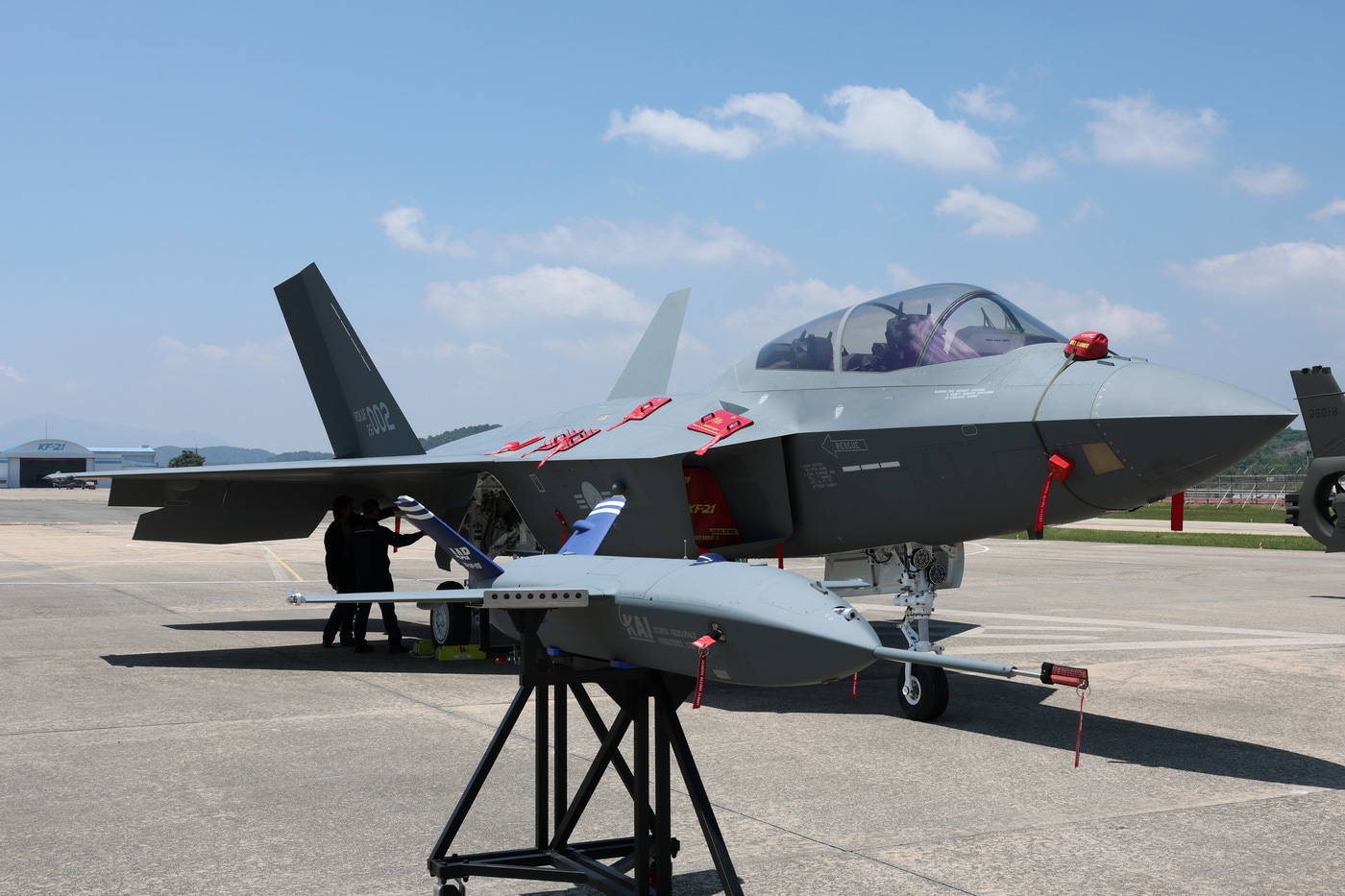
"잠재 수출 200대 이상"…사천 하늘 가른 KF-21 현장 가보니
김종출 KAI 사장 "글로벌 수출 플랫폼으로 성장할 것" 현재 수출 상담 중이거나 가능성을 가진 물량이 200대 플러스 알파 정도 됩니다. 알파 부분을 확장하면 욕심 같아선 1000대까지 가능하다고도 봅니다지난 13일 …
KAI unveiled the second Mass Production Unit and the AAP-150 to the media.
Fixed-wing production line.
I saw a glimpse of the production line in a video. It shows aircraft 015 being worked on. Presumably there are at least 15 aircraft being worked on at the same time.
I believe I read that the second production aircraft was rolled out in the last few days.
I believe I read that the second production aircraft was rolled out in the last few days.
Last edited:
urban mine
Contributor
Ultimately, everything depends on the decisions the government makes this year.
urban mine
Contributor
This has put an end to the concerns that had been raised. Considering that the ROKAF had already set 2027 as the retirement date for the KF-5, this outcome is hardly surprising.
urban mine
Contributor
A formation of KF-21 and F-35 aircraft escorting a repatriation flight carrying the remains of Korean War soldiers


