Air-Force [OpEd] How the Turkish Air Force Should Rebuild Its Airlift Fleet (2026-2040)

dBSPL

Experienced member
Think Tank Analyst
DefenceHub Ambassador
Messages
2,817
Reactions
120 14,307
Nation of residence
Turkey
Nation of origin
Turkey

Military logistics is measured not by a single aircraft but by a pyramid. Strategic heavy lift sits at the top, courier and liaison work at the base, and every layer is built to take weight off the one above it. An air force's real reach is set as much by the balance between these layers as by the range of its largest aircraft. Türkiye's deepening overseas basing needs, our rising operational tempo, and our next-generation readiness doctrine all force a simultaneous transformation across all five layers of this pyramid. Below I work through that transformation not from the top down, but layer by layer in order of urgency.


Turkish_Air_Force_Airbus_A400M.jpg

Photo: Turkish Air Force A400M at Shah Amanat International Airport, Chittagong to donate relief materials for the Rohingya refugees in Bangladesh (Wikimedia Coomons)

Item 1: Utility / Liaison Class (8+)​

At the base of the pyramid sits the courier and liaison role, the backbone of operational tempo. Today that job falls to four ageing airframes nearing the end of their economic life within the 212th Special Squadron: two Cessna Citation IIs and two Cessna Citation VIIs. Türkiye's expanding multipolar sphere of influence, its overseas base management, and the rising operational tempo are growing the workload on these four aircraft geometrically rather than linearly. Once the periodic maintenance margin is factored in, it is clear the current capacity will fall short within the next five to ten years (2030-2035).

What this segment needs is a light or mid-size, ideally twin-engine business-jet-based military liaison platform. The critical threshold is range: the aircraft should be able to reach overseas bases or NATO headquarters in Europe non-stop from Ankara without refuelling, meaning an operational radius of 3,500 km or more at full load. On top of a one-for-one replacement of the four ageing airframes, raising the total to eight platforms is a rational target, intended to feed the logistics liaison pool of the joint overseas bases.

The candidate platforms should be split by range threshold. The Embraer Phenom 300E, Cessna Citation Latitude, and Piaggio Avanti EVO are attractive in terms of low flight-hour cost and parts continuity; the Avanti EVO in particular warrants attention given Baykar's acquisition of Piaggio Aerospace, which brings the platform into the domestic industrial orbit. That said, all three meet the 3,500 km non-stop overseas range only at light load, making this group adequate for intra-continental and near-overseas tasks. For genuine non-stop strategic liaison, a longer-legged tier such as the Bombardier Challenger 650 or the Global series is a more consistent answer. Building the fleet around these two thresholds rather than a single type balances both cost and mission flexibility.

Item 2: Medium Tactical Transport / Battlefield Logistics (16-20)​

Over the next fifteen years (2026-2040), the transformation that will replace the CN-235 fleet in the light tactical transport class will be one of the most strategic calls to make. The path here is not a one-for-one replacement of the current aircraft but a vertical step up a class. The evolving overseas basing vision makes it necessary to jump directly into the medium tactical transport segment rather than settling for a platform that only carries personnel and light cargo.

The logic of that step lives in the hard numbers. In place of the 6-ton CN-235, what is needed is a platform that can carry 11 tons of payload and, thanks to its wide-body architecture, put tactical wheeled armoured vehicles and light artillery systems directly into the contact zone. At least 2,000 km of range at full load, over 4,000 km at light load, and a cruise speed above 550 km/h bring this class close to C-130 level. Part of the pure personnel-transport work the CN-235 fleet currently shoulders should be handed off to the liaison jets in Item 1, while the operational tactical load is met by a medium transport fleet of at least 16, ideally 20 aircraft. Given that the type's home operator Italy runs 12 and Greece 8, the figure may look high at first glance; but the tactical transport demand of Türkiye's large land army and its widening distributed basing network put this class on a different scale from the European examples. The ideal 20 is not just an opportunity buy, it is the product of a role expansion: the tasks inherited from the CN-235, the simultaneity demand that distributed basing brings, and a mid-tier contribution to airborne operations all pull this fleet upward in number.

The airborne dimension is an overlooked but critical function of this layer. With a capacity of roughly 46 paratroopers, the C-27J can feed the insertion of special forces and small units, but dropping an airborne force at brigade scale in a single wave is a load this class cannot carry on its own. For that reason the C-27J should be positioned not as the backbone of mass parachute operations but as the element that complements them and adds flexibility; the actual mass-drop capacity should be sought one layer up, in the expanded C-130J fleet.

The clearest proven example of this segment worldwide is the Leonardo C-27J Spartan. The point here is less an opportunity window than a lesson to be drawn. Under its 2026 National Defence Strategy, Australia decided to retire its 10 C-27Js early, before they had even completed a decade of service. But what sits behind that decision is not a capability shortfall of the aircraft; it is the chronic spare-parts and sustainment problems created by the FMS procurement route run through the United States. That carries a two-way message for Türkiye. On one hand it confirms the segment is the right one; on the other it is a reminder that if this class is entered, procurement must be structured through direct manufacturer support and a secured sustainment chain. The right aircraft can still cause trouble when bought through the wrong procurement model. Another thing that pushes the C-27J forward is the broad logistics commonality it shares with the C-130J; the same Rolls-Royce AE2100 engine family, a similar avionics architecture, and an overlapping sustainment chain make it a natural tactical complement to an expanded C-130J fleet. As of today, as a declared programme with an active production line and a proven track record, the strongest battlefield airlifter choice on the table is the C-27J.

That said, this choice should not be treated as the only option. The proposed 20-aircraft fleet would make Türkiye one of the largest operators of this class in the world; that is a deliberate choice grounded in tactical reasoning, but it also points to a rare economic condition. Domestic demand this large and this sustained can, on its own, provide the critical mass needed to keep an indigenous development programme alive, because it largely removes from the outset the biggest risk facing any domestic platform, which is an insufficient production run. On that footing, if no firm decision is taken in favour of the C-27J, an alternative path can be considered starting today: an indigenous tactical transport platform that would phase in gradually from the mid-2030s as the CN-235s leave service. Sitting above the CN-235 but below the full capacity of the C-27J, in the 7-9 ton payload band, wide-bodied and with a rear ramp, such an aircraft would be no fantasy but the natural extension of an existing industrial base. TUSAŞ has serially produced the CN-235 with a high domestic content ratio, put the C-130 fleet through a comprehensive avionics modernisation built around a national mission computer and indigenous mission software, and in the A400M programme moved from build-to-print parts manufacturing to design responsibility, becoming an industry player that holds the design rights to critical structural components. That accumulated base shows that the airframe, avionics, and systems-integration dimensions of an indigenous light transport could largely be resolved at home.

The two paths need not be mutually exclusive. If the indigenous platform is positioned to cover the upper end of the fleet, that is, the additional demand above 16, C-27J imports would be limited to a core fleet and the remaining requirement shifted to domestic production; this both pushes supply independence down to the base layer and secures the continuity of the local line. It must be said plainly, though, that there is no declared, budgeted indigenous programme today; this is a projection. On the ground of present reality, with an active production line, a proven logistics partnership with the C-130J, and standing as the standard of the segment, the C-27J is the primary and priority choice of this item. The indigenous alternative should be treated as an extension that could gradually take over this fleet once it matures.

Item 3: Medium-Heavy Tactical / Regional Transport Class (12 + 8)​

In the medium-heavy tactical transport class the decision has largely been made and is in the execution phase. Despite the ERCİYES modernisation, the veteran C-130B/E/H fleet faces the risk of permanently falling out of operation due to airframe ages in the 55-to-68-year band. To close this gap, the 12 stretched C-130J-30 Super Hercules procured from the United Kingdom are going through centre wing box renewal and heavy maintenance at Marshall Aerospace. The work involves a comprehensive programme spread over four years, and when the deliveries will complete is not yet settled; the depth of the airframe refurbishment suggests the schedule will not be rushed.

The 12 C-130J-30s, with the advantage of a stretched fuselage, close the tonnage gap left by the 19 ageing airframes to be retired (13 C-130Es and 6 C-130Bs), but they create a contraction in numerical flexibility. Türkiye's large land army places a far heavier operational load on its tactical transport fleets than the European examples; the fact that the existing A400M and C-130 fleets are already run at high tempo is the proof of that. For this reason the 12-aircraft fleet should ideally be brought up to 20 airframes with an additional buy of 8. That figure is not arbitrary but a doctrinal threshold: because readiness rates mean only a portion of the fleet will be flyable at any moment, the fleet needs to sit in the 20 band to sustain mass parachute operations across a meaningful number of waves, to keep regional transport flowing without interruption, and to feed a simultaneous airlift bridge. Whether this added capacity is met by hunting clean second-hand C-130J airframes on the used market or by the battlefield airlifter class in Item 2 taking over the tactical load; once the C-27J shoulders the tactical workload, the C-130J fleet can focus on pure regional transport, mass airborne drops, and the airlift bridge.

Airborne operations and the airlift bridge are the real strategic rationale for this layer. Dropping an airborne force at brigade scale, with a meaningful combat mass, in a single wave is possible only when a C-130J fleet in the 20 band works together with the A400Ms; the A400M carries the heavy end with its 116-paratrooper capacity, the C-130J the numerical mass. In the same way, when a 1974-type airlift bridge has to be set up in the near abroad, the backbone of that task is the fixed-wing transport fleet, not helicopters; helicopters only take on last-stage distribution once the corridor is established. This is exactly the logic of the pyramid: the tightness of one layer is offset by the correct sizing of the layers below and above it.

Item 4: Strategic / Heavy Transport Class (10 + 7)​

In the heavy transport class Türkiye starts from a strong position. Delivery of the 10-aircraft A400M Atlas fleet is complete, and the world's only external retrofit and FASBAT centre, set up within the 2nd Air Maintenance Factory in Kayseri, has earned serious infrastructure independence on this aircraft. The problem is not capability but scale. The multipolar basing strategy calls for this class of fleet to be grown.

The most rational way to grow is not a fresh order but seizing a ready opportunity. Spain plans to keep the first 20 aircraft of its original 27-aircraft A400M quota in its own air force; the remaining last 7 airframes, still to be built, are in surplus status. Acquiring these aircraft through a government-to-government deal would cut procurement time sharply compared with joining a zero-position order queue. On top of that, since these airframes are still to come off the production line, our domestic maintenance infrastructure already established in Kayseri reaches maximum efficiency with the larger fleet. This kind of overlap between the production and sustainment ecosystems is an industrial gain beyond a purely numerical fleet increase. And a fleet of 17 is hardly excessive next to the scale of NATO partners such as France and Germany, which run the A400M with 50 and 53 aircraft, and the United Kingdom with 22; it should be read as a minimum requirement for the multipolar basing vision.

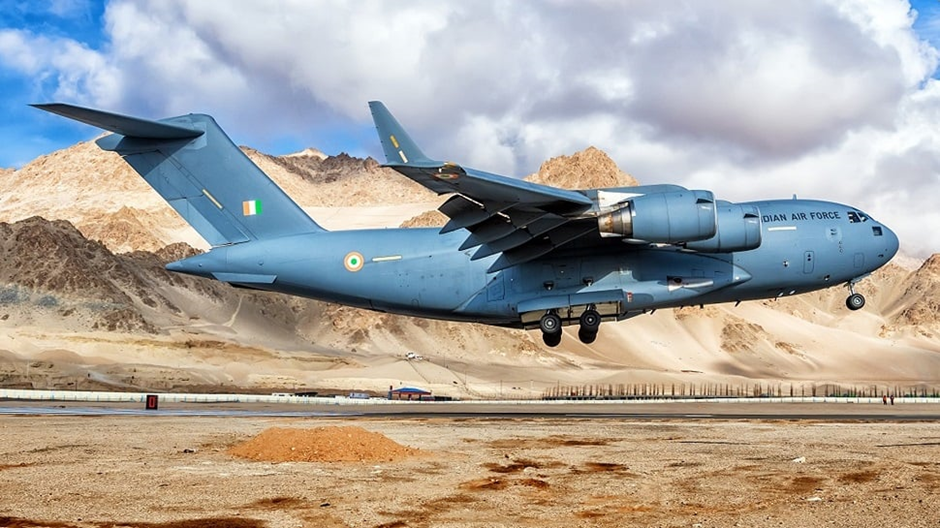
In the pure strategic heavy class, though, one has to be realistic. With the C-17 production line closed long ago, no second-hand market to speak of, and the aircraft's extreme sustainment costs, this option becomes a theoretical fantasy as an owned-asset goal. Yet this capacity gap can be placed on a rational footing through allied pooling. By expanding the existing military transport and deployment agreements with Qatar, which holds 8 C-17s in its inventory, a joint strategic logistics line can be set up between the two countries. For Türkiye, the real owned-asset goal should be to consolidate its heavy logistics weight within the A400M ecosystem. This fleet also carries the heavy end of airborne operations; with its 116-paratrooper capacity and its ability to put heavy vehicles down on short strips, the A400M, together with the C-130J in Item 3, forms the strategic backbone of mass parachute and airlift-bridge tasks.

Item 5: Strategic Tanker-Cargo Class (10-12+)​

This layer produces not weight but range. The 7 veteran KC-135Rs, the multiplier of the Turkish Air Force's deep-operations capability, will need to be retired within the next decade (2035) on account of airframe ages exceeding sixty years and high operating costs, even with avionics modernisation.

The platform chosen to replace them should be not just a refuelling aircraft but a multi-role carrier. A tanker that can carry up to 45 tons of cargo on its lower deck or 250 to 300 fully equipped personnel in its cabin relieves the whole system by sharing the palletised cargo and personnel load of the overseas-bound logistics pyramid with the A400Ms. There is a qualitative distinction here: the A330 MRTT cannot ramp-load heavy and outsize vehicles the way the A400M can, but it adds serious capacity in palletised freight and personnel movement. So this layer does its own job while also taking off part of the load of the layers beneath it.

A one-for-one replacement is not enough numerically. On the assumption that the number of manned fighters and unmanned platforms will trend upward over the coming decades with the manned-unmanned teaming concept, at least 10, ideally 12 or more next-generation strategic tankers would meet both readiness rates and deployment flexibility. The jump from 7 KC-135Rs to that figure may look large, but the comparative frame makes it reasonable: the United Kingdom runs 14 strategic tankers and France 11, with the UK keeping 9 of that fleet in continuous military service and holding the rest in a surge pool. A 12-aircraft fleet built on a similar core-plus-support logic would put Türkiye at the tanker-power level of those two countries. On platform choice, the Airbus A330 MRTT stands out. While the Boeing KC-46A is both a lower-capacity alternative and carries political and supply constraints, the A330 MRTT's conversion from a civil airframe is industrially established and cost-effective. This choice also overlaps with the A400M ecosystem in Item 4 and lets Türkiye build a consistent supply line in European-origin strategic air platforms.

Readiness and Scale: Why the Numbers Sit Where They Do​

A fleet's on-paper strength and the number of aircraft it can put in the air at once are not the same thing. In modern transport fleets the readiness rate generally runs in the 50-to-65-percent band; on complex platforms like the A400M, periodic maintenance, modernisation, and spare-parts cycles can pull that rate even lower at times. This explains why the numbers proposed above are not generous but measured. Of 17 A400Ms only 9 to 11 at a given moment, of 20 C-130Js 11 to 13, of 12 tankers 7 to 8 should be counted as actually operational. A concrete design scenario makes this visible: moving a mechanised brigade with its personnel, light armour, and supplies to an overseas theatre a few thousand kilometres away within a few days locks up nearly the entire operational portion of the A400M and C-130J fleets on a single task. Once you account for the need to keep up domestic tactical transport, the airlift bridge, and a possible airborne operation at the same time, the proposed fleet depth stops being a luxury and becomes a minimum requirement. When planning at the scale of the Turkish Armed Forces, the metric to go by is not the total number of airframes but the number of operational aircraft that can be put in the air simultaneously in the worst case.

Feasibility and Timeline: How the Transformation Can Happen​

The most critical implicit assumption of this architecture is that aircraft can be pulled off the shelf the moment they are wanted; in reality the procurement situation of each layer differs, and these differences set the timeline of the transformation. On the A400M side the situation is favourable: the production line is secured until at least 2029 by the 2025 agreement, and Spain's surplus airframes offer a ready supply window. On the C-130J side, clean, low-hour second-hand airframe supply is extremely scarce, because these aircraft are relatively young and owners do not let them go; for that reason part of the additional buy may require joining the new-build queue. On the C-27J side, the airframes Australia retired early create a one-off opportunity window, but once that window closes the low-tempo production line offers no flexible alternative. On the tanker side the A330 MRTT line is solid but the order book is full; delivery of a fresh order could run into the mid-2030s, which raises the risk of a transition-period gap overlapping with the KC-135Rs' retirement schedule.

The shared lesson in all of this is that this transformation has to be run not as a simultaneous bulk buy but as a phased, opportunistic procurement strategy keyed to supply windows. And there is a resource dimension to it, not only a supply one. More than sixty new airframes across five layers means a programme worth billions of dollars, and no defence budget can carry that load in a single fiscal period; this is where the real necessity of a phased schedule comes from. The issue is not platform cost alone, either. A type new to the inventory like the C-27J in particular requires building a pilot and technician training pipeline, simulators, a spare-parts pool, and a sustainment infrastructure from scratch; doubling the tanker fleet likewise forces a comparable investment in people and infrastructure. So the real risk planning has to manage is, as much as the capability trough that forms when an old platform retires before its replacement has arrived, the coordination of the acquisition schedule with training and infrastructure readiness. Right timing is as decisive as the right platform choice.

Conclusion​

What these five layers share is that none of them should be assessed on its own. The liaison jets take over the CN-235's personnel load, the battlefield airlifter eases the C-130J's tactical load, the multi-role tanker shares the A400M's strategic cargo load. The pyramid works as a system in which each layer lets the one above it breathe. The real difficulty lies not in the technical side but in the timing. Renewing five classes at once across the 2026-2040 span means a serious burden in budget, training, and sustainment. For that reason the transformation should be handled not as a shopping list but as a phased roadmap; starting from the oldest and most critical airframes, each layer's replacement should be planned in an order that eases the load of the next. And while this roadmap is for now drawn largely with imported platforms, no less important is keeping the way open for an indigenous alternative that will mature at the base layer and building an architecture that pulls external dependency down over time. Built correctly, this architecture gives Türkiye not just more aircraft but real logistics depth in an age of multipolar operations.


*Disclaimer: This article reflects the author's own analysis and recommendations, not any official position or confirmed programme. The figures and proposals are offered as a basis for discussion, and counterarguments, particularly on the fleet numbers, are welcome.
 
Last edited:

JOYDEEPGHOSH

Active member
Messages
148
Reactions
2 87
Nation of residence
India
Nation of origin
India
If the C17 Globemaster III program restarts Turkeiye could do well by going for atleast 6 of them that have almost double the capacity of A400M and triple of the C130J SH. Also being a NATO member its unlikely USA will deny them

Return of a Titan? Why Boeing C-17 Globemaster III Production Restart is Back on the Table


Khagan1923

Contributor
Messages
1,266
Reactions
25 5,355
Nation of residence
Germany
Nation of origin
Turkey
If the C17 Globemaster III program restarts Turkeiye could do well by going for atleast 6 of them that have almost double the capacity of A400M and triple of the C130J SH. Also being a NATO member its unlikely USA will deny them

Return of a Titan? Why Boeing C-17 Globemaster III Production Restart is Back on the Table

Our guys are crying about the maintance cost of the A400M, which we are a partner in. Don't think they would even look towards the C-17 even if the US restarted production.

Best case Qatar purchases new C-17 and hands over their used ones to the TurAF.
 

Yasar_TR

Experienced member
Staff member
Administrator
Messages
4,143
Reactions
250 21,648
Nation of residence
United Kingdom
Nation of origin
Turkey

Military logistics is measured not by a single aircraft but by a pyramid. Strategic heavy lift sits at the top, courier and liaison work at the base, and every layer is built to take weight off the one above it. An air force's real reach is set as much by the balance between these layers as by the range of its largest aircraft. Türkiye's deepening overseas basing needs, our rising operational tempo, and our next-generation readiness doctrine all force a simultaneous transformation across all five layers of this pyramid. Below I work through that transformation not from the top down, but layer by layer in order of urgency.


View attachment 81187
Photo: Turkish Air Force A400M at Shah Amanat International Airport, Chittagong to donate relief materials for the Rohingya refugees in Bangladesh (Wikimedia Coomons)

Item 1: Utility / Liaison Class (8+)​

At the base of the pyramid sits the courier and liaison role, the backbone of operational tempo. Today that job falls to four ageing airframes nearing the end of their economic life within the 212th Special Squadron: two Cessna Citation IIs and two Cessna Citation VIIs. Türkiye's expanding multipolar sphere of influence, its overseas base management, and the rising operational tempo are growing the workload on these four aircraft geometrically rather than linearly. Once the periodic maintenance margin is factored in, it is clear the current capacity will fall short within the next five to ten years (2030-2035).

What this segment needs is a light or mid-size, ideally twin-engine business-jet-based military liaison platform. The critical threshold is range: the aircraft should be able to reach overseas bases or NATO headquarters in Europe non-stop from Ankara without refuelling, meaning an operational radius of 3,500 km or more at full load. On top of a one-for-one replacement of the four ageing airframes, raising the total to eight platforms is a rational target, intended to feed the logistics liaison pool of the joint overseas bases.

The candidate platforms should be split by range threshold. The Embraer Phenom 300E, Cessna Citation Latitude, and Piaggio Avanti EVO are attractive in terms of low flight-hour cost and parts continuity; the Avanti EVO in particular warrants attention given Baykar's acquisition of Piaggio Aerospace, which brings the platform into the domestic industrial orbit. That said, all three meet the 3,500 km non-stop overseas range only at light load, making this group adequate for intra-continental and near-overseas tasks. For genuine non-stop strategic liaison, a longer-legged tier such as the Bombardier Challenger 650 or the Global series is a more consistent answer. Building the fleet around these two thresholds rather than a single type balances both cost and mission flexibility.

Item 2: Medium Tactical Transport / Battlefield Logistics (16-20)​

Over the next fifteen years (2026-2040), the transformation that will replace the CN-235 fleet in the light tactical transport class will be one of the most strategic calls to make. The path here is not a one-for-one replacement of the current aircraft but a vertical step up a class. The evolving overseas basing vision makes it necessary to jump directly into the medium tactical transport segment rather than settling for a platform that only carries personnel and light cargo.

The logic of that step lives in the hard numbers. In place of the 6-ton CN-235, what is needed is a platform that can carry 11 tons of payload and, thanks to its wide-body architecture, put tactical wheeled armoured vehicles and light artillery systems directly into the contact zone. At least 2,000 km of range at full load, over 4,000 km at light load, and a cruise speed above 550 km/h bring this class close to C-130 level. Part of the pure personnel-transport work the CN-235 fleet currently shoulders should be handed off to the liaison jets in Item 1, while the operational tactical load is met by a medium transport fleet of at least 16, ideally 20 aircraft. Given that the type's home operator Italy runs 12 and Greece 8, the figure may look high at first glance; but the tactical transport demand of Türkiye's large land army and its widening distributed basing network put this class on a different scale from the European examples. The ideal 20 is not just an opportunity buy, it is the product of a role expansion: the tasks inherited from the CN-235, the simultaneity demand that distributed basing brings, and a mid-tier contribution to airborne operations all pull this fleet upward in number.

The airborne dimension is an overlooked but critical function of this layer. With a capacity of roughly 46 paratroopers, the C-27J can feed the insertion of special forces and small units, but dropping an airborne force at brigade scale in a single wave is a load this class cannot carry on its own. For that reason the C-27J should be positioned not as the backbone of mass parachute operations but as the element that complements them and adds flexibility; the actual mass-drop capacity should be sought one layer up, in the expanded C-130J fleet.

The clearest proven example of this segment worldwide is the Leonardo C-27J Spartan. The point here is less an opportunity window than a lesson to be drawn. Under its 2026 National Defence Strategy, Australia decided to retire its 10 C-27Js early, before they had even completed a decade of service. But what sits behind that decision is not a capability shortfall of the aircraft; it is the chronic spare-parts and sustainment problems created by the FMS procurement route run through the United States. That carries a two-way message for Türkiye. On one hand it confirms the segment is the right one; on the other it is a reminder that if this class is entered, procurement must be structured through direct manufacturer support and a secured sustainment chain. The right aircraft can still cause trouble when bought through the wrong procurement model. Another thing that pushes the C-27J forward is the broad logistics commonality it shares with the C-130J; the same Rolls-Royce AE2100 engine family, a similar avionics architecture, and an overlapping sustainment chain make it a natural tactical complement to an expanded C-130J fleet. As of today, as a declared programme with an active production line and a proven track record, the strongest battlefield airlifter choice on the table is the C-27J.

That said, this choice should not be treated as the only option. The proposed 20-aircraft fleet would make Türkiye one of the largest operators of this class in the world; that is a deliberate choice grounded in tactical reasoning, but it also points to a rare economic condition. Domestic demand this large and this sustained can, on its own, provide the critical mass needed to keep an indigenous development programme alive, because it largely removes from the outset the biggest risk facing any domestic platform, which is an insufficient production run. On that footing, if no firm decision is taken in favour of the C-27J, an alternative path can be considered starting today: an indigenous tactical transport platform that would phase in gradually from the mid-2030s as the CN-235s leave service. Sitting above the CN-235 but below the full capacity of the C-27J, in the 7-9 ton payload band, wide-bodied and with a rear ramp, such an aircraft would be no fantasy but the natural extension of an existing industrial base. TUSAŞ has serially produced the CN-235 with a high domestic content ratio, put the C-130 fleet through a comprehensive avionics modernisation built around a national mission computer and indigenous mission software, and in the A400M programme moved from build-to-print parts manufacturing to design responsibility, becoming an industry player that holds the design rights to critical structural components. That accumulated base shows that the airframe, avionics, and systems-integration dimensions of an indigenous light transport could largely be resolved at home.

The two paths need not be mutually exclusive. If the indigenous platform is positioned to cover the upper end of the fleet, that is, the additional demand above 16, C-27J imports would be limited to a core fleet and the remaining requirement shifted to domestic production; this both pushes supply independence down to the base layer and secures the continuity of the local line. It must be said plainly, though, that there is no declared, budgeted indigenous programme today; this is a projection. On the ground of present reality, with an active production line, a proven logistics partnership with the C-130J, and standing as the standard of the segment, the C-27J is the primary and priority choice of this item. The indigenous alternative should be treated as an extension that could gradually take over this fleet once it matures.

Item 3: Medium-Heavy Tactical / Regional Transport Class (12 + 8)​

In the medium-heavy tactical transport class the decision has largely been made and is in the execution phase. Despite the ERCİYES modernisation, the veteran C-130B/E/H fleet faces the risk of permanently falling out of operation due to airframe ages in the 55-to-68-year band. To close this gap, the 12 stretched C-130J-30 Super Hercules procured from the United Kingdom are going through centre wing box renewal and heavy maintenance at Marshall Aerospace. The work involves a comprehensive programme spread over four years, and when the deliveries will complete is not yet settled; the depth of the airframe refurbishment suggests the schedule will not be rushed.

The 12 C-130J-30s, with the advantage of a stretched fuselage, close the tonnage gap left by the 19 ageing airframes to be retired (13 C-130Es and 6 C-130Bs), but they create a contraction in numerical flexibility. Türkiye's large land army places a far heavier operational load on its tactical transport fleets than the European examples; the fact that the existing A400M and C-130 fleets are already run at high tempo is the proof of that. For this reason the 12-aircraft fleet should ideally be brought up to 20 airframes with an additional buy of 8. That figure is not arbitrary but a doctrinal threshold: because readiness rates mean only a portion of the fleet will be flyable at any moment, the fleet needs to sit in the 20 band to sustain mass parachute operations across a meaningful number of waves, to keep regional transport flowing without interruption, and to feed a simultaneous airlift bridge. Whether this added capacity is met by hunting clean second-hand C-130J airframes on the used market or by the battlefield airlifter class in Item 2 taking over the tactical load; once the C-27J shoulders the tactical workload, the C-130J fleet can focus on pure regional transport, mass airborne drops, and the airlift bridge.

Airborne operations and the airlift bridge are the real strategic rationale for this layer. Dropping an airborne force at brigade scale, with a meaningful combat mass, in a single wave is possible only when a C-130J fleet in the 20 band works together with the A400Ms; the A400M carries the heavy end with its 116-paratrooper capacity, the C-130J the numerical mass. In the same way, when a 1974-type airlift bridge has to be set up in the near abroad, the backbone of that task is the fixed-wing transport fleet, not helicopters; helicopters only take on last-stage distribution once the corridor is established. This is exactly the logic of the pyramid: the tightness of one layer is offset by the correct sizing of the layers below and above it.

Item 4: Strategic / Heavy Transport Class (10 + 7)​

In the heavy transport class Türkiye starts from a strong position. Delivery of the 10-aircraft A400M Atlas fleet is complete, and the world's only external retrofit and FASBAT centre, set up within the 2nd Air Maintenance Factory in Kayseri, has earned serious infrastructure independence on this aircraft. The problem is not capability but scale. The multipolar basing strategy calls for this class of fleet to be grown.

The most rational way to grow is not a fresh order but seizing a ready opportunity. Spain plans to keep the first 20 aircraft of its original 27-aircraft A400M quota in its own air force; the remaining last 7 airframes, still to be built, are in surplus status. Acquiring these aircraft through a government-to-government deal would cut procurement time sharply compared with joining a zero-position order queue. On top of that, since these airframes are still to come off the production line, our domestic maintenance infrastructure already established in Kayseri reaches maximum efficiency with the larger fleet. This kind of overlap between the production and sustainment ecosystems is an industrial gain beyond a purely numerical fleet increase. And a fleet of 17 is hardly excessive next to the scale of NATO partners such as France and Germany, which run the A400M with 50 and 53 aircraft, and the United Kingdom with 22; it should be read as a minimum requirement for the multipolar basing vision.

In the pure strategic heavy class, though, one has to be realistic. With the C-17 production line closed long ago, no second-hand market to speak of, and the aircraft's extreme sustainment costs, this option becomes a theoretical fantasy as an owned-asset goal. Yet this capacity gap can be placed on a rational footing through allied pooling. By expanding the existing military transport and deployment agreements with Qatar, which holds 8 C-17s in its inventory, a joint strategic logistics line can be set up between the two countries. For Türkiye, the real owned-asset goal should be to consolidate its heavy logistics weight within the A400M ecosystem. This fleet also carries the heavy end of airborne operations; with its 116-paratrooper capacity and its ability to put heavy vehicles down on short strips, the A400M, together with the C-130J in Item 3, forms the strategic backbone of mass parachute and airlift-bridge tasks.

Item 5: Strategic Tanker-Cargo Class (10-12+)​

This layer produces not weight but range. The 7 veteran KC-135Rs, the multiplier of the Turkish Air Force's deep-operations capability, will need to be retired within the next decade (2035) on account of airframe ages exceeding sixty years and high operating costs, even with avionics modernisation.

The platform chosen to replace them should be not just a refuelling aircraft but a multi-role carrier. A tanker that can carry up to 45 tons of cargo on its lower deck or 250 to 300 fully equipped personnel in its cabin relieves the whole system by sharing the palletised cargo and personnel load of the overseas-bound logistics pyramid with the A400Ms. There is a qualitative distinction here: the A330 MRTT cannot ramp-load heavy and outsize vehicles the way the A400M can, but it adds serious capacity in palletised freight and personnel movement. So this layer does its own job while also taking off part of the load of the layers beneath it.

A one-for-one replacement is not enough numerically. On the assumption that the number of manned fighters and unmanned platforms will trend upward over the coming decades with the manned-unmanned teaming concept, at least 10, ideally 12 or more next-generation strategic tankers would meet both readiness rates and deployment flexibility. The jump from 7 KC-135Rs to that figure may look large, but the comparative frame makes it reasonable: the United Kingdom runs 14 strategic tankers and France 11, with the UK keeping 9 of that fleet in continuous military service and holding the rest in a surge pool. A 12-aircraft fleet built on a similar core-plus-support logic would put Türkiye at the tanker-power level of those two countries. On platform choice, the Airbus A330 MRTT stands out. While the Boeing KC-46A is both a lower-capacity alternative and carries political and supply constraints, the A330 MRTT's conversion from a civil airframe is industrially established and cost-effective. This choice also overlaps with the A400M ecosystem in Item 4 and lets Türkiye build a consistent supply line in European-origin strategic air platforms.

Readiness and Scale: Why the Numbers Sit Where They Do​

A fleet's on-paper strength and the number of aircraft it can put in the air at once are not the same thing. In modern transport fleets the readiness rate generally runs in the 50-to-65-percent band; on complex platforms like the A400M, periodic maintenance, modernisation, and spare-parts cycles can pull that rate even lower at times. This explains why the numbers proposed above are not generous but measured. Of 17 A400Ms only 9 to 11 at a given moment, of 20 C-130Js 11 to 13, of 12 tankers 7 to 8 should be counted as actually operational. A concrete design scenario makes this visible: moving a mechanised brigade with its personnel, light armour, and supplies to an overseas theatre a few thousand kilometres away within a few days locks up nearly the entire operational portion of the A400M and C-130J fleets on a single task. Once you account for the need to keep up domestic tactical transport, the airlift bridge, and a possible airborne operation at the same time, the proposed fleet depth stops being a luxury and becomes a minimum requirement. When planning at the scale of the Turkish Armed Forces, the metric to go by is not the total number of airframes but the number of operational aircraft that can be put in the air simultaneously in the worst case.

Feasibility and Timeline: How the Transformation Can Happen​

The most critical implicit assumption of this architecture is that aircraft can be pulled off the shelf the moment they are wanted; in reality the procurement situation of each layer differs, and these differences set the timeline of the transformation. On the A400M side the situation is favourable: the production line is secured until at least 2029 by the 2025 agreement, and Spain's surplus airframes offer a ready supply window. On the C-130J side, clean, low-hour second-hand airframe supply is extremely scarce, because these aircraft are relatively young and owners do not let them go; for that reason part of the additional buy may require joining the new-build queue. On the C-27J side, the airframes Australia retired early create a one-off opportunity window, but once that window closes the low-tempo production line offers no flexible alternative. On the tanker side the A330 MRTT line is solid but the order book is full; delivery of a fresh order could run into the mid-2030s, which raises the risk of a transition-period gap overlapping with the KC-135Rs' retirement schedule.

The shared lesson in all of this is that this transformation has to be run not as a simultaneous bulk buy but as a phased, opportunistic procurement strategy keyed to supply windows. And there is a resource dimension to it, not only a supply one. More than sixty new airframes across five layers means a programme worth billions of dollars, and no defence budget can carry that load in a single fiscal period; this is where the real necessity of a phased schedule comes from. The issue is not platform cost alone, either. A type new to the inventory like the C-27J in particular requires building a pilot and technician training pipeline, simulators, a spare-parts pool, and a sustainment infrastructure from scratch; doubling the tanker fleet likewise forces a comparable investment in people and infrastructure. So the real risk planning has to manage is, as much as the capability trough that forms when an old platform retires before its replacement has arrived, the coordination of the acquisition schedule with training and infrastructure readiness. Right timing is as decisive as the right platform choice.

Conclusion​

What these five layers share is that none of them should be assessed on its own. The liaison jets take over the CN-235's personnel load, the battlefield airlifter eases the C-130J's tactical load, the multi-role tanker shares the A400M's strategic cargo load. The pyramid works as a system in which each layer lets the one above it breathe. The real difficulty lies not in the technical side but in the timing. Renewing five classes at once across the 2026-2040 span means a serious burden in budget, training, and sustainment. For that reason the transformation should be handled not as a shopping list but as a phased roadmap; starting from the oldest and most critical airframes, each layer's replacement should be planned in an order that eases the load of the next. And while this roadmap is for now drawn largely with imported platforms, no less important is keeping the way open for an indigenous alternative that will mature at the base layer and building an architecture that pulls external dependency down over time. Built correctly, this architecture gives Türkiye not just more aircraft but real logistics depth in an age of multipolar operations.


*Disclaimer: This article reflects the author's own analysis and recommendations, not any official position or confirmed programme. The figures and proposals are offered as a basis for discussion, and counterarguments, particularly on the fleet numbers, are welcome.
Very detailed article.
If TurAF will go for any of the mentioned platforms however, is another matter. One platform; Embraer C390 which is a state of the art jet powered airlifter has not been mentioned.

Quantity of airlift planes are never enough for an airforce. They are one of the most utilised planes and are prone to be lost during conflicts and at peace times.

Turkish airforce will most likely go for platforms where local manufacturing involvement is at a maximum. US planes don’t give you that.

For example, A400, although very expensive, gives us over 7.2% share of structural work share and we are a core partner in the project. TEI holds 2.45% share in the company that produces the turboprop engines.

Cessna CN235 planes we have were assembled in Tusas under license. Turkish AF is the largest operator of these planes.(Total of 60 planes that are 30 to 35 years old)
Going forward with bigger capacity Leonardo C27J would be great if TOT and localisation of manufacturing is part of the deal.

Same is the case if we go with Embraer C390 planes. Once the 50 to 60 year old c130 planes in current inventory are retired, we will need at least 20 planes of this caliber.

Air refuelling tanker situation is going to be a sore point soon, as the 7 planes are not enough and the ones we have need retiring since they are very old. We should look in to a solution within Europe for that.
 

Saithan

Experienced member
Denmark Correspondent
DefenceHub Diplomat
Messages
9,714
Reactions
65 21,777
Nation of residence
Denmark
Nation of origin
Turkey
Considering that CN235 origin is spanish and Indonesian, I believe that it would be wise to continue in that direction and move on to C295. I do not envision that we won't ever be needing anything lesser. Add to that it's bigger than the 235 and can be used for AWAC solutions and other things.
 

dBSPL

Experienced member
Think Tank Analyst
DefenceHub Ambassador
Messages
2,817
Reactions
120 14,307
Nation of residence
Turkey
Nation of origin
Turkey
If the C17 Globemaster III program restarts Turkeiye could do well by going for atleast 6 of them that have almost double the capacity of A400M and triple of the C130J SH. Also being a NATO member its unlikely USA will deny them

Return of a Titan? Why Boeing C-17 Globemaster III Production Restart is Back on the Table

The C-17 restart discussion is real and worth taking seriously, unlike what the article's original framing suggested. Boeing has confirmed it is evaluating a restart, and Congress has now formally directed the Air Force to assess feasibility by March 2027. That said, "evaluating" and "delivering aircraft" are very different things. The production facilities in Long Beach were sold after the line closed in 2015, meaning reconstitution would require finding a new site, rebuilding the supplier base, and retraining a workforce from scratch. Realistically, even an optimistic restart scenario puts first deliveries no earlier than the mid-2030s at best, and likely later.

The political dimension also cuts both ways. Türkiye's removal from the F-35 programme is a recent reminder that NATO membership does not insulate defence procurement from political risk. A strategic airlift dependency on a single politically sensitive supplier, for a capability as critical as heavy lift, is exactly the kind of single point of failure sound planning tries to avoid.

On the capability argument itself, yes, the C-17 offers roughly double the payload of the A400M. But for Türkiye's specific strategic context, the real question is not maximum payload but sustained operational depth. A fleet of 17 A400Ms, fully supported by a domestic maintenance infrastructure already built in Kayseri, delivers that depth reliably and independently. Six C-17s with astronomical sustainment costs and no domestic support ecosystem would represent a very different risk profile. The Qatari pooling option, which the article proposes as a complement rather than a substitute, addresses the genuine outsize-payload gap without those dependencies. It may possible that 3-4 Qatari C-17s could be stationed in a permanent joint logistic fleet in Türkiye. If the C-17 line does restart and conditions allow, that conversation can be revisited; until then, consolidating in the A400M ecosystem is the more rational course.
 

Ripley

Contributor
Think Tank Analyst
DefenceHub Diplomat
Messages
1,385
Reactions
51 4,460
Nation of residence
United States of America
Nation of origin
Turkey

Item 2: Medium Tactical Transport / Battlefield Logistics (16-20)​

Over the next fifteen years (2026-2040), the transformation that will replace the CN-235 fleet in the light tactical transport class will be one of the most strategic calls to make. The path here is not a one-for-one replacement of the current aircraft but a vertical step up a class. The evolving overseas basing vision makes it necessary to jump directly into the medium tactical transport segment rather than settling for a platform that only carries personnel and light cargo.

The logic of that step lives in the hard numbers. In place of the 6-ton CN-235, what is needed is a platform that can carry 11 tons of payload and, thanks to its wide-body architecture, put tactical wheeled armoured vehicles and light artillery systems directly into the contact zone. At least 2,000 km of range at full load, over 4,000 km at light load, and a cruise speed above 550 km/h bring this class close to C-130 level. Part of the pure personnel-transport work the CN-235 fleet currently shoulders should be handed off to the liaison jets in Item 1, while the operational tactical load is met by a medium transport fleet of at least 16, ideally 20 aircraft. Given that the type's home operator Italy runs 12 and Greece 8, the figure may look high at first glance; but the tactical transport demand of Türkiye's large land army and its widening distributed basing network put this class on a different scale from the European examples. The ideal 20 is not just an opportunity buy, it is the product of a role expansion: the tasks inherited from the CN-235, the simultaneity demand that distributed basing brings, and a mid-tier contribution to airborne operations all pull this fleet upward in number.

I totally agree that CN-235 replacement should be a larger plane with larger payload, longer range in larger numbers instead a light plane.
That said, why can’t we combine light to medium, create a new segment maybe, that would serve in both segments comfortably and economically to cover all roles demanded by all our military service branches?
Of course at this point, I’m suggesting a new plane (a new design or a total reconfiguration of an available design) and this is not bad. Actually it should open new horizons for TUSAS by getting into a joint development and production with Embraer or CASA.
The momentum that Turkish aviation industry caught brought us to this point anyway and such joint venture seems like an eventuality.
 

dBSPL

Experienced member
Think Tank Analyst
DefenceHub Ambassador
Messages
2,817
Reactions
120 14,307
Nation of residence
Turkey
Nation of origin
Turkey
Considering that CN235 origin is spanish and Indonesian, I believe that it would be wise to continue in that direction and move on to C295. I do not envision that we won't ever be needing anything lesser. Add to that it's bigger than the 235 and can be used for AWAC solutions and other things.
The C295 is a logical candidate as a natural successor to the CN-235, and my opinions about this aircraft in the forum have been positive. However, the issue here is not an exact replacement of CN-235; Today, the CN-235 carries light logistics, personnel transportation and tactical mission loads at the same time, and it mostly tries to do this at its upper limits. I argue that these tasks should be separated in the new architecture. A C295-class platform could be very valuable at the lower level, but it alone does not meet the need for frontline/battlefield tactical logistics because the aircraft's design philosophy is not suitable for this.

The main determining factor in a transport fleet is not only the maximum carrying capacity; the type of cargo carried, the area of operation and the duration of duty. The advantage of the CN-235 for many years was that it could perform many different tasks at a sufficient level in a single class (it would be more accurate to say that it tried to do it). But this also creates a bottleneck: low-cost routine missions and high-intensity tactical missions consume the same fleet's available hours.

Actually, platform like C295 can provide significant optimization here. As a continuation of the CN-235 line: although its volume is very limited compared to the C27'j, it can carry the majority of the daily operational load due to its higher payload compared to the 235, more modern avionics infrastructure, lower operating costs, and the ability to adapt to derivative roles such as ISR / maritime patrol.

However, I think the critical question from an engineering perspective is not "9 tons or 11 tons?" ; but What geometric and operational boundaries the platform exceeds?

Key elements that determine the value of a tactical air transporter: cargo compartment volume, ramp loading capability, pallet standardization, vehicle transport geometry, short and impromptu runway operation, hot/high altitude performance, sortie production capacity. At this point, the difference between the C295 and C-27J class is not just a few tons of payload difference. The main difference is what level of payload of ground forces the platform can carry to the forward area.

For example, a C295 class aircraft is extremely efficient for: troop transfer, light vehicle, ammunition/supply pallets, small teams, inter-base logistics.However, it approaches its class limit in tasks that mechanized units need: heavier tactical vehicles, larger pallet loads, higher density forward supply, heavier take-off/landing from short runways. If the light cargo classes start to rely on the medium-heavy transport class for such needs - as is the case in the current situation - the light transport class cannot fully serve the purpose of providing operational economy in the future.

Therefore, the aim of the proposed architecture is not to reject C295, but to put it in the right place. The capacity to be created after CN-235 can be divided into three or even four separate needs:

1. Utility / Liaison use on an extended scale, which I mentioned as item 1, in the transportation of a very small number of personnel and critical loads, transfer between bases and courier. Also for some kind of special missions.

2a. Low-cost "behind-the-line" continuous logistics line. Platforms similar to C295 work here. It maintains more expensive tactical transport aircraft by taking over routine work that consumes the fleet's flight time. Although I have defended the C295 for a long time here, as you can see in the article, my basic proposition is that the Turkish aviation industry will be able to fly this type of aircraft indigenously by mid-2030 and replace the Cn-235s as they leave service. Of course, 295 can also be considered with an under-licensed model, but I think our current level is more prone to a model where we may want to be freer regarding export and commercial rights; and a model that will flow more cash to the domestic aviation industry.

2b. Medium tactical battlefield transport: I position the C-27J in this tier. It has a ramped wide body, but most importantly, it is a purebred battlefield tactical airlifter. Secondly, the extremely high common parts and logistics pool it carries with the C-130-J-30s. However, one more thing is possible here: A 9 ton class ramped wide-body domestic platform that Türkiye can develop covers these 2a and 2b distinctions as a hybrid.

3. Regional/strategic transport: C-130J and A400M level platforms undertake heavy loads.

Therefore, the C295 option is not an alternative to the suggestion in the article; It is a complementary solution that sits at the bottom-middle step of the pyramid when positioned correctly. The real mistake would be to assume that the need for higher tactical capacity disappears due to the possible existence of the C295 or similar platform. while writing the article, I had to skip such details because I started writing it by imagining a pyramid that could provide a high readiness rate with as little platform diversity as possible, a spare parts pool and maintenance logistics, and on the other hand, tried to avoiding turning it into a lengthy article.
 
Last edited:
Top Bottom