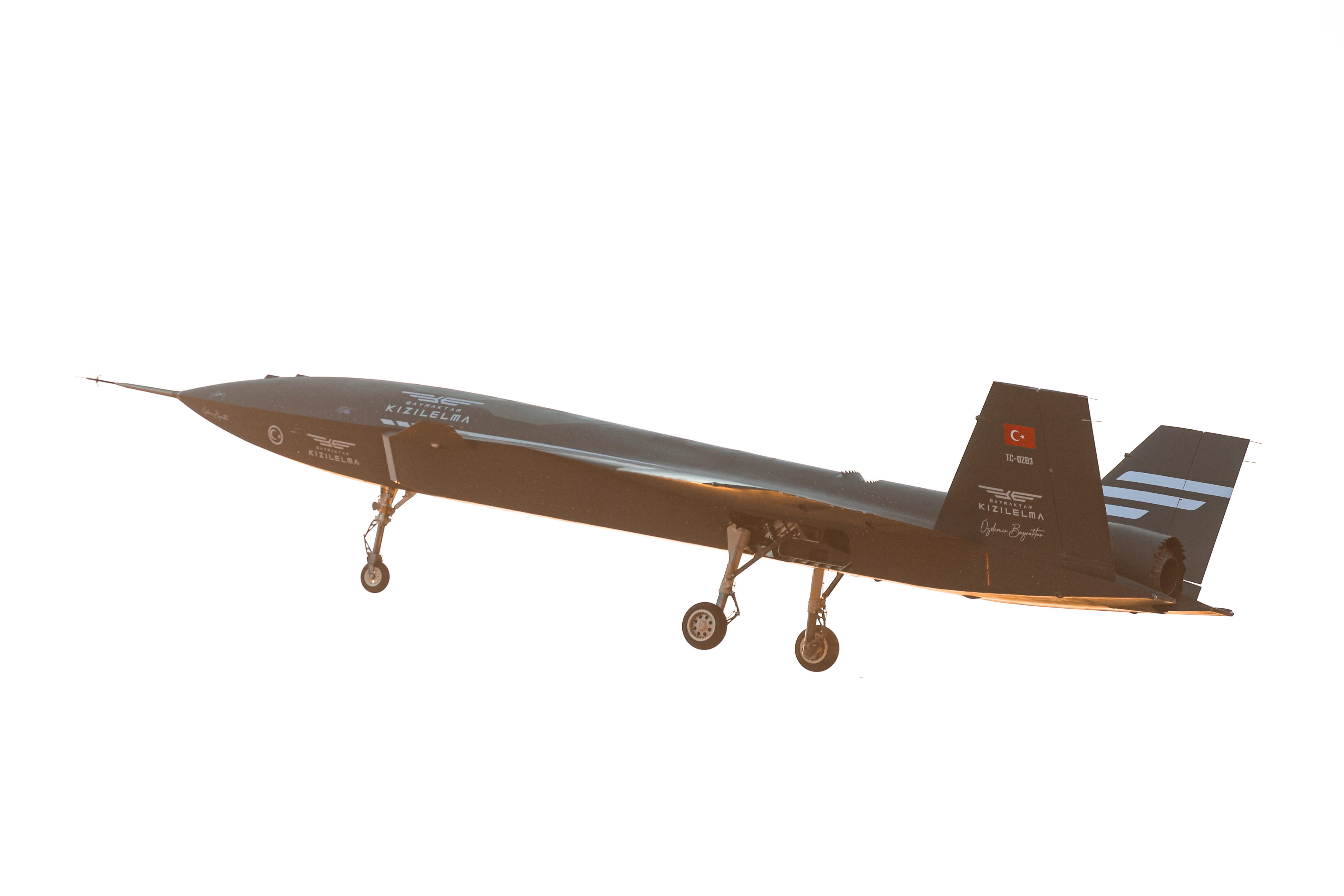
Sadly both payloads seem to surpass the limits, especially for the hunter which requires a long endurance.
Typically for work-ability we should divide them in three: Carrier platform (sonobuoys), A relay + ESM Node, A SAR platform and lastly the killer platform. The killer should also be agile and flow low&slow near the surface (which suits the TB3 but may as well require additional sensors) to launch the torpedo. Honestly too much of distribution that yields to inefficiency and elevated number of deck operations, which takes us to a new platform. We need a ship based drone with higher payload. Also note that, a few sonobuoys are not sufficient. There should be at least a few dozens laid on the field.
Moreover in doctrinal approach a LHD or AC shouldn't be occupied with ASW operations, it is the logic dictating it. It could support the destroyers, frigates in ASW operations nonetheless and be a relay node for MIMO integration of sonobuoys with ASW equipped ships.
Also, This the higher payload-land based TB3 version which Navy intends to couple with manned MPAs as forward nodes in laying sonobuoys, relaying the sonobuoy comms and SAR scanning within the hot zones.
Yes, when I did a more careful calculation, I noticed a discrepancy. 280 kg is the TB3's total payload capacity, not what's left after the EO camera, sonobuoy pods, MAD, and SAR are already loaded. Once you add those up (roughly 250-260 kg by my own numbers), there is realistically 20-30 kg left, not enough for a proper ESM suite plus AIS receiver. So yes, the Hunter config as I wrote it does not fit inside a single TB3, full stop. That is a math error on my part.
Given that, the three-way (or four-way) split you propose is basically correct, and I do not think it undermines the concept, it corrects it. Where I would push back is on the conclusion that this distribution automatically means the concept is inefficient enough to require a new, higher-payload ship-based platform. TB3 is already deck-qualified, already in the inventory, and already cheap relative to a clean-sheet naval UCAV program. A wing of four TB3s, each carrying one dedicated fit (sonobuoy layer, ESM/relay node, SAR, killer with ORKA), costs less airframe-development risk than waiting for a bigger platform, even if it means more deck cycles. The deck-ops penalty is real, but it is a tempo problem, not a feasibility problem, and TCG Anadolu's flight deck was sized with multiple simultaneous TB3 operations in mind from the start. Or, more accurately, TB3 itself was developed specifically around TCG Anadolu's operating constraints.
On sonobuoy count, agreed without reservation. Two 4-cell pods on one airframe was never meant to represent a complete field. The realistic employment model is cumulative: TB3's endurance lets it lay a partial pattern, return, rearm, and go back out, or hand off to a second airframe already airborne, building the field over several sorties rather than one. A few dozen buoys on station is the right order of magnitude, and that number only comes from stacking sorties, not from a single aircraft's pod count.
On doctrine, I think we actually agree more than the disagreement suggests. I was not arguing that TCG Anadolu should own an organic ASW kill chain, and if my post read that way, that is on the phrasing. The role I see for a TB3 ASW wing is closer to what you are describing: a forward sensor and relay layer, laying and monitoring a distributed sonobuoy field, feeding that picture back via MIMO-style integration to ASW-equipped frigates and destroyers, who retain the weapon-release decision. The ORKA-armed "killer" variant is the one part of this that does put a kill capability on the UCAV itself, and that is worth separating out as a distinct, more contentious piece of the concept rather than folding it into the sensor/relay argument. A carrier air wing doing search, classification, and cueing is a very different claim from a carrier air wing doing prosecution.
The land-based, higher-payload TB3 variant you mention is worth pulling into this too. If that version is meant to work alongside manned MPAs as forward nodes for buoy-laying, relay, and SAR in contested zones, it suggests Baykar and the Navy are already thinking in the distributed-node direction rather than a single do-everything airframe, which lines up with the correction above better than my original post did.
What I was really trying to show with the original post, math error aside, is that TB3 has genuine potential to play a highly effective role in the underwater tactical picture of the TCG Anadolu task group, not as a standalone ASW kill chain, but as the forward sensing and relay layer that makes the surface combatants' ASW picture sharper and faster than it would be without it. That is the part of the argument I still stand behind.