How New Chinese J-10C Fighters Provide Uzbekistan with a Major Upgrade Over its Soviet MiG-29s
Military Watch Magazine Editorial Staff
August-25th-2026
The confirmed delivery of the first J-10C fighters to Uzbekistan Air Force has represented the most significant milestone in for the service since its creation following the disintegration of the Soviet Union, as it moves to phase Soviet-era combat aircraft out of service. Reports indicate that Uzbekistan has placed orders for 24 J-10C fighters, the first two of which were delivered in July, which will allow it to fully phase its Soviet-built MiG-29s out of service. The MiG-29 and its heavier counterpart the Su-27 have formed the backbone of the Uzbekistan Air Force for most of the past 35 years, although Su-27s were phased out of service some time in the early 2020s due to their high operational costs.
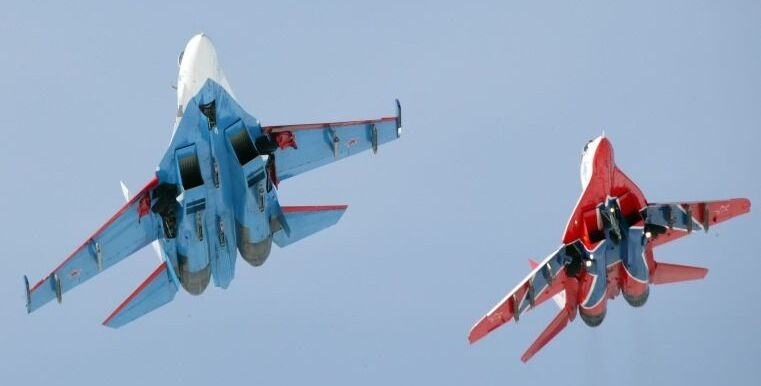
Su-27 (left) and MiG-29 Fighters
The contrast between the J-10C and Uzbekistan’s MiG-29s is particularly substantial because the two aircraft belong to very different technological generations. The MiG-29 was designed in the Soviet Union during the 1970s as a highly manoeuvrable air-superiority fighter intended primarily for operations relatively close to friendly airbases and ground-controlled interception networks. The J-10C, by contrast, was developed as a modern multirole fighter incorporating an AESA radar, digital avionics, datalinks satellite communications and access to cutting edge weaponry.
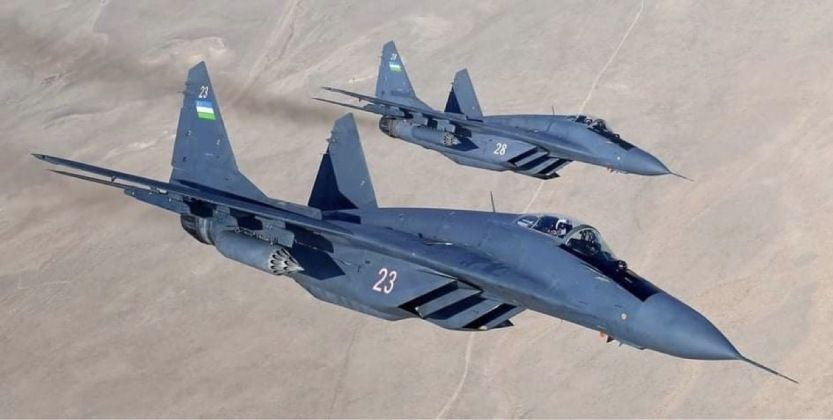
Uzbekistan Air Force MiG-29 Fighters
While the MiG-29 was designed with considerable modernisation potential, and was in the late 1980s in many respects the most capable light or medium weight fighter type in the world, the program received only minimal funding after the Soviet Union’s disintegration, resulting in a slow rate of improvements. While the modern MiG-29M and its derivative the MiG-35 are far more capable than Soviet era variants, their capabilities are significantly less advanced than those of the J-10C, reflecting both their lower priority status within the Russian defence sector, and China’s increasingly vast technological lead over Russia.
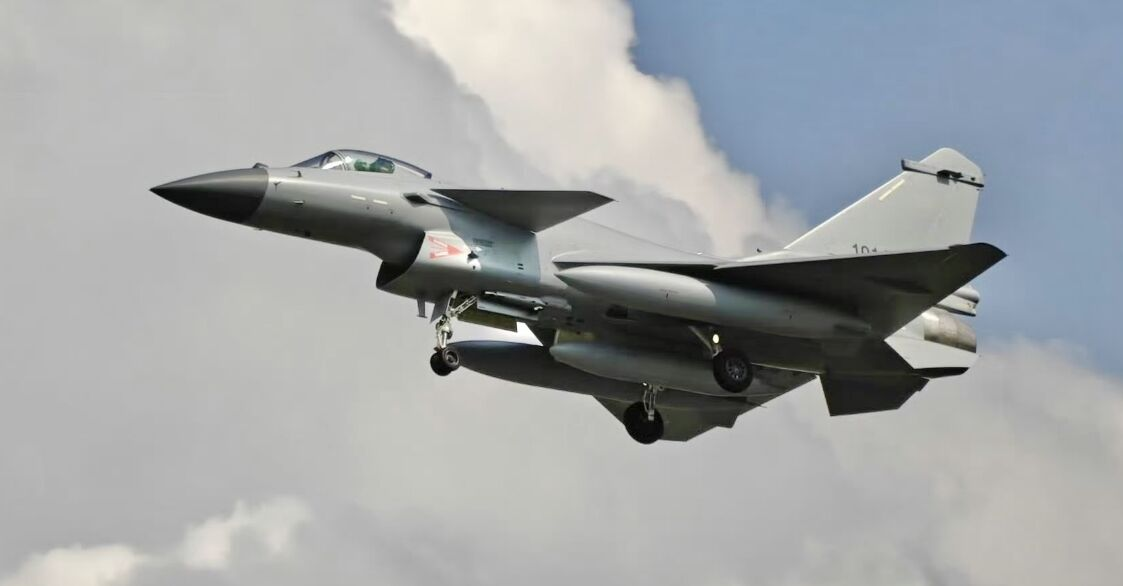
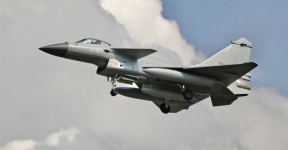
Uzbekistan Air Force J-10C
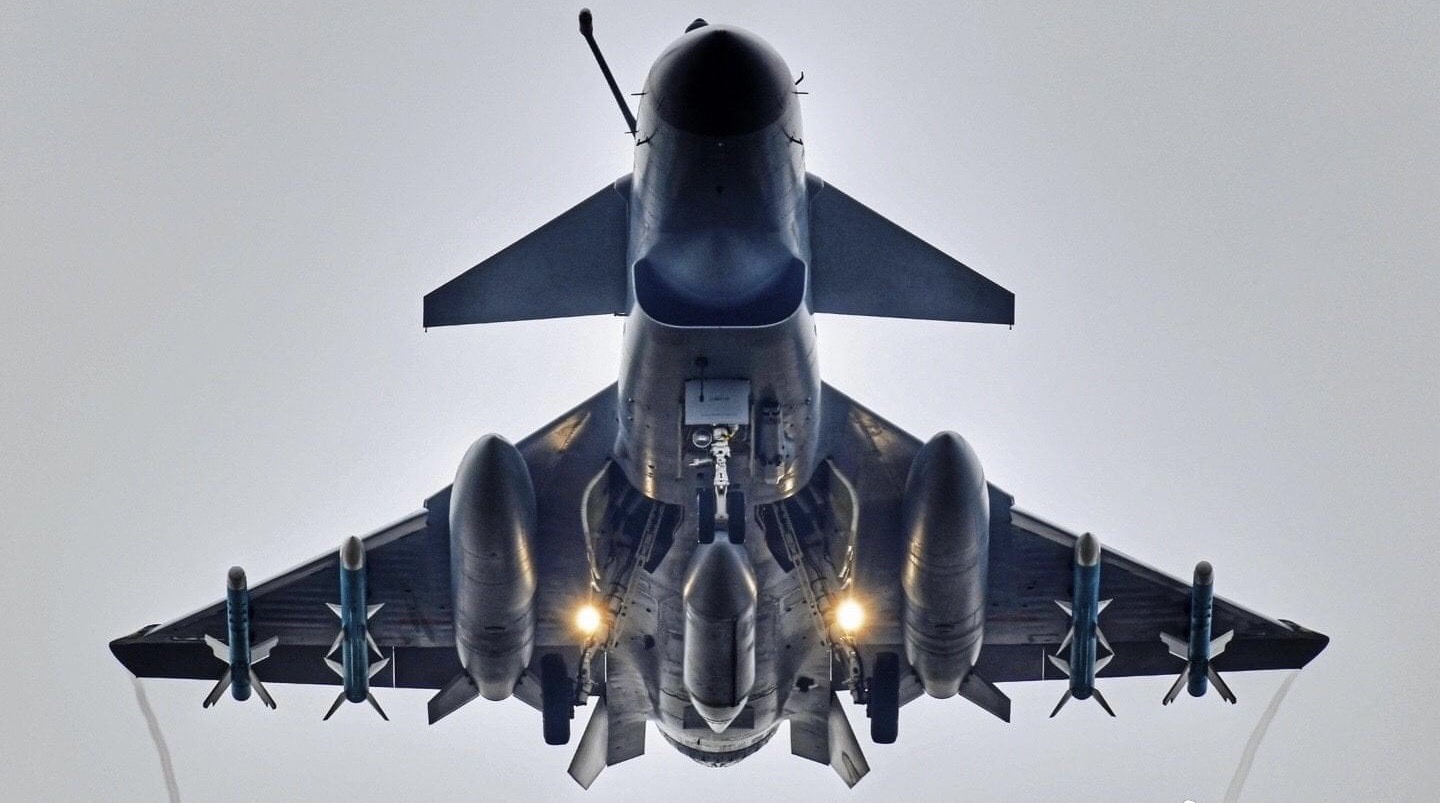
While the J-10C has a considerable advantage over the MiG-29M and MiG-35, this is more overwhelming when compared to Uzbekistan’s obsolete MiG-29s. The biggest single improvement is arguably the radar, as Uzbek MiG-29s integrate a radar with an architecture that dates back several decades, whereas the J-10C introduced an active electronically scanned array radar. AESA technology allows the fighter to rapidly scan large volumes of airspace, track multiple targets and maintain greater resistance to electronic countermeasures than older mechanically scanned systems. It can also improve detection and tracking of smaller or low-flying targets, making the J-10C substantially more versatile in both air-to-air and air-to-ground missions.
The difference becomes even more important when the radar is considered as part of a complete combat system rather than in isolation. The J-10C’s sensors can be connected through modern datalinks, allowing information from other aircraft and potentially ground-based sensors to contribute to its tactical picture. This reduces the need for the pilot to rely exclusively on what the fighter’s own radar can detect. An older MiG-29’s ability to participate in a modern networked air war is much more constrained.
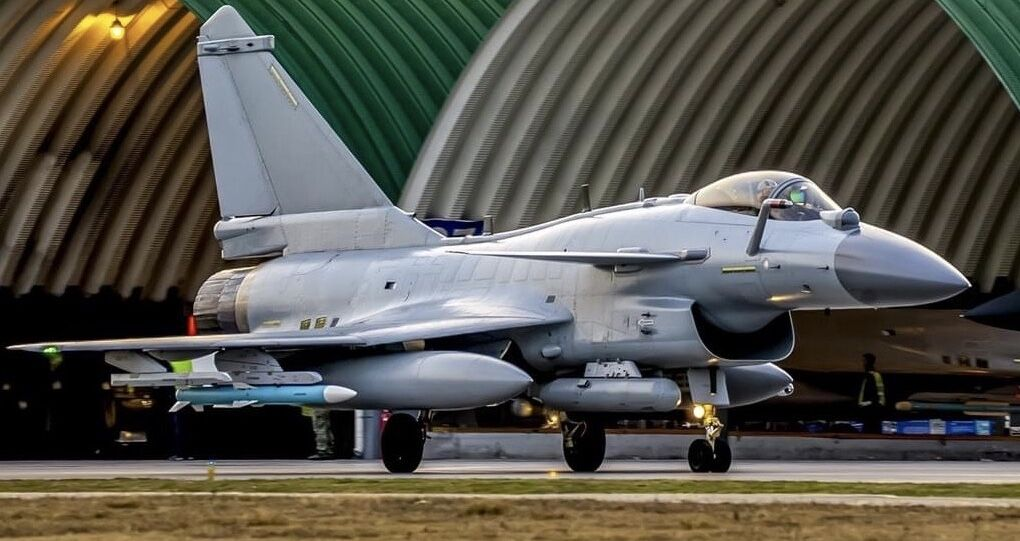
Chinese PLA Air Force J-10C Fighter
The J-10C also gives Uzbekistan access to a dramatically more capable beyond-visual-range air-combat system, with the PL-15 missile combining a range of close to 300 kilometres, with an AESA radar seeker, that latter which provides advantages in target acquisition, resistance to countermeasures and terminal engagement. The missile is among the most capable in the world. The PL-10 missile integrated for visual range combat has high-off-boresight capabilities with few rivals in the world, and while the MiG-29’s R-73 missile was world leading when introduced into service four decades ago, it has today been comfortably surpassed by newer Chinese technologies.
 militarywatchmagazine.com
Military Watch Magazine Editorial Staff
August-25th-2026
The confirmed delivery of the first J-10C fighters to Uzbekistan Air Force has represented the most significant milestone in for the service since its creation following the disintegration of the Soviet Union, as it moves to phase Soviet-era combat aircraft out of service. Reports indicate that Uzbekistan has placed orders for 24 J-10C fighters, the first two of which were delivered in July, which will allow it to fully phase its Soviet-built MiG-29s out of service. The MiG-29 and its heavier counterpart the Su-27 have formed the backbone of the Uzbekistan Air Force for most of the past 35 years, although Su-27s were phased out of service some time in the early 2020s due to their high operational costs.
Su-27 (left) and MiG-29 Fighters
The contrast between the J-10C and Uzbekistan’s MiG-29s is particularly substantial because the two aircraft belong to very different technological generations. The MiG-29 was designed in the Soviet Union during the 1970s as a highly manoeuvrable air-superiority fighter intended primarily for operations relatively close to friendly airbases and ground-controlled interception networks. The J-10C, by contrast, was developed as a modern multirole fighter incorporating an AESA radar, digital avionics, datalinks satellite communications and access to cutting edge weaponry.
Uzbekistan Air Force MiG-29 Fighters
While the MiG-29 was designed with considerable modernisation potential, and was in the late 1980s in many respects the most capable light or medium weight fighter type in the world, the program received only minimal funding after the Soviet Union’s disintegration, resulting in a slow rate of improvements. While the modern MiG-29M and its derivative the MiG-35 are far more capable than Soviet era variants, their capabilities are significantly less advanced than those of the J-10C, reflecting both their lower priority status within the Russian defence sector, and China’s increasingly vast technological lead over Russia.
Uzbekistan Air Force J-10C
While the J-10C has a considerable advantage over the MiG-29M and MiG-35, this is more overwhelming when compared to Uzbekistan’s obsolete MiG-29s. The biggest single improvement is arguably the radar, as Uzbek MiG-29s integrate a radar with an architecture that dates back several decades, whereas the J-10C introduced an active electronically scanned array radar. AESA technology allows the fighter to rapidly scan large volumes of airspace, track multiple targets and maintain greater resistance to electronic countermeasures than older mechanically scanned systems. It can also improve detection and tracking of smaller or low-flying targets, making the J-10C substantially more versatile in both air-to-air and air-to-ground missions.
The difference becomes even more important when the radar is considered as part of a complete combat system rather than in isolation. The J-10C’s sensors can be connected through modern datalinks, allowing information from other aircraft and potentially ground-based sensors to contribute to its tactical picture. This reduces the need for the pilot to rely exclusively on what the fighter’s own radar can detect. An older MiG-29’s ability to participate in a modern networked air war is much more constrained.
Chinese PLA Air Force J-10C Fighter
The J-10C also gives Uzbekistan access to a dramatically more capable beyond-visual-range air-combat system, with the PL-15 missile combining a range of close to 300 kilometres, with an AESA radar seeker, that latter which provides advantages in target acquisition, resistance to countermeasures and terminal engagement. The missile is among the most capable in the world. The PL-10 missile integrated for visual range combat has high-off-boresight capabilities with few rivals in the world, and while the MiG-29’s R-73 missile was world leading when introduced into service four decades ago, it has today been comfortably surpassed by newer Chinese technologies.
How New Chinese J-10C Fighters Provide Uzbekistan with a Major Upgrade Over its Soviet MiG-29s
The confirmed delivery of the first J-10C fighters to Uzbekistan Air Force has represented the most significant milestone in for the service since its creation following the disintegration of the Sov…
Attachments
-
 1788074034838.png164.7 KB · Views: 55
 -
 1788074086908.png329.6 KB · Views: 52
 -
 1788074204498.png251.9 KB · Views: 60
Last edited: