
You are using an out of date browser. It may not display this or other websites correctly.
You should upgrade or use an alternative browser.
You should upgrade or use an alternative browser.


Who set the targets and did it (source)?Next year's target is 11 bn. IMHO, passing 10 bn is important we can now safely say that our defense industry sector is mostly self-sufficient.

From the current 1.7% and 11th position I am guessing we can get to the 6th position with 5% in the next 5 years by the end of 2030 which requires 24% year over year increase for 5 years. This means nearly 3 times the current values. This can peak by 2035 when we hit 8% and 4th position. Table is SIPRI arms transfer list.
There's nothing to suggest that countries ahead of us won't increase their exports are similar levels.View attachment 78703
From the current 1.7% and 11th position I am guessing we can get to the 6th position with 5% in the next 5 years by the end of 2030 which requires 24% year over year increase for 5 years. This means nearly 3 times the current values. This can peak by 2035 when we hit 8% and 4th position. Table is SIPRI arms transfer list.
Russia is probably expected to lose few more positions, but none of the European countries are losing market share; they all have very large conglomerates that are basically printing money and those countries will get the lion's share from EU rearmament.
Israel is not shunned enough to be booted from EU tenders and they are signing huge contracts left and right. Their industry is largely unaffected from the war.
Korea has matured to the point that it is now not only winning huge multi year contracts worth billions, but it is also managing to replace both US and Russia in some places, most importantly in the gulf. They are now also entering American market in subsystems and shipbuilding as well.
Top 10 is really hard to crack and there will be other contenders in the next decade, like a Japan that remembered it could actually sell weapons which started winning huge contracts as soon as they started offering their stuff like in Australia recently.
I'm hopeful, but I don't see us entering top 10 in this decade. We've probably hit a plateau at 11th and will continue increasing USDs earned but not entering the top 10.
There are climbers like the countries you mentioned but the US has 43% which is not sustainable.There's nothing to suggest that countries ahead of us won't increase their exports are similar levels.
Russia is probably expected to lose few more positions, but none of the European countries are losing market share; they all have very large conglomerates that are basically printing money and those countries will get the lion's share from EU rearmament.
Israel is not shunned enough to be booted from EU tenders and they are signing huge contracts left and right. Their industry is largely unaffected from the war.
Korea has matured to the point that it is now not only winning huge multi year contracts worth billions, but it is also managing to replace both US and Russia in some places, most importantly in the gulf. They are now also entering American market in subsystems and shipbuilding as well.
Top 10 is really hard to crack and there will be other contenders in the next decade, like a Japan that remembered it could actually sell weapons which started winning huge contracts as soon as they started offering their stuff like in Australia recently.
I'm hopeful, but I don't see us entering top 10 in this decade. We've probably hit a plateau at 11th and will continue increasing USDs earned but not entering the top 10.
We have come thus far with only drones, ammunition and smaller other additions. When we add jet fighters, tanks and air defences it is not far fetched to triple the current volumes. Kaan will be the sole new comer in the fifth gen market for 6-7 years at least so will Kızılelma be the sole contender for some years. When there is so much movement it is hard to guess the composition. But moving from 1.7% to 5% is not huge when the market is tripling and our offerings are not so selective.

YeşilVatan
Contributor
I don't think major arms trades like tanks and jets are technical decisions. Those are mostly geopolitical / macro-economic in essence. That is why this scenario is not really plausible unless something seriously changes. And to be honest it really can, I just don't think it's going to change in the way it needs to for this to happen.
What needs to happen is Europeans wise up and buy our drones in droves (heh, pun) and then gulf arabs follow suit. Americans AND Chinese somehow need to lose market share while this happens. Coupled with numerous big sales to global south, and Pakistan & Azerbaijan making it rain for KAAN. And throughout all this there is no big instability issues that would stop the industry from growing.
That is the only way Turkey can be 6th. And let's be honest it's a long, long, long shot. Dream big but be realistic.
What needs to happen is Europeans wise up and buy our drones in droves (heh, pun) and then gulf arabs follow suit. Americans AND Chinese somehow need to lose market share while this happens. Coupled with numerous big sales to global south, and Pakistan & Azerbaijan making it rain for KAAN. And throughout all this there is no big instability issues that would stop the industry from growing.
That is the only way Turkey can be 6th. And let's be honest it's a long, long, long shot. Dream big but be realistic.
Hürjet will be called Saeta II in Spanish service; a nod to the original Saeta, a trainer from 60s and the first jet powered Spanish aircraft.
Translating the above article, looks like Roberto did a great job on creating a summary. Underscores are my notes:
"Spain has given the green light to the acquisition (although it is still pending formal award and signing) of the Turkish TAI Hürjet to transform it into the advanced flight training system (ITS-C) , intended to replace the veteran Northrop F-5Ms of Wing 23. This program not only involves the purchase of aircraft, but also the development of a state-of-the-art integrated training system with strong involvement from Spanish industry .
This transformation also includes a change in its name, which shifts from a tribute to the legendary Turkish pilot Vecihi Hürkuş to that of a legend in Spanish aeronautical history, the Hispano Aviación HA-200 Saeta . From now on, it will be known as Saeta II .
The total cost is distributed as follows:
Bit related:
DSCA notice for Spanish purchase of F404 related equipment. Spain at this time have no issues getting parts for its engines. This is more than likely related to F-18s and not Hürjets.
Translating the above article, looks like Roberto did a great job on creating a summary. Underscores are my notes:
"Spain has given the green light to the acquisition (although it is still pending formal award and signing) of the Turkish TAI Hürjet to transform it into the advanced flight training system (ITS-C) , intended to replace the veteran Northrop F-5Ms of Wing 23. This program not only involves the purchase of aircraft, but also the development of a state-of-the-art integrated training system with strong involvement from Spanish industry .
This transformation also includes a change in its name, which shifts from a tribute to the legendary Turkish pilot Vecihi Hürkuş to that of a legend in Spanish aeronautical history, the Hispano Aviación HA-200 Saeta . From now on, it will be known as Saeta II .
Program cost and expenditure allocation
The Spanish government has authorized a contract worth an estimated €3.12 billion for the acquisition of the ITS-C, based on the Turkish Aerospace Industries (TAI) Hürjet . The program is expected to produce 45 aircraft , although the official figure is yet to be confirmed.The total cost is distributed as follows:
- Direct acquisition of the aircraft: approximately 1.6 billion euros .
- Integrated teaching system (ITS-C) and national development: around €1.52 billion(approximately 49% of the total), which includes:
- "Spanishization" and adaptation: development and installation of higher performance equipment, electronics and systems developed by the national industry, with pre-financing of 1,040 million euros for Phase 1/2.
- Infrastructure: construction of hangars, buildings that will house the simulation center and software and systems development centers at the Talavera la Real base (Badajoz) .
Program structure and platform
The program will be structured as an integrated teaching system (ITS-C) that combines:- Hürjet aircraft: advanced training aircraft that will replace the F-5M.
- National customization: the platform will be adapted and integrated with avionics, systems and equipment developed by the Spanish industry (such as Indra or GMV) to meet NATO training and combat standards, possibly including the upgrade of the integrated training system.
- Simulators and synthetic subsystems: complete ground training system to maximize pilot training, including the development of ground software for mission preparation.
Training and simulation
The main objective is a generational leap in the training of fighter pilots , adapting them to new generation aircraft (such as the Eurofighter and the future FCAS ).- Type of training: The aim is to create a fighter and attack training system for the advanced phase of pilot training. The platform, with two tandem seats and fly-by-wire controls , offers supersonic performance (Mach 1.4) and the ability to simulate modern combat conditions.
- Simulation: The system will include ground-based simulators and synthetic subsystems . Advanced training aircraft typically use radar simulations instead of actual radars (as would be the case in a light attack version), and the Spanish industry will play a key role in the development of this training and simulation software package .
Light attack and Eagle Patrol versions
Light Attack Version (LCA)
- Existence and relevance: The TAI Hürjet-Saeta II was originally conceived as an advanced training aircraft and light combat aircraft (LCA) . Its capabilities, including supersonic speed and a payload of up to 3,000 kg , make it suitable for this role.
- Use by Spain: The 45 Saeta II aircraft will initially be acquired as part of the training system (ITS-C). However, their dual nature as an LCA/advanced trainer means the platform has the potential to be used in light attack, close air support, or air patrol missions , if necessary and with the integration of relevant weapon systems (such as a real radar , systems not typically carried by the advanced training version). The replacement of the F-5M , which also had some attack capability, suggests that this duality is an advantage .
Eagle Patrol version
- Lack of confirmation: there is no updated data confirming plans for the Saeta II to replace the C-101 Aviojet or the Pilatus PC-21 (which are already replacing the C-101 in basic/intermediate training) in the Patrulla Águila .
- Alternatives: The basic/aerobatic trainer role is being covered by the PC-21 . The Hürjet, being a larger and more powerful supersonic aircraft , is focused on advanced fighter and attack training , a role distinct from purely aerobatic.
Industrial participation (Türkiye and Spain)
The program will be developed under a temporary joint venture (UTE), ensuring a sharing of the workload and technology transfer.- Turkish industry (TAI):
- Initial platform: TAI designed and developed the Hürjet platform.
- Initial manufacturing: the structure of the 45 Saeta II will be manufactured by Turkish Aerospace Industries in Türkiye.
- Technical support: participation as a main partner in the joint venture for development and support.
- Spanish industry (Airbus, Indra, GMV, etc.):
- National coordination and leadership: Airbus Defence and Space Spain will act as national coordinator and driving force of the Spanish industry.
- Conversion and systems: The aircraft will arrive from Türkiye at the Airbus Defence and Space facilities in Spain for a conversion and adaptation process that will include the integration of:
- Spanish avionics and electronics.
- ground simulation systems (hardware and software).
- development of ground and mission software (with companies such as Indra or GMV).
- Partial production and maintenance: the manufacture of part of the aircraft in Spain and in-service support for 30 years are also part of the agreement, reinforcing Airbus' facilities in Albacete.
Bit related:
DSCA notice for Spanish purchase of F404 related equipment. Spain at this time have no issues getting parts for its engines. This is more than likely related to F-18s and not Hürjets.
Last edited:

That last figure cannot be what TAI is getting from this deal.This explains the seemingly high average unit cost when the total program cost (€3.12 billion) is divided by 45 units, resulting in approximately €69.33 million per aircraft, including all systems and associated infrastructure. However, the actual cost per aircraft (the Hürjet platform alone) is estimated at between €18 and €20 million per unit .

You are correct. The article has contradictions within itself. At one point it says:That last figure cannot be what TAI is getting from this deal.
- Direct acquisition of the aircraft: approximately 1.6 billion euros .
There isn’t enough detailed information in that article.
We know that a certain number of planes will be sold complete, with a view for the Spanish to alter some aspects to suit their needs. Certain number will be co-produced with a great deal of work being done by Spanish Airbus. We don’t know what TAI will get for being the owner of the design. Even with these, a lot of labour intensive parts will be produced by TAI to get an economical cost base. None of that is mentioned in that article.
Last edited:


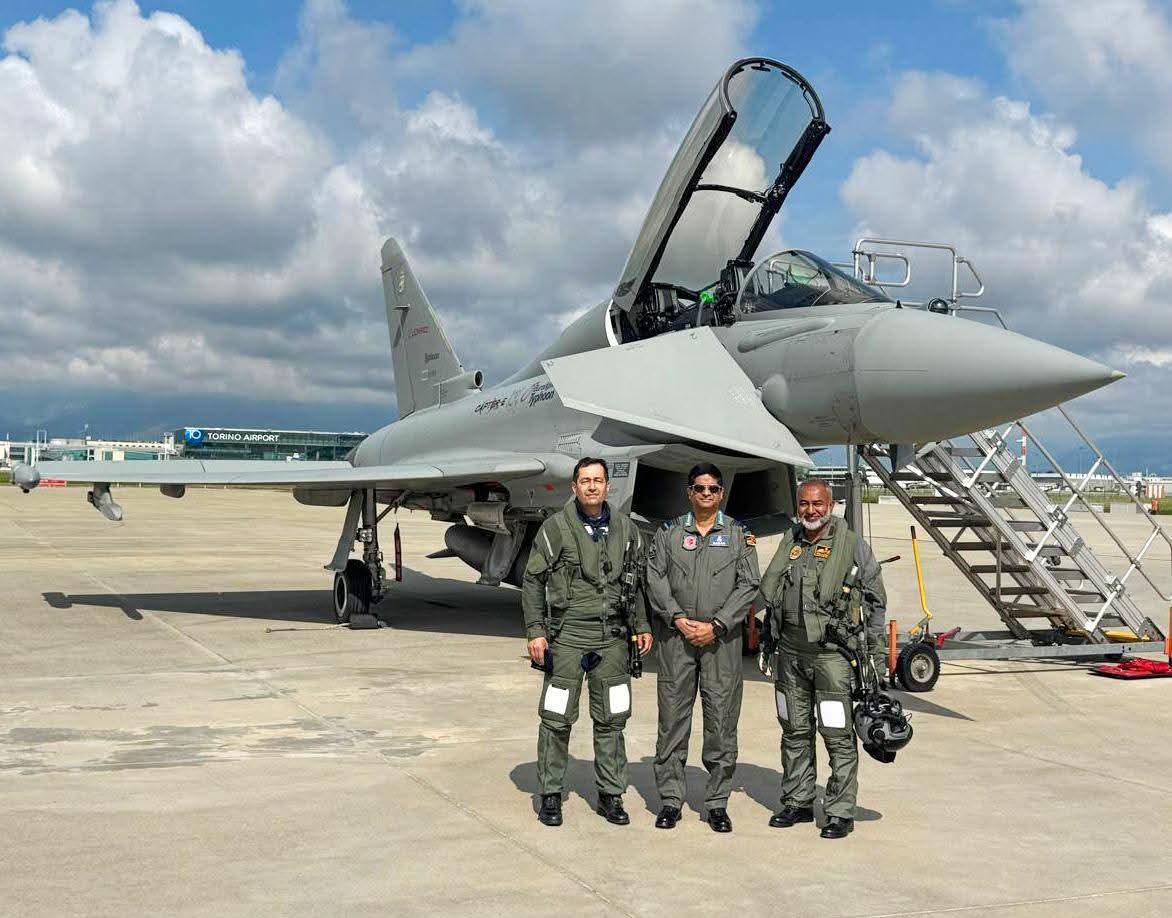
There are news coming in that Bangladesh is lining up to buy 6 Atak-129 helicopters in addition to the 10 Typhoons.

 defencesecurityasia.com
Bangladesh’s Airpower Leap: Ten Eurofighter Typhoons and Six T-129 ATAK Attack Helicopters Set to Redefine South Asia’s Aerial Balance - Defence Security Asia
Bangladesh plans to acquire Eurofighter Typhoon fighters and T-129 ATAK helicopters, reshaping its air force, deterrence posture, and South Asian airpower balance.
defencesecurityasia.com

Pokemonte13
Contributor
I know those news. It is always the sameThere are news coming in that Bangladesh is lining up to buy 6 Atak-129 helicopters in addition to the 10 Typhoons.
Bangladesh’s Airpower Leap: Ten Eurofighter Typhoons and Six T-129 ATAK Attack Helicopters Set to Redefine South Asia’s Aerial Balance - Defence Security Asia
Bangladesh plans to acquire Eurofighter Typhoon fighters and T-129 ATAK helicopters, reshaping its air force, deterrence posture, and South Asian airpower balance.
Last year there were reports that they were going to buy tulpar or something else. Nothing happened
Last edited by a moderator:


There are news coming in that Bangladesh is lining up to buy 6 Atak-129 helicopters in addition to the 10 Typhoons.
View attachment 78837
Bangladesh’s Airpower Leap: Ten Eurofighter Typhoons and Six T-129 ATAK Attack Helicopters Set to Redefine South Asia’s Aerial Balance - Defence Security Asia
Bangladesh plans to acquire Eurofighter Typhoon fighters and T-129 ATAK helicopters, reshaping its air force, deterrence posture, and South Asian airpower balance.
10x Typhoon, 20x J10CE, 16x JF17 B3, 6x T-129 these are all platforms of interest to BAF.
Only thing so far made any credible progress is Typhoon. I can guarantee you it won't be 10x typhoon along with 20x J10CE and 6x T129 as many are hoping.
It's gonna be 12/16 Typhoon (a squadron) and then it's done. There simply isn't much fund available to do these at the same time. T129 maybe at sometimes later.
However, what made some credible progress is a strategic framework agreement that would stablish a joint executive body to plan, prepare and execute joint ventures between BD and Turkiye. Would likely start with smaller stuff. I.e. local manufacturing of radios and similar things.


 A HISTORICAL EXPORT SUCCESS HAS BEEN ACHIEVED IN OUR DEFENSE INDUSTRY ONCE AGAIN! - HÜRJET EXPORT WORTH 2.6 BILLION EUROS…
Turkey's first national jet training aircraft HÜRJET has been officially selected by the Spanish Air and Space Forces with a 30-unit export package, marking a historic export success for our defense industry.
This step is a concrete indicator that Turkey has reached the position of a trusted, preferred, and leading exporter country in the defense industry.
Deliveries are planned to begin in 2028 within the scope of the program, which has a total project budget of 2.6 billion Euros.
Hang on hang on, does this count as part of 2025 exports? If it does the exports is 8.6+3.06 = US$ 11.66 bn
Turkey's first national jet training aircraft HÜRJET has been officially selected by the Spanish Air and Space Forces with a 30-unit export package, marking a historic export success for our defense industry.
This step is a concrete indicator that Turkey has reached the position of a trusted, preferred, and leading exporter country in the defense industry.
Deliveries are planned to begin in 2028 within the scope of the program, which has a total project budget of 2.6 billion Euros.
Last edited:
I can imagine that they split the payments. One part could be counted for fiscal year 26’ the rest as followed.Hang on hang on, does this count as part of 2025 exports? If it does the exports is 8.6+3.06 = US$ 11.66 bn
MOU and firm deals are different, we will see.It is not counted. In IDEF 25 there was around 15 billion dollars deals signed.
I believe yearly figures end by november. And for something to be counted, it needs to be "billed".Hang on hang on, does this count as part of 2025 exports? If it does the exports is 8.6+3.06 = US$ 11.66 bn

Hang on hang on, does this count as part of 2025 exports? If it does the exports is 8.6+3.06 = US$ 11.66 bn
That’s not how it works. It will only be recognised at key milestones/delivery. So no meaningful impact on numbers till 2027 at least


