Foreign solutions brought with the claim “This armor is better.”
The Engineering Director of the Operations and Energetic Systems Group at Roketsan at the time said:
“The main goal of armor systems is to provide the highest level of protection with the lowest possible weight. This is an optimization problem and one of the toughest tests of engineering capability. While working on the Altay Project, many foreign armor manufacturers presented their products to us, and opinions were expressed that these products were better. However, we argued that these armors needed to be tested according to Altay’s needs and the project requirements, especially within the scope of the threats directed at Altay.
These armors obtained from abroad were tested at the open test field in Şereflikoçhisar under the supervision of all relevant parties. As a result of the tests, it became clear that none of the foreign products performed as successfully as the armor we had developed. While we were trying to develop an armor system with national capabilities, foreign solutions were often brought to us with the claim that ‘this armor is better,’ which affected our motivation to some extent. However, the process actually created an opportunity to test our own work. The results obtained from the tests showed that we were on the right path and that our efforts had not been in vain.”
Murat Yalçıntaş / The Unknown Story of the New Altay
Was the armor of the Turkish ALTAY tank purchased from South Korea?
The Engineering Director of the Operations and Energetic Systems Group at Roketsan at the time said:
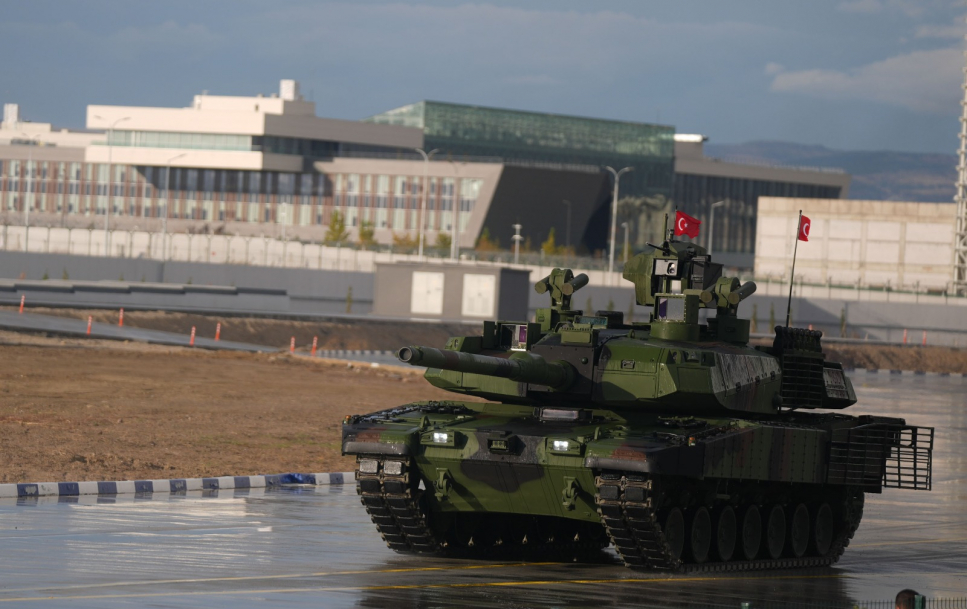
“There is a common misconception that the armor of the Korean K2 tank was transferred through technology transfer and applied to the Altay. In reality, Altay’s armor system was designed entirely from scratch in accordance with the requirements defined by the Turkish Armed Forces. It was developed to be resistant to both kinetic and chemical energy munitions. One of the most important features of this system is that it was designed modularly together with the hull. In this way, the best weight-performance ratio was achieved.
In other words, we are not talking about an ‘add-on’ armor system that was added later, but about a protection system integrated into the structural design of the tank. This not only provided highly effective protection-weight optimization but also strengthened the structural integrity of the tank. By especially reducing edge and corner effects, we achieved a much higher level of protection. This superiority was also proven in tests conducted under the supervision of the SSM and the Turkish Armed Forces. In these aspects, Altay’s armor system is at a much more advanced level than the armor systems of its peer main battle tanks.
The design requirements of the Altay tank were much higher than those of Korea’s K2 tank. For this reason, after a certain stage of the project, Korean engineers also began to need new data. Since the ballistic behavior of materials and armor design vary according to threat level, the data we needed was not available to them. We worked together at many points of the design and during system reviews, but the creation of the required data was achieved entirely through our own efforts. The biggest contribution of the technical support provider was in infrastructure. Korean engineers played an important role in quickly supplying equipment from Korea and installing it here. In addition, we received initial baseline data from them at the very beginning of the design. However, all subsequent achievements and developments were obtained through the joint work of Roketsan’s armor team and Otokar’s system design teams.”
Murat Yalçıntaş / The Unknown Story of the New Altay
ALTAY Project | “The President was following defense industry projects with great attention.”
While the ALTAY project was ongoing, the dialogue between President Recep Tayyip Erdoğan and the then head of the Presidency of Defense Industries, İsmail Demir, was described by Demir as follows:
“It was during my first days after taking office. One day, President Recep Tayyip Erdoğan called me and asked, ‘Mr. İsmail, I heard that the Altay tank’s firing is not accurate. Is that true?’ This surprised me quite a bit because I had no such information. In the presentations that had been made, no problem had been mentioned. I immediately gathered the relevant team and brought up the issue. At first, my colleagues stated that there was no such problem. However, when we questioned the matter in detail, it turned out that during firing tests the tank had not fully reached the desired IAVI values. Apparently a group already knew about the issue, and since the tests were still ongoing, it had not been reported because it was expected that the problem would soon be resolved. And that is exactly what happened; our engineers worked with great dedication and fixed the issue in a short time. The problem here was that the team initially did not consider the situation very important and did not escalate it through all levels, assuming it would be resolved.
The President was following defense industry projects with great attention.”
Murat Yalçıntaş / The Unknown Story of the New Altay




www.iletisim.gov.tr


