

Latest Thread
- Russia ZAK-30 Tsitadel anti-aircraft artillery system: overview and operation
- Bangladesh Seoul welcomes Dhaka's interest in strengthening defence ties
- Bangladesh Modernise armed forces, replace outdated machinery: Parliamentary body
- Piercing the illusion of the 'Indian Century', the Indian economy shows a fragile background
- Kyrgyzstan rejects European proposal to accept migrants
You are using an out of date browser. It may not display this or other websites correctly.
You should upgrade or use an alternative browser.
You should upgrade or use an alternative browser.
Bangladesh News Bangladesh Foreign Affairs
- Thread starter Isa Khan
- Start date

Two Bangladesh Navy personnel underwent Guns Orientation and Maintenance Course at Pakistan Navy Ordnance Training School (OTS), Mauripur. The training aimed to enhance their skills in weapon handling. Upon completion of the course, Commander Logistics awarded certificates to both trainees. Participation of Bangladesh Navy personnel in the course reflects commitment to mutual cooperation between both navies.
The Advisory Council of the interim government has approved the establishment of embassies in Buenos Aires, the capital of Argentina, and Dublin, Ireland.
The decision came during the 48th meeting of the Advisory Council on Thursday, chaired by Chief Advisor Mohammad Yunus, according to a media statement from his office.
Earlier, on Jun 2, the Ministry of Foreign Affairs had written to the finance ministry seeking administrative approval and the creation of different posts for new diplomatic missions across five countries.
The proposal also included Norway’s Oslo, Germany’s Frankfurt, and Brazil’s São Paulo.
The ministry highlighted that diplomatic presence in these strategically important locations would not only unlock new economic opportunities but also contribute to a dynamic, multidimensional, and forward-looking foreign policy.
It said Ireland’s technology-driven and education-friendly environment would facilitate access to IT, healthcare, and higher education sectors, while Argentina, as a regional power in Latin America, would enhance export access, agricultural cooperation, and Bangladesh’s visibility in the Global South.

 bdnews24.com
The decision came during the 48th meeting of the Advisory Council on Thursday, chaired by Chief Advisor Mohammad Yunus, according to a media statement from his office.
Earlier, on Jun 2, the Ministry of Foreign Affairs had written to the finance ministry seeking administrative approval and the creation of different posts for new diplomatic missions across five countries.
The proposal also included Norway’s Oslo, Germany’s Frankfurt, and Brazil’s São Paulo.
The ministry highlighted that diplomatic presence in these strategically important locations would not only unlock new economic opportunities but also contribute to a dynamic, multidimensional, and forward-looking foreign policy.
It said Ireland’s technology-driven and education-friendly environment would facilitate access to IT, healthcare, and higher education sectors, while Argentina, as a regional power in Latin America, would enhance export access, agricultural cooperation, and Bangladesh’s visibility in the Global South.
Bangladesh approves missions in Argentina, Ireland to strengthen global presence
The move will enhance Bangladesh’s ability to advance its interests within host countries’ policy-making, says the foreign ministry
bdnews24.com
Highlights:
Bhutan will carry out its first trial run under the traffic-in-transit agreement signed with Bangladesh, as a 15-tonne consignment is set to move from Chattogram Port to Burimari land port and onward to Bhutan through Indian territory during Bhutanese Prime Minister Tshering Tobgay's Bangladesh visit.
Once the second trial run is completed, the South Asian landlocked country will be able to transport goods regularly through Bangladesh, using Chattogram Port and travelling 684 kilometres across Bangladeshi territory, commerce ministry officials said yesterday.
Bhutanese Prime Minister Tshering Tobgay will visit Bangladesh from 22 to 24 November and will receive VVIP protocol during the trip, a government gazette notification said.
Asked about progress on the trial transit, Commerce Secretary Mahbubur Rahman told The Business Standard that Bangladesh has already issued written consent to the port authorities and the National Board of Revenue to facilitate the movement of Bhutanese cargo.
He said there will be no bilateral meeting on trade or investment between the commerce ministries during the visit.
"We have been invited to a dinner to be hosted by the chief adviser's chief adviser on Saturday night," he said, adding that the next commerce secretary-level meeting with Bhutan is scheduled for January.
Bangladesh signed the "Agreement on the Movement of Traffic-in-Transit" and its protocol with Bhutan on 22 March 2023. At a commerce secretary-level meeting in Bhutan in April last year, both sides agreed that the agreement would come into effect after completing two trial runs at mutually convenient times.
In October, Bhutan informed Bangladesh through a note verbale that a 15-ton shipment had been loaded for Chattogram Port for the first trial run and designated M/s Abhi Cargo Company to handle the process. The goods were imported from Thailand.
Earlier, Bangladesh completed four trial runs under its transit agreement with India ahead of the December 2024 national election. Although the agreement was expected to move into implementation, no progress has been made since the change of government.
Commerce ministry officials said transit charges and fees for India's use of Chattogram and Mongla ports were previously set through an inter-governmental committee. Under the Bhutan agreement, a joint technical committee is supposed to determine charges and fees.
However, Bhutan requested the trial run before the committee was formed and before charges were finalised, officials said. Since the consignment has already reached Chattogram Port, Bangladesh is preparing to conduct the trial as a friendly gesture.
For Bhutan's trial transit, Bangladesh has set a document processing fee of Tk30 per consignment, a transshipment fee of Tk20 per tonne, a security charge of Tk100 per tonne, an escort fee of Tk85 per kilometre per container, administrative charges of Tk100 per tonne and a scanning fee of Tk254 per container. Road tolls and corridor user fees will be determined by the Ministry of Road Transport and Bridges.

 www.tbsnews.net
- Trial run coincides with Bhutan PM Tshering Tobgay's 22–24 Nov Dhaka visit
- Bangladesh already issued clearance to port and customs authorities
- No trade talks planned during this visit; next secretary-level meeting in Jan
- Second trial run needed before transit begins regular commercial use
Bhutan will carry out its first trial run under the traffic-in-transit agreement signed with Bangladesh, as a 15-tonne consignment is set to move from Chattogram Port to Burimari land port and onward to Bhutan through Indian territory during Bhutanese Prime Minister Tshering Tobgay's Bangladesh visit.
Once the second trial run is completed, the South Asian landlocked country will be able to transport goods regularly through Bangladesh, using Chattogram Port and travelling 684 kilometres across Bangladeshi territory, commerce ministry officials said yesterday.
Bhutanese Prime Minister Tshering Tobgay will visit Bangladesh from 22 to 24 November and will receive VVIP protocol during the trip, a government gazette notification said.
Asked about progress on the trial transit, Commerce Secretary Mahbubur Rahman told The Business Standard that Bangladesh has already issued written consent to the port authorities and the National Board of Revenue to facilitate the movement of Bhutanese cargo.
He said there will be no bilateral meeting on trade or investment between the commerce ministries during the visit.
"We have been invited to a dinner to be hosted by the chief adviser's chief adviser on Saturday night," he said, adding that the next commerce secretary-level meeting with Bhutan is scheduled for January.
Bangladesh signed the "Agreement on the Movement of Traffic-in-Transit" and its protocol with Bhutan on 22 March 2023. At a commerce secretary-level meeting in Bhutan in April last year, both sides agreed that the agreement would come into effect after completing two trial runs at mutually convenient times.
In October, Bhutan informed Bangladesh through a note verbale that a 15-ton shipment had been loaded for Chattogram Port for the first trial run and designated M/s Abhi Cargo Company to handle the process. The goods were imported from Thailand.
Earlier, Bangladesh completed four trial runs under its transit agreement with India ahead of the December 2024 national election. Although the agreement was expected to move into implementation, no progress has been made since the change of government.
Commerce ministry officials said transit charges and fees for India's use of Chattogram and Mongla ports were previously set through an inter-governmental committee. Under the Bhutan agreement, a joint technical committee is supposed to determine charges and fees.
However, Bhutan requested the trial run before the committee was formed and before charges were finalised, officials said. Since the consignment has already reached Chattogram Port, Bangladesh is preparing to conduct the trial as a friendly gesture.
For Bhutan's trial transit, Bangladesh has set a document processing fee of Tk30 per consignment, a transshipment fee of Tk20 per tonne, a security charge of Tk100 per tonne, an escort fee of Tk85 per kilometre per container, administrative charges of Tk100 per tonne and a scanning fee of Tk254 per container. Road tolls and corridor user fees will be determined by the Ministry of Road Transport and Bridges.
Bhutan begins first trial transit of goods via Bangladesh on 22-24 Nov
The 15-ton consignment will move from Chattogram Port to Bhutan via India during Prime Minister Tshering Tobgay’s visit
emmataylor
New member

Bangladesh is clearly expanding its cooperation, connectivity and digital capacity across many sectors — agriculture, trade, energy, transportation, and even cross-border power exchange as mentioned in the updates.
One interesting thing is that while Bangladesh is strengthening international energy partnerships, the digitalisation of domestic utilities is also improving. For example, people can now easily check their electricity bill online through services like.
This kind of digital access actually supports the broader goal mentioned in the reports — ensuring better energy management, transparency, and user convenience at a national level.
As the country enhances foreign cooperation in the energy sector (like with Nepal, India, Uzbekistan, Russia, etc.), improving local digital utility services is equally important for long-term energy stability and public service efficiency.
One interesting thing is that while Bangladesh is strengthening international energy partnerships, the digitalisation of domestic utilities is also improving. For example, people can now easily check their electricity bill online through services like.
This kind of digital access actually supports the broader goal mentioned in the reports — ensuring better energy management, transparency, and user convenience at a national level.
As the country enhances foreign cooperation in the energy sector (like with Nepal, India, Uzbekistan, Russia, etc.), improving local digital utility services is equally important for long-term energy stability and public service efficiency.
The European Union has designated the Chattogram Port Authority (CPA) as Bangladesh's National Focal Point for its Indo-Pacific maritime information-sharing network, giving the country a larger role in a system now used by more than 150 organisations across 57 nations.
The EU's CRIMARIO programme has been expanding the Indo-Pacific Regional Information Sharing (IORIS) platform into a central hub for secure operational coordination among maritime agencies. It supports everything from incident reports and vessel tracking to geospatial analysis and joint responses to piracy, trafficking, IUU fishing, marine pollution and search-and-rescue, according to a press release from the CPA.
Bangladesh's participation has grown steadily as its own maritime responsibilities expand. The CPA's selection follows a series of steps that demonstrated it can coordinate national agencies and manage the technical demands of a modern information-sharing network. The most visible example came in March 2025, when the port authority brought together key maritime bodies for an inter-agency IORIS training programme that laid the groundwork for deeper national integration.
CPA officials also represented Bangladesh at the IORIS Policy Board's third standing committee meeting in Manila from 18–20 November, signalling that the country is adopting a more active role in regional discussions on maritime governance.
The designation of a single national focal point is expected to streamline how Bangladeshi agencies use IORIS. The Navy, Coast Guard, port authorities, customs, fisheries and emergency response units will be able to operate through a shared channel, improving awareness across the Bay of Bengal and reducing the time needed to respond to threats or incidents at sea.
EU officials see Bangladesh's involvement as part of a broader shift toward cooperative maritime security in the Indo-Pacific, where information-sharing and coordinated planning are becoming essential to regional stability.
For Bangladesh, the move strengthens its standing as a proactive maritime state at a time when trade, energy transport and blue-economy activities are becoming increasingly central to national interests.
 www.tbsnews.net

Brazil has emerged as the main supplier of raw cotton for Bangladesh, one of the world's top cotton importers and the second-largest garment exporter, surpassing neighbouring India, according to a US Department of Agriculture (USDA) report.
In the marketing year 2024–25 (MY25), beginning in August, Bangladesh imported 8.28 million bales of raw cotton. Brazil supplied about 1.9 million bales, accounting for 23 percent of total imports.
India was the second-largest supplier with 1.4 million bales, followed by Benin (1.06 million bales), Cameroon (616,538 bales), and the United States (595,902 bales).
The USDA report said that Brazilian cotton has become popular among Bangladeshi spinners due to its competitive pricing, wide availability during harvest, and stable supply.
In MY24, India was the top supplier, exporting 1.79 million bales (23 percent share). Bangladeshi importers mainly bought Indian cotton for shorter shipment times via the Kolkata and Benapole ports, despite higher prices and some quality issues.
For the current marketing year, MY26, the USDA forecasts Bangladesh's cotton imports at 8.4 million bales, a 1.4 percent increase from MY25, driven by higher usage by local spinners. This is 5.2 percent higher than the 7.8 million bales imported in MY24.
The report highlighted that cotton imports remained stable throughout MY25, despite early disruptions in RMG production following the formation of a new interim government in August 2024 after former prime minister Sheikh Hasina fled amid a student-led uprising in July.
Domestic cotton production is, however, expected to remain unchanged at 153,000 bales, limited by land scarcity and the long growing period, with cotton cultivated on 45,000–46,000 hectares.
Bangladesh's textile industry has the capacity to consume about 15 million bales annually, depending on raw material availability, power supply, and yarn demand.
Currently, only half of this capacity is being used, with raw cotton consumption estimated at 8.3 million bales in MY25. The USDA projects consumption will rise to 8.5 million bales in MY26, a 2.4 percent increase, driven by higher expected imports.
The spinning industry uses raw cotton to produce cotton and blended yarn, with yarn production expected to increase to 1.9 million tonnes in MY26 from 1.7 million tonnes.
Despite rising raw cotton imports and usage, Bangladesh's readymade garment industry is still expected to import more yarn and fabric.
India remains the largest supplier of cotton yarn to Bangladesh due to its large spinning industry, shorter shipment times, and lower logistics costs, while China is the top fabric exporter, followed by Pakistan and India.

 www.thedailystar.net
The EU's CRIMARIO programme has been expanding the Indo-Pacific Regional Information Sharing (IORIS) platform into a central hub for secure operational coordination among maritime agencies. It supports everything from incident reports and vessel tracking to geospatial analysis and joint responses to piracy, trafficking, IUU fishing, marine pollution and search-and-rescue, according to a press release from the CPA.
Bangladesh's participation has grown steadily as its own maritime responsibilities expand. The CPA's selection follows a series of steps that demonstrated it can coordinate national agencies and manage the technical demands of a modern information-sharing network. The most visible example came in March 2025, when the port authority brought together key maritime bodies for an inter-agency IORIS training programme that laid the groundwork for deeper national integration.
CPA officials also represented Bangladesh at the IORIS Policy Board's third standing committee meeting in Manila from 18–20 November, signalling that the country is adopting a more active role in regional discussions on maritime governance.
The designation of a single national focal point is expected to streamline how Bangladeshi agencies use IORIS. The Navy, Coast Guard, port authorities, customs, fisheries and emergency response units will be able to operate through a shared channel, improving awareness across the Bay of Bengal and reducing the time needed to respond to threats or incidents at sea.
EU officials see Bangladesh's involvement as part of a broader shift toward cooperative maritime security in the Indo-Pacific, where information-sharing and coordinated planning are becoming essential to regional stability.
For Bangladesh, the move strengthens its standing as a proactive maritime state at a time when trade, energy transport and blue-economy activities are becoming increasingly central to national interests.
EU names Chattogram Port Authority as Bangladesh's focal point for Indo-Pacific maritime cooperation
For Bangladesh, the move strengthens its standing as a proactive maritime state
- Brazil overtakes India as leading supplier
- Cotton imports forecast to rise in MY26
- Domestic production stagnant due to land scarcity
- Textile capacity underutilised, yarn imports rising
Brazil has emerged as the main supplier of raw cotton for Bangladesh, one of the world's top cotton importers and the second-largest garment exporter, surpassing neighbouring India, according to a US Department of Agriculture (USDA) report.
In the marketing year 2024–25 (MY25), beginning in August, Bangladesh imported 8.28 million bales of raw cotton. Brazil supplied about 1.9 million bales, accounting for 23 percent of total imports.
India was the second-largest supplier with 1.4 million bales, followed by Benin (1.06 million bales), Cameroon (616,538 bales), and the United States (595,902 bales).
The USDA report said that Brazilian cotton has become popular among Bangladeshi spinners due to its competitive pricing, wide availability during harvest, and stable supply.
In MY24, India was the top supplier, exporting 1.79 million bales (23 percent share). Bangladeshi importers mainly bought Indian cotton for shorter shipment times via the Kolkata and Benapole ports, despite higher prices and some quality issues.
For the current marketing year, MY26, the USDA forecasts Bangladesh's cotton imports at 8.4 million bales, a 1.4 percent increase from MY25, driven by higher usage by local spinners. This is 5.2 percent higher than the 7.8 million bales imported in MY24.
The report highlighted that cotton imports remained stable throughout MY25, despite early disruptions in RMG production following the formation of a new interim government in August 2024 after former prime minister Sheikh Hasina fled amid a student-led uprising in July.
Domestic cotton production is, however, expected to remain unchanged at 153,000 bales, limited by land scarcity and the long growing period, with cotton cultivated on 45,000–46,000 hectares.
Bangladesh's textile industry has the capacity to consume about 15 million bales annually, depending on raw material availability, power supply, and yarn demand.
Currently, only half of this capacity is being used, with raw cotton consumption estimated at 8.3 million bales in MY25. The USDA projects consumption will rise to 8.5 million bales in MY26, a 2.4 percent increase, driven by higher expected imports.
The spinning industry uses raw cotton to produce cotton and blended yarn, with yarn production expected to increase to 1.9 million tonnes in MY26 from 1.7 million tonnes.
Despite rising raw cotton imports and usage, Bangladesh's readymade garment industry is still expected to import more yarn and fabric.
India remains the largest supplier of cotton yarn to Bangladesh due to its large spinning industry, shorter shipment times, and lower logistics costs, while China is the top fabric exporter, followed by Pakistan and India.
Brazil becomes Bangladesh’s top cotton supplier, surpassing India
India was the second-largest supplier with 1.4 million bales, followed by Benin
Bangladesh’s integration into the Trans-Asian Railway (TAR) network has entered a period of uncertainty amid Myanmar’s civil war, long-standing India–Pakistan hostility, and recent diplomatic strains between Bangladesh and India. Over the past 15 years, Bangladesh has invested about BDT 1 trillion in rail infrastructure to join the multilateral network.
Yet escalating geopolitical frictions and regional political instability have cast doubt on whether those investments will deliver the regional connectivity and commercial gains once envisaged. With transit and corridor arrangements largely centred on India, any further deterioration in bilateral ties would jeopardise not only Bangladesh’s linkage but the effective implementation of the entire TAR framework, officials and analysts say.
In 2007, Bangladesh signed an agreement to join the Trans-Asian Railway — a global initiative to streamline freight movement across Asia and Europe. The country has since then executed major upgrades to its rail system, including the Chattogram–Cox’s Bazar line, the Padma Bridge, the Padma Bridge rail link, and the Jamuna rail bridge.
Together, these four flagship projects cost about BDT 980 billion. The government has also completed a series of complementary projects, among them the Dhaka–Chattogram line upgrade, the Khulna–Mongla rail link, reopening of the Akhaura–Agartala route, and a new line from Pabna to Dhalarchar. Each was designed, in part, to anchor Bangladesh more firmly in the TAR network.
Despite the scale of investment, Bangladesh still lacks a direct rail connection with Myanmar. That gap has blocked practical links with South-East Asia’s rail systems and onward links to China, Malaysia, and other countries in the region. At the same time, the stalemate between India and Pakistan, prolonged political instability in Myanmar, and intensifying geopolitical competition among regional powers have pushed the wider corridor toward uncertainty, according to sector specialists.
Meanwhile, diplomatic friction between Dhaka and New Delhi has deepened following the ouster of Sheikh Hasina amid the student-led uprising on August 5, 2024. Analysts say the strain has injected fresh doubt into rail-based transit and corridor plans.
Large sections of the TAR network depend on cross-border movement, transit facilities, and port access for India’s north-eastern states via alternative routes through Bangladesh. These arrangements and concessions could erode if bilateral relations worsen. In such a scenario, plans to build a rail corridor linking north-eastern India, Bangladesh, and sub-regional markets could stall or lose practical relevance.
Bangladesh’s participation in the Trans-Asian Railway has fallen into uncertainty amid Asia’s current diplomatic and geopolitical dynamics, said Fahmida Khatun, executive director of the Centre for Policy Dialogue. “Joining the Trans-Asian Railway is not only about economic investment; it is also inherently geopolitical,” she told Bonik Barta. “If relations among stakeholder countries are poor, the project cannot function. That is where we are now.
Political tensions persist among several Asian countries, and Bangladesh is part of that. As a result, Bangladesh’s integration into the Trans-Asian Railway has become uncertain. When multiple countries are involved and diplomatic and geopolitical ties do not improve, projects of this kind are simply not feasible.”
Officials at Bangladesh’s Ministry of Railways say the country is currently part of three TAR routes and a fourth proposed route. Route 1 enters Bangladesh at the Gede-Darshana border. It then runs via Ishurdi, the Jamuna Bridge, and Joydebpur to Tongi, before continuing through Akhaura, Chattogram, Dohazari, and Ramu. It then exits into Myanmar at the Gundum border. A sub-route of Route 1 branches from Akhaura and enters India via Shahbazpur in Kulaura.
Route 2 begins at Singhabad in India. It enters Bangladesh through the Rohanpur border in Chapainawabganj and runs via Rajshahi, Abdulpur, and Ishurdi, where it connects with Route 1. Route 3 also starts in India, at Radhikapur. It crosses into Bangladesh through the Birol border in Dinajpur and proceeds via Parbatipur, Abdulpur, and Ishurdi before merging with Route 1.
In addition to these three routes, Bangladesh Railway has proposed another TAR route — starting at Petrapole in India and entering Bangladesh through the Benapole border. It then runs through Jashore, Bhanga, Mawa, Dhaka, and Tongi before joining Route 1. All four routes converge on a 28-kilometre stretch from Ramu in Cox’s Bazar to the Gundum border with Myanmar. No railway line has been built along this section yet.
Bangladesh had earlier initiated construction of the Ramu–Gundum rail link under the Chattogram-Cox’s Bazar railway project. It later withdrew from the plan. Railway officials say Myanmar’s ongoing civil war, a deterioration in bilateral relations, and the presence of Rohingya refugee camps along the proposed route have emerged as key obstacles to implementation.
Commenting on the broader implications, Delwar Hossain, a professor in the Department of International Relations at the University of Dhaka, told Bonik Barta that Bangladesh’s integration into the TAR network would inevitably slow under current conditions.
He added, “It’s true that domestic political instability, strained bilateral relations, and the wider geopolitical environment will reduce momentum. But because multiple countries are involved in such initiatives, they will remain engaged regardless of how the situation evolves and that’s only natural.”
Experts say the TAR network is not any single country’s project. It is a policy-driven, technology-led connectivity concept built on a multilateral framework. But growing geopolitical polarisation has weakened its political foundations. China-led corridors and parallel connectivity networks are advancing rapidly. Traditional multilateral initiatives meanwhile are struggling to secure political backing and trust.
As a result, although the project has not faced outright opposition, its pace of implementation has slowed and its strategic relevance has diminished. Analysts argue that the rail corridor remains technically feasible and commercially attractive. But its greatest uncertainty is now political, shaped by regional tensions, security concerns, and a widening trust deficit.
M Humayun Kabir, a former ambassador, told Bonik Barta, “The initiative has effectively stalled. Yet if the region’s future needs and expectations are considered, the Trans-Asian Railway was necessary and remains so. Connectivity is essential for economic growth. That connectivity cannot be confined within national borders.”
The current uncertainty, he added, would serve no one in the long run. “That is precisely where hope lies. Countries cannot achieve their development ambitions without connectivity. To secure the growth they seek, there is no alternative to overcoming instability and strengthening regional links. The challenges are real. But necessity will ultimately push the initiative in a positive direction.”
Stakeholders note that the TAR network in South Asia inevitably revolves around India. Geography makes it impossible to build a continuous land corridor that bypasses Delhi. Rail links for Bangladesh, Nepal, Bhutan, and Pakistan all ultimately depend on Indian tracks. On paper, the westbound route runs from Bangladesh into India via Gede, continuing to Kolkata, Delhi, and Attari, before crossing into Pakistan at Wagah and continuing through Iran and Turkey to Europe. Eastward, the concept rests on a land bridge through Myanmar to South-East Asia. To the north, Afghanistan is envisaged as a gateway to Central Asia. However, a continuous rail corridor linking Afghanistan with South Asia has yet to materialise.
In reality, political tensions grip almost every country on this map. The sharpest fault line lies between India and Pakistan. From a technical standpoint, the Dhaka–Delhi–Lahore–Tehran–Istanbul corridor is largely ready. Track infrastructure exists, gauge-change points have been identified, and freight trains have conducted trial runs over long distances.
Still, the corridor remains non-functional. Decades of political deadlock have turned rail connectivity into a security and strategic issue rather than a matter of trade or transit. Recent wars, the Kashmir dispute, border clashes, and severed diplomatic channels have rendered this section of the TAR network effectively unworkable.
Plans for a land link to South-East Asia via India and Myanmar have also stalled because of Myanmar’s internal conflict. Civil war, fighting between the military junta and rebel groups, and chronic border insecurity have transformed the country from a land bridge into a geopolitical buffer zone. The picture is more nuanced for Nepal and Bhutan.
Caught between Indian and Chinese competition, both countries move cautiously. Analysts also point to China’s Belt and Road Initiative as a major obstacle to TAR’s implementation. Many countries across South and Central Asia have gravitated towards Chinese corridors in search of rapid financing, visible infrastructure, and political backing. That shift has further eroded the appeal of the consensus-driven, negotiation-heavy Trans-Asian Railway initiative.
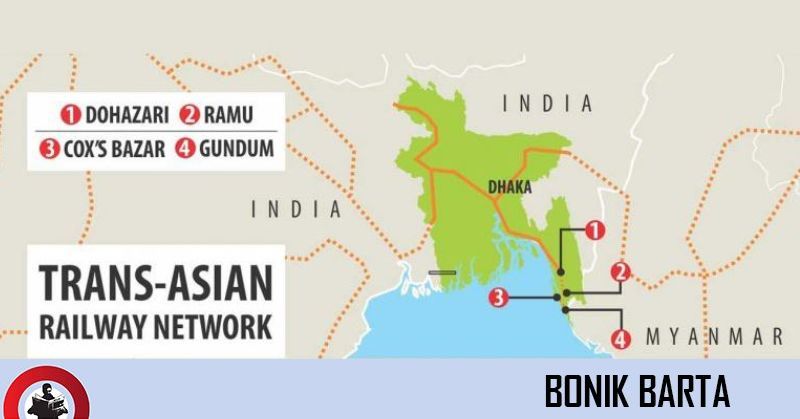
Uncertainty clouds Bangladesh’s integration into Trans-Asian Railway network
Over the past 15 years, Bangladesh has invested about BDT 1 trillion in rail infrastructure to join the multilateral network. Yet escalating geopolitical frictions and regional political instability have cast doubt on whether those investments will deliver the regional connectivity and...
 en.bonikbarta.com
Russian Ambassador to Bangladesh Alexander Grigoryevich Khozin today (22 December) called for reducing tensions in Bangladesh to create a conducive environment before the next national election scheduled for 12 February next year.
During his first interaction with a small group of journalists since his arrival in Dhaka, the Ambassador also highlighted the importance of reducing Bangladesh's tensions with its neighbour India. "The sooner you reduce tensions with India, the better."
The interactive session was held at the Embassy of the Russian Federation.
Alexandra Khlevnoy, the Director of the Russian House in Dhaka, among others, spoke at the session.
Responding to a question, Ambassador Khozin said this (reducing tensions) is important for both countries and the entire South Asia region.
Touching upon geopolitical implications, he said they have read statements of both Bangladesh and India, including comments of Foreign Affairs Adviser Md Touhid Hossain, and said the two sides are trying to find a balanced way to reduce tensions as soon as possible.
The Ambassador highlighted the role of India and Russia during 1971 and acknowledged India's help in gaining Bangladesh's independence - shoulder to shoulder together.
He said they are not interfering with the two countries' bilateral relations but they think it will be wise to find a way so that the tension does not escalate further from the current level.
The Ambassador said the relations should be based on mutual trust and confidence.
He welcomed the election date announced by the Election Commission and said they are expecting that the election will be held on time - February 12. "This (announcement of polls schedule) is a positive trend."
Regarding sending election observers, the Ambassador said they are in touch with the Election Commission and they are waiting for the official invitation from the Election Commission.
Ambassador Khozin said they are very much interested in creating such a positive, friendly and nonviolent and violation free atmosphere for the upcoming election. "This is very important for us."
He said they are interested in reducing the tension in Bangladesh as it is very important for the election. "For us and for me as Ambassador of my country, this is important to reduce tensions so that a congenial atmosphere can be created for the elections to be held."
Bangladesh-Russia relations
The Ambassador said Bangladesh remains their second largest trade partner in South Asia. For the past three years, despite the existing global hindrances, he said, the bilateral turnover steadily exceeded 2 billion US dollars.
He said Russia mainly exports machinery and agricultural products to Bangladesh and imports ready-made garments and textile goods.
"We hope that by the end of 2025 our turnover will also be significant – let's wait for the relevant statistics from our authorities at the beginning of the next year," said the Russian envoy.
He said Russia has been continuously contributing to the food security of Bangladesh being one of its key sources of food and agricultural products, including wheat and fertilizers. In 2025, the export volume of Russian wheat to Bangladesh is 2 million tons.
"This year we managed to achieve two times the increase in the supply of Russian fertilizers and mustard seeds to your country. We have also supplied almost 400 thousand tons of potash fertilizers to Bangladesh this year. Export of Russian veterinary vaccines has also increased by 25 percent," he said.
Ambassador Khozin said energy cooperation has always been the backbone of our economic relations.
"Our flagship development project is the construction of Bangladesh's first nuclear energy facility – Rooppur nuclear power plant. "Rosatom" State Corporation and its engineering division ASE are building the plant utilizing the most advanced engineering solutions, following the most stringent safety standards and environmental requirements," he said.
Once commissioned, he said, the Rooppur NPP will contribute to the stability of national energy security, providing an additional 2,400 MW to the grid.
Ambassador Khozin said nuclear power is low cost and environmentally friendly since NPPs produce nearly zero greenhouse gas emissions.
Moreover,he said, it will create an entire hi-tech industry for the benefit of Bangladesh's agriculture, health sector and engineering.
"We have a number of other projects no less important in terms of their impact on people's life and economic prosperity of this country. The Russian company Gazprom has been present in Bangladesh since 2012 and proved itself as a reliable partner in exploring gas reserves," he said.
Through its assistance, Ambassador Khozin said, new gas fields have been identified on Bhola island to further contribute to national self-reliance. Gazprom has accumulated vast expertise on the tricky geological structure of Bangladesh with its specific features and stands ready to continue its services for the benefit of the nation.
"Another field of our bilateral cooperation is gas production. Since 2012, Russian company "Gazprom International" has designed and built about 20 wells, including 7 on Bhola island," he said.
Ambassador Khozin said a significant amount of natural gas has been discovered there. Gazprom is interested in continuing its operations in Bangladesh by participating in drilling, seismic survey and gas transportation projects.
The company's proposals for gas evacuation and exploration of new fields are under consideration.
Ambassador Khozin said Russian exporters of LNG and crude oil are in the discussion to arrange the supplies of these products on a long-term basis that will meet the needs of Bangladesh facing shortage of energy resources required for the rapidly developing economy and daily communal activities.
Besides, he said, Russian companies engaged in the sphere of renewable energy are ready to share their developments with the Bangladeshi partners, as well as to invest in this sector and open joint ventures.
Ambassador Khozin said a skilled work force from Bangladesh is in demand in many countries, and Russia has joined this list.
"We are proud of the success achieved in bilateral economic relations so far, but at the same time we have to admit that the full potential of trade and investment cooperation is yet to be fully tapped," he said.
Ambassador Khozin said they have all the prerequisites for the successful development of our ties in a variety of spheres.
"Our political cooperation is smooth as it is not challenged by any contradictions. We have similar positions on the key issues of international agenda, such as countering terrorism, cybercrime, neocolonialism and glorification of Nazism, preventing arms race, including in outer space," he said.
Ambassador Khozin said their nations share traditional values such as patriotism and strong family links. "In other words, there is fertile soil for our bilateral relations to flourish."

Russia wants Dhaka to reduce tensions domestically, also with India
Russian Ambassador Alexander Khozin has urged Bangladesh to ease internal and regional tensions ahead of the 12 February national election, while reaffirming Russia’s commitment to strengthening bilateral trade, energy and strategic cooperation.
A leader of the youth wing of Pakistan Prime Minister Shehbaz Sharif’s party, Pakistan Muslim League, said that Pakistan’s military and missile capabilities would come into play in the event of any attack on Bangladesh.
Kamran Saeed Usmani made the remarks in a video statement circulated online, calling for a formal military alliance between Pakistan and Bangladesh.
“If India attacks Bangladesh’s autonomy, if anyone dares to look at Bangladesh with ill intent, then remember that the people of Pakistan, the Pakistani armed forces and our missiles are not far away," Usmani said.
Usmani alleged that Pakistan would not accept what he described as attempts to impose India’s “Akhand Bharat ideology" on Bangladesh.
In another video message, he said Pakistan does not accept Bangladesh being pushed into what he termed “India’s ideological dominance," adding that even an “evil eye" cast on Bangladesh’s autonomy would draw a response.
Outlining a hypothetical strategic scenario, Usmani spoke of coordinated pressure, with Pakistan acting from the west, Bangladesh from the east and China remaining focused on Arunachal Pradesh and Ladakh.
The interim government on Thursday approved a proposal to establish a Bangladesh embassy in Bern of Switzerland.
The approval was given at a meeting of the council of advisers, held with chief adviser Professor Muhammad Yunus in the chair at his office at Tejgaon in the capital Dhaka, according to information shared by the chief adviser’s press wing.
Since independence, Bangladesh has maintained in Geneva of Switzerland a permanent mission which handles both United Nations-related work and bilateral embassy functions due to the absence of a resident embassy in Bern, the capital of Switzerland.
Considering Switzerland’s role as an important development partner and strategic ally of Bangladesh, the council decided to open an embassy in Bern, said the press wing.
Initially, the embassy will begin operations with the appointment of an ambassador, a first secretary and a limited number of officials and staff, it added.
Bangladesh currently operates 82 mission offices, including embassies, across the world.

 www.newagebd.net
The approval was given at a meeting of the council of advisers, held with chief adviser Professor Muhammad Yunus in the chair at his office at Tejgaon in the capital Dhaka, according to information shared by the chief adviser’s press wing.
Since independence, Bangladesh has maintained in Geneva of Switzerland a permanent mission which handles both United Nations-related work and bilateral embassy functions due to the absence of a resident embassy in Bern, the capital of Switzerland.
Considering Switzerland’s role as an important development partner and strategic ally of Bangladesh, the council decided to open an embassy in Bern, said the press wing.
Initially, the embassy will begin operations with the appointment of an ambassador, a first secretary and a limited number of officials and staff, it added.
Bangladesh currently operates 82 mission offices, including embassies, across the world.
Bangladesh to open embassy in Switzerland
The interim government on Thursday approved a proposal to establish a Bangladesh embassy in Bern of Switzerland.
www.newagebd.net
Direct air connectivity between Pakistan and Bangladesh is set to resume after Pakistan granted approval to Biman Bangladesh Airlines to operate flights between Dhaka and Karachi, reports Geo News.
The approval, issued by Pakistan's Civil Aviation Authority (CAA) following clearance from the federal government, allows Bangladesh's national flag carrier to begin flight operations on the Dhaka-Karachi route amid improving bilateral relations between the two countries.
Sources told told Geo News today (2 January) that Biman has initially been allowed to operate flights until 30 March 2026. The airline has also been authorised to use Pakistan's airspace on approved routes.
At present, passengers travelling between Bangladesh and Pakistan have to rely on connecting flights through hubs such as Dubai or Doha.
The resumption of direct flights is expected to ease travel and boost people-to-people contacts as well as trade between the two nations.
 www.tbsnews.net
The approval, issued by Pakistan's Civil Aviation Authority (CAA) following clearance from the federal government, allows Bangladesh's national flag carrier to begin flight operations on the Dhaka-Karachi route amid improving bilateral relations between the two countries.
Sources told told Geo News today (2 January) that Biman has initially been allowed to operate flights until 30 March 2026. The airline has also been authorised to use Pakistan's airspace on approved routes.
At present, passengers travelling between Bangladesh and Pakistan have to rely on connecting flights through hubs such as Dubai or Doha.
The resumption of direct flights is expected to ease travel and boost people-to-people contacts as well as trade between the two nations.
Pakistan okays Biman Bangladesh to launch Dhaka-Karachi direct flights
Bangladesh’s national flag carrier to begin flight operations on the Dhaka-Karachi route amid improving bilateral relations between the two countries
Bangladesh and the European Union have finalised the text of the Framework Agreement on Comprehensive Partnership and Cooperation (PCA) following the fifth round of negotiations held on 7–8 January 2026 in Dhaka and Sylhet.
The negotiations concluded with both sides agreeing on the full text of the proposed agreement, according to a press release issued yesterday (7 January). A three-member European Union delegation is currently visiting Bangladesh for this purpose.
The Bangladesh delegation was led by Secretary (Bilateral) of the Ministry of Foreign Affairs Dr Md Nazrul Islam, while the EU side was headed by Ms Paola Pampaloni, Acting Managing Director for Asia-Pacific at the European External Action Service (EEAS). EU Ambassador to Bangladesh Michael Miller and senior EU officials also participated in the discussions, both in person and virtually. Bangladesh's Permanent Representative to the European Union, along with officials from relevant ministries and departments, assisted the Bangladesh delegation.
Negotiations on the PCA began with an explanatory meeting in Dhaka in November 2024. Since then, the two sides have held five rounds of talks and several technical meetings in Dhaka and Brussels, both physically and virtually. The fifth round focused on key areas of mutual interest, including legal and judicial cooperation, intellectual property rights, energy cooperation, fisheries, aquaculture and ocean governance, trade and investment, human rights and customs cooperation.
According to the release, discussions were constructive and aimed at reaching a comprehensive, balanced and mutually beneficial agreement that reflects the evolving priorities of Bangladesh–EU relations and addresses emerging global challenges.
Once signed, the PCA will provide the legal and political foundation for a strategic and long-term partnership between Bangladesh and the European Union. The agreement is expected to strengthen cooperation in a wide range of areas, including governance, human rights, trade, investment, environmental sustainability, climate change, food security, energy, transport, and science, technology and innovation. It will also mark a significant milestone, as Bangladesh moves towards becoming the first South Asian country to sign a PCA with the EU.
Earlier, the EU delegation paid courtesy calls on the Chief Adviser and the Foreign Adviser. During the meetings, both sides discussed Bangladesh–EU relations, the PCA, upcoming general elections and referendum, combating illegal migration, renewable energy cooperation, and expanding trade and investment. The Chief Adviser reaffirmed the government's commitment to ensuring a free, fair and peaceful election, while the Foreign Adviser emphasised Bangladesh's constructive and forward-looking engagement with the EU.
 www.tbsnews.net
The negotiations concluded with both sides agreeing on the full text of the proposed agreement, according to a press release issued yesterday (7 January). A three-member European Union delegation is currently visiting Bangladesh for this purpose.
The Bangladesh delegation was led by Secretary (Bilateral) of the Ministry of Foreign Affairs Dr Md Nazrul Islam, while the EU side was headed by Ms Paola Pampaloni, Acting Managing Director for Asia-Pacific at the European External Action Service (EEAS). EU Ambassador to Bangladesh Michael Miller and senior EU officials also participated in the discussions, both in person and virtually. Bangladesh's Permanent Representative to the European Union, along with officials from relevant ministries and departments, assisted the Bangladesh delegation.
Negotiations on the PCA began with an explanatory meeting in Dhaka in November 2024. Since then, the two sides have held five rounds of talks and several technical meetings in Dhaka and Brussels, both physically and virtually. The fifth round focused on key areas of mutual interest, including legal and judicial cooperation, intellectual property rights, energy cooperation, fisheries, aquaculture and ocean governance, trade and investment, human rights and customs cooperation.
According to the release, discussions were constructive and aimed at reaching a comprehensive, balanced and mutually beneficial agreement that reflects the evolving priorities of Bangladesh–EU relations and addresses emerging global challenges.
Once signed, the PCA will provide the legal and political foundation for a strategic and long-term partnership between Bangladesh and the European Union. The agreement is expected to strengthen cooperation in a wide range of areas, including governance, human rights, trade, investment, environmental sustainability, climate change, food security, energy, transport, and science, technology and innovation. It will also mark a significant milestone, as Bangladesh moves towards becoming the first South Asian country to sign a PCA with the EU.
Earlier, the EU delegation paid courtesy calls on the Chief Adviser and the Foreign Adviser. During the meetings, both sides discussed Bangladesh–EU relations, the PCA, upcoming general elections and referendum, combating illegal migration, renewable energy cooperation, and expanding trade and investment. The Chief Adviser reaffirmed the government's commitment to ensuring a free, fair and peaceful election, while the Foreign Adviser emphasised Bangladesh's constructive and forward-looking engagement with the EU.
Bangladesh, EU finalise text of Comprehensive Partnership and Cooperation Agreement
The negotiations concluded with both sides agreeing on the full text of the proposed agreement, according to a press release.
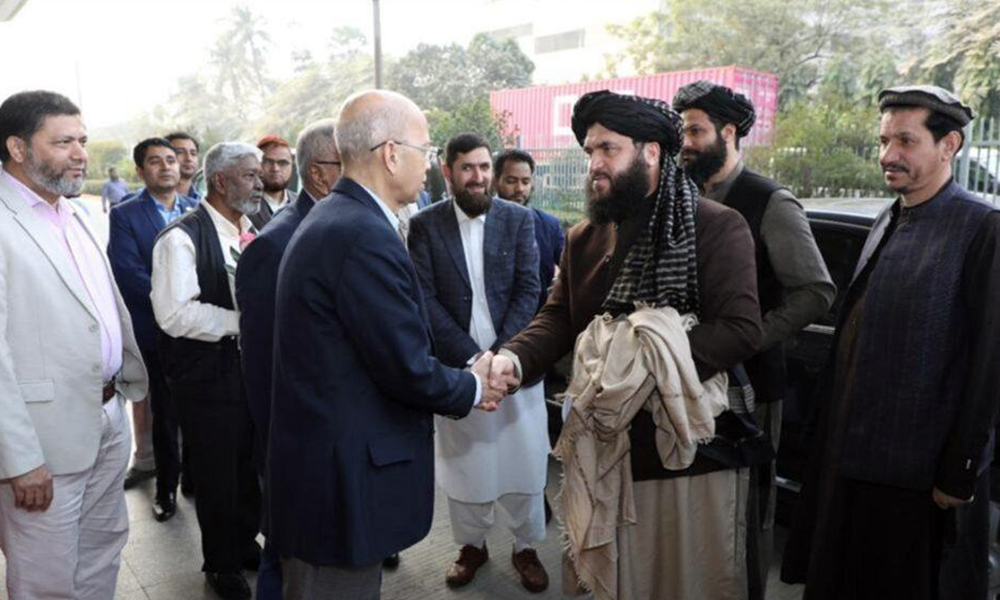
Afghan traders have signed an agreement with major Bangladeshi pharmaceutical companies to import medicines directly from Bangladesh, a move that comes as Afghanistan prepares to halt the customs clearance of medicines imported from Pakistan.
The deal was reached during a visit to Dhaka by a delegation led by the Deputy Minister of Commerce and Industry, Mawlawi Ahmadullah Zahid, according to a statement from the Ministry of Commerce and Industry.
The delegation visited two of Bangladesh’s largest pharmaceutical manufacturers — BEXIMCO Pharmaceuticals Ltd and RENATA PLC — both of which export medicines to around 50 countries.
Under the agreement, Afghan traders will enter into direct contracts with Bangladeshi producers to supply medicines to the Afghan market.
He said the government has provided all necessary facilities for investors and is committed to supporting domestic production.
Meanwhile, Dr. Naimullah Ayoubi, Director General of the Regulation of Medicines and Health Products at the Ministry of Public Health, assured Bangladeshi manufacturers of full cooperation in line with existing regulations.
The agreement follows an announcement by Afghan authorities that medicines imported from Pakistan will no longer be cleared through customs after the remaining 19-day grace period expires, prompting traders to seek alternative supply sources to ensure the continued availability of medicines in the country.
Afghanistan News Today – Breaking News, Politics, Sports & Live Updates | Ariana News
Stay informed with the latest breaking news from Afghanistan. Politics, business, sports, and culture updates in English – all in one place.
 www.ariananews.af
An Afghan delegation headed by the country’s deputy commerce minister met Bangladesh’s commerce secretary today, expressing hope for duty-free bilateral trade.
Deputy Minister of Commerce and Industry of Afghanistan, Mawlawi Ahmadullah Zahid, made the proposal during a meeting with Commerce Secretary Mahbubur Rahman at the latter’s office in Dhaka.
Zahid led the Afghan delegation of five to six members, said a senior commerce ministry official who asked not to be named.
It was not a formal bilateral meeting where documents or proposals were usually exchanged, the official added.
At the meeting, the Afghan deputy minister said his country seeks duty-free export of nearly 45 products to Bangladesh, including cotton, aiming to expand bilateral trade ties.
At the same time, he offered duty-free import of almost all major exportable commodities from Bangladesh.
Afghanistan considers Bangladesh a major source for RMG products, pharmaceuticals, beverages, confectionery, and packaged spices, Zahid added.
The commerce secretary could not be reached by phone for comments after the meeting.
A businessman involved in exports to Afghanistan said the two countries currently trade 98 products.
In terms of exporting dry food, fruits, stones, saffron, and almonds, Afghanistan may want to capture more of the market in Bangladesh, the businessman added.
Zahid arrived in Dhaka on Sunday as the head of the delegation, aiming to expand trade and economic ties.
A few months ago, another delegation from Afghanistan visited Bangladesh to discuss bilateral trade and investment with senior government officials.

Afghanistan wants duty-free bilateral trade with Bangladesh
A deputy minister of Afghanistan, now in Dhaka, met commerce secretary
Three defence sources said among the most advanced talks is a wide-ranging arms, defence cooperation and intelligence-sharing deal with Bangladesh, which gained independence from Pakistan after the 1971 civil war.
The talks include JF-17 Block III multi-role fighter jets, MFI-17 Mushshak aircraft, Pakistani-made drones including the Shahpar reconnaissance and attack UAVs, air defence systems, and Mohafiz mine-resistant armoured vehicles, two of the sources said.
The International Centre for Settlement of Investment Disputes (Icsid) has fined Canadian company Niko Resources $42 million in connection with the devastating explosion at the Tengratila gas field in Sunamganj, citing irreparable damage to gas resources and the environment.
The amount equals about Tk513 crore in Bangladeshi currency.
Petrobangla Chairman Engineer Rezanur Rahman confirmed the verdict to Dhaka Tribune on Thursday night.
According to Petrobangla sources, the ruling ordered Niko to pay $40 million for the loss of 8 billion cubic feet of gas that burned during the explosion and $2 million for environmental and other damages, bringing the total compensation to about $42 million.
Bangladesh had sought $118 million for gas losses and $896 million for overall state losses. The country had also applied to include compensation for environmental and health damages.
“Icsid has ordered Bangladesh to be paid $42 million as compensation. Now further legal steps will be taken swiftly after consulting lawyers,” Rezanur Rahman told DhakaTribune.
Two major explosions occurred on January 7 and June 24, 2005, due to Niko’s negligence while drilling wells at the Tengratila gas field in Chhatak upazila of Sunamganj. The incidents led to massive waste of gas resources and exposed the environment and local residents to serious health risks. The gas field has remained abandoned since the explosions.
Following the Tengratila incident, Bangladesh initially demanded Tk746 crore in compensation from Niko, which the company rejected outright. Petrobangla then stopped paying gas bills for Niko’s Feni gas field. In response, Niko filed a case in a local lower court in 2007.
When the matter moved to the higher court, the High Court ordered the confiscation of all Niko’s assets in Bangladesh and canceled its contracts. Niko appealed the order to the Supreme Court, but the verdict there also went in Bangladesh’s favor.
In 2010, Niko filed two cases with the Icsid seeking payment of withheld gas bills and challenging Bangladesh’s refusal to pay compensation. After a prolonged process, Icsid ruled in 2014 that Petrobangla must pay outstanding dues related to the Feni gas field.
However, the latest ruling has now conclusively settled Niko’s liability and compensation over the Tengratila explosion.
Although the verdict was finalized last month, it was not formally announced. As a result, Petrobangla refrained from commenting on the matter until now, according to a Petrobangla official.

 www.dhakatribune.com
Biman Bangladesh Airlines has resumed direct flights on the Dhaka-Karachi-Dhaka route after a 13-year hiatus. The inaugural flight, BG-341, departed Dhaka for Karachi today (29 January) at 8pm.
An inauguration ceremony was held at Hazrat Shahjalal International Airport to mark the occasion, according to a press release. Sk Bashir Uddin, adviser to the Ministry of Civil Aviation and Tourism and chairman of Biman's board of directors, attended the event.
Also present were Imran Haider, Pakistan's high commissioner to Bangladesh, and Air Vice Marshal Md Mostafa Mahmud Siddiq, chairman of the Civil Aviation Authority of Bangladesh. The ceremony was presided over by Dr Md Shafiqur Rahman, managing director and CEO of Biman Bangladesh Airlines. Senior officials from the ministry, Biman, civil aviation authorities and other organisations also attended.
The inaugural flight arrived in Karachi at 11pm local time today. The return flight, BG-342, departed Karachi at 12:01am on 30 January and arrived in Dhaka at 4:20am the same day. A total of 150 passengers travelled on the inaugural flight.
Under the winter schedule, flights on this route will operate every Thursday and Saturday.
With the launch of this route, direct connectivity between Bangladesh and Pakistan has been established. The route is expected to play a significant role in promoting trade and commerce, expanding educational exchanges, and fostering cultural ties between the two countries.
Biman last operated flights to Karachi in 2012. The resumption of the route is expected to strengthen trade, educational exchange, cultural ties, and diplomatic relations between Bangladesh and Pakistan.
 www.tbsnews.net
As growth in traditional markets such as the United States and European Union slows, Bangladesh is accelerating efforts to deepen economic engagement with Africa, with total trade nearing $4 billion.
According to data from the Export Promotion Bureau, the Bangladesh Bank and the National Board of Revenue, African exports to Bangladesh stood at $3.76 billion in the fiscal 2022-23, $2.84 billion in FY24 and $2.90 billion in FY25.
During July-January of FY26, imports reached $2.01 billion.
Bangladesh's exports to Africa also show steady growth – $367 million in FY23, $386.5 million in FY24 and $417.7 million in FY25.
Exports during July-January FY26 totalled $271 million.
Major African import sources include Morocco, South Africa, Benin, Burkina Faso, Cameroon, Côte d'Ivoire, Egypt, Mali and Algeria.
Business leaders say Africa offers stronger growth prospects compared to saturated markets in North America and Europe, particularly in IT-enabled services, pharmaceuticals and garments.
South Africa gains strategic importance
South Africa, a member of BRICS, has emerged as a key partner. Bangladesh's High Commissioner to South Africa, Shah Ahmed Shafi, said Pretoria is increasingly important to Dhaka's diversification strategy.
South Africa, with a population of about 63 million and GDP exceeding $400 billion, is Africa's most industrialised economy. KwaZulu-Natal, its second-largest contributor to GDP after Gauteng, has shown interest in Bangladeshi pharmaceutical investment.
Bangladesh's exports to South Africa rose from $119 million in FY23 to $124.2 million in FY25. South African exports to Bangladesh stood at $176 million in FY25.
Total official economic engagement between the two countries surpassed $800 million in FY25, including trade and remittance flows.
Remittances hit record levels
Remittances from expatriate Bangladeshis in South Africa have surged. In FY25, they sent home over $402.9 million. During July-January FY26 alone, remittances reached nearly $395.4 million, setting a new record.
Officials estimate that up to 30% of remittances flow through informal channels. Roughly 4,00,000–5,00,000 Bangladeshis are believed to reside in South Africa, largely engaged in small and medium businesses.
Bankers suggest that with policy support and incentives, Bangladesh's economic engagement with South Africa could reach $1 billion in 2026.
Expanding multilateral engagement
Commonwealth Observer Group Chair and former Ghanaian President Nana Akufo-Addo recently invited Bangladesh to invest in Africa's jute sector.
Meanwhile, South African High Commissioner to Bangladesh Anil Sooklal stressed the need to enhance trade visibility and people-to-people ties. He highlighted pharmaceuticals, education, culture, sports and private sector collaboration as priority areas.
Honorary Consul Md Solaiman Alam Seth said Bangladesh's steady growth, women's empowerment in garments and resilience in disaster management position it well to expand engagement with Africa's rising economies.
 www.tbsnews.net
Israel’s Ambassador to India, Reuven Azar, on Wednesday expressed serious concern over Hamas leaders’ interactions in Pakistan and Bangladesh, saying such engagements should worry all nations.
“We think this is something we must fight against. The fact that Hamas has been interacting in the region – in Pakistan, in Bangladesh – should make us all worry,” Azar said in an exclusive interaction with PTI Videos.
The ambassador also said that India and Israel have been engaging in dialogues on these issues.
“We are engaging in dialogues on these issues, and I hope we will find the ways to protect ourselves from any future attempts (of attacks),” Azar said.
Bangladesh has formally established diplomatic relations with the Caribbean nation of Grenada through the signing of a joint declaration at the Bangladesh High Commission in London.
The joint declaration was signed on Thursday afternoon by Bangladesh High Commissioner to the United Kingdom Abida Islam and Grenada’s High Commissioner to the UK Rachér Croney, marking the official start of diplomatic ties between the two countries.
Both Bangladesh and Grenada became members of the United Nations on September 17, 1974. Although various contacts and exchanges took place over the years, no formal diplomatic relations had been established until now.
Speaking at the ceremony, High Commissioner Abida Islam described the development as a significant and memorable moment in the history of Bangladesh’s foreign relations.
She said the historic step, approved by the Advisory Council led by Chief Adviser Prof Dr Muhammad Yunus, signals the beginning of a new chapter in South-South cooperation.
“This is not merely a diplomatic formality; it is a bridge between South Asia and the Caribbean,” Adiba said, adding that the relationship is founded on mutual respect and a shared vision for a fair and just global order.
As fellow members of the Commonwealth, both countries deeply value sovereignty and the resilience required for nation-building, she noted, adding that Bangladesh and Grenada share a unique historical bond.
“We will strengthen our voices together on the international stage,” she said.
The High Commissioner highlighted the potential for building a strong alliance by combining Bangladesh’s global leadership in disaster resilience with Grenada’s influential role among Small Island Developing States (SIDS).
She also said both sides would work jointly to expand trade and industrial cooperation by leveraging Bangladesh’s global capabilities in pharmaceuticals and textiles and Grenada’s strategic position in the Caribbean region.
Abida added that the partnership would further deepen mutual engagement, with both countries remaining steadfast advocates for equitable development and climate justice.
Grenada’s High Commissioner, Racher Croney, said that both nations, as Commonwealth members, are bound by shared principles of democracy, development, the rule of law, and multilateral cooperation.
She noted that, as developing countries of the Global South, Bangladesh and Grenada face similar challenges, particularly in climate change, sustainable development and economic resilience.
Croney said the establishment of formal diplomatic relations has opened new avenues for cooperation in key areas including trade and investment, education and capacity building and climate action.
He also expressed hope that Bangladesh and Grenada would further strengthen their engagement at multilateral forums such as the United Nations and the Commonwealth.
 www.dhakatribune.com
The amount equals about Tk513 crore in Bangladeshi currency.
Petrobangla Chairman Engineer Rezanur Rahman confirmed the verdict to Dhaka Tribune on Thursday night.
According to Petrobangla sources, the ruling ordered Niko to pay $40 million for the loss of 8 billion cubic feet of gas that burned during the explosion and $2 million for environmental and other damages, bringing the total compensation to about $42 million.
Bangladesh had sought $118 million for gas losses and $896 million for overall state losses. The country had also applied to include compensation for environmental and health damages.
“Icsid has ordered Bangladesh to be paid $42 million as compensation. Now further legal steps will be taken swiftly after consulting lawyers,” Rezanur Rahman told DhakaTribune.
Two major explosions occurred on January 7 and June 24, 2005, due to Niko’s negligence while drilling wells at the Tengratila gas field in Chhatak upazila of Sunamganj. The incidents led to massive waste of gas resources and exposed the environment and local residents to serious health risks. The gas field has remained abandoned since the explosions.
Following the Tengratila incident, Bangladesh initially demanded Tk746 crore in compensation from Niko, which the company rejected outright. Petrobangla then stopped paying gas bills for Niko’s Feni gas field. In response, Niko filed a case in a local lower court in 2007.
When the matter moved to the higher court, the High Court ordered the confiscation of all Niko’s assets in Bangladesh and canceled its contracts. Niko appealed the order to the Supreme Court, but the verdict there also went in Bangladesh’s favor.
In 2010, Niko filed two cases with the Icsid seeking payment of withheld gas bills and challenging Bangladesh’s refusal to pay compensation. After a prolonged process, Icsid ruled in 2014 that Petrobangla must pay outstanding dues related to the Feni gas field.
However, the latest ruling has now conclusively settled Niko’s liability and compensation over the Tengratila explosion.
Although the verdict was finalized last month, it was not formally announced. As a result, Petrobangla refrained from commenting on the matter until now, according to a Petrobangla official.
Niko fined $42 million over 2005 Tengratila gas field explosions
The International Centre for Settlement of Investment Disputes (Icsid) has fined Canadian company Niko Resources $42 million in connection with the devastating explosion at the Tengratila gas field in Sunamganj, citing irreparable damage to gas resources and the environment....
Biman Bangladesh Airlines has resumed direct flights on the Dhaka-Karachi-Dhaka route after a 13-year hiatus. The inaugural flight, BG-341, departed Dhaka for Karachi today (29 January) at 8pm.
An inauguration ceremony was held at Hazrat Shahjalal International Airport to mark the occasion, according to a press release. Sk Bashir Uddin, adviser to the Ministry of Civil Aviation and Tourism and chairman of Biman's board of directors, attended the event.
Also present were Imran Haider, Pakistan's high commissioner to Bangladesh, and Air Vice Marshal Md Mostafa Mahmud Siddiq, chairman of the Civil Aviation Authority of Bangladesh. The ceremony was presided over by Dr Md Shafiqur Rahman, managing director and CEO of Biman Bangladesh Airlines. Senior officials from the ministry, Biman, civil aviation authorities and other organisations also attended.
The inaugural flight arrived in Karachi at 11pm local time today. The return flight, BG-342, departed Karachi at 12:01am on 30 January and arrived in Dhaka at 4:20am the same day. A total of 150 passengers travelled on the inaugural flight.
Under the winter schedule, flights on this route will operate every Thursday and Saturday.
With the launch of this route, direct connectivity between Bangladesh and Pakistan has been established. The route is expected to play a significant role in promoting trade and commerce, expanding educational exchanges, and fostering cultural ties between the two countries.
Biman last operated flights to Karachi in 2012. The resumption of the route is expected to strengthen trade, educational exchange, cultural ties, and diplomatic relations between Bangladesh and Pakistan.
Biman resumes Dhaka-Karachi flights after 13 years
The inaugural flight arrived in Karachi at 11pm local time today. The return flight, BG-342, departed Karachi at 12:01am on 30 January and arrived in Dhaka at 4:20am the same day. A total of 150 passengers travelled on the inaugural flight.
As growth in traditional markets such as the United States and European Union slows, Bangladesh is accelerating efforts to deepen economic engagement with Africa, with total trade nearing $4 billion.
According to data from the Export Promotion Bureau, the Bangladesh Bank and the National Board of Revenue, African exports to Bangladesh stood at $3.76 billion in the fiscal 2022-23, $2.84 billion in FY24 and $2.90 billion in FY25.
During July-January of FY26, imports reached $2.01 billion.
Bangladesh's exports to Africa also show steady growth – $367 million in FY23, $386.5 million in FY24 and $417.7 million in FY25.
Exports during July-January FY26 totalled $271 million.
Major African import sources include Morocco, South Africa, Benin, Burkina Faso, Cameroon, Côte d'Ivoire, Egypt, Mali and Algeria.
Business leaders say Africa offers stronger growth prospects compared to saturated markets in North America and Europe, particularly in IT-enabled services, pharmaceuticals and garments.
South Africa gains strategic importance
South Africa, a member of BRICS, has emerged as a key partner. Bangladesh's High Commissioner to South Africa, Shah Ahmed Shafi, said Pretoria is increasingly important to Dhaka's diversification strategy.
South Africa, with a population of about 63 million and GDP exceeding $400 billion, is Africa's most industrialised economy. KwaZulu-Natal, its second-largest contributor to GDP after Gauteng, has shown interest in Bangladeshi pharmaceutical investment.
Bangladesh's exports to South Africa rose from $119 million in FY23 to $124.2 million in FY25. South African exports to Bangladesh stood at $176 million in FY25.
Total official economic engagement between the two countries surpassed $800 million in FY25, including trade and remittance flows.
Remittances hit record levels
Remittances from expatriate Bangladeshis in South Africa have surged. In FY25, they sent home over $402.9 million. During July-January FY26 alone, remittances reached nearly $395.4 million, setting a new record.
Officials estimate that up to 30% of remittances flow through informal channels. Roughly 4,00,000–5,00,000 Bangladeshis are believed to reside in South Africa, largely engaged in small and medium businesses.
Bankers suggest that with policy support and incentives, Bangladesh's economic engagement with South Africa could reach $1 billion in 2026.
Expanding multilateral engagement
Commonwealth Observer Group Chair and former Ghanaian President Nana Akufo-Addo recently invited Bangladesh to invest in Africa's jute sector.
Meanwhile, South African High Commissioner to Bangladesh Anil Sooklal stressed the need to enhance trade visibility and people-to-people ties. He highlighted pharmaceuticals, education, culture, sports and private sector collaboration as priority areas.
Honorary Consul Md Solaiman Alam Seth said Bangladesh's steady growth, women's empowerment in garments and resilience in disaster management position it well to expand engagement with Africa's rising economies.
Africa emerges as key partner, Bangladesh eyes $4b trade
Business leaders say Africa offers stronger growth prospects compared to saturated markets in North America and Europe, particularly in IT-enabled services, pharmaceuticals and garments
Israel’s Ambassador to India, Reuven Azar, on Wednesday expressed serious concern over Hamas leaders’ interactions in Pakistan and Bangladesh, saying such engagements should worry all nations.
“We think this is something we must fight against. The fact that Hamas has been interacting in the region – in Pakistan, in Bangladesh – should make us all worry,” Azar said in an exclusive interaction with PTI Videos.
The ambassador also said that India and Israel have been engaging in dialogues on these issues.
“We are engaging in dialogues on these issues, and I hope we will find the ways to protect ourselves from any future attempts (of attacks),” Azar said.
Bangladesh has formally established diplomatic relations with the Caribbean nation of Grenada through the signing of a joint declaration at the Bangladesh High Commission in London.
The joint declaration was signed on Thursday afternoon by Bangladesh High Commissioner to the United Kingdom Abida Islam and Grenada’s High Commissioner to the UK Rachér Croney, marking the official start of diplomatic ties between the two countries.
Both Bangladesh and Grenada became members of the United Nations on September 17, 1974. Although various contacts and exchanges took place over the years, no formal diplomatic relations had been established until now.
Speaking at the ceremony, High Commissioner Abida Islam described the development as a significant and memorable moment in the history of Bangladesh’s foreign relations.
She said the historic step, approved by the Advisory Council led by Chief Adviser Prof Dr Muhammad Yunus, signals the beginning of a new chapter in South-South cooperation.
“This is not merely a diplomatic formality; it is a bridge between South Asia and the Caribbean,” Adiba said, adding that the relationship is founded on mutual respect and a shared vision for a fair and just global order.
As fellow members of the Commonwealth, both countries deeply value sovereignty and the resilience required for nation-building, she noted, adding that Bangladesh and Grenada share a unique historical bond.
“We will strengthen our voices together on the international stage,” she said.
The High Commissioner highlighted the potential for building a strong alliance by combining Bangladesh’s global leadership in disaster resilience with Grenada’s influential role among Small Island Developing States (SIDS).
She also said both sides would work jointly to expand trade and industrial cooperation by leveraging Bangladesh’s global capabilities in pharmaceuticals and textiles and Grenada’s strategic position in the Caribbean region.
Abida added that the partnership would further deepen mutual engagement, with both countries remaining steadfast advocates for equitable development and climate justice.
Grenada’s High Commissioner, Racher Croney, said that both nations, as Commonwealth members, are bound by shared principles of democracy, development, the rule of law, and multilateral cooperation.
She noted that, as developing countries of the Global South, Bangladesh and Grenada face similar challenges, particularly in climate change, sustainable development and economic resilience.
Croney said the establishment of formal diplomatic relations has opened new avenues for cooperation in key areas including trade and investment, education and capacity building and climate action.
He also expressed hope that Bangladesh and Grenada would further strengthen their engagement at multilateral forums such as the United Nations and the Commonwealth.
Bangladesh establishes diplomatic ties with Grenada
Bangladesh has formally established diplomatic relations with the Caribbean nation of Grenada through the signing of a joint declaration at the Bangladesh High Commission in London. The joint declaration was signed on Thursday afternoon by Bangladesh High Commissioner to the...
The discussions also covered the exchange of criminals or prisoners, potential cooperation in the drone sector, and broader regional developments, alongside overall bilateral relations between the two countries.

 www.bssnews.net
Pakistan high commissioner calls on home minister, discusses expansion of bilateral cooperation | News
DHAKA, March 1, 2026 (BSS) - Pakistan’s High Commissioner to Bangladesh, Imran Haider, paid a courtesy call on Home Minister
The Leaders commended the excellent, longstanding ties in defence cooperation, anchored by regular high-level military visits, personnel training programs, and goodwill naval port calls. Both Leaders committed to fully operationalizing the MoU on Defence Cooperation to broaden strategic collaboration in military science, technical expertise, and defence industry partnerships. They looked forward to the convening of the bilateral Joint Committee on Defence Cooperation (JCDC) to chart a structured defence roadmap.
DHAKA -- Bangladesh has decided to fence off parts of its 271-kilometer border with Myanmar to combat transnational crime as the volatile situation in Rakhine state of the neighboring country deepens security concerns for Dhaka.
If actually constructed, this would be the first time for the government of Bangladesh to establish such infrastructure along its border with any neighbor, including Myanmar and India. The area has taken on added significance since 2017, when hundreds of thousands of Rohingya, a Muslim minority in Myanmar, fled persecution in their home state of Rakhine and sought refuge in Cox's Bazar, a coastal city in southern Bangladesh.
Bangladesh Home Minister Salahuddin Ahmed announced the border-fencing plan during a parliamentary session last month, stating the project aims to curb "infiltration, cross-border crime and smuggling."
The announcement came as the Arakan Army, an ethnic rebel group in Rakhine, consolidates control over most of the state, a shift that has heightened fears of a fresh Rohingya influx and increased cross-border crime, as well as the risk to life for people living along the border.
According to Border Guard Bangladesh (BGB), the government has undertaken the initiative to establish approximately 108 km of fencing along selected vulnerable stretches of the Bangladesh-Myanmar border. The authorities, however, have not disclosed the actual locations where the fence would be built.
The border security force said several factors have reinforced the need for the border infrastructure, including preventing unauthorized border crossings, combating transnational crimes such as narcotics, arms and human trafficking, and disrupting organized criminal networks.
The BGB's public relations officer, Md Shariful Islam, told Nikkei Asia that in many areas opposite Bangladesh, the traditional state border management mechanisms are no longer functioning as they did previously.
Md. Shahidul Haque, a retired Bangladeshi major general, elaborated on the country's intention of building the border fence.
"One of our primary concerns is that individuals from the Chittagong Hill Tracts are crossing into Rakhine state to join the Arakan Army as paid recruits, and that significant quantities of drugs and illegal weapons are being smuggled into our country through this route," said Haque, who is also a former defense attache at the Bangladesh Embassy in Myanmar.
The fence will reduce such cross-border movement, "as fence construction is typically accompanied by a parallel patrol road, enabling more effective monitoring and surveillance of the border," he said.
According to Haque, Myanmar began constructing a fence along the Naf River, a border waterway between the two countries, in late 2009 or early 2010. However, construction was halted after completing only about 70 km of the 120 km stretch. "This section has long been one of the easiest routes for drug traffickers, arms smugglers and human traffickers to operate."
"Bangladesh should give first priority to this river section, then the land portion, which is a little difficult. Another portion which Bangladesh should fence is the Naikhongchhari and Bandarban hill-tract section. This section is notorious for Indian [and] Myanmar insurgent movements and sanctuaries," he said.
Lt. Cmdr. Sabbir Alam Sujan, media officer of the Bangladesh Coast Guard, told Nikkei Asia that the security situation along the border area significantly changed after the Arakan Army's capture of Maungdaw in December 2024 and its subsequent consolidation of control over the borderlands.
"While Bangladesh maintains formal diplomatic ties with the military junta in Naypyidaw, a stark de facto reality has emerged: The central Myanmar regime exercises zero command or administrative authority along the bilateral border," he said. "This jurisdictional vacuum has worsened regional instability, manifested by a sharp rise in the abduction of Bangladeshi fishermen, heightened explosion of transnational arms and narcotics trafficking, Rohingya influx, and persistent risks from legacy landmines and unexploded ordnance."
According to the BGB's operational records, since late 2024, when the Arakan Army took control of the Myanmar side of the border, more than 426 Bangladeshi fishermen have been detained from the Naf River and the Bay of Bengal. Of these, 324 have been safely repatriated in successive phases, while the remaining are still being held by captors.
"Consequently, securing the border and safeguarding frontier civilians has become an increasingly complex challenge for Bangladesh security forces," Sujan said.
Media reports suggest that armed men believed to be from the Arakan Army abducted civilians and later contacted their families to demand ransom for their release.
"Arakan Army is abducting fishermen and demanding ransom as a source of funding. Since the AA captured Rakhine state, Bangladesh has faced an increase in smuggling, drugs and arms trafficking. AA needs money and they are doing this to fund itself," said M. Sakhawat Hossain, a retired brigadier general.
Abu Morshed Chowdhury, executive director of PHALS, a local Bangladeshi nongovernmental organization working with Rohingya refugees, said that fencing off the Bangladesh-Myanmar border could benefit both the Rohingyas and host communities.
"The fence would include multiple gates, allowing people to cross the border legally," Chowdhury said.
He noted that multiple incidents -- including mortar shelling, land mine explosions and drug smuggling -- have posed serious threats to the safety and security of people living in the border areas and that fencing would help strengthen security.

 asia.nikkei.com
If actually constructed, this would be the first time for the government of Bangladesh to establish such infrastructure along its border with any neighbor, including Myanmar and India. The area has taken on added significance since 2017, when hundreds of thousands of Rohingya, a Muslim minority in Myanmar, fled persecution in their home state of Rakhine and sought refuge in Cox's Bazar, a coastal city in southern Bangladesh.
Bangladesh Home Minister Salahuddin Ahmed announced the border-fencing plan during a parliamentary session last month, stating the project aims to curb "infiltration, cross-border crime and smuggling."
The announcement came as the Arakan Army, an ethnic rebel group in Rakhine, consolidates control over most of the state, a shift that has heightened fears of a fresh Rohingya influx and increased cross-border crime, as well as the risk to life for people living along the border.
According to Border Guard Bangladesh (BGB), the government has undertaken the initiative to establish approximately 108 km of fencing along selected vulnerable stretches of the Bangladesh-Myanmar border. The authorities, however, have not disclosed the actual locations where the fence would be built.
The border security force said several factors have reinforced the need for the border infrastructure, including preventing unauthorized border crossings, combating transnational crimes such as narcotics, arms and human trafficking, and disrupting organized criminal networks.
The BGB's public relations officer, Md Shariful Islam, told Nikkei Asia that in many areas opposite Bangladesh, the traditional state border management mechanisms are no longer functioning as they did previously.
Md. Shahidul Haque, a retired Bangladeshi major general, elaborated on the country's intention of building the border fence.
"One of our primary concerns is that individuals from the Chittagong Hill Tracts are crossing into Rakhine state to join the Arakan Army as paid recruits, and that significant quantities of drugs and illegal weapons are being smuggled into our country through this route," said Haque, who is also a former defense attache at the Bangladesh Embassy in Myanmar.
The fence will reduce such cross-border movement, "as fence construction is typically accompanied by a parallel patrol road, enabling more effective monitoring and surveillance of the border," he said.
According to Haque, Myanmar began constructing a fence along the Naf River, a border waterway between the two countries, in late 2009 or early 2010. However, construction was halted after completing only about 70 km of the 120 km stretch. "This section has long been one of the easiest routes for drug traffickers, arms smugglers and human traffickers to operate."
"Bangladesh should give first priority to this river section, then the land portion, which is a little difficult. Another portion which Bangladesh should fence is the Naikhongchhari and Bandarban hill-tract section. This section is notorious for Indian [and] Myanmar insurgent movements and sanctuaries," he said.
Lt. Cmdr. Sabbir Alam Sujan, media officer of the Bangladesh Coast Guard, told Nikkei Asia that the security situation along the border area significantly changed after the Arakan Army's capture of Maungdaw in December 2024 and its subsequent consolidation of control over the borderlands.
"While Bangladesh maintains formal diplomatic ties with the military junta in Naypyidaw, a stark de facto reality has emerged: The central Myanmar regime exercises zero command or administrative authority along the bilateral border," he said. "This jurisdictional vacuum has worsened regional instability, manifested by a sharp rise in the abduction of Bangladeshi fishermen, heightened explosion of transnational arms and narcotics trafficking, Rohingya influx, and persistent risks from legacy landmines and unexploded ordnance."
According to the BGB's operational records, since late 2024, when the Arakan Army took control of the Myanmar side of the border, more than 426 Bangladeshi fishermen have been detained from the Naf River and the Bay of Bengal. Of these, 324 have been safely repatriated in successive phases, while the remaining are still being held by captors.
"Consequently, securing the border and safeguarding frontier civilians has become an increasingly complex challenge for Bangladesh security forces," Sujan said.
Media reports suggest that armed men believed to be from the Arakan Army abducted civilians and later contacted their families to demand ransom for their release.
"Arakan Army is abducting fishermen and demanding ransom as a source of funding. Since the AA captured Rakhine state, Bangladesh has faced an increase in smuggling, drugs and arms trafficking. AA needs money and they are doing this to fund itself," said M. Sakhawat Hossain, a retired brigadier general.
Abu Morshed Chowdhury, executive director of PHALS, a local Bangladeshi nongovernmental organization working with Rohingya refugees, said that fencing off the Bangladesh-Myanmar border could benefit both the Rohingyas and host communities.
"The fence would include multiple gates, allowing people to cross the border legally," Chowdhury said.
He noted that multiple incidents -- including mortar shelling, land mine explosions and drug smuggling -- have posed serious threats to the safety and security of people living in the border areas and that fencing would help strengthen security.
Bangladesh to build 108-km fence along Myanmar border
Officials cite concerns over increased instability in Rakhine state
asia.nikkei.com
Chances are slim to none for Bangladesh and Papua New Guinea (PNG) to be ASEAN members, according to the bloc’s top official, citing that these countries do not meet the geographical requirements.
Bangladesh and PNG aspire to join ASEAN, with Port Moresby even receiving Indonesian backing. However, ASEAN Secretary-General Kao Kim Hourn recently confirmed that Timor-Leste would be the last country the group would bring into its fold.
“We have come to an end to the enlargement,” Kao told the 10th ASEAN Media Forum in Manila.
“Based on the ASEAN Charter, there are only 11 countries that are considered to be located in Southeast Asia. This is it. PNG and Bangladesh are outside the geographical zone."
The ASEAN Charter gives the group its legal framework. The document sees ASEAN setting some criteria for new prospective members, one of which requires them to have a “location in the recognised geographical region of Southeast Asia".
Geographically, PNG belongs to Oceania, while Bangladesh lies in South Asia.
The only way for Dhaka and Port Moresby to be part of ASEAN is if the Southeast Asian club changes its charter, although such amendments are subject to approvals by all members.
“Unless the member states amend the charter and redefine the geography. Without [those amendments], Southeast Asia [or ASEAN] would only constitute the 11 countries that we have,” Kao explained.
Timor-Leste finally secured its hard-fought seat in ASEAN last year, despite knocking on the group’s door since 2011. The process was so long that Timor-Leste President Jose Ramos-Horta came up with the joke that it would be “easier to get into heaven than the gates of ASEAN”.
Dhaka had tried to woo Malaysia for its backing when Kuala Lumpur was chairing the group last year. President Prabowo Subianto has openly declared Indonesia’s support for PNG’s membership.
“We would like to propose the participation of a close neighbor of ours, that is PNG. They have expressed their desire to join ASEAN," Prabowo said at the 2025 Kuala Lumpur ASEAN talks.
“In the current situation of geopolitical uncertainty, the stronger ASEAN is, the more we will be heard in the discourse of the great powers.”
PNG has enjoyed observer status since 1976, enabling the country to attend the meetings.
Bangladesh and PNG aspire to join ASEAN, with Port Moresby even receiving Indonesian backing. However, ASEAN Secretary-General Kao Kim Hourn recently confirmed that Timor-Leste would be the last country the group would bring into its fold.
“We have come to an end to the enlargement,” Kao told the 10th ASEAN Media Forum in Manila.
“Based on the ASEAN Charter, there are only 11 countries that are considered to be located in Southeast Asia. This is it. PNG and Bangladesh are outside the geographical zone."
The ASEAN Charter gives the group its legal framework. The document sees ASEAN setting some criteria for new prospective members, one of which requires them to have a “location in the recognised geographical region of Southeast Asia".
Geographically, PNG belongs to Oceania, while Bangladesh lies in South Asia.
The only way for Dhaka and Port Moresby to be part of ASEAN is if the Southeast Asian club changes its charter, although such amendments are subject to approvals by all members.
“Unless the member states amend the charter and redefine the geography. Without [those amendments], Southeast Asia [or ASEAN] would only constitute the 11 countries that we have,” Kao explained.
Timor-Leste finally secured its hard-fought seat in ASEAN last year, despite knocking on the group’s door since 2011. The process was so long that Timor-Leste President Jose Ramos-Horta came up with the joke that it would be “easier to get into heaven than the gates of ASEAN”.
Dhaka had tried to woo Malaysia for its backing when Kuala Lumpur was chairing the group last year. President Prabowo Subianto has openly declared Indonesia’s support for PNG’s membership.
“We would like to propose the participation of a close neighbor of ours, that is PNG. They have expressed their desire to join ASEAN," Prabowo said at the 2025 Kuala Lumpur ASEAN talks.
“In the current situation of geopolitical uncertainty, the stronger ASEAN is, the more we will be heard in the discourse of the great powers.”
PNG has enjoyed observer status since 1976, enabling the country to attend the meetings.


