
Using civilians as meat shields. Well done guys Even your brother's in the west dont do this.BGB and civilians working together to thwart illegal push-ins. They are the real patriots. Not some traitors who keep yapping about liberation war but loyal to other country.
View attachment 81649
View attachment 81650

Latest Thread
- Bangladesh Bangladesh to build 108-km fence along Myanmar border
- Forum Announcement Bug fixing
- UK BAE teaming up with Boeing, SAAB to offer T-7 for RAF
- Bangladesh News Govt Plans $7 Billion Military Modernisation Drive Over Next Decade: PM
- CYBINT/DNINT Opensource AI model to battle cyberattack
You are using an out of date browser. It may not display this or other websites correctly.
You should upgrade or use an alternative browser.
You should upgrade or use an alternative browser.
Bangladesh News Bangladesh - India Relation
- Thread starter Nilgiri
- Start date


Using civilians as meat shields. Well done guys Even your brother's in the west dont do this.
From which angle they look like meat shields to you?
 Your people also tried to be brave, picked fight, lost, ran away and our people won some spoils. Don't try to change the subject.
87.505 Aufrufe · 4.145 Reaktionen | সীমান্তে ভারত বাংলাদেশ নাগরিকের মধ্যে ব্যাপক ইট পাটকেল নিক্ষেপ, বাংলাদেশিদের ঢিলের মুখে সীমান্ত ছেড়ে পালিয়ে গেল ভারতীয় নাগরিকরা। Disclaimer: This video is shared for news reporting, public awareness, and documenta
সীমান্তে ভারত বাংলাদেশ নাগরিকের মধ্যে ব্যাপক ইট পাটকেল নিক্ষেপ, বাংলাদেশিদের ঢিলের মুখে সীমান্ত ছেড়ে পালিয়ে গেল ভারতীয় নাগরিকরা। Disclaimer: This video is shared for news reporting, public...
 www.facebook.com

71.342 Aufrufe · 3.289 Reaktionen | সীমান্তে ভারতীয়দের ধাওয়া দিয়ে তাদের শস্য নিয়ে এসেছে বাংলাদেশীরা। পুশ ইনে সহায়তা করতে কিছু ভারতীয় নাগরিকদের সীমান্তে জড়ো করেছিল বিএসএফ। তারা উপাড় থেকে প্রথমে ইট পাটকেল ছুঁড়তে শুরু করে। পরবর্তীতে বাংলাদেশীরা পাল্টা
সীমান্তে ভারতীয়দের ধাওয়া দিয়ে তাদের শস্য নিয়ে এসেছে বাংলাদেশীরা। পুশ ইনে সহায়তা করতে কিছু ভারতীয় নাগরিকদের সীমান্তে জড়ো করেছিল বিএসএফ। তারা উপাড় থেকে প্রথমে ইট পাটকেল ছুঁড়তে শুরু করে। পরবর্তীতে...
www.facebook.com

18.058 Aufrufe · 1.522 Reaktionen | জামালপুর জেলা সংলগ্ন বাংলাদেশ-ভারত সীমান্তে ভারতীয়দের উস্কানীমূলক বক্তব্য পরবর্তী বাংলাদেশের জনগণ কর্তৃক তাৎক্ষণিক প্রতিক্রিয়া। | Defence Research Forum DRF
জামালপুর জেলা সংলগ্ন বাংলাদেশ-ভারত সীমান্তে ভারতীয়দের উস্কানীমূলক বক্তব্য পরবর্তী বাংলাদেশের জনগণ কর্তৃক তাৎক্ষণিক প্রতিক্রিয়া।
www.facebook.com
Last edited:
Well our society doesnt expect people to act like thiefs. We all know taking spoils is nothing new for you guys.
Sure they don't. They expect you to act like robbers. Well we had a great teacher but still can't match his performance. Not even close. At least we win it fair and square, face to face.

Indian tourists caught stealing hotel inventory in Bali
These Indian tourists made a poor choice on their Bali trip...caught just in time by hotel security while trying to take items that weren’t theirs.
 www.brut.media

At least leave the undergarments alone
If they belong to Indian agent/slave working against Bangladesh in here then I afraid we can't do anything about your request. Those are valuable souvenirs/trophies. Well Hasina bought them with our tax payers money so people are just taking back what's theirs. No point in crying or begging.
But you can take random people's underweares as much as you want. We don't care. You need them badly.
Also when our boys gets serious it is you who always complain about them getting a 5.56 into their heads.
Serious with whom? People with only sticks and sharp weapons? Give them guns and lets see how serious you can get. Last time you picked fight with people carrying guns didn’t end well for you. And 5.56? Last time I checked someone got 7.62 in his head and he was definitely not Bangladeshi. REASON: STEALING!! Also the UNDERWEARS.
"three Indian fishermen were seen fishing on Padma River in an engine-run boat 350 yards inside Bangladesh from the zero line under BGB’s Charghat Border Outpost (BOP) around 11am on Thursday."
"One of them was in uniform while three others were wearing shorts and under-vests."
"Head constable Vijay Bhan Singh died after he received bullet injuries on his head."
Also is everything okay there?
Few Indian agents are barking here & there otherwise everything's fine. Hyped for tonight's final. More important question is are YOU ok? You are awfully lot salty nowadays in BD-IN related discussion. Getting triggered, throwing tantrums.
Last edited:
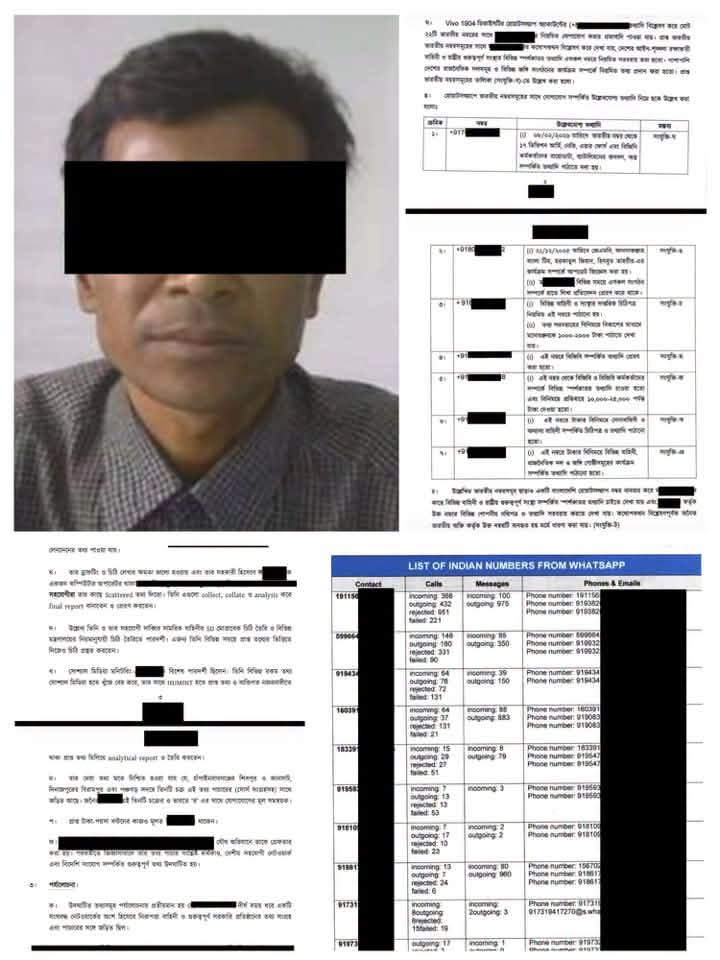
Two RAW operatives have been detained by the Bangladeshi intelligence operatives. From the recovered evidences, it's crystal clear that they had special focus on the Border Guard Bangladesh and had a dedicated medium for sending BGB-related information to the Indian counterparts.
Binnaguri Cantonment, where the two operatives were reportedly seen visiting, is home to the 20th Mountain Division, which was the main force in the bloody Battle of Hili in East Pakistan in 1971. By defeating the 16th Infantry Division of the Pakistan Army, their division managed to establish the Indian Army's dominance over the entire Rajshahi, Rangpur, and Bogra regions at that time.
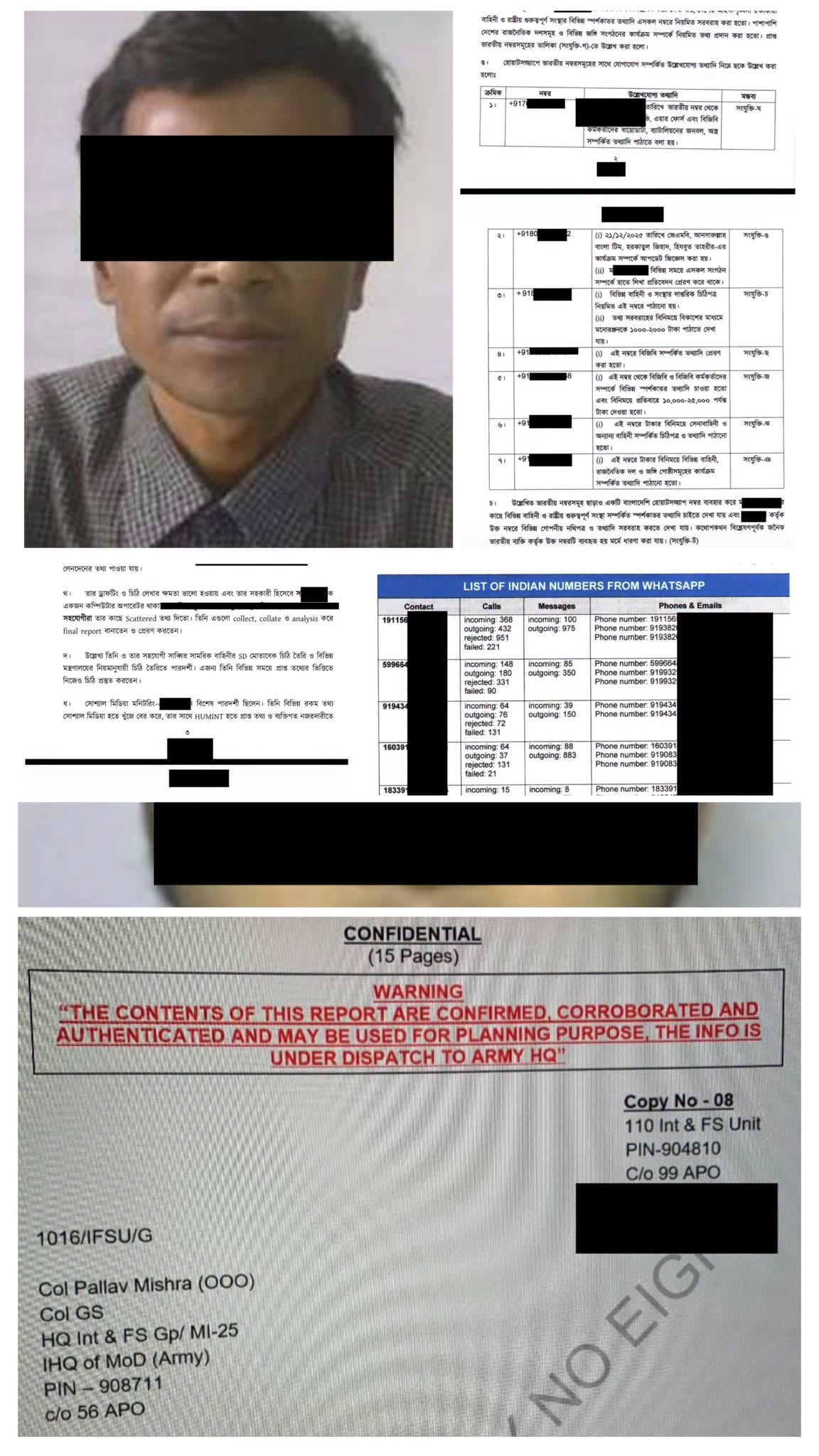
Binnaguri Cantonment, where the two operatives were reportedly seen visiting, is home to the 20th Mountain Division, which was the main force in the bloody Battle of Hili in East Pakistan in 1971. By defeating the 16th Infantry Division of the Pakistan Army, their division managed to establish the Indian Army's dominance over the entire Rajshahi, Rangpur, and Bogra regions at that time.
Last edited:
Highlights:
Indian Adani Power Limited (Jharkhand) Limited remained the most expensive source of imported electricity for Bangladesh in the fiscal 2024-25, costing more than other cross-border suppliers.
An analysis of the Power Division's financial statements and the Bangladesh Power Development Board's annual report shows that electricity imported from Adani cost nearly 59% more than the combined weighted average tariff charged by three other Indian power suppliers.
Bangladesh imports electricity from four Indian suppliers under separate agreements: Adani Power, NTPC Vidyut Vyapar Nigam Limited (NVVN), Sembcorp Energy India Ltd, and Power Trading Corporation of India Ltd (PTC India).
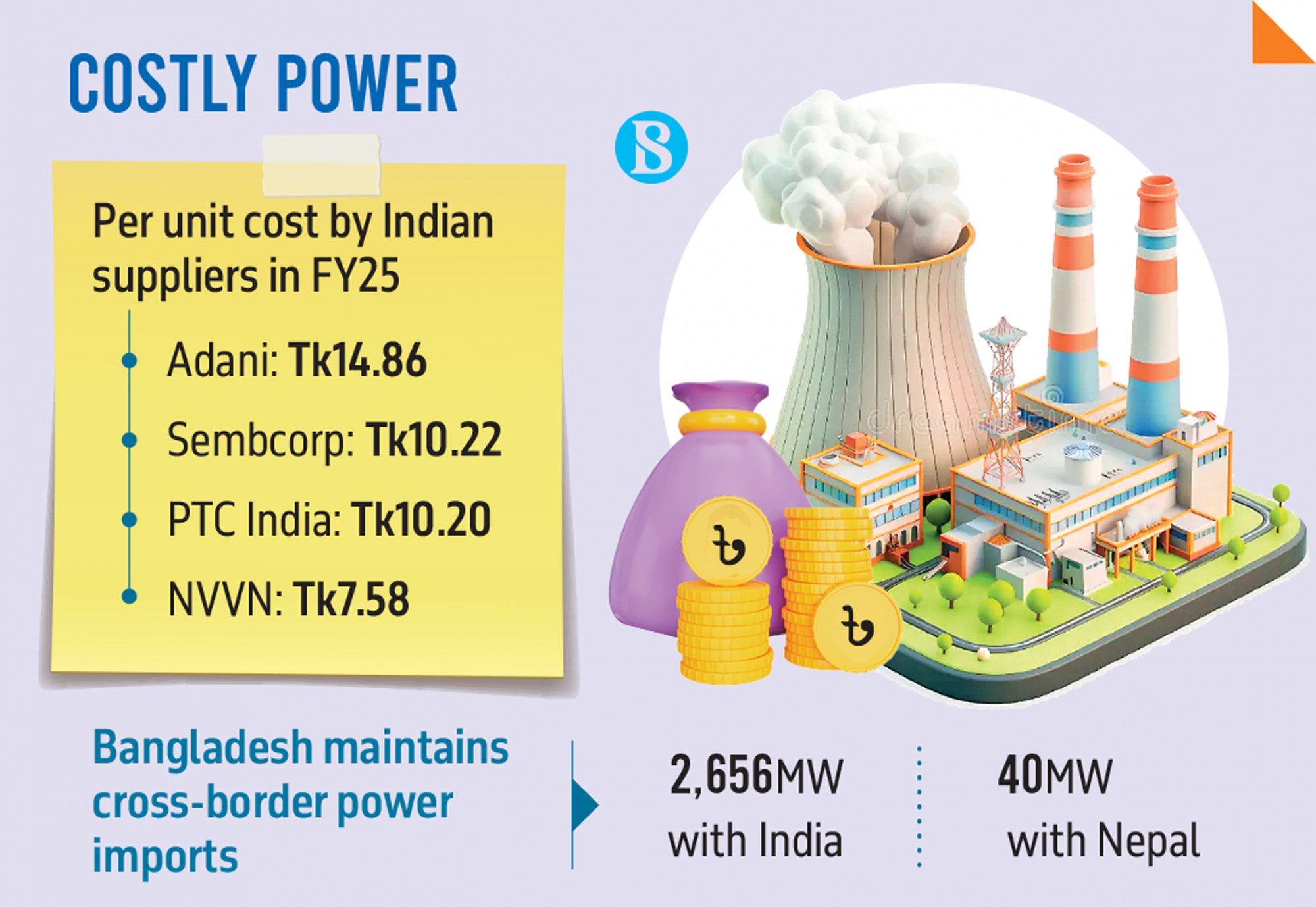
The power development board paid an average of Tk14.86 per kilowatt-hour (kWh) for electricity imported from Adani in FY25. In comparison, the combined weighted-average tariff for the other three suppliers was Tk 9.33 per unit.
The gap was even wider when compared separately.
Adani's tariff was nearly 96% higher than NVVN's weighted average cost of Tk7.58 per unit, while it was about 46% higher than PTC India's Tk10.20 per unit and 45% above Sembcorp's Tk10.22 per unit. Compared with electricity imported from Nepal, which cost Tk8.35 per unit, Adani's tariff was nearly 78% higher.
During FY25, the power board purchased 101,187.17 million kWh of electricity from all domestic and imported sources costing Tk121,420.16 crore.
The average power tariff rose to Tk12.10 per unit in FY25 from Tk11.35 a year earlier, marking a Tk0.75 per unit increase.
Currently, Bangladesh has 2,656MW of cross-border power import agreements with India and 40MW with Nepal.
Adani Power
In FY25, Bangladesh imported 8,030 million kWh of electricity from Adani's Jharkhand plant, paying Tk11,933.44 crore at an average tariff of Tk14.86 per unit.
In FY24, it imported 8, 170 million kWh and paid Tk12,146.96 crore, with the average tariff standing at Tk14.87 per unit.
Cost breakdown of other Indian suppliers
Bangladesh imports electricity from NVVN through three separate cross-border corridors.
In FY25, the 250MW corridor supplied 1, 840 million kWh at Tk4.42 per unit, making it the cheapest among all import routes.
The 160MW Tripura corridor supplied 477.67 million kWh at Tk10.64 per unit, while the 300MW corridor delivered 2, 520 million kWh at Tk8.46 per unit.
In FY24, the respective per-unit costs were Tk4.18, Tk9.17 and Tk8.08.
Overall, Bangladesh imported 4, 840 million kWh from NVVN in FY25, costing Tk3,457.82 crore, resulting in a weighted average tariff of Tk7.14 per unit, up from Tk6.86 in FY24 – an increase of 4.12%.
As Bangladesh pays wheeling charges separately to the grid corporation, the average cost rose to Tk7.58 per unit after adding Tk211.71 crore in transmission charges.
Even after including wheeling costs, the Tripura corridor remained NVVN's most expensive route at Tk 10.64 per unit.
Bangladesh also imported 1, 620 million kWh from PTC India in FY25, paying Tk1,651.32 crore, ending up into an average tariff of Tk10.20 per unit, compared with Tk9.29 in FY24 – an increase of 9.8%. The PTC agreement includes transmission charges.
Meanwhile, Sembcorp supplied 1, 920 million kWh of electricity in FY25 and earned Tk1,957.56 crore, with the average tariff standing at Tk 10.22 per unit, down from Tk10.43 a year earlier, marking a 2% decline.
Unlike NVVN, wheeling charges are already included in Sembcorp's power purchase agreement.
Nepal
Bangladesh began importing hydropower from the Nepal Electricity Authority in 2025.
In FY25, it imported 15.83 million kWh of electricity costing Tk132.25 million, resulting in an average tariff of Tk8.35 per unit.
Transmission costs fall
Bangladesh separately pays transmission, or wheeling, charges to India's grid corporation for electricity imported through corridors.
In FY25, the grid corporation transmitted 4,840 million kWh of electricity and charged Bangladesh Tk211.71 crore, down from Tk270.45 crore for 5, 130 million kWh in FY24.
As a result, the average transmission cost fell 17.08% to Tk0.437 per kWh from Tk0.527 per kWh, while total transmission payments declined 21.72%, despite electricity imports through the NVVN corridors dropping by only 5.6%.
Among the three routes, the 250MW corridor recorded a 3.8% rise in per-unit transmission cost.
The 160MW Tripura corridor saw transmission costs per unit more than double as imports fell sharply, while the 300MW corridor posted the biggest improvement, with per-unit transmission costs dropping 59.2%.

 www.tbsnews.net
- Adani supplied Bangladesh's most expensive imported electricity in FY2024-25
- Adani electricity cost 59% more than other Indian suppliers combined
- Bangladesh paid Tk14.86 per unit for Adani electricity
- NVVN supplied the cheapest imported electricity at Tk7.58 per unit
- Bangladesh began importing Nepal hydropower at Tk8.35 per unit
- India's electricity transmission charges to Bangladesh fell 17% in FY25
Indian Adani Power Limited (Jharkhand) Limited remained the most expensive source of imported electricity for Bangladesh in the fiscal 2024-25, costing more than other cross-border suppliers.
An analysis of the Power Division's financial statements and the Bangladesh Power Development Board's annual report shows that electricity imported from Adani cost nearly 59% more than the combined weighted average tariff charged by three other Indian power suppliers.
Bangladesh imports electricity from four Indian suppliers under separate agreements: Adani Power, NTPC Vidyut Vyapar Nigam Limited (NVVN), Sembcorp Energy India Ltd, and Power Trading Corporation of India Ltd (PTC India).
The power development board paid an average of Tk14.86 per kilowatt-hour (kWh) for electricity imported from Adani in FY25. In comparison, the combined weighted-average tariff for the other three suppliers was Tk 9.33 per unit.
The gap was even wider when compared separately.
Adani's tariff was nearly 96% higher than NVVN's weighted average cost of Tk7.58 per unit, while it was about 46% higher than PTC India's Tk10.20 per unit and 45% above Sembcorp's Tk10.22 per unit. Compared with electricity imported from Nepal, which cost Tk8.35 per unit, Adani's tariff was nearly 78% higher.
During FY25, the power board purchased 101,187.17 million kWh of electricity from all domestic and imported sources costing Tk121,420.16 crore.
The average power tariff rose to Tk12.10 per unit in FY25 from Tk11.35 a year earlier, marking a Tk0.75 per unit increase.
Currently, Bangladesh has 2,656MW of cross-border power import agreements with India and 40MW with Nepal.
Adani Power
In FY25, Bangladesh imported 8,030 million kWh of electricity from Adani's Jharkhand plant, paying Tk11,933.44 crore at an average tariff of Tk14.86 per unit.
In FY24, it imported 8, 170 million kWh and paid Tk12,146.96 crore, with the average tariff standing at Tk14.87 per unit.
Cost breakdown of other Indian suppliers
Bangladesh imports electricity from NVVN through three separate cross-border corridors.
In FY25, the 250MW corridor supplied 1, 840 million kWh at Tk4.42 per unit, making it the cheapest among all import routes.
The 160MW Tripura corridor supplied 477.67 million kWh at Tk10.64 per unit, while the 300MW corridor delivered 2, 520 million kWh at Tk8.46 per unit.
In FY24, the respective per-unit costs were Tk4.18, Tk9.17 and Tk8.08.
Overall, Bangladesh imported 4, 840 million kWh from NVVN in FY25, costing Tk3,457.82 crore, resulting in a weighted average tariff of Tk7.14 per unit, up from Tk6.86 in FY24 – an increase of 4.12%.
As Bangladesh pays wheeling charges separately to the grid corporation, the average cost rose to Tk7.58 per unit after adding Tk211.71 crore in transmission charges.
Even after including wheeling costs, the Tripura corridor remained NVVN's most expensive route at Tk 10.64 per unit.
Bangladesh also imported 1, 620 million kWh from PTC India in FY25, paying Tk1,651.32 crore, ending up into an average tariff of Tk10.20 per unit, compared with Tk9.29 in FY24 – an increase of 9.8%. The PTC agreement includes transmission charges.
Meanwhile, Sembcorp supplied 1, 920 million kWh of electricity in FY25 and earned Tk1,957.56 crore, with the average tariff standing at Tk 10.22 per unit, down from Tk10.43 a year earlier, marking a 2% decline.
Unlike NVVN, wheeling charges are already included in Sembcorp's power purchase agreement.
Nepal
Bangladesh began importing hydropower from the Nepal Electricity Authority in 2025.
In FY25, it imported 15.83 million kWh of electricity costing Tk132.25 million, resulting in an average tariff of Tk8.35 per unit.
Transmission costs fall
Bangladesh separately pays transmission, or wheeling, charges to India's grid corporation for electricity imported through corridors.
In FY25, the grid corporation transmitted 4,840 million kWh of electricity and charged Bangladesh Tk211.71 crore, down from Tk270.45 crore for 5, 130 million kWh in FY24.
As a result, the average transmission cost fell 17.08% to Tk0.437 per kWh from Tk0.527 per kWh, while total transmission payments declined 21.72%, despite electricity imports through the NVVN corridors dropping by only 5.6%.
Among the three routes, the 250MW corridor recorded a 3.8% rise in per-unit transmission cost.
The 160MW Tripura corridor saw transmission costs per unit more than double as imports fell sharply, while the 300MW corridor posted the biggest improvement, with per-unit transmission costs dropping 59.2%.
Adani power tariff 59% more expensive than three other Indian suppliers to Bangladesh
An analysis of the Power Division’s financial statements and the Bangladesh Power Development Board’s annual report shows that electricity imported from Adani cost nearly 59% more than the combined weighted average tariff charged by three other Indian power suppliers


