
Latest Thread
You are using an out of date browser. It may not display this or other websites correctly.
You should upgrade or use an alternative browser.
You should upgrade or use an alternative browser.
Ceuta and Melilla situation?
- Thread starter MadEvix
- Start date


My distinguished opinion,I am wondering about takes on that situation, from you distinguished people.
Thanks!
Stupid dumb action by dumbasses.
mehmed beg
Contributor


Jews always win, that's exactly what happened
I was in that shit hole, it is relatively small place. Total chaos.
I think that Spain needs to give a lesson to these jokers.
Personally, I would bring 10000 paratroopers there and beat those people to the pulp
I was in that shit hole, it is relatively small place. Total chaos.
I think that Spain needs to give a lesson to these jokers.
Personally, I would bring 10000 paratroopers there and beat those people to the pulp


Spanish Prime Minister Pedro Sánchez has defined what happened in Ceuta as a “violation of Spain’s territorial integrity.” In his own words: “What has happened is an attack on Spain’s territorial integrity and deserves our most resounding and energetic condemnation.” The problem is that he tells the truth — but Spain does not dare to say that it is Morocco that has violated that territorial integrity. There are many theories about why this took place, but I think we can all agree that this was a coordinated action. Sebta and Melilla are Moroccan. They sit on our land — that is a historical fact, and no amount of denial changes it.
Two points should be taken into consideration:
In previous incidents we mainly saw sub-Saharan migrants attempting to break through. This time they were not the majority. There will be no lasting security for the European Union, and no sustainable end to irregular migration, as long as Ceuta and Melilla remain under Spanish control. Addressing the root causes requires political courage, not only higher fences. Returning these two cities to their rightful country — Morocco — would open the door to a more stable and cooperative future based on mutual respect and shared responsibility.
Spain and the hypocritical European Union have received the message. Morocco wants a larger share in cooperation, trade, and partnership — one built on genuine respect and shared interests. As Foreign Minister Nasser Bourita said a few years ago, and the words remain just as relevant today:
“Morocco is not destined to be Europe’s gendarme, nor its concierge!”
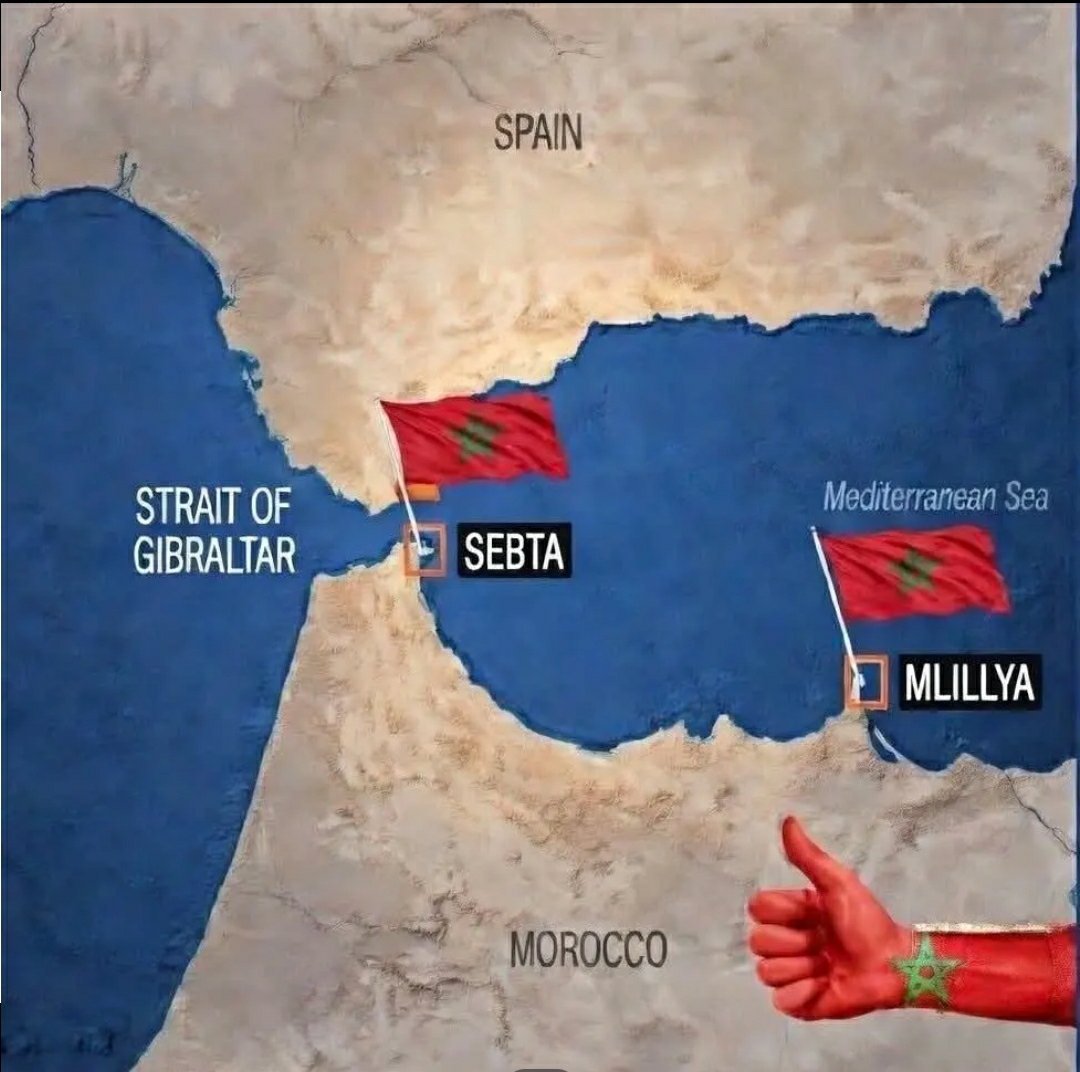
Two points should be taken into consideration:
- Spain and the United Kingdom recently removed the physical border fence at Gibraltar and scrapped routine land checkpoint controls.
- At the same time, voices inside the European Union have been discussing the imposition of tariffs on the automotive industry, electric vehicles, and lithium batteries.
In previous incidents we mainly saw sub-Saharan migrants attempting to break through. This time they were not the majority. There will be no lasting security for the European Union, and no sustainable end to irregular migration, as long as Ceuta and Melilla remain under Spanish control. Addressing the root causes requires political courage, not only higher fences. Returning these two cities to their rightful country — Morocco — would open the door to a more stable and cooperative future based on mutual respect and shared responsibility.
Spain and the hypocritical European Union have received the message. Morocco wants a larger share in cooperation, trade, and partnership — one built on genuine respect and shared interests. As Foreign Minister Nasser Bourita said a few years ago, and the words remain just as relevant today:
“Morocco is not destined to be Europe’s gendarme, nor its concierge!”
Jews always win, that's exactly what happened
I was in that shit hole, it is relatively small place. Total chaos.
I think that Spain needs to give a lesson to these jokers.
Personally, I would bring 10000 paratroopers there and beat those people to the pulp
Which jews are you talking about? And what is wrong with being a jew? Spain is in no position to give any lessons to the Kingdom of Morocco! A good start would be for Spain to dare to condemn Morocco when they clearly claimed that this act was a violation of their territorial integrity. For your information, Spain only has one brigade of paratroopers, sorry to tell you

Tell the Spaniards to exit their infantry vehicles and other armored vehicles instead of playing "clash royale"

Blaming everything on Jews is tiring.Jews always win, that's exactly what happened
I was in that shit hole, it is relatively small place. Total chaos.
I think that Spain needs to give a lesson to these jokers.
Personally, I would bring 10000 paratroopers there and beat those people to the pulp
Yes, they gain from this chaos , and they want to cause disturbances in Europe. But lets start pointing fingers at Muslims too.
Why can't they just build their own countries?
mehmed beg
Contributor
Oh you again? 500 is defending their country? I saw your comment a few days ago how you have certain affinities towards North Europeans. Just to tell you, I am a blonde person, you are not and I don't feel any affinities towards those people. In other hand, I don't need to comment on Muslims in this particular instance, over the years I wrote plenty of things in that regardsBlaming everything on Jews is tiring.
Yes, they gain from this chaos , and they want to cause disturbances in Europe. But lets start pointing fingers at Muslims too.
Why can't they just build their own countries?
Yes , Jews are to be blamed for everything, Protestants too.
Or course, the only people that Jewery is afraid are white Europeans and Turks.
Basically, they don't even hide it.
mehmed beg
Contributor
I am well aware of your mentality, so as I said before, if someone like Franco is in the charge of Spain, you wouldn't dare to say thing.Which jews are you talking about? And what is wrong with being a jew? Spain is in no position to give any lessons to the Kingdom of Morocco! A good start would be for Spain to dare to condemn Morocco when they clearly claimed that this act was a violation of their territorial integrity. For your information, Spain only has one brigade of paratroopers, sorry to tell you
Tell the Spaniards to exit their infantry vehicles and other armored vehicles instead of playing "clash royale"
I know that very well.
What is wrong being Jew?
Well I didn't push them to publicly ( governmental representatives) demand the annihilation of other people be it Palestinians or others. Did I invent this? Is this conspiracy theory etc?


Who are they?My distinguished opinion,
Stupid dumb action by dumbasses.
Look on my "Zionism-Antisemits". The Jews explain these situation very well.Which jews are you talking about? And what is wrong with being a jew? Spain is in no position to give any lessons to the Kingdom of Morocco! A good start would be for Spain to dare to condemn Morocco when they clearly claimed that this act was a violation of their territorial integrity. For your information, Spain only has one brigade of paratroopers, sorry to tell you
Tell the Spaniards to exit their infantry vehicles and other armored vehicles instead of playing "clash royale"
"What is wrong with being a Jew?" What is wrong to be a fan of Adolf Hitler?
@Knowledgeseeker
As @mehmed beg said, Jews are smart people.
 www.youtube.com
As @mehmed beg said, Jews are smart people.
- YouTube
Auf YouTube findest du die angesagtesten Videos und Tracks. Außerdem kannst du eigene Inhalte hochladen und mit Freunden oder gleich der ganzen Welt teilen.
www.youtube.com


About 50.000 people 99% men trying to enter Spanish territory because of a new law in Spain.Who are they?
Most of them turned back the same day,some drowned and some became real refugees.
Uuupss… 
Must Read❗️

 www.ynetnews.com
Must Read❗️
Abraham Accords reach the Strait: how Israel can help Morocco reclaim its north
Analysis: US-Spain tensions over NATO, Iran create opening for Morocco to press claims on Ceuta and Melilla, with Israel positioned to back Rabat diplomatically within US-led alliance that increasingly favors cooperative partners over European holdouts
Last edited:
More proof?…
 www.youtube.com
www.youtube.com
www.youtube.com
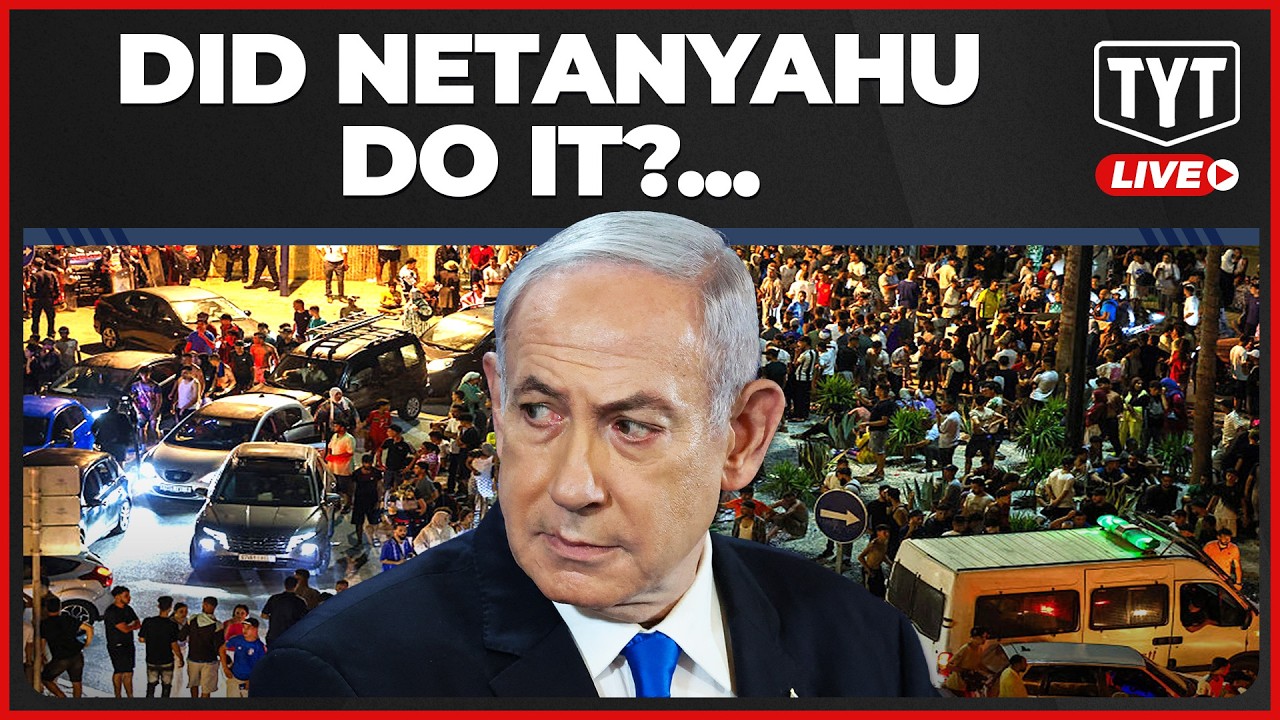
Was The ISRAELI GOVERNMENT Behind The MIGRANT SURGE?!?
Donald Trump and Hamas both say they have reached a deal for Gaza’s disarmament, marking a potentially major breakthrough even as questions remain about how ...
www.youtube.com
Was The ISRAELI GOVERNMENT Behind The MIGRANT SURGE?!?
Donald Trump and Hamas both say they have reached a deal for Gaza’s disarmament, marking a potentially major breakthrough even as questions remain about how ...
www.youtube.com
I said Northern Europeans don't hate Turks as much as Balkaners do.. am I wrong?Oh you again? 500 is defending their country? I saw your comment a few days ago how you have certain affinities towards North Europeans. Just to tell you, I am a blonde person, you are not and I don't feel any affinities towards those people. In other hand, I don't need to comment on Muslims in this particular instance, over the years I wrote plenty of things in that regards
Yes , Jews are to be blamed for everything, Protestants too.
Or course, the only people that Jewery is afraid are white Europeans and Turks.
Basically, they don't even hide it.
I am a real Turk and I interacted with you people and I know who hates my kind and don't. None of us need you to tell us anything, you're not even a Turk.
And no, Jews are not the only ones to blame. Arabs/Muslims are too. Arabs and Jews are cousins after all.
mehmed beg
Contributor
Is this drivel supposed to be an answer?I said Northern Europeans don't hate Turks as much as Balkaners do.. am I wrong?
I am a real Turk and I interacted with you people and I know who hates my kind and don't. None of us need you to tell us anything, you're not even a Turk.
And no, Jews are not the only ones to blame. Arabs/Muslims are too. Arabs and Jews are cousins after all.

The only ones who benefit from such chaos at such timing are none other than Israel and Morroco.I am wondering about takes on that situation, from you distiguished people.
Thanks!
With the current situation in the Middle East, Europe is in extreme alert since it may enter the point of economic collapse due to the closure of strait of Hormuz, strait of Bab el Mandab and now potentially the strait of gibraltar
Then we come to filthy Israel; we all know that Israel wants an all-out war in the region against Iran since the Israeli plan to topple the regime had failed. What truly disappointed Israel was the fact that none of the Western, Gulf, or Middle Eastern nations wants to go to a war with Iran; therefore, they are trying to artificially create a situation in which all nations will be forced to enter a war with Iran in order to re-open the straits and prevent a potential economic catastrophe in Europe; i-e, if you dont want prices in Europe to skyrocket and trade to halt, then grab a gun to fight against Iran in order to reopen the straits under Iranian control. Finally, Israel wants to topple Pedro Sanchez's government as it is the most outspoken critic of Israel's genocide in gaza and it wants to do that in such a way that it delivers a message to all EU leaders; "You are either with me or you are out of office". The current incident on Spanish lands were just a warning by Israel on what will happen to Spain if they keep up this extensive criticism of Israel
As for Morroco, we need to know that Morroco is a poor nation ruled by an extremely lavish king who is probably compromised by the Mossad (similar to Epstein files in the US). Morroco is experiencing tough times, with public support towards their government and king plummeting; furthermore, the increase in bilateral ties between Spain and Morroco's lifelong rival, Algeria, was gaining momentum in recent years with Spain undergoing talks to establish more gas pipelines to mainland Spain to transfer oil to EU while keeping the pipeline passing through Morocco closed which is something that pisses off Morocco. in addition to that, Algeria's support to the separatists in Western Sahara is rattling Morocco since the separatists dont wanna be a part of Morocco
So here is it; Israel threatens its critics and lay the foundation of an all-out war while Morroco lusts after more geopolitical leverage and economic advantage by riding Israel's coattails


What we know about the sudden influx of migrants in Spain's enclave of Ceuta
Around 200 migrants arriving “every minute”, according to journalist specialised in migration in North Africa.
share.google
200 migrants a minute!!!
As for Morroco, we need to know that Morroco is a poor nation ruled by an extremely lavish king who is probably compromised by the Mossad (similar to Epstein files in the US). Morroco is experiencing tough times, with public support towards their government and king plummeting; furthermore, the increase in bilateral ties between Spain and Morroco's lifelong rival, Algeria, was gaining momentum in recent years with Spain undergoing talks to establish more gas pipelines to mainland Spain to transfer oil to EU while keeping the pipeline passing through Morocco closed which is something that pisses off Morocco. in addition to that, Algeria's support to the separatists in Western Sahara is rattling Morocco since the separatists dont wanna be a part of Morocco
So here is it; Israel threatens its critics and lay the foundation of an all-out war while Morroco lusts after more geopolitical leverage and economic advantage by riding Israel's coattails
The Kingdom of Morocco is not a poor nation. By 2031, our economy is projected to reach approximately 320 billion USD, excluding the informal sector of around 100 billion USD. This would bring our total nominal GDP to roughly 420 billion USD, placing us firmly among the upper-middle-income countries and on a clear path toward high-income status.Your insults against my country and our King are completely unacceptable. What gives you, as an Albanian, the right to speak so disrespectfully about Morocco you filthy dog ?
Morocco is not experiencing the “tough times” you claim. On the contrary, we recorded one of the strongest economic growth rates in more than a decade — 4.9% in 2025. We will co-host the 2030 FIFA World Cup, and we have launched major strategic programs exceeding 50 billion USD in infrastructure, energy, and other vital strategic sectors.
Your claim that Morocco was “pissed off” because Algeria refused to transport more gas is frankly amusing. Algeria’s decision was a strategic mistake that cost them the Maghreb-Europe Gas Pipeline and an estimated 1–5 billion USD annually in lost gas exports to Europe. Morocco simply flipped the situation: the same pipeline is now used in reverse to import gas from Spain into Morocco.
As for the Moroccan Sahara, the file is closed. Do not waste your time on it. All five permanent members of the UN Security Council have effectively accepted our position: the United Kingdom, France, and the United States explicitly recognize Moroccan sovereignty over the Sahara, while Russia and China consistently abstain on related UN resolutions. Please do not speak on subjects you clearly know little about.
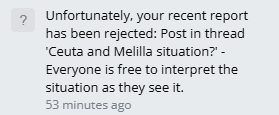
I was planning to ignore the post. However, after I reported your post two or three times for breaking the rules, the reports were surprisingly rejected. Go stick to Albania, which is one of the most pro-Israeli states on the planet, you filthy dog.

Last edited:


