

Latest Thread
- Russia ZAK-30 Tsitadel anti-aircraft artillery system: overview and operation
- Bangladesh Seoul welcomes Dhaka's interest in strengthening defence ties
- Bangladesh Modernise armed forces, replace outdated machinery: Parliamentary body
- Piercing the illusion of the 'Indian Century', the Indian economy shows a fragile background
- Kyrgyzstan rejects European proposal to accept migrants
You are using an out of date browser. It may not display this or other websites correctly.
You should upgrade or use an alternative browser.
You should upgrade or use an alternative browser.


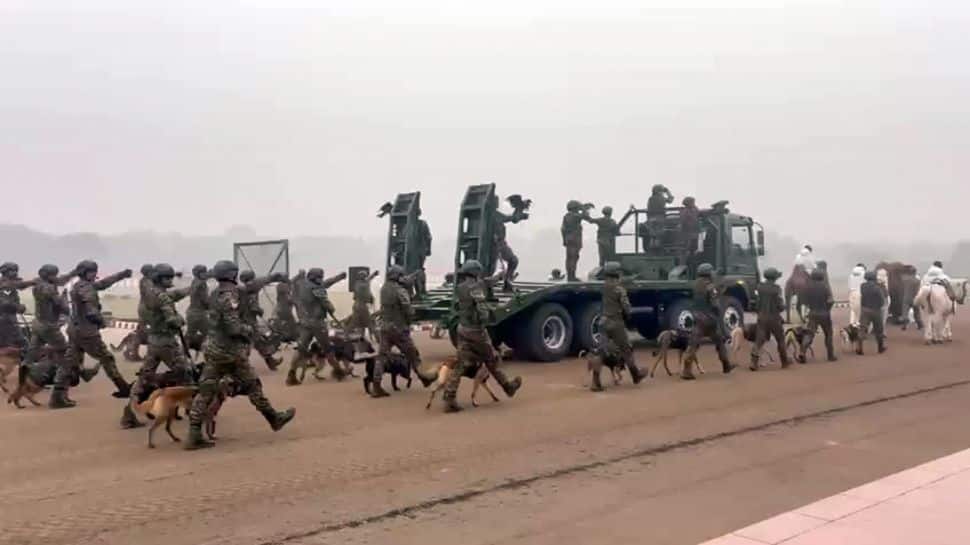
Global Lead: Why Indian Army Is Firing The World’s First Ramjet-Powered 155mm Shells
India is set to become first globally to deploy ramjet-powered 155mm artillery shells, boosting range by 30–50%, enhancing firepower, simplifying logistics, and showcasing indigenous innovation led by IIT Madras teams.
 zeenews.india.com
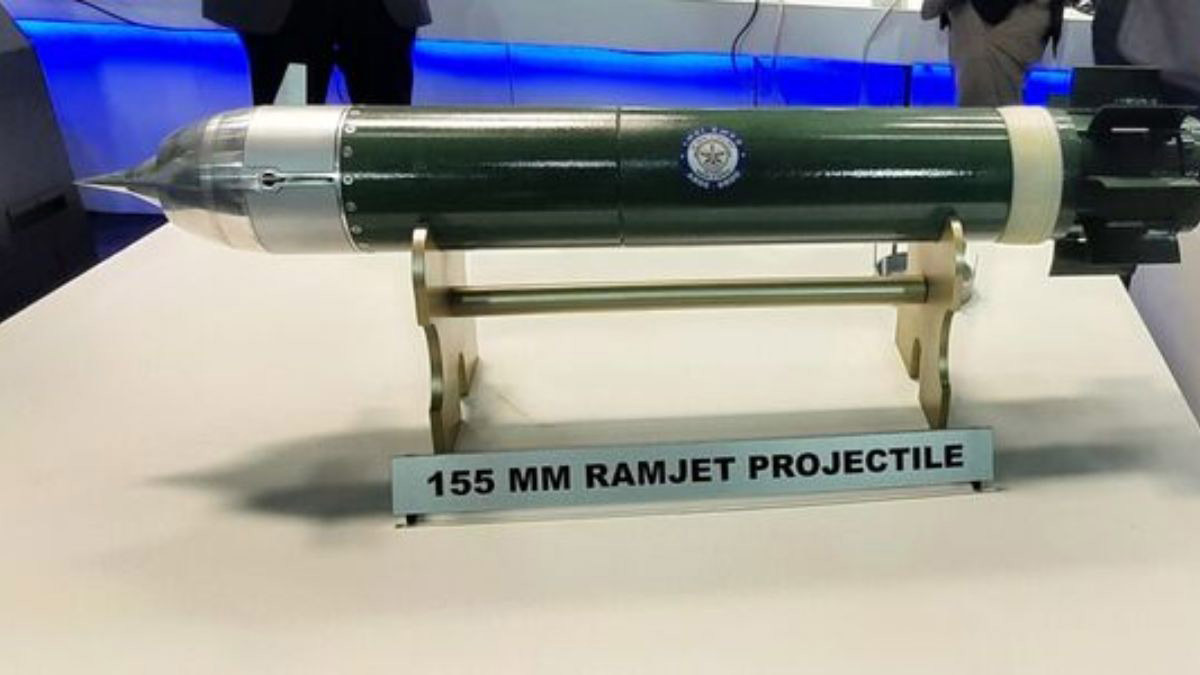
Indian Army to be world’s first to use ramjet-powered 155 mm artillery shells
This 'Atmanirbharta' initiative, in collaboration with IIT Madras, will increase the range of existing shells by 30-50 per cent without compromising lethality
"At the moment, the shell is undergoing developmental trials with IIT Madras even while it has been successfully tested in trials at Rajasthan’s Pokharan field firing ranges.
On whether the ramjet-powered shell can be fitted for the M 777 ultra-light howitzer, the IIT Madras professor said: “Once the technology is developed it can be used on any gun system that the Indian Army has in its armoury.”
Global Lead: Why Indian Army Is Firing The World’s First Ramjet-Powered 155mm Shells
India is set to become first globally to deploy ramjet-powered 155mm artillery shells, boosting range by 30–50%, enhancing firepower, simplifying logistics, and showcasing indigenous innovation led by IIT Madras teams.
Indian Army to be world’s first to use ramjet-powered 155 mm artillery shells
This 'Atmanirbharta' initiative, in collaboration with IIT Madras, will increase the range of existing shells by 30-50 per cent without compromising lethalitywww.theweek.in
"At the moment, the shell is undergoing developmental trials with IIT Madras even while it has been successfully tested in trials at Rajasthan’s Pokharan field firing ranges.
On whether the ramjet-powered shell can be fitted for the M 777 ultra-light howitzer, the IIT Madras professor said: “Once the technology is developed it can be used on any gun system that the Indian Army has in its armoury.”
(Some pics and some more details etc)
Moved:
Last edited:
@Gessler

 www.theweek.in
EXCLUSIVE: How DRDO cracked the code for GaN technology, boosting India's defence
Denied access to compound chip technology by foreign powers, Indian scientists did what they always do: Make in India
www.theweek.in
The push to indigenise compound chip production was initiated by, no surprises, former president A.P.J. Abdul Kalam. “Dr Kalam laid the foundation for making indigenous compound semiconductors,” said Mishra. “We successfully supplied to ISRO before moving on to next-generation GaN technology.”
The decisive push with regard to GaN came after foreign entities refused to share technology. Specifically, during negotiations for the purchase of 36 Rafale multirole combat aircraft from France’s Dassault Aviation under a Rs59,000-crore deal.
“In 2016, the order for 36 aircraft was signed as an inter-governmental agreement, mandating a 50 per cent offset clause,” said Mishra. Under the clause, French firms were required to reinvest 50 per cent of the contract value—about Rs30,000 crore—into India through technology transfer, business opportunities and R&D. “India proposed to receive GaN technology under the offset clause, but that was deemed a non-starter because of the strategic and state-of-the-art nature of the technology,” said Mishra. “The circuits were not denied but the technology was.”
In response, the DRDO launched the development of GaN technology. To date, the SSPL and the GAETEC have designed more than 30 chips across frequencies for applications including 5G, radars, satellite communications and electronic warfare.
“Foreign denials and endless delays forced us to innovate,” said Varughese. Strict export controls, including the International Traffic in Arms Regulation, restricted access to compound chip technology. Earlier DRDO programmes such as LSTAR (Long-Range Solid State Active Phase Array Radar, a forerunner to Airborne Early Warning and Control—AEW&C) and AEW&C faced severe difficulties in getting them.


It has to be noted that this is not packaging. Usually India's Military MMICs come from certain East Asian country which are then packaged here to form the broader component like Radars. This gives a rather false sense of being indigenous. This recent breakthrough is now true laboratory scale fabrication from wafer. I think only few countries can make GaN MMICs- US, UK, Germany, France, Taiwan, SK, Japan, China.@Gessler
EXCLUSIVE: How DRDO cracked the code for GaN technology, boosting India's defence
Denied access to compound chip technology by foreign powers, Indian scientists did what they always do: Make in India
Whatever we have done is simply at laboratory scale and can be throttled and may even be obstructed via export control on machinery. But indigenizing the machinery is herculean task.
Regarding fundamental building blocks for next-gen.-

India agrees arms deals with Israel worth $8.6b - report
 en.globes.co.il
The deals include SPICE 1000 precision guidance bombs, Rampage air-to-surface missiles, Air Lora air-launched ballistic missiles, and the Ice Breaker missile system, “Forbes India” reports.


