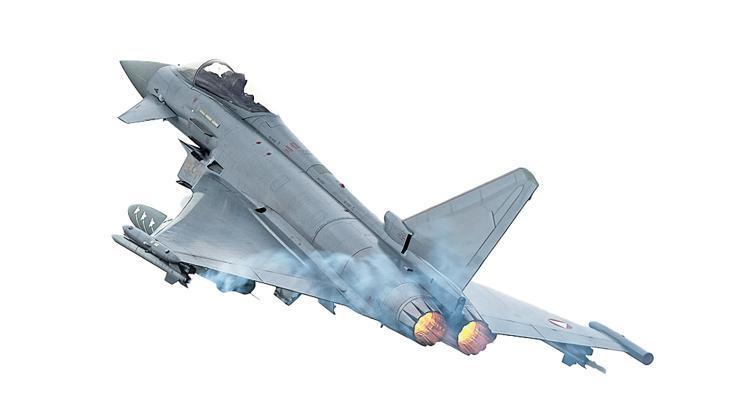
A large-scale procurement of more than 60 Eurofighters would be a strategic dead end. The goal must be interoperability and operational sovereignty – not the transition from one dependency to the next.
Together with the F-15EX, the Eurofighter is one of the most powerful 4.5+ generation fighter aircraft. As a customer, Turkey is expected to receive extensive rights of use, including the adaptation of own IFF, EW/ECM, electronic combat libraries, radar and threat profiles, and the integration of its own ammunition. This would give it a high degree of operational control over the weapon system.
However, the structural problem begins in areas beyond normal MRO contracts: spare parts, replacement engines and consortium-bound supply chains. In these areas, Turkey remains dependent on the Eurofighter consortium, especially on countries such as Germany. This dependence once again opens up opportunities for political blockades and delays by actors such as Greece, Cyprus or, indirectly, Israel.
It is also questionable whether the United Kingdom, Italy and Spain would continue to show the same political and diplomatic commitment after a sale has been completed as they did during the contract phase. Experience shows that once the sale is complete, there is less incentive to exert sustained political pressure within the consortium in favour of the customer. The customer is then bound and must accept existing restrictions.
For this reason, the Eurofighter should remain only a limited transitional solution for Turkey – not the new structural backbone of the air force.
Backbone until 2035+
Early IOC
TAI KAAN
Early MUM-T:
Kizilelma (Single Jet), Anka 3, Super Simsek
Main System Air Superiority:
F-16 Özgür II
Eurofighter T (Turkish Modified).
TB2/TB3, Akinci, Anka S
Backbone from 2035+
Main System Air Superiority:
TAI KAAN
MUM-T:
Kizilelma (Twinjet Version), Anka 3/4, Super Simsek
Workhorse:
HÜRJET next Blocks
Kizilelma (Twinjet Version)
Anka 3/4
Akinci next Blocks
TB2/TB3 and TB Next (Turbofan Version?)
will take over the tasks of the F-16/Eurofighter as workhorses in distributed across the platforms.
The F-16 Özgür II fleet would be gradually reduced to around 100+ aircraft remaining in service. In combination with drone systems, this strength would be sufficient to ensure homeland security in northern and eastern Turkey against potential threats from Russia, Iran and other regional actors.
In the west and south of the country, however, TAI KAAN and Hürjet, together with unmanned systems, would bear the brunt of deterrence and operational capability against Greece, Cyprus and Israel.
In this concept, the Eurofighter would serve as a second manned platform for redundancy and system diversification. A fleet of around 60 aircraft would be sufficient to maintain credible deterrence capability without creating new structural dependencies on a larger scale.
Together with the F-15EX, the Eurofighter is one of the most powerful 4.5+ generation fighter aircraft. As a customer, Turkey is expected to receive extensive rights of use, including the adaptation of own IFF, EW/ECM, electronic combat libraries, radar and threat profiles, and the integration of its own ammunition. This would give it a high degree of operational control over the weapon system.
However, the structural problem begins in areas beyond normal MRO contracts: spare parts, replacement engines and consortium-bound supply chains. In these areas, Turkey remains dependent on the Eurofighter consortium, especially on countries such as Germany. This dependence once again opens up opportunities for political blockades and delays by actors such as Greece, Cyprus or, indirectly, Israel.
It is also questionable whether the United Kingdom, Italy and Spain would continue to show the same political and diplomatic commitment after a sale has been completed as they did during the contract phase. Experience shows that once the sale is complete, there is less incentive to exert sustained political pressure within the consortium in favour of the customer. The customer is then bound and must accept existing restrictions.
For this reason, the Eurofighter should remain only a limited transitional solution for Turkey – not the new structural backbone of the air force.
Backbone until 2035+
Early IOC
TAI KAAN
Early MUM-T:
Kizilelma (Single Jet), Anka 3, Super Simsek
Main System Air Superiority:
F-16 Özgür II
Eurofighter T (Turkish Modified).
TB2/TB3, Akinci, Anka S
Backbone from 2035+
Main System Air Superiority:
TAI KAAN
MUM-T:
Kizilelma (Twinjet Version), Anka 3/4, Super Simsek
Workhorse:
HÜRJET next Blocks
Kizilelma (Twinjet Version)
Anka 3/4
Akinci next Blocks
TB2/TB3 and TB Next (Turbofan Version?)
will take over the tasks of the F-16/Eurofighter as workhorses in distributed across the platforms.
The F-16 Özgür II fleet would be gradually reduced to around 100+ aircraft remaining in service. In combination with drone systems, this strength would be sufficient to ensure homeland security in northern and eastern Turkey against potential threats from Russia, Iran and other regional actors.
In the west and south of the country, however, TAI KAAN and Hürjet, together with unmanned systems, would bear the brunt of deterrence and operational capability against Greece, Cyprus and Israel.
In this concept, the Eurofighter would serve as a second manned platform for redundancy and system diversification. A fleet of around 60 aircraft would be sufficient to maintain credible deterrence capability without creating new structural dependencies on a larger scale.
Last edited: