Home » Implications of the Hangor-class for Pakistan’s operational naval posture and strategic sovereignty
Implications of the Hangor-class for Pakistan’s operational naval posture and strategic sovereignty
- Published on 16/09/2026
- By Alex Luck
- In Features
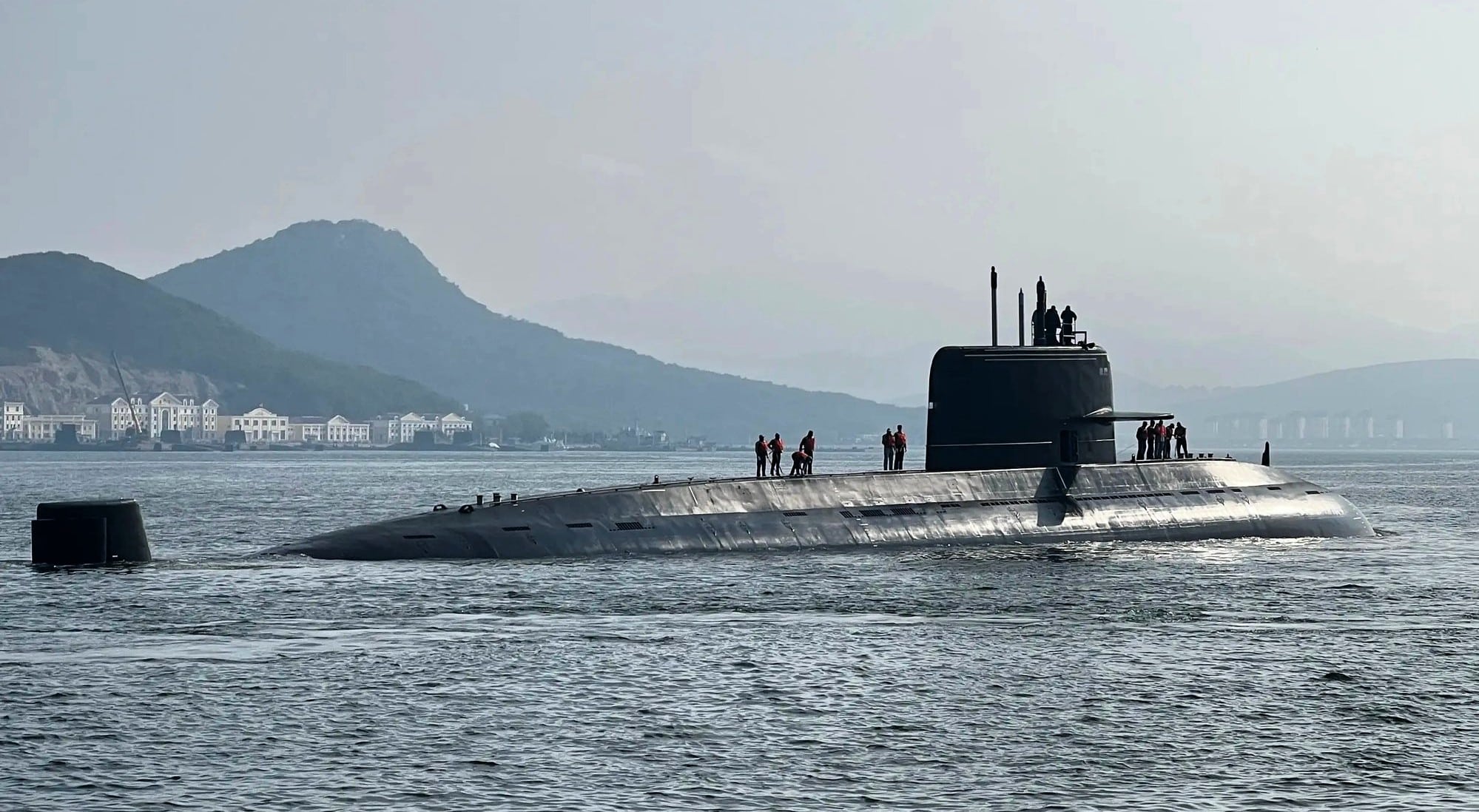
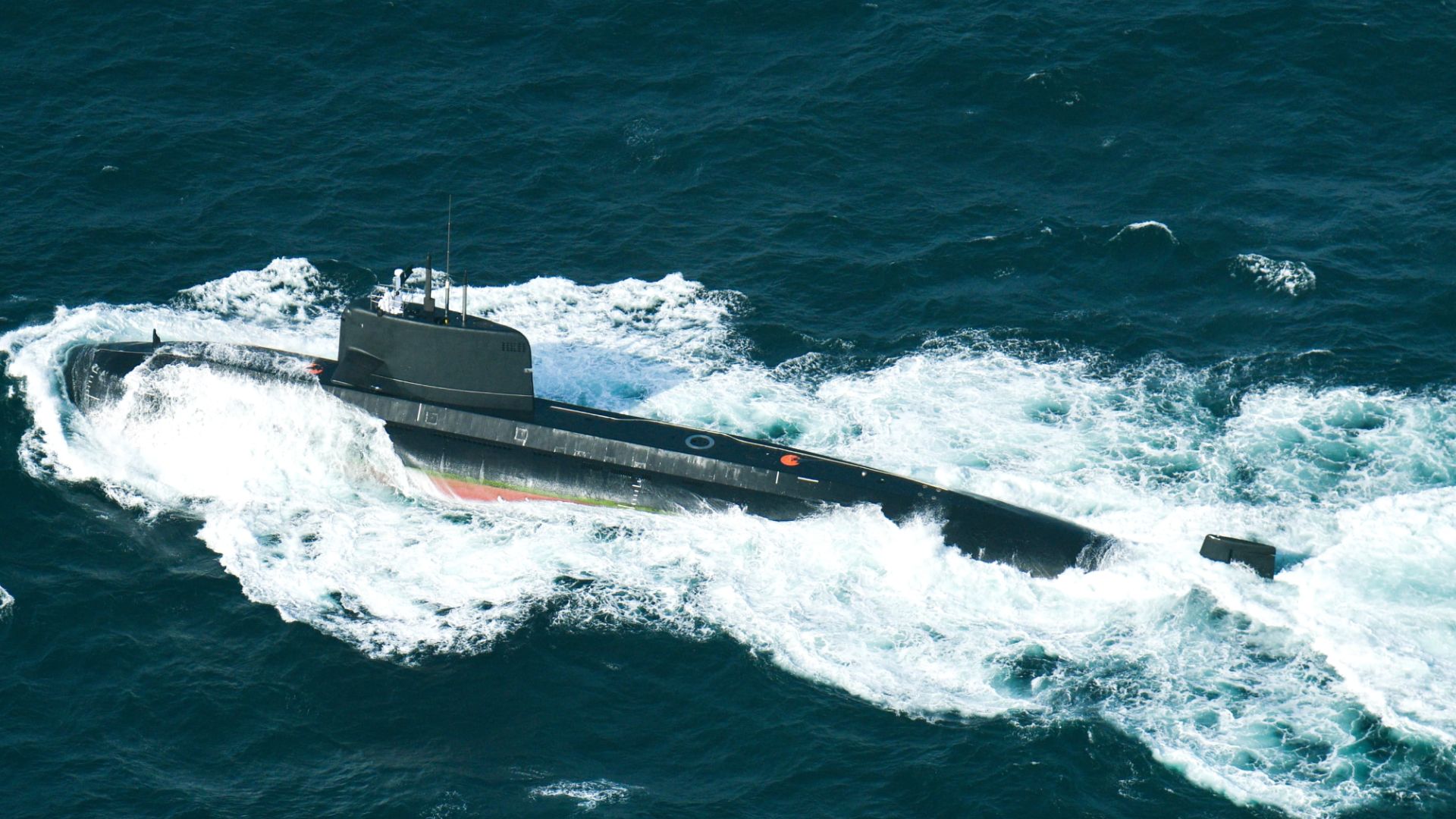
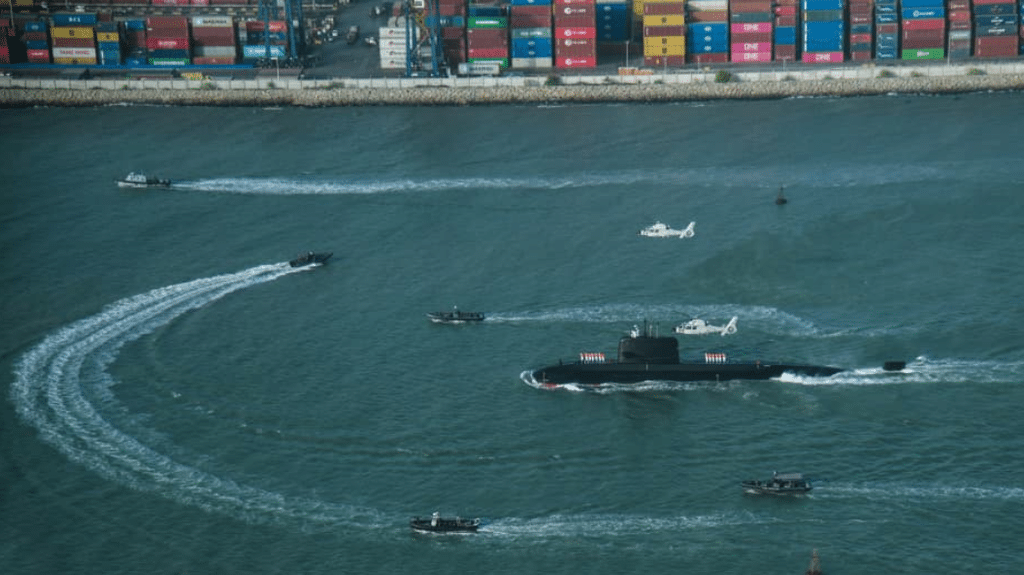
One of Pakistan's Hangor-class submarines undergoing sea trials near the builder Wuchang Shipbuilding in Wuhan. Image via Chinese social media.
This Naval News outline examines the importance of the Hangor-class submarines acquisition for the operational priorities of the Pakistan Navy, the industrial perspective for Islamabad and Beijing. The feature also looks at implications for Pakistani strategic sovereignty evolving because of acquisitions of Chinese materiel.
Sponsored feature by Gulf Defence Industry Initiative (GDII)
Over the next decade Pakistan is set to engage on the largest modernization of its submarine force since the inception of the service in 1964. The acquisition of the Hangor-class large diesel-electric submarines is notable for the large number of submarines included in one contract. Pakistan’s sourcing of such an important asset from China also aligns with a wider trend in Islamabad’s military acquisition choices. Across the wider military spectrum, Pakistan purchases an increasing amount of complex weapon systems from its strategic partner in Beijing.
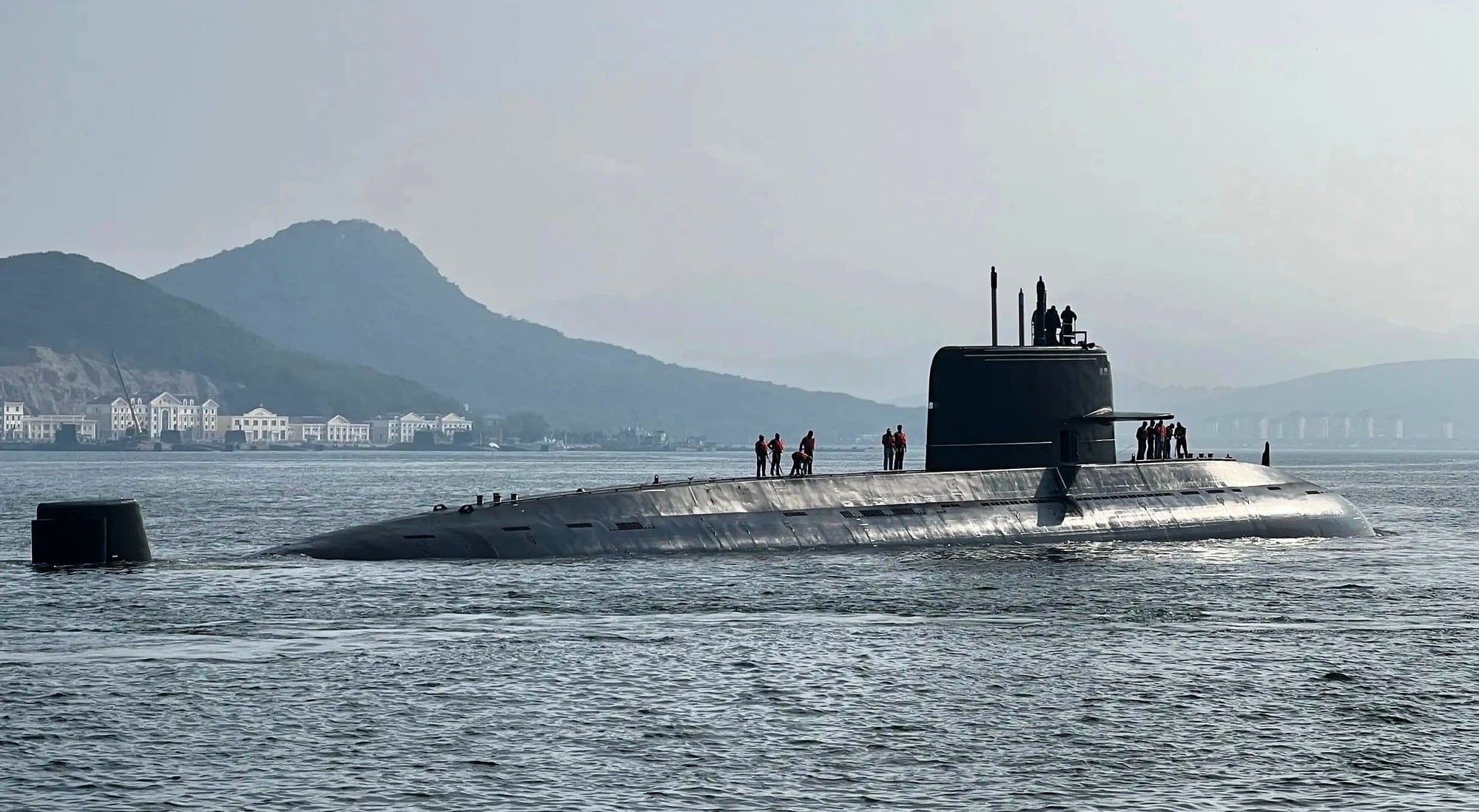
The first of class PNS Hangor on arrival June 11, 2026 in Karachi. Image via Pakistan Navy.
Pakistan’s evolution of submarine procurement and operations
Although Pakistan began submarine operations only in 1964, it is one of just three navies with post-1945 submarine combat experience. After acquiring a sole former American WW2-era boat, Islamabad bought three French Daphne-class submarines, including the original PNS Hangor. Then modern diesel-electric boats, the 700-ton Daphne-class offered limited endurance and range.
During the 1971 Indo-Pakistan War, PNS Hangor sank the Indian anti-submarine frigate INS Kukhri, a British-designed vessel India had acquired in the 1950s. The episode highlighted Pakistan’s use of its modest submarine force to blockade Indian ports and bases and constrain Indian naval operations and shipping.
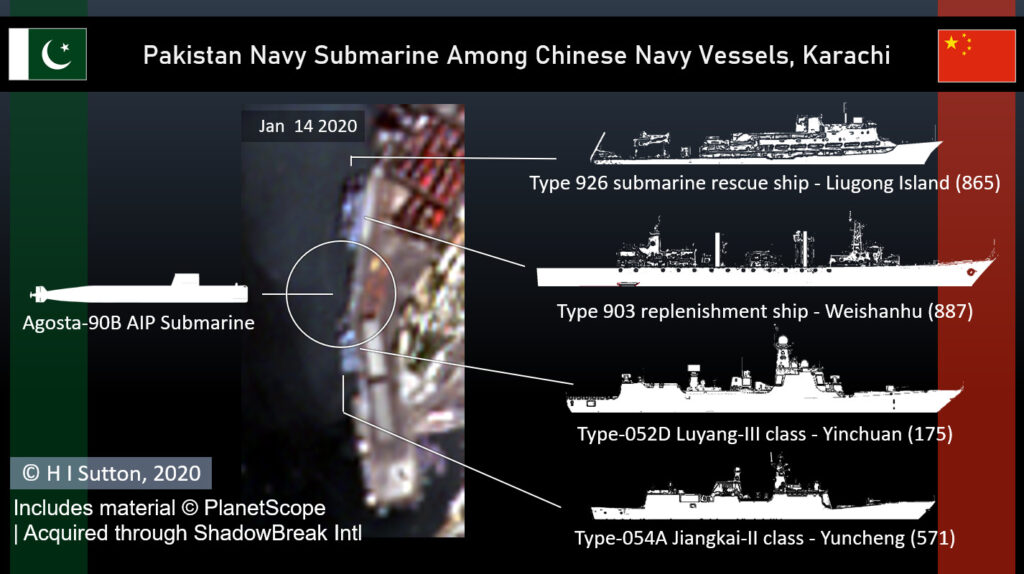
Pakistan proceeded to acquire another Daphne-class submarine as a used boat from Portugal in 1975, followed by two boats of the French Agosta-70 class. At 1,500 tons submerged, the original Agosta 70 was twice the displacement of the earlier Daphne-class. The new design enabled Pakistan for the first time to conduct longer ranged oceanic patrols. From 1992 Islamabad negotiated with Paris on the acquisition of a further three Agosta 90B submarines.
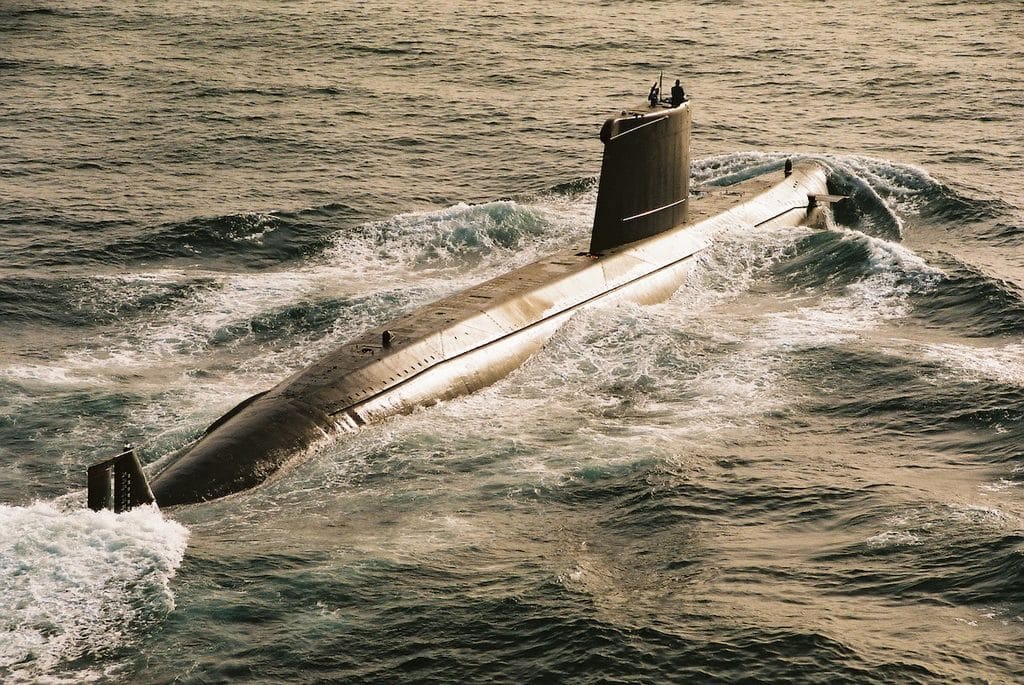
One of Pakistan’s three Agosta 90B submarines designated the Al Khalid-class. Image via STM Defence.
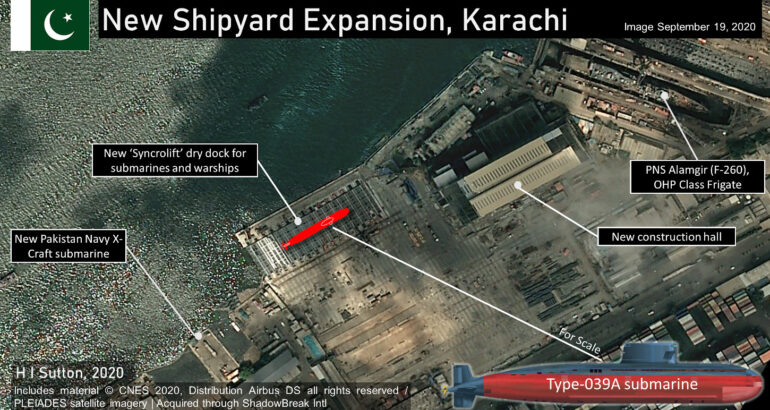
The Agosta 90B uses French MESMA-type air-independent propulsion (AIP), extending submerged loiter time at low speeds. For Pakistan, the agreement represented a significant industrial shift. DCNS, now Naval Group, built only the first boat. Meanwhile KS&EW in Karachi built the second and third with supporting technology transfer.
Pakistan retired the Daphne-class boats 2006, leaving it with the five Agosta-class boats by 2008. In 2016 Islamabad signed a contract
with Turkish defence company STM for modernization of the three Agosta 90B-submarines. Consequently, French suppliers missed out on this opportunity. As of 2026 STM completed modernization on two of the boats.
Broad shift towards Chinese military materiel
After
failing to acquire the German Type 214 fuell cell AIP-submarine in 2011
, Pakistan proceeded to negotiate with Chinese CSIC (now CSSC) through its trade arm CSOC for the supply of modern diesel electric submarines equipped with AIP. Both parties signed a contract for the purchase of eight such submarines in 2015.
Pakistan’s turn to a Chinese submarine supplier reflects its broader shift toward defence materiel from Beijing since the mid-2000s. Between 2006 and 2013, Islamabad bought four
Zulfiqar-class frigates, an export variant of the Type 053H3. Hudong built the first three hulls and Karachi’s KS&EW the final hull. Sino-Pakistani cooperation later added four Azmat-class fast attack craft, three built locally. Four
Tughril-class frigates followed from 2017 to 2022, based on the modern Type 054A. Most recently, Pakistan
acquired a missile range instrumentation ship from China.
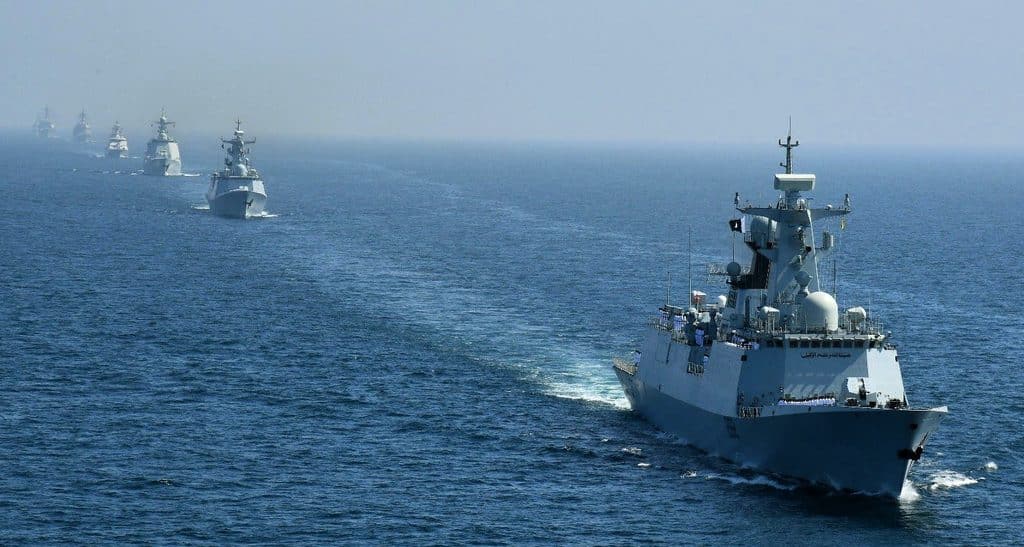
Two of Pakistan’s Tughril-class frigates leading participants in the Aman 2023 naval exercise. Image via Sinodefenceforum, originally Pakistan Navy.
Wuchang Shipbuilding Industry Group in Wuhan as the lead yard on Hangor produced most of the Chinese Navy’s conventional submarines for decades. The design is an export adaptation of the domestic Type 039B, or “Yuan-class” in Western reporting.
The Type 039B displaces about 2,600 tons surfaced. Therefore the design is larger by half than the Agosta 90B. CSIC/CSSC has marketed related export variants as the “S20”, “S26”, “2600 Ton Submarine” and, most recently, the “Kylin Class Submarine”.
The unspecified AIP is likely of the Stirling-type,
which PLAN operates on Type 039B/C-submarines. The contract includes delivery of four boats built at Wuchang. In parallel KS&EW Ltd will produce the remaining four hulls in Karachi.
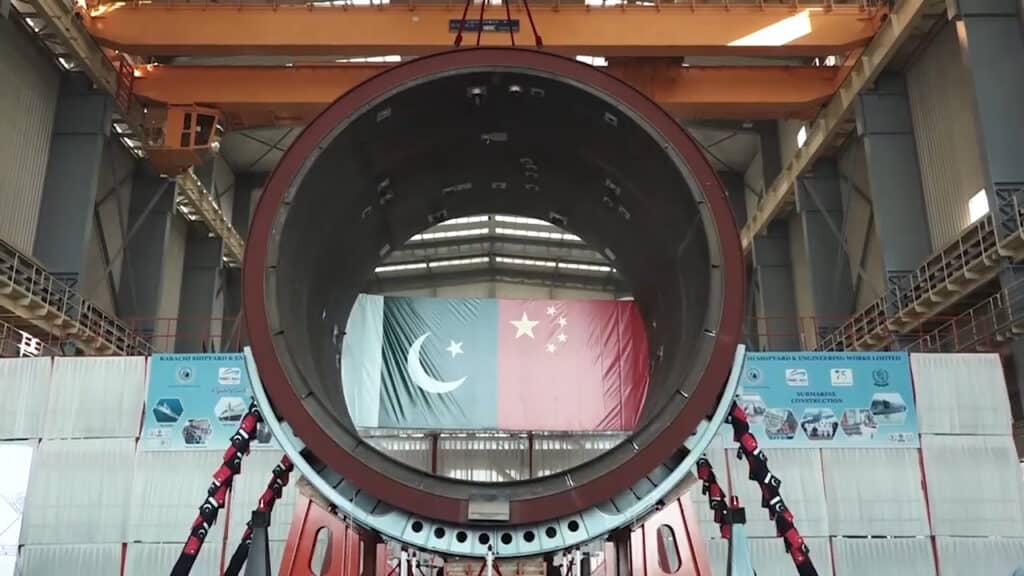
Keel-laying for the first Hangor-class submarine, the fifth overall, at KS&EW Karachi in December 2022. Image Pakistan Navy.
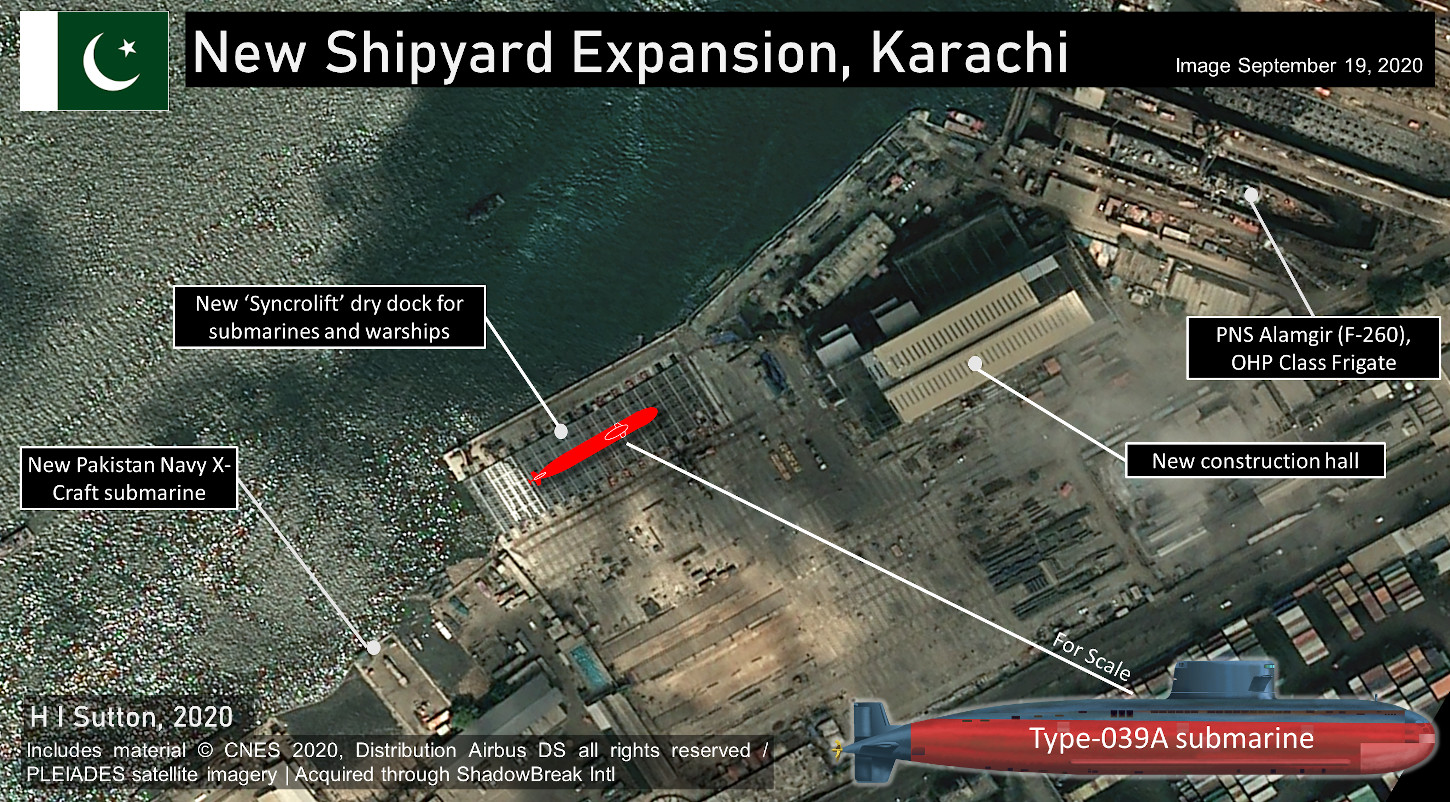
CSSC launched the first Hangor-class submarine at Wuchang on April 27, 2024. Three further boats followed in March, August and December 2025. Meanwhile KS&EW cut steel for the fifth boat, PNS Tasnim, in December 2021, followed by keel-laying in December 2022. The yard in Karachi cut steel on the sixth boat on the same date. Keel-laying occurred in February 2024.
Operational prospects of the Hangor acquisition
The Pakistan Navy commissioned the first-of-class PNS Hangor on April 30, 2026,
in a ceremony conducted at Sanya, in the South China Sea. The four Chinese-produced boats will likely all be in active service with Pakistan by 2028, by which time Islamabad may retire the Agosta 70-boats. The schedule for commissioning the Pakistan-build four Hangor-boats will likely reach well into the 2030s.
Pakistan therefore will operate seven modern diesel-electric submarines before the end of the 2020s. All boats feature AIP and significant blue water capability. With these characteristics the Hangor-submarines will add to Pakistan’s deterrence of Indian naval assets, based on the established PN concept of operations for submarines in ambush- and blockade scenarios.
The submarines also impact Indian planning as a
sheer “fleet in being”-asset. In essence, the boats improve the PN’s ability to hold Indian naval and commercial maritime infrastructure at risk. They may also enable covert standoff strikes with Pakistani- or Chinese-developed land-attack cruise missiles.
Large scale-sourcing of submarine capability without historical precedent
Most interesting will be the gradual strategic posture of Pakistan intensifying alignment with Chinese policy preferences on shared security concerns. Increasing acquisition of defence materiel historically tends to be a consequence, not a trigger for national security preferences.
However, the steeply increasing presence of Chinese defence technology across Pakistan’s military will arguably compel new motivations aligning Islamabad’s national security posture with that of Beijing due to operational and industrial dependencies. Such a dynamic is not unique to interactions of foreign governments with Beijing. A similar trend is regularly visible in how the United States interact with formal and de facto-military allies around the globe.
Beijing has yet to establish a consistent military export posture tied to political alignments across multiple foreign partners. The Chinese military industrial complex as part of foreign policy-interactions is a relatively recent phenomenon for complex weapon systems such as submarines, air defence systems and offensive guided missile types.
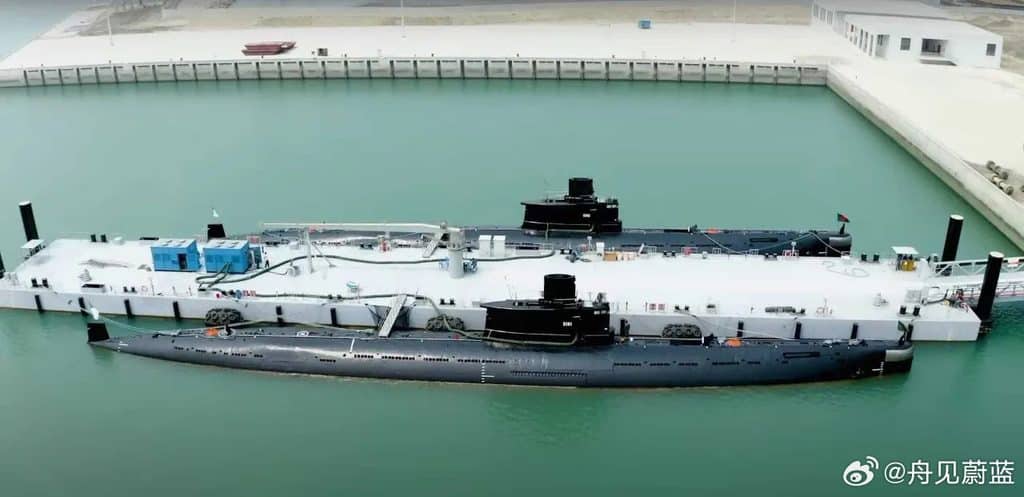
The two Bangladesh-operated Type 035G submarines at their naval base in Pekua. Image via Chinese social media.
In this context the Pakistani acquisition of the Hangor-submarines is unprecedented in modern times. China did export four Type 033 submarines to Egypt in the early 1980s, which Cairo later
comprehensively modernized with American technology. More recently Beijing has passed on used Type 035G-submarines to Bangladesh and Myanmar. Thailand is engaged in a
troublesome and delayed procurement of at least one S26T submarine, broadly comparable to the Hangor-class. Older examples such as proliferation of Type 033-submarines to North Korea are of limited relevance due to the dated political and military dynamics then driving Beijing’s policy.
Local construction with caveats for technological autonomy
A related trend with recent Pakistani naval acquisitions from Beijing is a thorough transition to Chinese subsystems for weapons, sensors and propulsion. An example on the Hangor-class are the new Chinese diesel engines powering the boats, after Germany refused to approve an export of MTU-made equivalents. Neither Islamabad nor Beijing detail the precise configuration of the Hangor-class. However, the boats very likely feature a Chinese-supplied armament, in addition to sensors and key communication equipment.
Steel cutting ceremony for one of the Hangor-class submarines at KS&EW Karachi. Image Pakistan Navy.
Media references to “transfer of technology” for complex weapon systems often understate continued reliance on OEM support for deep-cycle maintenance and modernization. Integrating domestic technology likewise requires supplier approval and cooperation. In this context, local construction does not imply full operational or industrial autonomy. Even sophisticated partnerships, such as Germany and Italy on the Type 212A and Italy’s national U-212 NFS successor, include component packages from the original supplier for construction and repair.
Because Pakistan appears to move to an exclusively Chinese-provided naval ecosystem for modern combatants, its singular dependence on Beijing in this regard therefore logically increases accordingly.
Naval collaboration as the ties that bind
Pakistan has previously adjusted meaningful military-industrial relationships, as shown by the French Agosta-class program. A key difference lies in Paris treating these ties mainly as business supporting its domestic defence industry.
Meanwhile, China shares strategic geopolitical concerns with Pakistan regarding India. Beijing also expanded far more robustly than any other vendor into the supply base for the Pakistan Navy, as outlined above. Unless a significant and unexpected political fallout occurs between both partners, it appears plausible that Islamabad considers such military commitments acceptable.
If such a disruption occurred, Pakistan might seek third-party support to sustain Chinese-sourced systems such as the Hangor-class submarines, as it did with Turkish STM for the Agosta-class. Yet the present Sino-Pakistani military-industrial integration would make any sustained changes a daunting prospect, undermining the readiness of Pakistan’s submarine, naval and broader security capabilities. Dependencies in the Sino-Pakistani security relationship would also be pertinent to decision-making by Islamabad’s partners in the Arabian Gulf. Any naval assistance by Pakistan such as during a significant crisis could hinge in part on Beijing’s preferences for the situation
Tags
Alex Luck
Alex Luck is a freelance writer & analyst, with a focus on German military modernization, NATO and naval programs worldwide, particularly with the Chinese Navy (PLAN). Originally from Germany, Alex is presently based in Brisbane, Australia.
www.navalnews.com



 www.navalnews.com