

Latest Thread
- Russia ZAK-30 Tsitadel anti-aircraft artillery system: overview and operation
- Bangladesh Seoul welcomes Dhaka's interest in strengthening defence ties
- Bangladesh Modernise armed forces, replace outdated machinery: Parliamentary body
- Piercing the illusion of the 'Indian Century', the Indian economy shows a fragile background
- Kyrgyzstan rejects European proposal to accept migrants
You are using an out of date browser. It may not display this or other websites correctly.
You should upgrade or use an alternative browser.
You should upgrade or use an alternative browser.
History and Culture
- Thread starter Nilgiri
- Start date


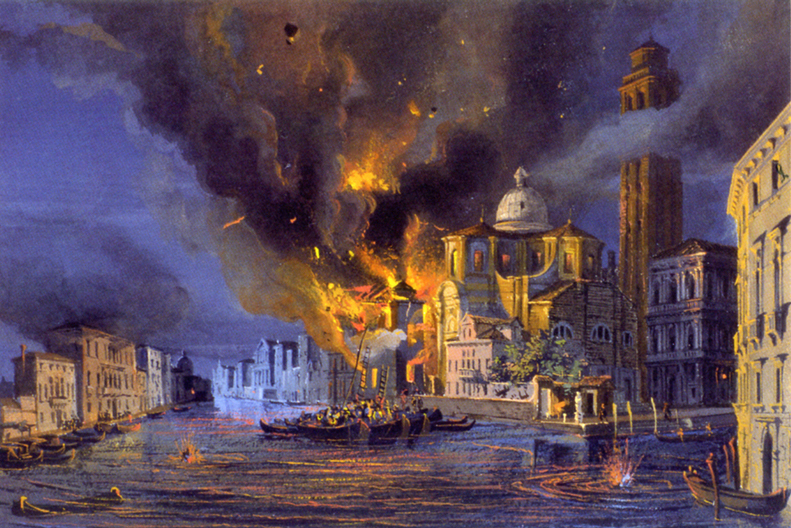
ΣΑΝ ΣΗΜΕΡΑ - 22 Αυγούστου 1849: Πρώτη επίθεση από τον ουρανό! - Military History
Λαμβάνει χώρα η πρώτη εναέρια επιδρομή στην ιστορία, όταν η Αυστρία εξαπολύει σμήνη μικρών μη επανδρωμένων αεροστάτων κατά της πολιορκούμενης Βενετίας. Η Βενετία ήταν μια ακμαία, αυτόνομη Δημοκρατία μέχρι το 1797, που ο Ναπολέων την κατέλαβε και την κατέλυσε. Μετά τον πόλεμο ενσωματώθηκε στην...
 military-history.gr
LIKE TODAY – August 22, 1849: First attack from the sky!
The first air raid in history takes place when Austria launches swarms of small unmanned balloons against besieged Venice.
Venice was a thriving, autonomous Republic until 1797, when Napoleon conquered and destroyed it. After the war, it was incorporated into Austria. When in 1848, a year of great revolutions and upheavals in Europe, it threw off the Austrian yoke, the Austrian army of Marshal Radetzky besieged the city.
Its powerful coastal artillery and the marshy lakes that surrounded it, however, prevented the Austrian troops from getting close enough. A young artillery lieutenant, Franz von Uchatius, had the idea of launching hot air balloons filled with incendiary devices with 10-13 kilograms of gunpowder against it. After an unsuccessful attempt in July, when the wind turned against them, the Austrian balloons flew 1,500 meters above the city in August.
Most of them were blown up in the air and fell into the water, while little damage was done to Venice, which surrendered a few days later after starvation and deprivation. However, von Uchatius's invention is recorded as the first official air raid.
He worked on other ideas, such as the discovery of high-strength metal alloys and the creation of smokeless powder, and after the end of the war he completed the kinetoscope, a device for displaying moving images. He had worked on this during the war to give training lectures on ballistics to young officers.

Argentina to Retire Super Étendard Aircraft in 2026
The Argentine Navy will permanently retire its Super Étendard aircraft by the end of 2026 after the jets effectively remained grounded since Argentina received them from France.
 share.google
The main problem was the Martin-Baker ejection seats manufactured in the United Kingdom.
Africa is often described as a continent rich in natural resources, but the deeper story is about who controls those resources, who profits from them, and how much value remains in African economies after extraction. The continent holds enormous deposits of gold, diamonds, cobalt, copper, uranium, oil, natural gas, platinum, iron ore and other minerals, alongside major agricultural resources such as cocoa, coffee, tea and cotton. These resources have made Africa central to global trade for centuries. Long before modern multinational corporations arrived, African gold, salt, ivory and other commodities were moving through extensive regional and international trade networks. During European colonial rule, however, the extraction of African resources became closely tied to systems designed to benefit colonial powers, with raw materials frequently exported while industrial development and manufacturing remained limited within the colonies.
That history still matters today. Having valuable resources does not automatically make a country wealthy. The real economic power comes from being able to process, manufacture and add value to those resources, create skilled jobs, negotiate strong contracts and ensure that local communities benefit from the wealth beneath their land. A country that exports raw minerals and then imports finished products made from those same materials can capture far less economic value than a country that develops the industries needed to process them. This is why Africa’s resource wealth should not simply be celebrated as proof of abundance. It should also raise questions about ownership, infrastructure, trade agreements, taxation, corruption, industrialization and who ultimately benefits. Africa has never lacked resources. One of the biggest challenges has been turning that enormous wealth into broad and lasting prosperity for the people who live on the continent. #BlackHistory #AfricanHistory #Africa
www.x.com
Smorgoni, December 5, 1812: the Grande Armee was dying in the snow, and its emperor was about to disappear.
Napoleon had marched into Russia that summer with over four hundred thousand men, certain that one decisive battle would bring the Tsar to terms.
Instead Moscow burned, the harvest never came, and the retreat turned into a slow massacre of cold and starvation.
At Smorgoni the emperor made a choice that stunned his own marshals: he would leave the army behind and race for Paris alone.
He handed command to Joachim Murat, climbed into a cramped sleigh with his aide Armand de Caulaincourt, and vanished into the frozen dark.
For thirteen days the two men crossed roughly eleven hundred miles of hostile, half frozen territory, trading horses and coaches to avoid capture.
Caulaincourt posed as the master and Napoleon as his servant, a disguise so complete that guards along the way waved the most wanted man in Europe straight through.
Bearded, filthy, and wrapped in soiled greatcoats, the pair rolled into the Tuileries Palace just before midnight on December 18.
The sentries at the gate, trained to recognize an emperor by his uniform and his bearing, saw only two haggard travelers and nearly turned them away.
Only when Napoleon stepped into the light did the guards realize who had just walked past them.
Behind him, in the snow he had left, tens of thousands of his soldiers were still dying without him.
Napoleon's arrival in Paris let him move faster than rumor, and he used the advantage to crush a coup attempt led by General Claude-Francois de Malet before it could spread further. He raised fresh conscripts through the winter and spring, rebuilding an army to replace the one still dying in the Russian snow, though it never approached the size or quality of what had marched east that summer. Roughly half a million men, soldiers from across his empire, never came home from Russia at all, and the disaster shattered the myth of Napoleonic invincibility that had held Europe in check for years. Prussia and Austria, sensing weakness for the first time, began turning against him within months. The campaign that started with dreams of forcing the Tsar to heel instead set in motion the coalition that would eventually march Napoleon into exile.
#archaeohistories
www.x.com
Ziggurat of Ur in iraq built over 4000 years ago in ancient Mesopotamia -
Built around 2100 BC, the Great Ziggurat of Ur was constructed during the reign of King Ur-Nammu in what is now southern Iraq

The enormous stepped structure stood at the center of Ur, one of the world’s earliest great cities. It was dedicated to Nanna, the Mesopotamian moon god and patron deity of the city.
Its core was constructed from millions of sun-dried mud bricks, while the exterior was faced with more durable fired bricks set in bitumen, a naturally occurring petroleum substance used as mortar and waterproofing.
The original ziggurat probably rose approximately 100 feet and supported a temple at its summit. Ordinary citizens likely could not enter the sanctuary, which was reserved for priests and religious ceremonies.
Ur eventually declined, but portions of the massive structure survived thousands of years of warfare, weather and political change.
The ancient city of Ur is traditionally associated with Abraham of the Bible. Archaeologist Leonard Woolley excavated the site during the 1920s and 1930s and uncovered spectacular royal tombs containing gold jewelry, musical instruments and elaborate objects approximately 4,500 years old.
#drthehistories
www.x.com
The United States once offered a secret bounty of a hundred thousand dollars to any enemy pilot who would defect and hand over one of the Soviets' terrifying new jets. It worked perfectly. A young North Korean flew one right into an American airfield and collected the money. The twist is that he had never heard of the reward. He just wanted out.
In the skies over Korea, the Americans had a serious problem, and its name was the MiG-15. This Soviet built jet fighter was fast, tough, and dangerous, and in the hands of a good pilot it could go toe to toe with America's best. The trouble was that the West did not really understand it. They had never gotten their hands on an intact one to study.
So the Air Force cooked up a scheme with a wonderfully blunt code name, Operation Moolah. They would simply buy one. Over North Korea they scattered more than a million leaflets promising a huge cash reward, a hundred thousand dollars, plus asylum and a new life, to the first enemy pilot who would fly a MiG-15 intact into UN hands. It was a bribe on a national scale, dropped from the sky.
For a while, nothing. And then, on the morning of September 21, 1953, after the shooting war had actually already ended in the armistice, a twenty one year old North Korean pilot named No Kum-sok climbed into his MiG-15 at a base near Pyongyang, peeled away from his flight, and flew south as fast as he could. He came screaming into Kimpo airfield near Seoul and landed, delivering a perfect, intact MiG-15 straight into American hands.
It was exactly what Operation Moolah had been designed to produce. Except for one thing. No Kum-sok had no idea the reward existed. He had never seen the leaflets. He was not doing it for money at all. He simply hated the regime he was living under and wanted to escape it, and flying his jet to the South was his way out. He was as surprised as anyone when the Americans eventually handed him a hundred thousand dollars he did not know he had earned.
The captured jet was a treasure. American engineers took it apart and studied every inch, and it was flight tested by the best pilots the country had, including the legendary Chuck Yeager, the first man to break the sound barrier, who got to wring out the enemy's mystery fighter and learn all its secrets.
As for No Kum-sok, his story has the happiest ending of all. He came to the United States, built a new life, changed his name to Kenneth Rowe, became an aeronautical engineer, and lived a long, free, prosperous life in the country he had risked everything to reach. A man flew a stolen jet across a war to freedom, accidentally won a fortune he did not know was on offer, and handed the West its greatest intelligence prize of the air war, all because he wanted to be free.
www.x.com
On a personal note. My late father belonged to the 17th Indian division during the Burma campaign.


