
Latest Thread
You are using an out of date browser. It may not display this or other websites correctly.
You should upgrade or use an alternative browser.
You should upgrade or use an alternative browser.
Israel Politics
- Thread starter Nilgiri
- Start date


They make up a fifth of Israel's population – their votes could be decisive for the country's future.
Voter turnout among the Arab population in Israel may have an impact on who gets the opportunity to form a government.

As you approach Umm al-Fahm in northern Israel, the Arab election posters begin to become more frequent. (Photo: © Ammar Awad, Reuters/Ritzau Scanpix)
Of
Selin Turker - Israel
Yesterday at 21:57
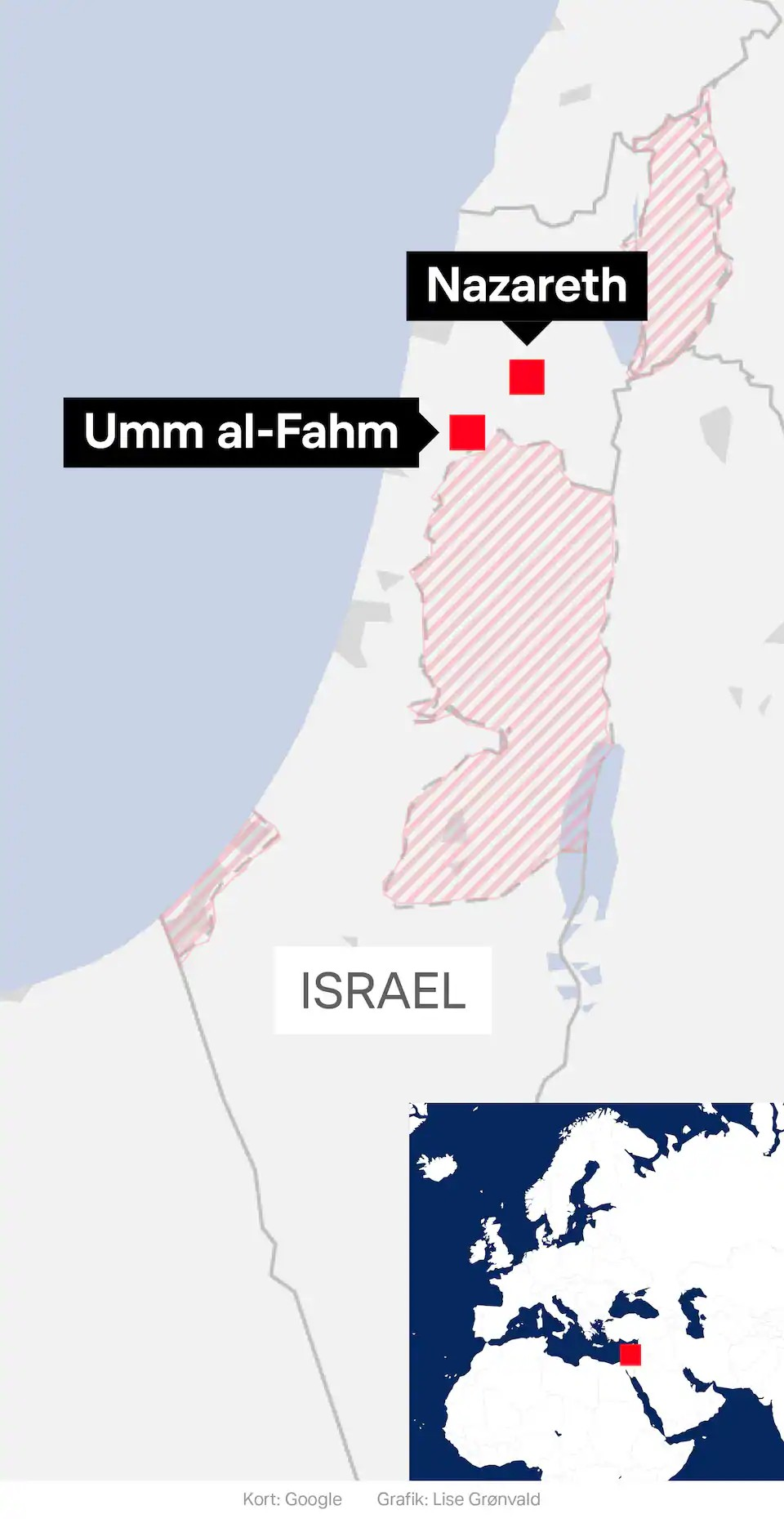
If you get into a car in Jerusalem and drive north, past Tel Aviv and on through the countryside, you will come to Umm al-Fahm.
The name of the town means 'mother of the litter' in Arabic. Where the name comes from is not entirely clear. However, the way there is simple: the highway takes you almost all the way to Umm al-Fahm, which stretches along the main road with shops, restaurants and car repair shops on both sides.
The closer you get to Umm al-Fahm, the more election posters appear with Arabic text. This is because the majority of people living here are Arabs of Palestinian background and with Israeli citizenship. Arab citizens make up about a fifth of Israel's population and about 17 percent of all eligible voters.
In the most recent election, in 2022, around 60 percent of voters in Umm al-Fahm abstained from voting. One of them was 33-year-old intensive care nurse Ehab Mahujnu, whom DR meets at one of the city's auto mechanics while he is having his white Chery repaired:
"I didn't vote last time because I didn't feel that the Arab parties were doing anything for us anyway. I didn't vote, and now we have men like Ben-Gvir and Smotrich in the government," he says, shaking his head.
Israel's National Security Minister, Itamar Ben-Gvir, is one of Israel's most controversial politicians. He has repeatedly called for the killing of Palestinians and has previously been convicted of incitement to racism and support for terrorism, among other charges.
Finance Minister Bezalel Smotrich has been a central driving force behind the expansion of Israeli settlements in the occupied West Bank. In connection with a new settlement project last year, Smotrich declared that the project would "bury the idea of a Palestinian state."

33-year-old Ehab Mahujnu is an intensive care nurse and father of two little girls. (Photo: © Selin Türker)
The two ministers are once again speaking to voters in Umm al-Fahm. Several say this election is the most important of their lives. Whether they choose to vote or stay home could affect who gets the chance to form Israel's next government.
For Ehab Mahujnu, there is no hesitation when DR asks if he believes it is the most important choice of his lifetime: The answer is "yes".
Nazareth is considered the largest city in Israel with a primarily Arab population – both Christian and Muslim Arabs live here.
On a quiet street, where most shops have closed, Samir Mazzawi, Rafi Hassan and Fadel Basiouni sit outside Rafi Hassan's bakery. They drink strong Arabic coffee from small transparent coffee cups while they turn the world upside down. All three plan to vote in the upcoming elections, and they urge all their fellow citizens to do the same:
- We will have to prove to the rest of the country that we Arabs are also part of the population, says Samir Mazzawi.
A significant increase in voter turnout among Arab voters could be crucial to the election outcome. According to Haaretz , it could help ensure that neither of the two major political blocs can form a government without either supporting each other or receiving support from Arab parties.
What is most important to voters in the Israeli election on Tuesday, October 27, depends on who you ask.
But among the Arab voters DR meets in Umm al-Fahm and Nazareth, one answer is repeated: They want a new government without the far-right ministers Itamar Ben-Gvir and Bezalel Smotrich. At the same time, they hope that the Arab parties will fight for better conditions in the Arab communities.
Several of those DR spoke to say that they are afraid to travel around Israel and speak Arabic for fear of being attacked. Samir Mazzawi says that he no longer goes to Tel Aviv, where his daughter lives, because he does not feel comfortable speaking Arabic there.
For Ehab Mahujnu, the concerns run deeper than language. He has two daughters, but fears what the future would look like if he one day had a son.
"I don't want to bring a boy into this world where I know there's a high risk of him being shot and killed because he's been involved in a fight. But that's the reality in the country today," he says, continuing:
- We just want to have the same rights as Israelis have in this country.
Abroad
As you approach Umm al-Fahm in northern Israel, the Arab election posters begin to become more frequent. (Photo: © Ammar Awad, Reuters/Ritzau Scanpix)
Of
Selin Turker - Israel
Yesterday at 21:57
If you get into a car in Jerusalem and drive north, past Tel Aviv and on through the countryside, you will come to Umm al-Fahm.
The name of the town means 'mother of the litter' in Arabic. Where the name comes from is not entirely clear. However, the way there is simple: the highway takes you almost all the way to Umm al-Fahm, which stretches along the main road with shops, restaurants and car repair shops on both sides.
The closer you get to Umm al-Fahm, the more election posters appear with Arabic text. This is because the majority of people living here are Arabs of Palestinian background and with Israeli citizenship. Arab citizens make up about a fifth of Israel's population and about 17 percent of all eligible voters.

In the most recent election, in 2022, around 60 percent of voters in Umm al-Fahm abstained from voting. One of them was 33-year-old intensive care nurse Ehab Mahujnu, whom DR meets at one of the city's auto mechanics while he is having his white Chery repaired:
"I didn't vote last time because I didn't feel that the Arab parties were doing anything for us anyway. I didn't vote, and now we have men like Ben-Gvir and Smotrich in the government," he says, shaking his head.
Israel's National Security Minister, Itamar Ben-Gvir, is one of Israel's most controversial politicians. He has repeatedly called for the killing of Palestinians and has previously been convicted of incitement to racism and support for terrorism, among other charges.
Finance Minister Bezalel Smotrich has been a central driving force behind the expansion of Israeli settlements in the occupied West Bank. In connection with a new settlement project last year, Smotrich declared that the project would "bury the idea of a Palestinian state."
33-year-old Ehab Mahujnu is an intensive care nurse and father of two little girls. (Photo: © Selin Türker)
The two ministers are once again speaking to voters in Umm al-Fahm. Several say this election is the most important of their lives. Whether they choose to vote or stay home could affect who gets the chance to form Israel's next government.
For Ehab Mahujnu, there is no hesitation when DR asks if he believes it is the most important choice of his lifetime: The answer is "yes".
Nazareth is considered the largest city in Israel with a primarily Arab population – both Christian and Muslim Arabs live here.

On a quiet street, where most shops have closed, Samir Mazzawi, Rafi Hassan and Fadel Basiouni sit outside Rafi Hassan's bakery. They drink strong Arabic coffee from small transparent coffee cups while they turn the world upside down. All three plan to vote in the upcoming elections, and they urge all their fellow citizens to do the same:
- We will have to prove to the rest of the country that we Arabs are also part of the population, says Samir Mazzawi.
A significant increase in voter turnout among Arab voters could be crucial to the election outcome. According to Haaretz , it could help ensure that neither of the two major political blocs can form a government without either supporting each other or receiving support from Arab parties.
What is most important to voters in the Israeli election on Tuesday, October 27, depends on who you ask.
But among the Arab voters DR meets in Umm al-Fahm and Nazareth, one answer is repeated: They want a new government without the far-right ministers Itamar Ben-Gvir and Bezalel Smotrich. At the same time, they hope that the Arab parties will fight for better conditions in the Arab communities.
Several of those DR spoke to say that they are afraid to travel around Israel and speak Arabic for fear of being attacked. Samir Mazzawi says that he no longer goes to Tel Aviv, where his daughter lives, because he does not feel comfortable speaking Arabic there.
For Ehab Mahujnu, the concerns run deeper than language. He has two daughters, but fears what the future would look like if he one day had a son.
"I don't want to bring a boy into this world where I know there's a high risk of him being shot and killed because he's been involved in a fight. But that's the reality in the country today," he says, continuing:
- We just want to have the same rights as Israelis have in this country.
Abroad
As you approach Umm al-Fahm in northern Israel, the Arab election posters begin to become more frequent. (Photo: © Ammar Awad, Reuters/Ritzau Scanpix)
Of
Selin Turker - Israel
Yesterday at 21:57
If you get into a car in Jerusalem and drive north, past Tel Aviv and on through the countryside, you will come to Umm al-Fahm.
The name of the town means 'mother of the litter' in Arabic. Where the name comes from is not entirely clear. However, the way there is simple: the highway takes you almost all the way to Umm al-Fahm, which stretches along the main road with shops, restaurants and car repair shops on both sides.
The closer you get to Umm al-Fahm, the more election posters appear with Arabic text. This is because the majority of people living here are Arabs of Palestinian background and with Israeli citizenship. Arab citizens make up about a fifth of Israel's population and about 17 percent of all eligible voters.
In the most recent election, in 2022, around 60 percent of voters in Umm al-Fahm abstained from voting. One of them was 33-year-old intensive care nurse Ehab Mahujnu, whom DR meets at one of the city's auto mechanics while he is having his white Chery repaired:
"I didn't vote last time because I didn't feel that the Arab parties were doing anything for us anyway. I didn't vote, and now we have men like Ben-Gvir and Smotrich in the government," he says, shaking his head.
Israel's National Security Minister, Itamar Ben-Gvir, is one of Israel's most controversial politicians. He has repeatedly called for the killing of Palestinians and has previously been convicted of incitement to racism and support for terrorism, among other charges.
Finance Minister Bezalel Smotrich has been a central driving force behind the expansion of Israeli settlements in the occupied West Bank. In connection with a new settlement project last year, Smotrich declared that the project would "bury the idea of a Palestinian state."
33-year-old Ehab Mahujnu is an intensive care nurse and father of two little girls. (Photo: © Selin Türker)
The two ministers are once again speaking to voters in Umm al-Fahm. Several say this election is the most important of their lives. Whether they choose to vote or stay home could affect who gets the chance to form Israel's next government.
For Ehab Mahujnu, there is no hesitation when DR asks if he believes it is the most important choice of his lifetime: The answer is "yes".
Nazareth is considered the largest city in Israel with a primarily Arab population – both Christian and Muslim Arabs live here.
On a quiet street, where most shops have closed, Samir Mazzawi, Rafi Hassan and Fadel Basiouni sit outside Rafi Hassan's bakery. They drink strong Arabic coffee from small transparent coffee cups while they turn the world upside down. All three plan to vote in the upcoming elections, and they urge all their fellow citizens to do the same:
- We will have to prove to the rest of the country that we Arabs are also part of the population, says Samir Mazzawi.
A significant increase in voter turnout among Arab voters could be crucial to the election outcome. According to Haaretz , it could help ensure that neither of the two major political blocs can form a government without either supporting each other or receiving support from Arab parties.
What is most important to voters in the Israeli election on Tuesday, October 27, depends on who you ask.
But among the Arab voters DR meets in Umm al-Fahm and Nazareth, one answer is repeated: They want a new government without the far-right ministers Itamar Ben-Gvir and Bezalel Smotrich. At the same time, they hope that the Arab parties will fight for better conditions in the Arab communities.
Several of those DR spoke to say that they are afraid to travel around Israel and speak Arabic for fear of being attacked. Samir Mazzawi says that he no longer goes to Tel Aviv, where his daughter lives, because he does not feel comfortable speaking Arabic there.
For Ehab Mahujnu, the concerns run deeper than language. He has two daughters, but fears what the future would look like if he one day had a son.
"I don't want to bring a boy into this world where I know there's a high risk of him being shot and killed because he's been involved in a fight. But that's the reality in the country today," he says, continuing:
- We just want to have the same rights as Israelis have in this country.
Still, it may prove difficult for the Arab parties to translate the mandates into political influence after the election. Gadi Eisenkot, Netanyahu's leading opponent in the polls, has so far maintained that he will not cooperate with Arab parties.
"I will not enter into an alliance with any Arab party," he said in a podcast earlier this month, referring, among other things, to the parties' refusal to label Hamas a terrorist organization.
It requires 61 seats to gain a majority in the Knesset.
1 / 2
The Joint List has previously made it a condition for supporting a government that Eisenkot and the other opposition parties support a plan for an independent Palestinian state. But that is not a realistic requirement right now, says Sohaib Jabareen, who owns a shop in Umm al-Fahm.
According to him, it risks weakening Arab voters' ability to influence the issues that shape their everyday lives right now.
"The issue of a Palestinian state is really important, but the most important thing right now is to get rid of the current coalition," he says.
Several people DR spoke to echo this point, but did not want to be interviewed by name. According to a 2025 survey of Arab citizens in Israel, violence and crime are the biggest concern for 74 percent of those surveyed. In comparison, 7.6 percent believe that it is important to find a solution to the conflict between Israel and Palestine.
According to Sohaib Jabareen, the Arab parties should give greater priority to the acute problems in local communities, he believes:
- They will need to focus more on the pressing issues such as the rising crime rate, the many demolitions of Palestinian homes and the economy.
In 2025, 252 Arab citizens were killed in violence and crime in Israel. According to the organization Abraham Initiatives, it was the deadliest year on record for the country's Arab community. The vast majority of victims were shot, and a large proportion of the killings remain unsolved.
- As an Arab citizen of Israel, these issues are far more important to us right now, says Sohaib Jabareen.
Israeli polling institutes expect voter turnout among Arab voters to be higher than in the previous elections in 2022 and 2020. The Stat-Net Research Institute expects a voter turnout of 63 percent compared to 56 percent in the 2022 elections.
33-year-old Ehab Mahujnu has no doubt that he will vote on Tuesday:
- Last time, I didn't realize how important my voice was. I do now, he says, before getting into the car and driving home to his daughters – one of whom is only 15 days old.
- I will also have to vote for their future.

 www.dr.dk
Voter turnout among the Arab population in Israel may have an impact on who gets the opportunity to form a government.
As you approach Umm al-Fahm in northern Israel, the Arab election posters begin to become more frequent. (Photo: © Ammar Awad, Reuters/Ritzau Scanpix)
Of
Selin Turker - Israel
Yesterday at 21:57
If you get into a car in Jerusalem and drive north, past Tel Aviv and on through the countryside, you will come to Umm al-Fahm.
The name of the town means 'mother of the litter' in Arabic. Where the name comes from is not entirely clear. However, the way there is simple: the highway takes you almost all the way to Umm al-Fahm, which stretches along the main road with shops, restaurants and car repair shops on both sides.
The closer you get to Umm al-Fahm, the more election posters appear with Arabic text. This is because the majority of people living here are Arabs of Palestinian background and with Israeli citizenship. Arab citizens make up about a fifth of Israel's population and about 17 percent of all eligible voters.
In the most recent election, in 2022, around 60 percent of voters in Umm al-Fahm abstained from voting. One of them was 33-year-old intensive care nurse Ehab Mahujnu, whom DR meets at one of the city's auto mechanics while he is having his white Chery repaired:
"I didn't vote last time because I didn't feel that the Arab parties were doing anything for us anyway. I didn't vote, and now we have men like Ben-Gvir and Smotrich in the government," he says, shaking his head.
Israel's National Security Minister, Itamar Ben-Gvir, is one of Israel's most controversial politicians. He has repeatedly called for the killing of Palestinians and has previously been convicted of incitement to racism and support for terrorism, among other charges.
Finance Minister Bezalel Smotrich has been a central driving force behind the expansion of Israeli settlements in the occupied West Bank. In connection with a new settlement project last year, Smotrich declared that the project would "bury the idea of a Palestinian state."
33-year-old Ehab Mahujnu is an intensive care nurse and father of two little girls. (Photo: © Selin Türker)
The two ministers are once again speaking to voters in Umm al-Fahm. Several say this election is the most important of their lives. Whether they choose to vote or stay home could affect who gets the chance to form Israel's next government.
For Ehab Mahujnu, there is no hesitation when DR asks if he believes it is the most important choice of his lifetime: The answer is "yes".
A question about the future
Continuing even further north from Umm al-Fahm, you reach Nazareth. A holy city for Christians because the archangel Gabriel is believed to have appeared to the Virgin Mary here.Nazareth is considered the largest city in Israel with a primarily Arab population – both Christian and Muslim Arabs live here.
On a quiet street, where most shops have closed, Samir Mazzawi, Rafi Hassan and Fadel Basiouni sit outside Rafi Hassan's bakery. They drink strong Arabic coffee from small transparent coffee cups while they turn the world upside down. All three plan to vote in the upcoming elections, and they urge all their fellow citizens to do the same:
- We will have to prove to the rest of the country that we Arabs are also part of the population, says Samir Mazzawi.
A significant increase in voter turnout among Arab voters could be crucial to the election outcome. According to Haaretz , it could help ensure that neither of the two major political blocs can form a government without either supporting each other or receiving support from Arab parties.
What is most important to voters in the Israeli election on Tuesday, October 27, depends on who you ask.
But among the Arab voters DR meets in Umm al-Fahm and Nazareth, one answer is repeated: They want a new government without the far-right ministers Itamar Ben-Gvir and Bezalel Smotrich. At the same time, they hope that the Arab parties will fight for better conditions in the Arab communities.
Several of those DR spoke to say that they are afraid to travel around Israel and speak Arabic for fear of being attacked. Samir Mazzawi says that he no longer goes to Tel Aviv, where his daughter lives, because he does not feel comfortable speaking Arabic there.
For Ehab Mahujnu, the concerns run deeper than language. He has two daughters, but fears what the future would look like if he one day had a son.
"I don't want to bring a boy into this world where I know there's a high risk of him being shot and killed because he's been involved in a fight. But that's the reality in the country today," he says, continuing:
- We just want to have the same rights as Israelis have in this country.
Abroad
They make up a fifth of Israel's population – their votes could be decisive for the country's future.
Voter turnout among the Arab population in Israel may have an impact on who gets the opportunity to form a government.
As you approach Umm al-Fahm in northern Israel, the Arab election posters begin to become more frequent. (Photo: © Ammar Awad, Reuters/Ritzau Scanpix)
Of
Selin Turker - Israel
Yesterday at 21:57
If you get into a car in Jerusalem and drive north, past Tel Aviv and on through the countryside, you will come to Umm al-Fahm.
The name of the town means 'mother of the litter' in Arabic. Where the name comes from is not entirely clear. However, the way there is simple: the highway takes you almost all the way to Umm al-Fahm, which stretches along the main road with shops, restaurants and car repair shops on both sides.
The closer you get to Umm al-Fahm, the more election posters appear with Arabic text. This is because the majority of people living here are Arabs of Palestinian background and with Israeli citizenship. Arab citizens make up about a fifth of Israel's population and about 17 percent of all eligible voters.
In the most recent election, in 2022, around 60 percent of voters in Umm al-Fahm abstained from voting. One of them was 33-year-old intensive care nurse Ehab Mahujnu, whom DR meets at one of the city's auto mechanics while he is having his white Chery repaired:
"I didn't vote last time because I didn't feel that the Arab parties were doing anything for us anyway. I didn't vote, and now we have men like Ben-Gvir and Smotrich in the government," he says, shaking his head.
Israel's National Security Minister, Itamar Ben-Gvir, is one of Israel's most controversial politicians. He has repeatedly called for the killing of Palestinians and has previously been convicted of incitement to racism and support for terrorism, among other charges.
Finance Minister Bezalel Smotrich has been a central driving force behind the expansion of Israeli settlements in the occupied West Bank. In connection with a new settlement project last year, Smotrich declared that the project would "bury the idea of a Palestinian state."
33-year-old Ehab Mahujnu is an intensive care nurse and father of two little girls. (Photo: © Selin Türker)
The two ministers are once again speaking to voters in Umm al-Fahm. Several say this election is the most important of their lives. Whether they choose to vote or stay home could affect who gets the chance to form Israel's next government.
For Ehab Mahujnu, there is no hesitation when DR asks if he believes it is the most important choice of his lifetime: The answer is "yes".
A question about the future
Continuing even further north from Umm al-Fahm, you reach Nazareth. A holy city for Christians because the archangel Gabriel is believed to have appeared to the Virgin Mary here.Nazareth is considered the largest city in Israel with a primarily Arab population – both Christian and Muslim Arabs live here.
On a quiet street, where most shops have closed, Samir Mazzawi, Rafi Hassan and Fadel Basiouni sit outside Rafi Hassan's bakery. They drink strong Arabic coffee from small transparent coffee cups while they turn the world upside down. All three plan to vote in the upcoming elections, and they urge all their fellow citizens to do the same:
- We will have to prove to the rest of the country that we Arabs are also part of the population, says Samir Mazzawi.
A significant increase in voter turnout among Arab voters could be crucial to the election outcome. According to Haaretz , it could help ensure that neither of the two major political blocs can form a government without either supporting each other or receiving support from Arab parties.
What is most important to voters in the Israeli election on Tuesday, October 27, depends on who you ask.
But among the Arab voters DR meets in Umm al-Fahm and Nazareth, one answer is repeated: They want a new government without the far-right ministers Itamar Ben-Gvir and Bezalel Smotrich. At the same time, they hope that the Arab parties will fight for better conditions in the Arab communities.
Several of those DR spoke to say that they are afraid to travel around Israel and speak Arabic for fear of being attacked. Samir Mazzawi says that he no longer goes to Tel Aviv, where his daughter lives, because he does not feel comfortable speaking Arabic there.
For Ehab Mahujnu, the concerns run deeper than language. He has two daughters, but fears what the future would look like if he one day had a son.
"I don't want to bring a boy into this world where I know there's a high risk of him being shot and killed because he's been involved in a fight. But that's the reality in the country today," he says, continuing:
- We just want to have the same rights as Israelis have in this country.
The Arab parties running in the elections
There are two Arab-led electoral lists running in the upcoming elections for the Knesset, Israel's parliament.- One is The Joint List , an alliance of three parties: Hadash, Ta'al, and Balad. The parties differ significantly on several issues, but are running together, partly because each would have a harder time passing the barrier alone. The alliance emphasizes equality for Arab citizens in Israel, social improvements, and Palestinian rights. The Joint List has a more critical approach to cooperation with Israeli government parties, especially if the cooperation requires it to compromise its principled positions on Palestinian self-determination.
- The second is the United Arab List , which is an independent party led by Mansour Abbas. The party focuses on improving the concrete living conditions of Arab citizens, including through investments in housing, education, and a strengthened fight against crime. Ra'am is more pragmatic in its approach to Israeli politics and is willing to negotiate with different political blocs to achieve concrete results. In 2021, the party became the first independent Arab party to be part of an Israeli government coalition.
The struggle for influence
In Haaretz's latest polls, the United Arab List is set to win five seats in the Knesset, while The Joint List is set to win eight seats – the same number as the ultra-Orthodox party Shas and Ben-Gvir's party, Otzama Yehudit.Still, it may prove difficult for the Arab parties to translate the mandates into political influence after the election. Gadi Eisenkot, Netanyahu's leading opponent in the polls, has so far maintained that he will not cooperate with Arab parties.
"I will not enter into an alliance with any Arab party," he said in a podcast earlier this month, referring, among other things, to the parties' refusal to label Hamas a terrorist organization.
It requires 61 seats to gain a majority in the Knesset.
The election poster for The Joint List - an alliance between three parties. (Photo: © Ahmad Gharabli, AFP/Ritzau Scanpix)
Election poster of the United Arab List, led by Mansour Abbas (left). (Photo: © Ahmad Gharabli, AFP/Ritzau Scanpix)
1 / 2
The Joint List has previously made it a condition for supporting a government that Eisenkot and the other opposition parties support a plan for an independent Palestinian state. But that is not a realistic requirement right now, says Sohaib Jabareen, who owns a shop in Umm al-Fahm.
According to him, it risks weakening Arab voters' ability to influence the issues that shape their everyday lives right now.
"The issue of a Palestinian state is really important, but the most important thing right now is to get rid of the current coalition," he says.
Several people DR spoke to echo this point, but did not want to be interviewed by name. According to a 2025 survey of Arab citizens in Israel, violence and crime are the biggest concern for 74 percent of those surveyed. In comparison, 7.6 percent believe that it is important to find a solution to the conflict between Israel and Palestine.
According to Sohaib Jabareen, the Arab parties should give greater priority to the acute problems in local communities, he believes:
- They will need to focus more on the pressing issues such as the rising crime rate, the many demolitions of Palestinian homes and the economy.
In 2025, 252 Arab citizens were killed in violence and crime in Israel. According to the organization Abraham Initiatives, it was the deadliest year on record for the country's Arab community. The vast majority of victims were shot, and a large proportion of the killings remain unsolved.
- As an Arab citizen of Israel, these issues are far more important to us right now, says Sohaib Jabareen.
Israeli polling institutes expect voter turnout among Arab voters to be higher than in the previous elections in 2022 and 2020. The Stat-Net Research Institute expects a voter turnout of 63 percent compared to 56 percent in the 2022 elections.
33-year-old Ehab Mahujnu has no doubt that he will vote on Tuesday:
- Last time, I didn't realize how important my voice was. I do now, he says, before getting into the car and driving home to his daughters – one of whom is only 15 days old.
- I will also have to vote for their future.
De udgør en femtedel af Israels befolkning – deres stemmer kan blive afgørende for landets fremtid
Vælgerdeltagelsen blandt den arabiske befolkning i Israel kan få betydning for, hvem der får mulighed for at danne regering.


