Japan JMSDF news and updates

Saithan

Experienced member
Denmark Correspondent
DefenceHub Diplomat
Messages
9,493
Reactions
56 21,394
Nation of residence
Denmark
Nation of origin
Turkey
New Chief of Staff for the JMSDF
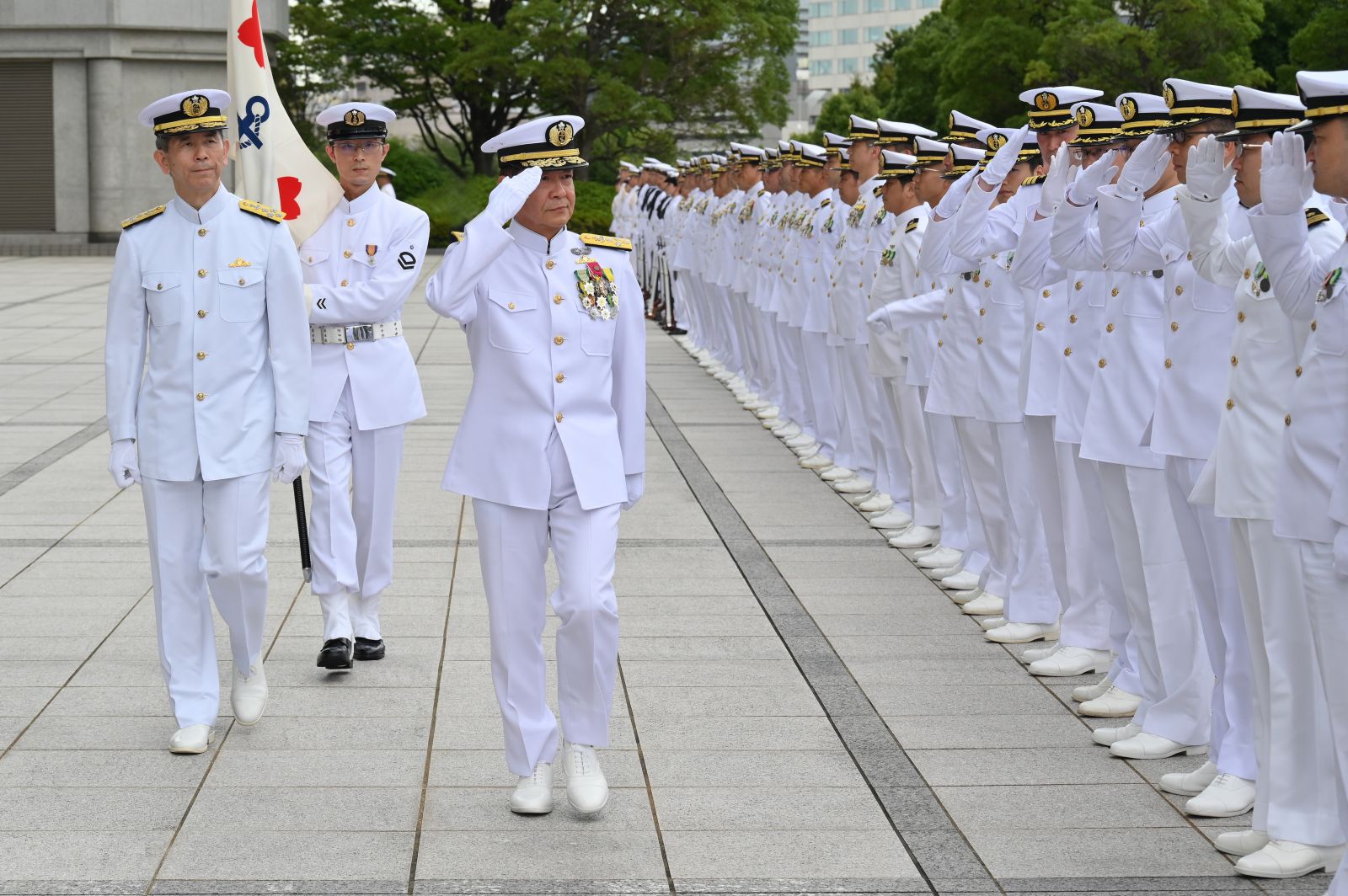
Admiral Sait saluting naval officers at the ceremony (JMSDF image)

New Chief Of Staff For The Japan Maritime Self-Defense Force​

Admiral Akira Saito was appointed as the new Chief of Staff of the Japan Maritime Self-Defence Force (JMSDF) on July 19, 2024. He succeeds Admiral Ryo Sakai who resigned from his position earlier in July.​

Naval News Staff 31 Jul 2024

Graduated from the National Defense Academy in 1989, Admiral Saito commanded several minor ships before becoming Commanding Officer of the Hatsuyuki-class destroyer ‘JS Isyuki’ in 2006. He joins the famous Command course at the US Naval War College in Newport in 2008 allowing him to access superior command within the JMSDF.

He was first assigned to the plans and programs division to become in 2009 the Chief of the latter. However, Saito is called back to the operational level to take command of the 14th escort squadron composed of 3 destroyers. This will last only one year.

During two years, the new Chief of Staff will handle more administrative duties becoming director of education and assignment director. He will be rewarded by taking command of Escort Flotilla One based in Yokosuka which includes two escort squadrons – about 8 combat surface ships. During the 5 following years, Admiral Saito will be assigned to various Commanding positions switching between the Fleet Escort Force and more general operational commands.

In 2022, he took charge of the Self Defense Fleet gathering all forces of the JMSDF – Fleet Escort Force, Fleet Air Force, submarine force, mine warfare, and support units as the intelligence command, the oceanographic and ASW command but also other specified units.

Admiral Saito has already a full agenda as his assignment comes as the JMSDF is impacted by several troubles that happened within, and which the new Chief of Staff highlights in his greetings message: “I would also like to express my sincere apologies for the improper management of classified information, the allowance fraud, and other misconduct that have greatly undermined the expectations and trust of the public.”

The admiral stresses the need to change the behaviour of JMSDF personnel to face internal and external challenges as the security environment gets tougher.

“As the Chief of Staff, JMSDF, I will have “Strength” and “Sincerity” for my motto as I work together with all members of the JMSDF to protect the seas and defend the peace and independence of our country.”


Admiral Satoshi Saito, Chief of the JMSDF

Admiral Saito last week visited Perth, Australia for the IODS conference (Naval News picture):
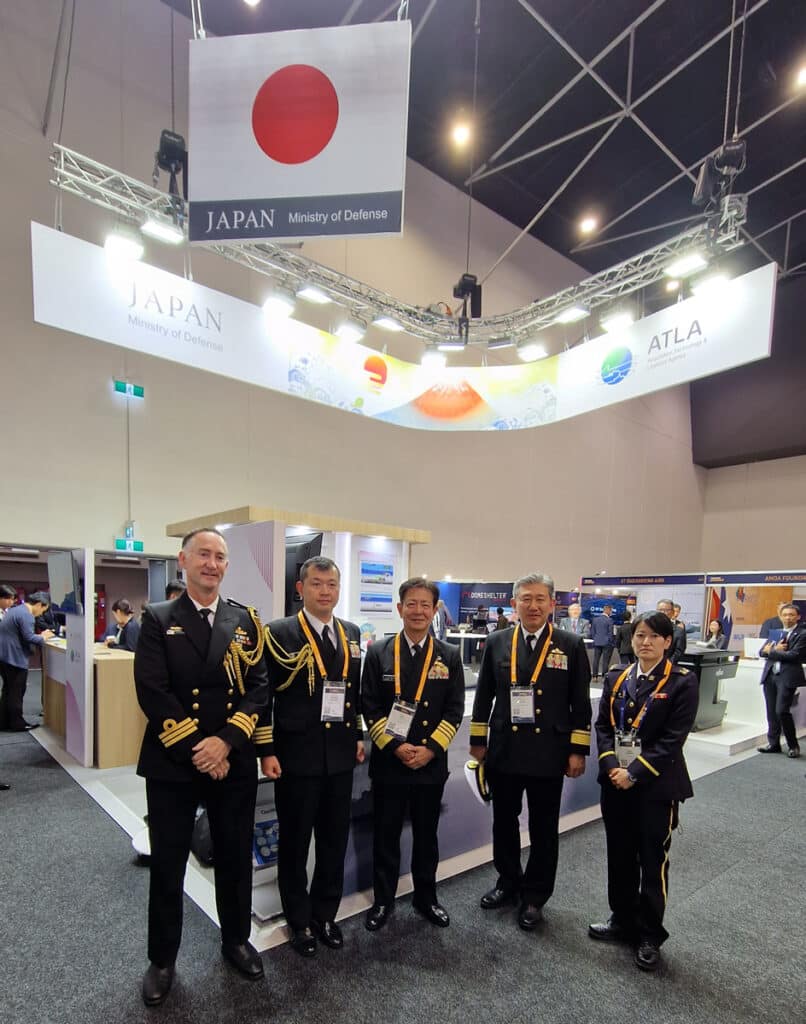
Saito-JMSDF-IODS-2024-806x1024.jpg


Passenger

Committed member
Moderator
China Moderator
Messages
207
Reactions
7 342
Nation of residence
China
Nation of origin
China

JMSDF changes its largest ‘destroyer’ classification from ‘DDH’ to ‘CVM’​

  • Published on 18/09/2025
  • By Yoshihiro Inaba
  • In News
1758903244259.png

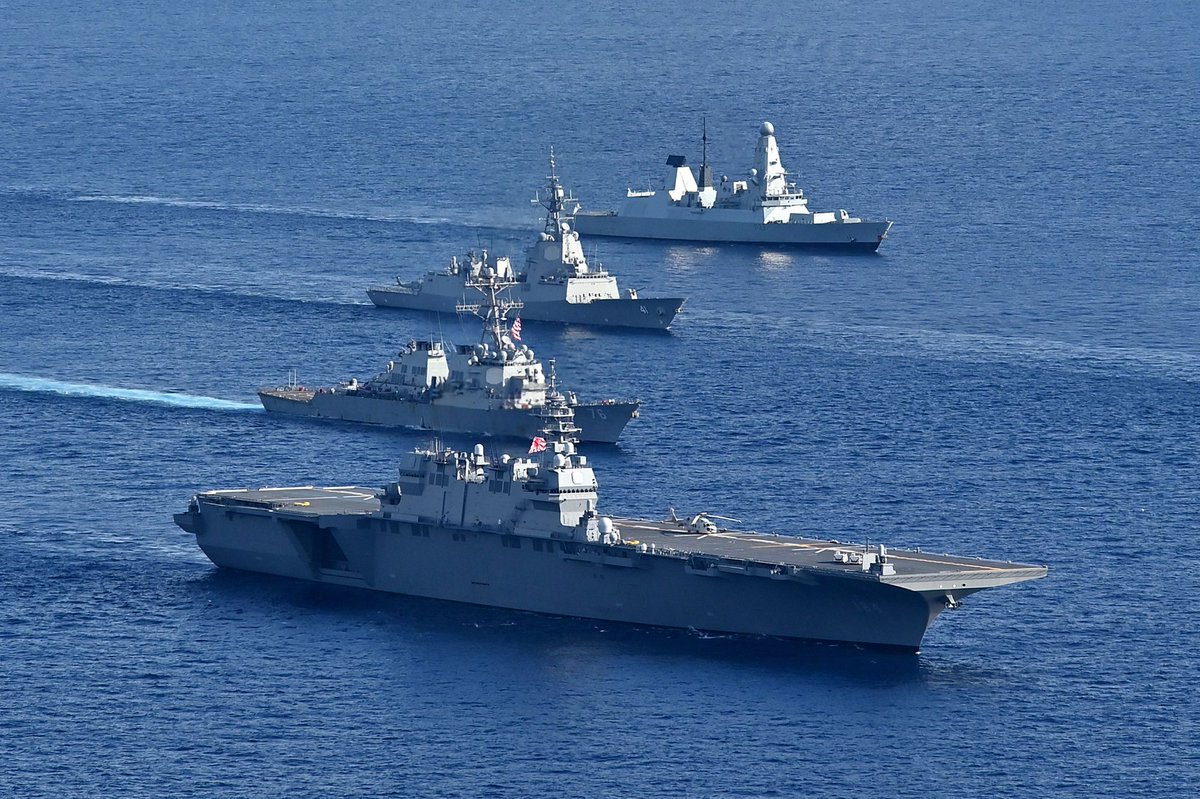
JS Kaga conducting a multi-lateral exercise in September 2025. The vessel is classified as "CVM" from now on. JMSDF picture.

The Japanese Ministry of Defense has revised the hull classification symbols for Japan Maritime Self-Defense Force (JMSDF) vessels effective October 2024. The change adds two new symbols, “CG” and “CVM,” which will be applied to upcoming ship types.


JMSDF vessels are classified into warships that enjoy the status of warships under international law (Self Defense Ship: 自衛艦 in Japanese) and other vessels categorized as support ships. The warship category is further divided into escort vessels and auxiliary vessels. Escort vessels are sub-categorized by function into surface/subsurface combatants (destroyers, submarines), mine warfare vessels (minesweepers, minesweeper craft, minesweeper tenders), patrol vessels (missile boats, offshore patrol vessels), and transport vessels (transport ships, landing craft, hovercraft).


The revision this time concerns the classification symbols for escort destroyers, which belong to the surface combatant group. Destroyers are combatant ships in the JMSDF inventory equipped with guns, missiles and other weapons, and possess the capability to engage enemy surface ships, submarines and aircraft. Until now, hull classification symbols have included general-purpose destroyer (DD), guided-missile destroyer (DDG), helicopter destroyer (DDH), as well as smaller coastal escort destroyer (DE) and multi-role frigates (FFM). Last year’s directive added two new symbols: “CG” and “CVM.” Naval News interviewed the JMSDF Office of Public Affairs to clarify what these new codes signify.

First, “CG” stands for “Cruiser Guided-missile” — a guided-missile cruiser — and will be applied to the Aegis system-equipped vessels (ASEV) scheduled to enter service in 2027 and 2028. The other new symbol, “CVM,” at first glance appears analogous to U.S. Navy nomenclature and might be read as a “multi-purpose aircraft carrier.” However, the JMSDF Office of Public Affairs says the acronym expands to “Cruiser Voler Multipurpose,” and in Japanese the type is being called 航空機搭載多機能護衛艦 — literally, an “aircraft-carrying multi-role cruiser.” According to the office, the Izumo-class which is the biggest surface combatant in JMSDF, fall under this new CVM designation.


The lead ship of the Izumo-class, Izumo, entered service in 2015, and the second ship, Kaga, entered service in 2017; both were originally operated as helicopter destroyers (DDH). However, modifications carried out from fiscal 2020 onward added the capability to operate the F-35B short-takeoff/vertical-landing (STOVL) fixed-wing fighter, and that operational change has led to the assignment of the new CVM classification.


As for the “Cruiser” element of CVM, JMSDF officials explained that the term replaces “Destroyer” to reflect the larger hull size compared with conventional destroyers. The middle term “Voler” is the French verb meaning “to fly,” and was chosen to indicate the vessel’s capability to operate aircraft, including fixed-wing types.


Saithan

Experienced member
Denmark Correspondent
DefenceHub Diplomat
Messages
9,493
Reactions
56 21,394
Nation of residence
Denmark
Nation of origin
Turkey

Japan prepares for deployment of its own long-range missile​


TOKYO​

Japan prepares for deployment of its own long-range missile

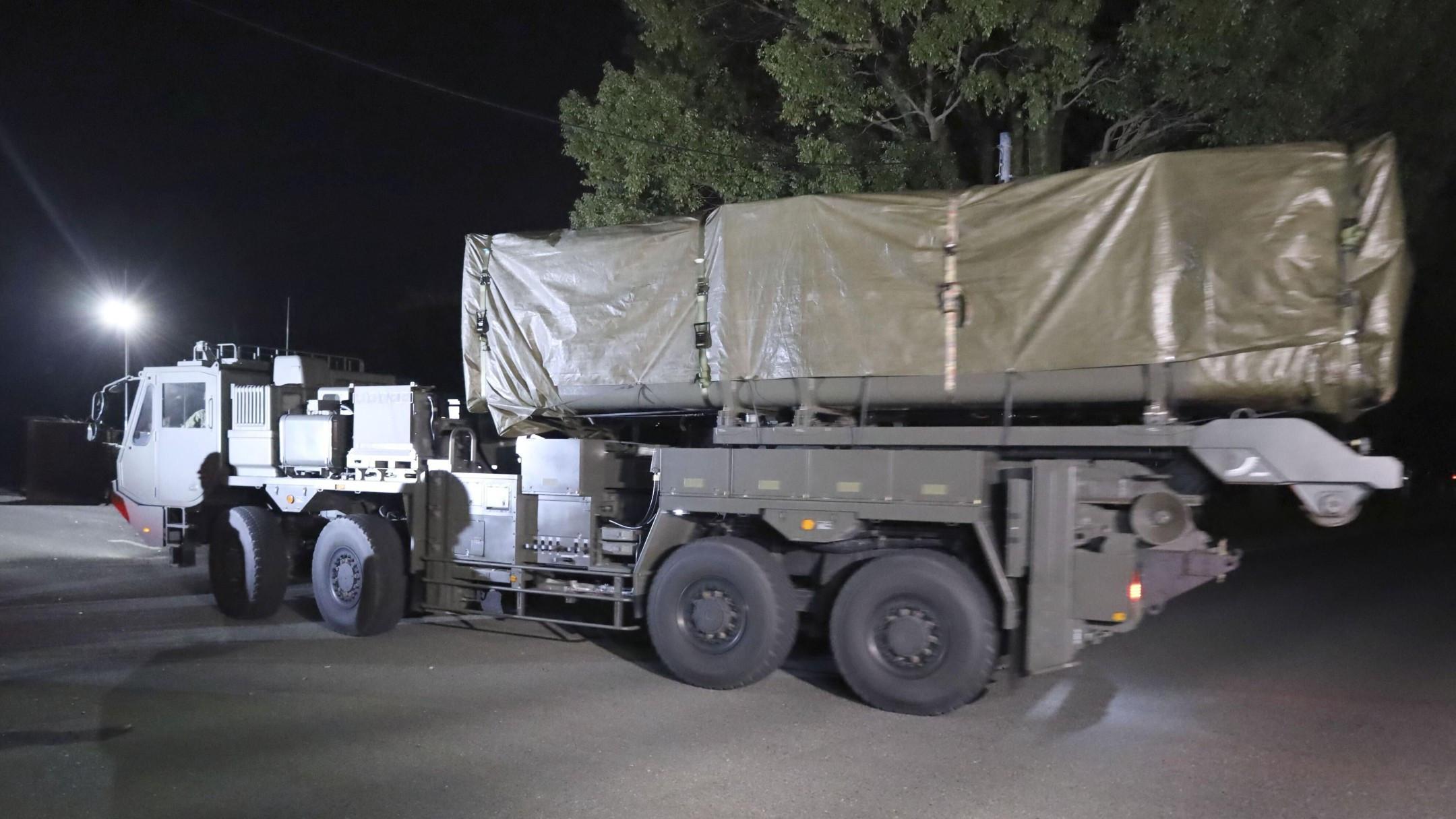
Japan is preparing to deploy its first batch of domestically developed long-range missiles, with their launchers arriving at an army camp on March 9 as the country accelerates its offensive capability in response to rising challenges in the region.


The upgraded Type-12 land-to-ship missiles will be deployed at Camp Kengun in Japan’s southwestern prefecture of Kumamoto by the end of March, completing the process of deployment, Chief Cabinet Secretary Minoru Kihara said without giving details.

Army vehicles carrying the launchers and other equipment arrived past midnight in a highly secretive mission criticized by residents. Dozens of people stood outside of the camp, shouting “Stop long-range missile deployment!” and holding banners carrying messages of protest.

Opponents have complained about the lack of transparency and said the deployment would instead escalate tension and make the missiles the target of attacks.

“The prefecture has never been notified,” Kumamoto Gov. Takashi Kimura told reporters on March 9. “It is extremely disappointing that we learned this from media reports.”

The regional defense bureau in Kyusu later on March 9 announced plans to invite local representatives for an equipment exhibit at the camp next week ahead of the missile deployment on March 31. Town hall meetings are not planned.

The Defense Ministry last year moved up the schedule of the missiles' deployment by one year. Japan has accelerated a military buildup in the southwestern region, while China has escalated tension around Taiwan, the self-governing island Beijing claims as its own.

The upgraded Type-12 missile, developed and produced by Mitsubishi Heavy Industries, has a range of about 1,000 kilometers and can reach mainland China, a significant extension from the 200-kilometer range of the original.

It will be deployed next at Camp Fuji in Shizuoka, west of Tokyo, later this year.

Japan considers China a growing security threat and has pushed a military buildup on southwestern islands near the East China Sea. It has deployed PAC-3 interceptors and midrange surface-to-air missiles on many of the islands, including Okinawa, Ishigaki and Miyako.

Defense Minister Shinjiro Koizumi last month said Japan will deploy the midrange SAMs on Japan’s westernmost island of Yonaguni, just east of Taiwan, by March 2031.

Tensions have escalated further since Prime Minister Sanae Takaichi’s comment soon after taking office that any Chinese military action against Taiwan could be grounds for a Japanese military response.

Takaichi has pledged to revise security and defense policy by the end of the year and seeks to further bolster Japan’s military with unmanned combative weapons and long-range missiles.

Her government is also set to scrap restrictions on lethal arms exports in the coming weeks to promote the development of Japan’s defense industry and cooperation with friendly nations, based on a proposal recently submitted by her party and its governing coalition partner.


Follow us on social media

Top Bottom