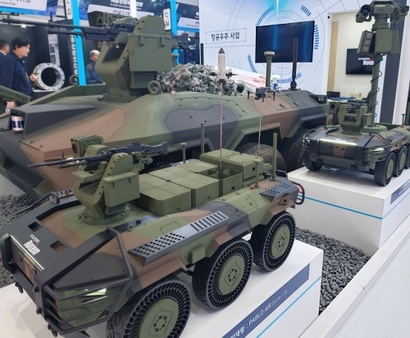
Hanwha Aerospace's Arion-SMET was selected for Korea's first multipurpose unmanned vehicle mass-production project by DAPA, with a follow-on deal estimated at over 500 billion won.

en.sedaily.com
Hanwha Aerospace's Arion-SMET Wins Korea's First Multipurpose Unmanned Vehicle Deal
Hanwha Aerospace (012450.KS) has been selected as the contractor for a multipurpose unmanned vehicle project that the military has pursued in response to a declining pool of troop resources. The project had been stalled for more than a year amid controversy over fairness in the contractor selection process.
The Defense Acquisition Program Administration (DAPA) said on the 16th that it held its 142nd Defense Acquisition Planning and Management Subcommittee meeting and reviewed the "type determination plan for the domestic purchase of multipurpose unmanned vehicles," finally selecting the model proposed by Hanwha Aerospace.
The multipurpose unmanned vehicle is a core piece of equipment in the Army's future force system, "Army TIGER 4.0," carrying out surveillance and reconnaissance, materiel transport, casualty evacuation, and combat support missions. Its defining feature is the use of autonomous driving technology to deploy into dangerous areas in place of troops.
Competing in the project were Hanwha Aerospace's "Arion-SMET" and Hyundai Rotem's "HR-SHERPA."
Although the project is not large, at about 50 billion won, its symbolic significance as the first mass-production project drew intense industry attention. The selected company is assessed to be able to secure an advantageous position in future follow-on mass-production projects and in the overseas unmanned systems market.
The scale of the follow-on mass-production project is estimated at a minimum of 500 billion won. It is expected to be pursued in earnest in 2029, after a requirement is raised and a project feasibility study is conducted next year.
The project was designated a rapid demonstration acquisition project in April 2024 and had been scheduled for completion by 2026. However, differences among participating companies and controversy over the fairness of the selection process delayed contractor selection by about a year from the original plan, also pushing back the force integration schedule.
DAPA explained, "The bidding procedure was conducted fairly and lawfully in accordance with relevant laws and regulations," adding, "We determined the model after a comprehensive review of the companies' proposals, test evaluations, negotiations, and performance verification results, followed by subcommittee deliberation."
DAPA plans to sign the contract within the third quarter of this year after follow-on contract procedures. Force integration is scheduled to take place in 2027-2028.