How PAF helped Pakistan Army in their counter - terrorism efforts.
How Pak Air Force served as the hammer in counter terror Zarbe Azb Operation?
CRSS Note: The following story discusses the role of Pakistan Air Force in Operation Zarb-e-Azb with input from CRSS Annual Security Report 2016.
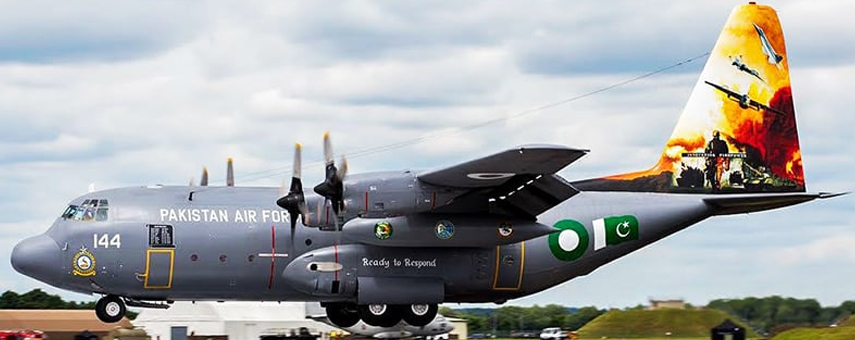
The Pakistani air force (PAF) has played a decisive role in eliminating militancy over the past two years, monitors say.
The PAF took active part in Operation Zarb-e-Azb, targeting high-profile militants who had taken refuge in the mountains of North and South Waziristan, where direct ground operations were difficult to carry out.
The army launched Zarb-e-Azb in June 2014 after years of generally steering clear of North Waziristan.
“In the last two years, the PAF carried out 1,327 aerial attacks that killed many militants and destroyed their safe havens and infrastructure of terrorism,” Centre for Research and Security Studies (CRSS) Executive Director Imtiaz Gul told Pakistan Forward.
The PAF conducted 1,094 air strikes against militants in 2015 and 233 air strikes in 2016, according to the CRSS Annual Security Report 2016.
“The number of PAF attacks on militants dropped in 2016 as aerial and ground operations eliminated the strongholds, networks and infrastructure of the Taliban, al-Qaeda and other militant groups in North and South Waziristan in 2015,” Gul said.
“Fighter jets and gunship helicopters of the [PAF] bombed the hideouts of militants in Khyber Agency, North Waziristan and Shawal,” he said.
After the start of Operation Zarb-e-Azb, militants fled from Waziristan to Shawal, which is situated on the border with Afghanistan and was the stronghold of Lashkar-e-Islam (LI) commander Mangal Bagh until his death in July 2016, he said.
But PAF air strikes and Pakistani army ground operations killed most of the militants in Shawal, while some leaders of Tehreek-e-Taliban Pakistan (TTP), LI and al-Qaeda fled to Afghanistan, he said.
“The combination of PAF and ground troop operations against militants proved very successful in destroying their hideouts on mountains and in caves,” he said.
Precision-guided air strikes
“The [PAF] was used sparingly but effectively in Operation Zarb-e-Azb, which helped the military to inflict huge damage to militants,” Peshawar-based security analyst Brig. (ret.) Mehmood Shah told Pakistan Forward.
The PAF used precision-guided munitions in aerial bombings to avoid collateral damage and to hit the intended targets exactly, he said.
As a result, most of the PAF aerial attacks targeted locations containing only Taliban members, he said.
Besides relying on ground intelligence, the PAF aircrafts carried out aerial surveillance to identify the exact locations of the militants before launching air strikes, Shah said.
“In two cases the PAF did not carry out attacks in North Waziristan when their aerial surveillance found some children present at the Taliban hideouts,” he said, adding that in these cases the army used ground troops to target Taliban fighters and to avoid collateral damage.
The exact number of militants killed in aerial bombing is not available, but military officials estimate that hundreds of militants were killed by PAF air strikes in 2015 and 2016, according to Shah.
The army and other security organisations appreciate the PAF role in combating militancy, he said.
Limited collateral damage
“PAF attacks were very well calculated because of better intelligence on the locations of militants and on their activities,” Mubasher Mir, security analyst and resident editor of the Daily Pakistan in Karachi, told Pakistan Forward.
Perfect ground and aerial surveillance combined with intelligence enabled the PAF to target precisely the hideouts of militants in Khyber Agency and in North and South Waziristan, he said.
“This empowered the military to extend its penetration and hold in the areas that were previously under the control of the Taliban and other militant groups,” he said.
“We have not heard of any collateral damage in PAF aerial bombing, which shows the [high] standards of intelligence and perfect action by the air force officials,” he said.
To ensure the safety of civilians, troops evacuated locals from some areas before air strikes, he said, as a result of which only the Taliban and their allied militants became the targets of aerial bombing.
“We can say that without the engagement of the [PAF], Operation Zarb-e-Azb could have not achieved the desired results,” Mir said.
This article originally appeared on www.pakistan.asia-news.com on January 30, 2017. Original link.