• Forum restore complete (see latest announcement thread)

TR Air-Force TF-X KAAN Fighter Jet

IC3M@N FX

Contributor
Messages
701
Reactions
3 30 1,432
Nation of residence
Germany
Nation of origin
Turkey
You are dragging my comments somewhere else and making up assumptions.

There is a reason Korea went with the KFX program. If you create a airframe that is larger than the F22 with engines less powerfull than a tiny f16, you have created a very inefficient product. It takes countries 8-10 years to create good engines, this goes for countries that CAN make those(Russia/China failed btw). Countries that can't, don't. If Turkey wants a go at it, fine, but the package doesn't make sense.

The plane won't be ready for another 10 years and that is with the f110 engines. The tf35000 isn't guaranteed and wars like Ukraine show that warfare is rapidly changing. I am not even talking about the nepotism that has already rusted the defense industry and the very low funding the project has.

Turkey should build a Toyota Yaris GR and not a Bugatti with 1.6tdi engine.
And what makes you think that?
TAI KAAN has approximately at least the first prototype would have 27 tons as take-off weight, if fully fueled and loaded with ammunition, at least in theory.
Both GE F-110-129 Engines each have a dry and wet thrust of 76KN/131KN.

TAI KAAN

To calculate the thrust-to-weight ratio for the TAI Kaan with two engines and a maximum takeoff weight of 27 tons, here are the details:

Given Data:

1. Thrust per engine: General Electric F110-GE-129

With afterburner: 131 kN per engine

For two engines:

Screenshot_20241217_154251_Gallery.jpg


Result:

The thrust-to-weight ratio of the TAI Kaan is approximately 0.98 at maximum takeoff weight with full afterburner thrust. If the aircraft operates at a lower weight (e.g., reduced fuel or fewer weapons), the ratio can exceed 1.0, improving acceleration and maneuverability.

F-22

To calculate the thrust-to-weight ratio of the F-22 Raptor when fully fueled and armed, we need the following data:

Given Data for the F-22 Raptor:

1. Engines: Pratt & Whitney F119-PW-100

Thrust per engine (with afterburner): 156 kN

Total thrust for two engines:

Screenshot_20241217_154850_Gallery.jpg


Result:

The F-22 Raptor has a thrust-to-weight ratio of approximately 0.84 when fully fueled and armed (at its maximum takeoff weight). This value increases significantly when the fuel load decreases or the aircraft carries fewer weapons, often exceeding 1.1 in combat configurations with partial fuel and weapon loadouts.

TAI KAAN probably uses more composite, titanium materials than the F-22, The Second KAAN Prototype will probably be somewhat smaller and more delicate, probably 6-8% Lighter then the first Prototype.
We would then be talking about a thrust ratio of 1.10/1.20 and that is more then the State of the Art.

KAAN is actually an air superiority fighter with multi-role options. But it is not a bomb truck like the F-35 which is superior against other GEN 4+ aircraft but I doubt it has a chance against a J-20 Chengdu SU-57 at least in dogfight provided the radars of both aircraft have the F-35 under control.
 
Last edited:

IC3M@N FX

Contributor
Messages
701
Reactions
3 30 1,432
Nation of residence
Germany
Nation of origin
Turkey
A small note about the actual Engine in TAI KAAN Its advantages and disadvantages.
Air battles are the absolute exception. In almost all missions, movement is almost exclusively subsonic. The short-term increase in performance is provided by the respective missiles. Pure super-sonic speeds beyond Mach 1.5 are only required for altitudes above 50 kft. Even several minutes in the trans-sonic range significantly reduce the remaining flight time. Today's weapons technology allows close encounters in almost all ranges. The times when an excess of speed was needed to penetrate ground-to-air defenses, see F-22, no longer exist. For this reason, super-cruise has been dispensed with for the F-35 and the focus is increasingly on the possible gain in time through optimized stealth. In the speed range beyond Mach 1.5, the respective stealth coating suffers and the costs for its maintenance increase. Today, only short-term "sprints" of Mach 1.6-1.8 are required. With controlled air intakes or a corresponding excess thrust, Mach 2 and more can be achieved, but why? A current guided missile only needs seconds to achieve this, and even an F-22 takes minutes.

Significantly more powerful engines therefore make little sense provided the design remains the same.
32000 or 35000 LBF for the owm domestic Turkish Engine for KAAN is more than enough.
 
Last edited:

uçuyorum

Contributor
Messages
1,225
Reactions
15 1,988
Nation of residence
Turkey
Nation of origin
Turkey
A small note about the actual Engine in TAI KAAN Its advantages and disadvantages.
Air battles are the absolute exception. In almost all missions, movement is almost exclusively subsonic. The short-term increase in performance is provided by the respective missiles. Pure super-sonic speeds beyond Mach 1.5 are only required for altitudes above 50 kft. Even several minutes in the trans-sonic range significantly reduce the remaining flight time. Today's weapons technology allows close encounters in almost all ranges. The times when an excess of speed was needed to penetrate ground-to-air defenses, see F-22, no longer exist. For this reason, super-cruise has been dispensed with for the F-35 and the focus is increasingly on the possible gain in time through optimized stealth. In the speed range beyond Mach 1.5, the respective stealth coating suffers and the costs for its maintenance increase. Today, only short-term "sprints" of Mach 1.6-1.8 are required. With controlled air intakes or a corresponding excess thrust, Mach 2 and more can be achieved, but why? A current guided missile only needs seconds to achieve this, and even an F-22 takes minutes.

Significantly more powerful engines therefore make little sense provided the design remains the same.
32000 or 35000 LBF for the owm domestic Turkish Engine for KAAN is more than enough.
If KAAN can match F35 level of speed and agility thats sufficient for us. In fact at this stage being able to reach F35 for any given cabability is more than enough for us. If we have any extras that's nice to have, but not necessary.
 

YeşilVatan

Contributor
Messages
802
Reactions
16 2,004
Nation of residence
Turkey
Nation of origin
Turkey
If KAAN can match F35 level of speed and agility thats sufficient for us. In fact at this stage being able to reach F35 for any given cabability is more than enough for us. If we have any extras that's nice to have, but not necessary.
Well, what makes F-35 a wonder is mostly sensor fusion AFAIK. That is really hard to achieve and gets fairly arcane & esoteric for a layman to understand. I have no idea if wwe can do it or not. But mechanically, I think it will fly way higher. This has specific advantages WRT air superiority missions.
 

uçuyorum

Contributor
Messages
1,225
Reactions
15 1,988
Nation of residence
Turkey
Nation of origin
Turkey
Well, what makes F-35 a wonder is mostly sensor fusion AFAIK. That is really hard to achieve and gets fairly arcane & esoteric for a layman to understand. I have no idea if wwe can do it or not. But mechanically, I think it will fly way higher. This has specific advantages WRT air superiority missions.
Well I think we will do fine, but F-35 can be combined with all the capabilities of aegis ship and all the US satellites, uavs etc. as well. Near our borders we should have pretty good coverage from all sort of stuff like HAKIM and what not, and the actual sensors we can put on KAAN i am confident as well. The bigger bottleneck would be software, datalinks and overall processing power ( because you would probably need to transmit parts of data to central server to process and spread to rest of network for maximum usefulness, a lot of money) and also on board processing and transmission to nearby assets of collected useful data. You need to create libraries from that data and classify them accurately, stuff like signal data from enemy radars... and then you need to then deliver the updated software or parameters to other assets in the field, can that be real time or would that require going back to base etc
 

Iskander

Contributor
Think Tank Analyst
Messages
1,111
Reactions
21 2,877
Age
65
Nation of residence
Azerbaijan
Nation of origin
Azerbaijan
Thank you for your answer. No, I had no other goal. This question had been in my mind for a long time. So I decided to ask it on the forum.
As you can see, I haven't written a single sentence about Turkey's domestic policy for a whole year. Except for one or two compliments to Erdogan. And I don't discuss religious issues.
Only after reading your answer did I realize how tactless and inappropriate my question was.
Yes, I would also like to delete my previous post.
Sorry.
 

hugh

Contributor
Messages
567
Reactions
17 1,533
Nation of residence
Turkey
Nation of origin
Turkey
this is not a scientific paper. these losers are out on twitter doing KAAN propaganda all day. how do they know the RCS of KAAN or F35 or KIZILELMA? what do they know about the applied RAM materials and their efficacy? it's just bunch of assumption made in favor of KAAN.

besides, even in their pseudo-scientific paper, F35 has lower RCS than KAAN.
 

godel44

Committed member
Messages
167
Reactions
8 505
Nation of residence
Turkey
Nation of origin
Turkey
this is not a scientific paper. these losers are out on twitter doing KAAN propaganda all day. how do they know the RCS of KAAN or F35 or KIZILELMA? what do they know about the applied RAM materials and their efficacy? it's just bunch of assumption made in favor of KAAN.

besides, even in their pseudo-scientific paper, F35 has lower RCS than KAAN.
They actually address all those questions in the paper with quite some detail. And when they make assumptions, they make them explicitly against Kaan to be conservative.

You can still disagree with them of course but it's not fair to disagree without reading the paper.
 

Oublious

Experienced member
The Netherlands Correspondent
Messages
2,780
Reactions
15 6,101
Nation of residence
Nethelands
Nation of origin
Turkey
this is not a scientific paper. these losers are out on twitter doing KAAN propaganda all day. how do they know the RCS of KAAN or F35 or KIZILELMA? what do they know about the applied RAM materials and their efficacy? it's just bunch of assumption made in favor of KAAN.

besides, even in their pseudo-scientific paper, F35 has lower RCS than KAAN.


Do you have scientific paper of F35?

lol
 

UcanTost

Active member
Messages
94
Reactions
1 127
Nation of residence
Turkey
Nation of origin
Turkey
And what makes you think that?
TAI KAAN has approximately at least the first prototype would have 27 tons as take-off weight, if fully fueled and loaded with ammunition, at least in theory.
Both GE F-110-129 Engines each have a dry and wet thrust of 76KN/131KN.

TAI KAAN

To calculate the thrust-to-weight ratio for the TAI Kaan with two engines and a maximum takeoff weight of 27 tons, here are the details:

Given Data:

1. Thrust per engine: General Electric F110-GE-129

With afterburner: 131 kN per engine

For two engines:

View attachment 72716

Result:

The thrust-to-weight ratio of the TAI Kaan is approximately 0.98 at maximum takeoff weight with full afterburner thrust. If the aircraft operates at a lower weight (e.g., reduced fuel or fewer weapons), the ratio can exceed 1.0, improving acceleration and maneuverability.

F-22

To calculate the thrust-to-weight ratio of the F-22 Raptor when fully fueled and armed, we need the following data:

Given Data for the F-22 Raptor:

1. Engines: Pratt & Whitney F119-PW-100

Thrust per engine (with afterburner): 156 kN

Total thrust for two engines:

View attachment 72717


Result:

The F-22 Raptor has a thrust-to-weight ratio of approximately 0.84 when fully fueled and armed (at its maximum takeoff weight). This value increases significantly when the fuel load decreases or the aircraft carries fewer weapons, often exceeding 1.1 in combat configurations with partial fuel and weapon loadouts.

TAI KAAN probably uses more composite, titanium materials than the F-22, The Second KAAN Prototype will probably be somewhat smaller and more delicate, probably 6-8% Lighter then the first Prototype.
We would then be talking about a thrust ratio of 1.10/1.20 and that is more then the State of the Art.

KAAN is actually an air superiority fighter with multi-role options. But it is not a bomb truck like the F-35 which is superior against other GEN 4+ aircraft but I doubt it has a chance against a J-20 Chengdu SU-57 at least in dogfight provided the radars of both aircraft have the F-35 under control.
F22 has a ttw exceeding 1 at all times. The fact that you brought up su57 is a complete joke. j20 has been produced since 2009 with almost similar ttw as f22. MMU with own engines will probably be somewhere around 2040 and thats IF its succesful. My comment wasn't just about the weird ratios of size/weight and engines but also about nepotism reaching tusas/tai aswell. Everyone seems to get annoyed at me for saying something they dont wanna hear. It needs to be said and adjust YOUR expections accordingly. The fact that Mahmut Aksit is trying to downplay the expections says enough. MMU with f110 will be the final package. Buraya yazdim.
 

hugh

Contributor
Messages
567
Reactions
17 1,533
Nation of residence
Turkey
Nation of origin
Turkey
They actually address all those questions in the paper with quite some detail. And when they make assumptions, they make them explicitly against Kaan to be conservative.

You can still disagree with them of course but it's not fair to disagree without reading the paper.
there is no detail on the paper. it is assumption over assumption over assumption.

A mechanical engineer is writing a paper on RCS? with no background whatsoever. written in poor English with large fonts to pamper KAAN. The calculations @Afif makes about radars are much more in-depth than this paper.

PS: I read the paper
 

uçuyorum

Contributor
Messages
1,225
Reactions
15 1,988
Nation of residence
Turkey
Nation of origin
Turkey
there is no detail on the paper. it is assumption over assumption over assumption.

A mechanical engineer is writing a paper on RCS? with no background whatsoever. written in poor English with large fonts to pamper KAAN. The calculations @Afif makes about radars are much more in-depth than this paper.

PS: I read the paper
Beyazıt karataş is retired air force general and F16 pilot so he must know a thing or two
 

hugh

Contributor
Messages
567
Reactions
17 1,533
Nation of residence
Turkey
Nation of origin
Turkey
Beyazıt karataş is retired air force general and F16 pilot so he must know a thing or two
how can being a pilot give you the credentials to write scientific-papers of comprehensive analysis on radars(electro-magnetic theory) and stealth tech?

below is the whole reference section of the paper, btw. If you call that science, then I don't know what to say.

refence.png


PS: the second one on the image is his other pseudo paper with no reference whatsoever.
 
Last edited:

blackjack

Experienced member
Moderator
Russia Correspondent
Russia Moderator
Messages
1,667
Reactions
10 975
Nation of residence
United States of America
Nation of origin
Russia
175kms for a 1m2 target for Kaan radar is BS, the old su-57 and f-22 radars with wide beams and lesser power see 1m2 targets at 200kms. That entire research paper should be thrown in the trash because the Kaan should see a further range.
Did you know that Kaan is 10 times less visible on radar (rcs) than F-35.
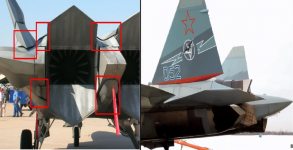
Not with the current round nozzles it has and I am assuming the domestic engine made for Kaan will at least be a serrated engine. Kaan is physically bigger maybe it can have a lower RCS than the F-35 if they go for a flat nozzle design like these.
288455-1c96df7b9b455d324703fa8a3d99723e.png
 

godel44

Committed member
Messages
167
Reactions
8 505
Nation of residence
Turkey
Nation of origin
Turkey
how can being a pilot give you the credentials to write scientific-papers of comprehensive analysis on radars(electro-magnetic theory) and stealth tech?

this is the whole reference section of the paper, btw. If you call that science, then I don't know what to say.

View attachment 72720
You still haven't said anything substantial about the paper. They have laid out their steps and worked through them transparently. To be clear, I am not married to their results. I would be willing to hear counter-arguments and adjust my opinion but a valid argument would be like "They made this mistake in this step" or "They missed this detail which causes a material change in the result." Instead you produced a lot of ad hominem, calling them "losers on twitter" and "pseudo-scientific." When they show their assumptions, and output of their Matlab code and you only engage in name-calling, you are not as convincing as you might think.
 

hugh

Contributor
Messages
567
Reactions
17 1,533
Nation of residence
Turkey
Nation of origin
Turkey
You still haven't said anything substantial about the paper. They have laid out their steps and worked through them transparently. To be clear, I am not married to their results. I would be willing to hear counter-arguments and adjust my opinion but a valid argument would be like "They made this mistake in this step" or "They missed this detail which causes a material change in the result." Instead you produced a lot of ad hominem, calling them "losers on twitter" and "pseudo-scientific." When they show their assumptions, and output of their Matlab code and you only engage in name-calling, you are not as convincing as you might think.
Do I really need to dissect that rag and spoon-feed you with it?

This is from page 8:

"Based on our calculation and respecting to the counter measure on TF-23 Block0, we can assume frontal aspect RCS as -20dbsqm (0.01m2). TF-23 Block1, with advanced magnetic coating and RAM panel layer, it could reach RCS value for X Band 10GHz as -25dbsqm (0.003m2)."

Do you see any math on that paper to support this? Did they provide any insight on what their variables were and what assumptions they have made? Are you just taking their word for it?

From page 9:

"Assuming all other parameters are the same apart from emitting power rate (40kW/25.5kW), it corresponds to range 12% higher for TF-23 KAAN radar. So with a certain margin, safely it can be assumed 175km for RCS 1m2 targets"

They assume F35 has 160km detection range against 1 sqm target. How do they know this? They also somehow calculate BÜRFİS's range as 175km against 1sqm target. Again, they say we calculated but there is no calculation shown on the paper? Like why is it not 150km or 300km?

Then there are these tables:

rcs.png


Do you see any evidence or proof of where they got the RCS figures of these aircrafts. Like how can you know the radar signatures of KIZILELMA or KAAN when they're going through iterative changes from prototype to prototype(with not RAM material)? And as if the charade wasn't enough, they've added in a KIZILELMA Block2 and its RCS when there's not even a picture of the drone?

Maybe you should ask yourself why are you so easily convinced? Why do you think that this "paper" is more credible than the daily chatter we do about KAAN on this forum? Or are we doing science here?
 
Last edited:
Top Bottom