• Forum restore complete (see latest announcement thread)

TR Turkish History|Debate & Discussion

Fatman17

Contributor
Moderator
Pakistan Moderator
Messages
1,391
Reactions
11 1,436
Nation of residence
Pakistan
Nation of origin
Pakistan
HOyf-i-bMAAOFap.jpg

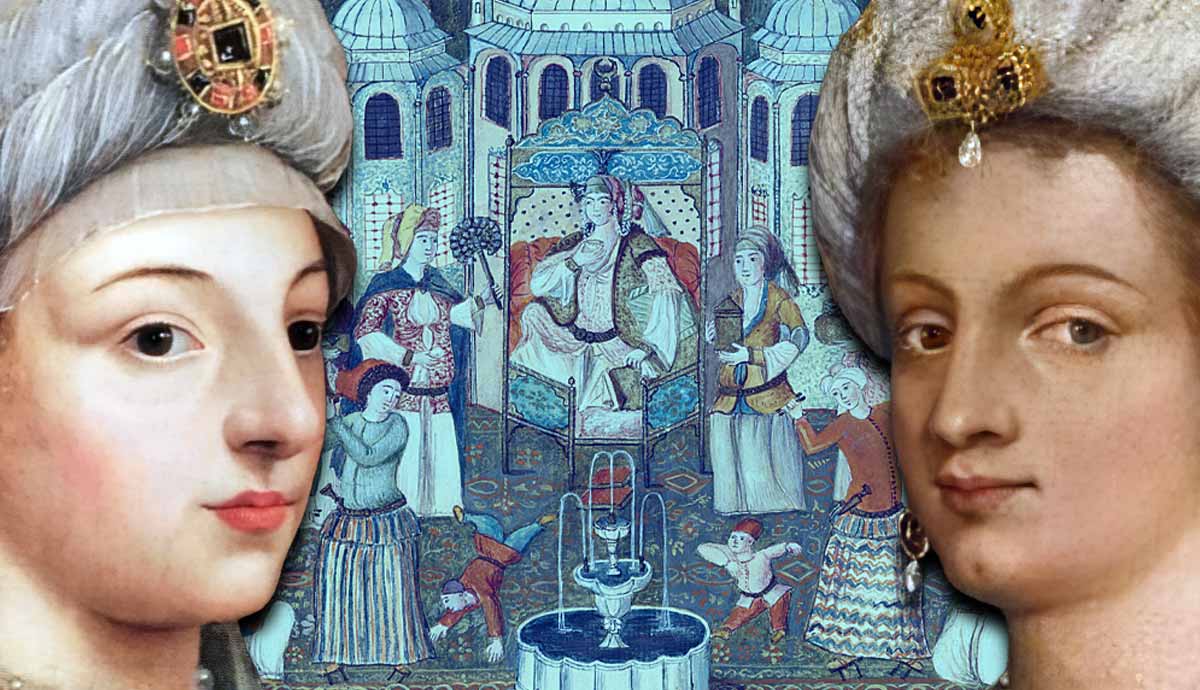
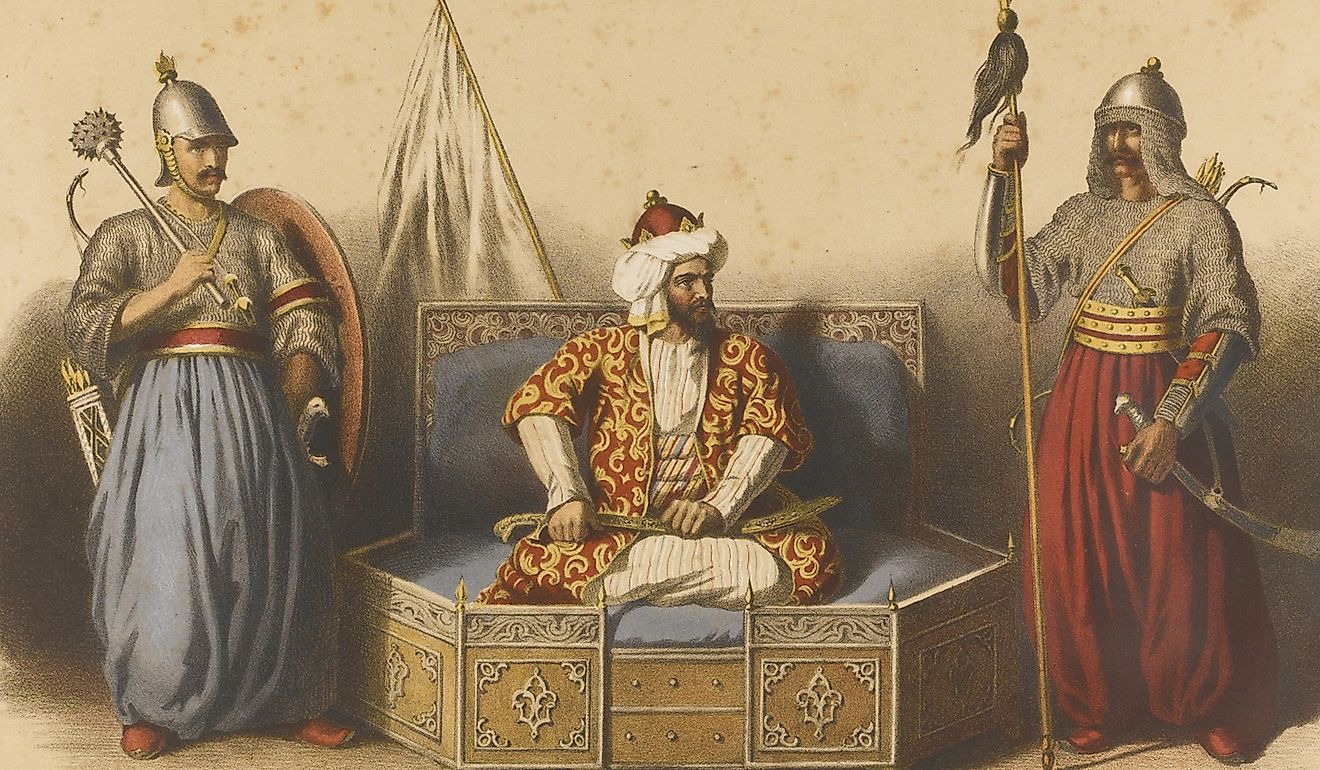
At its peak in the 1500s, the Ottoman Empire was one of the biggest military and economic powers in the world, controlling an expanse that included not just its base in Asia Minor but also much of southeastern Europe, the Middle East and North Africa. The empire controlled territory that stretched from the Danube to the Nile, with a powerful military, lucrative commerce, and impressive achievements in fields ranging from architecture to astronomy. But it didn’t last...

Though the Ottoman Empire persisted for 600 years, it succumbed to what most historians describe as a long, slow decline, despite efforts to modernize. Finally, after fighting on the side of Germany in World War I and suffering defeat, the empire was dismantled by treaty and came to an end in 1922, when the last Ottoman Sultan, Mehmed VI, was deposed and left the capital of Constantinople (now Istanbul) in a British warship. From the Ottoman Empire’s remains arose the modern nation of Turkey.

While the industrial revolution swept through Europe in the 1700s and 1800s, the Ottoman economy remained dependent upon farming. The empire lacked the factories and mills to keep up with Great Britain, France and even Russia, according to Michael A. Reynolds, an associate professor of Near Eastern Studies at Princeton University. As a result, the empire’s economic growth was weak, and what agricultural surplus it generated went to pay loans to European creditors. When it came time to fight in World War I, the Ottoman Empire didn’t have the industrial might to produce heavy weaponry, munitions and iron and steel needed to build railroads to support the war effort.

At its apex, the Ottoman Empire included Bulgaria, Egypt, Greece, Hungary, Jordan, Lebanon, Israel and the Palestinian territories, Macedonia, Romania, Syria, parts of Arabia and the north coast of Africa. Even if outside powers hadn’t eventually undermined the empire, Reynolds doesn’t think that it could have remained intact and evolved into a modern democratic nation. “The odds probably would have been against it, because of the empire’s tremendous diversity in terms of ethnicity, language, economics, and geography,” he says. “Homogenous societies democratize more easily than heterogeneous ones.”

The various peoples who were part of the empire grew more and more rebellious, and by the 1870s, the empire had to allow Bulgaria and other countries to become independent and ceded more and more territory. After losing the 1912-1913 Balkan Wars to a coalition that included some of its former imperial possessions, the empire was forced to give up its remaining European territory.

Despite efforts to improve education in the 1800s, the Ottoman Empire lagged far behind its European competitors in literacy, so by 1914, it’s estimated that only between 5 and 10 percent of its inhabitants could read. “The human resources of the Ottoman empire, like the natural resources, were comparatively undeveloped,” Reynolds notes. That meant the empire had a shortage of well-trained military officers, engineers, clerks, doctors and other professions.

#archaeohistories
X.com
 

dBSPL

Experienced member
Think Tank Analyst
DefenceHub Ambassador
Messages
2,845
Reactions
122 14,420
Nation of residence
Turkey
Nation of origin
Turkey
This tweet presents the Treaty of Sevres as an unimplemented agreement. It wasn't unimplemented; they forcet it, but they couldn't sustain it. Every region you see on the map was occupied; even in the area designated as left to the Turkish people, the ports, sea routes, and railways were completely controlled by the occupying forces. Settlement policies were attempted in the occupied regions, hundreds of massacres occurred, and the civilian population was suppressed. The Ottoman state surrendered its seas, disbanded its army, closed its parliament, and, in complete submission, began to play a role in finalizing the occupation of Anatolia by signing the directives of the occupying forces' outpost commanders.

Having fought almost continuously since the Russo-Turkish War of 1877-1878, impoverished Anatolia, already suffering from an influx of displaced populations from the Balkans, Black Sea region, Levant, and North Africa, had neither an army nor capital. The only thing left was Anatolia itself. The slogan "Independence or Death" wasn't just a propaganda slogan. Anatolia was now the last stronghold. The Anatolian Turk had nowhere else to go.

The Turkish people's spirit of national struggle was at such a point that they would fight to the very end, to the last drop of Turkish blood. If the British had not withdrawn from Istanbul, the army would have entered Istanbul.

In other words, it wasn't that the Treaty of Sevres wasn't implemented. Attempts were made to implement it. But at the point where it was thought to be over, the Turkish people, amidst such deprivation, demonstrated their will for independence, their political acumen, and their fighting ability in such a way that this treaty could not survive. Turks do not accept living under subjugation. If their state collapses, they will establish a new one. Rather than live without a homeland, they would destroy the world if necessary and take their place in the new world.
 

Yasar_TR

Experienced member
Staff member
Administrator
Messages
4,207
Reactions
252 21,954
Nation of residence
United Kingdom
Nation of origin
Turkey
This tweet presents the Treaty of Sevres as an unimplemented agreement. It wasn't unimplemented; they forcet it, but they couldn't sustain it. Every region you see on the map was occupied; even in the area designated as left to the Turkish people, the ports, sea routes, and railways were completely controlled by the occupying forces. Settlement policies were attempted in the occupied regions, hundreds of massacres occurred, and the civilian population was suppressed. The Ottoman state surrendered its seas, disbanded its army, closed its parliament, and, in complete submission, began to play a role in finalizing the occupation of Anatolia by signing the directives of the occupying forces' outpost commanders.

Having fought almost continuously since the Russo-Turkish War of 1877-1878, impoverished Anatolia, already suffering from an influx of displaced populations from the Balkans, Black Sea region, Levant, and North Africa, had neither an army nor capital. The only thing left was Anatolia itself. The slogan "Independence or Death" wasn't just a propaganda slogan. Anatolia was now the last stronghold. The Anatolian Turk had nowhere else to go.

The Turkish people's spirit of national struggle was at such a point that they would fight to the very end, to the last drop of Turkish blood. If the British had not withdrawn from Istanbul, the army would have entered Istanbul.

In other words, it wasn't that the Treaty of Sevres wasn't implemented. Attempts were made to implement it. But at the point where it was thought to be over, the Turkish people, amidst such deprivation, demonstrated their will for independence, their political acumen, and their fighting ability in such a way that this treaty could not survive. Turks do not accept living under subjugation. If their state collapses, they will establish a new one. Rather than live without a homeland, they would destroy the world if necessary and take their place in the new world.
Very well put. But one thing you omitted, I might gather was probably by accident, was the very fact that we were given a genius to lead us in the name of Mustafa Kemal Ataturk through our “Kurtulusş Savaşı”.
As mentioned by British Prime Minister Lloyd George in the Parliament when defending his governments failures :
"Man may see an exceptional genius once in centuries. How unlucky we are that this rare genius of our era was born from the Turkish nation."
If It weren’t for the genius of Ataturk, most of us would not be here and those of us who were woul carry a Greek name. At best majority of us would be carrying a foreign nationality similar to Palestinians.
 
Top Bottom