
You are using an out of date browser. It may not display this or other websites correctly.
You should upgrade or use an alternative browser.
You should upgrade or use an alternative browser.
Live Conflict Ukraine-Russia War
- Thread starter Kartal1
- Start date


You need to ask yourself what fuelled the 4% GDP growth in 2023 and 2024. I think it was probably the ramp up in military production. If that reached its maximum level in Q1 2024, that would explain the dramatic drop in GDP growth between Q1 2024 and Q1 2025.
2.2% unemployment is indicative of a serious lack of labour to service an economy's demand for labour. Many hundreds of thousands left Russia when it invaded Ukraine and later to avoid conscription. Additionally several hundred thousand Russians of working age are in Ukraine or have been killed or disabled after being sent there.
While stubbornly high, the inflation rate is falling in Russia. It is believed that VAT will increase from 20% to 22% in the forthcoming budget which may prove inflationary - or not so since economic growth is expected to drop sharply this year and a drop in growth rate generally dampens inflation.
Medvedev? I don't take this propagandising 'attack dog' seriously. To me he talks as much unfounded nonsense as Trump.
Last edited:

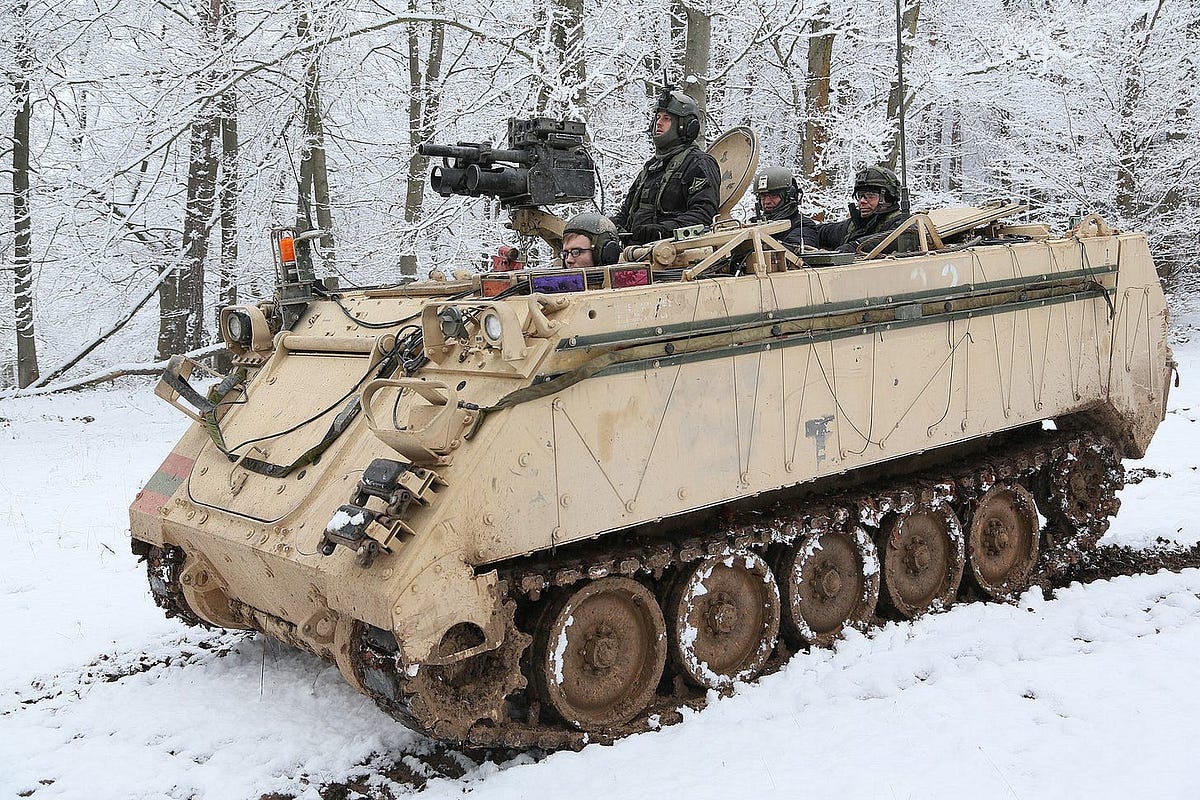
Italy  has prepared 400 Italian variant M113 APCs for Ukraine. It was announced earlier this year that the units would be removed from storage and would undergo modernization and refurbishment prior to their shipment before year's end. Pictures have surfaced of the units in transit as Rome looks to help replenish Ukraine's troop mobility armor, which has faced heavy attrition throughout the war.
 armyrecognition.com
 wesodonnell.medium.com
has prepared 400 Italian variant M113 APCs for Ukraine. It was announced earlier this year that the units would be removed from storage and would undergo modernization and refurbishment prior to their shipment before year's end. Pictures have surfaced of the units in transit as Rome looks to help replenish Ukraine's troop mobility armor, which has faced heavy attrition throughout the war.Exclusive: Italy readies massive transfer of 400 M113 armored carriers to Ukraine
Exclusive: Italy readies massive transfer of 400 M113 armored carriers to Ukraine
armyrecognition.com
Weiterleitungshinweis
www.google.com
Italy Empties the Garage: 400 M113s Headed to Ukraine
It finally happened. Italy just cleaned out its Cold War garage and sent Ukraine the keys.
Footage of a Ukrainian naval drone, presumably a Magura V5, being shot down by a Russian Lancet-52 kamikaze drone. The exact location of the footage is not disclosed, but it is known to be in Crimean waters. The video shows the Lancet-52 drone's automatic targeting system. As a result of the attack by the Russian Lancet-52, the Ukrainian Magura naval drone was destroyed.

Well, you do like to regurgitate that their economy is doing bad but not as bad as the west.You need to ask yourself what fuelled the 4% GDP growth in 2023 and 2024. I think it was probably the ramp up in military production. If that reached its maximum level in Q1 2024, that would explain the dramatic drop in GDP growth between Q1 2024 and Q1 2025.
2.2% unemployment is indicative of a serious lack of labour to service an economy's demand for labour. Many hundreds of thousands left Russia when it invaded Ukraine and later to avoid conscription. Additionally several hundred thousand Russians of working age are in Ukraine or have been killed or disabled after being sent there.
While stubbornly high, the inflation rate is falling in Russia. It is believed that VAT will increase from 20% to 22% in the forthcoming budget which may prove inflationary - or not so since economic growth is expected to drop sharply this year and a drop in growth rate generally dampens inflation.
Medvedev? I don't take this propagandising 'attack dog' seriously. To me he talks as much unfounded nonsense as Trump.
Are you the same guy or was it the user 500 that embarrassed himself that the rubble was falling while it went back up and continued to fluctuate?
Footage of Ukrainian naval drone attacks on the Russian seaports of Novorossiysk and Tuapse on September 24. A UAV attack also occurred that day. The type of Ukrainian drones used is unknown. Small arms, anti-tank guided missiles, and FPV drones were used to destroy the naval drones. Judging by the video, the seaports' defenses were insufficient for the drones to get so close. All Ukrainian naval drones were reportedly destroyed in Novorossiysk. In Tuapse, a Ukrainian naval drone attacked an oil loading pier.


Well, you do like to regurgitate that their economy is doing bad but not as bad as the west.
Not as bad as the West? I don’t know of any Western country where gasoline sales are being rationalized. With all the problems we have in Europe, and despite being net importers, there are no shortages of gasoline.
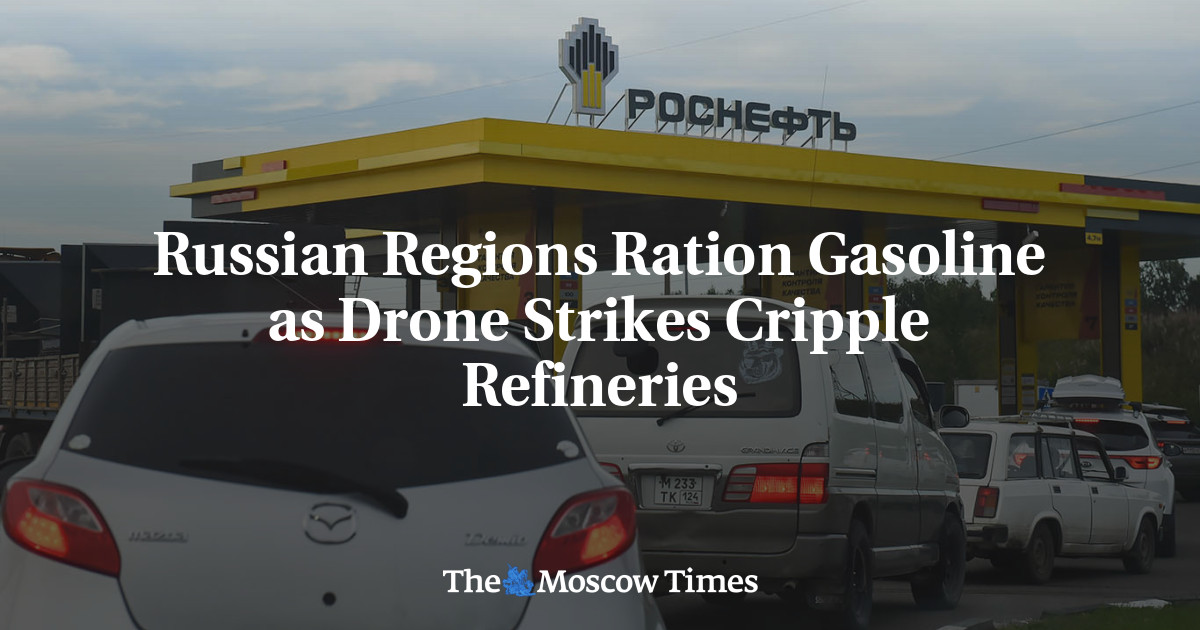
In the meantime, in Russia, despite an export ban on gasoline, the shortages are starting to mount:
Russian Regions Ration Gasoline as Drone Strikes Cripple Refineries - The Moscow Times
Gas stations across Russia have started rationing fuel sales as drone strikes on oil refineries by Ukraine deepen a supply crisis, the pro-Kremlin daily Izvestia reported Wednesday.
Russia's economy not doing as badly as the west? Russia's capital has been redirected from investment in the economy to investment in the arms production economy. An economy using its capital to produce arms at the expense of non-military production is not creating wealth. Produce a house, a car, a washing machine, an airliner and you have produced things that satisfy consumers. Producing a tank or a fighter aircraft or a missile to destroy another country's wealth does not make your own country wealthier. A missile used to destroy part of another country's wealth and in so doing is itself destroyed has not created wealth. It is economic madness to apply land, labour and capital to destroying rather than creating wealth.Well, you do like to regurgitate that their economy is doing bad but not as bad as the west.
Are you the same guy or was it the user 500 that embarrassed himself that the rubble was falling while it went back up and continued to fluctuate?
Last edited:
can you provide statistical proof excluding the fact their economy is doing better than the west? This sounds like a long explanation to just saying, "no"Russia's economy not doing as badly as the west? Russia's capital has been redirected from investment in the economy to investment in the arms production economy. An economy using its capital to produce arms at the expense of non-military production is not creating wealth. Produce a house, a car, a washing machine, an airliner and you have produced things that satisfy consumers. Producing a tank or a fighter aircraft or a missile to destroy another country's wealth does not make your own country wealthier. A missile used to destroy part of another country's wealth and in so doing is itself destroyed has not created wealth. It is economic madness to apply land, labour and capital to destroying rather than creating wealth.
not to embarrass you but that is because Europe is paying 3 times the amount for Russian gas from China. Why do you think Germanys industrial production capabilities has cost them to fire over 100,000 people a few weeks ago? I am just sticking around if we will escalate to a nuclear war, 4 territories or all territories to the dniepr river.there are no shortages of gasoline.
It is not as easy as it was to ascertain what is happening in the Russian economy. Some data and stats that were previously published by the state are no longer published. When the data is bad, why publish it? It only punctures the facade of all being well in the Russian economy that the Kremlin seeks to maintain.can you provide statistical proof excluding the fact their economy is doing better than the west? This sounds like a long explanation to just saying, "no"
not to embarrass you but that is because Europe is paying 3 times the amount for Russian gas from China. Why do you think Germanys industrial production capabilities has cost them to fire over 100,000 people a few weeks ago? I am just sticking around if we will escalate to a nuclear war, 4 territories or all territories to the dniepr river.
not to embarrass you but that is because Europe is paying 3 times the amount for Russian gas from China.
The fact remains that Europe can afford to provide gasoline and diesel to its citizens without any form of rationing, while Russia, the great oil producer can’t. The economic strength of Europe is so big, that it affords to import all the expensive gas it needs, without causing shortages. Yes, energy is more expensive, but Europe has the money to pay for it, while Russia doesn’t have the means to keep its gas stations supplied.
For Russians and Russian apologists, here is a source they should trust:
If you look you will see the Russian central bank forecast for GDP growth in 2025. At 1.2% it is much lower, I think, than it was forecast to be a few months ago. If Ukraine intensifies its strikes against Russian refineries and crude loading facilities at ports, I would expect GDP growth to fall to nearer 0% for 2025.
If you look you will see the Russian central bank forecast for GDP growth in 2025. At 1.2% it is much lower, I think, than it was forecast to be a few months ago. If Ukraine intensifies its strikes against Russian refineries and crude loading facilities at ports, I would expect GDP growth to fall to nearer 0% for 2025.
Last edited:
More anti-Russian propaganda from a western news source? What is the explanation for it coming from the head of occupied Crimea?
MOSCOW (Reuters) -Sergei Aksyonov, the head of Russia-controlled Crimea, said on Thursday that disruptions in fuel supplies were related to the closure of some oil refineries as a gasoline crisis widened across Russia.
MSN
www.msn.com
No I'm not. If you read my analysis of the value of the ruble I was arguing that it was to the Russian government's financial advantage for the ruble to fall in value. I have explained my view once. Not spending time repeating myself.Are you the same guy or was it the user 500 that embarrassed himself that the rubble was falling while it went back up and continued to fluctuate?
The European Union  is conspiring to create the most significant funding pool for Ukraine to this point in the war. Out of the nearly $300 Billion usd in frozen Russian assets stuck in Western banks, $175 Billion usd of funds are in Belgium's Euroclear. Those funds have now become liquid and can become legally transferred.
To avoid the claim that the EU is trying to illegally steal Russian assets, a plan is being created to remove the Russian money in the form of "cash" and replace it with equivalent of low interest IOUs. The cash would then be used as follows. $45 Billion usd would be used to immediately pay back the loan that the G7 floated Ukraine earlier this year, that was due to be paid back using the profits from the frozen assets. That would leave roughly $130 Billion usd that could be then transferred to Ukraine, giving them plenty of additional cash for weapons and ensuring that the budget shortfall that Ukraine was expecting in 2026 and 2027 is fully covered.
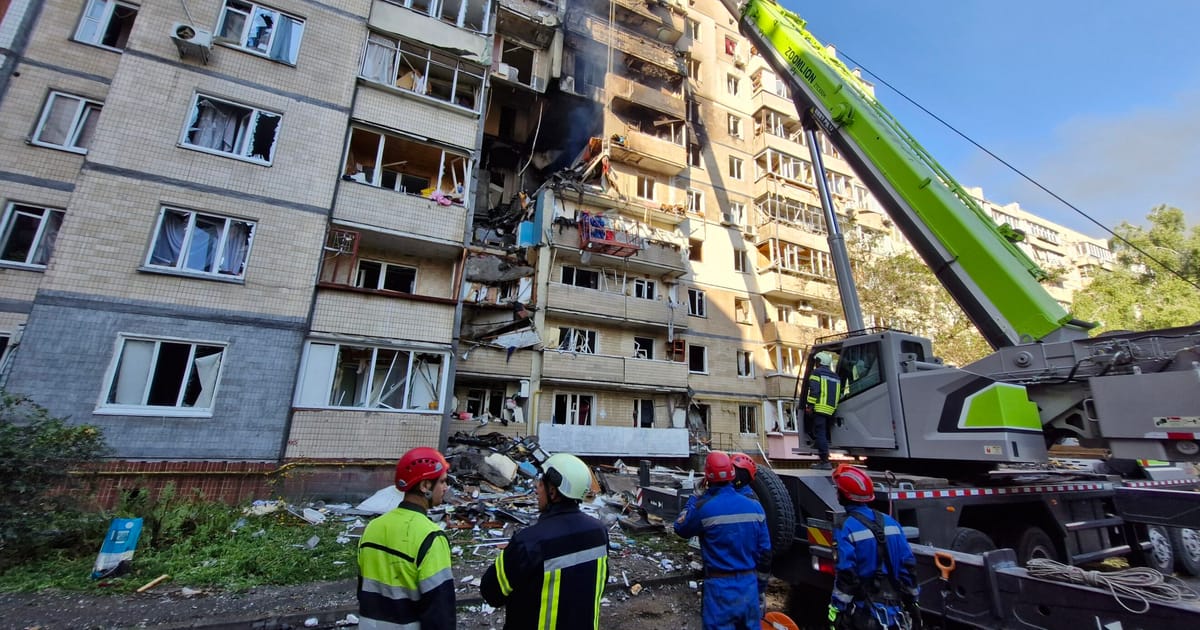
Germany , one of the biggest hurdles towards the implementation of this plan lent their support for it today. EU leaders will meet in Copenhagen next week to discuss further details of how to put the plan into action.
 www.politico.eu
is conspiring to create the most significant funding pool for Ukraine to this point in the war. Out of the nearly $300 Billion usd in frozen Russian assets stuck in Western banks, $175 Billion usd of funds are in Belgium's Euroclear. Those funds have now become liquid and can become legally transferred.To avoid the claim that the EU is trying to illegally steal Russian assets, a plan is being created to remove the Russian money in the form of "cash" and replace it with equivalent of low interest IOUs. The cash would then be used as follows. $45 Billion usd would be used to immediately pay back the loan that the G7 floated Ukraine earlier this year, that was due to be paid back using the profits from the frozen assets. That would leave roughly $130 Billion usd that could be then transferred to Ukraine, giving them plenty of additional cash for weapons and ensuring that the budget shortfall that Ukraine was expecting in 2026 and 2027 is fully covered.
Germany
, one of the biggest hurdles towards the implementation of this plan lent their support for it today. EU leaders will meet in Copenhagen next week to discuss further details of how to put the plan into action.
Germany backs EU’s ‘creative’ plan to send frozen Russian cash to Ukraine
Talks will come to a head during an informal meeting of EU leaders in Copenhagen next week.
www.politico.eu
It is not normal for banks to convert deposits into IOU's without the depositors' agreement. This move sets a precedent threatening confidence in the western banking system. Is it worth doing just to save finding $300 Billion USD? I don't think that is a good idea. Better for 'the West' to fund Ukraine out of its own pockets than to undermine confidence in its banking system IMO.The European Union
To avoid the claim that the EU is trying to illegally steal Russian assets, a plan is being created to remove the Russian money in the form of "cash" and replace it with equivalent of low interest IOUs. The cash would then be used as follows. $45 Billion usd would be used to immediately pay back the loan that the G7 floated Ukraine earlier this year, that was due to be paid back using the profits from the frozen assets. That would leave roughly $130 Billion usd that could be then transferred to Ukraine, giving them plenty of additional cash for weapons and ensuring that the budget shortfall that Ukraine was expecting in 2026 and 2027 is fully covered.
Germany
Germany backs EU’s ‘creative’ plan to send frozen Russian cash to Ukraine
Talks will come to a head during an informal meeting of EU leaders in Copenhagen next week.
Footage of a Russian Iskander-M ballistic missile with a cluster munition warhead striking a Ukrainian MIM-104 Patriot air defense system. The Patriot air defense system is manufactured in the United States. The video was filmed near the village of Svetlogorskoye in the Dnipropetrovsk region of Ukraine. The Iskander-M missile strike presumably destroyed a Ukrainian AN/MPQ-65 radar, part of the Patriot air defense system. The video shows a Ukrainian evacuation team arriving at the radar.

Europe is stupid, and famous for shooting themself in their own foot, what did you expect?It is not normal for banks to convert deposits into IOU's without the depositors' agreement. This move sets a precedent threatening confidence in the western banking system. Is it worth doing just to save finding $300 Billion USD? I don't think that is a good idea. Better for 'the West' to fund Ukraine out of its own pockets than to undermine confidence in its banking system IMO.
This move sets a precedent threatening confidence in the western banking system. Is it worth doing just to save finding $300 Billion USD? I don't think that is a good idea. Better for 'the West' to fund Ukraine out of its own pockets than to undermine confidence in its banking system IMO.
While in theory I agree with you, I think that the Western banking system‘s reputation is so low now, that it doesn’t even matter anymore.
Ever since the US enacted FATCA and the OECD implemented the CRS, the global banking system has turned into complete trash, with zero credibility.
Freezing accounts, sanctions, exchange of information, closing accounts for no reasons, this is what today’s banking system is. There is no more secrecy or trust anymore. So from this point of view, there is no reputation left to defend.


