All Eyes on Cuba
Trump’s campaign to take out long-standing U.S. irritants looks back to the Caribbean.
By Vivian Salama
In the basement Situation Room at the White House and a gilded secure room at Mar-a-Lago are whispers of a Trumpian grand plan that many in Washington and in capitals around the world once considered unthinkable: the toppling of not one, not two, but three autocracies that have tormented generations of American presidents. As U.S. and Israeli missiles fell on Iran this weekend, just weeks after Donald Trump ordered a lightning strike that put Venezuela’s president in a New York City courtroom, Trump is already eyeing his next target: Cuba.
“The president is feeling like, ‘I’m on a roll’; like, ‘This is working,’” one administration official told me.
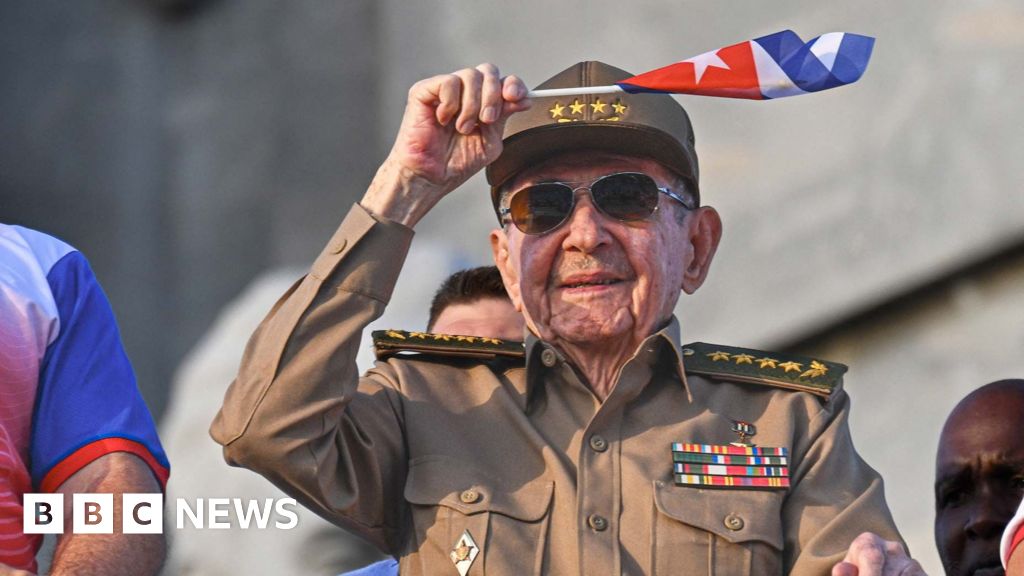
The president has been open about what he would like to see in Cuba, floating the possibility while speaking with reporters at the White House on Friday of a “friendly takeover” of the island of 11 million people. He said that Secretary of State Marco Rubio is in discussions with Cuban leaders at a “very high level” to potentially “make a deal.” Rubio also is in contact through unofficial channels with Raúl Guillermo Rodriguez Castro, the grandson of former President Raúl Castro, Fidel’s brother and successor, according to Axios. Trump has repeatedly emphasized Cuba’s dire economic state, telling reporters last month that “there’s no oil, there’s no money, there’s no anything.” He has also argued that the post-Castro Cuban regime is so fundamentally weak that its own rot would inevitably do the work of an invading army.
But the idea is fraught with risk. A Cuba in turmoil could cause an influx of refugees to the United States at a time when the administration is trying to reverse immigration flows. A military campaign might set the stage for a revolt, but there is little organized opposition in the country after almost seven decades of repressive rule. That could make a negotiated settlement that leaves the regime in place but puts America in charge (à la Venezuela) a tempting option. But such an outcome would fall far short of turning Cuba into the world’s newest democracy—a goal of many of Trump’s South Florida supporters and a move that would allow the president to claim that he hadn’t just changed leaders but changed the fundamental character of the country.
At play behind the president’s public Cuba musings is something big and personal, administration officials and Trump confidants told me. The president sees himself as the first modern American leader with the guts to complete what others only flirted with: map-changing transformations across the world that could, in his mind, cement his legacy above that of Ronald Reagan (who bested the Soviet Union in the Cold War), Jimmy Carter (who secured the 1978 Camp David Accords between Israel and Egypt), and Richard Nixon (who restored U.S. relations with China). In a remarkable pivot from the isolationist rhetoric that suffused his three presidential campaigns and his first term in office, Trump is now pursuing a trio of regime changes in countries that have long vexed the American foreign-policy establishment.
...
I asked Timothy Naftali, a presidential historian, about Trump’s ambitions with respect to Cuba. He responded that this moment reminded him of December 2001. The ease with which the U.S. military was able to overthrow the Taliban in Afghanistan after 9/11 had bolstered the confidence of the George W. Bush administration, which began talking about tackling Saddam Hussein. “He had been a boil on the backside of American foreign policy and in the wake of 9/11, the country’s willingness to tolerate threat was low, and its ambitions to make the world a safer place were high,” said Naftali, a scholar at the Columbia University School of International and Public Affairs.
...
This year, the island is a flash point once again. The administration’s dramatic seizure of Nicolás Maduro made clear the lengths to which Trump is willing to go to effect a change in leadership. And the strong links between Venezuela’s and Cuba’s economies (Caracas has provided oil to Havana and Havana has sent intelligence agents, doctors, teachers, and other professionals to Caracas) meant the reverberations from that raid were felt across the Caribbean.
At the time, though, senior administration officials dismissed the notion that there were any imminent efforts to carry out a similar regime-changing operation in Cuba. One laughed when I asked the question. They argued that unlike in Venezuela, which had a long legacy of democratic institutions and a clear opposition leader, the challenges in Cuba were too great.
In the weeks since, though, Trump has upped the pressure, declaring in late January a national emergency over Cuba’s hosting of Russian-signals-intelligence facilities and its alleged safe harbor for transnational terrorist groups such as Hezbollah and Hamas. The Trump administration also authorized punitive tariffs on imports from any third country that directly or indirectly supplies oil to the Cuban government. U.S. forces have begun intercepting vessels en route to Cuba as part of a broader strategy of isolation (although there’s been no articulated legal authority for such action). And a strict blockade remains in place (although the administration recently authorized U.S. companies to sell fuel, and resell Venezuelan oil, exclusively to private Cuban businesses and humanitarian organizations).
...
So what could go wrong if Trump moves ahead with more forceful action? “Oh my God,” Naftali said. “What could go wrong is what could go wrong in Iran. When you have a police state populated by people who have no future in a pro-American successor government, they have no incentive to give up, and they have the monopoly on firepower.”
...
The justification for any attack based on imminent threats to the U.S. also is unclear. Maduro was seized with a federal arrest warrant based on narco-trafficking charges. Trump said Iran had to be dealt with because of its nuclear-weapons threat and malign influence throughout the region. But “there’s no predicate like that in Cuba,” LeoGrande said. “There’s the listing of Cuba as a state sponsor of terrorism—I suppose they could point to something like that. But even when you really look at the rationale for that, it’s nonsensical.”
...
How Trump proceeds may be, at least in part, determined by the outcome of his two existing operations. Venezuela has been relatively calm since Maduro’s capture, after Trump decided to work with Maduro’s vice president, Delcy Rodríguez. Some political prisoners have been released, and the Venezuelan economy has been shored up by U.S.-arranged sales of Venezuelan oil. But the Trump administration has given no timeline for any moves toward democracy. It may be that simply having Maduro out of the way is enough to satisfy Trump’s ambitions.
The strikes in Iran that killed the supreme leader, Ayatollah Ali Khamenei, are so fresh that it is impossible to determine what happens next there. The regime in Havana, presumably, is hoping for another U.S. quagmire in the Middle East akin to the aftermath of the 2003 invasion of Iraq, to discourage Trump from pursuing regime change No. 3. But within the Trump administration, the pressure is likely only to grow. “Cuba’s status quo is unacceptable,” Rubio told reporters last week. “Cuba needs to change.”
Trump’s campaign to take out long-standing U.S. irritants looks back to the Caribbean.

www.theatlantic.com