• Forum restore complete (see latest announcement thread)

Live Conflict Israel-US vs Iran War (2026)

Nilgiri

Experienced member
Staff member
Administrator
Aviation Specialist
Messages
11,082
Reactions
153 22,637
Nation of residence
Canada
Nation of origin
India
Iran has placed one foot on the US economic stability and the other on China's economic stability. Even if the Iran-Israel war continues, any steps that will affect the energy sector are unlikely.

In short, Iran will not close Hormuz unless a full-scale war breaks out.

However, if the equation is paralyzed and the crisis gets out of control, we will see the Chinese army there with all its might. Because the stability of the Chinese economy is dependent on cheap oil from Iran.

@TR_123456 @Yasar_TR @Zafer @TheInsider @NEKO @Nilgiri

Well a Hormuz closure affects lot more than just Iran exports.

Chinese economy is not actually dependent on cheap oil from Iran if you look at their total imports from middle east and rest of world, even accounting for the sanctioned "separate" book-keeping:


So a hypothetical Hormuz closure of any sustained length cuts off KSA, Kuwait, Iraq, Qatar, Bahrain and UAE as well. Maybe Oman is only one left outside it.

It will be untenable thing for many countries reliant on middle east energy. i.e why its bigger issue for China than say US (which has vast domestic shale oil and gas reserves and production its expanding over last decade, leading to US being net energy exporter even lately) in end.

It is why China messages "de-escalation" w.r.t anything regd this matter to begin with:


I very much doubt Iran would do anything on Hormuz even in any all-out war. It is too little force stopping too much to world.

Its navy and harbour assets (blockading or releasing sea mines) would just get taken out in way worse fashion than operation praying mantis....and it indeed might not be the US doing it this time as it hits others a lot more first.
 

NEKO

Experienced member
Indonesia Correspondent
Messages
3,543
Reactions
5 3,220
Nation of residence
Indonesia
Nation of origin
Indonesia
However, if the equation is paralyzed and the crisis gets out of control, we will see the Chinese army there with all its might.
I am not sure about that.

But if it really happen, its a big win for the US.
Diverting China attention away from Taiwan and make China get entangled in the messy Middle East.

Because the stability of the Chinese economy is dependent on cheap oil from Iran.
They will just look for other alternative sources.

Taiwan is still China's primary target for war, not Middle East.
 

Bogeyman 

Experienced member
Professional
Messages
9,921
Reactions
76 33,073
Website
twitter.com
Nation of residence
Turkey
Nation of origin
Turkey
I am not sure about that.

But if it really happen, its a big win for the US.
Diverting China attention away from Taiwan and make China get entangled in the messy Middle East.


They will just look for other alternative sources.

Taiwan is still China's primary target for war, not Middle East.
Well a Hormuz closure affects lot more than just Iran exports.

Chinese economy is not actually dependent on cheap oil from Iran if you look at their total imports from middle east and rest of world, even accounting for the sanctioned "separate" book-keeping:


So a hypothetical Hormuz closure of any sustained length cuts off KSA, Kuwait, Iraq, Qatar, Bahrain and UAE as well. Maybe Oman is only one left outside it.

It will be untenable thing for many countries reliant on middle east energy. i.e why its bigger issue for China than say US (which has vast domestic shale oil and gas reserves and production its expanding over last decade, leading to US being net energy exporter even lately) in end.

It is why China messages "de-escalation" w.r.t anything regd this matter to begin with:


I very much doubt Iran would do anything on Hormuz even in any all-out war. It is too little force stopping too much to world.

Its navy and harbour assets (blockading or releasing sea mines) would just get taken out in way worse fashion than operation praying mantis....and it indeed might not be the US doing it this time as it hits others a lot more first.
You forget that if there is a war in Iran or if Khamenei is killed, all US bases in the region will be targeted by Iran. Iran will choose to fight the US rather than be a puppet of the US.

Even if Iran falls and miraculously no war breaks out with the countries in the region, 5 million barrels of daily production will have evaporated from the market. You cannot make up for this with production in "other" countries. Oil prices will go crazy. The Chinese economy will also collapse. The lack of cheap energy has brought about the end of German industry.

Let's go back to the beginning...

US missile defense stockpiles are at critical levels
THAAD and SM-3/6 productions are not enough for the US to be present in both Iran and the Pacific. Here, we are talking about a few hundred missile defense munitions production per year at most. Iran has fired around 500 ballistic missiles in just 12 days. Remember that for missile defense fires to be successful, 2 munitions must be fired at each ballistic missile. The conditions for China to take action on Taiwan could not be more favorable.

The US, which has focused too much on the Persian Gulf, has fallen into the real trap itself.
 

Bogeyman 

Experienced member
Professional
Messages
9,921
Reactions
76 33,073
Website
twitter.com
Nation of residence
Turkey
Nation of origin
Turkey
You forget that if there is a war in Iran or if Khamenei is killed, all US bases in the region will be targeted by Iran. Iran will choose to fight the US rather than be a puppet of the US.

Even if Iran falls and miraculously no war breaks out with the countries in the region, 5 million barrels of daily production will have evaporated from the market. You cannot make up for this with production in "other" countries. Oil prices will go crazy. The Chinese economy will also collapse. The lack of cheap energy has brought about the end of German industry.

Let's go back to the beginning...

US missile defense stockpiles are at critical levels
THAAD and SM-3/6 productions are not enough for the US to be present in both Iran and the Pacific. Here, we are talking about a few hundred missile defense munitions production per year at most. Iran has fired around 500 ballistic missiles in just 12 days. Remember that for missile defense fires to be successful, 2 munitions must be fired at each ballistic missile. The conditions for China to take action on Taiwan could not be more favorable.

The US, which has focused too much on the Persian Gulf, has fallen into the real trap itself.
"When Israel attacked the energy infrastructure in the 12-day war, the US pulled its ear so that Israel would not attack the energy infrastructure in Iran."

The US did not want gasoline prices to skyrocket, so it prevented Israel from attacking the energy infrastructure. Therefore, the US economy would be a direct target in the event of a war there. If gasoline were to cost $10 a gallon in the US, the country's economy would be in tatters. Trump does not have the courage to go to full-scale war with Iran. That is why they are trying to start a civil war and stage a coup by killing Khamenei.

The US could limit oil exports or ban exports altogether to protect its own country. In this case, at best, gasoline prices in other countries would double or triple. At worst, you would not be able to find any gasoline at all. Gasoline would be rationed. European economies with very limited oil reserves (I hope you do not think that Norway and England can meet the gasoline needs of all of Central Europe) would also start to collapse.

This would also affect civil aviation flights.
 
Last edited:

Bogeyman 

Experienced member
Professional
Messages
9,921
Reactions
76 33,073
Website
twitter.com
Nation of residence
Turkey
Nation of origin
Turkey

Iran struck five Israeli military bases during 12-day war​


Iranian missiles appear to have directly hit five Israeli military facilities during the recent 12-day war, according to radar data seen by The Telegraph.

The strikes have not been made public by the Israeli authorities and cannot be reported from within the country because of strict military censorship laws.

They will further complicate the battle of words between the enemies, with both sides attempting to claim absolute victory.

The new data were shared with The Telegraph by US academics at Oregon State University, who specialise in using satellite radar data to detect bomb damage in war zones.

It suggests five previously unreported military facilities were hit by six Iranian missiles in the north, south and centre of Israel, including a major air base, an intelligence gathering centre and a logistics base.

Approached by The Telegraph on Friday, the Israel Defense Forces (IDF) said it would not comment on missile interception rates or damage to its bases.

“What we can say is that all relevant units maintained functional continuity throughout the operation,” said a spokesman.

The strikes on the military facilities are in addition to 36 others known to have pierced Israeli air-defence systems, causing significant damage to residential and industrial infrastructure.

Despite the considerable damage to residential property across the country, only 28 Israelis died – a testament to the country’s sophisticated alert system and the disciplined use of bomb shelters and safe rooms by the population.

Analysis by The Telegraph suggests that while the vast majority of Iranian missiles were intercepted, the proportion that got through grew steadily in the first eight days of the 12-day war.

The reasons for this, say experts, are not clear but may include the rationing of a limited stock of interceptor missiles on the Israeli side and improved firing tactics and the possible use of more sophisticated missiles by Iran.

Although the Iron Dome is Israel’s best-known air-defence system, it is actually designed to protect against short-range projectiles such as mortars and is only one part of the “layered” air-defence system the country uses.

In the middle tier stands the David’s Sling air-defence system, which is optimised for intercepting drones and missiles with ranges up to 300km. At the top is the Arrow system, which engages long-range ballistic missiles before they re-enter the atmosphere.

Importantly, the Israeli systems were backed up throughout the 12-day war by two US ground-based THAAD missile-defence systems and ship-based interceptors launched from US assets in the Red Sea.

The US is estimated to have launched at least 36 THAAD interceptors during the war at a cost of some $12 million a time.

In Israel, a densely packed small country of just 9.7 million people, the piercing of the country’s famed missile-defence systems has come as a shock, with the authorities having to issue notices warning that they were “not hermetic”.

The 15,000 made homeless are especially conspicuous as they have been distributed to hotel accommodation throughout the country and the restriction of residential sites has been reported freely.

But there has also been growing suspicion within the country that military targets were hit.

Raviv Drucker of Channel 13, one of the country’s best-known journalists, said last week: “There were a lot of [Iranian] missile hits in IDF bases, in strategic sites that we still don’t report about to this day... It created a situation where people don’t realise how precise the Iranians were and how much damage they caused in many places”.

Corey Scher, a researcher at Oregon State University, said his unit was working on a fuller assessment of missile damage in both Israel and Iran, and would publish its findings in around two weeks.

He said the radar system data that they used to assess damage measured changes in the built environment to detect blasts and that absolute confirmation of hits would necessitate either on-the-ground reporting at the military sites concerned or satellite pictures.

The Telegraph’s data analysis shows the combined US and Israeli defence systems performed well overall, but were letting through around 16 per cent of missiles by day seven of the war.

This broadly accords with an earlier IDF estimate for the defence system that put the success rate at “87 per cent”.

In Iran, Islamic Republic officials and state media are using footage of missiles penetrating Israeli air defences in an attempt to convince domestic audiences they won the war.

Ekran görüntüsü 2025-07-03 195720.png


There are cartoons mocking the Iron Dome in Iranian media with revolutionary songs playing over videos of missiles hitting Israeli cities.

Iranian officials say that the main way Israel’s air defences were pierced was by using missiles and drones at the same time to confuse defence systems.

Fast missiles mixed with slower drones confused the defences and made them split their attention, officials claim.

“The main goal of firing [suicide drones] at Israel is always to keep their systems busy,” one Iranian official told The Telegraph. “Many don’t even get through – they’re intercepted – but they still cause confusion.”

Maj Gen Ali Fazli, the IRGC’s deputy commander-in-chief, appeared on state TV on Thursday night, claiming implausibly that Iran was “in the best defensive position in the 47-year history of the Islamic Revolution – never before have we been at such a level in terms of military readiness, operational cohesion, and fighter morale”.

This despite Israel’s proven ability to strike at will over the entire country and the substantial damage caused to the country’s military leadership and nuclear programme.

Nevertheless, it is likely that a large part of Iran’s ballistic missile arsenal remains untouched. Even by Israeli estimates, only half of its launchers were destroyed in the 12-day conflict and substantial stocks of missiles remain.

“Iran had about 400 launchers, and we destroyed more than 200 of them, which caused a bottleneck in their missile operations,” an Israeli military official said on Thursday

They added: “We assessed that Iran had approximately 2,000 to 2,500 ballistic missiles at the beginning of this conflict. However, they were rapidly moving toward a mass-production strategy, which could see their missile stockpile grow to 8,000 or even 20,000 missiles in the next few years.”

Maj Gen Fazli claimed that underground “cities” of missiles remained untouched in Iran.

“We have not yet opened the doors of even one of our missile cities,” he claimed on Thursday.

“We assess that so far only about 25 to 30 per cent of existing missile capability has been used and, at the same time, the production cycle is powerfully supporting this operational capacity.”


@TR_123456 @Zafer @NEKO @Yasar_TR @TheInsider

 

Bogeyman 

Experienced member
Professional
Messages
9,921
Reactions
76 33,073
Website
twitter.com
Nation of residence
Turkey
Nation of origin
Turkey

Iran struck five Israeli military bases during 12-day war​


Iranian missiles appear to have directly hit five Israeli military facilities during the recent 12-day war, according to radar data seen by The Telegraph.

The strikes have not been made public by the Israeli authorities and cannot be reported from within the country because of strict military censorship laws.

They will further complicate the battle of words between the enemies, with both sides attempting to claim absolute victory.

The new data were shared with The Telegraph by US academics at Oregon State University, who specialise in using satellite radar data to detect bomb damage in war zones.

It suggests five previously unreported military facilities were hit by six Iranian missiles in the north, south and centre of Israel, including a major air base, an intelligence gathering centre and a logistics base.

Approached by The Telegraph on Friday, the Israel Defense Forces (IDF) said it would not comment on missile interception rates or damage to its bases.

“What we can say is that all relevant units maintained functional continuity throughout the operation,” said a spokesman.

The strikes on the military facilities are in addition to 36 others known to have pierced Israeli air-defence systems, causing significant damage to residential and industrial infrastructure.

Despite the considerable damage to residential property across the country, only 28 Israelis died – a testament to the country’s sophisticated alert system and the disciplined use of bomb shelters and safe rooms by the population.

Analysis by The Telegraph suggests that while the vast majority of Iranian missiles were intercepted, the proportion that got through grew steadily in the first eight days of the 12-day war.

The reasons for this, say experts, are not clear but may include the rationing of a limited stock of interceptor missiles on the Israeli side and improved firing tactics and the possible use of more sophisticated missiles by Iran.

Although the Iron Dome is Israel’s best-known air-defence system, it is actually designed to protect against short-range projectiles such as mortars and is only one part of the “layered” air-defence system the country uses.

In the middle tier stands the David’s Sling air-defence system, which is optimised for intercepting drones and missiles with ranges up to 300km. At the top is the Arrow system, which engages long-range ballistic missiles before they re-enter the atmosphere.

Importantly, the Israeli systems were backed up throughout the 12-day war by two US ground-based THAAD missile-defence systems and ship-based interceptors launched from US assets in the Red Sea.

The US is estimated to have launched at least 36 THAAD interceptors during the war at a cost of some $12 million a time.

In Israel, a densely packed small country of just 9.7 million people, the piercing of the country’s famed missile-defence systems has come as a shock, with the authorities having to issue notices warning that they were “not hermetic”.

The 15,000 made homeless are especially conspicuous as they have been distributed to hotel accommodation throughout the country and the restriction of residential sites has been reported freely.

But there has also been growing suspicion within the country that military targets were hit.

Raviv Drucker of Channel 13, one of the country’s best-known journalists, said last week: “There were a lot of [Iranian] missile hits in IDF bases, in strategic sites that we still don’t report about to this day... It created a situation where people don’t realise how precise the Iranians were and how much damage they caused in many places”.

Corey Scher, a researcher at Oregon State University, said his unit was working on a fuller assessment of missile damage in both Israel and Iran, and would publish its findings in around two weeks.

He said the radar system data that they used to assess damage measured changes in the built environment to detect blasts and that absolute confirmation of hits would necessitate either on-the-ground reporting at the military sites concerned or satellite pictures.

The Telegraph’s data analysis shows the combined US and Israeli defence systems performed well overall, but were letting through around 16 per cent of missiles by day seven of the war.

This broadly accords with an earlier IDF estimate for the defence system that put the success rate at “87 per cent”.

In Iran, Islamic Republic officials and state media are using footage of missiles penetrating Israeli air defences in an attempt to convince domestic audiences they won the war.

View attachment 76293


There are cartoons mocking the Iron Dome in Iranian media with revolutionary songs playing over videos of missiles hitting Israeli cities.

Iranian officials say that the main way Israel’s air defences were pierced was by using missiles and drones at the same time to confuse defence systems.

Fast missiles mixed with slower drones confused the defences and made them split their attention, officials claim.

“The main goal of firing [suicide drones] at Israel is always to keep their systems busy,” one Iranian official told The Telegraph. “Many don’t even get through – they’re intercepted – but they still cause confusion.”

Maj Gen Ali Fazli, the IRGC’s deputy commander-in-chief, appeared on state TV on Thursday night, claiming implausibly that Iran was “in the best defensive position in the 47-year history of the Islamic Revolution – never before have we been at such a level in terms of military readiness, operational cohesion, and fighter morale”.

This despite Israel’s proven ability to strike at will over the entire country and the substantial damage caused to the country’s military leadership and nuclear programme.

Nevertheless, it is likely that a large part of Iran’s ballistic missile arsenal remains untouched. Even by Israeli estimates, only half of its launchers were destroyed in the 12-day conflict and substantial stocks of missiles remain.

“Iran had about 400 launchers, and we destroyed more than 200 of them, which caused a bottleneck in their missile operations,” an Israeli military official said on Thursday

They added: “We assessed that Iran had approximately 2,000 to 2,500 ballistic missiles at the beginning of this conflict. However, they were rapidly moving toward a mass-production strategy, which could see their missile stockpile grow to 8,000 or even 20,000 missiles in the next few years.”

Maj Gen Fazli claimed that underground “cities” of missiles remained untouched in Iran.

“We have not yet opened the doors of even one of our missile cities,” he claimed on Thursday.

“We assess that so far only about 25 to 30 per cent of existing missile capability has been used and, at the same time, the production cycle is powerfully supporting this operational capacity.”


@TR_123456 @Zafer @NEKO @Yasar_TR @TheInsider
1.png
 

500

Contributor
Moderator
Think Tank Analyst
Israel Moderator
Messages
1,161
Solutions
1
Reactions
16 3,317
Nation of residence
Israel
Nation of origin
Israel

Iran struck five Israeli military bases during 12-day war​


Iranian missiles appear to have directly hit five Israeli military facilities during the recent 12-day war, according to radar data seen by The Telegraph.

The strikes have not been made public by the Israeli authorities and cannot be reported from within the country because of strict military censorship laws.

They will further complicate the battle of words between the enemies, with both sides attempting to claim absolute victory.

The new data were shared with The Telegraph by US academics at Oregon State University, who specialise in using satellite radar data to detect bomb damage in war zones.

It suggests five previously unreported military facilities were hit by six Iranian missiles in the north, south and centre of Israel, including a major air base, an intelligence gathering centre and a logistics base.

Approached by The Telegraph on Friday, the Israel Defense Forces (IDF) said it would not comment on missile interception rates or damage to its bases.

“What we can say is that all relevant units maintained functional continuity throughout the operation,” said a spokesman.

The strikes on the military facilities are in addition to 36 others known to have pierced Israeli air-defence systems, causing significant damage to residential and industrial infrastructure.

Despite the considerable damage to residential property across the country, only 28 Israelis died – a testament to the country’s sophisticated alert system and the disciplined use of bomb shelters and safe rooms by the population.

Analysis by The Telegraph suggests that while the vast majority of Iranian missiles were intercepted, the proportion that got through grew steadily in the first eight days of the 12-day war.

The reasons for this, say experts, are not clear but may include the rationing of a limited stock of interceptor missiles on the Israeli side and improved firing tactics and the possible use of more sophisticated missiles by Iran.

Although the Iron Dome is Israel’s best-known air-defence system, it is actually designed to protect against short-range projectiles such as mortars and is only one part of the “layered” air-defence system the country uses.

In the middle tier stands the David’s Sling air-defence system, which is optimised for intercepting drones and missiles with ranges up to 300km. At the top is the Arrow system, which engages long-range ballistic missiles before they re-enter the atmosphere.

Importantly, the Israeli systems were backed up throughout the 12-day war by two US ground-based THAAD missile-defence systems and ship-based interceptors launched from US assets in the Red Sea.

The US is estimated to have launched at least 36 THAAD interceptors during the war at a cost of some $12 million a time.

In Israel, a densely packed small country of just 9.7 million people, the piercing of the country’s famed missile-defence systems has come as a shock, with the authorities having to issue notices warning that they were “not hermetic”.

The 15,000 made homeless are especially conspicuous as they have been distributed to hotel accommodation throughout the country and the restriction of residential sites has been reported freely.

But there has also been growing suspicion within the country that military targets were hit.

Raviv Drucker of Channel 13, one of the country’s best-known journalists, said last week: “There were a lot of [Iranian] missile hits in IDF bases, in strategic sites that we still don’t report about to this day... It created a situation where people don’t realise how precise the Iranians were and how much damage they caused in many places”.

Corey Scher, a researcher at Oregon State University, said his unit was working on a fuller assessment of missile damage in both Israel and Iran, and would publish its findings in around two weeks.

He said the radar system data that they used to assess damage measured changes in the built environment to detect blasts and that absolute confirmation of hits would necessitate either on-the-ground reporting at the military sites concerned or satellite pictures.

The Telegraph’s data analysis shows the combined US and Israeli defence systems performed well overall, but were letting through around 16 per cent of missiles by day seven of the war.

This broadly accords with an earlier IDF estimate for the defence system that put the success rate at “87 per cent”.

In Iran, Islamic Republic officials and state media are using footage of missiles penetrating Israeli air defences in an attempt to convince domestic audiences they won the war.

View attachment 76293


There are cartoons mocking the Iron Dome in Iranian media with revolutionary songs playing over videos of missiles hitting Israeli cities.

Iranian officials say that the main way Israel’s air defences were pierced was by using missiles and drones at the same time to confuse defence systems.

Fast missiles mixed with slower drones confused the defences and made them split their attention, officials claim.

“The main goal of firing [suicide drones] at Israel is always to keep their systems busy,” one Iranian official told The Telegraph. “Many don’t even get through – they’re intercepted – but they still cause confusion.”

Maj Gen Ali Fazli, the IRGC’s deputy commander-in-chief, appeared on state TV on Thursday night, claiming implausibly that Iran was “in the best defensive position in the 47-year history of the Islamic Revolution – never before have we been at such a level in terms of military readiness, operational cohesion, and fighter morale”.

This despite Israel’s proven ability to strike at will over the entire country and the substantial damage caused to the country’s military leadership and nuclear programme.

Nevertheless, it is likely that a large part of Iran’s ballistic missile arsenal remains untouched. Even by Israeli estimates, only half of its launchers were destroyed in the 12-day conflict and substantial stocks of missiles remain.

“Iran had about 400 launchers, and we destroyed more than 200 of them, which caused a bottleneck in their missile operations,” an Israeli military official said on Thursday

They added: “We assessed that Iran had approximately 2,000 to 2,500 ballistic missiles at the beginning of this conflict. However, they were rapidly moving toward a mass-production strategy, which could see their missile stockpile grow to 8,000 or even 20,000 missiles in the next few years.”

Maj Gen Fazli claimed that underground “cities” of missiles remained untouched in Iran.

“We have not yet opened the doors of even one of our missile cities,” he claimed on Thursday.

“We assess that so far only about 25 to 30 per cent of existing missile capability has been used and, at the same time, the production cycle is powerfully supporting this operational capacity.”


@TR_123456 @Zafer @NEKO @Yasar_TR @TheInsider
Thats very bombastic title, but means absolutely nothing. 90% of base territory is empty sand. So 1 missile per base means nothing at all. Most probably Israel did not even try to intercept them, because chance they will make some serious damage much lower that the interceptor cost.
 
T

TR_123456

Guest

Iran struck five Israeli military bases during 12-day war​


Iranian missiles appear to have directly hit five Israeli military facilities during the recent 12-day war, according to radar data seen by The Telegraph.

The strikes have not been made public by the Israeli authorities and cannot be reported from within the country because of strict military censorship laws.

They will further complicate the battle of words between the enemies, with both sides attempting to claim absolute victory.

The new data were shared with The Telegraph by US academics at Oregon State University, who specialise in using satellite radar data to detect bomb damage in war zones.

It suggests five previously unreported military facilities were hit by six Iranian missiles in the north, south and centre of Israel, including a major air base, an intelligence gathering centre and a logistics base.

Approached by The Telegraph on Friday, the Israel Defense Forces (IDF) said it would not comment on missile interception rates or damage to its bases.

“What we can say is that all relevant units maintained functional continuity throughout the operation,” said a spokesman.

The strikes on the military facilities are in addition to 36 others known to have pierced Israeli air-defence systems, causing significant damage to residential and industrial infrastructure.

Despite the considerable damage to residential property across the country, only 28 Israelis died – a testament to the country’s sophisticated alert system and the disciplined use of bomb shelters and safe rooms by the population.

Analysis by The Telegraph suggests that while the vast majority of Iranian missiles were intercepted, the proportion that got through grew steadily in the first eight days of the 12-day war.

The reasons for this, say experts, are not clear but may include the rationing of a limited stock of interceptor missiles on the Israeli side and improved firing tactics and the possible use of more sophisticated missiles by Iran.

Although the Iron Dome is Israel’s best-known air-defence system, it is actually designed to protect against short-range projectiles such as mortars and is only one part of the “layered” air-defence system the country uses.

In the middle tier stands the David’s Sling air-defence system, which is optimised for intercepting drones and missiles with ranges up to 300km. At the top is the Arrow system, which engages long-range ballistic missiles before they re-enter the atmosphere.

Importantly, the Israeli systems were backed up throughout the 12-day war by two US ground-based THAAD missile-defence systems and ship-based interceptors launched from US assets in the Red Sea.

The US is estimated to have launched at least 36 THAAD interceptors during the war at a cost of some $12 million a time.

In Israel, a densely packed small country of just 9.7 million people, the piercing of the country’s famed missile-defence systems has come as a shock, with the authorities having to issue notices warning that they were “not hermetic”.

The 15,000 made homeless are especially conspicuous as they have been distributed to hotel accommodation throughout the country and the restriction of residential sites has been reported freely.

But there has also been growing suspicion within the country that military targets were hit.

Raviv Drucker of Channel 13, one of the country’s best-known journalists, said last week: “There were a lot of [Iranian] missile hits in IDF bases, in strategic sites that we still don’t report about to this day... It created a situation where people don’t realise how precise the Iranians were and how much damage they caused in many places”.

Corey Scher, a researcher at Oregon State University, said his unit was working on a fuller assessment of missile damage in both Israel and Iran, and would publish its findings in around two weeks.

He said the radar system data that they used to assess damage measured changes in the built environment to detect blasts and that absolute confirmation of hits would necessitate either on-the-ground reporting at the military sites concerned or satellite pictures.

The Telegraph’s data analysis shows the combined US and Israeli defence systems performed well overall, but were letting through around 16 per cent of missiles by day seven of the war.

This broadly accords with an earlier IDF estimate for the defence system that put the success rate at “87 per cent”.

In Iran, Islamic Republic officials and state media are using footage of missiles penetrating Israeli air defences in an attempt to convince domestic audiences they won the war.

View attachment 76293


There are cartoons mocking the Iron Dome in Iranian media with revolutionary songs playing over videos of missiles hitting Israeli cities.

Iranian officials say that the main way Israel’s air defences were pierced was by using missiles and drones at the same time to confuse defence systems.

Fast missiles mixed with slower drones confused the defences and made them split their attention, officials claim.

“The main goal of firing [suicide drones] at Israel is always to keep their systems busy,” one Iranian official told The Telegraph. “Many don’t even get through – they’re intercepted – but they still cause confusion.”

Maj Gen Ali Fazli, the IRGC’s deputy commander-in-chief, appeared on state TV on Thursday night, claiming implausibly that Iran was “in the best defensive position in the 47-year history of the Islamic Revolution – never before have we been at such a level in terms of military readiness, operational cohesion, and fighter morale”.

This despite Israel’s proven ability to strike at will over the entire country and the substantial damage caused to the country’s military leadership and nuclear programme.

Nevertheless, it is likely that a large part of Iran’s ballistic missile arsenal remains untouched. Even by Israeli estimates, only half of its launchers were destroyed in the 12-day conflict and substantial stocks of missiles remain.

“Iran had about 400 launchers, and we destroyed more than 200 of them, which caused a bottleneck in their missile operations,” an Israeli military official said on Thursday

They added: “We assessed that Iran had approximately 2,000 to 2,500 ballistic missiles at the beginning of this conflict. However, they were rapidly moving toward a mass-production strategy, which could see their missile stockpile grow to 8,000 or even 20,000 missiles in the next few years.”

Maj Gen Fazli claimed that underground “cities” of missiles remained untouched in Iran.

“We have not yet opened the doors of even one of our missile cities,” he claimed on Thursday.

“We assess that so far only about 25 to 30 per cent of existing missile capability has been used and, at the same time, the production cycle is powerfully supporting this operational capacity.”


@TR_123456 @Zafer @NEKO @Yasar_TR @TheInsider
Ok but no impact and nothing military destroyed,only some dead civillians.
Yet they claim they won the war.
 
T

TR_123456

Guest
Where do you know it?
Because normally you wont see any casualties from Israel but we have seen civillian casualties but no military,only some impacts near military sites.
Just like in Iran,people will post videos from smartphones in Israel(at least the Arab population).
Iran did nothing to military sites unless we see some footage.
 

Huelague

Experienced member
Messages
5,380
Reactions
19 5,413
Nation of residence
Germany
Nation of origin
Turkey
Because normally you wont see any casualties from Israel but we have seen civillian casualties but no military,only some impacts near military sites.
Just like in Iran,people will post videos from smartphones in Israel.
Iran did nothing to military sites unless we see some footage.
You will never see anything from Israel. Expect the things the Zionist want you to see.
 

500

Contributor
Moderator
Think Tank Analyst
Israel Moderator
Messages
1,161
Solutions
1
Reactions
16 3,317
Nation of residence
Israel
Nation of origin
Israel
The Arab minority will not allow to publish anything, that Jews not want to share.
In 2024 videos with hits were immediately published. And few days later also satellite images (which showed that they did not hit anything significant).
 

Bogeyman 

Experienced member
Professional
Messages
9,921
Reactions
76 33,073
Website
twitter.com
Nation of residence
Turkey
Nation of origin
Turkey
You forget that if there is a war in Iran or if Khamenei is killed, all US bases in the region will be targeted by Iran. Iran will choose to fight the US rather than be a puppet of the US.

Even if Iran falls and miraculously no war breaks out with the countries in the region, 5 million barrels of daily production will have evaporated from the market. You cannot make up for this with production in "other" countries. Oil prices will go crazy. The Chinese economy will also collapse. The lack of cheap energy has brought about the end of German industry.

Let's go back to the beginning...

US missile defense stockpiles are at critical levels
THAAD and SM-3/6 productions are not enough for the US to be present in both Iran and the Pacific. Here, we are talking about a few hundred missile defense munitions production per year at most. Iran has fired around 500 ballistic missiles in just 12 days. Remember that for missile defense fires to be successful, 2 munitions must be fired at each ballistic missile. The conditions for China to take action on Taiwan could not be more favorable.

The US, which has focused too much on the Persian Gulf, has fallen into the real trap itself.
What Happens in the Middle East Doesn’t Stay in the Middle East: Strategic Signaling in a Multipolar Age

In his West Point article, they wrote similar things to what I wrote a few days ago (Taiwan is the main subject of the article, of course).
 

Bogeyman 

Experienced member
Professional
Messages
9,921
Reactions
76 33,073
Website
twitter.com
Nation of residence
Turkey
Nation of origin
Turkey
Chinese laser attack on German aircraft

Chinese attack on a German aircraft in the Red Sea! The German government has summoned the Chinese ambassador to the Federal Foreign Office (AA).


"The Chinese military has targeted a German aircraft in the EU operation #ASPIDES using a laser ," the Foreign Office writes on X. "The endangerment of German personnel and the disruption of the operation are completely unacceptable. The Chinese ambassador was summoned to the Foreign Office today."

The formal summoning of an ambassador is considered a sharp diplomatic tool with which the government of the host country signals a clear discontent.

BILD learned from security sources: The attack took place on July 2 near the coast of Yemen. During a routine flight as part of the EU ASPIDES mission, a German reconnaissance aircraft over the Red Sea was blinded without warning by a Chinese warship with a laser.


Bundeswehr's "Flying Eye" attacked​

A spokesperson for the Ministry of Defense told BILD: "The MSP aircraft, which was used for maritime surveillance in the Red Sea, was lasered during a routine mission over the Red Sea as part of Aspides by a Chinese warship, which had already been encountered in the area several times, without any reason and without prior contact."

He continued: “By using the laser, the warship accepted a risk to people and equipment.”

The crew aborted the mission and returned safely to Djibouti. The East African country serves as a supply port for EU member states within the framework of ASPIDES.

The aircraft attacked appears to be a military-spec Beechcraft 350 – a "flying eye" used by Germany for reconnaissance over the Red Sea. The aircraft was operated by a civil service provider, but Bundeswehr personnel were involved.

It is not the first laser attack by China​

The military has repeatedly used lasers against Western aircraft to blind pilots and disrupt the aircraft's electronics.

In 2018, lasers were allegedly aimed at US military aircraft from a Chinese military base in Djibouti, resulting in minor injuries to several pilots. The US officially protested, while China denied the allegations.

However, these "blinding lasers" are not used to acquire targets and then fire missiles. According to security sources, they are used solely to disrupt aircraft. Shining a laser beam is considered at least a threatening gesture in the military.

China's ambassador to Germany is Deng Hongbo (60). He has represented the vast empire in Berlin since October 2024.

BILD learned from German diplomatic circles: The meeting with the Chinese ambassador in Berlin took place on Tuesday morning.

"We will not accept that German soldiers are put at risk. The Chinese actions were completely unacceptable," the newspaper told BILD. This was precisely what the ambassador was "made clear today."

Operation ASPIDES (Greek for "shields") is an EU military naval mission launched in 2024. Its objective is to ensure free sea lanes for shipping in the Red Sea, the Gulf of Aden, the Arabian Sea, the Gulf of Oman and the Persian Gulf.

The German Armed Forces (Bundeswehr) are participating in this EU mission in the Red Sea, including regular airspace surveillance flights. The aircraft affected by the attack is now back in service.


Bogeyman 

Experienced member
Professional
Messages
9,921
Reactions
76 33,073
Website
twitter.com
Nation of residence
Turkey
Nation of origin
Turkey

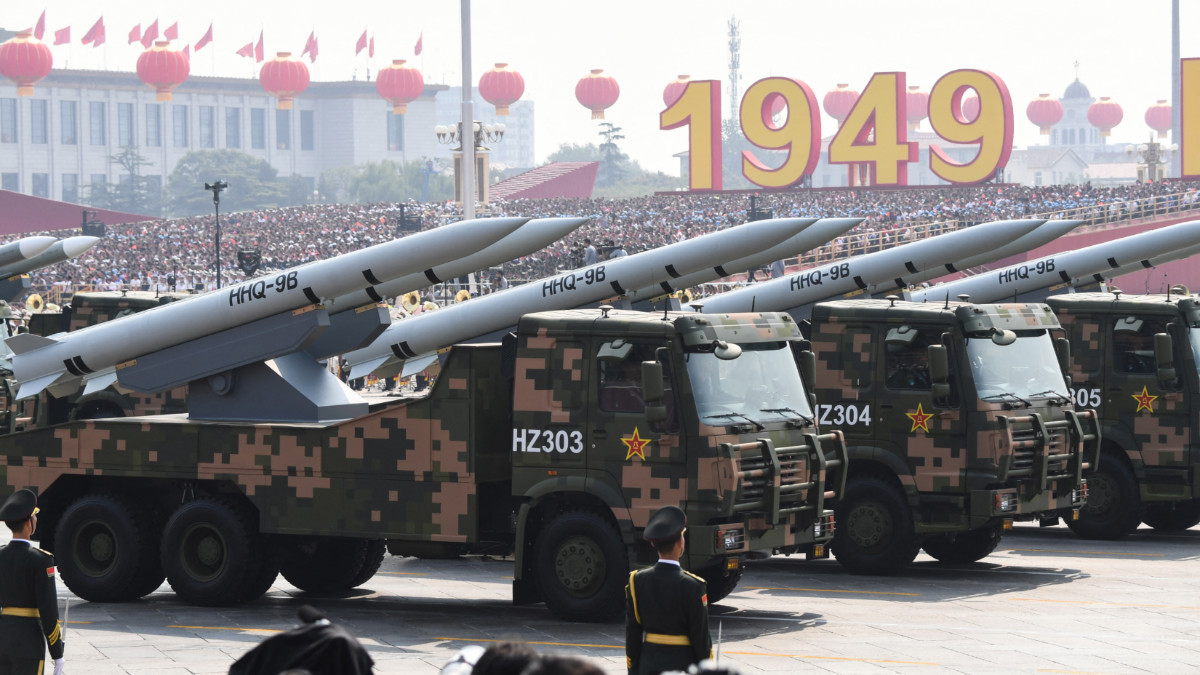
Iran receives Chinese surface-to-air missile batteries after Israel ceasefire deal​


Iran has taken possession of Chinese surface-to-air missile batteries as Tehran rapidly moves to rebuild defensives destroyed by Israel during their recent 12-day conflict, sources have told Middle East Eye.

The deliveries of Chinese surface-to-air missile batteries occurred after a de-facto truce was struck between Iran and Israel on 24 June, an Arab official familiar with the intelligence told MEE.

Another Arab official, who spoke on the condition of anonymity to discuss the sensitive intelligence, said that the US's Arab allies were aware of Tehran's efforts to "back up and reinforce" its air defences and that the White House had been informed of Iran's progress.

The officials did not say how many surface-to-air missiles, or SAMs, Iran had received from China since the end of the fighting. However, one of the Arab officials said that Iran was paying for the SAMs with oil shipments.

China is the largest importer of Iranian oil, and the US Energy Information Administration suggested in a report in May that nearly 90 percent of Iran’s crude and condensate exports flow to Beijing.

For several years, China has imported record amounts of Iranian oil despite US sanctions, using countries such as Malaysia as a transshipment hub to mask the crude's origin.

"The Iranians engage in creative ways of trading," the second Arab official told MEE.

Israeli Prime Minister Benjamin Netanyahu and US President Donald Trump are expected to discuss Iran and its nuclear programme when they meet on Monday.

MEE reached out to the White House for comment but did not receive a response by the time of publication.

Deepening relationship​

The shipments mark a deepening of Beijing’s relationship with Tehran and come as some in the West noted that China and Russia appeared to keep a distance from Iran amid Israel's unprecedented attacks.

Israel achieved air superiority over Iran's skies during the conflict, destroying ballistic missile launch pads and assassinating Iranian generals and scientists.

Despite this, the government endured the strikes. It was also able to continue firing ballistic missiles at Israel, decimating several sensitive sites in Tel Aviv and Haifa before a ceasefire took hold.

In the late 1980s, Iran received HY-2 Silkworm cruise missiles from China via North Korea when it was at war with Iraq.

The Islamic Republic used the missiles to attack Kuwait and strike a US-flagged oil tanker during the so-called tanker wars. In 2010, there were reports that Iran received HQ9 anti-aircraft missiles from China.

Iran is believed to use Russia's S-300, which is capable of engaging aircraft and UAVs in addition to providing some cruise and ballistic missile defence capability, as well as older Chinese systems and locally produced batteries such as the Khordad series and the Bavar-373.

These systems are believed to have a limited ability to shoot down the US F-35 stealth warplane that Israel operates.

China already sells its HQ-9 and HQ-16 air defence systems to Pakistan. Egypt is also understood to have China’s HQ-9 system, according to reports.

 
Top Bottom