
In an ideal world you use radars on the ground and in air(like in an Akıncı) to detect them and use fast moving high performance jets with pilots that can make on the spot decisions to undertake kill missions.Actually, I was referring to the Akıncı. If it has radar and cost-effective missiles, it would be suitable for that task. Because iAkıncı can stay in the air for a relatively long time while on patrol duty.

You are using an out of date browser. It may not display this or other websites correctly.
You should upgrade or use an alternative browser.
You should upgrade or use an alternative browser.

This isn't a MK bomb that needs to be put in a heavy steel casing mate, the whole body of the drone is already a casing, it is a kamikaze drone.Bro, its total warhead weight is 200kg. Not the explosive inside the warhead.


This isn't a MK bomb that needs to be put in a heavy steel casing mate, the whole body of the drone is already a casing, it is a kamikaze drone.
Yes, but UAVs body is not strong metal. That acts as penetrating sharpnel.

Compared to US laser targeted missiles and even MAM-L firings, this is a poor shot. Baykar needs to address this deficiency. On top of it this was a shot on a stationary target. Laser guidance normally is good for moving targets.Looks like the LGK might have missed the designated mark.
Bomb and sight is from Aselsan; doubt it's much to do with Baykar. Of course stuff will be done to address them. They work hand in hand always.Compared to US laser targeted missiles and even MAM-L firings, this is a poor shot. Baykar needs to address this deficiency. On top of it this was a shot on a stationary target. Laser guidance normally is good for moving targets.


Compared to US laser targeted missiles and even MAM-L firings, this is a poor shot. Baykar needs to address this deficiency. On top of it this was a shot on a stationary target. Laser guidance normally is good for moving targets.
Bomb and sight is from Aselsan; doubt it's much to do with Baykar. Of course stuff will be done to address them. They work hand in hand always.
It's working as intended. LGK's CEP is < 10 meters. Compare that to GÖZDE, which is < 3. TEBER is also < 3, hence why it is more accurate in the video.
I'm pretty sure LGK is a lower cost conversion kit, whereas TEBER and GÖZDE are more expensive, yet more accurate.
It wouldn't necessarily matter in most cases unless you're hitting a fortified target or a moving naval vessel, as the blast radius is relatively large.

GPS spoofing was already mentioned in my reply as a weakness of Shahed.Bro, Electronic Warfare (EW) will have significant effects on both GPS and Inertial Navigation Systems (INS)
.As the name suggests it affects electronic equipment. Both GPS and INS contain electronic systems.
GPS signals are weak signals and the electronic systems receiving it can be jammed. They can also be spoofed.
INS is inherently EW proof on the surface. But it too can be spoofed and effected by intricate and powerful EW. INS uses gyros and accelerometers (an electro mechanical device). In most drones like Shaheed, they work together with GPS. So they can be spoofed.
Only INS that are used in very sophisticated ICBMs and really expensive seeker heads are not affected by EW.
Apparently, Ukraine is using really fast FPV drones to shoot down Shaheeds.

What are the Ukrainian drone interceptors sent to counter Iranian attacks?
Ukraine has battle experience with Iranian-made Shahed drones and has mass-produced cheap interceptors.www.aljazeera.com
To interfere with INS, you need EMP, which is a completely different beast compared to EW. To my understanding, nobody is using EMP in any ongoing conflicts. The inherent disadvantage of INS is the drift of around 1-5%. So, you could be off by 5km if you lose your GPS coordinates 100km from the target. This was the reason why I suggested that any Turkish mass swarm suicide drone should have a cheap camera for geo-locating in a GPS-denied region.
For all practical purposes, Shahed is relatively robust against EW since it has so little electronic communication exposed to the outside.
But this is also its weakness.
The link you provided was also what I was referring to as the cheapest and most versatile solution against Shahed.
The production cost of Shahed is most likely below 10k, but I know that people talk about 20-30k as well.Shahed doesn't cost that low mate, and this one carries as much firepower as 4 of those. This is not a Shahed/Geran copy. This carries a warhead equivalent of a MK-83 bomb, which weighs 1000 pounds, or about 450 kgs. So, using this is like dropping a MK-83 from 2000 km away, with precision guidance. If I had to guess, I would say it has 200 kg of insensitive explosive with some sort of prescored fragmentation sleeve instead of just steel or tungsten balls around it to save weight and if it explodes in the air, it would shred the fuck out of everything in a very good range even outside the blast zone.
And making that one is possibly the easiest thing in the world. TEI already produces the same engine as used in Gerans, PG-50 which is the same as the German engine Iranians copied, strap that to an aerodynamic body with 50 kg warhead and enough fuel and you have your Shahed.
Russia is using something similar, I've seen one of their solution literally gets launched from something like a gun.
Producing these is obviously not difficult for TEI, as even an amateur could design something similar (excluding the explosives).
Youtube is even full of more advanced amateur-designed jet-powered drones. My intention was never to say that Shahed was advanced or difficult to design.
The issue I tried to highlight was that we need 100k drones that are cheap, EW proof, and highly destructive in our inventory today as the world is speed-running into a global war thanks to USA.
K2 is a good design, but it seems expensive to me to produce 100k of them. We need both the super cheap Shahed clone as well as K2 and everything else that we are doing.
This isn't a MK bomb that needs to be put in a heavy steel casing mate, the whole body of the drone is already a casing, it is a kamikaze drone.
See 0:12 and 7:30
My topic was laser guidance in general, not specific missile type. Laser guidance was invented by Texas Instruments in the 1960’s, to give pin point precision to guided munitions. It gives immunity from EW. It is ideal for hitting moving targets. The modern laser targeting uses pulse coded targeting which allows multiple targets to be hit by different missiles in the same area.Abi the topic is LGK-82 and its US equivalent is GBU-12. As we all can see sometimes those weapons don't hit perfectly.
Laser guidance is used in missiles primarily for extreme precision, allowing weapons to hit specific, often moving, targets with high accuracy (often within metres) while minimising collateral damage.
If missiles are not hitting their targets accurately when guided by laser, then there is something wrong in the system. It could be the missile mechanical guidance systems, it could be the algorithms in the guidance, it could be the optical head, etc etc. if is not hitting it’s target in a test, then it needs to be corrected.
It is not easy to use laser guided missiles. Either the platform firing the munition or another drone has to hold the laser beam on the target or alternatively ground assets have to mark the target with a laser beam with great danger to themselves.
This is done so that the required high precision is obtained.
Yes! As per @Sanchez ’s post it is Aselsan that provides the seeker. But Aselsan here is the supplier of the kit to Baykar. It is up to Baykar to get them to sort out the problem.
Additionally, the tests are there to iron out problems, so that in real life they do not occur.
Last edited:
It could be the missile mechanical guidance systems, it could be the algorithms in the guidance, it could be the optical head, etc etc. if is not hitting it’s target in a test, then it needs to be corrected
It's an Aselsan EO system and an Aselsan guidance kit. It's not a subcontractor but the primary contractor for both systems. I'm pretty sure Teber is also used with laser guidance in the video, we just see the footage through the day camera of the EOTS in the first footage. Not every strike will be picture perfect. Munitions, seekers fail; it happens all the time.it is Aselsan that provides the seeker and Roketsan that makes the munition. But they are subcontractors. It is up to Baykar to get them to sort out the problem.
You are right.It's an Aselsan EO system and an Aselsan guidance kit. It's not a subcontractor but the primary contractor for both systems. I'm pretty sure Teber is also used with laser guidance in the video, we just see the footage through the day camera of the EOTS in the first footage. Not every strike will be picture perfect. Munitions, seekers fail; it happens all the time.
it is aselsan’s kit.
the munition is probably MKE Mk 82 dumb bomb. Not roketsan!
So it is up to Aselsan to sort it out.


I’m confused. US transferring its 6 Patriot batteries from the Pacific to deploy Iran front to shoot down Shahed drones?
That is false economy. It s not feasible to shoot thousands of 30thousand dollar Shaheeds with 3 to 4 million dollar AD missile each time. You would soon end up spending billions.
Ukranians use 50 caliber guns fitted on to pickups to bring them down. We have a similar gun based system to overcome these drones. They can be brought down with EW as well.
In Turkish Armed Forces we had an unfilled position for a good loitering and long range munition/UCAV. From what we can see with K2, this hole is going to be filled. But as we are always aspiring to better any other weapon system, attrition rate of K2 has to be minimised. Best way to do that is to get stealth factor in to the equation. Even Iranians are trying to find ways to make their Shaheeds less noisy and smaller. The less they are shot down means the more of them are going through to cause serious damage.

Fransa'nın Rafale uçaklarında kullanılan MICA füze stokları alarm veriyor | SavunmaSanayiST
Fransa’nın, Orta Doğu’da İran yapımı İHA’lara karşı operasyonlarda kullanılan hava-hava füzelerinin hızla tükenmesi nedeniyle endişe duyduğu bildirildi.
 www.savunmasanayist.com
beautiful.

Despite Israel and America mobilizing all their allies, Iran's cheap Shahid drones managed to deplete the missile stockpiles of all allies.Fransa'nın Rafale uçaklarında kullanılan MICA füze stokları alarm veriyor | SavunmaSanayiST
Fransa’nın, Orta Doğu’da İran yapımı İHA’lara karşı operasyonlarda kullanılan hava-hava füzelerinin hızla tükenmesi nedeniyle endişe duyduğu bildirildi.
beautiful.
There are two lessons to be learned here: 1. We must produce a large quantity of very inexpensive drones; 2. We must produce a large quantity of inexpensive air-to-air and ground-to-air missiles like the Eren...

MonteCarlo
Committed member
4 Kemankeş-2's are quite a strike package. You can be sure it won't get shoot down by an FK-2000 with that payload lmao
Last edited:
They changed the nose design
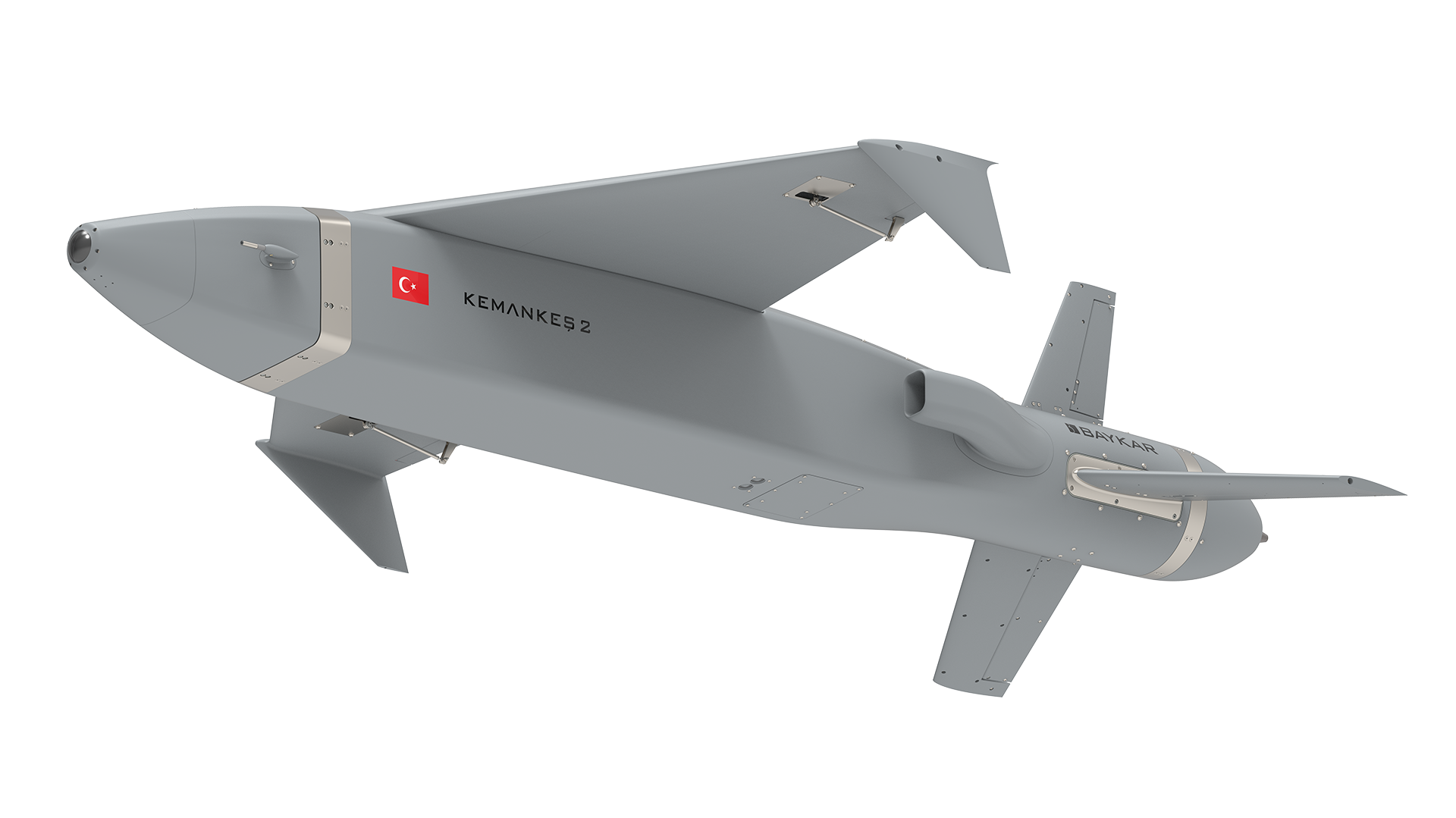
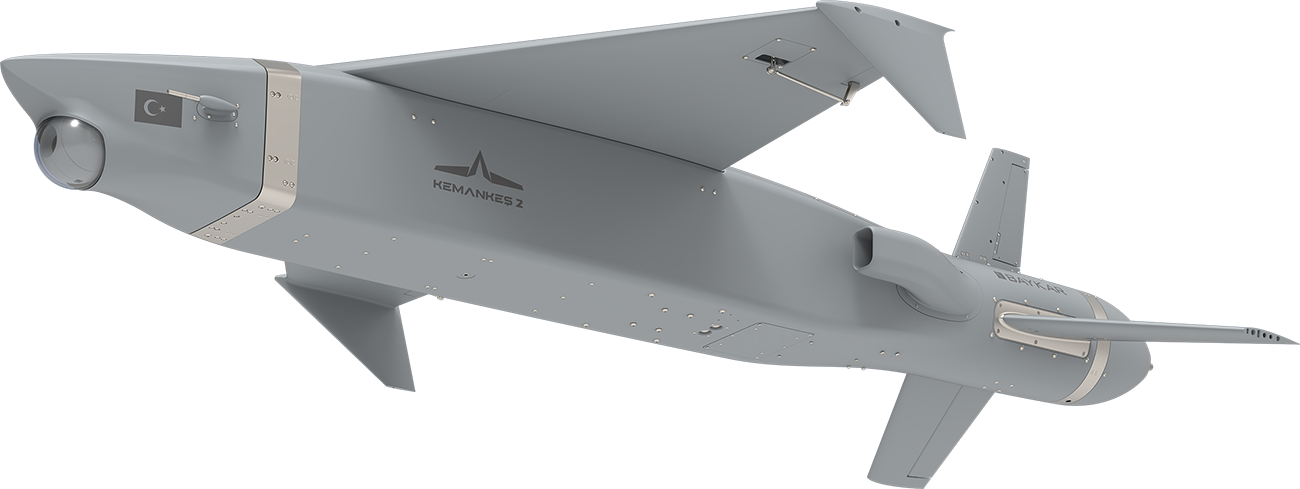
4 UAV-230 would be even better and it has the same range.4 Kemankeş-2's are quite a strike package. You can be sure it won't get shoot down by an FK-2000 with that payload lmao
They changed the nose design
4 UAV-230 would be even better and it has the same range.
Looks like they are updating the ammunition.
MonteCarlo
Committed member
Kemankeş-1 also had a stationary camera that was later upgraded to gimbal if I remember correctly. I wonder what is the reason for itThey changed the nose design
4 UAV-230 would be even better and it has the same range.


