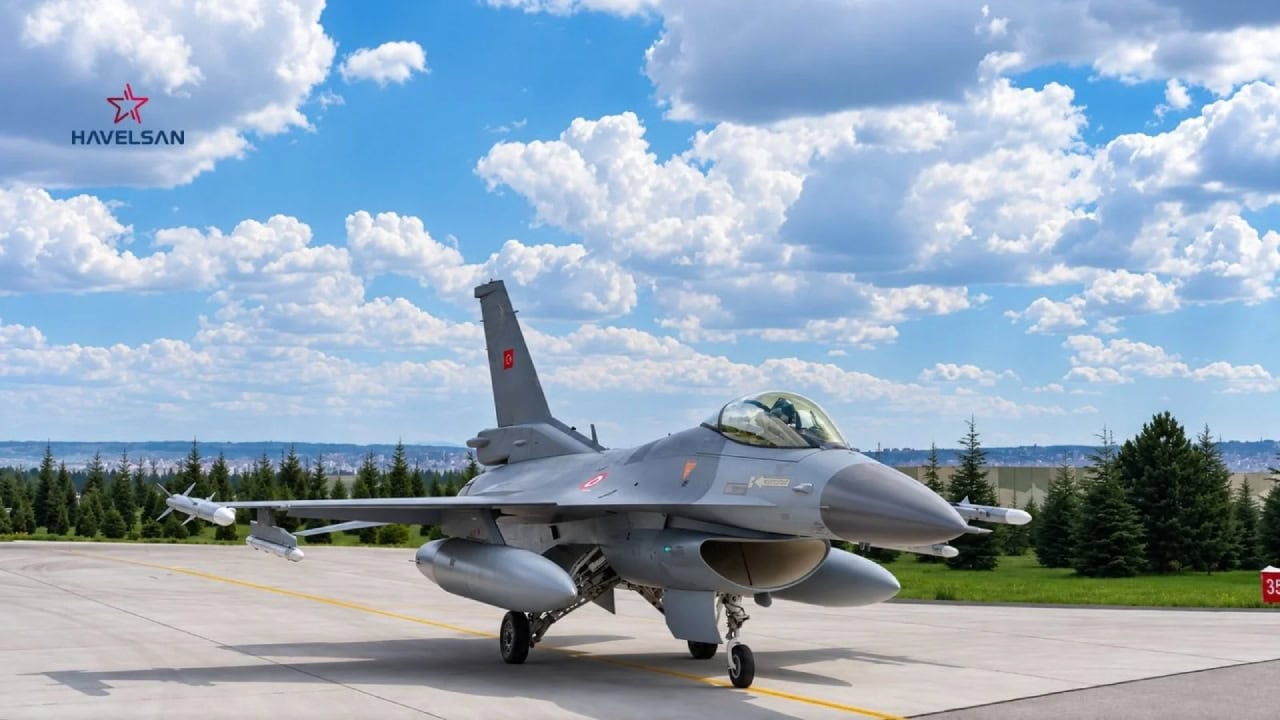
TR HÜRJET-Advanced Jet Trainer/ Light attack aircraft

Samba

Committed member
Messages
239
Reactions
3 393
Nation of residence
Turkey
Nation of origin
Turkey
Selling f404 class engines for a LCA equivalent of hardly 4.5 gen may not be an issue for the US..
 

Sanchez

Experienced member
Moderator
Think Tank Analyst
DefenceHub Diplomat
Messages
4,085
Reactions
120 18,644
Nation of residence
Turkey
Nation of origin
Turkey
Re Hürjet, possible future interest of Japan to replace their aging T-4s. Looks like TAI also offered Hürkuş back in 2024. Japan had selected the T-6 Texan instead.

A dark horse to succeed the JASDF T-4? What is this "supersonic" trainer aircraft that could break the South Korean dominance? Manufacturers "have a strong interest in Japan," and Airbus is also cooperating.​


"...In fact, TAI also has its sights set on Japan. I asked a TUSAŞ representative whether they intended to propose the T-4 trainer as a successor to the Japan Air Self-Defense Force, and they replied, "We haven't made a decision yet, but we have a strong interest."

About 10 years ago, they probably asked that as a polite formality, knowing that I was Japanese. However, in 2024, TAI proposed a training system centered on their turboprop trainer "Hürks" for the competition to select the T-7 primary trainer aircraft for the Japan Air Self-Defense Force.

Furthermore, on May 6, 2026, Japan and Turkey exchanged a document confirming their commitment to accelerating cooperation in the field of defense equipment between the two countries, thus strengthening defense cooperation between Japan and Turkey compared to 2024.

I've heard that TAI was perplexed by Japan's unique defense equipment procurement situation during the competition for the successor to the T-7 trainer aircraft. However, if they propose the Hulje (SAETA II) this time, it's expected that they'll have the strong support of Airbus. Perhaps the Hulje (SAETA II) could become a dark horse for the T-4 successor..."


Saithan

Experienced member
Moderator
Denmark Correspondent
DefenceHub Diplomat
Messages
8,880
Reactions
64 18,223
Nation of residence
Denmark
Nation of origin
Turkey
Would it be safe to assume that Hürjet has done the same acrobatics ?
 

Sanchez

Experienced member
Moderator
Think Tank Analyst
DefenceHub Diplomat
Messages
4,085
Reactions
120 18,644
Nation of residence
Turkey
Nation of origin
Turkey
Would it be safe to assume that Hürjet has done the same acrobatics ?
Nope, most probably just a flyby. This is not even Hürjet's first formation flight with Stars. First was in 2024.

1781273412736.png
 

Strong AI

Experienced member
Messages
2,788
Reactions
62 10,108
Nation of residence
Germany
Nation of origin
Turkey
🔴TUSAŞ General Manager Mehmet Demiroğlu:

“HÜRJET is going very well right now.

Our 2 prototypes have nearly reached 500 flight hours.

4 more prototypes are coming, we'll see flights this year.

Likewise, we're working on the “Light Attack” and “Naval Forces -again single-engine-” configurations.”
 

Strong AI

Experienced member
Messages
2,788
Reactions
62 10,108
Nation of residence
Germany
Nation of origin
Turkey
🔴TUSAŞ General Manager Mehmet Demiroğlu:

“HÜRJET is going very well right now.

Our 2 prototypes have nearly reached 500 flight hours.

4 more prototypes are coming, we'll see flights this year.

Likewise, we're working on the “Light Attack” and “Naval Forces -again single-engine-” configurations.”
Turkish Aerospace is additionally examining alternative engine configurations for future HÜRJET variants. Demiroğlu referred to the GE Aerospace F404 and F414 as examples of engines belonging to the same general family but offering different thrust levels. He explained that HÜRJET could be redesigned around a different engine if a future customer requirement and sufficient commercial demand justified the additional development work.
 

TheInsider

Experienced member
Professional
Messages
4,834
Solutions
1
Reactions
49 16,835
Nation of residence
Turkey
Nation of origin
Turkey
I think TUSAS will switch to F414-GE-400 for Hürjet-N and maybe LCA. F414 has ~%18 more dry and ~%24 more wet thrust compared to its predecessor. Hürjet-N and LCA with F414, MURAD radar, MUM-T capability and long-range air-to-air missiles like Gökbora, can beat any existing 4th gen aircraft without those capabilities.
 

TR_123456

Member
Staff member
Administrator
Messages
20
Reactions
89
Nation of residence
Nethelands
Nation of origin
Turkey
I think TUSAS will switch to F414-GE-400 for Hürjet-N and maybe LCA. F414 has ~%18 more dry and ~%24 more wet thrust compared to its predecessor. Hürjet-N and LCA with F414, MURAD radar, MUM-T capability and long-range air-to-air missiles like Gökbora, can beat any existing 4th gen aircraft without those capabilities.
So,why didnt they do that already?
Is it not availlable yet?
 

Yasar_TR

Experienced member
Staff member
Administrator
Messages
4,162
Reactions
252 21,764
Nation of residence
United Kingdom
Nation of origin
Turkey
So,why didnt they do that already?
Is it not availlable yet?
In addition to @TheInsider ’s post :

There is a cost and fuel consumption issue.

The f414 uses more fuel but per thrust it is more efficient. It is a real fighter jet engine.

F404 is cheaper and good for a trainer.

Normally F414 is 30-40% more expensive. But in certain cases it can be double the price of a f404.

F414 is the standard engine of F/A18 Süper Hornets and the supercruise capable Gripen E/F fighters. They are also being used in twin format on KF21 Boromae and are being considered in home manufacturing for AMCA too.
 

IC3M@N FX

Contributor
Messages
687
Reactions
3 30 1,401
Nation of residence
Germany
Nation of origin
Turkey
So,why didnt they do that already?
Is it not availlable yet?
For this reason, the GE F-414 engine is simply too expensive for a Trainer.
The market is looking for the best overall package, not the best flight performance figures. As the Hürjet is already almost on a par with the T-50 Golden Eagle, it is, technically speaking, the best training aircraft available in Europe, offering Airbus the opportunity to integrate its own systems.
Spain is leading the way, and it is highly likely that other European countries will also procure this training aircraft fitted with Airbus subsystems.

As a Light Combat Aircraft (LCA) powered by GE F-414 engines, the Hürjet would operate in similar roles to the Gripen E/F and, in the long term, render the F-16 obsolete. This is because it would cover 60–70% of an F-16’s mission profile; the remaining 30–40% of missions would then be handled by the Anka 3 and the Kizilelma. If this Hürjet II were also flown in MUM-T mode with these engines, even the Rafale and the F-16 would face major problems. With significantly lower running costs.

The TAI KAAN would then serve solely for air superiority and deterrence, working alongside the Anka 3 and the Kizilelma to neutralise the F-35/35I Tactically and strategically.

But that’s just my opinion on the matter.

Addendum:
I would like to make it clear once again that there is genuine interest in the Hürjet as a training aircraft on the German Aircraft Forum, and that people are asking me what the current status is and whether weapons tests have already taken place. Members of the German Federal Aviation Authority, the Bundeswehr’s armaments department and Airbus staff are also represented anonymously on this forum – I’m not joking; they really do seem to have a keen interest in the Hürjet as the European standard trainer for 5th and 6th generation Aircrafts.

I’ve already mentioned that in German Forum, I don’t work for TAI or other turkish organizations and am just a Military Nerd 😂 with big turkish Nationality and Proud, but they regularly ask me questions, even via private Message.
 
Last edited:

Yasar_TR

Experienced member
Staff member
Administrator
Messages
4,162
Reactions
252 21,764
Nation of residence
United Kingdom
Nation of origin
Turkey
As a Light Combat Aircraft (LCA) powered by GE F-414 engines, the Hürjet would operate in similar roles to the Gripen E/F and, in the long term, render the F-16 obsolete. This is because it would cover 60–70% of an F-16’s mission profile; the remaining 30–40% of missions would then be handled by the Anka 3 and the Kizilelma. If this Hürjet II were also flown in MUM-T mode with these engines, even the Rafale and the F-16 would face major problems. With significantly lower running costs.

The TAI KAAN would then serve solely for air superiority and deterrence, working alongside the Anka 3 and the Kizilelma to neutralise the F-35/35I.

But that’s just my opinion on the matter.
Exactly, it is YOUR opinion.

Hurjet can not operate as a Gripen E/F . Airframes are totally different.
They will have to alter immensely the design of the Hurjet airframe in order to get a performance of a Gripen E/F out of a Hurjet.

No matter what you do to a Hurjet, you will NEVER get the performance level you get from an Ozgur F16.

Operating Anka-3 and KE in conjunction with a fighter is good for both f16 and Hurjet. They are even talking about MUMT operation with a Typhoon now. That is a different issue.
Hurjet maximum payload is almost a third of an F16.
F16 is a 9g capable 2+mach speed, 50000+ft fully fledged fighter jet. Hurjet, even with a f414 engine can not manage that altitude and speed. Remember it is going to have navalised set up with a heavier than current Hurjet weight overall.
 

IC3M@N FX

Contributor
Messages
687
Reactions
3 30 1,401
Nation of residence
Germany
Nation of origin
Turkey
Exactly, it is YOUR opinion.

Hurjet can not operate as a Gripen E/F . Airframes are totally different.
They will have to alter immensely the design of the Hurjet airframe in order to get a performance of a Gripen E/F out of a Hurjet.

No matter what you do to a Hurjet, you will NEVER get the performance level you get from an Ozgur F16.

Operating Anka-3 and KE in conjunction with a fighter is good for both f16 and Hurjet. They are even talking about MUMT operation with a Typhoon now. That is a different issue.
Hurjet maximum payload is almost a third of an F16.
F16 is a 9g capable 2+mach speed, 50000+ft fully fledged fighter jet. Hurjet, even with a f414 engine can not manage that altitude and speed. Remember it is going to have navalised set up with a heavier than current Hurjet weight overall.
You’re right, but in the long term you can’t maintain medium-class fighter aircraft alongside high-end fighter aircraft – the running costs would drive you into the ground.

There’s already an international consensus that, unless you’re the US, China or Russia, you’d prefer to operate only a high-low mix (Highend with LCA and Drones) fleet alongside drones (at least that’s the aim) – if only for budgetary reasons.

This is just one example:

From 2040 onwards, Turkey will not be able to maintain 150–200 TAI KAAN 120-150 F-16 Özgür IIs, 60–80 Eurofighters and 80–120 Hüjets as training aircraft, light combat aircraft (LCA) and naval platforms, alongside hundreds of different drones. We are talking here about 500–600 manned fighter jets – which, due to the varying maintenance and operating costs alone, will entail considerable expenditure.
 
Last edited:

Yasar_TR

Experienced member
Staff member
Administrator
Messages
4,162
Reactions
252 21,764
Nation of residence
United Kingdom
Nation of origin
Turkey
You’re right, but in the long term you can’t maintain medium-class fighter aircraft alongside high-end fighter aircraft – the running costs would drive you into the ground.

There’s already an international consensus that, unless you’re the US, China or Russia, you’d prefer to operate only a high-low mix fleet alongside drones (at least that’s the aim) – if only for budgetary reasons.
Can you please explain what you mean by this with examples?
UK has f35Bs with Typhoons
Germany has Typhoons with Tornados. (Soon to have f35As)
India has Tejas with SU30s and Mig21s.
Poland has F16s with FA50 and Mig 29
South Korea has F15s, F16s, F35As with FA50s and F5s. Soon to have KF21s.
 

IC3M@N FX

Contributor
Messages
687
Reactions
3 30 1,401
Nation of residence
Germany
Nation of origin
Turkey
And that is precisely the problem: costs are skyrocketing because there are too many different types of aircraft in the fleet, each with different engines and airframes, which complicates repairs, maintenance and operational readiness.
Take a look at the Indian fleet – only 60+ per cent of the fleet is actively in service.

The Indian Air Force currently operates six distinct fighter families:
  • Sukhoi Su-30MKI (Russia / License-built in India): ~260 aircraft forming the heavy multirole backbone.
  • Dassault Rafale (France): 36 modern multirole fighters.
  • Dassault Mirage 2000 (France): ~45 upgraded multirole interceptors.
  • Mikoyan MiG-29UPG (Russia): ~60 air superiority/multirole fighters.
  • SEPECAT Jaguar (UK / France / India): ~110 aging ground-attack aircraft.
  • HAL Tejas (India): ~30–40 light combat aircraft from indigenous production (slowly entering service).

The reasons for this are the lack of spare parts and the high operating costs (flight costs) of the aircraft. Only superpowers, along with Saudi Arabia and the like, can still afford something like this. It is simply financially inefficient and also unsustainable.

If, in the long term, Turkey has only three types of aircraft, two of which are manufactured entirely domestically and the Eurofighter has a fully integrated domestic MRO base, costs will fall dramatically.

The country would then have its ‘high-low mix’ and would not have to sacrifice the valuable service life of a TAI KAAN or a Eurofighter airframe for patrol flights. Day-to-day operations would then be handled by the optimised Hürjet and the drones. At the same time, more actual flying hours can be generated for pilots, as the Hürjet is significantly cheaper to maintain in flight than the KAAN, Eurofighter and F-16 Özgür II.

That’s a bit of an exaggeration, but one flying hour in a TAI KAAN/Eurofighter would be roughly equivalent to 2–3 flying hours in a Hürjet
 
Top Bottom