
Hah, after seeing above post i just went to his twitter to see what he actually said before seeing this. I love twitter. People forget that we are in such a small niche.

You are using an out of date browser. It may not display this or other websites correctly.
You should upgrade or use an alternative browser.
You should upgrade or use an alternative browser.


hurjetspain.com HÜRJET SPAINFLIGHT — JOIN THE FUTURE OF FLIGHT(Únete al Futuro de la Aviación)


"The site delivers technical data, development updates, and media resources about the HÜRJET program through a user-friendly interface tailored for Spanish aerospace and defense stakeholders.
This is not just an aircraft showcase — it is a gateway to a strategic, industrial, and technological partnership between two rising aerospace nations.
Developed by Türkiye, HÜRJET is a supersonic, AI-enabled, multi-role next-gen combat trainer, capable of seamless coordination with unmanned aerial and naval systems.
For Spain, HÜRJET represents not just a platform, but:
A tactical transformation from training to live operations
High-tech co-production opportunities at the heart of Europe"
The HÜRJET already has its own website!!

"The site delivers technical data, development updates, and media resources about the HÜRJET program through a user-friendly interface tailored for Spanish aerospace and defense stakeholders.
This is not just an aircraft showcase — it is a gateway to a strategic, industrial, and technological partnership between two rising aerospace nations.
Developed by Türkiye, HÜRJET is a supersonic, AI-enabled, multi-role next-gen combat trainer, capable of seamless coordination with unmanned aerial and naval systems.
For Spain, HÜRJET represents not just a platform, but:
A tactical transformation from training to live operations
High-tech co-production opportunities at the heart of Europe"
The HÜRJET already has its own website!!


Series production activities continue within the HÜRJET Project. In this context, the process is progressing in line with the Turkish Stars’ delivery schedule planned for 2026.
While assembly activities for the aircraft to be delivered are ongoing, the first flights of the newly produced aircraft are planned to take place in the first quarter of next year.

 www.aa.com.tr
While assembly activities for the aircraft to be delivered are ongoing, the first flights of the newly produced aircraft are planned to take place in the first quarter of next year.
HÜRJET 3 koldan hedefe ilerliyor
Türk savunma ve havacılık sanayisini jet motorlu uçaklar sınıfında yeni bir aşamaya taşıyan HÜRJET için test, seri üretim ve ihracata yönelik olarak 3 koldan yoğun bir çalışma yürütülüyor. - Anadolu Ajansı
www.aa.com.tr


Pokemonte13
Contributor
Hürjet doesn't have an internal gun right?

It's a trainer, it doesn't.Hürjet doesn't have an internal gun right?


The Spanish Air Force already adapted Hürjet and renamed it as Saeta II (Arrow II)
to honor an old jet trainer fighter HA-200 Saeta designed and produced by Hispano.
They apparently also were quick to outline a share of production and addition of local production plan.
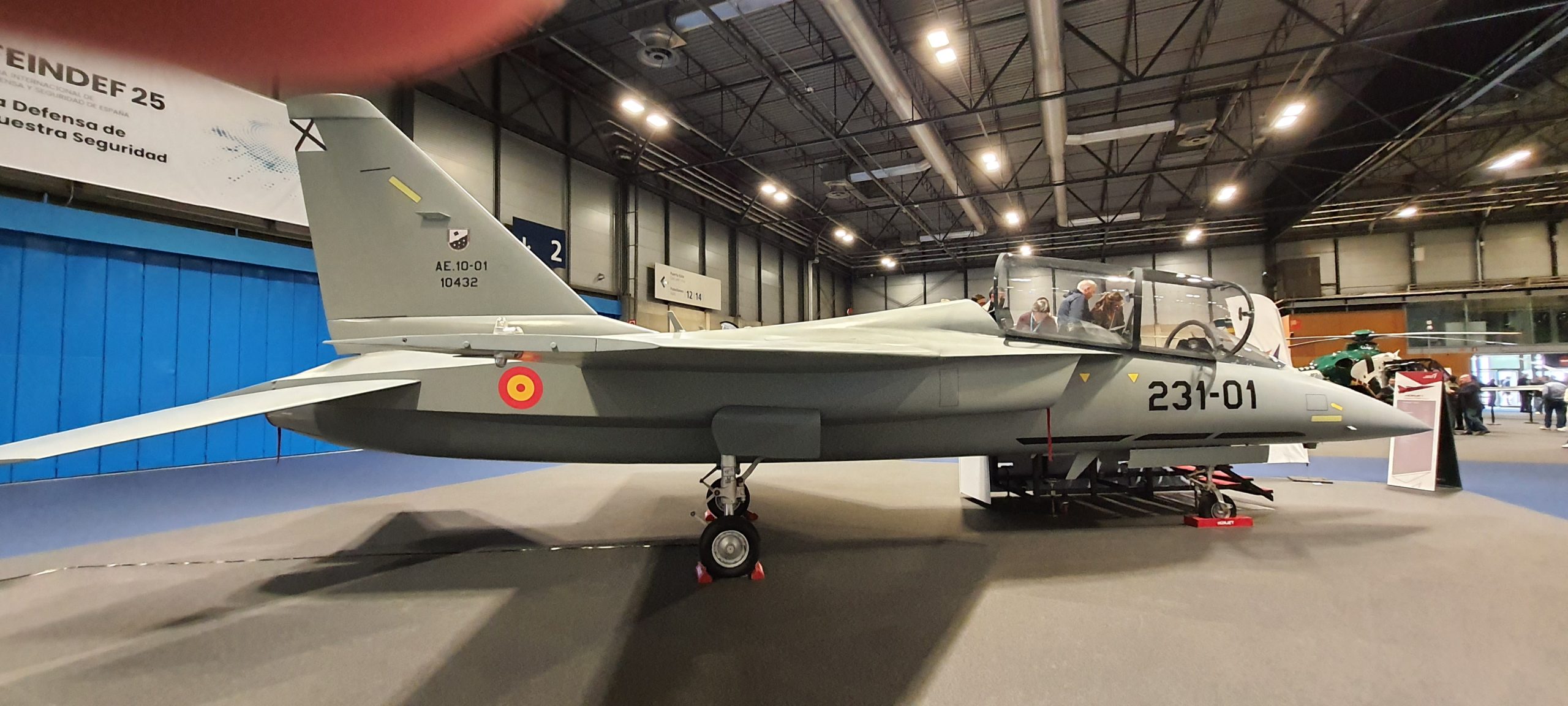
 defensayseguridad.es
Arrow II: the future advanced trainer and possible light fighter of the Air and Space Army
Spain gave the green light to the acquisition (although it is still missing the formal award and signature) of the Turkish TAI Hürjet to transform it into the advanced flight education system (ITS-C), intended to replace the veterans Northrop F-5M of the 23rd Wing. This program not only involves the purchase of aircraft, but the development of a state-of-the-art integrated training system with a strong involvement of the Spanish industry.
In this transformation also comes that of his name, which transforms the name in tribute to the legendary Turkish pilot Vecihi Hürkuş, for that of a legend in Spanish aeronautical history, the Hispano Aviación HA-200 Saeta. From now on, it is called Saeta II.
So we are going to try to break down and clarify where the entire amount of the program is going to go, which has generated a lot of controversy and discussion due to its high cost, and which now returns to the fore after its renaming by the Air and Space Army.
Cost of the program and distribution of expenditure
The Spanish government has authorized a contract with an estimated value of 3.120 million euros for the acquisition of the ITS-C, based on the Hürjet of Turkish Aerospace Industries (TAI). The program is estimated for the acquisition of 45 aircraft, although the official figure is still to be confirmed.
The total cost is distributed as follows:
Direct acquisition of the aircraft: approximately 1.6 billion euros.
Integrated education system (ITS-C) and national development: around 1.52 billion euros (about 49% of the total), which includes:
"Spanishization" and adaptation: development and installation of equipment, electronics and higher performance systems developed by the national industry, with a pre-financing of 1,04 billion euros for Phase 1/2.
Infrastructure: construction of hangars, buildings that will house the simulation center and software and system development centers at the Talavera la Real base (Badajoz).
This explains the apparent high average unit cost if the total of the program (€3,120 million) is divided by 45 units, resulting in about 69.33 million euros per device with all the systems and the associated infrastructure. However, the real cost per device (only the Hürjet platform) is estimated at between 18 and 20 million euros per unit.
Constitution of the program and platform
The programme will be constituted as an integrated education system (ITS-C) that combines:
Hürjet aircraft: advanced training aircraft that will replace the F-5M.
National customization: the platform will be adapted and integrated with avionics, systems and equipment developed by the Spanish industry (such as Indra or GMV) to achieve NATO training and combat standards, possibly including the update of the integrated training system.
Simulators and synthetic subsystems: complete ground training system to maximize pilot training, including the development of ground software for mission preparation.
Training and simulation
The main objective is a generational leap in the training of fighter pilots, adapting them to new generation aircraft (such as the Eurofighter and the future FCAS).
Type of training: seeks to create a hunting and attack teaching system for the advanced phase of pilot training. The tandem two-seat platform with fly-by-wire controls offers supersonic performance (Mach 1.4) and the ability to simulate modern combat conditions.
Simulation: the system will include ground simulators and synthetic subsystems. Advanced training aircraft usually use radar simulations instead of real radars (as would be done in a light attack version), and the Spanish industry will be key in the development of this training and simulation software package.
Versions of light attack and Eagle Patrol
Light attack version (LCA)
Existence and relevance: the TAI Hürjet-Saeta II was originally conceived as an advanced training and light attack vector (LCA) aircraft. Its features, including supersonic capacity and a payload of up to 3,000 kg, make it suitable for this function.
Use by Spain: the 45 Saeta II will initially be acquired as part of the education system (ITS-C). However, its own dual nature as an ACL/advanced trainer implies that the platform has the potential capacity to be used in light attack missions, close support or air patrolling, if necessary and the relevant weapon systems are integrated (such as a real radar, systems that the advanced training version does not normally carry). The replacement of the F-5M, which also had some attack capacity, points to this duality being an advantage.
Version for the Eagle Patrol (La Patrulla Águila)
Absence of confirmation: there is no updated data confirming plans for the Saeta II to replace the C-101 Aviojet or the Pilatus PC-21 (which are already replacing the C-101 in basic/intermediate education) in the Eagle Patrol.
Alternatives: the role of basic/acrobatic trainer is being covered by the PC-21. The Hürjet, being a larger and more powerful supersonic aircraft, is focused on teaching hunting and advanced attack, a role other than purely acrobatic.
Industrial participation (Turkey and Spain)
The program will be developed under a temporary union of companies (UTE), ensuring a distribution of the workload and technology transfer.
Turkish industry (TAI):
Initial platform: TAI designed and developed the Hürjet platform.
Initial manufacturing: the structure of the 45 Saeta II will be manufactured by Turkish Aerospace Industries in Turkey.
Technical support: participation as a main partner in the UTE for development and support.
Spanish industry (Airbus, Indra, GMV, etc.):
Coordination and national leadership: Airbus Defence and Space Spain will act as national coordinator and tractor company of the Spanish industry.
Conversion and systems: the aircraft will arrive from Turkey to the Airbus Defence and Space facilities in Spain for a conversion and adaptation process that will include the integration of:
Spanish avionics and electronics.
Ground simulation systems (hardware and software).
Development of ground and mission software (with companies such as Indra or GMV).
Partial production and maintenance: the manufacture of a part of the aircraft in Spain and the support in service for 30 years are also part of the agreement, strengthening the Airbus facilities in Albacete.
Integrated simulation systems of the ITS-C
The goal of the advanced flight training system (ITS-C) is not simply to acquire aircraft, but to create a training system that ensures that pilots are ready to operate 5ª generation aircraft (such as future FCAS aircraft) from the first flight in a live fighter. This is achieved by maximizing synthetic training on the ground.
The simulation center (ground-based training system - GBTS) This center is the heart of the program and will include several components developed and managed by the Spanish industry (mainly Airbus, Indra and GMV):
Full mission simulators (FMS): they are 1:1 replica flight cabins, mounted on movement platforms, which allow the pilot and the instructor to perform complex missions in a 360° virtual environment.
Flight training devices (FTD): similar to FMS, but with less visual complexity and no movement platform.
Connected tactical training simulators: they allow several pilots in their respective FMS to fly in the same virtual scenario simultaneously.
Mission planning and debriefing system (MPDS): ground software where missions are planned and analyzed.
Development of scenarios and 'threat libraries': the Spanish industry will update the databases of simulated threats and current tactical scenarios.
Integrated virtual training (embedded training) The Saeta II will act as a simulator in the air through:
Virtual radar and virtual weapon systems: the plane pretends to carry active radar and weapons.
Virtual tactical data link: simulates communication and data between aircraft and ground.
Highlights of the Arrow II:
Supersonic Performance: Unlike the M-346 and T-7A (which are subsonic), the Saeta II can overcome the sound barrier (M > 1). This is essential to get pilots used to the high speeds and flight characteristics of front-line fighters.
Technology and Cost: The Saeta II offers superior or comparable performance to those of the T-50 Golden Eagle (already in service in several countries) at a platform acquisition cost (only the aircraft) potentially lower than the T-7 Red Hawk.
Modularity for the LCA: Its design as a Light Attack Aircraft (LCA) allows it to integrate into real combat missions in case of need, something that is not always feasible in purer trainers like the M-346.
Technology Transfer: The Spanish agreement is based on the "Spanization" of the system, guaranteeing a high rate of industrial return and technological sovereignty in mission and training systems.
And now knowing how the complete training system will be and the differences with its direct Western rivals, let's go to the labor distribution of the main Spanish companies involved:
Airbus Defence and Space acts as the national coordinator. Its function is critical for three reasons:
Conversion and assembly in Albacete
Design authority
Life cycle support
The brains of the system: Indra and GMV
Indra: simulators, avionics, virtual warfare.
GMV: navigation, fly-by-wire, mission software.
The giants of the structure: Aernnova and Aciturri
Aernnova and Aciturri: manufacture of wings, fuselage, surfaces.
Specialized lomponentes and successes already signed
Airtificial: flight joysticks for TAI.
ITP Aero: maintenance of the F404 engine.
CESA: landing gear and hydraulic systems.
Electronics and communications: Grupo Oesía and Tecnobit
Tecnobit: data links and tactical communications.
The "consortium of the 16"
Includes Aertec, Amper, Centum, Clue, Grabysur, Orbital, SENER:
Grabysur: booth and NVG lighting.
SENER: action and control systems.
Aertec: tests and guidance electronics.
What does Spain gain from this?
The involvement of these companies not only generates highly qualified employment, but also grants Technological Sovereignty. If tomorrow Spain decides to integrate a new missile or a new training system in the Saeta II, it does not have to ask permission or pay licenses to third countries; the national industry has the knowledge and authority to do so.
This level of industrial intervention is what raises the cost of the program, but it guarantees that of the 3,120 million invested, a very significant part returns to the Spanish economy in the form of technology, taxes and jobs.
to honor an old jet trainer fighter HA-200 Saeta designed and produced by Hispano.
They apparently also were quick to outline a share of production and addition of local production plan.
SAETA II: el Ejército del Aire y su nuevo entrenador Hürjet - Defensa y Seguridad
Saeta II: el futuro entrenador avanzado y posible caza ligero del Ejército del Aire y del Espacio
defensayseguridad.es
Arrow II: the future advanced trainer and possible light fighter of the Air and Space Army
Spain gave the green light to the acquisition (although it is still missing the formal award and signature) of the Turkish TAI Hürjet to transform it into the advanced flight education system (ITS-C), intended to replace the veterans Northrop F-5M of the 23rd Wing. This program not only involves the purchase of aircraft, but the development of a state-of-the-art integrated training system with a strong involvement of the Spanish industry.
In this transformation also comes that of his name, which transforms the name in tribute to the legendary Turkish pilot Vecihi Hürkuş, for that of a legend in Spanish aeronautical history, the Hispano Aviación HA-200 Saeta. From now on, it is called Saeta II.
So we are going to try to break down and clarify where the entire amount of the program is going to go, which has generated a lot of controversy and discussion due to its high cost, and which now returns to the fore after its renaming by the Air and Space Army.
Cost of the program and distribution of expenditure
The Spanish government has authorized a contract with an estimated value of 3.120 million euros for the acquisition of the ITS-C, based on the Hürjet of Turkish Aerospace Industries (TAI). The program is estimated for the acquisition of 45 aircraft, although the official figure is still to be confirmed.
The total cost is distributed as follows:
Direct acquisition of the aircraft: approximately 1.6 billion euros.
Integrated education system (ITS-C) and national development: around 1.52 billion euros (about 49% of the total), which includes:
"Spanishization" and adaptation: development and installation of equipment, electronics and higher performance systems developed by the national industry, with a pre-financing of 1,04 billion euros for Phase 1/2.
Infrastructure: construction of hangars, buildings that will house the simulation center and software and system development centers at the Talavera la Real base (Badajoz).
This explains the apparent high average unit cost if the total of the program (€3,120 million) is divided by 45 units, resulting in about 69.33 million euros per device with all the systems and the associated infrastructure. However, the real cost per device (only the Hürjet platform) is estimated at between 18 and 20 million euros per unit.
Constitution of the program and platform
The programme will be constituted as an integrated education system (ITS-C) that combines:
Hürjet aircraft: advanced training aircraft that will replace the F-5M.
National customization: the platform will be adapted and integrated with avionics, systems and equipment developed by the Spanish industry (such as Indra or GMV) to achieve NATO training and combat standards, possibly including the update of the integrated training system.
Simulators and synthetic subsystems: complete ground training system to maximize pilot training, including the development of ground software for mission preparation.
Training and simulation
The main objective is a generational leap in the training of fighter pilots, adapting them to new generation aircraft (such as the Eurofighter and the future FCAS).
Type of training: seeks to create a hunting and attack teaching system for the advanced phase of pilot training. The tandem two-seat platform with fly-by-wire controls offers supersonic performance (Mach 1.4) and the ability to simulate modern combat conditions.
Simulation: the system will include ground simulators and synthetic subsystems. Advanced training aircraft usually use radar simulations instead of real radars (as would be done in a light attack version), and the Spanish industry will be key in the development of this training and simulation software package.
Versions of light attack and Eagle Patrol
Light attack version (LCA)
Existence and relevance: the TAI Hürjet-Saeta II was originally conceived as an advanced training and light attack vector (LCA) aircraft. Its features, including supersonic capacity and a payload of up to 3,000 kg, make it suitable for this function.
Use by Spain: the 45 Saeta II will initially be acquired as part of the education system (ITS-C). However, its own dual nature as an ACL/advanced trainer implies that the platform has the potential capacity to be used in light attack missions, close support or air patrolling, if necessary and the relevant weapon systems are integrated (such as a real radar, systems that the advanced training version does not normally carry). The replacement of the F-5M, which also had some attack capacity, points to this duality being an advantage.
Version for the Eagle Patrol (La Patrulla Águila)
Absence of confirmation: there is no updated data confirming plans for the Saeta II to replace the C-101 Aviojet or the Pilatus PC-21 (which are already replacing the C-101 in basic/intermediate education) in the Eagle Patrol.
Alternatives: the role of basic/acrobatic trainer is being covered by the PC-21. The Hürjet, being a larger and more powerful supersonic aircraft, is focused on teaching hunting and advanced attack, a role other than purely acrobatic.
Industrial participation (Turkey and Spain)
The program will be developed under a temporary union of companies (UTE), ensuring a distribution of the workload and technology transfer.
Turkish industry (TAI):
Initial platform: TAI designed and developed the Hürjet platform.
Initial manufacturing: the structure of the 45 Saeta II will be manufactured by Turkish Aerospace Industries in Turkey.
Technical support: participation as a main partner in the UTE for development and support.
Spanish industry (Airbus, Indra, GMV, etc.):
Coordination and national leadership: Airbus Defence and Space Spain will act as national coordinator and tractor company of the Spanish industry.
Conversion and systems: the aircraft will arrive from Turkey to the Airbus Defence and Space facilities in Spain for a conversion and adaptation process that will include the integration of:
Spanish avionics and electronics.
Ground simulation systems (hardware and software).
Development of ground and mission software (with companies such as Indra or GMV).
Partial production and maintenance: the manufacture of a part of the aircraft in Spain and the support in service for 30 years are also part of the agreement, strengthening the Airbus facilities in Albacete.
Integrated simulation systems of the ITS-C
The goal of the advanced flight training system (ITS-C) is not simply to acquire aircraft, but to create a training system that ensures that pilots are ready to operate 5ª generation aircraft (such as future FCAS aircraft) from the first flight in a live fighter. This is achieved by maximizing synthetic training on the ground.
The simulation center (ground-based training system - GBTS) This center is the heart of the program and will include several components developed and managed by the Spanish industry (mainly Airbus, Indra and GMV):
Full mission simulators (FMS): they are 1:1 replica flight cabins, mounted on movement platforms, which allow the pilot and the instructor to perform complex missions in a 360° virtual environment.
Flight training devices (FTD): similar to FMS, but with less visual complexity and no movement platform.
Connected tactical training simulators: they allow several pilots in their respective FMS to fly in the same virtual scenario simultaneously.
Mission planning and debriefing system (MPDS): ground software where missions are planned and analyzed.
Development of scenarios and 'threat libraries': the Spanish industry will update the databases of simulated threats and current tactical scenarios.
Integrated virtual training (embedded training) The Saeta II will act as a simulator in the air through:
Virtual radar and virtual weapon systems: the plane pretends to carry active radar and weapons.
Virtual tactical data link: simulates communication and data between aircraft and ground.
Highlights of the Arrow II:
Supersonic Performance: Unlike the M-346 and T-7A (which are subsonic), the Saeta II can overcome the sound barrier (M > 1). This is essential to get pilots used to the high speeds and flight characteristics of front-line fighters.
Technology and Cost: The Saeta II offers superior or comparable performance to those of the T-50 Golden Eagle (already in service in several countries) at a platform acquisition cost (only the aircraft) potentially lower than the T-7 Red Hawk.
Modularity for the LCA: Its design as a Light Attack Aircraft (LCA) allows it to integrate into real combat missions in case of need, something that is not always feasible in purer trainers like the M-346.
Technology Transfer: The Spanish agreement is based on the "Spanization" of the system, guaranteeing a high rate of industrial return and technological sovereignty in mission and training systems.
And now knowing how the complete training system will be and the differences with its direct Western rivals, let's go to the labor distribution of the main Spanish companies involved:
Airbus Defence and Space acts as the national coordinator. Its function is critical for three reasons:
Conversion and assembly in Albacete
Design authority
Life cycle support
The brains of the system: Indra and GMV
Indra: simulators, avionics, virtual warfare.
GMV: navigation, fly-by-wire, mission software.
The giants of the structure: Aernnova and Aciturri
Aernnova and Aciturri: manufacture of wings, fuselage, surfaces.
Specialized lomponentes and successes already signed
Airtificial: flight joysticks for TAI.
ITP Aero: maintenance of the F404 engine.
CESA: landing gear and hydraulic systems.
Electronics and communications: Grupo Oesía and Tecnobit
Tecnobit: data links and tactical communications.
The "consortium of the 16"
Includes Aertec, Amper, Centum, Clue, Grabysur, Orbital, SENER:
Grabysur: booth and NVG lighting.
SENER: action and control systems.
Aertec: tests and guidance electronics.
What does Spain gain from this?
The involvement of these companies not only generates highly qualified employment, but also grants Technological Sovereignty. If tomorrow Spain decides to integrate a new missile or a new training system in the Saeta II, it does not have to ask permission or pay licenses to third countries; the national industry has the knowledge and authority to do so.
This level of industrial intervention is what raises the cost of the program, but it guarantees that of the 3,120 million invested, a very significant part returns to the Spanish economy in the form of technology, taxes and jobs.
In Turkey, this comparison between BAYKAR and TAI comes up very often. It's like comparing apples and oranges. BAYKAR, of course, has to be good for export, but the same goes for everyone else. That’s the alpha and omega for the success of any company. Years ago, I read an analysis of ASELSAN, I believe it was by Arda M. At that time, ASELSAN was declared dead because this company received a very high share of its orders domestically. Since then, ASELSAN has expanded internationally and is achieving success stories. And BAYKAR's products aren't bad either. In the end, they have driven many competitors out of the market. That doesn’t happen with poor products. TAI's products are better… etc., these are claims without facts.
For example, AKSUNGUR... I still can't believe that such a poor product came from a company that used to assemble and partly produce the F-16.
Admittedly, BAYKAR, like all privately operated companies worldwide, benefits from certain advantages. However, these advantages come from freedom of movement in gray areas and agility in decision-making. TAI can't do that.
Gentlemen, I have followed all the production work on ANKA. TAI had such a difficult birth, you wouldn't believe it. How many times the wing designs were changed, how many times the outer skin was made thinner, how many times, how many times, how many times... and they did the same with HÜRKUS and HÜRJET. Thank God HÜRJET is now an EU product, so TAI can no longer change anything.
As far as state aid is concerned, the Turkish president personally intervened for TAI in some African countries, resulting in one being purchased for HÜRKUS.
From now on, HÜRJET is no longer a Turkish product; it is European. I personally welcome this decision and the fact that TUSAS can no longer make any changes to this aircraft. As a result, TUSAS will have to buy more components from Spain than it does now, simply because TUSAS lacks the capacity and ideas.The Spanish Air Force already adapted Hürjet and renamed it as Saeta II (Arrow II)
to honor an old jet trainer fighter HA-200 Saeta designed and produced by Hispano.
They apparently also were quick to outline a share of production and addition of local production plan.
SAETA II: el Ejército del Aire y su nuevo entrenador Hürjet - Defensa y Seguridad
Saeta II: el futuro entrenador avanzado y posible caza ligero del Ejército del Aire y del Espacio
Arrow II: the future advanced trainer and possible light fighter of the Air and Space Army
Spain gave the green light to the acquisition (although it is still missing the formal award and signature) of the Turkish TAI Hürjet to transform it into the advanced flight education system (ITS-C), intended to replace the veterans Northrop F-5M of the 23rd Wing. This program not only involves the purchase of aircraft, but the development of a state-of-the-art integrated training system with a strong involvement of the Spanish industry.
In this transformation also comes that of his name, which transforms the name in tribute to the legendary Turkish pilot Vecihi Hürkuş, for that of a legend in Spanish aeronautical history, the Hispano Aviación HA-200 Saeta. From now on, it is called Saeta II.
So we are going to try to break down and clarify where the entire amount of the program is going to go, which has generated a lot of controversy and discussion due to its high cost, and which now returns to the fore after its renaming by the Air and Space Army.
Cost of the program and distribution of expenditure
The Spanish government has authorized a contract with an estimated value of 3.120 million euros for the acquisition of the ITS-C, based on the Hürjet of Turkish Aerospace Industries (TAI). The program is estimated for the acquisition of 45 aircraft, although the official figure is still to be confirmed.
The total cost is distributed as follows:
Direct acquisition of the aircraft: approximately 1.6 billion euros.
Integrated education system (ITS-C) and national development: around 1.52 billion euros (about 49% of the total), which includes:
"Spanishization" and adaptation: development and installation of equipment, electronics and higher performance systems developed by the national industry, with a pre-financing of 1,04 billion euros for Phase 1/2.
Infrastructure: construction of hangars, buildings that will house the simulation center and software and system development centers at the Talavera la Real base (Badajoz).
This explains the apparent high average unit cost if the total of the program (€3,120 million) is divided by 45 units, resulting in about 69.33 million euros per device with all the systems and the associated infrastructure. However, the real cost per device (only the Hürjet platform) is estimated at between 18 and 20 million euros per unit.
Constitution of the program and platform
The programme will be constituted as an integrated education system (ITS-C) that combines:
Hürjet aircraft: advanced training aircraft that will replace the F-5M.
National customization: the platform will be adapted and integrated with avionics, systems and equipment developed by the Spanish industry (such as Indra or GMV) to achieve NATO training and combat standards, possibly including the update of the integrated training system.
Simulators and synthetic subsystems: complete ground training system to maximize pilot training, including the development of ground software for mission preparation.
Training and simulation
The main objective is a generational leap in the training of fighter pilots, adapting them to new generation aircraft (such as the Eurofighter and the future FCAS).
Type of training: seeks to create a hunting and attack teaching system for the advanced phase of pilot training. The tandem two-seat platform with fly-by-wire controls offers supersonic performance (Mach 1.4) and the ability to simulate modern combat conditions.
Simulation: the system will include ground simulators and synthetic subsystems. Advanced training aircraft usually use radar simulations instead of real radars (as would be done in a light attack version), and the Spanish industry will be key in the development of this training and simulation software package.
Versions of light attack and Eagle Patrol
Light attack version (LCA)
Existence and relevance: the TAI Hürjet-Saeta II was originally conceived as an advanced training and light attack vector (LCA) aircraft. Its features, including supersonic capacity and a payload of up to 3,000 kg, make it suitable for this function.
Use by Spain: the 45 Saeta II will initially be acquired as part of the education system (ITS-C). However, its own dual nature as an ACL/advanced trainer implies that the platform has the potential capacity to be used in light attack missions, close support or air patrolling, if necessary and the relevant weapon systems are integrated (such as a real radar, systems that the advanced training version does not normally carry). The replacement of the F-5M, which also had some attack capacity, points to this duality being an advantage.
Version for the Eagle Patrol (La Patrulla Águila)
Absence of confirmation: there is no updated data confirming plans for the Saeta II to replace the C-101 Aviojet or the Pilatus PC-21 (which are already replacing the C-101 in basic/intermediate education) in the Eagle Patrol.
Alternatives: the role of basic/acrobatic trainer is being covered by the PC-21. The Hürjet, being a larger and more powerful supersonic aircraft, is focused on teaching hunting and advanced attack, a role other than purely acrobatic.
Industrial participation (Turkey and Spain)
The program will be developed under a temporary union of companies (UTE), ensuring a distribution of the workload and technology transfer.
Turkish industry (TAI):
Initial platform: TAI designed and developed the Hürjet platform.
Initial manufacturing: the structure of the 45 Saeta II will be manufactured by Turkish Aerospace Industries in Turkey.
Technical support: participation as a main partner in the UTE for development and support.
Spanish industry (Airbus, Indra, GMV, etc.):
Coordination and national leadership: Airbus Defence and Space Spain will act as national coordinator and tractor company of the Spanish industry.
Conversion and systems: the aircraft will arrive from Turkey to the Airbus Defence and Space facilities in Spain for a conversion and adaptation process that will include the integration of:
Spanish avionics and electronics.
Ground simulation systems (hardware and software).
Development of ground and mission software (with companies such as Indra or GMV).
Partial production and maintenance: the manufacture of a part of the aircraft in Spain and the support in service for 30 years are also part of the agreement, strengthening the Airbus facilities in Albacete.
Integrated simulation systems of the ITS-C
The goal of the advanced flight training system (ITS-C) is not simply to acquire aircraft, but to create a training system that ensures that pilots are ready to operate 5ª generation aircraft (such as future FCAS aircraft) from the first flight in a live fighter. This is achieved by maximizing synthetic training on the ground.
The simulation center (ground-based training system - GBTS) This center is the heart of the program and will include several components developed and managed by the Spanish industry (mainly Airbus, Indra and GMV):
Full mission simulators (FMS): they are 1:1 replica flight cabins, mounted on movement platforms, which allow the pilot and the instructor to perform complex missions in a 360° virtual environment.
Flight training devices (FTD): similar to FMS, but with less visual complexity and no movement platform.
Connected tactical training simulators: they allow several pilots in their respective FMS to fly in the same virtual scenario simultaneously.
Mission planning and debriefing system (MPDS): ground software where missions are planned and analyzed.
Development of scenarios and 'threat libraries': the Spanish industry will update the databases of simulated threats and current tactical scenarios.
Integrated virtual training (embedded training) The Saeta II will act as a simulator in the air through:
Virtual radar and virtual weapon systems: the plane pretends to carry active radar and weapons.
Virtual tactical data link: simulates communication and data between aircraft and ground.
Highlights of the Arrow II:
Supersonic Performance: Unlike the M-346 and T-7A (which are subsonic), the Saeta II can overcome the sound barrier (M > 1). This is essential to get pilots used to the high speeds and flight characteristics of front-line fighters.
Technology and Cost: The Saeta II offers superior or comparable performance to those of the T-50 Golden Eagle (already in service in several countries) at a platform acquisition cost (only the aircraft) potentially lower than the T-7 Red Hawk.
Modularity for the LCA: Its design as a Light Attack Aircraft (LCA) allows it to integrate into real combat missions in case of need, something that is not always feasible in purer trainers like the M-346.
Technology Transfer: The Spanish agreement is based on the "Spanization" of the system, guaranteeing a high rate of industrial return and technological sovereignty in mission and training systems.
And now knowing how the complete training system will be and the differences with its direct Western rivals, let's go to the labor distribution of the main Spanish companies involved:
Airbus Defence and Space acts as the national coordinator. Its function is critical for three reasons:
Conversion and assembly in Albacete
Design authority
Life cycle support
The brains of the system: Indra and GMV
Indra: simulators, avionics, virtual warfare.
GMV: navigation, fly-by-wire, mission software.
The giants of the structure: Aernnova and Aciturri
Aernnova and Aciturri: manufacture of wings, fuselage, surfaces.
Specialized lomponentes and successes already signed
Airtificial: flight joysticks for TAI.
ITP Aero: maintenance of the F404 engine.
CESA: landing gear and hydraulic systems.
Electronics and communications: Grupo Oesía and Tecnobit
Tecnobit: data links and tactical communications.
The "consortium of the 16"
Includes Aertec, Amper, Centum, Clue, Grabysur, Orbital, SENER:
Grabysur: booth and NVG lighting.
SENER: action and control systems.
Aertec: tests and guidance electronics.
What does Spain gain from this?
The involvement of these companies not only generates highly qualified employment, but also grants Technological Sovereignty. If tomorrow Spain decides to integrate a new missile or a new training system in the Saeta II, it does not have to ask permission or pay licenses to third countries; the national industry has the knowledge and authority to do so.
This level of industrial intervention is what raises the cost of the program, but it guarantees that of the 3,120 million invested, a very significant part returns to the Spanish economy in the form of technology, taxes and jobs.
The Spaniards will finish it with EU funds, what we have started.
What? This is not at all true. All the deal about it with Airbus is to modify the aircraft and create a training system for Spanish needs, it doesn't even include joint development or marketing the aircraft for other customers.I personally welcome this decision and the fact that TUSAS can no longer make any changes to this aircraft. As a result, TUSAS will have to buy more components from Spain than it does now, simply because TUSAS lacks the capacity and ideas.
What? This is not at all true. All the deal about it with Airbus is to modify the aircraft and create a training system for Spanish needs, it doesn't even include joint development or marketing the aircraft for other customers.
Exactly!! Read what you wrote. HÜRJET is now SAETA II. It is marketed, sold, and modified solely by Spain. TUSAS is out.
Whoever has the money also has control.
In fact, the Spaniards acquired the aircraft very cheaply and nationalized and modified the HÜRJET so much that the plane deserves a new name: SAETA!!
The Spaniards didn’t even keep the wing construction with TUSAS. Why??
What I can assure you, however, is that Saeta will become a very beautiful airplane, one that we can fall in love with. Above all, the Spanish adaptation will not be such a huge task for Spaniards, because HÜRJET includes a lot of Spanish components.
I hope that the money coming from HÜRJET won't be squandered on countless projects, but will go directly to the KAAN.
Last edited:
For the Spanish, not for anyone else. They didn't give it a new name because it is theirs or it is a new plane. And TAI is not out, Spain is not marketing and selling the plane. You might want to check the agreement before confidently giving out false information.Exactly!! Read what you wrote. HÜRJET is now SAETA II. It is marketed, sold, and modified solely by Spain. TUSAS is out.
Whoever has the money also has control.
In fact, the Spaniards acquired the aircraft very cheaply and nationalized and modified the HÜRJET so much that the plane deserves a new name: SAETA!!
The Spaniards didn’t even keep the wing construction with TUSAS. Why??
What I can assure you, however, is that Saeta will become a very beautiful airplane, one that we can fall in love with. Above all, the Spanish adaptation will not be such a huge task for Spaniards, because HÜRJET includes a lot of Spanish components.
I hope that the money coming from HÜRJET won't be squandered on countless projects, but will go directly to the KAAN.
Hürjet will be called Saeta II in Spanish service; because Hürjet is a Turkish amalgamation that doesn't mean anything in Spanish. Naming has nothing to do with Hürjet IP or nowhere does anyone claim Spain will market it or sell it. You are attacking windmills.HÜRJET is now SAETA II. It is marketed, sold, and modified solely by Spain. TUSAS is out
I can't believe how naive the Turks can be.Hürjet will be called Saeta II in Spanish service; because Hürjet is a Turkish amalgamation that doesn't mean anything in Spanish. Naming has nothing to do with Hürjet IP or nowhere does anyone claim Spain will market it or sell it. You are attacking windmills.
Dear people, if a buyer can do whatever he wants with an aircraft... so Spaniards with Spanish components, then everything has been sold with all rights. I repeat, HÜRJET is no longer Turkish but European, and BAYKAR may also make money from it.
Can someone tell me here now if the F 16 is a Turkish aircraft, even if TURAF has the source code for some blocks. Should Turkey make any structural changes to an F16, then we'll see how quickly the world turns upside down for TURAF.
"Whatever" in this context is modifying the aircraft for Spanish needs by TAI and Airbus.if a buyer can do whatever he wants with an aircraft... so Spaniards with Spanish components
This very simply is not true.then everything has been sold with all rights
I wish there was some truth to it and Airbus was wholly behind it to put its weight behind the project to market it as the next European trainer. This did not yet happen. Regardless, even if it did happen Hürjet would still be as Turkish as it as yesterday.
 ok just a little disappointed about Saeta II name but just a little....... Alpha Jet is Alpha Jet, Rafale is Rafale or Typhoon is Typhoon in the whole world ..... ok I admit with little changes in pronunciations I guess
Last edited:

Why worry dude? Hey, as long as we can sell the plane to everyone like this, they can call it tel maşa as all I care


I think everyone is right to a certain degree here.
This Hurjet deal has similarities with our Atak helicopter deal:
We had received 9 early production samples of Atak, from Italy.
Again we are selling a number of fully furnished Hürjets with TAI set up to Spain. These will later on be converted to their specs.
We called the Augusta A-129 helicopters, Atak-129.
They are calling our Hürjets, Saeta-2
We started licenced production of the helicopter with certain parts like the transmission coming from Italy. Later on the indigenisation rate increased. But Italy still earns money from every Atak we produce and sell.
Due to TAI’s economical cost base, Spanish want to keep the cost down by producing basic parts at TAI. But most other parts related to what they want from the aircraft, will be produced in Spain.
Whatever is produced at TAI and in Spain will make money for us though.
This is the first time a Turkish jet aircraft is sold to a primary European and NATO country; no matter in whichever form it was done.
No one can get a better publicity deal than this for TAI, even if they paid a truck load of money. Think of it as a “Door-Opener” deal.
This Hurjet deal has similarities with our Atak helicopter deal:
We had received 9 early production samples of Atak, from Italy.
Again we are selling a number of fully furnished Hürjets with TAI set up to Spain. These will later on be converted to their specs.
We called the Augusta A-129 helicopters, Atak-129.
They are calling our Hürjets, Saeta-2
We started licenced production of the helicopter with certain parts like the transmission coming from Italy. Later on the indigenisation rate increased. But Italy still earns money from every Atak we produce and sell.
Due to TAI’s economical cost base, Spanish want to keep the cost down by producing basic parts at TAI. But most other parts related to what they want from the aircraft, will be produced in Spain.
Whatever is produced at TAI and in Spain will make money for us though.
This is the first time a Turkish jet aircraft is sold to a primary European and NATO country; no matter in whichever form it was done.
No one can get a better publicity deal than this for TAI, even if they paid a truck load of money. Think of it as a “Door-Opener” deal.
Last edited:
If we had given it a codename which we still haven't at least that would have stayed. Like T-23 etc. The name is also free, wonder if Germany would sue for Junkers T23 name in 1920. At least it would be then T-23S Saeta 2, and T-23A etc would be Hürjet, Like F35I is named Adir


