


I'm a father now so barelyYou still alive bro?

Latest Thread
I'm a father now so barelyYou still alive bro?

I'm a father now so barely

Congratulations bro!!!I'm a father now so barely

Congratulations!I'm a father now so barely

Congrats, brother!I'm a father now so barely
First Claw seen with a F-16D B40M. This aircraft used to fly under 132 Daggers, so we can indeed say 133 was born out of 132. I also now see the dagger the bird is holding on the first patch; must be a reference as well.Looks like the old 133 "Claw" was brought back to life as well. They used to fly F-5s and it was disbanded in 2013. The "132" detail on the first patch makes me think they will possibly be another tactics and training squadron like the 132?
Funfact, with 133 being returned back to life, we now have a full house at Konya 131 through 138. Only 132 and 133 are fighter squadrons, but fun still.

 tolgaozbek.com
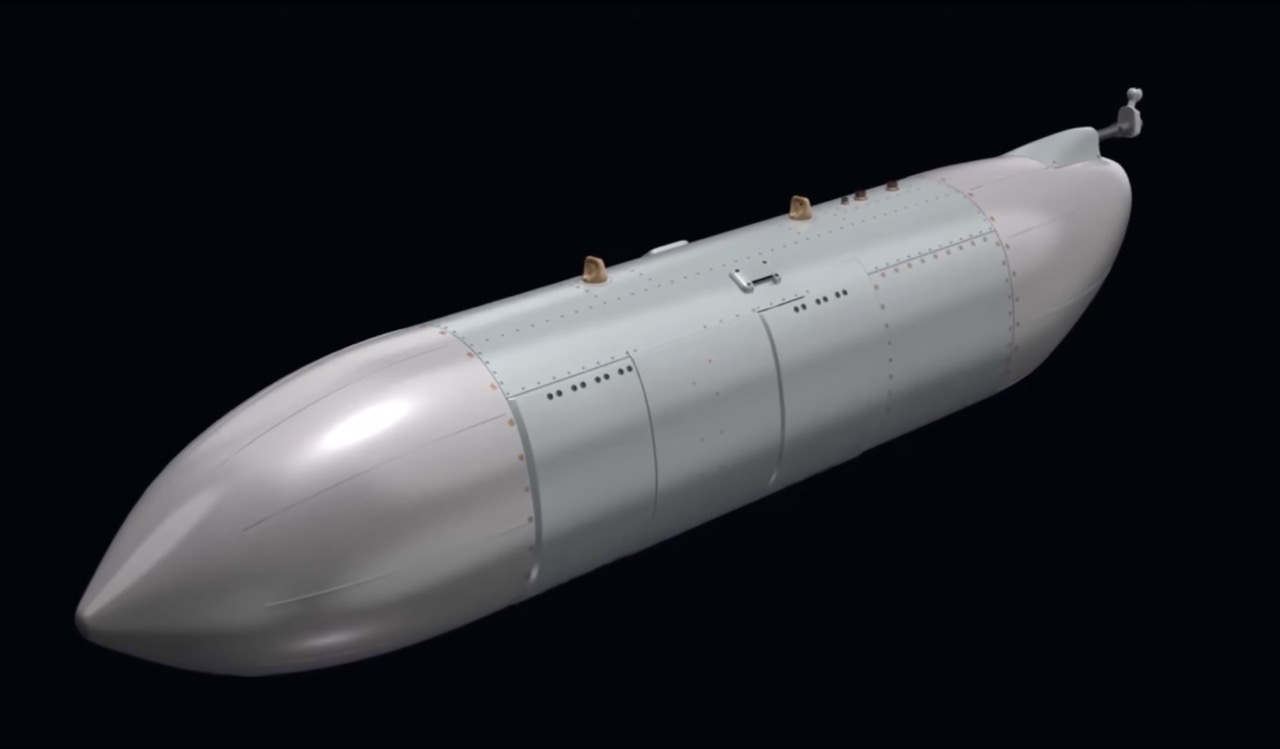
RAT: The turbine powering the pod—and saving the aircraft
Civil aviation certification is extremely rigorous regarding flight safety.
This is no different for an aircraft's electrical generation and distribution systems.
The FAA and EASA classify engine generators as active sources, the Auxiliary Power Unit (APU) as an active backup, and the Ram Air Turbine (RAT) as a passive backup.
The APU is a small gas turbine that operates independently of the aircraft's main engines.
The RAT, on the other hand, is a completely independent small wind turbine powered by the airflow generated by the aircraft's forward motion.
APUs and RATs are typically found on large aircraft.
For instance, the ATR72-600 has neither an APU nor a RAT.
Batteries are present on every aircraft.
Why is a RAT system needed?
So, why is a RAT necessary?
No single power source offers sufficient redundancy on its own.
Battery power is not limitless.
The APU can also fail or become unavailable.
A recent example occurred on March 4, 2026, when the RAT deployed on an American Airlines Airbus A321 following the loss of both generators.
Conversely, in military applications, this same technology may be utilized for purposes entirely different from—and for reasons far more demanding than—those in the civil sector.
When developing an AEW&C (Airborne Early Warning & Control) aircraft from a Boeing 737, a P-72 Maritime Patrol Aircraft from an ATR72-600, or an Airborne SOJ (Stand-Off Jammer) from a Bombardier Global 6000, the aircraft's existing electrical architecture may prove insufficient to meet the demands of high-power mission systems.
The first step taken is to upgrade the active power source—essentially installing a larger generator.
What if that isn't enough?
As seen with our Airborne SOJ aircraft, the emergency APU system is transformed into a continuous power source. Alternatively, one might even consider a dedicated generator for the mission system.
But the most interesting aspect is the use of a RAT.
RAT = Independence!
The AN/ALQ-99 is a US tactical electronic warfare system developed in the late 1960s for the EA-6B Prowler.
Later, advanced versions were used on the EA-18G Growler.
And all of them featured RAT generators.
Israel’s ELTA Scorpius-EJ also utilizes a RAT.
In short, they all generate their own electricity.
The US maintains this approach with the AN/ALQ-249 Next Generation Jammer (NGJ) program.
So, why?
Aircraft have fixed capacities.
Modifying them comes at a cost.
And it creates platform dependency.
For instance, the RAT provided 27 kW for the ALQ-99; for the NGJ, that figure is 140 kW!
However, the RAT is no miracle solution.
It doesn't provide free electricity; it increases drag and fuel consumption.
RAT performance fluctuates with changes in speed, altitude, and air density.
Icing is another issue.
It is a mechanical system, meaning it requires maintenance!
But the advantage is clear: Independence.
In 2025, a project titled "Development of a RAT-Based In-Pod Electric Power Supply" was conducted with the support of Gazi University and TUSAŞ.
The target was 50 kW.
The outcome?
Making pods as independent as possible from the aircraft could pave the way for more modular systems with reduced platform dependency.
Ultimately, how you generate power is just as important as the amount of power the pod delivers!
I believe our work will prove beneficial.
RAT: Uçağı kurtaran türbinden podu besleyen türbin - Tolga Özbek
Sivil havacılık sertifikasyonu, uçuş emniyeti açısından son derece katıdır.
RAT exists to meet the additional power requirements of early warning aircraft and electronic warfare aircraft.So the RAT jump ship first but never jump airplane.
I wonder for what end use TUSAŞ started that development job as the RAT system is for passenger planes and maybe for cargo planes too none of which TUSAŞ make and spares would be bought from foreign makers. They maybe wanting to replace the lesser power ones with more powerful ones to run additional systems in an emergency perhaps.
Block 30M, 40M and 50Ms now flying for 133 Claws. Beauty of CCIP, they are all same aircraft avionically.First Claw seen with a F-16D B40M. This aircraft used to fly under 132 Daggers, so we can indeed say 133 was born out of 132. I also now see the dagger the bird is holding on the first patch; must be a reference as well.
View attachment 82829

Let us not get ahead of ourselves.
 defencehub.live
As long as it works and is effective.Let us not get ahead of ourselves.
I have written about the bomb in question here before, which is dubbed as “hayalet”, in my previous post in below page Post number #10354
TF-X KAAN Fighter Jet
The joke went right over your head here I was expecting a serious and informed reply and not a joke Anyways i have models iwb of turkish jets with the global info But i was curious as in Wikipedia, the numbers are way to high , like it does not make sens that a 6.5 tonn anka 3 has 1.2-1.6...
Hayalet and gbu57 are very different bombs. GBU 57 is a monster bomb compared to Hayalet. What we have with hayalet is a poor man’s GBU-57.
I think the point here is that the GBU-57 has a tenfold weight compared to ours.Let us not get ahead of ourselves.
I have written about the bomb in question here before, which is dubbed as “hayalet”, in my previous post in below page Post number #10354
TF-X KAAN Fighter Jet
The joke went right over your head here I was expecting a serious and informed reply and not a joke Anyways i have models iwb of turkish jets with the global info But i was curious as in Wikipedia, the numbers are way to high , like it does not make sens that a 6.5 tonn anka 3 has 1.2-1.6...
Hayalet and gbu57 are very different bombs. GBU 57 is a monster bomb compared to Hayalet. What we have with hayalet is a poor man’s GBU-57.
Unless our bomb somehow defies the laws of physics, that is simply impossible.The point here is that two of them could match a 13-14 tonne GBU-57 in penetrating enemy bunkers.
After the shit they pulled in this years IDEF, I don't believe anything MSB Arge says mate.Let us not get ahead of ourselves.
I have written about the bomb in question here before, which is dubbed as “hayalet”, in my previous post in below page Post number #10354
TF-X KAAN Fighter Jet
The joke went right over your head here I was expecting a serious and informed reply and not a joke Anyways i have models iwb of turkish jets with the global info But i was curious as in Wikipedia, the numbers are way to high , like it does not make sens that a 6.5 tonn anka 3 has 1.2-1.6...
Hayalet and gbu57 are very different bombs. GBU 57 is a monster bomb compared to Hayalet. What we have with hayalet is a poor man’s GBU-57.
When a bunker buster bomb explodes underground in a “confined” space, the explosive force has 3 basic physical parameters.I think the point here is that the GBU-57 has a tenfold weight compared to ours.
The point here is that two of them could match a 13-14 tonne GBU-57 in penetrating enemy bunkers.

I didn't necessarily mean to the same effect. Merely penetration.Unless our bomb somehow defies the laws of physics, that is simply impossible.
After the shit they pulled in this years IDEF, I don't believe anything MSB Arge says mate.
AFAIK C-130 fleet was grounded after the accident last year. Did they return back to service? Will the be back if they didn't or will they be retired?


