• Forum restore complete (see latest announcement thread)

TR Air Forces|News & Discussion

Passenger

Contributor
Moderator
China Moderator
Messages
545
Reactions
17 973
Nation of residence
China
Nation of origin
China
Yes, they failed in Iran – at least the HQ9s – but this failure has less to do with the system itself and more to do with the networked integration within the system, that is, the integration of systems within a complete IADS through sensor fusion and all radar systems. Iran has not the the requirements and the technology needed to manage this.

Take the war in Ukraine: several S-300/S-400s were destroyed there, not because they are poor, but because they were operating as individual, isolated systems – and, of course, thanks to very good intelligence from the Americans.

The US is not angry alone because we have purchased S-400s, but also because we are able to integrate them seamlessly into an IADS – specifically via the HAKIM system, which functions as management software within the IADS. This gives the S-400 access to all radar systems in Turkey, even those of the ALP and EIRIS series, and conversely, the S-400’s radar can, based on priority, authorise a Hisar O+ to engage a target, which is controlled via HAKIM.


View attachment 79935
There are good reasons why it was included at first and then removed.

HAKIM acts as the ‘brain’ that translates different languages Protocols (Russian protocols for the S-400 and NATO standards for the rest of the infrastructure) into a unified tactical picture.
I still not find any evidence about Iran got HQ9s(FK-2000) system.
If they have, there should be some image from satellite(Dead or Alive) at least.
 

Khagan1923

Contributor
Messages
1,275
Reactions
25 5,392
Nation of residence
Germany
Nation of origin
Turkey
One of our ch-47 crashed during a training session.

Buy a way lower amount then the requirement set by TSK, have said low amount of critical assets work 24/7 even for non-essential duties, be suprised said assets gives up after years of being worked to death.

You can maintain a vehicle as good as you want, which age and usage said vehicle won't hold up.

We are seeing the same being done to our Naval Helicopter fleet, same is being done to our A400M fleet, same was done to our C-130 fleet.

We set out with a requirement of 20-25 A400M and the government bought 10 which are now being worked to death. Same for CH-47F, same for SH-70.

Thank god no one was seriously injured acc. to reports.

TSK needs ASAP new Helicopters for the Navy (SH-70 and even CH-53 for amphibious operations), more CH-47 for Land Forces/Air Force and more A400M/C-130J for the Air Force.

But of course none will actually happen.

Passing up the co-development offer from Brazil for the C-390 was such a idiotic decision.
 

Sanchez

Experienced member
Moderator
Think Tank Analyst
DefenceHub Diplomat
Messages
4,190
Reactions
127 19,047
Nation of residence
Turkey
Nation of origin
Turkey
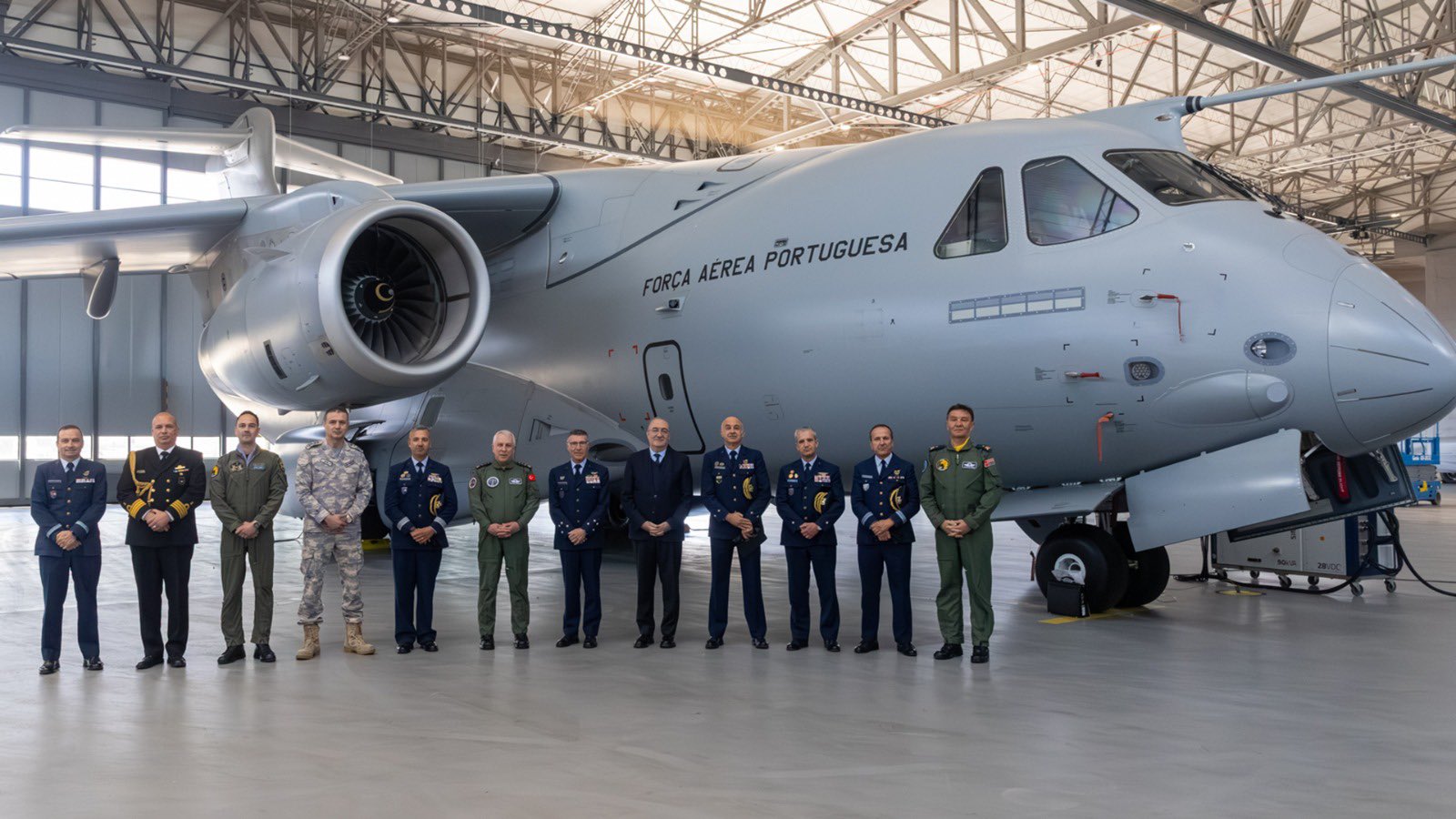
Air Force chief visited Portugal, was also briefed on a Portuguese KC-390. Portugal was the first export user of the type and the Embraer majority held OGMA is part of its production. Probably too early to talk about anything, but nice to see.
1778876110173.png


Pokemonte13

Contributor
Messages
1,178
Reactions
11 2,147
Nation of residence
Germany
Nation of origin
Turkey
Air Force chief visited Portugal, was also briefed on a Portuguese KC-390. Portugal was the first export user of the type and the Embraer majority held OGMA is part of its production. Probably too early to talk about anything, but nice to see.
View attachment 80527
Honestly best choice there is with the older c130 facing retirement in the coming decade and A400 being to expensive. Minimum 20 aircraft
 

dBSPL

Experienced member
Think Tank Analyst
DefenceHub Ambassador
Messages
2,871
Reactions
123 14,521
Nation of residence
Turkey
Nation of origin
Turkey
Leaving aside the recent debates surrounding the Embraer C-390, I believe that, with a longer-term perspective, a strategic gap that could completely change the rules of the game could be targeted: Boeing closed its C-17 Globemaster production line years ago, and currently, the Western world cannot purchase a brand-new "Heavy Strategic Transport Aircraft (60+ Tons)" capable of transporting, for example, main battle tanks in one piece over intercontinental ranges.

While the Airbus A400M is excellent at the tactical level, its 37-ton capacity attempts to meet the heavy logistics needs of modern armies. However, to close this enormous monopoly gap in the global market, I envision a brand-new "Big Brother" project that references the C-390's tactical jet cargo architecture, fly-by-wire and ramp engineering, but is redesigned with four engines and a wide body.

The only alternative bloc that could realize such a vision in the Western aviation world by breaking the Airbus and Boeing monopoly is a partnership between Türkiye, Brazil, and the UK. Türkiye and Brazil, sharing the industrial risk 40-40, could be the main engine of the project. While Brazil (Embraer) is bringing its aviation expertise to the table, Türkiye can integrate TUSAŞ's existing airframe design experience from the A400M consortium, its deepening aero-structural manufacturing capabilities with KAAN and HÜRJET, in addition to its civil market experience; and ASELSAN/HAVELSAN's avionics and mission computer capabilities. The UK, meanwhile, can adapt Rolls-Royce's proven Trent series civil wide-body engines to military standards, providing the 40,000+ lbf thrust per engine required for the aircraft, as well as system engineering consultancy. Furthermore, a "launch customer" order of 14-20 aircraft from the Turkish Armed Forces (TSK), expanding its overseas operational footprint, could provide the initial financial impetus for this project.

On the civilian aviation side, the withdrawal of massive industrial cargo aircraft like the Antonov An-124 and Il-76 from the global market after the Russia-Ukraine war has created a serious shortage of oversized cargo aircraft in civil logistics. A "Civil Freighter" version of this aircraft, stripped of military systems, could quickly find its place in the fleets of global giants like Turkish Cargo. This "dual-use" platform, achievable with an R&D budget of approximately 8-10 billion dollars and a realistic 10-year timeline, would both transform the Turkish Armed Forces into a global logistics power and elevate our defense industry to the world's top league.

Could the idea of a tripartite alliance to fill this strategic void, desperately sought by the Western world, Western aviation-related markets, and armed forces, be realized without being hampered by geopolitical obstacles... This is truly one of the dreams that has been on my mind for some time.
 
Last edited:

Khagan1923

Contributor
Messages
1,275
Reactions
25 5,392
Nation of residence
Germany
Nation of origin
Turkey
Apart from air force chief's visit to Portugal last month, nothing.
I wouldn't expect any news on any possible procurement until NATO Summit has concluded. Either we will hear and read about a massive purchase from the Americans (KC-46A, C-130J, F-16, F110 and so on) or we will hear the same phrases we have heard for the last 3-4 years now regarding all this.

If the latter happens I would expect headway to be made on things like C-390, possibly more A400M and A330 MRTT+ in the near future.
 

Pokemonte13

Contributor
Messages
1,178
Reactions
11 2,147
Nation of residence
Germany
Nation of origin
Turkey
I wouldn't expect any news on any possible procurement until NATO Summit has concluded. Either we will hear and read about a massive purchase from the Americans (KC-46A, C-130J, F-16, F110 and so on) or we will hear the same phrases we have heard for the last 3-4 years now regarding all this.

If the latter happens I would expect headway to be made on things like C-390, possibly more A400M and A330 MRTT+ in the near future.
new c130j are not happening as c390 are better and almost cost the same. More A400m are also unlikely simply because they are to expensive to buy and maintain its really about C390 and which tanker the airforce chooses (KC46 or A330). F16 purchase is currently on hold because LM prices are off the charts and not to mention all new purchases have to through congress.
 

Sanchez

Experienced member
Moderator
Think Tank Analyst
DefenceHub Diplomat
Messages
4,190
Reactions
127 19,047
Nation of residence
Turkey
Nation of origin
Turkey
F16 purchase is currently on hold because LM prices are off the charts and not to mention all new purchases have to through congress.
A 20+bn F-16 sale already cleared the congress years ago.
 

Sanchez

Experienced member
Moderator
Think Tank Analyst
DefenceHub Diplomat
Messages
4,190
Reactions
127 19,047
Nation of residence
Turkey
Nation of origin
Turkey
new c130j are not happening as c390 are better and almost cost the same
Greece will pay 600 million euros for 3 C-390s and a "first logistical package" by the way. C-390 is more expensive and if we ordered fresh built C-130Js we would have commonality with ex-RAF C-130s.
 

Fairon

Contributor
Messages
511
Reactions
6 1,278
Nation of residence
Turkey
Nation of origin
Turkey
Greece will pay 600 million euros for 3 C-390s and a "first logistical package" by the way. C-390 is more expensive and if we ordered fresh built C-130Js we would have commonality with ex-RAF C-130s.

Speaking of which, any news on the C-130Js?

They were getting overhaul but is there any update on that?
 

Sanchez

Experienced member
Moderator
Think Tank Analyst
DefenceHub Diplomat
Messages
4,190
Reactions
127 19,047
Nation of residence
Turkey
Nation of origin
Turkey
Speaking of which, any news on the C-130Js?

They were getting overhaul but is there any update on that?
They were getting overhauled, I believe they would have a wingbox change as well and we know that few months ago TurAF technicians flew to UK for training. No timeline is provided, but work is being done concurrently on the airframes. We should remember that wingbox replacement is a very very arduous task, it's the spine replacement equivalent for an aircraft, very labor intensive, can take up to a year to complete. Marshall on their website claim that the process currently takes 10 months.

Deal was signed in October 2025, I'd expect the first or first two aircraft reaching Konya no earlier than Q4 2026, more realistically Q1-2 2027. We reallyyy need to sort out C-130B-Es.
 

mTT

Contributor
Messages
966
Reactions
13 2,796
Nation of residence
Turkey
Nation of origin
Turkey
Çiğli AFB, 2.th AJÜ along with Air Training Command and Air Technical Schools Command to be moved to Manisa Akhisar. Weird thing is the news being broken by the AKP's district mayor. Strategy wise, probably a safer location.


Ministry of National Defence:
"Reports in the press stating that the 2nd Main Jet Base Command and Flight School, based in Çiğli, İzmir, are to be relocated to the Akhisar district of Manisa are incorrect. Work is continuing to enhance the capabilities of the Akhisar Airfield Command in Manisa and utilise them more effectively in line with growing requirements. This is respectfully announced to the public."


Sanchez

Experienced member
Moderator
Think Tank Analyst
DefenceHub Diplomat
Messages
4,190
Reactions
127 19,047
Nation of residence
Turkey
Nation of origin
Turkey
So Akhisar will also be announced as an AJÜ like Dalaman before it and there will be a transfer of some capability there, but not clear if command structure will be carried over just yet. That's probably because it will be, but it's not yet officially announced. Most fun thinbg is, I think we now have more AJÜs than we have fighter squadrons. Not very nice. I'd like to learn more about the reasoning behind turning all secondary bases to AJÜs.
 
Last edited:

Yasar_TR

Experienced member
Staff member
Administrator
Messages
4,277
Reactions
263 22,333
Nation of residence
United Kingdom
Nation of origin
Turkey
Greece will pay 600 million euros for 3 C-390s and a "first logistical package" by the way. C-390 is more expensive and if we ordered fresh built C-130Js we would have commonality with ex-RAF C-130s.

2.2 billion, inflation corrected for today means 2.5billion. That is 210million per C130J.


Australia pays 6.6 billion for 20 C130Js in 2023. That is 330 million dollars without inflation corrected.

It has a lot to do with what you add as extra to the order sheet.
But it all depends on which plane is best suited to our needs.

In 2023 Austria bought four C-390 planes each costing 130million.
India were offered 80million a piece for 60 C390s December 2025.
Only last month UAE signed a contract for 700million dollars for 10 C-390planes.


Figures put Embraer to be cheaper than C130Js.
 

dBSPL

Experienced member
Think Tank Analyst
DefenceHub Ambassador
Messages
2,871
Reactions
123 14,521
Nation of residence
Turkey
Nation of origin
Turkey
Procurement cost comparisons in this space tend to conflate package values with airframe prices. Full programme figures routinely bundle simulators, initial spare parts pools, training pipelines and multi-year support contracts, making raw per-unit extrapolations misleading. The cleaner reference remains Austria's confirmed band of €130-150M per airframe, which places the C-390 and C-130J in a narrower acquisition band than is often assumed.

Where the C-390's structural case becomes genuinely compelling is not at the point of purchase but across the operating cost envelope. Cost per flight hour, CPFH, and lifecycle maintenance burden tell a different story: two V2500 turbofans drawing on a deep commercial MRO ecosystem versus four AE2100D turboprops on a purely military supply chain is a meaningful structural difference over a 30-year fleet life. The honest caveat is that independent, verified CPFH data for the C-390 doesn't yet exist at scale. Embraer's own case studies point in the right direction, but we're still in the early innings of building an operational evidence base.

(...)
Passing up the co-development offer from Brazil for the C-390 was such a idiotic decision.

Khagan1923 is right on the substance, even if the framing understates how consequential the decision actually was. The missed window wasn't just about getting a cheaper airframe. When Türkiye was at the table as a potential co-development partner, Embraer needed anchor customers and industrial credibility. That leverage doesn't exist anymore in the same form.

There is, however, one window that hasn't fully closed. The co-development opportunity is no longer what it was, Embraer now enters any partnership conversation from a position of genuine commercial strength, with a growing NATO customer base and an order book that has removed much of the early-programme risk it once carried. That changes the terms of engagement. But the doctrine-shaping customer role is still available, and it is a different kind of leverage.

Every C-390 operator so far, Portugal, the Netherlands, Hungary, Austria, South Korea, Sweden, has procured the platform for standard airlift requirements. Nobody has yet brought a serious SOF integration package, an electronic mission variant requirement, or a MALE support platform concept to Embraer with the fleet volume to back it up. That kind of customer generates a fundamentally different conversation with the manufacturer than a three-airframe order does.

Türkiye, when it eventually enters a C-390 procurement, will not be a single-digit buyer. A TurAF order at meaningful scale, paired with operationally specific requirements drawn from its actual doctrine, gives it something no current C-390 operator has offered: the combination of volume and mission depth that pushes a manufacturer toward variants it wouldn't otherwise prioritise.

That is where the broader strategic question connects. A large, doctrinally demanding customer doesn't just buy an aircraft, it shapes the platform's development trajectory. Push that logic far enough and you arrive at a different category of conversation entirely: not medium tactical airlift, but potentially even the heavy strategic transport gap that no Western programme is currently addressing. That is the thread worth pulling on, and it is one I outlined earlier in this discussion.
 
Top Bottom