
As noted earlier; first two C-130Js to be delivered in late Q4 2026.They were getting overhauled, I believe they would have a wingbox change as well and we know that few months ago TurAF technicians flew to UK for training. No timeline is provided, but work is being done concurrently on the airframes. We should remember that wingbox replacement is a very very arduous task, it's the spine replacement equivalent for an aircraft, very labor intensive, can take up to a year to complete. Marshall on their website claim that the process currently takes 10 months.
Deal was signed in October 2025, I'd expect the first or first two aircraft reaching Konya no earlier than Q4 2026, more realistically Q1-2 2027. We reallyyy need to sort out C-130B-Es.

Latest Thread
- Bangladesh Opinion Bangladesh’s intelligence challenge
- Iran’s Long Game in Türkiye: From Political Islam to the Post-Erdoğan Era
- Open-source AI for exploiting cyber vulnerabilities
- Engineering Atomic Machines: Matter Compiler
- Breaking News Turkish and Greek defence officials meet for "Confidence Building Measures"
You are using an out of date browser. It may not display this or other websites correctly.
You should upgrade or use an alternative browser.
You should upgrade or use an alternative browser.

We need to hear some big news regarding the logistics fleet. We're losing time. While 12 C-130J aircraft are a significant acquisition, even the average citizen knows it's not enough. In fact, considering the current state of the C-130s, it could be argued that additional second-hand 130-J-30s, if available, or even some additional orders from the production line, which is operating at high capacity, are needed.
While the C-130Js are undergoing line maintenance, steps could have been taken to procure C27Js, which are Jr. Hercules-like and share the same engines and avionics; especially considering with that it's currently one of the tactical airlifter with the lowest crowd order book. This would have allowed the light-to-medium transport fleet to evolve into a more heavier and robust combat airlifter/frontline aircraft in the long term. Furthermore, the surplus of 7 A400Ms that Spain will receive between 2028-2030 presents a window of opportunity that we must constantly emphasize. There is no more valuable option within the same delivery schedule. And there's the issue of the tanker-cargo (KC) fleet, although it's not discussed much. The A330MRTT, through the conversion of civilian aircraft, could offer a more cost-effective and efficient delivery plan compared to the Boeing option.
I must state clearly that without fully improving the posture of the Air Force's logistics support fleets, we will remain incomplete in fully reflecting our deterrent capability on the field.
While the C-130Js are undergoing line maintenance, steps could have been taken to procure C27Js, which are Jr. Hercules-like and share the same engines and avionics; especially considering with that it's currently one of the tactical airlifter with the lowest crowd order book. This would have allowed the light-to-medium transport fleet to evolve into a more heavier and robust combat airlifter/frontline aircraft in the long term. Furthermore, the surplus of 7 A400Ms that Spain will receive between 2028-2030 presents a window of opportunity that we must constantly emphasize. There is no more valuable option within the same delivery schedule. And there's the issue of the tanker-cargo (KC) fleet, although it's not discussed much. The A330MRTT, through the conversion of civilian aircraft, could offer a more cost-effective and efficient delivery plan compared to the Boeing option.
I must state clearly that without fully improving the posture of the Air Force's logistics support fleets, we will remain incomplete in fully reflecting our deterrent capability on the field.
Last edited:
Akbaba claims Turkey is now looking to buy the entire EF stocks of Qatar and Oman, which would be 36 aircraft apart from the 20+20 new builds and 40 F-16Vs are back on the menu.

YeşilVatan
Contributor
You know what, this actually makes sense. EF is not optimized for threats from Iran, which is what they actually have to prepare for. They might need something like a Korkut + Hisar + Radars + ISR. The only thing they would actually need and we don't have is anti ballistic missile capability. Which is not that big of a problem because they don't have a realistic alternative as US and Israel will be busy with restocking their own inventory for a long while.Akbaba claims Turkey is now looking to buy the entire EF stocks of Qatar and Oman, which would be 36 aircraft apart from the 20+20 new builds and 40 F-16Vs are back on the menu.
Akbaba claims Turkey is now looking to buy the entire EF stocks of Qatar and Oman, which would be 36 aircraft apart from the 20+20 new builds and 40 F-16Vs are back on the menu.
So;
1. Manned Fighter / Combat Aircraft Fleet
- F-16 Block 70 (Viper): 40 Units
- TUSAŞ ÖZGÜR Program :
- F-16 Block 30 (ÖZGÜR-I/II): 35 Units
- F-16 Block 40 (ÖZGÜR-II): 103 Units
- F-16 Block 50 (ÖZGÜR-II): 27 Units
- F-16 Block 50+ Advanced (ÖZGÜR-II): 29 Units
*Note: Total Long-Range Fleet (CFT-equipped): 69 Units (40 New Block 70 + 29 Modernized Block 50+)
- Eurofighter Typhoon:
- Tranche 3A (Second-Hand): 36 Units (Planned procurement of all 24 Qatari + 12 Omani to be modernized in the UK)
- Tranche 4 (New Production): 20 Units (Brand new production aircraft to come directly from the UK)
- HÜRJET LCA (Light Combat Aircraft): At least 2 squadrons (~40 Units) (Reasonable projection for Close Air Support and MUM-T operations)
- KAAN (Next Gen National Combat Aircraft): At least 2 squadrons (~40 Units) (Based on the secured inventory of US-sourced F110 engines for early production blocks)
- Bayraktar KIZILELMA: ~60 Units (Land-based operational fleet for the Air Force. Projected based on Baykar's target of 30-40 annual production capacity post-2028, allocating 50% for export markets)
- TUSAŞ ANKA-III: ~50 Units (Special Missions, Deep Strike and SEAD/DEAD role. Projected based on TUSAŞ's expectations for an initial official procurement package of over 50 units for the Air Force)
***
The Turkish Air Force currently operates 11 active tactical fighter squadrons, housing roughly 240 combat aircraft. However, the projected interim inventory compiled in this list reaches 370 manned jets. Dividing this future fleet by the standard size of 20 aircraft per squadron reveals that Air Force will operate at least 18 manned squadrons, just before starting deliveries of the indigenous engined KAANs. This shift indicates that the air force is not executing a simple one-to-one replacement, but is preparing to activate at least 6 to 7 entirely new fighter squadrons to absorb the massive influx of F-16 Viper, Eurofighter, and HÜRJET platforms.
This high-volume interim expansion could serves a deeper strategic purpose: building the necessary organizational infrastructure, pilot pool, and network-centric command structures for the future. The dense mixture of Generation 4+ and 4.5 platforms is a transitional bridge. As older F-16 blocks and interim Eurofighters complete their operational lifespans, this expanded infrastructure will directly support the air force's ultimate transition to a fully standardized, low-observable fleet.
Ultimately, this structural growth provides a clear perspective on Air Force's long-term procurement goals for its 5th-generation fighter, KAAN. Sustaining a baseline of 18 to 20 manned squadrons means that once interim aircraft are retired, they will be replaced by next-generation platforms. Therefore, this current buildup signals that Turkiye's final roadmap aims to operate a permanent frontline force of at least 250 KAAN or subsequent variant aircrafts, seamlessly integrated with hundreds of stealth unmanned systems like KIZILELMA and ANKA families.
Last edited:

MonteCarlo
Committed member
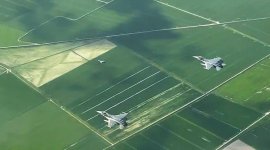
2 f-16's in a formation flight with an f-16 decoy Süper Şimşek
Attachments
-
 HMYTOjXWUAIqKqj.jpg48.5 KB · Views: 169


Turkish Air Force Inducts Roketsan's SOM-B1T Cruise Missile
Türkiye's SOM-B1T enters Turkish Air Force service with Kale's KTJ-3200 turbojet, ending the cruise missile's dependence on a French engine.
 share.google
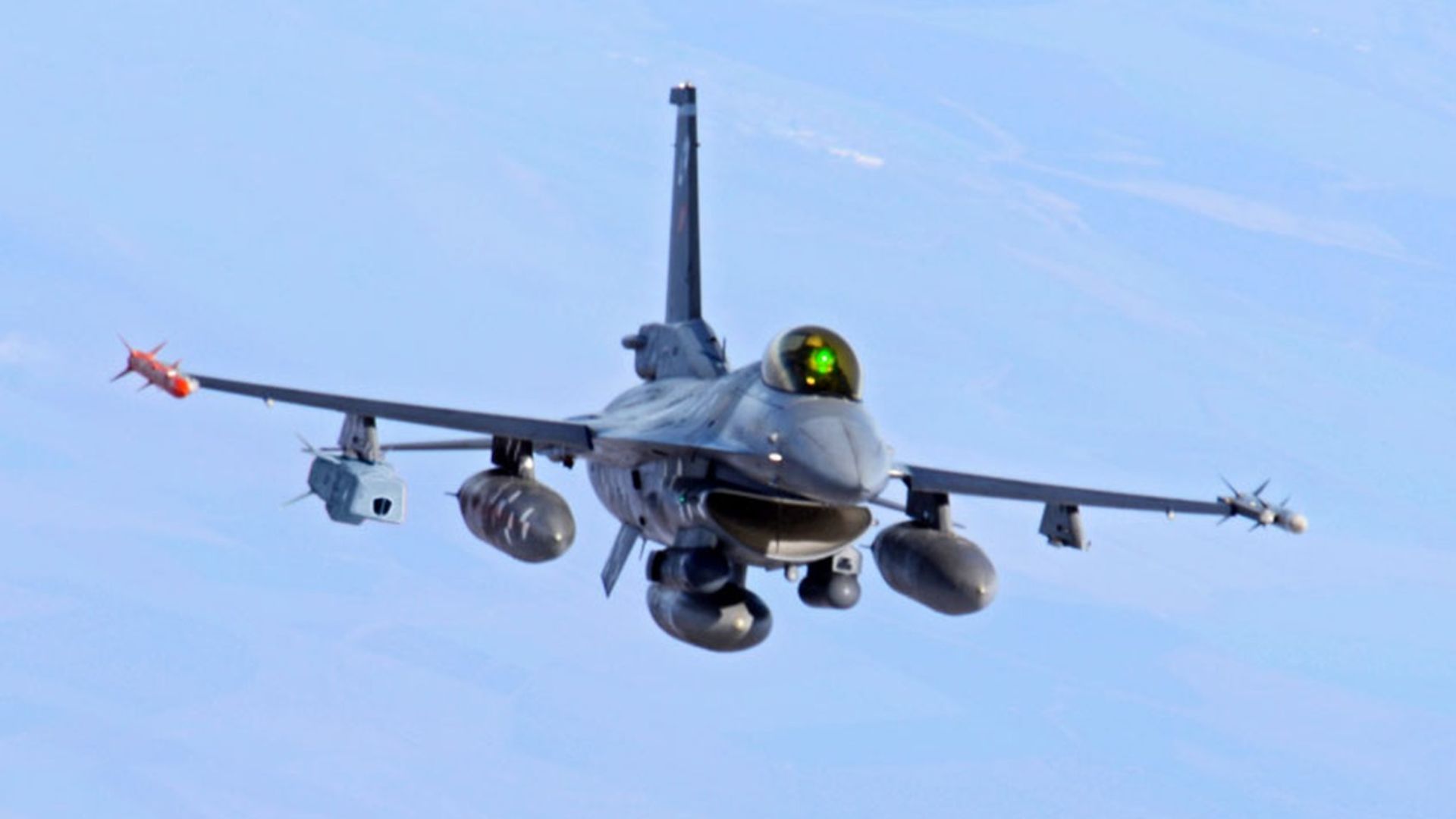
Turkiye AF integrates cruise missiles on F-16s

Pokemonte13
Contributor

Noting new just qualification process
"The aircraft are undergoing comprehensive maintenance and inspection work at Marshall Aerospace’s facilities in Cambridge before being delivered in a baseline configuration that will allow Türkiye to integrate its own mission systems.As noted earlier; first two C-130Js to be delivered in late Q4 2026.
Deliveries are expected to take place over three to four years, with the first aircraft planned to arrive by the end of 2026.
The C-130J-30 is the stretched-fuselage variant of the C-130J. Its fuselage is approximately 4.6 metres longer than that of the baseline aircraft, increasing cargo volume and providing space for additional pallets, personnel or mission equipment...
TurDef has learned that some of the aircraft underwent centre wing box replacement after their retirement from RAF service. Those still requiring the procedure will receive new centre wing boxes as part of the programme for Türkiye.
The condition of the centre wing box will determine much of the work required on each aircraft and the duration of its maintenance. As a result, a standard turnaround time cannot be established for every airframe.
The aircraft will therefore enter Turkish service either with centre wing boxes installed under the current programme or with structures replaced after their retirement from RAF service. In both cases, the work is intended to provide the structural life required for their planned service with the Turkish Air Force...
RAF-specific mission equipment, cryptographic devices and other sovereign systems will be decommissioned and removed before delivery. This does not mean that the aircraft will be stripped of their core C-130J avionics. Instead, they will be returned to a baseline configuration suitable for the integration of Turkish equipment..."

New Details on Ex-RAF C-130J-30s for Turkish Air Force | TURDEF
Türkiye’s 12 ex-RAF C-130J-30s are undergoing deep maintenance, centre wing box work and configuration changes ahead of delivery to the Turkish Air Force.
 turdef.com
Finally some updates on this front.
Company in question is Marshall Aerospace based in UK, most probably. All 15 aircraft were being kept near their hangar since 2023:
Now my question is, what will the transfer really entail; there are some really nice specimens in the ex-RAF fleet, like the C-130J4 RAF 47 SQN used for special forces missions, equipped with AN/AAQ-24 DIRCM. Being an American system, it is possible that this might be removed if the said aircraft is one of the ones to be transferred. Most aircraft are also equipped with American MWRs as well, which air force would probably would like to change with Aselsan ones.
Well after the program is concluded and aircraft are delivered to TurAF, there'll be work to do.
Pointing to above post from last year. Looks like the DIRCM that was on some of the aircraft will also be removed.
Looks like the old 133 "Claw" was brought back to life as well. They used to fly F-5s and it was disbanded in 2013. The "132" detail on the first patch makes me think they will possibly be another tactics and training squadron like the 132?It's not a new squadron per se. It was formed last year from aircraft and crews being sent over to Dalaman, some of them were 401 squadron aircraft, but probably not all.

Gök vatanın "demir kartalları" yeni yıla nöbette giriyor
Türkiye Cumhuriyeti'nin hava yetki alanlarının teminatı Hava Kuvvetleri Komutanlığı personeli, yeni yıla ailelerinden uzak, komutanları ve silah arkadaşlarıyla girdi. - Anadolu Ajansıwww.aa.com.tr
Brings the new total to 10 squadrons, if we count 113. There were some talks about it for some time, but it's nice to finally put a face on it. Newest fighter squadron of the air force, 166 'Uçbey', based in 16th jet base in Dalaman finally have a patch.
HvKK lowered the number of squadrons since 2011 for multiple reasons. First was to get ready for F-35s, but major reason was the loss of personell after 2016 coup attempt. It's nice to see some return to normalcy.
View attachment 75038
To go over fighter squadrons, I count 111 Panthers operating F-4s, 113, 132, 151, 161, 181, 191, 193, 152 and now 166 operating F-16s. Orko's ekşisözlük entry where he actively follows HVKK organization with OSINT data since 2005 is probably the best source to follow changes.
Funfact, with 133 being returned back to life, we now have a full house at Konya 131 through 138. Only 132 and 133 are fighter squadrons, but fun still.
Last edited:
Updating this with 113, 132, 133, 151, 161, 162, 181, 191, 192, 193, 152 and 166 for F-16 squadrons. 193 usually acts as a transition unit for future F-16 pilots but they undertake combat ops as well.To go over fighter squadrons, I count 111 Panthers operating F-4s, 113, 132, 151, 161, 181, 191, 193, 152 and now 166 operating F-16s. Orko's ekşisözlük entry where he actively follows HVKK organization with OSINT data since 2005 is probably the best source to follow changes.
In the last 2 years, 162, 192, 166 and now 133 were revived/formed, bringing the total to 12 squadrons if I count right. Manpower issues are being sorted out; now we need more planes as some of these squadrons share a fighter pool. That nearly all F-16s underwent CCIP and share the same avionics across blocks is a godsend; they are basically plug and play.
Last edited:
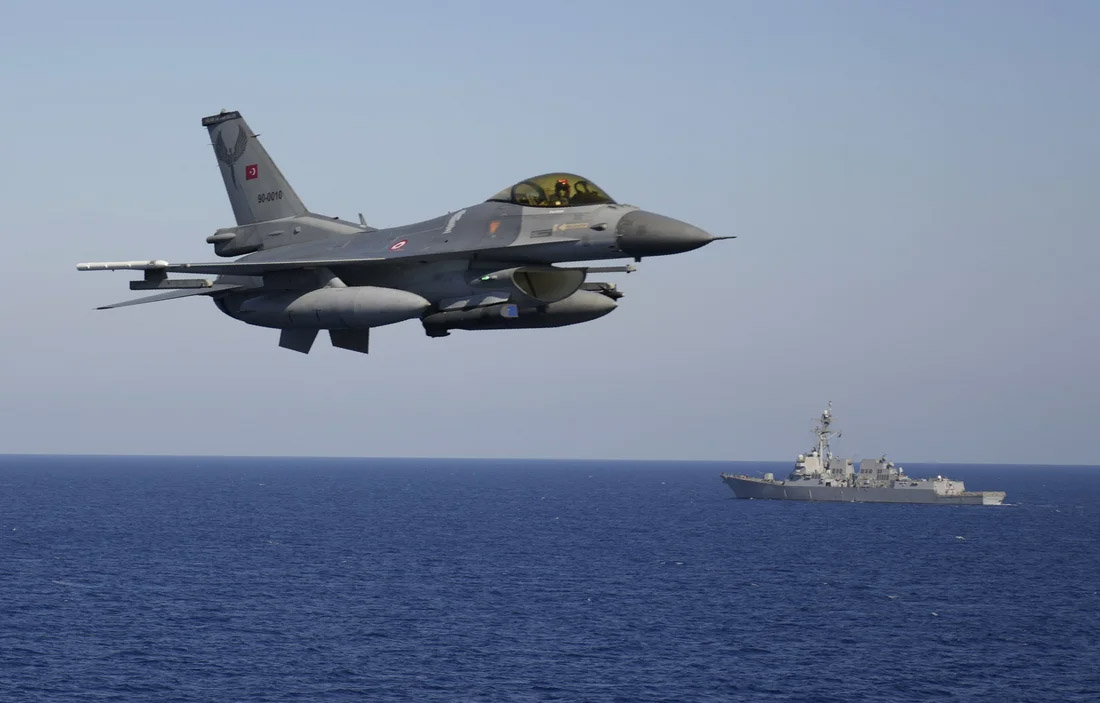
Turkish F-16 exercises increase over Cyprus airspace
Turkish F-16 fighter jets have been flying over Cyprus with increasing frequency, with residents reporting sightings and hearing the aircraft over Nicosia on Tuesday. The aircraft are understood to have taken off from Tymbou airport in the north before flying towards the Pentadaktylos range and...
 share.google

Supply chain problems will delay deliveries for everyone.
We are best served when our small turbofan engines are made in quantities and free from foreign supply chains as soon as possible. Just like how it was with the TS1400 engine we should be looking for 100% accessible/local materials rather than the highest performance. High performance can come when it can. This would be the same for the large engines too. Those engines should be made in several different generations. Reliable but lower performing first generation can serve initial needs and exports. A second generation with additional higher grade materials can be the upgraded new capability engine. And the highest performing but limited quantity engines reflecting the frontier technologies we can afford.
We make what we can make sure we can make.
We are best served when our small turbofan engines are made in quantities and free from foreign supply chains as soon as possible. Just like how it was with the TS1400 engine we should be looking for 100% accessible/local materials rather than the highest performance. High performance can come when it can. This would be the same for the large engines too. Those engines should be made in several different generations. Reliable but lower performing first generation can serve initial needs and exports. A second generation with additional higher grade materials can be the upgraded new capability engine. And the highest performing but limited quantity engines reflecting the frontier technologies we can afford.
We make what we can make sure we can make.
Strange US supply chains are among the best
This one has smaller fooprint, probably electric powered and more convenient, as an option.So why do we need this if we already have Seyit Onbaşı?
2021
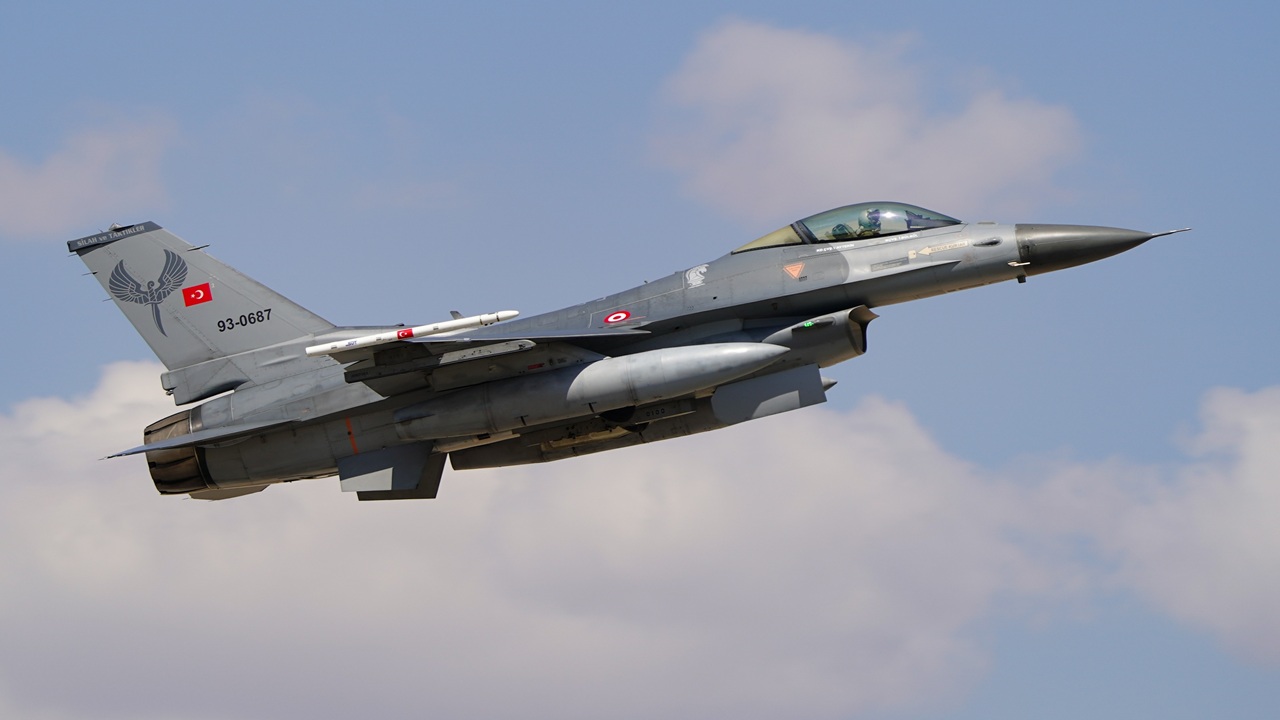
Turkish F-16s Are Now Defending the Baltic
NATO recently upgraded its “Baltic Air Policing” mission to “Baltic Air Defense,” with substantive changes in how its pilots are allowed to engage hostile targets.
 share.google
Earlier this month, a pair of Turkish Air Force F-16 Fighting Falcon single-engine multirole fighters took part in a mission from Amari Air Base in Estonia to shoot down a Russian drone that crossed into the Baltic nation’s airspace. That sortie followed another, in which the Turkish F-16s were joined by two Italian Air Force Eurofighter Typhoons operating from Siauliai Air Base in Lithuania, which also identified a suspected Russian drone that crossed into Latvian airspace.
These activities were coordinated from the NATO Combined Air Operations Center (CAOC) in Uedem, Germany, and from Allied Command at Ramstein Air Base, Germany. It is part of a transition from the NATO “Baltic Air Policing” (BAP) mission to the “Baltic Air Defense” (BAD) mission, which is more expansive.


You still alive bro?We had some in Poland too. Is this the replacement or in addition to the other mission?


