Highlights:
- CPA, DP World sign 15-year concession agreement
- DP World will operate, maintain, and modernise NCT
- Agreement includes around Tk600 crore upfront payment
- DP World to invest Tk1,000 crore over 10 years
- CPA to receive revenue share and annual fees
- NCT guarantees minimum annual volume of 1.23m TEUs
- Full-fledged DP World operations expected within two years
The Chittagong Port Authority (CPA) and global port operator DP World today (8 October) signed a 15-year concession agreement to operate and modernise the New Mooring Container Terminal (NCT) and its Overflow Container Yard, bringing one of the world's largest port operators into Bangladesh's main container terminal.
CPA Chairman Rear Admiral Md Moniruzzaman and DP World Chairman Essa Kazim signed the agreement at the Invest Bangladesh auditorium in Dhaka in the presence of Shipping Minister Shaikh Rabiul Alam, State Minister for Shipping Md Rajib Ahsan, and UAE Ambassador to Bangladesh Abdulla Ali Al Hamoudi, among others.
Essa Kazim also led a delegation at a meeting with Prime Minister Tarique Rahman today to discuss expanding trade and investment between Bangladesh and DP World.
Tarique sought an update on DP World's interest in establishing free trade zones and rail-based inland container depots in Bangladesh, as well as making new investments in the country.
NCT handled about 13.85 lakh TEUs last fiscal year, accounting for roughly 44% of Chattogram Port's total container handling.
Under the concession, DP World will operate, maintain and modernise NCT, while the CPA will retain ownership of the terminal, land and infrastructure, as well as regulatory oversight and overall control.
The government has highlighted around $150 million in investment and other commitments over 15 years, higher CPA revenue, modern equipment, automation and faster cargo handling as key benefits.
However, the full concession agreement has not been made public, including detailed investment obligations, performance benchmarks, revenue-sharing terms, worker protections, maintenance requirements and termination conditions, raising questions over how key commitments will be measured and enforced.
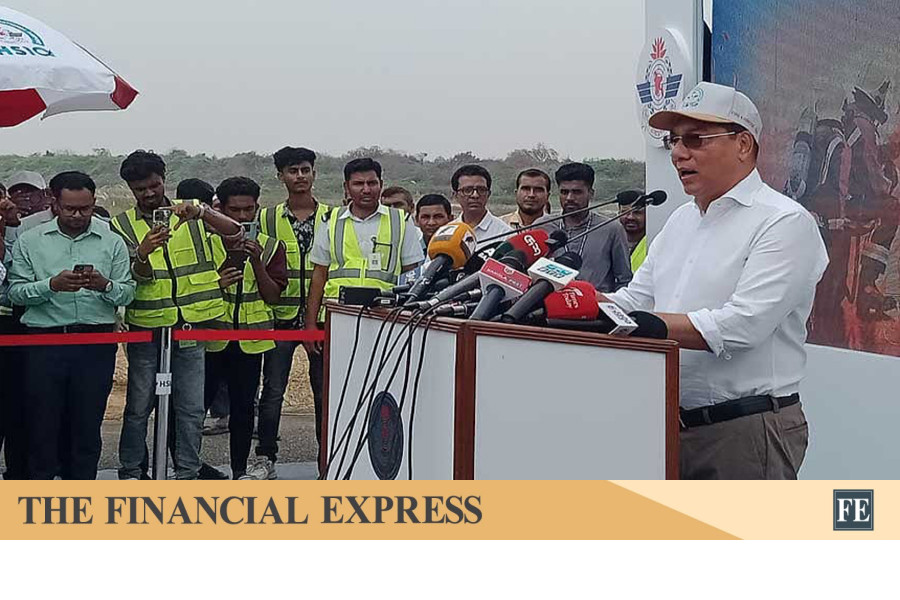
Rabiul Alam said DP World would start work within six months of signing and begin full-fledged operations within two years.
Investment and returns
DP World will make an upfront payment of around Tk600 crore to CPA, with 25% payable upon signing and 75% before operations begin.
It will invest more than Tk1,000 crore in the first 10 years, while the broader package includes about $150 million in investment and other commitments, including around $90 million for equipment, technology and upgrades.
CPA earned Tk6,629 crore in FY26 by handling 3.52 million TEUs. NCT's 44% share of container handling translates to an estimated Tk2,917 crore at CPA's average revenue per TEU, though this is not a reported NCT revenue figure.
Workers' leaders have questioned whether the investment adequately reflects the value and earning capacity of an already-developed and profitable terminal. They argue Bangladesh could forgo substantial future earnings by handing its operation to a foreign company for 15 years.
The government says DP World will bear the operational, investment and maintenance risks, including equipment repair costs. Rabiul said the agreement includes financial penalties if contractual targets are not met.
CPA will receive 67% of the terminal's revenue from each TEU handled, plus a fixed annual fee of about Tk10 crore. Based on an estimated average revenue of $140-$150 per TEU, CPA's share would be roughly $93-$100 per TEU.
The concession carries a minimum annual volume guarantee of 1.23 million TEUs, reducible to 1 million once a new terminal becomes operational. But the precise revenue-sharing formula, including covered income streams and allowable deductions, has not been publicly disclosed.
A terminal under pressure
Chattogram/NCT ranks 364th in the Container Port Performance Index 2025, with containers staying an average 9.4 days and ships 2.53 days.
Oman's Port of Salalah keeps both below a day, while Vietnam's Cai Mep limits container dwells to 2-3 days and vessels stay for about a day. Singapore's PSA keeps containers under a day, while India's Jawaharlal Nehru Port records vessel stays of 22.6 hours and containers dwell below two days.
Invest Bangladesh estimates port inefficiencies cost the economy around Tk3,000 crore annually, while World Bank data cited by it suggests cutting dwell time by one day could boost exports by 7.4%.
DP World is expected to address these gaps through modern scanning, upgraded or replacement cranes, automation and paperless operations. The government targets truck turnaround of around 90 minutes, improved crane productivity from the second year and zero vessel waiting time at NCT.
The operator uses similar systems in India, Pakistan, Thailand and the Philippines, including electric cranes, green energy, automated gates and electric transfer vehicles. In Manila, a $100 million investment raised annual capacity from 1.45 million to nearly 2 million TEUs.
Rabiul said DP World is one of the world's top five container terminal operators, running around 80 terminals in nearly 70 countries. APM Terminals, another top-five operator, has already been brought into Laldia Terminal, while talks are underway with Singapore's PSA.
Kazim said DP World also sees scope to invest up to $1 billion in Bay Terminal, rail terminals, logistics parks and free zones, while supporting Bangladesh Single Window and improved rail connectivity, subject to government priorities.
Workers and oversight
The government says existing NCT workers will retain their jobs, wages and benefits, with expanded training and career-development opportunities. It expects technology and skills transfer in automation, equipment management, safety and cargo handling.
Workers' leaders, however, have raised concerns over job security, transparency and foreign control of a strategically important facility. They question why an already-profitable terminal should be handed to a foreign operator for 15 years and whether the investment commitments adequately reflect an asset developed and owned by Bangladesh.
Automation could also alter some jobs, making retraining and technology transfer important.
CPA's ownership will only provide effective oversight if it can enforce performance standards, independently verify revenue, monitor investment and maintenance and impose penalties for breaches.
Maintenance and replacement requirements will determine the condition of equipment and infrastructure returned to CPA after 15 years, while termination provisions will matter if commitments are repeatedly missed.
From approval to signing
The process began with in-principle approval from the Cabinet Committee on Economic Affairs on 23 March 2023. The transaction structure was approved on 20 October 2025, followed by the RFP on 8 January 2026 and bids on 25 January.
Negotiations continued until 6 August, before CPA Board approval on 16 September and Cabinet Committee approval on 1 October.
Essa Kazim said DP World's approach would focus on "continuity, Bangladesh's long-term objectives and the capabilities of its workforce".
Over the 15-year concession, key measures will include actual investment, CPA's realised revenue, container dwell time, vessel and truck turnaround, crane productivity, worker retention and training, equipment condition, and the cost and predictability of cargo movement.
DP World will invest more than Tk1,000 crore during the first 10 years to modernise the terminal through new equipment, technology, and operational improvements.

www.tbsnews.net
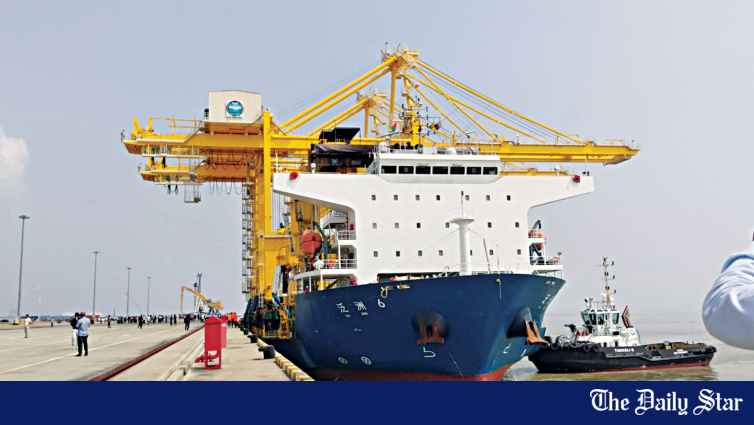
Five modern cargo- and container-handling cranes have been added to the fleet of the first terminal of Payra Port in Kalapara, Patuakhali.
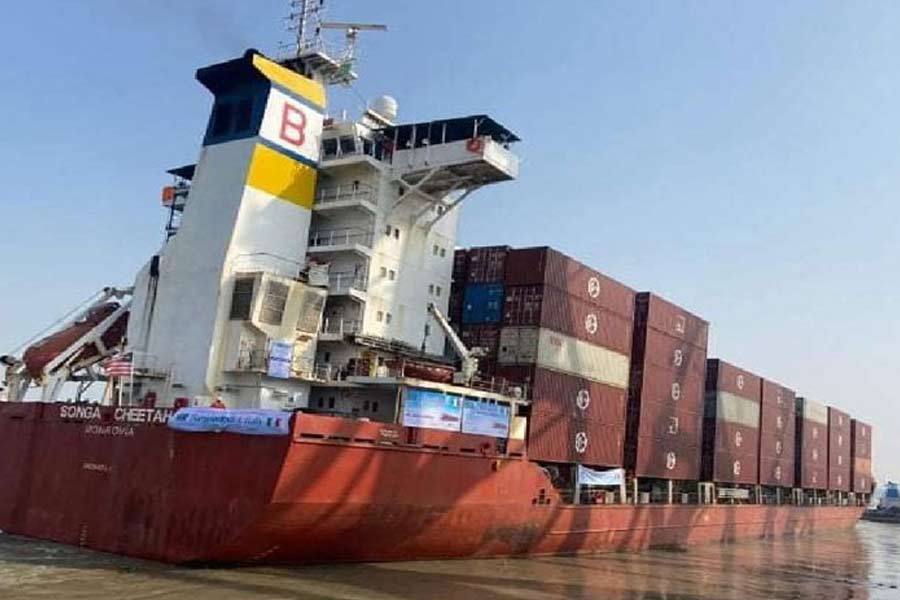
The equipment arrived aboard Fan Zhou-6, a mother vessel, which docked directly at the terminal jetty at around 9am yesterday.
The arrival marked the resumption of direct mother-vessel operations at the terminal after nearly two years.
Port authorities said the new equipment would speed up cargo handling, reduce vessel turnaround time and increase the terminal’s capacity.
The machinery includes two 80-tonne ship-to-shore (STS) cranes for loading and unloading containers between vessels and the jetty, two 40-tonne rubber-tyred gantry (RTG) cranes for moving and stacking containers in the yard, and an 80-tonne mobile harbour crane (MHC) for handling various types of cargo.
The equipment was manufactured by China’s Nanjing Port and Harbour Machinery Co (NPHMC) and Xuzhou Construction Machinery Group (XCMG).
Azizur Rahman, deputy director of the port’s traffic department, said the STS cranes would handle containers on mother vessels, while the RTG cranes would move containers to trailers and manage yard storage. The MHC would be used to unload bulk cargo and containers.
Captain SM Sharifur Rahman, harbour master of Payra Port, said the 170-metre-long Fan Zhou-6 left China’s Pingtan Port for Payra on September 18. The vessel has a draft of about six metres, meaning its hull sits that far below the waterline.
He said larger mother vessels with deeper drafts could dock directly at the jetty if the navigability of the Rabnabad Channel -- the main access route for Payra port -- improves through dredging.
Rear Admiral Syed Saiful Islam, chairman of Payra Port Authority, said the new equipment would bring the port closer to full operational capacity.
He said a dedicated yard for imported vehicles was also ready and that the new cranes had brought the 650-metre multipurpose berth to full operational capacity.
He stressed the need to maintain the channel’s navigability to allow larger mother vessels to berth directly at the jetty.
Before this, two mother vessels had docked at the terminal, carrying 50,500 tonnes of stone on May 15, 2024, and 48,511 tonnes of stone in October-November 2024. The vessels were MV Zain and MV Da Hong-16, respectively.
Five modern cargo- and container-handling cranes have been added to the fleet of the first terminal of Payra Port in Kalapara, Patuakhali.

www.thedailystar.net
Toyota Tsusho Corporation is preparing to establish its first vehicle manufacturing facility in Bangladesh, a high-level delegation led by vice-chairman Ichiro Kashitani revealed during a meeting with prime minister Tarique Rahman at the secretariat on Tuesday, said a press release.
Under the development philosophy ‘With Bangladesh, For Bangladesh’, Toyota plans to begin setting up a Hybrid Electric Vehicle manufacturing plant within one of the country’s economic zones in 2027, targeting full-scale commercial production by 2029.
Briefing the prime minister on the long-term project, Toyota representatives highlighted the factory’s potential to drive local job creation, accelerate industrialisation, and train young workers through technical and vocational programmes tailored to modern automotive manufacturing.
Welcoming the project, prime minister Rahman assured the delegation of full policy support, infrastructure facilities, and investment incentives. He noted that the government remains focused on maintaining a stable, competitive, and investor-friendly climate, while also encouraging Toyota to explore additional opportunities in renewable energy and waste-to-energy projects.
The high-level meeting included key cabinet members and advisers, alongside senior executives from Toyota Tsusho Corporation, including Shigeru Harada, CEO of the Mobility Division, and Premhit Singh, President of Toyota Bangladesh Ltd.
Toyota Motor Corporation, a Japanese multinational automotive manufacturer, is set to invest nearly $40 million in Bangladesh to establish its first direct presence in the country through two 3S centres for vehicle sales, servicing and spare parts, with construction expected to begin in November 2026.
The two centres will be established in the capital Dhaka and the port city of Chattogram, marking the Japanese automotive giant's first direct presence in Bangladesh, according to the Invest Bangladesh Authority.
Nahian Rahman Rochi, a member of Invest Bangladesh, told TBS that the $40 million foreign direct investment, equivalent to around Tk500 crore, was confirmed this month.
"Toyota will open its first 3S (sales, servicing and spare parts) service centres. Construction will begin in November," he said, adding that the sites for the two centres have already been identified.
A 3S centre integrates vehicle sales, servicing and spare parts under one roof, allowing customers to access all these services at a single location.
Toyota has so far operated in Bangladesh through local dealers and distributors. The two centres will mark the company's first direct operational presence in the country.
The Invest Bangladesh member said they had been pursuing the company for five to six months to bring the investment to the country.
Meanwhile, Toyota Tsusho Corporation is planning to develop a hybrid electric vehicle (HEV) manufacturing industry in Bangladesh, with work scheduled to begin in 2027 and full-scale production expected by 2029.
According to the Prime Minister's Office, the Toyota Tsusho Corporation will begin work establishing the HEV-producing factory in due time in Bangladesh under a "with Bangladesh, for Bangladesh" development philosophy.
The announcement followed a meeting between Prime Minister Tarique Rahman and a high-level delegation from Toyota Tsusho Corporation led by its Vice Chairman Ichiro Kashitani on 6 October at the Prime Minister's Office in the Secretariat.
The Invest Bangladesh Authority will continue to provide policy support to help Toyota establish a manufacturing presence in Bangladesh.
Toyota has so far operated in Bangladesh through local dealers and distributors.
www.tbsnews.net
The first controlled nuclear chain reaction at Unit 1 of the Rooppur Nuclear Power Plant was achieved today (11 October), marking a major milestone in Bangladesh's first nuclear power project as the reactor entered its initial criticality stage ahead of electricity generation.
The chain reaction marks the first of four stages before the plant can generate electricity. The subsequent stages involve thermal energy transfer, mechanical energy conversion, and finally electricity generation and supply to the national grid.
Md Anwar Hossain, secretary of the Ministry of Science and Technology, confirmed the development to The Business Standard, saying the reaction was initiated after the required compliance procedures, technical parameters and external certifications had been completed.
"Today at 3:34pm, we were able to achieve the chain reaction smoothly. By the grace of Allah, the parameters were within the desired ranges, and the reactor was very stable," he said.
Inside a nuclear reactor, a controlled chain reaction splits uranium atoms through nuclear fission, releasing energy as heat. That heat is used to generate steam, which drives turbines to produce electricity.
Russian specialists, Bangladeshi experts and other technical specialists were present to observe the process and assess the reactor's performance, Anwar added.
He said nuclear fuel had already been loaded into the reactor and the fission process had now begun.
Anwar said technical teams were working to complete the remaining processes as quickly as possible, while stressing that every stage must comply with the required procedures and safety standards.
The Rooppur Nuclear Power Plant in Ishwardi, Pabna, is being built with two VVER-1200 pressurised water reactor units using Russian technology supplied by Rosatom.
Each unit has a planned generation capacity of 1,200 megawatts, giving the plant a combined capacity of 2,400MW.
Reactor enters initial criticality before electricity generation begins.
www.tbsnews.net
An anti-drone system will be installed at Hazrat Shahjalal International Airport in Dhaka to prevent unauthorised drone flights, Civil Aviation and Tourism Minister M Rashiduzzaman Millat says.
Announcing the new measure, he said: “We have seen incidents of unauthorised drones being flown during fire accidents. The airport is a key point installation (KPI) of the state. So, an initiative has been taken to install an anti-drone system to prevent unauthorised drone flights in the airport area. Besides, scanners and equipment related to security must be available in greater numbers than required.”
He also said there would be no compromise on ensuring the safety of the country’s aviation sector.
“Our goal must be zero compromise on aviation safety,” he said.
The minister made the remarks at a programme after inspecting the “Airport Emergency Exercise 2026” held at Hazrat Shahjalal International Airport in Dhaka on Monday morning.
Speaking about the importance of fire safety and the emergency drill, Millat said, “A drill is necessary, but I pray to Allah and seek His help so that it is never needed in practice.”
Referring to the airport fire during the tenure of the interim government, he said: “You know that a massive fire broke out at the airport’s import cargo complex in October last year during the interim government’s tenure. It caused huge losses and damaged the country’s image. Therefore, ensuring security is the highest priority of the current government.”
Highlighting measures taken by the government to strengthen security, the minister said: “After assuming office, we formed the National Civil Aviation Security Committee, the highest policy-making body, to ensure security at the country’s airports.
“An ICAO audit will be held soon. The country’s image is linked to its observations. Therefore, we have taken measures to ensure compliance on issues that may come under observation by ICAO.”
Issuing a stern message about VIP protocols at the airport, Millat said: “The security protocol is the same for everyone, including VIPs and CIPs. Therefore, everyone must follow the same protocol to ensure airport security.”
The minister also highlighted the need to reduce response times in dealing with accidents.
“The first few minutes are extremely important in the event of any accident or fire at the airport. The response time for dealing with fire incidents must be reduced further,” he said.
Asked by journalists about recent harassment of passengers at the airport and various videos circulating on social media, the minister said the government was working to prevent misinformation and ensure passenger services.
Responding to a question about a video that went viral on social media, he said: “There is not the slightest truth in what the woman said in the voice message yesterday. I immediately verified it with our executive director.
“Nothing of the sort happened here. You are using voice messages from outside, while passengers’ luggage is arriving properly on the belt. This misinformation needs to be analysed.”
The minister also warned that airport officials would be rewarded for good performance and punished for negligence in their duties.
Dhaka-18 MP SM Jahangir Hossain, Air Vice Marshal Md Mostafa Mahmood Siddiq, and airport Executive Director Group Captain SM Ragib Samad, among others, were present at the programme.
An anti-drone system will be installed at Hazrat Shahjalal International Airport in Dhaka to prevent unauthorised drone flights, Civil Aviation and Tourism Minister M Rashiduzzaman Millat says. Announcing the new measure, he said: “We have seen incidents of unauthorised drones being flown du

thefinancialexpress.com.bd
As the Secretariat will be relocated to Sher-e-Bangla Nagar, there will be no new buildings inside the Secretariat located on Abdul Gani Road in the capital.
The government made a policy decision last Wednesday to relocate the Secretariat in a meeting presided over by Prime Minister Tarique Rahman.
Top officials from the Ministry of Housing and Public Works, the Public Works Department, and the Department of Architecture were present at the meeting held at the Prime Minister's Office.
The following day, the Ministry of Housing and Public Works sent a letter to the Planning Commission to include a project for relocating the Secretariat in the Annual Development Programme (ADP).
An inter-ministerial meeting on this project is expected to be held at the Planning Commission next week.
According to a related source, the government aims to commence the project work as soon as possible and achieve visible progress during its tenure.
When contacted, the Chief Architect of the Department of Architecture, Asifur Rahman Bhuiyan, who attended the meeting, told Prothom Alo that three separate designs were presented by the Department of Architecture for relocating the Secretariat to Sher-e-Bangla Nagar. Everyone agreed to finalise one of the designs.
Architect Asifur Rahman Bhuiyan said that the project will be developed based on this design. The designs will also be presented at the meeting of the Executive Committee of the National Economic Council (ECNEC).
Past initiatives, no progress
According to information from the Ministry of Housing and Public Works, several initiatives to relocate the Secretariat to Sher-e-Bangla Nagar were taken during various periods, including under the Awami League government that was ousted in the July uprising.
In 2015, a project worth Tk 22.09 billion was initiated to relocate the Secretariat, scheduled for completion by June 2018.
It was initially planned to construct the Secretariat on 32 acres of land north of Zia Uddyan and west of the Bangladesh-China Friendship International Conference Centre, where the annual trade fair is held. The plan followed the original blueprint by Louis I. Kahn, the architect of the National Parliament Building.
During the Awami League administration, the original designs of the entire Sher-e-Bangla Nagar including the National Parliament Building by American architect Louis I. Kahn were brought to the country at the cost of 400,000 dollars. The plan was to build four main buildings with nine floors on top of fourteen-story bases.
However, the relocation did not materialise. During the interim government period of one and a half years, there was no discussion about moving the Secretariat.
Under the new BNP government, a project was undertaken to construct a 21-story building within the Secretariat at a cost of Tk 6 billion. When the project was presented at an ECNEC meeting on 26 April, it was sent back without approval.
In the meeting, Prime Minister Tarique Rahman instructed the Ministry of Housing and Public Works and the Department of Architecture to assess the possibility of relocating the Secretariat to Sher-e-Bangla Nagar.
Project worth Tk 35 billion
In the past five months, the Ministry of Housing and Public Works has held several meetings with stakeholders regarding the potential relocation site for the Secretariat. The preliminary estimated cost for implementing the project is Tk 35 billion.
After five months of review, a report was presented in front of the Prime Minister last Wednesday. Three separate designs by three teams from the Department of Architecture were shown in the meeting. One design was finalised, and based on it, the Housing Department was instructed to prepare the project.
New roads and facilities
According to the proposed design, a circular road will surround the Secretariat. A road will be constructed behind the Bangladesh-China Friendship Conference Center. This road will exit to Mirpur Road passing by the July Uprising Museum (former Ganabhaban).
There are various establishments near the museum such as schools, hospitals, and the Ministry of Defence which may need to be relocated to accommodate this road.
The Ministry of Housing and Public Works has indicated discussions about constructing an underground road beneath the road that runs from Bijoy Sarani through Agargaon to Mirpur No. 10. The proposed Secretariat could be accessed via the upper road, while Mirpur Road can be reached using the lower road. A separate project might be undertaken for this.
According to the proposed design, each building within the Secretariat will be 12 stories tall. The buildings will be constructed in alignment with the National Parliament.
Related sources indicate that after the relocation of the Secretariat to Sher-e-Bangla Nagar, the main challenge will be traffic congestion. However, the Ministry of Housing and Public Works stated that measures will be taken to keep the area free from congestion.
A source from the Ministry of Housing and Public Works mentioned that after the Secretariat moves from Abdul Gani Road to Sher-e-Bangla Nagar, the current Secretariat could be repurposed for government offices such as the Dhaka Deputy Commissioner’s (DC) Office and the Superintendent of Police’s (SP) Office, currently scattered throughout Old Dhaka.
Due to limited space, the current Secretariat poses challenges for officials in carrying out office work effectively and causes heavy traffic congestion around it, leading to wasted working hours. The current Secretariat covers 1.7 million square feet, while the proposed design plans for a 3.1 million square feet area.
The trade fair ground belongs to the Ministry of Housing and Public Works, and the trade fair was moved to Purbachal in 2021, leaving the ground vacant. Four years ago, a project was undertaken to build a park on the vacant land at a cost of Tk 1 billion, although the project did not come to fruition.
Traffic congestion could be severe
The Ministry of Housing and Public Works believes that leaving the area vacant could lead to unauthorised occupation. If the Secretariat is relocated, it would prevent the land from being encroached upon.
Architect Iqbal Habib opines that relocating the Secretariat to Sher-e-Bangla Nagar following Louis I. Kahn's 1969 design would be inappropriate in 2026. He suggests considering alternative sites for relocation, similar to Putrajaya in Malaysia.
Iqbal Habib mentioned that numerous government facilities have already emerged in Sher-e-Bangla Nagar and Agargaon, increasing the number of vehicles in the area. Establishing the Secretariat there could lead to severe traffic congestion.
As the Secretariat will be relocated to Sher-e-Bangla Nagar, there will be no new buildings inside the Secretariat located on Abdul Gani Road in the capital. The government made a policy decision last Wednesday to relocate the Secretariat in a meeting presided over by Prime Minister Tarique...

en.prothomalo.com
CHATTOGRAM, Oct 09: The government plans to develop Shah Amanat International Airport in Chattogram into a regional aviation hub under a fast-track project aimed at improving air connectivity with South and Southeast Asia, the Middle East and China.
The project, expected to be implemented over 18 months, will focus on expanding airport infrastructure, boosting cargo-handling capacity and introducing international transit facilities, sources said.
Once the project is implemented, it would open up new eastward and westward air routes for Chattogram, airport officials said.
According to sources, the estimated cost of the proposed project ranges between $280 million and $300 million, with the government seeking financial assistance from the Asian Development Bank (ADB).
The project includes runway expansion, parking facility for wide-body aircraft, a new cargo village, cold-chain and bonded warehouses, and a regional passenger transit terminal.
The Economic Relations Division (ERD) has sought ADB support and requested that the proposed 'Chittagong Regional Air Hub Project' be included under the bank's Integrated Growth Network Development initiative.
A Preliminary Development Project Proposal (PDPP), outlining the airport's infrastructure and operational constraints, has already been prepared and sent to the Ministry of Civil Aviation and Tourism and the Civil Aviation Authority of Bangladesh (CAAB) for necessary administrative action, sources said.
Airport officials said the initiative could open up new eastward and westward air routes for Chattogram, expanding its access to international destinations and connecting passengers to global markets.
Currently, the airport operates only a limited number of international flights, mainly serving the Middle East. Flights from Chattogram to Kolkata and other destinations in India have also remained suspended since 2024, according to the sources.
The airport, however, has the potential to serve routes to China, Singapore and Thailand. Flights to some of these destinations operated in the past, enabling passengers to connect to other international destinations.
To revive the airport's role in regional aviation, the government is prioritising cargo-handling capacity and other infrastructure improvements in the project's first phase, described in the draft PDPP as the "Quick-Win Phase".
The phase aims to establish a regional hub capable of accommodating wide-body aircraft, transit passengers and increased cargo volumes.
The first phase is expected to require about $250 million in public investment. Of the amount, the government is seeking $175 million in loans or assistance from development partners, including the ADB, while the government and CAAB would provide the remaining $75 million.
Also, there are plans to mobilise another $30 million to $50 million in investment through a public-private partnership (PPP) to develop commercial and hospitality facilities. The investment could be structured through long-term agreements spanning 20 to 25 years, sources said.
Runway, terminal expansion planned
Shah Amanat International Airport currently has a 2,940-metre runway, two boarding bridges and 11 parking stands for narrow-body aircraft. Its annual cargo-handling capacity is around 40,000 tonnes.
Under the proposed plan, the runway will be strengthened, while a full-length parallel taxiway and a rapid-exit taxiway will be constructed. The runway is also expected to be extended to 3,600 metres in phases.
The project will add parking stands for six to eight wide-body aircraft, allowing larger planes such as the Boeing 777 and 787 and the Airbus A330 and A350 to operate at the airport.
The estimated cost of upgrading airside infrastructure is around $115 million.
Another $43 million is earmarked for expanding the passenger terminal and improving boarding facilities, including around $25 million for expanding and reconfiguring the terminal building.
Following the expansion, the airport's annual passenger-handling capacity is projected to rise from 5 million to between 8 million and 10 million.
Four new boarding bridges will also be installed, taking the total to six. At least four will be capable of serving wide-body aircraft.
The plan also includes construction of a regional passenger transit centre, estimated to cost around $10 million. It will have separate security arrangements, immigration counters and a transit lounge, alongside facilities for passengers transferring between international flights.
CHATTOGRAM, Oct 09: The government plans to develop Shah Amanat International Airport in Chattogram into a regional aviation hub under a fast-track project aimed at improving air connectivity with South and Southeast Asia, the Middle East and China. The project, expected to be implemented over 18
thefinancialexpress.com.bd
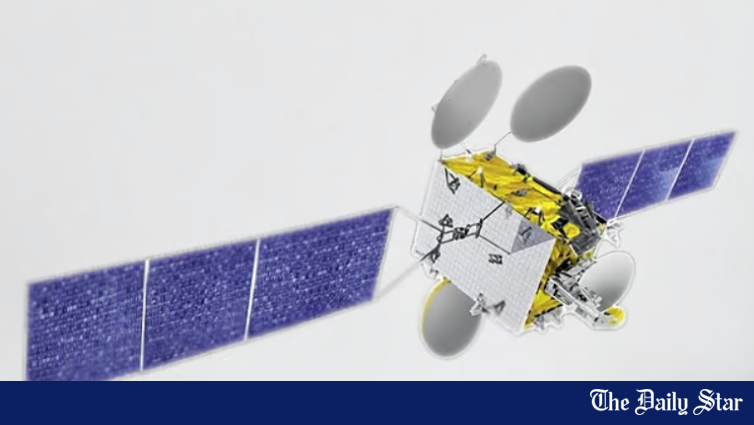
Bangladesh’s first satellite, BS-1, was saved from a potentially dangerous collision with debris from an old Indian satellite after engineers at Bangladesh Satellite Company Limited (BSCL) carried out calculations and a manoeuvre from its ground control station in Gazipur.
The debris came as close as 852 metres to BS-1 on August 13, according to BSCL Managing Director Muhammad Imadur Rahman in an interview with The Daily Star today.
A warning about the approaching debris was received by BSCL’s ground control station around August 8-9 from Space-Track, a US-based space surveillance and tracking platform, Imadur said.
“Normally, there are some debris in space that keep moving around,” he said. Space-Track, which BSCL is a member of, regularly provides information when such objects pose a potential threat to satellites.
The debris approaching BS-1 was from INSAT-1A, India’s first satellite, which was launched in 1982 and later lost control, according to information shared by BSCL.
Once the warning was received, engineers at BSCL’s Gazipur control centre began assessing the satellite’s position, the expected trajectory of the debris and the possibility of a collision.
“We had to do all of these calculations, all the studies,” Imadur said. “Anyway, here the thing is, there is no room for mistakes.”
The engineers remained in continuous contact with Space-Track as the estimated time and distance of the closest approach became clearer.
The situation required BS-1 to be manoeuvred from its existing position to avoid the approaching debris.
“Then, considering that, we had to do some manoeuvre, the satellite manoeuvre, moving from the current location and so on,” Imadur said.
The closest approach took place on August 13. The debris passed within 852 metres of BS-1, he said.
The entire operation was conducted by Bangladeshi engineers from the ground control centre, without operational assistance from the French company Thales, which built the satellite.
“Thales was the company that originally made the satellite, but we did not take any help from them,” Imadur said. “Our engineers have done this completely.”
BS-1 was manufactured by Thales Alenia Space and launched from Florida’s Kennedy Space Centre in May 2018. For the first three years after its launch, Thales engineers supported its operation. But BSCL took over full operational control in 2021.
“Our satellite was launched in 2018. So, for the first three years, there was support from Thales,” Imadur said. “Since 2021, we have been doing everything by ourselves.”
He said some support was available until 2024, but BSCL now handles the satellite’s operations independently.
The satellite can be controlled from the ground, with BSCL engineers operating it from its facility in Gazipur.
The August incident was not the first time BS-1 faced a potential collision with an object in space. Imadur said a similar incident occurred in 2021, while space-tracking agencies have also issued warnings about other debris passing close to the satellite.
Debris came within 852 metres of BS-1 on August 13
www.thedailystar.net