Bangladesh News Bangladesh - India Relation

dronie

Active member
Messages
103
Reactions
1 80
Nation of residence
India
Nation of origin
India
Talking about a matter without having proper knowledge is a dangerous and irresponsible act. The image presented here is clearly cropped and taken out of context; in all fairness and intellectual honesty, the complete picture should have been provided. The event in question was a seminar focused on the Bengali people, the history of Bengal, and the Bangla language. At no point did he ever advocate destruction, aggression, or the annexation of Indian territories. On the contrary, he consistently expressed respect for the people of India and upheld the values of mutual respect and coexistence.
That image is literally his tweet. It was widely shared among bangladeshi circles as to why "india had a desire to get him" A video of his sister saying that indian "dogs" needed to be completely killed is in the Bangladeshi sub reddit of all places.


And dont forget this dude also
 

Areeb

Member
Messages
16
Reactions
8
Nation of residence
Bangladesh
Nation of origin
Bangladesh
That image is literally his tweet. It was widely shared among bangladeshi circles as to why "india had a desire to get him" A video of his sister saying that indian "dogs" needed to be completely killed is in the Bangladeshi sub reddit of all places.


And dont forget this dude also
He never made any such statement on X; rather, he posted a photograph on Facebook. The image currently circulating on the internet is a cropped and incomplete version of the original, and therefore presents a misleading narrative. Any argument constructed on the basis of such partial evidence is fundamentally flawed.


Regarding his sister, your claim lacks factual accuracy. She has appeared in the media only once, during which she was visibly emotional while speaking before the Chief Adviser. Aside from that single instance, she has not participated in public or political discourse. For this reason, I find your reference difficult to understand.


As for the other individual you mentioned, Hasnat Abdullah, his remarks represent nothing more than a personal opinion and carry no official or institutional weight. Similar, and in several cases far more extreme, statements have been made by various leaders of the Bharatiya Janata Party, some of whom have even called for the separation of the Rangpur and Chittagong divisions. Should such statements then also be interpreted as an act of war?
 

dronie

Active member
Messages
103
Reactions
1 80
Nation of residence
India
Nation of origin
India
He never made any such statement on X; rather, he posted a photograph on Facebook. The image currently circulating on the internet is a cropped and incomplete version of the original,
Then what was he using that image for?
for the other individual you mentioned, Hasnat Abdullah, his remarks represent nothing more than a personal opinion and carry no official or institutional weight
Your talking as if he has no political power over the masses. If any indian leader says anything like this you guys will be up at arms.
Similar, and in several cases far more extreme, statements have been made by various leaders of the Bharatiya Janata Party, some of whom have even called for the separation of the Rangpur and Chittagong divisions. Should such statements then also be interpreted as an act of war?
How did it end up here? Because of a wild obsession in Bangladeshi leaders for the indian north east. You cant cry malice when your own leaders foul mouthness ended up causing all this issue.
 

Areeb

Member
Messages
16
Reactions
8
Nation of residence
Bangladesh
Nation of origin
Bangladesh
Then what was he using that image for?
again , The event under discussion was an academic seminar devoted to the Bengali people, the historical evolution of Bengal, and the linguistic heritage of the Bangla language.
Your talking as if he has no political power over the masses. If any indian leader says anything like this you guys will be up at arms.
He has no direct control over the people or the country. Possessing political influence does not automatically result in decisive authority; it is frequently used as a political strategy. The narrative itself originated in India and was subsequently reinforced by the media & educators.
How did it end up here? Because of a wild obsession in Bangladeshi leaders for the indian north east. You cant cry malice when your own leaders foul mouthness ended up causing all this issue.
This situation has reached this point because of Indian leaders. For years, they treated Bangladesh as if it were their twenty-ninth state, exercising influence through Hasina. That control has now collapsed, and they are unable to accept it. No Bangladeshi leader has any intention of seizing India’s Northeast—unless, of course, India itself harbors ambitions of cutting or destabilizing Bangladesh.
 

dronie

Active member
Messages
103
Reactions
1 80
Nation of residence
India
Nation of origin
India
again , The event under discussion was an academic seminar devoted to the Bengali people, the historical evolution of Bengal, and the linguistic heritage of the Bangla language
Come on man you are just embarassing yourself at this point. How does one have an image of the entire indian north east and north india under Bangladeshi and pak control for some seminar? I know you have to white wash this dude but come on.
He has no direct control over the people or the country. Possessing political influence does not automatically result in decisive authority; it is frequently used as a political strategy. The narrative itself originated in India and was subsequently reinforced by the media & educators.
The whole greater Bangladesh conspiracy nut job didnt originate from india but from your own religious nutjobs. Under Hasina's rule that was more subtle but now it has finally come out.
This situation has reached this point because of Indian leaders. For years, they treated Bangladesh as if it were their twenty-ninth state, exercising influence through Hasina. That control has now collapsed, and they are unable to accept it. No Bangladeshi leader has any intention of seizing India’s Northeast—unless, of course, India itself harbors ambitions of cutting or destabilizing Bangladesh.
I always know india had massive influence during Hasina's era but Bangladeshis constantly exaggerating this to make India the scape goat for every problem. India cant even build a fence in its own area because of Bangladesh insecurity about it and them clinging on some treaty from the 70s. We couldn't stop you from buying chinese subs or tanks either . Thats some 29th state level control there. India deliberately didn't utilise its potential of its textile industry so that Bangladesh could dominate the sector. Which caused massive issues to our textiles. Only after Hasina's exit did india pursue a more aggressive expansion on the textile sector. Both sides had to make compromises unlike how many like you put it.
 

Afif

Experienced member
Moderator
Bangladesh Correspondent
DefenceHub Diplomat
Bangladesh Moderator
Messages
5,020
Reactions
104 9,751
Nation of residence
Bangladesh
Nation of origin
Bangladesh
How did it end up here? Because of a wild obsession in Bangladeshi leaders for the indian north east. You cant cry malice when your own leaders foul mouthness ended up causing all this issue.

No false claim. Long before Yunus and July revolution, we had Indian politicians talking akhand Bharat stuff. Don't ask me to bring the list here.

India deliberately didn't utilise its potential of its textile industry so that Bangladesh could dominate the sector.

That's nonsense.
 

Areeb

Member
Messages
16
Reactions
8
Nation of residence
Bangladesh
Nation of origin
Bangladesh
Come on man you are just embarassing yourself at this point. How does one have an image of the entire indian north east and north india under Bangladeshi and pak control for some seminar? I know you have to white wash this dude but come on.
It is painfully clear that you do not possess even a basic understanding of history, particularly the history of Bengal. Offering opinions on a subject you have not taken the effort to understand is intellectually reckless and completely undermines the seriousness of your argument.

Screenshot_6.png
Screenshot_7.png
Screenshot_8.png


Throughout history, Bengalis were not passive observers but dominant political actors who exercised authority over regions that includes todays India’s northeast, Kolkata, Odisha, Bihar, and Sikkim. Bengali sultans, kings, and emperors ruled these territories in different periods. The image currently circulating is simply one example that reflects this documented reality, not a fabricated or modern claim.


The whole greater Bangladesh conspiracy nut job didnt originate from india but from your own religious nutjobs. Under Hasina's rule that was more subtle but now it has finally come out.
Once again, this shows how weak your understanding is. You are repeating claims pushed by your own people instead of looking at real history, and that seriously damages your credibility.

Screenshot_9.png

The very image that Indians repeatedly cite as “Akhand Bharat” clearly depicts Bangladesh as part of it, and this image is displayed inside India’s new Parliament. A parliament is a state institution; anything officially displayed there carries political and governmental meaning. I challenge you to show a single comparable image displayed in any Bangladeshi government building.


You then unnecessarily dragged religion into this discussion, which does not belong here, by referring to Ghazwa-e-Hind.


Literally, “Ghazwa-e-Hind” means:


  • Ghazwa (غزوة): a military expedition in early Islamic history
  • Hind (الهند): a broad historical term, not limited to modern India. Historically, it included regions of present-day India, Pakistan, Bangladesh, and sometimes beyond, depending on the period.

Therefore, Ghazwa-e-Hind does not mean modern India alone.


More importantly, Ghazwa-e-Hind is not mentioned in the Qur’an, nor does it appear in any primary, universally accepted Hadith collections. Bringing it into this argument is misplaced and weakens your position rather than strengthening it.


Classical Islamic scholarly view​


Mainstream scholars historically viewed Ghazwa-e-Hind as:

  • Possibly already fulfilled during early Muslim expansions into the subcontinent (e.g., Muhammad bin Qasim, 8th century).
  • Not a religious obligation for Muslims.

No classical scholar ever declared:

“Muslims must conquer India in the future.”

That idea is modern distortion.

Therefore, your argument is fundamentally incorrect and reflects the consumption of propaganda rather than engagement with established scholarship.


I always know india had massive influence during Hasina's era but Bangladeshis constantly exaggerating this to make India the scape goat for every problem. India cant even build a fence in its own area because of Bangladesh insecurity about it and them clinging on some treaty from the 70s.
Once again, you are revealing a fundamental ignorance of the matter. Bangladesh and India share one of the largest and most complex international borders in the world. India has already fenced the majority of this border, and there exists no treaty, agreement, or legal constraint preventing them from doing so. It is true that certain areas pose genuine difficulties: some communities from both sides reside intermingled along the border, and riverine erosion constantly alters the landscape, making construction more challenging. Yet Bangladesh has never obstructed the fencing; on the contrary, it has consistently raised concerns, engaged in dialogue, and negotiated practical solutions to these local issues.

We couldn't stop you from buying chinese subs or tanks either .

Stopping a sovereign country from buying the equipment it needs is nothing but hegemony. It is an act of control that violates the country’s right to make its own decisions. No nation can claim the authority to decide what another country can or cannot buy—doing so is domination, not diplomacy.


India deliberately didn't utilise its potential of its textile industry so that Bangladesh could dominate the sector. Which caused massive issues to our textiles. Only after Hasina's exit did india pursue a more aggressive expansion on the textile sector.

This is nothing more than wild exaggeration and conspiracy-mongering. India has never restrained its textile industry; it remains one of the largest and most established in the world, historically strong in cotton and jute. The claim that India “held back” is baseless.

India was unable to surpass Bangladesh in textiles not because of any deliberate restraint, but due to the very policies of the countries themselves.

Bangladesh’s rise in the textile sector is driven by clear, measurable factors:
  • Lower labor costs
  • Aggressive export incentives
  • Government support for RMG sector
  • Foreign investment and global supply chain positioning

    The idea that India deliberately slowed its expansion because Hasina was in power is completely unsubstantiated—there is no evidence to support such a claim.
Both sides had to make compromises unlike how many like you put it.

Well, if what you call “compromise” includes water piracy, then that is nothing short of alarming. India has constructed dams, barrages, and irrigation projects on nearly all rivers that flow into Bangladesh. As a result, during the monsoon, these projects cause devastating floods, while in the dry season, they create severe water scarcity—disrupting agriculture, drinking water supplies, and entire ecosystems.


Is that what you call a “sacrifice”? This goes far beyond mere compromise. You are not only violating agreements like the Ganges Water Treaty, but you are also contravening established international law. The UN Convention on the Law of Non-Navigational Uses of International Watercourses (1997) clearly states that upstream countries must not cause significant harm to downstream nations.


In short, what you are doing amounts to a crime, yet you audaciously label it as an “act of sacrifice.”


Screenshot_10.png


This is Felani—a 15-year-old girl who was shot dead by the BSF. Tell me, is killing a 15-year-old an “act of sacrifice”?


Over the years, India has killed more than a thousand people along the border. The India–Bangladesh border is considered one of the most dangerous in the world. Is this what you call compromise or sacrifice? These are acts of violence, plain and simple, not sacrifices.


I could go like this for hours !!
 

Isa Khan

Experienced member
Moderator
Messages
7,693
Reactions
69 10,813
Nation of residence
Bangladesh
Nation of origin
Bangladesh
Bangladesh's restriction on raw jute exports since September has begun to pinch jute mills in the Indian state of West Bengal, Indian media reported citing industry sources.

A section of the mills has sharply cut production after raw jute prices touched Rs 1,10,000 per tonne mark, and traders and stockists are unwilling to release jute, anticipating even higher prices, according to industry sources, The Business Line reported.

West Bengal is the primary jute and jute goods production centre in India.

In the Hooghly industrial belt, jute mills operate at 10-15 shifts per week, far below sustainable levels. Concerned about further price escalation of raw jute and uncertain availability, even relatively well-placed mills are holding onto the raw material.

In a letter to Indian Textiles Minister Giriraj Singh on 18 December, Indian Jute Mills Association (IJMA) Chairman Raghavendra Gupta said the Bangladesh government's action has abruptly disrupted raw material supplies, exposed mills to severe financial risk and led to an abnormal escalation in domestic raw jute prices.

"The combined impact threatens mill operations, employment and the stability of the jute value chain," Gupta said.

Industry sources reported that some mills have reduced working shifts due to the shortage of raw jute. A growing number of mills are now operating at bare-minimum levels, reflecting an industry-wide contraction that could accelerate in the coming weeks.

The situation has worsened despite repeated deliberations at the Jute Advisory Group, where concerns over raw jute availability, hoarding, and price volatility have been repeatedly flagged. While demand dilution and stock control measures were discussed, ground-level enforcement has remained absent, industry participants said.

According to The Business Line, IJMA said in its letter that it favours a ban on India allowing export of high-yielding varieties of jute seeds on which Bangladesh is heavily dependent. These high-yielding seeds are a vital input enabling Bangladesh's jute production and exports.


Highlights
  • Bangladesh halts visa services in New Delhi, Siliguri and Agartala amid security concerns
  • High Commission in New Delhi suspends services following protest by Hindu group
  • Siliguri visa centre shut down after vandalism and a large protest by Hindu groups
  • Assistant High Commission in Agartala to stop services from 23 December until further notice

Visa and consular services for Bangladesh nationals and applicants in India's New Delhi, Shiliguri, and Agartala have been suspended.

The development came following protests by Hindu nationalist groups, prompting temporary suspensions reportedly on security grounds.

The Bangladesh High Commission in New Delhi temporarily suspended all consular services, including visa issuance today (22 December), citing "unavoidable circumstances." Officials at the Ministry of Foreign Affairs confirmed that the suspension will remain in effect until further notice.

A notice posted at the high commission stated that all consular services and visa issuance have been halted temporarily. The decision followed a protest on Saturday night by 20-25 members of 'Akhand Hindu Rashtra Sena' in front of the high commission premises.

The protesters reportedly chanted slogans against Bangladesh and threatened Bangladesh's High Commissioner to India, M Riaz Hamidullah, before leaving after about 20 minutes.

Meanwhile, Bangladesh's visa centre in Siliguri, West Bengal, was forced to shut down today after members of several Hindutva organisations vandalised the facility, reports Prothom Alo.

Members of the Vishwa Hindu Parishad (VHP), Hindu Jagaran Manch and Siliguri Mahanagar Sangathan staged a protest, alleging persecution of the Hindu community in Bangladesh.

Diplomatic sources in Delhi and Kolkata told Prothom Alo that a private company, DU Digital, has been operating the Bangladesh visa centre in Siliguri for several years. Today, around 300 protesters gathered at Bagha Jatin Park in Siliguri before marching to and surrounding the visa office. During the demonstration, they demanded an end to alleged persecution of minority Hindus in Bangladesh and called for justice over the killing of Dipu Das in Mymensingh.

A five-member delegation of the protesters later entered the visa office and asked the authorities to keep it closed as a form of protest. One representative reportedly instructed a DU Digital official over the phone not to reopen the office and to remove Bangladesh-related visa banners and signage, warning that business operations would not be allowed to continue amid alleged abuses in Bangladesh.

Citing a diplomatic source in Kolkata, Prothom Alo reported that considering the security situation, DU Digital shut down the Siliguri visa centre before 3pm. A decision on reopening the centre will be taken after reviewing the situation.

Later in the day, Bangladesh's Assistant High Commission in Agartala, located in the northeastern Indian state of Tripura, decided to temporarily halt consular services and visa issuance from tomorrow (23 December) until further notice, an official of the Ministry of Foreign Affairs has confirmed.

Assam on high alert, says CM Himanta

The north eastern Indian state of Assam has been on "high alert" in the wake of the fresh wave of unrest in Bangladesh, Chief Minister Himanta Biswa Sarma said today.

Sarma told reporters on the sidelines of a programme in Guwahati that the Assam government was closely monitoring the developments in Bangladesh.

He said, "We have to be vigilant and must keep a sharp eye on the developments in that country.''

Meanwhile, prohibitory orders are in force along the border with Bangladesh in Assam's Cachar district to prevent illegal movement and potential law and order threats, officials said.

Yesterday, the Indian visa application centre in Chattogram also halted its operations until further notice, citing security concerns at the Indian Assistant High Commission in the city.

Protest at Bangladesh High Commission in New Delhi

Responding to questions from journalists yesterday, Foreign Adviser Md Touhid Hossain said the Bangladesh mission is located in a highly secure area within the diplomatic enclave of Delhi, making such an incident unexpected.

However, he added that following the protest, the High Commissioner's family has been feeling threatened and at risk, prompting heightened security measures.

The Indian Ministry of External Affairs, in a statement yesterday, said "About 20-25 youths gathered in front of the Bangladesh High Commission in New Delhi on 20 December and chanted slogans in protest against the killing of Dipu Chandra Das in Mymensingh, while also calling for the protection of all minorities in Bangladesh."

The statement clarified that there was no attempt to breach the High Commission's security or create a dangerous situation. Delhi Police, stationed at the Bangladesh High Commission, quickly dispersed the group within a few minutes.


Bangladesh today (21 December) categorically rejected an Indian press note on the reported demonstration near its High Commission in New Delhi, questioning how protesters accessed a highly secured diplomatic zone and citing serious security lapses.

"Regarding the Indian press note, we completely reject it, entirely reject it. The issue has been presented as if it were very simple, whereas in reality it is not. Our mission is located deep inside the diplomatic area, not at the periphery," Foreign Affairs Adviser Touhid Hossain told reporters at the foreign ministry this afternoon.

He said that the issue had been oversimplified in the Indian press note, while the Bangladesh Mission in New Delhi is located deep inside a sensitised and secured diplomatic area.

He questioned how a group of 25 to 30 people, described as belonging to a Hindu extremist organisation, could reach such a sensitive zone, saying that under normal circumstances this should not have been possible without being allowed access.

"They [India] say it may have been 20-25 people, but that is not the point. The question is how a group of 25 or 30 people from a Hindu extremist organisation could come so far into a sanitised, secured area. Under normal circumstances, they should not have been able to reach there at all."

The foreign adviser said the protesters did not merely raise slogans over the killing of a Hindu citizen in Bangladesh but made other statements as well, adding that reports published in Bangladeshi newspapers were largely accurate and not misleading, as claimed.

Responding to a question he said while there was no concrete proof of death threats to Bangladesh envoy though it was heard that threats were made.

"I do not have concrete proof that death threats were issued, but we have also heard that death threats were made. That may have been said by someone [among the protesters]. But my point is, why were they able to come this far in the first place, and why were they able to issue threats there?" he said.

Referring to standard international practice, Touhid said protest groups are usually required to inform authorities in advance and are stopped at a distance by police, sometimes allowing only one or two representatives to submit documents.

"What happened here, we do not accept," Touhid said.

Touhid said Bangladesh believes normal security rules and protocols were not properly followed in this case.

He said Bangladesh has alerted the Indian authorities regarding the security of its missions in India and expressed hope that such an environment would not be allowed to recur.

Asked about the format of Dhaka's protest, he said both sides remain in contact through diplomatic channels and convey their positions accordingly, adding that Bangladesh was compelled to respond openly following the Indian press note.

On the safety of Bangladeshi diplomats, he said Dhaka still trusts India to take appropriate security measures, but would consider scaling back its presence if the situation deteriorates.

"This is not just about slogans," the foreign adviser said, noting that the high commissioner and his family reside at the mission premises and felt threatened due to inadequate security, with only two guards present at the time.

He said ensuring adequate protection of diplomatic missions and personnel is the responsibility of the host country, adding that Bangladesh is taking necessary steps and the remarks reflect the position of the Government of Bangladesh.

He said such incidents occur across the region and every country has the responsibility to take appropriate measures, adding that Bangladesh was doing so and others should act similarly.

At around 9pm local time yesterday, a group of radical Hindu activists staged a protest in front of the main gate of Bangladesh House in Delhi under the banner of Akhand Hindu Rashtra Sena.


India on Sunday (December 21, 2025) suspended visa operations at the Indian Visa Application Centre in Bangladesh’s second-largest city, Chittagong, until further notice in the wake of heightened tensions following the death of prominent youth leader Sharif Osman Hadi, local media reported.

Hadi, a prominent leader of the student-led protests last year that led to the ouster of the prime minister Sheikh Hasina-led Awami League government, was a candidate for the scheduled February 12 general elections.

He was shot in the head on December 12 by masked gunmen at an election campaign in central Dhaka’s Bijoynagar area. He died while undergoing treatment in Singapore on Thursday (December 18).

His death triggered attacks and vandalism across Bangladesh, including stone-hurling at the Assistant Indian High Commissioner’s residence in Chattogram on Thursday (December 18).

Indian visa applications in Chittagong have been suspended indefinitely, the Indian Visa Application Centre (IVAC) was quoted as saying by The Dhaka Tribune newspaper on Sunday (December 21).

The decision came into effect on Sunday (December 21) following a recent security incident at the Assistant High Commission of India in Chittagong.

According to the IVAC, all Indian visa-related services in the port city will remain closed from December 21 until further notice.

The statement added that a further announcement will be made regarding the reopening of the visa application centre after a review of the security situation.

On December 20, security was strengthened at the Indian Assistant High Commission office and the visa application centre in Bangladesh’s Sylhet city.

The enhanced security measures were put in place to ensure that “no third party can exploit the situation”, Additional Deputy Commissioner (Media) of the Sylhet Metropolitan Police Saiful Islam was quoted as saying by The Dhaka Tribune newspaper on Saturday (December 20).

Hadi, 32, was laid to rest on Saturday (December 20) amid extra-tight security beside the grave of National Poet Kazi Nazrul Islam near the Dhaka University mosque.

Tens of thousands of people attended the funeral prayers, and ahead of the ritual, they chanted anti-India slogans like “Delhi or Dhaka - Dhaka, Dhaka” and “brother Hadi’s blood will not be allowed to go in vain”.


The Border Guard Bangladesh (BGB) has arrested a member of India's Border Security Force (BSF) after he crossed into Bangladeshi territory.

The incident took place early on Sunday near the Patgram border in Lalmonirhat district, according to the BGB. The BSF constable was stopped by a routine patrol after crossing about 50 to 100 metres inside Bangladesh.

BGB officials said the detained man, identified as Ved Prakash of the BSF’s 174th Battalion, told officers he had lost his way in dense fog while chasing cattle smugglers.

The BGB said the constable was being held at a local border outpost along with his service weapon, ammunition and other equipment.

In a statement, the force said Indian border authorities had been informed and acknowledged the mistake, expressing regret and requesting his return.

The BGB added that a battalion-level flag meeting had been proposed to resolve the matter in line with bilateral border agreements and international law.

A senior BGB officer said discussions were continuing with Indian counterparts and further details would be shared later.

BGB Sector Commander Lt Col Selim Al Deen said, “We’re continuing to contact the higher-ups of the BSF. Details will be shared with you later.”


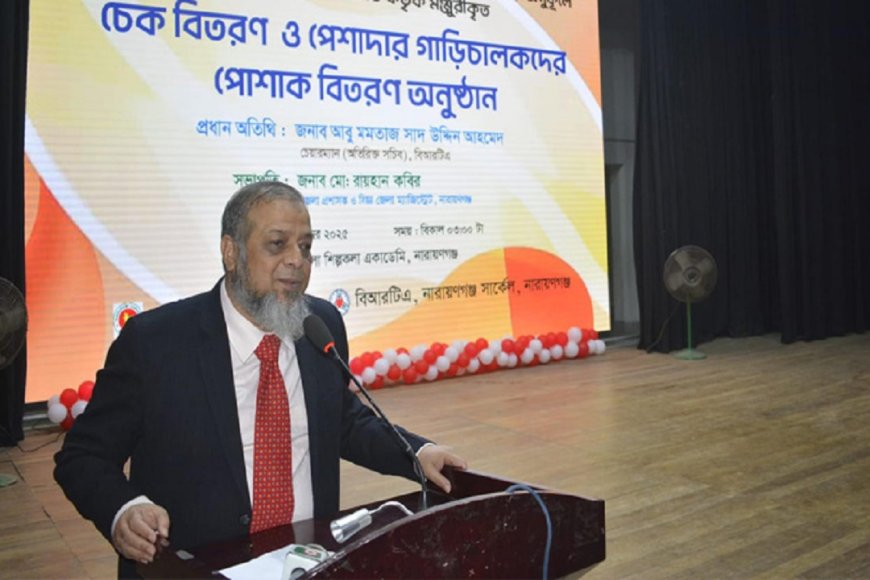
Bangladesh Road Transport Authority (BRTA) Chairman Abu Mumtaz Saad Uddin has finally disclosed with confirmation that the country’s driving licences were previously issued through a company based in Madras, India, and announced that the process will now be brought under local control.

Speaking on Monday evening, December 22, at a cheque distribution ceremony for road accident victims in Narayanganj, the BRTA chief said the authority’s licence issuance work had been handled by an Indian company operating from Madras. He noted that the contract with the firm expired in July this year.

“The company applied for a two-year extension, but we did not respond,” he said. “We want our sovereignty to remain in our own hands. The work will now be assigned to a locally owned company.”

The remarks came nearly two months after an investigative report by DigiBanglaTech.news raised questions over whether BRTA smart cards were being printed following instructions from Madras.

 

Isa Khan

Experienced member
Moderator
Messages
7,693
Reactions
69 10,813
Nation of residence
Bangladesh
Nation of origin
Bangladesh
1766609561882.png


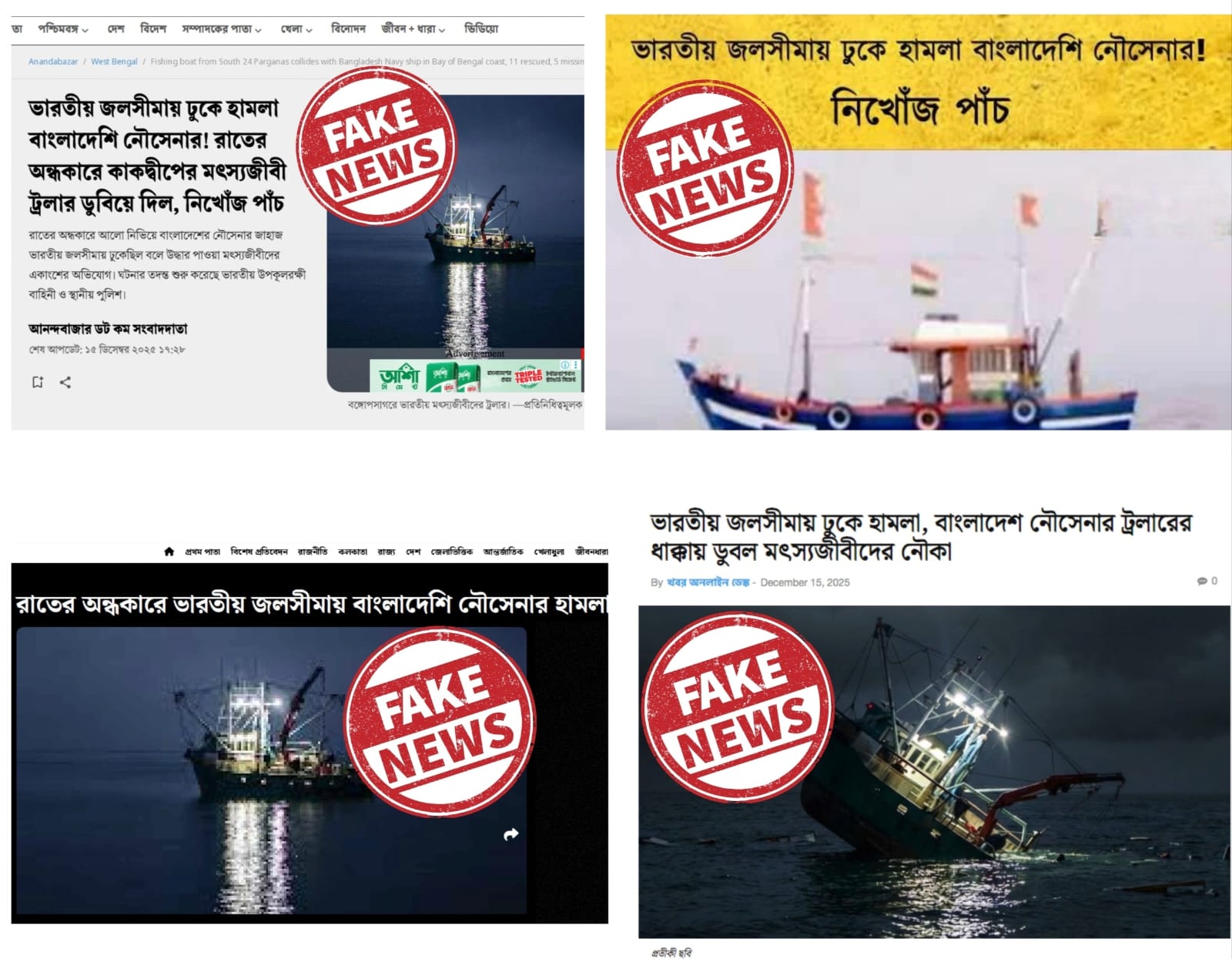
Dhaka, 16 December 2025: It has recently been observed that certain media outlets and social media platforms are circulating false, misleading and unfounded reports involving the Bangladesh Navy. These reports allege that a Bangladesh Navy ship intruded into Indian waters and deliberately sank an Indian fishing trawler named PAROMITA-10 while it was engaged in fishing activities in the Bay of Bengal. In fact, at the time the Indian fishing trawler met with the accident, Bangladesh Navy patrol ship was conducting routine maritime patrol well within Bangladesh waters, at a distance of more than 12 miles from the incident location. Bangladesh Navy had no involvement whatsoever in the said incident.

On Monday (15 December 2025), Bangladesh Local Time at 1515 hours, the Maritime Rescue Coordination Centre (MRCC) of the Indian Coast Guard officially informed MRCC, Dhaka via email that an Indian Fishing Boat (IFB) named PAROMITA-10 had capsized and sunk in Indian waters of the Bay of Bengal with 16 fishermen on board. Another Indian fishing trawler IFB RAGHUPATI successfully rescued 11 fishermen, while the remaining five fishermen remain missing.

The Indian Coast Guard subsequently requested all nearby ships and fishing trawlers to assist in the ongoing search efforts. Immediately upon receiving this information, Bangladesh Navy promptly directed its patrol ship to undertake search activities within Bangladesh waters. Through close coordination and cooperation with the relevant authorities of both Bangladesh and India, Bangladesh Navy patrol ship actively participated in the searching efforts alongside the Indian Coast Guard and local Bangladeshi fishermen. Such initiatives reflect the Bangladesh Navy’s commitment to humanitarian assistance at sea and contribute significantly to strengthening mutual trust, cooperation and friendly relations between the two neighboring countries.

Notwithstanding these facts, some sections of the News Media and Social Media have continued to disseminate unfounded allegations claiming that a Bangladesh Navy ship entered Indian waters and sank the fishing trawler PAROMITA-10. These claims are entirely baseless.

The publishing of such misinformation is deeply regrettable and unwarranted. In this regard, all media outlets are earnestly urged to exercise responsible journalism and to refrain from publishing and circulating misleading, sensational or defamatory reports against Bangladesh Navy and Bangladesh.


Jackdaws

Experienced member
Messages
2,844
Reactions
1 1,620
Nation of residence
India
Nation of origin
India
That’s pretty how China also sees the Dalai Lama - they call him “a terrorist”.

Bangladesh doesn’t want cordial relations with India - that’s their call as a sovereign nation.
 

Isa Khan

Experienced member
Moderator
Messages
7,693
Reactions
69 10,813
Nation of residence
Bangladesh
Nation of origin
Bangladesh
Bangladesh today categorically rejects the recent comments made by the Spokesperson of the Indian Ministry of External Affairs (MEA) regarding the situation of the minority communities in Bangladesh.

“The Government of Bangladesh categorically rejects any inaccurate, exaggerated, or motivated narratives that misrepresent Bangladesh’s longstanding tradition of communal harmony,” Bangladesh foreign ministry’s Spokesperson and Director General of Public Diplomacy Wing S M Mahbubul Alam told reporters at the ministry this afternoon.

He added, “His (Indian Spokesperson) comments do not reflect the facts”.

With much regret, Alam said, Dhaka noted that there are systematic attempts to portray the isolated incidents of criminal acts as systemic persecution of the Hindus and maliciously used to propagate anti-Bangladesh sentiments in different parts of India.

“We observe a selective and unfair bias in certain quarters, where isolated incidents are amplified, misrepresented and propagated to incite common Indians against Bangladesh, its diplomatic missions and other establishments in India,” he said.

Alam said that one of the individuals cited by the MEA’s Spokesperson was a listed criminal whose unfortunate death happened when he was committing extortion with his Muslim accomplice, who was later arrested.

“To portray this criminal act in the lens of minority treatment is not factual but misleading,” he added.

The Director General said that Bangladesh called upon different quarters in India to refrain from spreading misleading narratives that undermines the spirit of good-neighbourly relations and mutual trust.

Responding to a question, Bangladesh Spokesperson Alam said that Dhaka is deeply concerned over incidents of brutal killings, mob violence, obstruction of elections, and disruption of religious events targeting Muslims, Christians, and other minority communities in India.

Last week, incidents of violence against Christians were also reported across India during the celebration of the major religious festival Christmas.

Alam said that Bangladesh is also deeply concerned about the communal violence committed against these communities.

“These incidents are viewed as hate crimes and targeted violence. We expect the concerned authorities in India to conduct impartial investigations into these incidents and bring the perpetrators to justice,” the spokesperson said.

He said the Dhaka believed that every country had the responsibility to protect its minority communities, ensure their safety and dignity, and uphold these obligations without discrimination.

 
Top Bottom