• Forum restore complete (see latest announcement thread)

Bangladesh News Biman-Airbus-Boeing Deal

Isa Khan

Experienced member
Moderator
Messages
8,024
Reactions
75 11,167
Nation of residence
Bangladesh
Nation of origin
Bangladesh
p3_airbus-wings_0.jpg


Highlights:

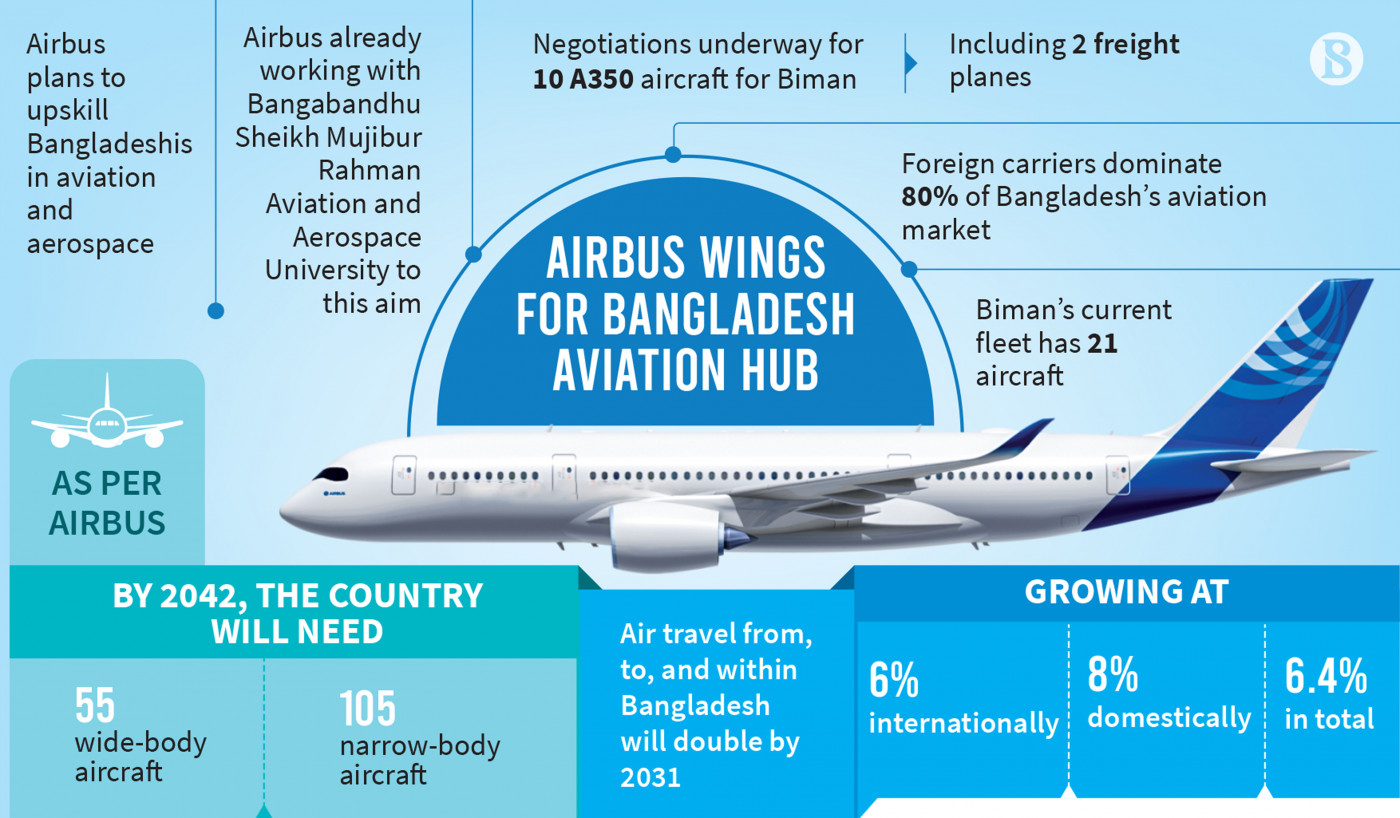
  • Airbus plans to upskill Bangladeshis in aviation and aerospace
  • Negotiations underway for 10 A350 aircraft sale to Biman
  • Foreign carriers dominate 80% of Bangladesh's aviation market
  • Bangladesh's large population and GDP make it an attractive market
  • Bangladesh would need 55 wide-body aircraft by 2042
  • Biman's current fleet consists of 21 aircraft

European aviation giant Airbus has aligned its plans to help Bangladesh achieve its ambition of becoming an aviation hub by creating a favourable ecosystem, said Morad Bourouffala, chief representative of the company in Bangladesh.

During a recent visit by Bangladeshi journalists to Airbus headquarters in Toulouse, France, he said, "We are no longer seeing Bangladesh as a transactional partner, meaning that we sell something and leave. We truly want Bangladesh to become an aviation superpower.

"I believe Bangladesh has the potential to become an aviation hub."

Bourouffala said, "Our strong bilateral relationship has led to this, where all of our plans are aligned to help Bangladesh achieve its ambition of becoming an aviation hub."

Airbus marketing vice president Antonio da Costa and wide-body market development manager Juan Camilo Rodríguez also joined Bourouffala in briefing the Bangladeshi journalists in Toulouse, Europe's aerospace capital.

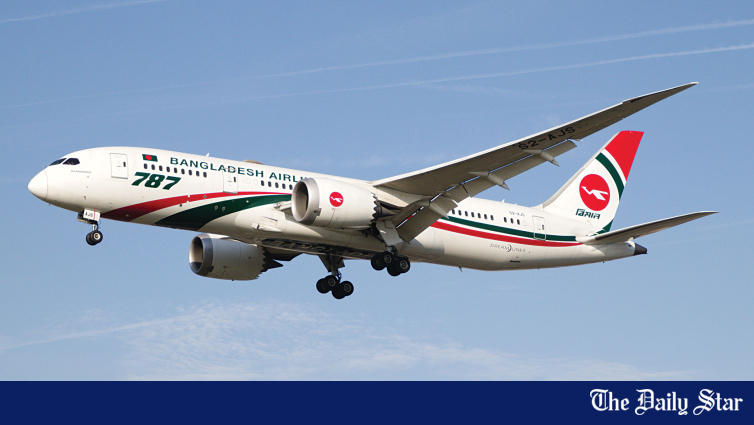
The European aircraft manufacturer is currently negotiating a sale of 10 wide-body A350 aircraft, including two freight planes, to Biman Bangladesh Airlines. The state-run Biman now has a 21-aircraft fleet, mostly dominated by Airbus's main competitor Boeing planes from the United States.

Asked what it means for the public to have an aviation hub, Airbus's marketing vice president, Antonio da Costa, said, "It really means being able to take advantage of existing passenger flows, both Bangladeshi nationals and foreigners visiting Bangladesh.

"Bangladesh is well-located in Asia, and this can be used as an opportunity to act as a gateway for people travelling between point A and point B, both within Asia and globally, to go through Bangladesh. It is important to establish the necessary infrastructure to make this possible."

Foreign carriers currently capture around 80% of the aviation market in Bangladesh, according to industry insiders.

"With its new-generation wide-body A350 aircraft, which offer 25% lower fuel burn and a superior passenger experience, Airbus can equip Bangladeshi airlines with the right tools to compete with foreign airlines," said da Costa.

The Airbus executives highlighted the tremendous potential of Bangladesh, citing its large population of 175 million and higher GDP per capita than India.

Morad Bourouffala said, "We want to capitalise on the human and skills force that is present in Bangladesh. Our project will upskill Bangladeshis in the aviation and aerospace industry."

Bourouffala said Airbus will help Bangladesh develop human capital for the aviation sector. "When we sell aircraft to customers worldwide, we always provide a comprehensive training package for their personnel. It is clearly our ambition to help Bangladesh develop its human skills capacity."

Despite recognising that Bangladesh is a "shining economy", the officials believe that the aviation market here is not yet fully realised.

"We are investing time and resources in Bangladesh because we believe in [the country's] Vision 2041 and want to be a part of it," said Bourouffala.

He added that Airbus is already working with the Bangabandhu Sheikh Mujibur Rahman Aviation and Aerospace University to develop a talented workforce.

'Bangladesh needs more wide-body aircraft'

The Airbus Global Market Forecast study predicts that Bangladesh will need 105 narrowbody and 55 widebody aircraft by 2042 to meet the growing demand of air travellers.

Juan Camilo Rodríguez, widebody market development manager at Airbus, presented a comparative study of the aviation potential of different countries, taking into account their GDP size and number of air travellers.

He claimed that air travel from, to, and within Bangladesh will double by 2031, growing at 6% internationally, 8% domestically, and 6.4% in total.

The state-run Biman and private airlines currently have a combined fleet of 36 aircraft, including 10 wide-bodied ones. Bangladesh's GDP is worth $416 billion, and 7.5 million Bangladeshi expatriates live around the world.

In contrast, the Airbus study showed that Vietnam has a fleet of 187 aircraft, including 35 wide-bodied ones, with a GDP of $366 billion and 3.4 million expatriates. The Philippines operates 172 aircraft, including 29 wide-bodied ones, with a GDP of $394 billion and 6.1 million expatriates.


yf120

Active member
Messages
81
Reactions
1 62
Nation of residence
St V'nt & the Gr'dines
Nation of origin
Bangladesh
p3_airbus-wings_0.jpg


Highlights:

  • Airbus plans to upskill Bangladeshis in aviation and aerospace
  • Negotiations underway for 10 A350 aircraft sale to Biman
  • Foreign carriers dominate 80% of Bangladesh's aviation market
  • Bangladesh's large population and GDP make it an attractive market
  • Bangladesh would need 55 wide-body aircraft by 2042
  • Biman's current fleet consists of 21 aircraft

European aviation giant Airbus has aligned its plans to help Bangladesh achieve its ambition of becoming an aviation hub by creating a favourable ecosystem, said Morad Bourouffala, chief representative of the company in Bangladesh.

During a recent visit by Bangladeshi journalists to Airbus headquarters in Toulouse, France, he said, "We are no longer seeing Bangladesh as a transactional partner, meaning that we sell something and leave. We truly want Bangladesh to become an aviation superpower.

"I believe Bangladesh has the potential to become an aviation hub."

Bourouffala said, "Our strong bilateral relationship has led to this, where all of our plans are aligned to help Bangladesh achieve its ambition of becoming an aviation hub."

Airbus marketing vice president Antonio da Costa and wide-body market development manager Juan Camilo Rodríguez also joined Bourouffala in briefing the Bangladeshi journalists in Toulouse, Europe's aerospace capital.

The European aircraft manufacturer is currently negotiating a sale of 10 wide-body A350 aircraft, including two freight planes, to Biman Bangladesh Airlines. The state-run Biman now has a 21-aircraft fleet, mostly dominated by Airbus's main competitor Boeing planes from the United States.

Asked what it means for the public to have an aviation hub, Airbus's marketing vice president, Antonio da Costa, said, "It really means being able to take advantage of existing passenger flows, both Bangladeshi nationals and foreigners visiting Bangladesh.

"Bangladesh is well-located in Asia, and this can be used as an opportunity to act as a gateway for people travelling between point A and point B, both within Asia and globally, to go through Bangladesh. It is important to establish the necessary infrastructure to make this possible."

Foreign carriers currently capture around 80% of the aviation market in Bangladesh, according to industry insiders.

"With its new-generation wide-body A350 aircraft, which offer 25% lower fuel burn and a superior passenger experience, Airbus can equip Bangladeshi airlines with the right tools to compete with foreign airlines," said da Costa.

The Airbus executives highlighted the tremendous potential of Bangladesh, citing its large population of 175 million and higher GDP per capita than India.

Morad Bourouffala said, "We want to capitalise on the human and skills force that is present in Bangladesh. Our project will upskill Bangladeshis in the aviation and aerospace industry."

Bourouffala said Airbus will help Bangladesh develop human capital for the aviation sector. "When we sell aircraft to customers worldwide, we always provide a comprehensive training package for their personnel. It is clearly our ambition to help Bangladesh develop its human skills capacity."

Despite recognising that Bangladesh is a "shining economy", the officials believe that the aviation market here is not yet fully realised.

"We are investing time and resources in Bangladesh because we believe in [the country's] Vision 2041 and want to be a part of it," said Bourouffala.

He added that Airbus is already working with the Bangabandhu Sheikh Mujibur Rahman Aviation and Aerospace University to develop a talented workforce.

'Bangladesh needs more wide-body aircraft'

The Airbus Global Market Forecast study predicts that Bangladesh will need 105 narrowbody and 55 widebody aircraft by 2042 to meet the growing demand of air travellers.

Juan Camilo Rodríguez, widebody market development manager at Airbus, presented a comparative study of the aviation potential of different countries, taking into account their GDP size and number of air travellers.

He claimed that air travel from, to, and within Bangladesh will double by 2031, growing at 6% internationally, 8% domestically, and 6.4% in total.

The state-run Biman and private airlines currently have a combined fleet of 36 aircraft, including 10 wide-bodied ones. Bangladesh's GDP is worth $416 billion, and 7.5 million Bangladeshi expatriates live around the world.

In contrast, the Airbus study showed that Vietnam has a fleet of 187 aircraft, including 35 wide-bodied ones, with a GDP of $366 billion and 3.4 million expatriates. The Philippines operates 172 aircraft, including 29 wide-bodied ones, with a GDP of $394 billion and 6.1 million expatriates.

This definitely feels like a forced justification for the nightmare that is coming in the not-so-distant future, and the writer checks out nicely.

Not to mention the hilarious comparison of BD with Vietnam and the Philippines. He surely lives in a bubble
 

Isa Khan

Experienced member
Moderator
Messages
8,024
Reactions
75 11,167
Nation of residence
Bangladesh
Nation of origin
Bangladesh
The US-based aviation giant Boeing demanded a fair evaluation of its proposal made to Biman Bangladesh Airlines about selling four 787 Dreamliner passenger planes and two 777 freighters.

"We have had a proposal on the table for years now," said Ryan Weir, vice president of India and South Asia Commercial Sales and Marketing at Boeing, when speaking with journalists at a city hotel yesterday. "We understand that Airbus's proposal to sell two A350s was evaluated."

"We are hoping our proposal will be evaluated before a final decision is taken," he said, while two other Boeing representatives were present at the meeting with journalists and also answered questions.

The other two Boeing representatives are Ashwin Naidu, Managing Director-Commercial Marketing, Eurasia, and Indian Subcontinent, and Kaanthi Bhuvanagiri, BCA Sales Director.

Boeing representatives also estimated that Biman will have to pay an additional complexity cost of nearly $150 million over the next 20 years if it mixes its fleet with Airbus planes. They suggested that the airline could purchase another plane with these complexity costs.

The team claimed that Boeing's product will be as affordable as, or less expensive than, those of their competitors.

Here is the question-answer session with Boeing and journalists:

What is the progress on the Boeing proposal?

We met key leaders in the Prime Minister's Office and in the Ministry of Aviation, along with key leaders at the airline. They have all assured us that our proposal will be evaluated.

We are hoping our proposal will be evaluated before a final decision is taken.

We made proposals for four wide-bodied passenger planes and two freighters. This goes back to addressing the vision of the prime minister, who is very keen on building the cargo market with Biman.

There is a big export market out of Biman, and a lot of other airlines are taking that cargo market today.

So in order to address the vision of the prime minister, we have also submitted a proposal for two freighters.

We have yet to hear of a timeframe, but our request is out there, and they have assured us of that evaluation.

We understand that the Airbus proposal was evaluated. Several people, including the minister and people at the airline, said that the Boeing 787 would be evaluated. We are always after a fair evaluation of our products.

There is a safety concern about the 787 Dreamliner worldwide. So should Biman consider procuring 787?

I believe there was a press release by the minister kind of expressing concerns and directing Biman to work with Boeing. We formally responded to that letter to the minister with full documentation in terms of what we have done.

The issue started in 2021; it was a self-reported issue. We found something in our production process that we wanted to make sure was okay or addressed.

And then we spent the next 18 to 24 months working with the FAA (Federal Aviation Administration) and going through rigorous engineering evaluations to ensure that the build of our aeroplane was safe.

We then took steps to rework all the aeroplanes that we had built. We basically created inventory for that period of time. We slowed production but continued to build aeroplanes.

And then we went and reworked those aeroplanes and were in the process of delivering those aeroplanes to the customers.

And then I know that recently there has been a lot of media coverage of the whistle-blowers, and we always respect a whistle-blower in this case. We believe that those claims are inaccurate.

Those claims are exactly what we were working on for 18 to 24 months with the FAA to make sure that we were building to the specs that we had designed for the airplane. The 787 has been through rigorous, rigorous tasks.

A lot of that frustration stems from not necessarily safety concerns, but a lot of the frustration right now is because they are not getting aeroplanes fast enough.

Because the market is demanding airplanes. People want to travel both in the United States and around the world. And they need to have aeroplanes to replace them.

And those aeroplanes are late for a variety of reasons, largely outside of Boeing control.

The industry has basically gone from almost zero production to 30 to 40 aeroplanes a month coming out of Covid and in that time, the industry, Boeing included, lost a lot of experienced people who left as a result of Covid and didn't come back.

And so to replace those people and increase production rate, it put a huge strain on the whole production system, supply chain.

Why is Boeing better than Airbus?

First and foremost, bringing on a new fleet type of aeroplane, whether it be the A350 or any other wide-body aeroplane, was going to cost the airline about $150 million, or a little less.

That doesn't change significantly based on the number of aeroplanes you bring on.

That is essentially enough money to pay for one more aeroplane, reinvest in the airline, and do other things that Boeing would argue would be more productive.

But on top of that, we believe that on the critical missions that Biman is evaluating and would evaluate, the 787 would produce about $5 million more profit per plane annually operating those routes.

We have a detailed study behind it, and it is predicated on, you know, 6% less fuel per trip operating the 787, 30% less maintenance costs because of the design and construction of the 787.

And we can offer competitive delivery timing with a delivery position of 787.

Boeing products are going to be more or less expensive than those of our competitors.

So anytime you have a set infrastructure and now you suddenly bring on a new aircraft type, first you start with all your tooling, your maintenance infrastructure, and all your investments that you have to make in spare aeroplanes, spare parts, tools, and spare engines.

We have a detailed study that we have shared with the airline, and it has been demonstrated that the extra complexity will cost $150 million over 20 years.

But that is a cost that includes three or four major line items and expenses, training, tooling, and maintenance infrastructure, engine parts, and engine spares.

Moreover, the airline is going to take all those pilots who are operating the 787 and send them on ground training, classroom training, and simulator training, all to fly a new aircraft type.

So all those costs add up very substantially, and there is a big jump in expenses upfront, and recurring expenses each year that continue to add to the expense line.


PutinBro

Committed member
Messages
262
Reactions
9 319
Nation of residence
China
Nation of origin
Bangladesh
Airbus offer not viable financially, Biman evaluation finds

The total investment for two aircrafts will exceed $1 billion, equivalent to Tk12,000 crore at the current exchange rate​


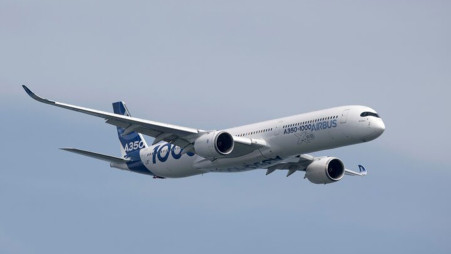
The Airbus A350-1000 seen in the aerial display during the media preview of the Singapore Airshow in Singapore, 13 February 2022. Photo: Reuters


The Airbus A350-1000 seen in the aerial display during the media preview of the Singapore Airshow in Singapore, 13 February 2022. Photo: Reuters


European aviation giant Airbus' offer to sell two A350-900 passenger aircraft is not financially viable for Biman Bangladesh Airlines as its net cash flow is found negative for the next 25 years compared to the cost of capital investment, according to a report.


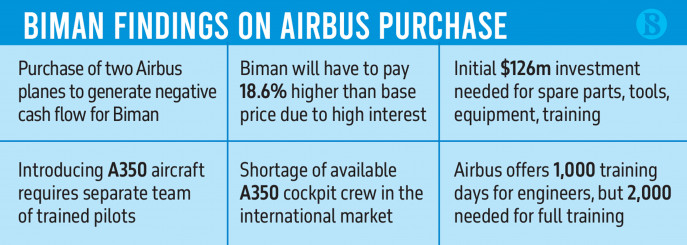
The report, prepared by the techno-financial evaluation committee of the national flag carrier, projects that Biman will have to pay a total of $900 million for the two aircraft by June 2027, which is 18.6% higher than the base price of $763.75 million offered by Airbus based on 1 January 2023.

The price escalation is significant due to a high-interest cost at a 5.50% SOFR rate, compounded by the current cost of capital and an escalation factor based on a formula provided by Airbus.

Besides, Biman will need to pay a $10 million non-refundable commitment fee upon signing the memorandum of understanding. Also, an initial investment of $126 million is projected for spare engines, parts, tools, equipment provisioning, and crew training due to the different equipment.

p_1-highlight-biman-findings-on-airbus-purchase.jpg


Therefore, the total investment for the two aircraft will exceed $1 billion, equivalent to Tk12,000 crore at the current exchange rate.

This substantial capital investment will generate negative cash flow over the next 25 years based on Biman's operating plan, as revenue generation is low due to poor yield, the evaluation committee finds.

"As the project is not financially viable, Biman may not consider purchasing the two new A350-900 passenger aircraft from Airbus," according to the committee's report obtained by The Business Standard.

However, an alternate source of funding with less than 1% interest and changes to routes, frequency, and fleet size may make the project viable, said the report.

Though the A350 is popular among renowned airlines worldwide, Biman will face challenges in crew management, engineering training, logistics, pre-flight inspections, and provisioning spares and tools when introducing the aircraft into its fleet, according to the evaluation report.

The report further says, "The management needs to consider very carefully before finalising its decision."

To evaluate the Airbus proposal, Biman management formed the techno-financial committee through an office order on 31 July last year, comprising internal and external officials.

The committee submitted a comprehensive evaluation report on 30 January 2024, based on Biman's ground rules and considering commercial, technical, operational, maintenance, and financial aspects.

Meanwhile, Biman has also an offer from Boeing in hand, which has yet to be evaluated.
In a recent visit to Dhaka, Ryan Weir, vice president of India and South Asia Commercial Sales and Marketing at Boeing, demanded fair evaluation of their proposal.
He said Boeing had proposed selling four 787 Dreamliner passenger planes and two 777 freighters a year ago, but Biman has yet to begin evaluating their products.

He urged for a fair evaluation before making a final decision on procuring new aircraft.

The two aircraft

Airbus has proposed two A350-900 aircraft with Rolls-Royce engines to be delivered between the second half of 2027 and the first half of 2028. Each plane will have 346 seats.

Airbus quoted the aircraft price based on the 1 January 2023 rate, despite delivery scheduled for January and July 2028. The price will increase on the delivery date based on a set formula provided by Airbus.

Hence, Biman estimated the increased price of the aircraft at delivery by considering a 3.50% annual escalation factor.
Biman currently operates 21 aircraft, with 16 made by Boeing, US, and five Dash 8-400 Turbo-prop aircraft made by De Havilland, Canada.

Biman's "Network and Fleet Plan for FY2024-25 to FY2033-34" indicates a need for 47 aircraft by FY35, including one with over 400 seats, eight with 300 seats, seven with 270 seats, ten with 170 seats, and six with 70 seats.

As per the projection, Biman would require a 400+ seat capacity aircraft by FY29 and two 300+ seat capacity wide-body aircraft by FY26.

Challenges in crew

The report also mentioned several challenges of procuring the two Airbus aircraft.
It said Biman faces a significant crew shortage across its fleet. Introducing the A350 requires a separate team of trained pilots.

The existing crew must undergo training to operate Airbus planes.
Switching crews between Airbus and Boeing is complex. With current crew shortages, deploying them on A350s poses challenges. Recruiting new crew will not quickly resolve the issue, as "experience" is crucial in aviation. Acquiring the necessary experience for advanced planes takes time, said the report.

The evaluation committee also noted that operating the A350 on existing routes would require more than double the cockpit crew compared to the B787. This is because Biman's B787 flights have lower crew requirements due to established flight patterns, crew rotations, and rest periods.

Currently, there is a shortage of available A350 cockpit crew in the international market. Biman may need to recruit cadet pilots locally and provide them with subsequent training to address this shortage.

Challenges in maintenance

Currently, Biman operates Boeing 787-8/9, 777-300ER, 737-800, and DHC-400 aircraft. Introducing the A350-900 will add a new aircraft type to its fleet, leading to a mixed wide-body fleet.

This brings several challenges in airworthiness management, maintenance, certification, training, logistics, and pre-flight inspection, said the report.
These challenges can affect various aspects of airworthiness management, line and base maintenance, certification, training, logistics, and pre-flight inspection, etc.

The dissimilar equipment compared to Biman's existing fleet will require spare engines, parts, and tools. Based on discussions with the Airbus team, approximately $61.77 million will be needed for spare parts, tools,
equipment, and spare engine.

Challenges in engineering section

A significant number of Biman's engineering and maintenance personnel will be retiring within the next five years, creating challenges in maintaining the current fleet, according to the report.

It typically takes seven to eight years to train skilled personnel eligible to certify aircraft, so immediate and large-scale recruitment is necessary, it said.
Meanwhile, Airbus offers 1,000 trainee-days support for engineers for the two aircraft, but 2,000 trainee-days are needed to train engineering and maintenance personnel fully.

Besides, Airbus' proposal does not include training for software development, modification, configuration control, electronic delivery, or safety and security programs for the Performance Engineers Program (PEP). Airbus could not confirm whether the PEP is part of the offer.

Also, the Engine Maintenance (Total Care) Program is exclusively offered by Rolls Royce, while the Component Repair/Overhaul Service programme is available from Airbus and other vendors on a Flight Hour payment basis.

 
Last edited:

Isa Khan

Experienced member
Moderator
Messages
8,024
Reactions
75 11,167
Nation of residence
Bangladesh
Nation of origin
Bangladesh
If PM still goes forward with this (which she might) it'll be totally a political move against US. But if BD really wants distance itself from US, sooner or later we'll have to pay this cost but now is really not the right time.
 

PutinBro

Committed member
Messages
262
Reactions
9 319
Nation of residence
China
Nation of origin
Bangladesh
If PM still goes forward with this (which she might) it'll be totally a political move against US. But if BD really wants distance itself from US, sooner or later we'll have to pay this cost but now is really not the right time.
Cargo aircraft from airbus is very likely while purchase of passenger jets may happen from boeing.
 

PutinBro

Committed member
Messages
262
Reactions
9 319
Nation of residence
China
Nation of origin
Bangladesh

Considering Airbus’s offer of passenger planes seriously, Biman’s outgoing MD says​


Biman Bangladesh Airlines could be expanding its fleet with new aircraft from Airbus. Outgoing Managing Director and CEO of the national flag carrier, Shafiul Azim, made the indication during a views exchange meeting with the Aviation and Tourism Journalists’ Forum of Bangladesh (ATJFB) today (May 29, 2024).

The meeting, held in Dhaka, saw the participation of ATJFB members led by their president, Tanzim Anwar. Addressing the forum, the outgoing Biman MD said that Airbus had proposed two offers to Biman for aircraft procurement.

“Initially, Airbus offered us two cargo planes, but we decided we do not need them at the moment. Instead, we expressed our interest in expanding our passenger fleet. Subsequently, Airbus proposed four passenger aircraft, which was a better offer. This proposal has been evaluated by the committee and forwarded to the board for approval,” Azim explained.

He emphasized the importance of diversifying their fleet, noting that currently, 16 out of 21 large aircraft in Biman’s fleet are from Boeing. “We are considering Airbus’s offers seriously. Diversifying our aircraft will not only mitigate risk but also appeal to passengers who appreciate newer models,” Azim said.

Airbus leading in Bangladesh’s aircraft purchase consideration over Boeing?

Regarding Boeing, Azim mentioned that they also received an offer from Boeing, which will be evaluated. “We have a longstanding relationship with Boeing, not just in terms of aircraft procurement but also their technical support and credit facilities. We are working well together,” he added.

Azim highlighted Biman’s advantageous position due to the competitive proposals from both Airbus and Boeing. He assured that regardless of the manufacturer chosen, Biman stands to benefit as a customer.
When asked about the financial status of Biman, Azim confidently stated that Biman has been “profitable for eight out of the last ten years.”

The two years of losses included one year heavily impacted by the COVID-19 pandemic and another due to significant payment obligations. “Despite challenges such as dollar shortages and ongoing global conflicts, we have remained profitable,” the Biman MD said.

He further defended Biman’s financial health, pointing out that regular audits have confirmed their profitability. “We continue to hire, pay salaries and bonuses, including profit bonuses. If Biman wasn’t profitable, where would this money come from? To those who doubt our success, I pray they find guidance,” he remarked.

PM’s likely Visit to Paris: France hopes significant progress on purchase from Airbus, satellite
Reflecting on his tenure, Azim expressed satisfaction with his management approach. “During my time, I never hesitated to reward deserving employees or to impose necessary disciplinary actions. I have used my authority to the fullest and believe that with effort, Biman can compete with the world’s leading airlines,” he stated.

Addressing the frequent changes in Biman’s leadership, Azim underscored the need for a stable management system. “Our human and technical resources are competent. If systems and structures are in place, the organization won’t rely on any single individual. I have focused on establishing these systems,” he noted.

He also recommended retaining experienced personnel in technical fields, regardless of age, as experience grows with time. “Biman should not function with the mindset of a government office; it is a commercial entity and should be managed commercially,” Azim advised.

He expressed a slight regret, wishing that four new aircraft could have been added to Biman’s fleet during his tenure(🐸).


PutinBro

Committed member
Messages
262
Reactions
9 319
Nation of residence
China
Nation of origin
Bangladesh

Plane Purchase: ‘Airbus’s second proposal far better than the first’​

Outgoing Biman MD tells Star in an interview


Biman's outgoing Managing Director and CEO Shafiul Azim said the Airbus's second proposal to sell its aircraft to the national flag carrier was far better than the first one.

Read More.

Biman U-turns to buy Airbus planes

In an interview with The Daily Star in his office on Tuesday, he said, "That's why the technical and financial evaluation committee had given the go-ahead to the second proposal to purchase aircraft from the European plane manufacturer.

"In the first of the two proposals, Airbus proposed selling two freighters along with a passenger aircraft," he said, adding, "We don't think we need cargo planes now as it wouldn't be economically viable.

"In the second one, it proposed selling four passenger aircraft. This was far better than the first."

About reconstituting the evaluation committee after it had said buying Airbus aircraft would not be profitable, he said, "There was no change made in the committee. The previous chair went into retirement. So, the next most senior person was made the new chair."

Azim said, "Boeing also sent us a proposal and we'll evaluate that too. We have a long-standing good relationship with Boeing.

"It is our very trusted and reliable partner. Our relationship is not only based of buying or selling planes, the company's technical support and credit facilities are also good. Overall, we work well together."

He further said, "However, whichever aircraft we buy, we're in a preferable position as a buyer with competitive offers from both companies."

Azim claimed the technical and financial evaluation committee worked very transparently and that even the slightest compromise was not made to ensure Biman's interests.

"The highest authority of the country instructed us to choose the proposal that will be better for Biman, and we followed that instruction ... The committee didn't face any pressure or interference while doing its work."
He further said the committee green-signaled the second proposal, which was later sent to the Biman board. The board then sent it to the negotiation committee with instructions to proceed.

"We're now prioritising the Airbus offer. All major aircraft in our fleet are from Boeing, so passengers will like something different.
"Any company can face bad times at any time. We're negotiating with Airbus as part of a long-term plan to ensure we're not in any kind of danger, that our strength doesn't wane in the future, and that we're not exposed to any risk."

About "risks", he spoke about some recent incidents involving the Boeing-737 max aircraft.
"If we can make an excellent combination of Boeing and Airbus, Biman will reach a new height in Asia.

"Now that we're growing the fleet and if there is no diversity, we're just single-sourced. Then there's no option for passengers to choose. They often have a choice as to which company's aircraft they will fly."

Azim said the decision to buy Airbus aircraft has already been made and the proposals are being reviewed. "The aircraft will be bought following proper procedures."

Meanwhile, at a views-exchange meeting with the Aviation and Tourism Journalists Forum of Bangladesh at Biman's headquarters in the capital's Kurmitola yesterday, Azim said Biman has been a profitable venture for the last eight to 10 years.

"We had two years of losses, one due to the Covid-19 pandemic and the other due to huge repayments."

About a syndicate selling Biman tickets, he said, "If anyone can prove this, the responsible officials and staffers of Biman will face proper punishment."


PutinBro

Committed member
Messages
262
Reactions
9 319
Nation of residence
China
Nation of origin
Bangladesh
After a deal with Airbus takes shape, Biman Bangladesh Airlines will proceed with the Boeing proposal for purchasing new aircraft, said Jahidul Islam Bhuiyan, the new managing director and CEO of the national flag carrier, today (30 June).

"Discussions and various internal negotiations with Airbus are going on. Now there is also an offer from Boeing. Once it [deal with Airbus] takes shape, we will move forward with talking about the other," he said, replying to a question from journalists at a views-exchange meeting at the airline's head office in Dhaka.

"We need more aircraft. Accordingly, we will work with everyone. We will also evaluate Boeing's proposal. And Airbus's internal procedure has progressed a little," said Jahidul, also an additional secretary of the government.

Asked if they would buy aircraft from both American planemaker Boeing and its European rival Airbus, he said, "The requirement is extensive, so it doesn't appear that one company alone can fulfil it."

At present, the Biman fleet has 21 aircraft – four Boeing 777-300 ERs, four Boeing 787-8s, two Boeing 787-9s, six Boeing 737s, and five Dash 8-400s.

On the issue of its 10-year fleet plan, the MD said, "Biman will have a fleet of 47 planes by 2034. In the meantime, six aircraft of the existing 21-strong fleet will be phased out. So, we have to add 32 new aircraft by the next decade to achieve the expansion plan."

He explained that the airline will either purchase or lease the new aircraft to meet its target and support the national carrier's route expansion strategy over the next 10 years.

Earlier in May, Biman's outgoing MD Shafiul Azim said, "Airbus had made two offers. The first one was to sell two freighters, but we felt that we did not need cargo aircraft for the time being…We informed them about our desire to increase the passenger fleet, following which they sent the other proposal."


Isa Khan

Experienced member
Moderator
Messages
8,024
Reactions
75 11,167
Nation of residence
Bangladesh
Nation of origin
Bangladesh
1762990075526.png


Envoys from France, Germany, the United Kingdom, and the European Union in Dhaka today said that adding Airbus aircraft to Biman's fleet, alongside its existing models, would help make the national carrier more flexible, resilient, and competitive.

They expressed the view while speaking at a programme titled "European Dialogue on Bangladesh Aviation Growth" at the France-German Embassy in Dhaka.

The four envoys, along with senior Airbus officials, said they are committed to building a long-term partnership to support Bangladesh's broader aviation ecosystem. This, they explained, would include pilot and engineer training, maintenance operations, and the transfer of industrial expertise -- all aimed at strengthening Biman's operational capabilities and developing local human capital.

This marks the first time the four ambassadors, together with senior Airbus officials, have appeared at an event in Dhaka to promote the sale of Airbus aircraft to Biman.

Speaking at the event, Jean-Marc Séré-Charlet, who took office as France's new ambassador to Bangladesh in late September, said the country's rapid growth and strategic position in the Indo-Pacific, bridging South and Southeast Asia, offer immense opportunities for collaboration with France and Europe.

"It is within this spirit of shared ambition and partnership that Airbus truly stands out," he added, "and France and Europe fully support its engagement in Bangladesh."

"With its heritage in Europe, its vision and solutions for Bangladesh's aviation sector, Airbus represents a credible, sustainable, and forward-looking choice to help realise the country's aviation ambitions," he added.

The French ambassador also said, "We believe that Airbus would be an important partner for Bangladesh's aviation sector, which is today entering a decisive phase. With increasing connectivity needs, and a strategic geographic position, Bangladesh has all the ingredients to become a regional aviation hub."

"In this context, Airbus presents a comprehensive and competitive solution to Biman Bangladesh in order to accompany this transformation.

"I can assure you that the Airbus offer is strongly backed by all four European countries that are part of the multinational company. Our respective Export Credit Agencies already expressed their interest in supporting this deal," he said.

The envoy also said, "As Bangladesh emerges as a key aviation player in the region, Europe is willing to accompany this journey through Airbus."

German Ambassador to Dhaka Rüdiger Lotz said that with Bangladesh's growing economy and emerging middle class, Biman needs modern, environmentally friendly aircraft, and Airbus is well-positioned to provide them.

British High Commissioner Sarah Cooke reiterated the UK government's continued commitment to supporting Bangladesh's economic growth and its aspiration to become a regional aviation hub.

EU Ambassador to Bangladesh Michael Miller also spoke about strengthening trade partnerships between the European Union and Bangladesh.

Representatives from Airbus also presented insights on Bangladesh's aviation growth potential and reaffirmed their ongoing engagement with Biman Bangladesh Airlines and the government.


Isa Khan

Experienced member
Moderator
Messages
8,024
Reactions
75 11,167
Nation of residence
Bangladesh
Nation of origin
Bangladesh
Biman Bangladesh Airlines has decided to purchase 14 aircraft from US manufacturer Boeing after prolonged discussions between Boeing and European rival Airbus, ending months of speculation about fleet expansion.

Airline's Board of Directors principally approved the Boeing aircraft purchase at its latest meeting, Biman General Manager (Public Relations) Bosra Islam confirmed on Thursday.

Decision includes eight Boeing 787-10 Dreamliners, two Boeing 787-9 Dreamliners and four Boeing 737-8 aircraft. Boeing formally sent proposal detailing sale and delivery terms on 24th November 2024, which board approved at recent meeting.

Interim government had earlier pledged to purchase aircraft from Boeing to help reduce trade deficit with United States. After further evaluation and scrutiny, Biman finalised the decision.

Board members said decision was taken considering need to enhance country's aviation capacity, strengthen international connectivity and meet future demand. Once aircraft are added to fleet, opportunities will be created to expand operations in both state and commercial sectors, according to board meeting discussions.

After completing required approvals and financial procedures, final contract will be signed with Boeing, followed by phased delivery of aircraft, sources confirmed.

European aircraft manufacturer Airbus became active in seeking deal after pledge made to United States. Ambassadors from European Union and several countries engaged in diplomatic efforts to promote sale of Airbus aircraft to Biman. However, none of those efforts were successful.

Boeing 787 Dreamliners are wide-body aircraft designed for long-haul international routes, while Boeing 737-8 is narrow-body aircraft typically used for shorter regional and domestic flights. Addition of these aircraft will significantly expand Biman's operational capacity and route network.

National carrier's decision marks significant fleet modernisation effort and strengthens aviation ties between Bangladesh and United States. Purchase is expected to support both passenger and cargo operations as Bangladesh seeks to expand its international air connectivity.


Isa Khan

Experienced member
Moderator
Messages
8,024
Reactions
75 11,167
Nation of residence
Bangladesh
Nation of origin
Bangladesh
1768587045738.png


An agreement between Biman Bangladesh Airlines and Boeing is expected to be signed this month, with the first aircraft from the US aviation giant scheduled for delivery in October 2031, according to sources at the national flag carrier.

The remaining aircraft are expected to be delivered by November 2035.

The timeline follows a recent policy-level approval by the Biman board to purchase 14 aircraft from Boeing, a decision that has, for now, pushed Airbus's competing proposal on the back burner.

Biman spokesperson Boshra Islam confirmed the delivery schedule to The Business Standard, adding that discussions with Boeing are underway on contractual and procedural issues.

"After the board's decision, talks are continuing on signing the agreement and completing the required formalities," she said, adding that the price of the aircraft is currently the main issue under discussion.

When asked about financing, Boshra said, "We will issue a request for proposal to obtain a bank loan. Then, we will engage with the lender offering the lowest interest rate."

Biman currently operates a fleet of 19 aircraft, of which 14 are Boeing-made. Under the approved proposal, Boeing is set to supply two Boeing 787-9 aircraft, eight Boeing 787-10s and four Boeing 737-8s.

The board reviewed Boeing's proposal dated 24 November 2025 and a revised draft agreement submitted on 20 December 2025 before granting policy-level approval on 30 December.

The national carrier has been facing a severe fleet crisis over the last few years after failing to ensure aircraft availability through leasing, disrupting existing routes and delaying the launch of new ones.

Board approval not the final step

However, aviation experts and former insiders have cautioned that board approval alone does not guarantee aircraft acquisition, as several key steps still remain.

Former Biman board member Kazi Wahidul Alam said the approval marks only the beginning of a complex contractual and financial process. "Board approval is not the final step. There are important procedures both before and after this stage."

According to him, aircraft purchases typically require a down payment of around 10% of the total price, usually arranged through banks.

"Only after the down payment is made and the aircraft purchase agreement is signed does the order become officially confirmed," he explained.

Recalling Biman's 2007 aircraft deal with Boeing, Wahidul said the signing process was itself complicated. "Initially, the plan was to sign the agreement in Dhaka. Later, we were required to go to the US Department of Commerce to finalise it."

He indicated that the change in government also affected such deals, citing challenges they faced after Sheikh Hasina came to power following the caretaker government led by Fakhruddin Ahmed.

Biman officials also stressed that the board's approval merely authorises negotiations and does not create any financial or legal obligation until a formal contract is signed.

Airbus proposal uncertain

Airbus has reportedly proposed supplying 10 A350 wide-body aircraft and four A320neo narrow-body jets to Biman. On the status of that proposal, Biman spokesperson Boshra indicated that there would be no immediate progress.

"Since Boeing's proposal has been accepted between the two, it can be assumed that there will be no advancement regarding the other proposals at this stage," she said.

Asked whether the Airbus proposal had been rejected following the Boeing decision, an Airbus source told The Business Standard on condition of anonymity, "We have been informally informed about the board decision. That's it. There has been no communication regarding rejection or otherwise."

While the Boeing purchase is expected to modernise Biman's long-haul fleet, industry experts have warned that over-reliance on large aircraft could weaken the airline's commercial competitiveness.

Speaking to TBS, Wing Commander (retd) ATM Nazrul Islam, an aviation expert and former airline executive, noted that the addition of wide-body Boeing 787 and 777 aircraft has improved fuel efficiency, but questioned the strategic balance of the fleet.

"Not all routes can sustain wide-body aircraft year-round. Operating large planes on thin routes leads to empty seats and revenue losses," he said.

According to him, narrow-body aircraft such as the Airbus A321neo or Boeing 737 MAX are better suited for many regional and medium-density routes. "Major global airlines operate mixed fleets. Biman must do the same if it wants to survive and grow," he added.

Nazrul also rejected the notion that fleet size alone defines a major airline. "You don't become a big airline just by flying big aircraft. Increasing frequency and maintaining market presence is the real strategy."

Echoing the sentiment, Wahidul Alam said, "Rather than relying solely on Boeing, it is essential to maintain a balanced fleet."

He added that operating large aircraft on all routes is not feasible and that Airbus A320 or A321-type aircraft could be more effective on short- and medium-haul routes.

Boeing deal amid geopolitical, market pressure

The Boeing purchase also carries geopolitical implications.

Earlier, amid discussions over reciprocal tariffs with Washington, the government committed to buying up to 25 Boeing aircraft as part of a broader trade arrangement, according to Commerce Secretary Mahbubur Rahman.

Following the commerce secretary's remarks, European diplomats stepped up efforts to promote Airbus aircraft in Bangladesh.

Discussions on acquiring Airbus planes began under the previous government, and French President Emmanuel Macron publicly acknowledged Bangladesh's interest during his visit to Dhaka in September 2023.

With Bangladesh's aviation market expanding and local carriers holding only about 35% of the market, Biman faces growing pressure to expand and restructure its fleet.

For now, however, Boeing appears firmly in the cockpit, while Airbus remains on the runway, waiting.


Isa Khan

Experienced member
Moderator
Messages
8,024
Reactions
75 11,167
Nation of residence
Bangladesh
Nation of origin
Bangladesh
Biman is preparing to sign deals for 21 more Boeing and Airbus aircraft within weeks, taking its unfulfilled orders to 35 aircraft.

The national flag carrier currently has 19 planes.

Sources familiar with the process told The Daily Star that an agreement on 11 Boeing aircraft is expected during the UN General Assembly, followed by a deal on 10 jets with Airbus next month.

Details of the Boeing aircraft, their variants, value, financing structure, and delivery schedule have yet to be publicly disclosed.

The proposed Airbus package comprises four A350-900s and six A321neos, sources said.

The purchases would come on top of a $3.7 billion agreement signed in April for 14 Boeing aircraft: eight 787-10s, two 787-9s and four 737 MAX-8s, with deliveries scheduled to run from November 2031 to October 2035.

State Minister for Foreign Affairs Humaiun Kobir said at a programme in Dhaka on September 12 that Bangladesh needed to expand its aircraft fleet to support new routes and networks.

Any decision to buy Boeing or Airbus aircraft, he said, was “all business of Bangladesh, nobody else’s”.

Against this backdrop, European Union Ambassador Michael Miller last week urged the government to ensure a level playing field in Biman’s procurement process, saying such decisions should be made “on the basis of commercial merit.”

The proposed Airbus purchase came up again yesterday when British High Commissioner Sarah Cooke met Civil Aviation and Tourism Minister M Rashiduzzaman Millat at his Secretariat office.

According to a ministry press release, Millat said Biman was facing an aircraft shortage and that steps were being taken to add aircraft urgently.

He said any procurement would be carried out transparently, based on recommendations from the High-Level Negotiation Committee.

Biman currently operates 19 aircraft, including five turboprops, four 777s, four 787-8s, two 787-9s, and four 737-800s. If the deals go through, it will be the largest fleet expansion in Biman’s history.

Biman has not released a consolidated business case explaining how a mixed fleet and new planes would be used and when the old ones would be retired.

AIRBUS DEAL

Biman had earlier signalled readiness to conclude the Airbus agreement by August 31, according to sources familiar with the process. After that deadline passed without a signing, officials said the deal is now likely in October.

Millat at a programme in Mymensingh on August 31 said that Bangladesh would buy aircraft from France, England, and Germany, where sections of Airbus aircraft are made.

A source familiar with the process said Bangladesh bought Boeings at list prices, while Airbus had offered discounts.

The source said Airbus would begin the delivery process soon after the agreement is signed, with 85 percent of the purchase cost covered through financing from the UK, Germany, and France.

Interest rates would be disclosed only after the agreement is signed, sources said.

Airbus has also proposed a package covering maintenance, repair and overhaul (MRO), as well as pilot and cabin crew training, fleet planning, and cabin design, another source said.

BOEING DEAL

The potential order of 11 Boeing planes came to the fore on August 30, when US Special Envoy for South and Central Asian Affairs and Ambassador to India Sergio Gor said on X that President Donald Trump and Prime Minister Tarique Rahman had made “another incredible deal”.

Trump later shared the announcement and wrote to Tarique, expressing appreciation for the “decision to purchase.”

On September 1, Humaiun Kobir said Bangladesh faced no pressure from the US to buy Boeing aircraft, adding that the fleet expansion was based on the needs of the aviation sector.

CARGO HANDLING

The Cooke-Millat meeting also covered aviation security and airport operations.

Millat sought steps towards withdrawing the European Union’s High Risk Cargo & Mail (HRCM) status, imposed on Bangladesh in 2017, saying it had increased the time and cost of shipping. He said the government had taken initiatives to have the status withdrawn and was moving to install Explosive Detection Systems (EDS) at airports. The minister said Hazrat Shahjalal International Airport and Sylhet Osmani International Airport had received satisfactory ratings in a recently completed audit and that the government now wants the EU to withdraw the HRCM status.

Cooke said the UK was ready to cooperate with Bangladesh in its efforts to establish an aviation hub.

The meeting also discussed Menzies Aviation’s interest in working with Biman on ground handling at the third terminal.

Sources familiar with the process said the UK-based company wants to handle cargo there and that the proposed operation could create around 1,000 jobs locally.

They said Menzies is seeking government approval.

The third terminal is set to be operated by a Japanese consortium led by Sumitomo Corporation, which the Civil Aviation Authority of Bangladesh said will have the prerogative to select a second ground-handling operator alongside Biman.

Sources said proposals from interested firms, including Menzies, would therefore be assessed through that selection process.


1789989753736.png


Highlights:
  • Biman aims to sign deal for 10 Airbus aircraft by 31 August
  • Airbus deliveries expected to begin from 2031
  • Biman to lease 10 aircraft until new jets arrive
  • Govt approves move to acquire 10 Airbus planes
  • Fleet expansion plan targets 43 aircraft with Boeing, Airbus orders
  • Revised Airbus proposal includes four A350s, six A321neos
  • Deal awaits final Biman board approval
  • Airbus deal follows Biman's $3.7b Boeing order

State-owned Biman Bangladesh Airlines is set to sign another multibillion-dollar agreement with European aerospace giant Airbus by 31 August to purchase 10 aircraft, adding a second major order to its recent $3.7 billion deal with US manufacturer Boeing.

"The government has decided to proceed with the acquisition of 10 Airbus aircraft," State Minister for Civil Aviation and Tourism M Rashiduzzaman Millat told The Business Standard. "We hope to sign the agreement by 31 August."

"However, the Airbus aircraft will not be delivered immediately. Deliveries are expected to begin from 2031. Therefore, until the new aircraft arrive, we will have to strengthen the fleet by leasing aircraft," he added.

Millat said details of the procurement, including the price and other terms and conditions, would be disclosed after the agreement is finalised, adding that negotiations are going on.

Talks advance at Farnborough Airshow

The proposed deal gained momentum at the Farnborough International Airshow 2026 in the United Kingdom, where Airbus and Biman officials met yesterday to discuss the timeline for signing the agreement, according to Airbus sources.

"The meeting at the Farnborough Airshow discussed the progress of the proposed agreement and the next steps in the timeline," an Airbus spokesperson based in South Asia told TBS.

He said the national flag carrier had sent a letter to Airbus this week expressing its intention to sign the agreement by 31 August.

"This is the first time we have received a clear commitment from Biman," the spokesperson said.

Biman Managing Director and Chief Executive Officer Kaizer Sohel Ahmed, accompanied by four senior officials from flight operations, engineering and corporate planning, travelled to the UK on 19 July to attend the airshow.

Airbus Vice President Edward Delahaye also recently met Civil Aviation and Tourism Minister Afroza Khanam, State Minister Millat and senior Biman officials in Dhaka to advance discussions on the proposal.

Fleet expansion plans

The proposed purchase comes as the government reviews a long-term roadmap to expand Biman's fleet to 47 aircraft by the fiscal 2034-35 as part of efforts to modernise the flag carrier, strengthen international connectivity and establish Bangladesh as a regional passenger and cargo hub.

Biman currently operates 19 aircraft, 14 of which are manufactured by Boeing. With the addition of the Boeing and Airbus orders, the fleet would expand to 43 aircraft.

Because neither manufacturer is expected to deliver new aircraft before 2030, Biman plans to lease 10 aircraft by next year to address its fleet shortage.

Industry insiders said Bangladeshi airlines are expanding their fleets in anticipation of rising passenger demand and additional capacity following the expected opening of Hazrat Shahjalal International Airport's Third Terminal later this year.

Board approval still pending

Although the government has publicly expressed its interest in purchasing Airbus aircraft, the deal still requires internal corporate and government approvals, according to Airbus.

"Although Biman's Board had earlier given policy approval on certain aspects, the issue of the down payment has not yet been finalised. Therefore, the proposal will have to be placed before the Board again before the agreement can be signed," the Airbus spokesperson said.

He added that advance payments are standard international practice in aircraft procurement, with around 1% of the total contract value typically paid upfront, although the amount may vary depending on negotiations.

Biman acting spokesperson Md Mohiuddin confirmed that the government approval process is underway.

Asked about the price of the aircraft, the Airbus spokesperson said: "We cannot make the price public because of legal obligations. However, the customer may disclose it after the agreement is signed."

According to aviation news portal Simple Flying, Airbus's flagship A350-900 wide-body aircraft had a list price of $317.4 million in late 2023, while the larger A350-1000 was listed at $366.5 million. The A320ceo carried a list price of $101 million, while the A320neo was priced at $110.6 million.

Airbus revises proposal

According to Airbus and Biman sources, the European manufacturer has revised its proposal, reducing its earlier offer from 14 aircraft to 10 following Biman's agreement with Boeing in April.

The latest proposal, submitted to Biman's techno-finance committee, includes four A350-900 wide-body aircraft and six A321neo narrow-body jets.

The revised offer comes less than three months after Biman signed a $3.7 billion agreement with Boeing on 30 April to purchase 14 aircraft, including eight Boeing 787-10 Dreamliners, two Boeing 777-9 aircraft and four Boeing 737 MAX aircraft.

Airbus and Boeing have competed for a place in Biman's future fleet for several years, attracting considerable diplomatic and commercial interest from both the United States and Europe.

Debate over a mixed fleet

Former Civil Aviation Authority of Bangladesh chairman Air Vice Marshal (retd) M Mafidur Rahman said he supports a mixed fleet comprising both Boeing and Airbus aircraft.

According to Rahman, reliance on a single manufacturer exposes airlines to operational risks if one manufacturer's aircraft encounter technical or regulatory problems.

However, he cautioned that operating aircraft from two manufacturers would increase maintenance costs, training requirements and technical complexity.

"A mixed fleet certainly involves additional costs. But with proper planning, it also offers strategic advantages. The most important thing is that Biman prepares a comprehensive commercial and operational plan so that the government and the public clearly understand the benefits expected from this investment," he said.

Rahman added that Biman has significant opportunities to expand revenue and strengthen its international competitiveness, but that achieving those goals would require professional management, policy continuity and a long-term strategy.

Europe's long campaign

Industry insiders said Airbus scaled back its original proposal as part of a strategic effort to remain competitive in Bangladesh's long-term fleet expansion programme.

The company had earlier proposed supplying 14 aircraft, including 10 A350 wide-body jets and four A320neo narrow-body aircraft.

Diplomats from France, the United Kingdom and Germany have repeatedly encouraged Bangladesh to consider Airbus aircraft as part of a balanced procurement strategy.

Airbus's campaign gained momentum in 2023 following French President Emmanuel Macron's visit to Bangladesh and references in the Bangladesh-UK Joint Statement to the possible acquisition of 10 Airbus A350 aircraft, including freighters.

On 4 November last year, the ambassadors and high commissioners of France, Germany, the United Kingdom and the European Union publicly urged Biman to diversify its Boeing-heavy fleet, arguing that a more balanced mix would improve operational resilience and competitiveness.

According to people familiar with the matter, at least two high-level meetings involving European envoys and senior officials from Bangladesh's aviation sector were held this month to discuss the proposal.

 
Top Bottom