

Latest Thread
- Russia ZAK-30 Tsitadel anti-aircraft artillery system: overview and operation
- Bangladesh Seoul welcomes Dhaka's interest in strengthening defence ties
- Bangladesh Modernise armed forces, replace outdated machinery: Parliamentary body
- Piercing the illusion of the 'Indian Century', the Indian economy shows a fragile background
- Kyrgyzstan rejects European proposal to accept migrants
You are using an out of date browser. It may not display this or other websites correctly.
You should upgrade or use an alternative browser.
You should upgrade or use an alternative browser.
Bangladesh News Border Guard Bangladesh - BGB
- Thread starter Isa Khan
- Start date

To strengthen border security and curb illegal crossings and drug smuggling, a new Border Outpost (BOP) of Border Guard Bangladesh (BGB) has been established at Borobari border area in Panchagarh’s Haribhanga.
The newly constructed BOP was inaugurated on Saturday afternoon by Brigadier General SM Zahidur Rahman, Commander of the Northwest Region (Rangpur) of BGB. Prior to the inauguration, the commander received a guard of honour, hoisted the national flag, unveiled the name plaque, and planted an orange sapling within the outpost premises while offering prayers for national peace and prosperity.
Panchagarh, which shares a 282 km border with India, has long been a hotspot for cross-border crimes, including drug trafficking and illegal intrusions (push-ins). The district is guarded by three BGB battalions: Nilphamari-56, Thakurgaon-50, and Panchagarh-18. Among these, Borobari and Ghagra border areas are under Nilphamari-56 Battalion. While Ghagra already had a BOP, Borobari remained unguarded despite being a critical location frequently affected by incidents such as BSF firing, drug smuggling, and Indian nationals being pushed into Bangladesh.
The inauguration ceremony was attended by Sector Commander of Thakurgaon Golam Rabbani, Commander of Nilphamari-56 BGB Battalion Lt. Col. Sheikh Mohammad Badruddoza, and other senior BGB officials and members.
Local resident Jarina Begum expressed relief and optimism, saying, “With this new BGB camp, incidents of illegal crossing, drug trafficking, and push-ins from India are likely to decrease.”
In the inaugural speech, Brigadier General SM Zahidur Rahman emphasized that the BOP will play a vital role in preventing drug and arms smuggling, illegal crossings, and all kinds of border crimes, and he instructed BGB personnel to carry out their duties with professionalism and integrity.
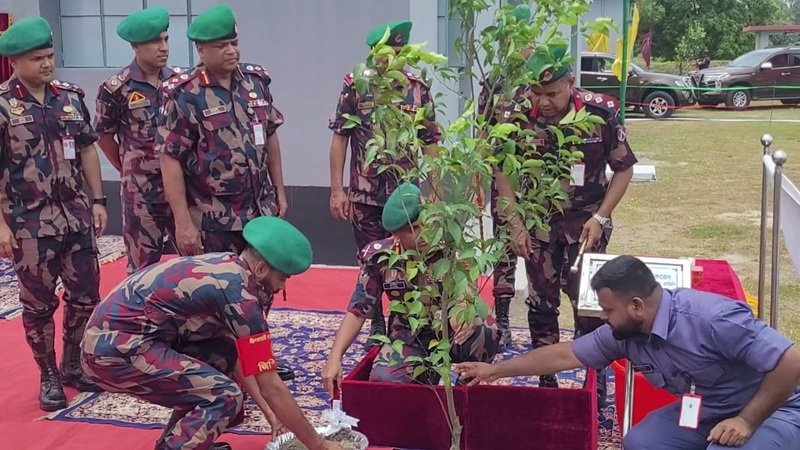
New BGB outpost inaugurated in Panchagarh
To strengthen border security and curb illegal crossings and drug smuggling, a new Border Outpost (BOP) of Border Guard Bangladesh
 www.observerbd.com
Border Guard Bangladesh (BGB) has planned to form two new battalions to protect the remote and vulnerable border areas of the Chittagong Hill Tracts. 30 new Border Posts (BOPs) will be established under these two battalions. The plan is currently awaiting final approval from the concerned ministry.
Brigadier General Sohel Ahmed, Region Commander of BGB Chittagong South East Region, gave this information to reporters during the official inauguration of the 'Chhota Faringa BOP' set up in the remote border area surrounded by the hills and forests of Karerhat in Mirsarai Upazila of Chittagong under the 43rd BGB Battalion in Ramgarh, Khagrachhari on Sunday (October 5).
He said that the border of the Chittagong Hill Tracts is not as traditional as the border areas of the plain districts of Bangladesh. The border areas there are very remote. For example, there are BOPs in remote areas under the Baghaihat and Marishya battalions in Rangamati, where it takes 4 days to walk. As a result, it becomes difficult to cover all those areas. If two new battalions are established in the remote and unprotected border areas of the hill districts under the South-East Region, it will be possible to ensure the security of the vast remote border areas.
He further said that out of the 73 new BOPs decided by the government for border security, 69 BOPs have already been established at various borders of the country. The work of establishing four more BOPs will be completed very soon. Out of the 10 new BOPs established in the last one year, five were established at the borders under the South-Eastern Region. The establishment of the new BOPs has increased the capacity and efficiency of the BGB in border security, prevention of smuggling and suppression of all border crimes.
Brigadier General Sohel Ahmed said, the nearly five-kilometer border area between Dantmara Union of Fatikchhari and Korerhat Union of Mirsarai under the jurisdiction of Ramgarh 43 Battalion was difficult for BGB to conduct operational activities as it was surrounded by mountains and forests and was inaccessible. With the establishment of the Chhota Faringa BOP, this vast border area, which had been largely unprotected for a long time, has now been secured. The operational activities of BGB will be more dynamic, including the security of the residents of the border area.

চট্টগ্রামে ভারত সীমান্ত বসছে বিজিবির ৩০ বর্ডার পোস্ট
পার্বত্য চট্টগ্রামের দুর্গম ও অরক্ষিত সীমান্ত এলাকা সুরক্ষায় বর্ডার গার্ড বাংলাদেশ (বিজিবি) নতুন করে দুটি ব্যাটালিয়ন গঠনের...
DHAKA, Oct 25, 2025 (BSS)- The government has given a nod to create 2258 more posts for the paramilitary force Border Guard Bangladesh (BGB).
According to the notification issued by the Home Ministry, the posts will be created for three battalions and a hospital facility of the force.
The battalions are posted at Bhuruingamari of Kurigram district, Thanchi of Bandarban district and Meherpur district. Border Guard Hospital is located at Guimara Upazila of Khagrachhari district.
As per the order, 742 posts will be created for each of the three battalions and 32 for the hospital facility.
With the creation of the new posts, the total manpower of the BGB will be 59,735.
BGB to get 2258 more manpower | Top News
DHAKA, Oct 25, 2025 (BSS)- The government has given a nod to create 2258 more posts for the paramilitary force
DHAKA, Nov 30, 2025 (BSS) – The National Independent Inquiry Commission, formed to investigate the brutal killings carried out in the name of the BDR mutiny, today submitted its report to the government with findings that Awami League (AL) was organisationally involved in the carnage.
The report revealed that the massacre was pre-planned and then Member of Parliament Sheikh Fazle Noor Taposh “acted as the principal coordinator” while the full incident took place with ‘green signal’ from the then prime minister Sheikh Hasina.
Commission head Major General (retd) ALM Fazlur Rahman and other members handed over the report to Chief Adviser Professor Muhammad Yunus at the State Guesthouse Jamuna here, said Chief Adviser’s Press Wing this evening.
Other members of the Commission are Major General (retd) Md Jahangir Kabir Talukder, Brigadier General (retd) Md Saidur Rahman Bir Protik, former joint secretary Munshi Alauddin Al Azad, former DIG Dr M Akbar Ali, Associate Professor of Dhaka University Political Science Department Md Shariful Islam, and Assistant Professor Jagannath University (JnU) Institute of Education and Research (IER) Md Shahnewaz Khan Chandon.
On the occasion, Fazlur Rahman said that the Commission maintained maximum professionalism to ensure fairness, accuracy and neutrality during the investigation.
“When we began working, much of the evidence from this 16-year-old incident had already been destroyed. Many individuals involved in the incident had left the country,” he said.
The Commission head added that they went through two processes. “We called witnesses and listened to some of them for up to 8 hours as long as they wanted to talk,” he said, adding, “We spoke to those who were involved in the investigation. We collected their investigation reports and other elements as well."
Fazlur Rahman said the Commission attempted to answer every question that existed in the public mind, including why the army had remained inactive during the incident.
“The investigation found strong evidence of direct involvement of external forces as well as the then-ruling party Awami League in the BDR carnage,” he added.
About the findings, Commission member Jahangir Kabir Talukder said the Commission unearthed some external and real causes behind the incident.
“The massacre was pre-planned and then Member of Parliament Sheikh Fazle Noor Taposh acted as the principal coordinator,” he added.
Jahangir said that the local AL leaders played a direct role in protecting those involved in the killings, citing that a group of 20–25 people entered Pilkhana in a procession but came out with more than 200 people.
“Incident took place with the ‘green signal’ of the then Prime Minister Sheikh Hasina,” he added.
Regarding the responsibility for the incident, Jahangir said that the responsibility lies with the then head of government and the army chief as well.
Decision was made to resolve this incident politically, he said, adding, the police, RAB and intelligence agencies failed miserably.
The Commission member said that during the massacre, some print and electronic media outlets and a few journalists played an “unprofessional role”.
Jahangir said that no proper records were kept of the identities of the BDR personnel who met Sheikh Hasina at the State Guesthouse Jamuna (then the Prime Minister’s residence) during the incident.
In its report, the Commission made several recommendations aimed at preventing such incidents within forces in the future and ensuring justice for the victims.
Speaking on the occasion, Chief Adviser Professor Yunus said, “For long, the nation remained in the dark about the BDR killings. The nation will remember you for the role you have played in unearthing the truth. I thank you on behalf of the nation.”
The nation had many questions about this most horrific event in history, and this work will put an end to those questions, he said, adding, “This report contains many lessons. It will remain as a valuable national asset”.
National Security Adviser Dr Khalilur Rahman, Special Assistant to the Chief Adviser on Defence and National Solidarity Development Lieutenant General (retd) Abdul Hafiz and Home Secretary Nasimul Ghani were present at the event.
AL found organisationally involved in BDR carnage, Taposh identified as key coordinator: report | At a Glance
DHAKA, Nov 30, 2025 (BSS) – The National Independent Inquiry Commission, formed to investigate the brutal killings carried out in
DHAKA, Nov 30, 2025 (BSS) – The National Independent Inquiry Commission, formed to investigate the brutal killings carried out in the name of the BDR mutiny, today submitted its report to the government with findings that Awami League (AL) was organisationally involved in the carnage.
The report revealed that the massacre was pre-planned and then Member of Parliament Sheikh Fazle Noor Taposh “acted as the principal coordinator” while the full incident took place with ‘green signal’ from the then prime minister Sheikh Hasina.
Commission head Major General (retd) ALM Fazlur Rahman and other members handed over the report to Chief Adviser Professor Muhammad Yunus at the State Guesthouse Jamuna here, said Chief Adviser’s Press Wing this evening.
Other members of the Commission are Major General (retd) Md Jahangir Kabir Talukder, Brigadier General (retd) Md Saidur Rahman Bir Protik, former joint secretary Munshi Alauddin Al Azad, former DIG Dr M Akbar Ali, Associate Professor of Dhaka University Political Science Department Md Shariful Islam, and Assistant Professor Jagannath University (JnU) Institute of Education and Research (IER) Md Shahnewaz Khan Chandon.
On the occasion, Fazlur Rahman said that the Commission maintained maximum professionalism to ensure fairness, accuracy and neutrality during the investigation.
“When we began working, much of the evidence from this 16-year-old incident had already been destroyed. Many individuals involved in the incident had left the country,” he said.
The Commission head added that they went through two processes. “We called witnesses and listened to some of them for up to 8 hours as long as they wanted to talk,” he said, adding, “We spoke to those who were involved in the investigation. We collected their investigation reports and other elements as well."
Fazlur Rahman said the Commission attempted to answer every question that existed in the public mind, including why the army had remained inactive during the incident.
“The investigation found strong evidence of direct involvement of external forces as well as the then-ruling party Awami League in the BDR carnage,” he added.
About the findings, Commission member Jahangir Kabir Talukder said the Commission unearthed some external and real causes behind the incident.
“The massacre was pre-planned and then Member of Parliament Sheikh Fazle Noor Taposh acted as the principal coordinator,” he added.
Jahangir said that the local AL leaders played a direct role in protecting those involved in the killings, citing that a group of 20–25 people entered Pilkhana in a procession but came out with more than 200 people.
“Incident took place with the ‘green signal’ of the then Prime Minister Sheikh Hasina,” he added.
Regarding the responsibility for the incident, Jahangir said that the responsibility lies with the then head of government and the army chief as well.
Decision was made to resolve this incident politically, he said, adding, the police, RAB and intelligence agencies failed miserably.
The Commission member said that during the massacre, some print and electronic media outlets and a few journalists played an “unprofessional role”.
Jahangir said that no proper records were kept of the identities of the BDR personnel who met Sheikh Hasina at the State Guesthouse Jamuna (then the Prime Minister’s residence) during the incident.
In its report, the Commission made several recommendations aimed at preventing such incidents within forces in the future and ensuring justice for the victims.
Speaking on the occasion, Chief Adviser Professor Yunus said, “For long, the nation remained in the dark about the BDR killings. The nation will remember you for the role you have played in unearthing the truth. I thank you on behalf of the nation.”
The nation had many questions about this most horrific event in history, and this work will put an end to those questions, he said, adding, “This report contains many lessons. It will remain as a valuable national asset”.
National Security Adviser Dr Khalilur Rahman, Special Assistant to the Chief Adviser on Defence and National Solidarity Development Lieutenant General (retd) Abdul Hafiz and Home Secretary Nasimul Ghani were present at the event.
AL found organisationally involved in BDR carnage, Taposh identified as key coordinator: report | At a Glance
DHAKA, Nov 30, 2025 (BSS) – The National Independent Inquiry Commission, formed to investigate the brutal killings carried out inwww.bssnews.net
DHAKA, Jan 14, 2026 (BSS) - Border Guard Bangladesh (BGB) marked a historic milestone today as a record 3,000 new recruits took the oath to protect the sovereignty and integrity of the mother land at the 104th Recruit Batch Training Graduation Parade.
The ceremony was held in the morning at the Bir Uttam Mujibur Rahman Parade Ground of the Border Guard Training Center and College (BGTC&C) in Baitul Izzat, Satkania, Chattogram.
Home Adviser Lieutenant General (Retd) Md. Jahangir Alam Chowdhury attended the event as the chief guest and inspected the parade, according to a press release of the para-military force.
Senior Secretary to Home Ministry Nasimul Ghani, BGB Director General Major Mohammad Ashrafuzzaman Siddiqui, the Commandant of BGTC&C, along with senior military and civil officials, were present on the occasion.
The parade formally began with an armed salute to the chief guest.
Addressing the newly inducted soldiers, the Home Adviser described BGB as a 230-year-old traditional force that has evolved into a modern, disciplined and professional organization.
He highlighted BGB’s vital role as the “watchful guard of the border,” protecting the country’s 4,427-kilometer border, preventing smuggling, drug and human trafficking, suppressing cross-border crimes, assisting civil administration in maintaining law and order, and responding to disasters.
Emphasizing discipline as the core of a soldier’s life, he urged the recruits to uphold honesty, loyalty, intelligence and professionalism, and to remain guided by BGB’s four principles—morale, brotherhood, discipline and skills.
The advisor praised the impressive parade performance and congratulated the recruits on entering their new professional life.
Special recognition was given to Recruit Al Imran (Chest No. 155) for securing first place as the best recruit overall. Recruits Shapikul Islam (Male) and Lubna Khatun (Female) were awarded for physical excellence, while Shafiqur Rahman Tamim (Male) and Nahida Akhtar (Female) were recognized as best firers.
The Home Adviser noted that although BGTC&C has a training capacity of 700–1,000 recruits, a total of 3,023 recruits—2,950 male and 73 female—successfully completed training in the 104th batch, creating history in independent Bangladesh.
He thanked all concerned, including the BGB Headquarters, for the successful organization of the training and parade.
The ceremony concluded with an armed salute, followed by an impressive trick drill and a colorful band display by BGB members. Senior BGB officials, military and civilian officers from Dhaka, Chattogram and Cox’s Bazar, local dignitaries, and representatives from print and electronic media attended the event.
Record 3,000 recruits take oath at BGB | Others
DHAKA, Jan 14, 2026 (BSS) - Border Guard Bangladesh (BGB) marked a historic milestone today as a record 3,000 new
LALMONIRHAT, Jan 14, 2026 (BSS) - A new Border Observation Post (BOP) of the
Border Guard Bangladesh (BGB) was inaugurated in Lalmonirhat on Wednesday to
strengthen border security and enhance surveillance in the area.
Brigadier General A S M Nasher, region commander of the BGB North-West
Region, formally inaugurated the newly-constructed BOP at the East Sardubi
border area of the district. The BOP falls under the jurisdiction of the
Rangpur Teesta Battalion (61 BGB).
Senior BGB officials present at the ceremony included Colonel SM Shafiqur
Rahman, Lieutenant Colonel Sheikh Md. Musahid Masum, Lieutenant Colonel Syed
Fazle Munim and other officers of various ranks.
According to BGB sources, the establishment of the new BOP aims to strengthen
regular patrolling along the border and enhance monitoring activities.
The initiative is expected to play a significant role in preventing border-
related crimes such as illegal infiltration and smuggling.
New Border Observation Post inaugurated in Lalmonirhat | Others
LALMONIRHAT, Jan 14, 2026 (BSS) - A new Border Observation Post (BOP) of the Border Guard Bangladesh (BGB) was inaugurated in


