Breaking News China-US War?

contricusc

Contributor
Think Tank Analyst
Messages
822
Reactions
17 1,251
Nation of residence
Panama
Nation of origin
Romania
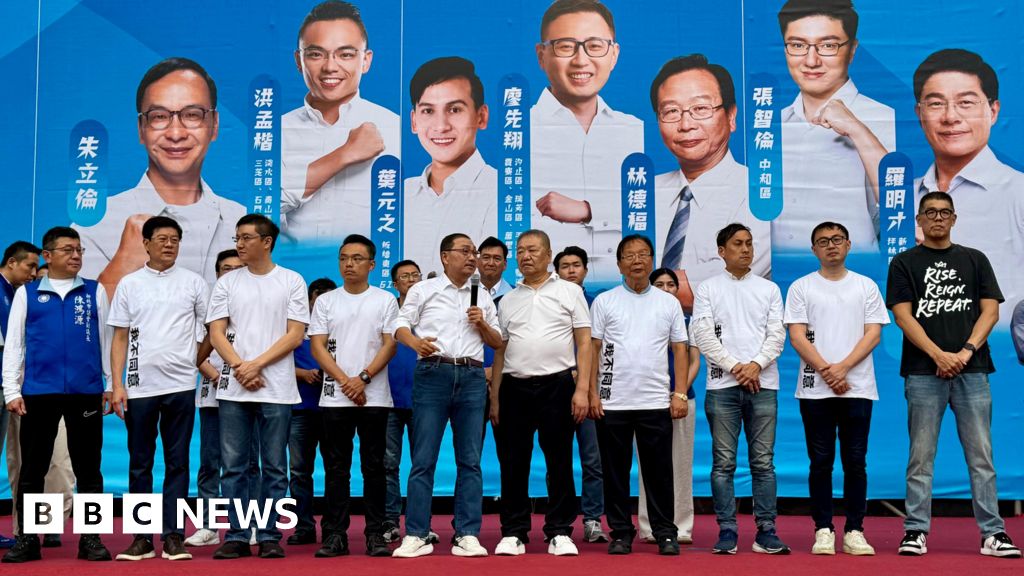
Starting to boil over in pretty unprecedented way politically:


“Beijing has also waded into the debate while watching from afar.

Its Taiwan Affairs Office has accused Lai of "engaging in dictatorship under the guise of democracy" and "using every means possible to suppress the opposition".”

Oh, the irony, when the Chinese accuse others of engaging in “dictatorship“ and “suppressing the opposition”. I guess they already forgot about the Tiananmen massacre.
 

Claudia

Member
Messages
9
Reactions
3
Nation of residence
Pakistan
Nation of origin
United Kingdom
Link for those who want to watch the aircraft activity live in Taiwan airspace

Link for daily GPS jamming maps in Taiwan airspace
The United States is accelerating its AIM-260 Joint Advanced Tactical Missile (JATM) program with a fresh $1 billion funding push, amid growing concerns about the pace of foreign missile development and combat employment. The urgency has been underscored by recent events in South Asia, where Pakistan reportedly used China’s PL-15 long-range air-to-air missile against Indian Air Force jets. This development not only highlights the operational maturity of Chinese missile technology but also reinforces why the Pentagon is pushing AIM-260 forward at speed. Read More https://tinyurl.com/pl-15-vs-US-aim260
 

Bogeyman 

Experienced member
Professional
Messages
9,728
Reactions
74 32,626
Website
twitter.com
Nation of residence
Turkey
Nation of origin
Turkey

US concerned by Taiwan defence delay 'concession' to China​


Further delays to Taiwan military spending are a "concession" to China, the U.S. State Department said, as Taipei's defence ministry detailed ‌the impact of projects excluded from a package passed by the opposition-controlled parliament.
Taiwan President Lai Ching-te had sought $40 billion in supplementary defence spending to better deter China, which views the democratically governed island as its own territory and has stepped up its military pressure.

But after repeated delays by opposition parties, who hold the majority of seats, parliament on Friday approved only two-thirds of the money requested, all for U.S. weapons rather than including ⁠other projects like domestically developed drones and missiles.
The opposition said that while it supports defence spending, it would not sign "blank cheques", saying the proposals were vague in places and could open the door to corruption.
A State Department spokesperson said the U.S. supports Taiwan's acquisition of critical defence capabilities "commensurate with the threat it faces" and consistent with the ongoing commitment of multiple U.S. administrations.

"While we are encouraged by the passage of this special defence budget after unhelpful stalling, the United States notes that further delays in funding the remaining proposed capabilities are a concession to the Chinese Communist Party," the spokesperson added.
The U.S. is Taiwan's most important international backer and arms supplier, despite the lack of formal ‌diplomatic ⁠ties, and has strongly supported increased military spending. Beijing has repeatedly demanded an end to weapons sales.
In a statement late on Friday, Taiwan's defence ministry said the approved spending completely excludes certain commercial purchases, which is highly likely to create "capability gaps".
"Our country faces a severe and continuously escalating threat environment," it said.
One plan not included is the Chiang Kung, or "Strong Bow", anti-ballistic missile ⁠which is meant to form the backbone of Taiwan's new "T-Dome" air defence system, the ministry added.

"Following its removal from the special budget, if it cannot be procured in a timely manner, air defence combat effectiveness will be severely impacted," it said.
Lack of approval ⁠for drone systems like sea attack drones will significantly delay asymmetric warfare capabilities and affect projected economic growth and employment opportunities for domestic industry, the ministry said.
Lai said that while he appreciated the approved funding, which allows purchases ⁠of such items as the Lockheed Martin-made (LMT.N), opens new tab HIMARS multiple-launch rocket system to proceed, this was only the first step.
"Any gap will affect the integrity of the overall defence system. Any delay will increase the shared security risks borne by the people of Taiwan," he posted on Facebook.
 

Passenger

Well-known member
Moderator
China Moderator
Messages
442
Reactions
14 824
Nation of residence
China
Nation of origin
China
President Xi Jinping Holds Talks with U.S. President Donald J. Trump

President Xi noted that transformation not seen in a century is accelerating across the globe, and the international situation is fluid and turbulent. Can China and the United States overcome the Thucydides Trap and create a new paradigm of major-country relations? Can we meet global challenges together and provide greater stability for the world? Can we build a bright future together for our bilateral relations in the interest of the well-being of the two peoples and the future of humanity? These are the questions vital to history, to the world, and to the people. They are the questions of our times that the leaders of major countries need to answer together. I stand ready to work together with President Trump to set the course and steer the giant ship of China-U.S. relations, so as to make 2026 a historic, landmark year that opens up a new chapter in China-U.S. relations.

President Xi stressed that China is committed to a steady, sound and sustainable development of China-U.S. relations. I have agreed with President Trump on a new vision of building a constructive China-U.S. relationship of strategic stability. This will provide strategic guidance for China-U.S. relations over the next three years and beyond, and will be well received by the people of both countries and the international community. “Constructive strategic stability” means positive stability with cooperation as the mainstay, healthy stability with competition within proper limits, constant stability with manageable differences, and lasting stability with expectable peace. Building a constructive China-U.S. relationship of strategic stability is not a slogan. It means actions in the same direction.

President Xi noted that China-U.S. economic and trade ties are mutually beneficial and win-win in nature. Where disagreements and frictions exist, equal-footed consultation is the only right choice. Yesterday, our economic and trade teams produced generally balanced and positive outcomes. This is good news for the people of the two countries and the world. The two sides should jointly sustain the good momentum that we have worked hard to create. China will only open its door wider. U.S. businesses are deeply involved in China’s reform and opening up. China welcomes more mutually beneficial cooperation from the U.S.

President Xi pointed out that the two sides should implement the important common understandings we have reached, and make better use of communication channels in the political and diplomatic and military-to-military fields. The two countries should expand exchanges and cooperation in areas such as the economy and trade, health, agriculture, tourism, people-to-people ties and law enforcement.

President Xi stressed that the Taiwan question is the most important issue in China-U.S. relations. If it is handled properly, the bilateral relationship will enjoy overall stability. Otherwise, the two countries will have clashes and even conflicts, putting the entire relationship in great jeopardy. “Taiwan independence” and cross-Strait peace are as irreconcilable as fire and water. Safeguarding peace and stability across the Taiwan Strait is the biggest common denominator between China and the U.S. The U.S. side must exercise extra caution in handling the Taiwan question.

President Trump said that it was a great honor to pay a state visit to China. The United States and China have a very good relationship. President Xi and I have had the longest and greatest relationship the presidents of the two countries have ever had. We have enjoyed friendly communication and worked out many important issues. President Xi is a great leader, and China is a great country. I have tremendous respect for President Xi and the Chinese people. Our meeting today is the biggest summit the world is watching. I will work together with President Xi to strengthen communication and cooperation, properly handle differences, make bilateral relations better than ever before and embrace a fantastic future. The United States and China are the most important and most powerful countries in the world. Together, we can do a lot of big and good things for the two countries and the world. I have brought with me the best representatives of American businesses. They all respect and value China. I strongly encourage them to expand their cooperation with China.

The two presidents exchanged views on major international and regional issues, such as the Middle East situation, the Ukraine crisis, and the Korean Peninsula.

The two presidents agreed to support each other in hosting a successful APEC Economic Leaders’ Meeting and G20 Summit this year.

During the meeting, President Trump asked each of the business leaders who were traveling with him to present themselves to President Xi.


Bogeyman 

Experienced member
Professional
Messages
9,728
Reactions
74 32,626
Website
twitter.com
Nation of residence
Turkey
Nation of origin
Turkey
HIiDY4BX0AAn2TJ

HIiDY37X0AAo90N


Bogeyman 

Experienced member
Professional
Messages
9,728
Reactions
74 32,626
Website
twitter.com
Nation of residence
Turkey
Nation of origin
Turkey

US Navy’s repair gap could hand the Pacific war to China​

The US Navy’s greatest vulnerability in a war with China may not be losing ships — but getting them back into the fight.

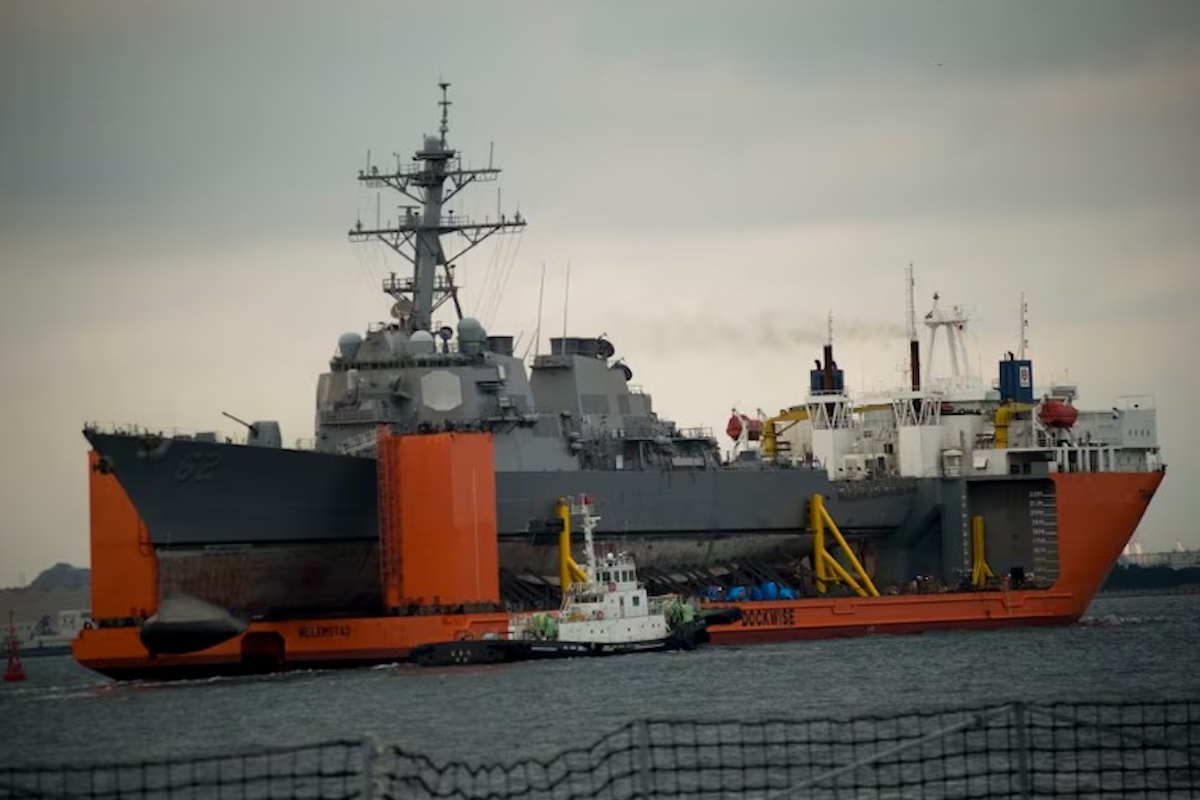
RAND released a recent report warning that the US Navy faces severe risks to its maritime dominance because repairing battle-damaged Arleigh Burke-class destroyers in a hostile Indo-Pacific theater is significantly more complex and difficult than current military plans allow.

Based on a two-day wargaming tabletop exercise sponsored by the Joint Staff and held in August 2025, defense experts from the US and regional allies — including Japan, South Korea and Australia — simulated conflict vignettes against China to evaluate strategic ship-salvage and force-regeneration capabilities.

The analysis revealed critical bottlenecks in industrial ship repair, finding that the US Navy’s organic capabilities are insufficient for major repairs and can only stabilize ships to the point that they can transit back to the US.

Repairs are further crippled by a severe shortage of specialized technicians and a rigid peacetime regulatory framework that stalls emergency wartime operations.

Additionally, tech-sharing hurdles and the non-standardized, “snowflake” configurations of individual Aegis combat systems make it nearly impossible to substitute or cannibalize parts.

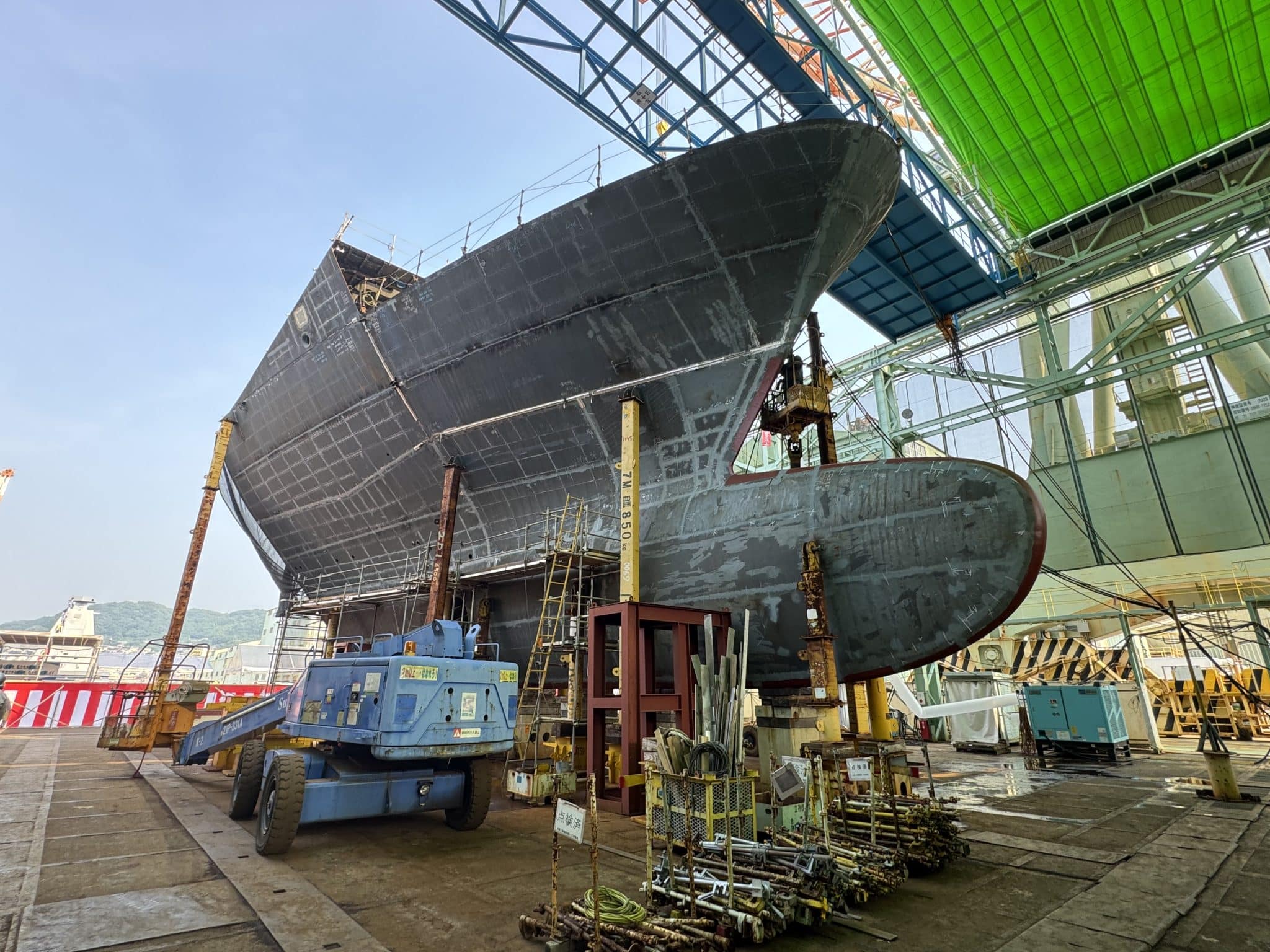
This lack of specialized spare parts is compounded by the extreme physical vulnerability of allied shipyards to enemy attacks and commercial constraints at regional hubs such as Singapore.

Together, those factors threaten to leave damaged US warships stranded and defenseless during an active campaign.

The US Navy’s battle damage repair capabilities may not be limited to just the Arleigh Burke destroyer class. A US Government Accountability Office (GAO) report from June 2021 states that the US Navy is still in the early stages of developing the capabilities needed to repair battle damage in great-power conflicts.

The GAO report says that the US Navy lacks an established wartime doctrine, has fragmented planning on which authority oversees repair and maintenance efforts, and faces severe shipyard capacity shortages, because it hasn’t had to repair damaged warships on a scale not seen since World War II.

Compounding these vulnerabilities, the report says the US Navy relies on outdated ship survivability models, leaving it without reliable data on modern failure points needed to accurately analyze battle damage repair needs.

Furthermore, Michael Hogan mentions in a May 2025 article for the Center for International Maritime Security (CIMSEC) that post-Cold War downsizing slashed the US Navy’s auxiliary fleet to just three ocean-going tugs, two rescue ships and two submarine tenders, driving its declining repair capabilities and leaving it unable to handle sudden wartime battle damage.

According to Hogan, US public shipyards are already operating at maximum capacity, and routine peacetime modernization means fewer than 40% of maintenance periods are completed on time. He stresses that with a massive domestic shipbuilding bottleneck, the US faces a crippling capacity deficit compared to China, leaving forward-deployed warships highly vulnerable in a conflict.

Illustrating the US Navy’s massive shipbuilding deficit vis-a-vis China, The War Zone (TWZ) reported in June 2023 that a leaked US Navy intelligence slide revealed that China possesses an astonishing 232 times the shipbuilding capacity of the US.

The slide said China’s state-run shipyards produce a massive capacity of approximately 23.25 million gross tons, compared to less than 100,000 tons domestically for the US.

Moreover, Arjun Vohra mentions in a Geopolitical Monitor article this month that the US today maintains only eight military shipyards, a far cry from its robust World War II industrial base.

Vohra points out that because modern destroyers take 5 to 7 years to build, compressing wartime timelines is nearly impossible, forcing the US Navy to rely heavily on retrofitting older vessels rather than building new ones.

Against that backdrop, China’s naval repair enterprise is evolving in the opposite direction. Contrasting China’s approach to naval shipbuilding and repair with that of the US, a RAND report this month mentions that the People’s Liberation Army Navy (PLAN) is transitioning toward a hybrid maintenance framework, balancing the replacement of older hulls with comprehensive overhauls of its newest, highly sophisticated surface combatants.

The report says that to support its breakneck shipbuilding pace, China heavily prioritizes organic, grassroots self-sufficiency, though its lower-level units still struggle with surface-level practices and rely on higher echelons for complex repairs.

It notes that this strategy directly contrasts with the US Navy’s longstanding, repair-focused approach, which remains severely hindered by domestic shipyard bottlenecks, compounding maintenance backlogs and critical workforce shortages.

A Center for Strategic and Budgetary Assessments (CSBA) report warns that the lack of rapid repair capabilities has diminished the US Navy to the point of functioning as a mere “garrison force,” dependent on a forward network of ports and bases rather than the true expeditionary force it was during World War II.

It warns that in a protracted war of attrition against a peer adversary like China, this decay would be catastrophic. Lacking mobile repair assets and flexible surge capacity to triage struck vessels, the US Navy faces a steep drop in operational availability and a dramatically higher loss percentage of salvageable warships, the report says.

Those shortcomings could be especially consequential in a Taiwan contingency. A January 2023 Center for Strategic and International Studies (CSIS) report mentions that a potential Chinese amphibious invasion of Taiwan would inflict catastrophic losses on the US Navy, typically sinking two US carriers and 10 to 20 large surface combatants within three weeks, losses that could cripple the US’s global position for years.

Reversing those shortcomings will require more than additional funding — it will require a fundamental shift in how the US Navy prepares to regenerate combat power during wartime.

William Arnest writes in a March 2025 Proceedings article that, to reverse severe post-Cold War capability divestments, the US Navy must transition from peacetime efficiency metrics to a wartime framework focused on rapid force regeneration through a tiered triage matrix that prioritizes quick, mission-essential fixes over full restoration.

Arnest urges accelerating the procurement of Navajo-class salvage ships and next-generation submarine tenders, using existing expeditionary fast transports as repair platforms, and deploying containerized, mobile Expeditionary Maintenance and Repair Facilities (EMRFs).

He adds that the US Navy must have a flag-level champion within the Chief of Naval Operations (CNO) staff to bridge structural organizational divides and secure vital funding. Whether the US can sustain maritime power in the Indo-Pacific may ultimately depend less on how many warships it fields than on how quickly it can return damaged ones to the fight.

Unless the US rebuilds the industrial, logistical and organizational foundations of wartime naval resilience, China’s growing advantages in shipbuilding and force regeneration could increasingly shape the strategic balance in any prolonged conflict.


@TR_123456 @Nilgiri @Mis_TR_Like @Yasar_TR @what @Anmdt @Isa Khan @Sanchez @Passenger @Zafer

 
Top Bottom