REalloys, U.S. Critical Materials sign MoU to build domestic rare earth supply chain
April 1 (Reuters) - Rare earths developers REalloys (ALOY.O), opens new tab and U.S. Critical Materials Corp have signed a memorandum of understanding to build a fully domestic supply chain for the key materials in the U.S., in line with Washington's aims to reduce reliance on China.
Under the agreement, REalloys will secure up to 10% offtake from the U.S. Critical Materials-owned Sheep Creek rare earth deposit in Ravalli County, Montana.
The U.S. has been escalating efforts to reduce dependence on China for the critical materials, such as instituting tighter procurement rules, prompting a rush among miners and processors to build domestic rare earth supply chains.
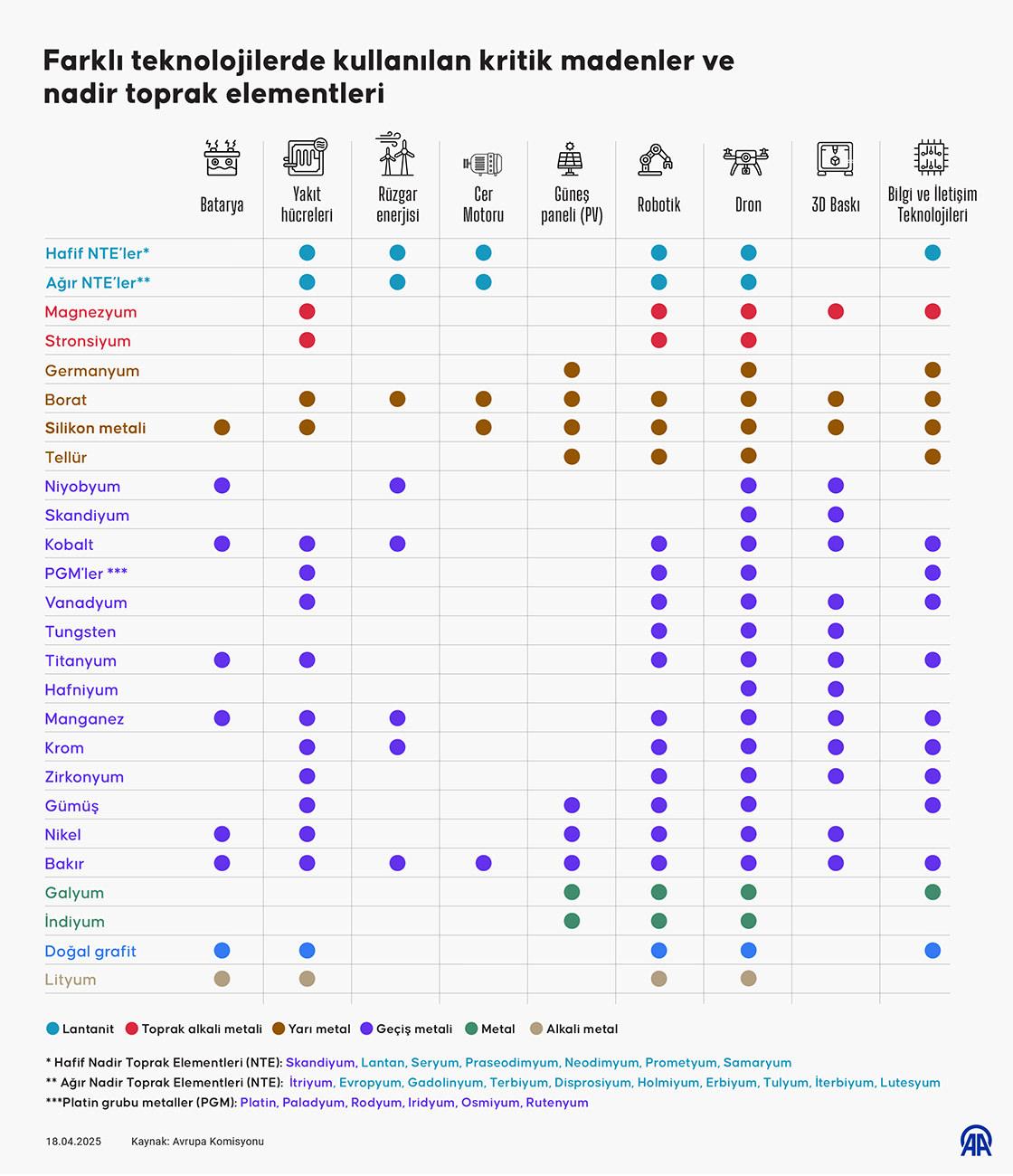
The Sheep Creek deposit contains high concentrations of elements such as dysprosium and terbium, which are used to power high-performance permanent magnets in F-35 fighter aircraft, missile guidance systems and radar platforms, the companies said.
"We are identifying the strategic assets that plug into our advanced midstream and downstream ecosystem to fortify supply chain security for protected and strategic markets, with zero Chinese involvement at any stage," said Lipi Sternheim, CEO of REalloys.
REalloys and U.S. Critical Materials also said they would advance test work to improve heavy rare earth processing and seek to finalize a long‑term offtake deal within one year.
Japan, France agree rare earths deal to cut China reliance, NHK reports
April 1 (Reuters) - Japan and France agreed to strengthen support for rare earths supply chains on Wednesday, Japan's public broadcaster NHK reported, in the latest moves by both countries to lessen dependence on the world's dominant supplier, China.
During French President Emmanuel Macron's three-day visit to Japan for talks with Prime Minister Sanae Takaichi, officials signed a roadmap to cooperate on critical minerals supply chains, NHK said.
"We cannot rely solely on specific countries, especially China," French Finance Minister Roland Lescure was quoted as saying by NHK.
The two sides also agreed to secure raw material supplies for a rare earths refining project in southern France, called Caremag, the broadcaster said.
The state-owned Japan Organization for Metals and Energy Security and gas firm Iwatani (8088.T), opens new tab, along with the French government, are investors in Caremag, which is due to start operations in late 2026.
Japan plans to get about 20% of its future demand for dysprosium and terbium from the refining plant, heavy rare earth oxides used in magnets for EV motors, offshore wind turbines and electronic components.
Takaichi and Macron are due to issue a joint statement calling for diversifying supplies of rare earths and other critical minerals during their summit on Wednesday, the Nikkei newspaper reported separately.
DIVERSIFYING FROM CHINA
The deal comes at a critical moment, with Japan and Western governments and manufacturers scrambling to secure supplies of rare earths minerals to reduce their dependency on China, the world's dominant rare earths producer and supplier.
In February, China prohibited exports of so-called dual-use items to 20 Japanese entities, which it said supply Japan's military.
That was after Takaichi angered Beijing with comments about Taiwan in November.
The rules cover seven rare earths and associated materials currently on China's dual-use control list, including dysprosium and yttrium, along with a swathe of other controlled critical minerals.
"China is pursuing a strategy of using rare earths as a diplomatic card, and if U.S.-China and Japan–China relations improve, exports could recover quickly," said Kotaro Shimizu, principal analyst at Mitsubishi UFJ Research and Consulting.
Japan has reduced its reliance on China to 60% from 90% following a 2010 diplomatic incident which saw Beijing restricting rare earths supply to Tokyo.
Japan has been boosting investments in overseas projects like trading house Sojitz's (2768.T), opens new tab tie-up with Australia's Lynas Rare Earths (LYC.AX), opens new tab, and promoting rare earths recycling and manufacturing processes.
In the latest set of steps, Japan's Mitsubishi Materials (5711.T), opens new tab this week agreed to acquire a stake in U.S. ReElement, a company involved in rare earth element recycling, as both countries have set up an action plan for China alternatives.
Japan and the U.S. are also considering joint development of rare-earth-rich mud deposits, near the remote Minamitori Island, and Japan is in talks with India to jointly explore rare earths in the desert state of Rajasthan.
Japan and France will also seek cooperation in space, with companies from the two countries expected to sign memorandums of understanding on 12 joint projects, including space debris removal and rocket launches, the Nikkei said.



 ekonomi.haber7.com