

You are using an out of date browser. It may not display this or other websites correctly.
You should upgrade or use an alternative browser.
You should upgrade or use an alternative browser.
History and Culture
- Thread starter Nilgiri
- Start date

The Roman empire under Hadrian (ruled 117–138) showing the location of roads, cities, provincial boundaries, naval bases, the Roman legions deployed in AD 125 and Germanic tribes from the time of Augustus.
X.com
Why Were There Archery Contests in Medieval England?
The English leveraged the longbow to gain a military advantage in the Middle Ages. Archery contests were essential for training bowmen, and they shaped English society.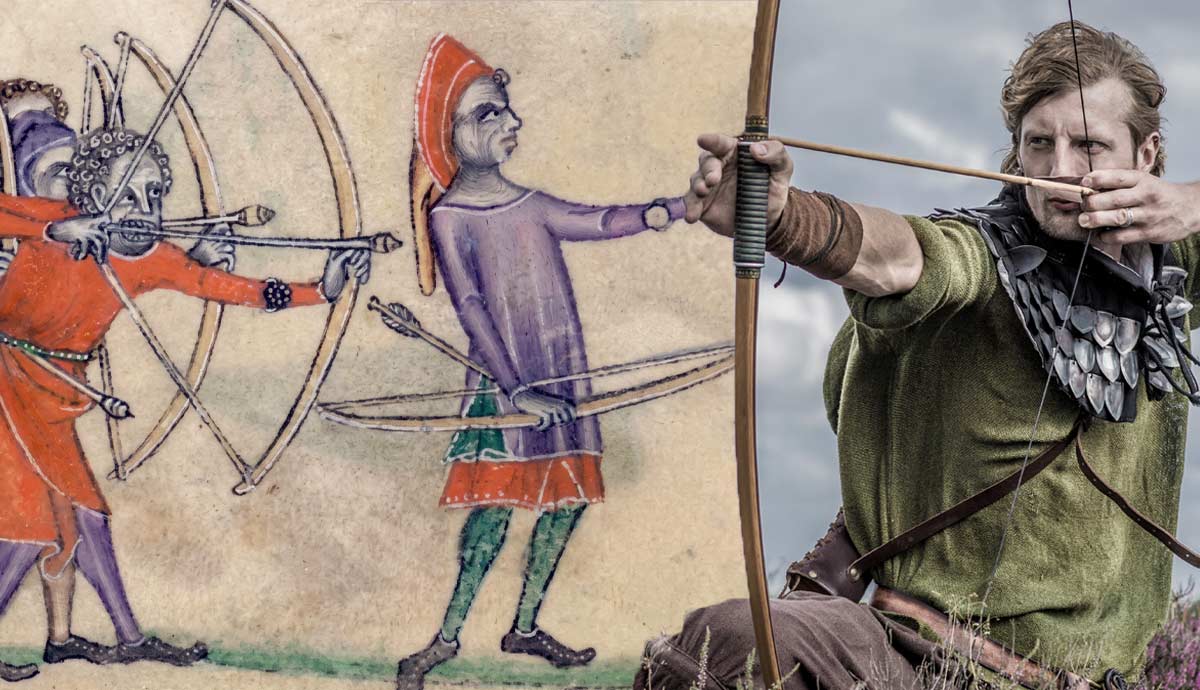
Why Were There Archery Contests in Medieval England? | TheCollector
The English leveraged the longbow to gain a military advantage in the Middle Ages. Archery contests were essential for training bowmen and shaped English society.
 share.google
Ottoman houses Istanbul
Iron used for the first time
The Mongols operated a vast relay network called the yam, consisting of more than 1,000 relay stations spread across the empire.
Stations were typically placed 20–40 miles (30–65 km) apart and stocked with fresh horses, food, fodder, and lodging.
Official couriers carried a paiza (an imperial passport), allowing them to change horses at each station and travel without delay. Most official messengers covered 150–250 km (90–155 miles) per day, while urgent dispatches could travel even faster under ideal conditions.
The system enabled the Mongol Empire to send military orders, intelligence, tax records, and diplomatic messages across thousands of miles in just weeks, making it the fastest overland communication network in the world before the telegraph.
#archaeohistories
X.com
The only two known authentic pirate flags.
Only two authentic pirate flags from the Golden Age of Piracy are confirmed to survive today, providing a rare physical connection to historical buccaneers. The most famous example is preserved at the Åland Maritime Museum in Finland, featuring a classic skull and crossbones stitched onto a faded black fabric that likely belonged to an 18th century Barbary corsair.
The second genuine artifact is housed at the Pirate and Treasure Museum in St. Augustine, Florida, dating back to the late 19th century.
Because most pirate crews burned or discarded their illegal colors to avoid execution upon capture, these two delicate textiles represent the only verified exceptions to a historical record otherwise filled with myth and modern reproduction.
X.com
This is one single tree!
In 1851, a Viennese workshop took a single oak tree and, without using a single nail or a central supporting column, carved a self-supporting spiral staircase through the precision of its joinery.
It stands in Lednice Castle in the present-day Czech Republic. Commissioned by Prince Alois II of Liechtenstein, an admirer of English Gothic, as part of the castle’s neo-Gothic renovation, it was executed by the Viennese workshop of Karl Leister with carved motifs of vine leaves, flowers, and heraldic elements inspired by Burgundian and English Gothic. It ascends to the castle’s library.
What makes this staircase special is not only that it came from a single trunk, but how it holds itself together: each step fits the next without nails or added reinforcements, relying solely on precise carving. No step is more important than any other. The one at the top exists only because all those below were well resolved.
X.com
#OnThisDay 1914 Britain declared war on Germany after Germany invaded Belgium. World War One had begun. 58,000 Irishmen were mobilised at once & the total number of Irish that enlisted is estimated at 205,000. 37 Victoria Crosses were awarded to Irishmen.
#Ireland #History #WW1
X.com
 do we know that
Rommel visits Normandy
A 2,000-year-old Roman-era swimming pool has been uncovered in Aydın, offering a glimpse into how ancient Romans enjoyed leisure and bathing.
Archaeologists excavating the ancient city of Tralleis near Aydın in western Türkiye have fully uncovered a remarkably preserved Roman swimming pool dating to around the 1st or 2nd century AD.
Measuring roughly 37 meters (121 feet) long and 12 meters (39 feet) wide, the massive pool could hold around 300 people and was part of a sprawling 40,000-square-meter bath and gymnasium complex. Researchers believe it was a cold-water pool used for swimming, athletic training, instruction, and recreation.
The complex reflects how important physical fitness and public life were in Roman society. Bath and gymnasium complexes were more than places to exercise and bathe—they also served as centers for education, business, and social interaction.
The pool was supplied by an advanced water system that continuously circulated fresh water while allowing it to drain efficiently, showcasing the sophistication of Roman hydraulic engineering.
Tralleis was a prosperous city in the Roman province of Asia, known for its temples, theaters, baths, and other monumental buildings. Excavations continue to reveal new insights into daily life in one of the region’s most important ancient urban centers.
Despite being described as an “Olympic” pool in some modern reports because of its impressive size, it was not built for the ancient Olympic Games. Archaeologists believe it instead belonged to a local athletic complex where young people learned to swim and trained for regional competitions.
X.com


