• Forum restore complete (see latest announcement thread)

History of Pakistan

Saiyan0321

Contributor
Moderator
Think Tank Analyst
Messages
1,209
Reactions
101 1,894
Nation of residence
Pakistan
Nation of origin
Pakistan
Whilst the Federation of Pakistan happened in 1947, the land is rich with history dating thousands of years back. Such history and culture is preserved by the people of Pakistan and recently the state has taken an effort to preserve the history of Pakistan. This thread would look to contain historical knowledge of the events that happened in conterminous Pakistan as well as how the impacts of those events on modern day Pakistan. It will also look to see how the administrative reforms of the British Empire, Sikh Empire, Mughal Empire and the Delhi sultanate, impacted the regions and whether those administrative and even economic reforms survive to this. As a lawyer, i have often come across land divisions and land administrative system that dates back to the Mughal land reforms which i shall discuss over here as well. It will also look to see the history of the various tribes, city states, and their relations with others.

This thread is entirely meant to be informative and any attempted trolling will not be tolerated.

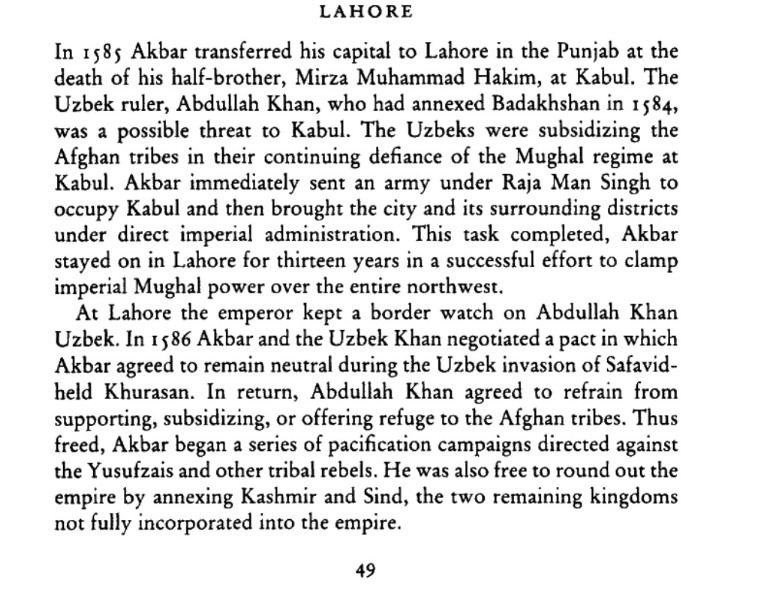
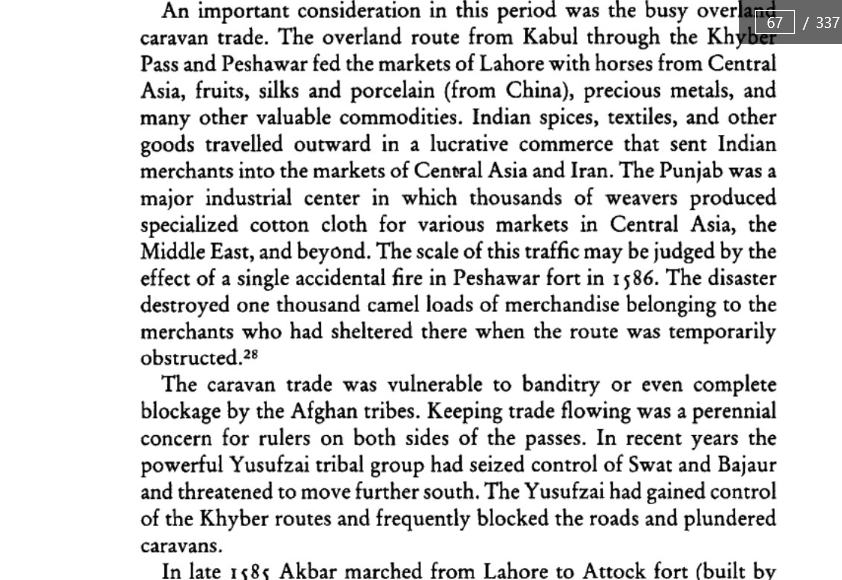
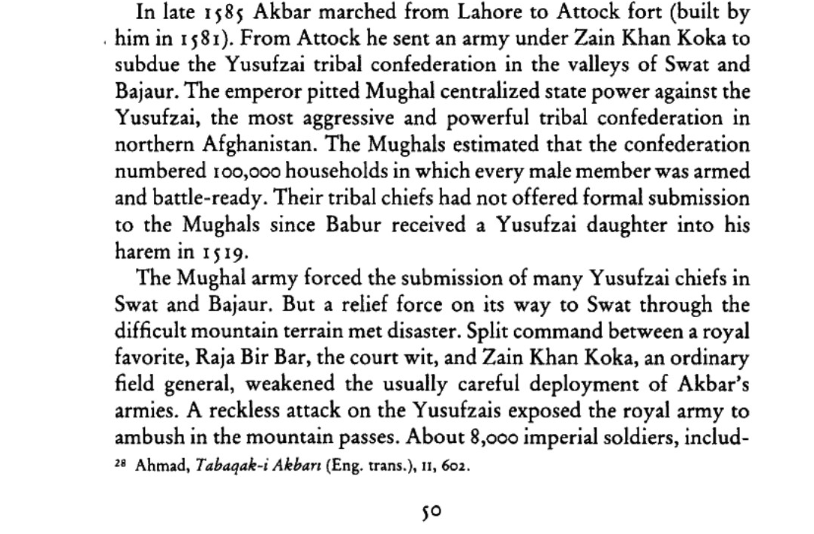
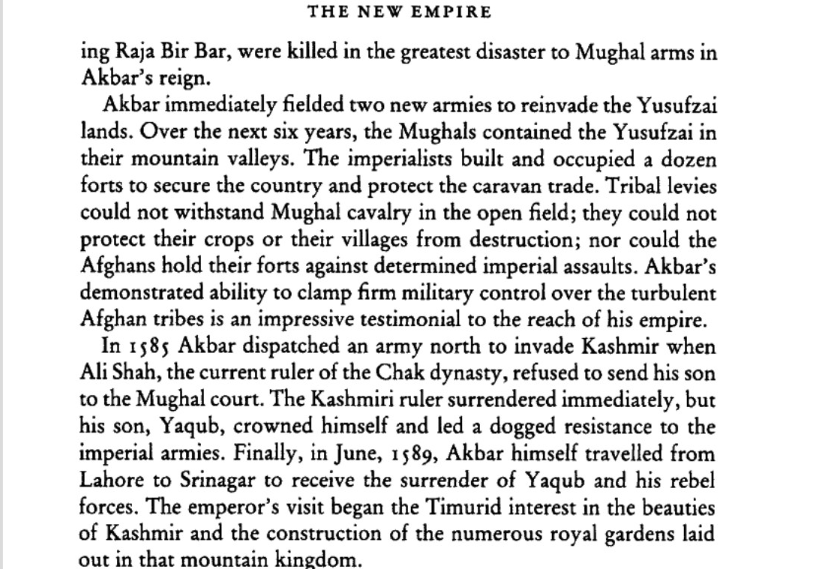
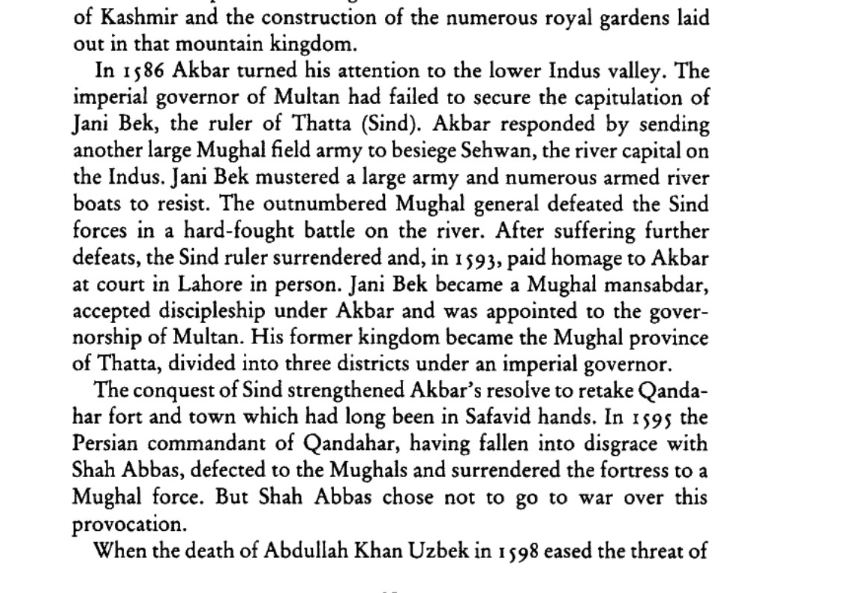
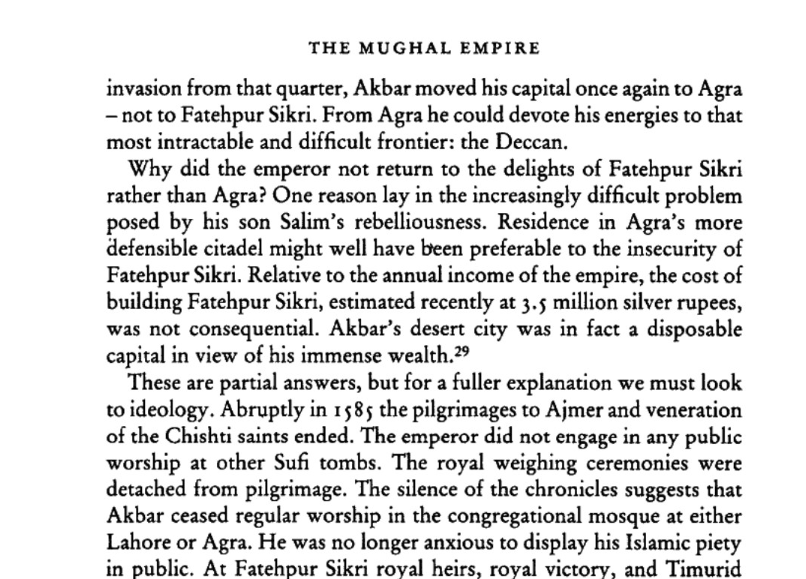
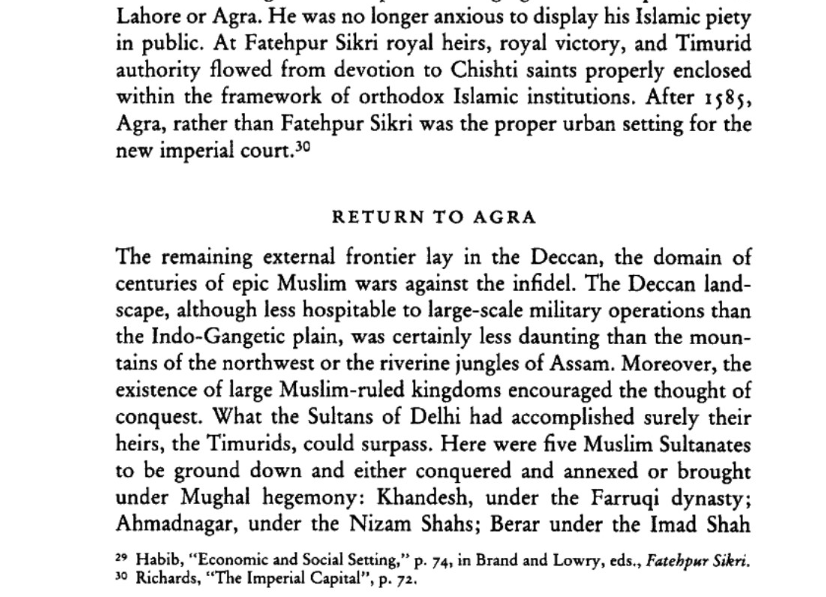
So lets start the thread utilizing an excerpt from Richards Jhon F "The Mughal Empire Part 1 Volume 5"

2020-12-26.png


2020-12-26 (1).png

;
2020-12-26 (2).png
2020-12-26 (3).png
2020-12-26 (4).png
2020-12-26 (5).png
2020-12-26 (6).png
 

Saiyan0321

Contributor
Moderator
Think Tank Analyst
Messages
1,209
Reactions
101 1,894
Nation of residence
Pakistan
Nation of origin
Pakistan
as i highlighted that the land and agrarian reforms of the Mughal empire had a deep impact on the region. Let me introduce them by taking in the excerpt from the book "The Administration of Mughal" By Ishtiaq Hussain Qureshi


2020-12-26 (7).png
2020-12-26 (8).png
2020-12-26 (9).png
2020-12-26 (10).png
2020-12-26 (11).png
2020-12-26 (12).png
2020-12-26 (13).png


2020-12-26 (14).png
2020-12-26 (15).png
2020-12-26 (16).png
 

Saiyan0321

Contributor
Moderator
Think Tank Analyst
Messages
1,209
Reactions
101 1,894
Nation of residence
Pakistan
Nation of origin
Pakistan
MUGHAL LAND REVENUE SYSTEM​


INTRODUCTION

The central feature of the agrarian system under the Mughals was the alienation from the peasant of his surplus produce (produce over and above the subsistence level) in the form of land revenue which was the main source of state's income. Early British administrators regarded the land revenue as rent of the soil because they had a notion that the king was the owner of the land. Subsequent studies of Mughal India have shown that it was a tax on the crop and was thus different from the land revenue as conceived by the British. Abul Fazl in his Ain-i Akbari justifies the imposition of taxes by the state saying that these are the remuneration of sovereignty, paid in return for protection and justice.
The Persian term for land revenue during the Mughal rule was mal and mal wajib. Kharaj was not in regular use.

The process of land revenue collection has two stages:

(a) Assessment (tashkhis/jama)

(b) Actual collection (hasil).

Assessment was made to fix the state demand. On the basis of this demand, actual collection was done separately for kbarif and rabi crops.


METHODS OF LAND REVENUE ASSESSMENT

Under the Mughals assessment was separately made for kharif and rabi crops. After the assessment was over a written document called patta, qaul or paul-e-qarar was issued in which the amount or the rate of the revenue demand was mentioned. The assessee was in return supposed to give qabuliyat i.e. 'the "acceptance" of the obligation imposed upon him, stating when and how he would make the payments'.

We will discuss here a few commonly used methods:

1) Ghalla Bakhshi (Crop-sharing): In some areas it was called bhaoli and batai. The
Ain-i Akbri notes three types of crop-sharing:

a) Division of crop at the threshing floor after the grain was obtained. This was done in the presence of both the parties in accordance with agreement.

b) Khet batai: The share was decided when the crop was still standing in the fields, and a division of the field was marked.

c) Lang batai: The crop was cut and stacked in heaps without separating grain and a division of crop in this form was made.

In Malikzada's Nigarnama-i Munshi ,crop sharing has been mentioned as the best method of revenue assessment and collection. Under this method, the peasants and the state shared the risks of the seasons equally. But as Abul Fazl says it was expensive from the viewpoint of the state since the latter had to employ a large number of watchmen, else there were chances of misappropriation before harvesting. When Aurangzeb introduced it in the Deccan, the cost of revenue collection doubled simply from the necessity of organizing a watch on the crops.

2) Kankut/Dambandi The word kankut is derived from the words kan and kat. Kan denotes grain while kat means to estimate or appraisal. Similarly, dam means grain while bandi is fixing or detemining anything. It was a system where the grain yield (or productivity) was estimated. In kankut, at first, the field was measured either by means of a rope or by pacing. After this, the per bigha productivity from good, middling and bad Iands was estimated and the revenue demand was fixed accordingly.

3) Zabti: In Mughal India, it was the most important method of assersment. The origin of this practice is traced to Sher Shah. During Akbar'r reign, the system was revised a number of times before it took the final shape.

Sher Shah had established a rai or per bigha yield for lands which were under continuous cultivation (polaj), or those land which very rarely allowed to lie fallow (parauti). The rai was based on three rates, representing good, middling and low yields and one third of the sum of these was appropriated as land revenue. Akbar adopted Sher Shah's rai. Akbar introduced his so-called karori experiment and appointed karoris all aver North India in 1574-75. The entire jagir was converted into khalisan. On the basis of the information provided by the karoris regarding the actual produce, local prices, productivity, etc. in.1580. Akbar instituted a new system ain dhasals, where the average produce.of different crops as well as the average prices prevailing over the last ten years were calculated. One third of the average produce was the state's minimum share. Under karori experiment, measurement of all provinces took place. Bamboo rods with iron rings called tanab were used instead of hempen ropes. On the basis of productivity and prices prevailing in different regions they were divided for revenue purposes into dastur circles. The rates of assessment in cash for each crop in every dastur were decided, and the demand was f ixed accordingly. The main features of the zabti system as it finally came into operation under Akbar were:

i) measurement of land was essential

ii) Fixed cash revenue rates known as dastur for each crop.

iii) All the collection was made in cash.

From an administrative point of view, zabtl system had some merits:

i) measurement could always be rechecked;

ii) due to fixed dasturs, local officials could not use their discretion; and

iii) With fixing the permanent dasturs, the uncertainties and fluctuation in levying the land revenue demand were greatly reduced.

There were some limitations of this system also:

i) It could not be applied if the quality of the soil was not uniform;

ii) If the yield was uncertain, this method was disadvantageous to peasants because
risks were borne by them alone. Abul Fazal says, "If the peasant does not have the strength to bear zabti, the practice of taking a third of the crop as revenue is followed."

iii) This was an expensive method as a cess of one dam per bigha known as zabitana was given to meet the costs towards the maintenance of the measuring party;and

iv) Much fraud could be practiced in recording the measurement.

Zabti system was adopted only in the core regions of the Empire. The main provinces covered under zabti were Delhi, Allahabad, Awadh, Agra, Lahore and
Multan. Even in these provinces, other methods of assessment were also practiced, depending on the circumstances of the area.

Revenue farming

Ijara syrtem or revenue farming war another feature of the revenue system of that time. Though, as a rule Mughals disapproved of this practice, in actual fact certain villages were sometimes farmed out. Generally, these villages, when peasant did not have resources available for undertaking cultivation or where owing to some calamity cultivation could not be done, were farmed out on ijara. The revenue officials or their relatives were not supposed to take land on ijara . It was expected that revenue farmers would not extract more than the stipulatedl land revenue from the peasants. But this was hardly the case in actual practice.

The practice of ijara, it seems, could not have been very common in the zabti provinces, Gujarat and the Mughal Dakhin. In the khalisa lands also this practice was very rare. However, in the jagir lands it became a common feature. Revenue assignees (jagirdars) farmed out their assignments in lieu of a lump sum payment, generally to the highest bidders.
Sometimes jagirdars sub-assigned part of their Jagirs to his subordinate/troopers.
During the 18th century ijara system became a common form of revenue assessment and collection.

MODE OF PAYMENT

The practice of collecting land revenue in cash was in use in some regions even as early as the 13th century. In the Mughal period, the peasant under zabti system had to pay revenue in cash. No provision is on record for allowing a commutation of cash into kind in any circumstances. However, under crop-sharing and hankut, commutation into cash was permitted at market prices. Cash nexus was firmly established in almost every part of the Empire.

COLLECTION OF LAND REVENUE

Under ghalla bakhshi, the state's share was seized directly from the field. In other systems, the state collected its share at the time of harvest. Abul Fazl maintains that "Collection shou!d begin for rabi from holi and for kharif from Dashehra. The officials should not delay it for another crop”

In the kharif season, the harvesting of different crops was done at different times and the revenue was accordingly to be collected in three stages depending on the type of crops. Thus, under kharif the revenue could only be collected in instalments.The rabi harvest was all gathered within a very short period. The authorities tried to collect revenue before the harvest was cut and removed from the fields. By the end of the 17th century, the authorities in desperation started preventing the peasants from reaping their fields until they had paid their revenue. Irfan Habib comments:
"It shows how oppressive it was to demand the revenue from the peasant before the harvest, when he would have absolutely nothing left. The practice was at the same time the work of a well developed money economy, for it would have been impossible to attempt it unless the officials expected that the peasants would pay up by pledging their crops before hand to grain merchants or moneylenders".

Usually, the revenue was deposited in the treasury through the 'amil' or revenue collector. Akbar encouraged the peasants to pay directly, Todar Ma1 recommended that the peasants of trusted villages, within the time limit, could deposit their revenue in the treasury themselves and could obtain receipt. The village accountant, patwari made endorsement in his register to establish the amount paid. Irfan Habib considers there regulations as precautionary measures on the part of administration to avoid fraud and embezzlement.

RELIEF MEASURES

Abbas Khan in the Tarikh-i-Sher Shahi writes, "Sher Shah declared that concessions could be permitted at assessment time, but never at that of collection". Aurangzeb in his farman to Muhqmmad Hashim kararori, instructed that no remissions were to be allowed once the crop had been cut.

Whatever be the method of revenue assessment, there was some provision for relief in the care of bad harvests. In ghallaa bakhshi and kankut, state's share would rise and fall depending upon the current harvest. In zabti, relief was given by excluding the area designated nabud from assessment.
In practice, it was not possible to collect the entire amount, and there was always a balance which was to be collected next year. It also seems to have been a common practice to demand the arrears, owed by peasants who had fled or died, from their neighbors. Aurangzeb issued a hasb ul hukm in A.D. 1674-75 to check this practice in khalisa and jagir lands, arguing that no peasant could be held responsible for arrears contracted by others.

Taqavi (strength giving) loans were granted to enable the peasants to buy seeds and cattle. Abul Fazl writes, "the amalguzar should assist the empty handed peasants by advancing them loans". Todar Ma1 had suggested that taqavi should be given to cultivators who were in distressed circumstances and did not have seeds or cattle. These loans were interest-free, normally to be repaid at the time of harvest. These were advanced through the chaudhris and muqaddams. Abul Fazl says that the loans
should be recovered slowly.New wells were dug up and old ones were repaired for extension and improvement of cultivation.


LAND REVENUE ADMINISTRATION

We get ample information about the revenue machinery for khalisa lands. But our information for Jagir administration is quite scanty. Since Jagirdars were transferred after every two or three years they had no knowledge of revenue paying capacity of the people and local customs. So we find three types of officials:

a) Officials and agents of jagirdars;

b) Permanent local officials many of whom were hereditary. They were generally not affected by the frequent transfers of the Jagirdars, and

C) Imperial officials to help and control the Jagirdars

At the rural level, there were many revenue officials

i) karori: In 1574-75, the office of karori was created. Describing his duties, Abul Fazl says that he was incharge of both assessment and collection of the revenue. An important change took place during Shah Jahan's reign. Now amins were appointed in every mahal and they were given the work of assessment. After this change, karori (or amil) remained concerned chiefly with collection of revenue which amin had assessed.

The karori was appointed by the diwan of the province. He was expected to look after the interests of the peasantry. The accounts of the actual collection of the karoris and their agents were audited with the help of the village patwari's papers.

ii) Amin: The next important revenue official was amin. As we have already mentioned, that the office of amin was created during Shah Jahan's reign. His main function was to assess the revenue. He, too, was appointed by the diwan.He was responsible jointly with the karori and faujdar for the safe transit of the collected revenue. The faujdar of the province kept a vigilant eye on the activities of amin and karori . He also used to recommend their promotion.

iii) Qanungo: He was the local revenue official of the pargana, and generally belonged to one of the accountant castes. It was a hereditary post, but an imperial order was essential for the nomination of each new person.

Nigarnama-i Munsbi holds qanungoo responsible for malpractices because "they have no fear of being transferred or deposed." But a qanungoo could be removed by an imperial order if he indulged in malpractices, or on account of negligence of duty. He was supposed.to maintain records conarning revenue receipts, area statistics, local revenue rates.and practice and customs of the pargana. It was generally believed that if a qaaungo was asked to produce the revenue records for the previous hundred years, he should be able to do so.

The Jagjrdar's agents were generally unfamiliar with the locality; they usually depended heavily on the information supplied to them by the qanungos.

The qanungoo was paid 1% of the total revenue as remuneration, but Akbar started paying them salary.

iv) Chaudhari: He was also important revenue official like the qanungo. In most
cases he was the leading zamindar of the locality. He was mainly concerned with the collection. He also stood surety for the lesser. Zamindars.

The Chaudhari distributed and stood surety for the repayment of the taqavi loans.He was a countercheck on qanungo.

From Dastur-ul amal alammgiri it appears that the allowance to the Chaudhari was not very substantial. But it is possible that he held extensive revenue free (inam) lands.
v) Shiqqdar: Under Sher Shah, he was the incharge of revenue collection and maintained law and order. In Akbar's later period, he seems to be a subordinate official under the karori . Abul Fazl mentions that in case of an emergency, the shiqqdar could give the necessary sanction for disbursement which was to be duly reported to the court. He was also responsible for thefts that occurred in his jurisdiction.


vi) Muqaddam and Patwari: The muqaddam and patwari were village level officials.
The former was the village headman. In lieu of his services; he was allowed 2.5 percent of.the total revenue collected by him.,The patwari was to. . maintain records of the village land, the holdings of the individual cultivators, variety of crops grown and details about fallow land. The names of the cultivators were entered in his bahi (ledger). On the basis of information contained in these bahis, the bitikchi used to prepare necessary papers and records according to which assessment and collection was carried out.

In each pargana, there were two other officials-the foujdar or khazandar (the treasurer), and karkun or bitikchi (the accountant). Under Sher Shah, there wen two karkuns, one for keeping the records in Hindi and the other in Persian. But in A.D. 1583-84 Persian was made the sole language for accounts.

The fauJdar represented the military or policy power of the imperial government.
One of his main duties was to help the jagirdar or amil in collecting revenue from the zortalab (refractory) zamindars and peasants.

There were waqai naivs, sawanih nigar (news writers), etc., whose duty was to report the cases of irregularities and oppression to the centre.

Conclusion

The land revenue was the main source of the state's income. The British administrators regarded it as rent of the soil, and thought that the owner of the land was the king, but subsequent studies have shown that it.was a tax on the crop rather than on land.
The salient features of the Mughal land revenue system may be summarised as follows :

a) The magnitute of land-revenue demand varied from region to region;

b) A number of methods were used to assess the land revenue demand. Though zabti was the most important method of revenue assessment, other methods, like , ghalla bakhshi, and kankut were also prevalent.

c) The special feature was that in most cases (at least in the. zabti provinces), revenue was realized in cash, thereby giving impetus to monetization and market economy.

d) Relief was provided at the time of natural calamity. The state used to give concessions in the form of nabud, and advanced loans called taqavi, and,

e) A large number of officials were associated with the administration of land revenue. Some of the important functionaries were karori, amin, qanungo,
chaudhuri, shiqqdar, fotadar, bitikchi, diwm, faujdar, waqai navis sawanih nigar, etc.


Saiyan0321

Contributor
Moderator
Think Tank Analyst
Messages
1,209
Reactions
101 1,894
Nation of residence
Pakistan
Nation of origin
Pakistan
The land revenue in Pakistan is governed through the Land Revenue Act 1967 to be read with the settlement manual. land record manual and land administration manual.

Revenue Law is one of the most complicated legal fields in Pakistan with many lawyers struggling with simply understanding the Fard and the land terms. I will provide a long list of land terms that are often used in Revenue law and you would notice that alot of them are actually similar to the terms used in Mughal revenue administration.


Glossary of Land Revenue Words

(From Punjab Settlement Manual)

A

​
Abadi deh…Inhabited site of village.
Abi…Watered by lift from tanks, pools, marshes, or streams.
Abiana…An assessment levied in addition to the assessment at unirrigated rates on account of the advantage derived from irrigation (Paragraph 61).
Abwab…Cesses.
Adhlapi…A man who by sinking a well in another man’s land acquires ownership in half of the land attached to the well (paragraph 173).
Adna malik…Inferior owner.
Ahtrafi…A cess paid by artisance to the village proprietors.
Ala lambardar…Chief lambardar (Headman).
Ala malik.…Superior owner.
Amin…Surveyor employed for making village maps.
Ang…Cess on cattle levied by proprietors on other residents in village for grazing in village waste.
Anwanda…Clearing tenant in Dera Ghazi Khan (See note, page 107 of Settlement manual).
Asami…Tenant (in old settlement literature the term is sometimes confined to a resident tenant).

B

​
Bachh…Distribution of revenue over holdings.
Badastur…Ledger.
Bahi…Unaltered.
Bajra…A kind of millet (Pennisetum typhodeum).
Bakhra…Share (in Pathan tracts).
Banda…Hamlet (in Pathan tracts).
Bangar…Upland tract.
Banjar…Uncultivated land.
Bania…Village’s shopkeeper, money-lender.
Banjar…Uncultivated land.
Banjar kadim…New fallow (for all explanation see paragraph 267).
Banjar kadim…Old fallow (for full explanation see paragraph 267).
Barani…Dependent on rainfall.
Batai…Rent taken by division of crop.
Batta…A form of village tenure (see paragraph 139).
Bhaichara…Sub-number (paragraph 271).
Bhoang…Due paid harvest by harvest to a godkesh tenant (note on page 107).
Bhunga…Cess on cattle levied by proprietors on other residents in a village for grazing in village waste.
Bhur…Sand.
Bigha…A measure of area. In the Western Punjab the bigha is half a ghumao, in the east the shahjahani bigha is five-eighths of an acre and the zamindari or kacha bigha five-twenty fourths of an acre. The actual bigha used by the Zamindari does not always correspond with the kacha bigha used in settlement surveys (see paragraph 243).
Bir…A preserve.
Bisa…One-twentieth of a bigha (q. v).
Biswi…A fee paid in recognition of property right.
Biswansi…One-twentieth of a bigha (q.v).
Burji…A survey pillar.
Butemar…A tenant who has acquired permanent rights in the land by clearing it of jangal.

C

​
Chaharam…A grant of one-fourth of the ruler’s share of the produce to an individual or family of influence.
Chah…Well; well-holding.
Chahi…Irrigated from a well.
Chahi khalis…Irrigated only from a well as distinguished from chahi-narhi (q.v) or chahi-sailab.
Chahi-nahri…Irrigated partly from a well and partly from canal.
Chak…Assessment circle, a block of land.
Chakbat…Applied to a patti or sub-division of an estate which has all its land lying in one block (see Khetbat).
Chakdar…Inferior owner (in South-West Punjab). For full explanation, (see paragraph 168).
Chakla…Assessment circle.
Chakota…Lump grain rent or rent consisting of a fixed amount of grain in the rabi, and a fixed amount of cash in the kharif harvest (see paragraph 312).
Chapparband…A term for a resident (see tenant paragraph 196) entitled to permanent occupation at a fixed rate of rent (see paragraph 197).
Chari…A kind of millet (q.v) grown for fodder (see jowar).
Chaudhri…Rural notable.
Chaukidar…Village watchman.
Chela…Supiritual son or pupil.
Chhambh…A marsh.
Chhar…A system of silt clearance under which the clearance is effected by the irrigators themselves (see paragraph 449).
Chundavand…A custom of inheritance under which several sons by one wife inherit the same share as a single son by another wife (see pagvand).

D

​
Daftri…Owner in pathan tracts (see paragraph 157).
Dak…Post.
Dakar…Stiff clay soil.
Darbar…Council or other governing body in a Native State.
Darkhwast Mal…Tender of engagement to pay the land revenue.
Duzari….Assessment.
Darya…River.
Dastur-ul-amal…Hand-book for the guidance of district revenue officers in carrying out of the provisions of the settlement.
Daul…Estimate of revenue payable by different estates (see paragraph 16).
Daulp…Ridge.
Dharat…Weighment fee; levied on sales of produce within village (see paragraph 94).
Dhenkli…A hand-lever well.
Dhok…Hamlet.
Doab…Country lying between two rivers.
Dohli…Death-bed gift of a small plot of land to a Brahman.

E

​
Ekfasli…Yielding one crop in each agricultural year.

F

​
Fakir…Religious mendicant.
Fard Ranngazi.…List of fields for colouring purposes.


Saiyan0321

Contributor
Moderator
Think Tank Analyst
Messages
1,209
Reactions
101 1,894
Nation of residence
Pakistan
Nation of origin
Pakistan
G

​
Gharldakhilkar…Tenant-at-will.
Ghair Maurasi…Tenant-at-will.
Ghairmumkin…Barren.
Ghi…Clarified butter.
Ghumao…A measure of area (see paragraph 243).
Girdawar…Kanungo or supervisor of patwaris (Paragraph 292-A).
Girdawari…Harvest inspection.
Godkesh…Tenant in Multan who has acquired a permanent title by breaking up waste (note on page 107).
Gora…Land close to a village site which is often heavily manured.
Gosha…Corner.
Got…Sub-division of a tribe.
Guru…Spiritual father or guide.

H

​
Hakimi hissa…The ruler’s share of the produce.
Hakk buha…Dorr tax; a cess levied by proprietors from other residents in a village (see paragraph 94).
Hakkdar…A tenant entitled to permanent occupation at a fixed rate of rent (see paragraph 197).
Hamsayas…Dependents occupying outlying hamlets of a pathan estate on condition of assisting in repelling raids on the lands of the proprietors (see paragraph 159).
Hari…Applied to land cropped only in the rabi harvest.
Hathrakhaidar…A man who agreed to become responsible for payment of the revenue on condition of receiving the proprietor’s share of the produce; has less a fee paid in recognition of the owner’s proprietary title (see paragraph 172).

I

​
Ikrarnama…Village administration paper, same as wajib-ul-arz.
Iliaqawar…Relating to an ilaka or tract.
Inam…A cash allowance paid to secure the services of a man of influence.
Inamdar…The holder of an inam (q.v)
Ismi…A proprietary fee.

J

​
Jadid…See banjar jaded. Also a class of tenant ( see paragraph 196).
Jagir…An assignmen of land revenue.
Jagirdar…Holder of an assignment of land-revenue.
Jama…Land revenue demand.
Jamabandi…Register of holdings of owners and tenants showing land held by each and amounts payable as rent, land revenue, and cesses.
Jamai…A class of tenant (see paragraph 196).
Jangal…Uncultivated land covered with brushwood and small trees.
Jhalar…A Persian-wheel by which water is raised from a stream or canal.
Jahalari…Irrigated by jhalar (q.v).
Jhil…A sheet of water.
Jhuri…Fee paid to proprietor when entering on possession of land (see paragraph 168).
Jinswar…Relating to crops, also the crop statement for any particular harvest.
Jowar…A kind of millet (Sorghum Vulgare).

K

​
Kabza…Possession.
Kacha…Incomplete or imperfect, applied to village measures of area and weights as distinguished from those recognised by Government; not lined with masonry (of a well).
Kacha asami…Term used for a tenant-at-will (see paragraph 197).
Kacha bigha…See bigha.
Kacha malba…The system under which the amount actually expended on the common pruposes fo a village is distributed periodically over the proprietors. To be distinguished from pakka malba (q.v).
Kachahri…District court-house.
Kadam…A pace (see paragraph 243).
Kadim…See banjar kadim also a class of tenant (see paragraph 197).
Kadimi…A class of tennat (see paragraph 198).
Kaifiyat…Report note.
Kalar…Barren land, also applied to reh efflorescence, and in the east of the Punjab to sour clay rice (Land kalar dahr).
Kamlana…Cess paid by artisans to the proprietors of the village in which they ply their trade (see paragraph 94).
Kan…Appraisement of crops, realization of landlord’s share of produce in cash after appraising its amount and value.
Kanal…A measure or area (see paragraph 243).
Kania…A man who appraises crops.
Kankar…Lime modules.
Kankut…Same as kan (q.v).
Kanungo…Supervisor of patwaris.
Karam…Unit of length.
Kardar…Title of official in Indian State.
Karguzari…Outturn of work.
Karukan…Length and breadth.
Kasur…Fee paid in recognition of proprietary title (see paragraph 170).
Khadir…Lowlying land near river.
Khaka…Rough plan.
Khalsa…The Sikh commonwealth. Revenue credited to Government as contrasted with jagir (q.v.) revenues.
Khamtahsil…Direct management of estate by Government.
Kharaba…Portion of crop which has failed to come to maturity.
Kharach…Cess realized by landlord in addition to rent (see paragraph 339).
Kharif…Autumn harvest.
Khasanve…Same as vesh (q.v).
Khasra…List of folds, field register.
Khasra girdawari.…Harvest inspection register.
Khata…Holding of a tenant.
Khatauni…A list of holdings of tenants. Holding slips prepared at re-measurement (see Appendix VII).
Khetbat…Applied to a patti or sub-division of an estate; all the land of which does not lie in a single block (see chakbat).
Khewat…A list of owners’ holdings.
Khewat-khatauni.…A combined khewat and khatauni corresponding to the present jamabandi (see Paragraph 274).
Khudkasht…Cultivated by the owner himself.
Khula vesh…Fresh calculation of shares at time of vesh (q.v.) (See paragraph 158).
Khush-haisiyati…Owner’s rate, water, or canal-advantage rate.
Killabandi…(See Appendix XIV).
Kudhi-Lamini…A cess on hearths realized by proprietors from other residents in a village (see paragraph 94).
Kuhmar…A tenant in Dera Gazi Khan who has earned a permanent title by sinking a well (see paragraph 211).

L

​
Lakh…1,00,000.
Lakhiraj…Exempt from assessment.
Lambardar…Village headman.
Latha girdawari.…Cloth copy of the patwari’s map (Paragraph 292 and Appendix XXI).
Lathband…A tenant who acquires rights in land by embanking fields (see Paragraph 211).
Lathmar…Same as lathband (q.v).
Lichh…Fee paid in recognition of proprietary title (see Paragraph 169).
Lungi…Fee paid to proprietor when enterin on possession of land (see paragraph 168).

M

​
Mafi…Revenue free.
Mafidar…The holder of an assignment of land revenue.
Mahal…Estate.
Mahsul…Share of produce due to sate, now share of produce taken by person who pays the revenue in money (see paragraph 170).
Mahsulkhor…A kind of land revenue farmer (see paragraph 172).
Maira…Sandy loam.
Mal…Land Revenue
Malatar…Same as hamsaya (q.v).
Malba…Fund out of which common village expenses are defrayed.
Malguzar…Person responsible for payment of land revenue.
Malguzari…Relating to assessment assessable.
Malik…Owner in Western Punjab; malik means a leading man in a section of a tribe.
Malik adna…Inferior proprietor.
Malik ala…Superior proprietor.
Malikana…Fee paid in recogniting of proprietary title.
Malik Kabza…A man who owners the land actually in his possession; but has no share in the common property of the village community (see paragraph 142).
Marla…A measure of area (see paragraph 243).
Masri…A small pulse.
Matyat…A word used in United provinces fro a clay soil. Occupancy tenant.
Mauza…Village.
Mauzawar…By villages (paragraph 512).
Milan khasra…An area statement abstracted from the khasra (q.v) annual area statement.
Milan rakba…Annual area statement.
Milkiyat adna…Inferior ownership.
Milkiyat ala…Superior ownership.
Milkiyat makbuz…Tenure of a malik kabza (q.v).
Min…Portion.
Minhai…Excluded from the assessable area.
Minjumla…Part out of a whole (Instruction 3, Appendix VIII).
Mirasi…A class of Landholder (See paragraph 196).
Mirasidar…A class of landholder (see Paragraph 196).
Misl haqiyat…Record-of- rights.
Moth…A small pulse (phareoolus trilobus).
Muhtarafa…Same as ahtrafi (q.v).
Mukaddim…Superior proprietor (see paragraph 167), also a leading man or headman in a village community (see paragraph 115).
Makaddmi…Fee paid to superior proprietor in recognition of proprietary title (see paragraph 169).
Mukarraridar…A kind of occupancy tenant (see paragraph 211).
Mundhimar…A man who acquires occupancy right in land by clearing it of jangal (see paragraph 211).
Munshi…An Indian clerk.
Muntakhib assamiwar…Statement of owners and tenants, holding with detail of fields and rent, etc.
Musavi…Mapping sheet.
Mushakhsadar…A farmer of the land revenue (See paragraph 172).

N

​
Nagha…Commutation paid for failure to perform ehher (q.v) labour.
Nahri…Irrigated from a canal.
Nahri-parts…Assessment rate over and above the assessment rate or unirrigated land applied to nahri land in calculating the fixed assessment which it shall pay (see paragraph 446).
Naib-tehsildar…The deputy or assistant of he Tehsildar (q.v.).
Naksha alamat…List of conventional signs.
Naksha-intikal…Statement of land transfers.
Naksha-lakhiraj…Statement of land revenue assignments.
Naksha-thakbast…Village boundary map (see paragraphs 248 and 270).
Nala…Drain or watercourse.
Nautor…Land brought under cultivation for the first time.
Nazim…Governor of large tract in an Indian State.
Nazrana…An abatement from the revenue to an estate, etc., retained by government in making a land revenue assignment to an individual.
Nazul…Land, etc. which has become the property of government by escheat or failure of heirs.
Niai…Manured.

P

​
Pachotra…A surcharge of 5 per cent on the revenue paid to village headmen.
Pag…Fee paid to proprietor on entering on possession of land and (see paragraph 168).
Pagvand…A custom of inheritance under which sons by different wives inherit equal shares in land (see chundavand) the property being divided per capita.
Pahikasht…A tenant who does not live in the village in which he cultivates land .
Paipath…A fee paid, to a superior owner in a recognition of his proprietary title (see paragraph 169).
Pakka…Complete or perfect applied to measures of weight and area recognized by government as distinguished from those used in villages; lined with masonry (of a well).
Pakka malba…The system under which the amount to be collected for common village expenses in fixed at a definite percentage on the land revenue.
Pana…A sub-division of an estate (see paragraph 128).
Panahi…A tenant protected from ejectment for a term, of years (See paragraph 203).
Panapalat…A form of periodical distribution of a land in the Gurgaon District (see paragraph 158).
Parcha…An extract from a khatauni or Jamabandi, a copy of the entry in a khatauni regarding his holding given to a right-holder at measurement (see paragraph 2, Appendix VII).
Pargana…A group of estates forming a sub-division of a district or Tehsil.
Part Sirkar…Government copy of the new settlement record.
Part Tehsil…Tehsil copy of the settlement map (paragraph 292 and Appendix XXI).
Parta…Assessment rate.
Patta…Leather cover such as is used fro protecting account books by Indian shopkeepers (see Appendix VII) also deed of grant (see paragraph 152).
Patti…A sub-division of an estate (see paragraph 128); also a well holding (see paragraph 165).
Pattidar…A form of village tenure (see paragraphs 137 and 138).
Patwari…A village accountant or registrar.
Puchh-bakri…A cess on marriage levied by proprietors from other resides in a village (see paragraph 94).

R

​
Rabi…Spring harvest.
Raiyat…Tenant.
Raiyatwari…A form of settlement in which the occupant of each holdings is under a separate engagement with Government, as distinguished from the village settlement in force in North-Western area.
Rakh…A preserve.
Rangsaz…A colourist.
Rassa-Buti…A form of tenure in riverain estates in Sialko (see note on page 72).
Rastah…Pathway.
Rausli…A loam soil.
Riwaj-I-am…Record of customs followed by the chief tribes in a district in the matter of marriage, inheritance, etc. (see paragraphs 561—567).
Ret…Sand.
Rohi…A stiffish soil containing a considerable amount of clay.
Rubakati-akhir…Brief abstract of settlement proceedings appended to settlement record (see paragraph 270).

S

​
Sabik…Former.
Sadr…Headquarters station.
Sad malguzars…Leading land-owners allowed to become responsible for revenue assessed on an estate (see paragraph 17).
Sailab…Flooded or kept permanently moist by river.
Sailaba…Same as sailab (q.v.).
Sair…Miscellaneous income derived from an estate by its owners over and above the profits fo cultivation (see paragraph 356).
Sanad…A deed of grant.
Sarak…Road.
Sarsahi…A measure of area (See paragraph 243).
Sarsari parts…An all-round rate on cultivation without discrimination of soils or classes of land.
Sawani…Cropped only in the autumn harvest.
Sayar…See sair.
Ser…A measure of weight, 1/40th of maund.
Seri…Grant of land made by pathan Chief to me who helped him with their swords or their prayers.
Sermani…A fee of one ser in the mauud of produce paid in recognition of proprietary title.
Shahjahani bigha…See bigha.
Shahnahri…Irrigated from a canal owned by the State.
Shajra…Map, plan.
Shajra kishtwar…Village common land.
Shikast…Broken.
Shora…Saltpetre.
Sihadda…Masonry pillar or platform erected at point where boundaries of three villages meet.
Silhdar…Same as chakdar (q.v.).
Sir jagir…Land owned by jagirdat in an estate of which the revenue is assigned to him.
Sir-o-pa…Fee paid to proprietor when entering on possession of land (see paragraph 168).
Siwai…Cesses also same as sair (q.v.).

T

​
Tafrik…Distribution of revenue over holdings.
Tahrij asamiwar…Abstract of khatauni showing tenants, holdings with their areas and rents; but without details of fields (see paragraph 270).
Tehsil…A sub-division of a district, charge of Tehsildar.
Tehsildar…Official in chief executive charge of a Tehsil.
Takavi…Loan granted by Government to a land-owner for agricultural purposes.
Talukdar…A superior proprietor (see paragraphs 103, 143 and 145).
Taraddadkar…A class of tenant in jhang (see paragraph 211).
Taraf…A sub-division of an estate.
Tarika paimaish…Note of method of suvey (Appendix XXI).
Tarmim…Correction.
Tawani…A class of tenant in Kohat
Thana…Police Station or the jurisdiction of a police Station (see paragraph 579).
Tahana patti…Marriage fee levied by proprietors of village from other residents (See paragraph 94).
Thok…A sub-division of an estate (see paragraph 128).
Thula…A sub-division of an estate (see paragraph 128).

V

​
Vesh…Periodical redistribution of land among proprietors (see paragraph 158).

W

​
Wajib-ul-arz…Village administration paper (see paragraphs 295-296-A and Appendix VIII).
Waris…Landholder (see paragraphs 152, 175, 178 and 197-A).
Warisi…Right of the waris (q.v.).
Water…Line.
Wirsana…Fee paid in recognition of proprietary title.

Z

​
Zabti…Cash rents levied on account of certain crops.
Zail…A group of estates out of which some representative man is appointed zaildar.
Zaildar…A man of influence appointed to have charge of a zail.
Zamindar…Land-owner.
Zamindari…A form of village tenure (see paragraph 136).
Zamindari bigha…See bigha.
Zari-I-Zagha…Fund formed out of commutation paid by persons who do not perform the chher (q.v.) labour for which they are responsible.
Zillah (zil’s)…District.
 

Saiyan0321

Contributor
Moderator
Think Tank Analyst
Messages
1,209
Reactions
101 1,894
Nation of residence
Pakistan
Nation of origin
Pakistan
THE JATS OF SI�DH
Before commencing a review of the Muslim period of Sindh’s history, we shall speak
briefly of the Jats of Sindh (Pakistan) who were known all over Iran and the Middle East
for their sturdy constitution and industrious nature. They have a colorful history and an
adventurous past.
The author of Mujmaul Tawarikh has quoted an extinct Sanskrit work according to which
the original inhabitants of Sindh were Jats and Meds. Early Arab writers on Sindh also
say that Jats and Meds were important tribes in their time. Ibn Khurdabah mentions
‘zutts’ as guarding the route between Kirman and Mansura while Ibn Haukal writes:
“Between Mansura and Makran the waters from the Mehran form lakes and the
inhabitants of the country are the Indian races called Zutt. The Chinese traveler Yuan
Chwang who visited this region in the 7th century A.D. also mentioned Jats.
“The Jats claim to be included in the 36 royal Rajput tribes. Some of them state that their
forefathers came from Ghazni. But it is generally accepted that they are the descendants
of the ancient Getae, or Jeutchi, from Scythia. Some authorities consider that they entered
India some time in 1500 B.C. and are the same as the Jattikas mentioned in the
Mahabharata, and also identical with the Jatti of Pliny and Ptolemy. Their original home
was on the Oxus.”10 According to the Encyclopedia of Islam, the Jats of the lower Indus
comprise both Jats and Rajputs, and the same rule applies to Las-Bela where descendants
of former ruling races like the Sumra and and Samma of Sindh and the Langah of Multan
are found. At the time of the first appearance of the Arabs they found the whole of
Makran in possession of Jats (Zutts).
According to a ‘Hadis’, Hazrat Abdulla Bin Masood, a companion of the Prophet saw
some strangers with the Prophet and said that their features and physique were like those
of Jats.11 This means that Jats were present in Arabia even during the Prophet’s time.
Hazrat Imam Bukhari (d. 875 A.D. — 256 A.H.) writing about the period of the
Companions in his book “Al adab al Mufarrad” has stated that once when Hazrat Aisha
(Prophet’s wife) fell ill, her nephews brought a Jat doctor for her treatment. We hear of
them next when the Arab armies clashed with the Persian forces which comprised of Jat
soldiers as well. The Persian Commander Hurmuz used Jat soldiers against Khalid Bin
Walid in the battle of ‘salasal’ of 634 A.D. (12 hijri). It is said that since the Jats used to
fight by tying chains to their feet, this battle is called Harb-e-Salasal (battle of chains).
This was the first time that Jats were captured by the Arabs. They put forward certain
conditions for joining the Arab armies which were accepted, and on embracing Islam
they were associated with different Arab tribes.12 This event proves that the first group of
Pakistanis to accept Islam were Jats who did it as early as 12 hijri (634 A.D.) in the time
of Hazrat Omar.

The Persian King Yazdjard had also sought the help of the Sindh ruler who sent Jat
soldiers and elephants which were used against the Arabs in the battle of Qadisia.

According to Tibri, Hazrat Ali had employed Jats to guard Basra treasury during the
battle of Jamal. “Jats were the guards of the Baitul Maal at al-Basra during the time of
Hazrat Osman and Hazrat Ali.”Amir Muawiya had settled them on the Syrian border to
fight against the Romans. It is said that 4,000 Jats of Sindh joined Mohammad Bin.
Qasim’s army and fought against Raja Dahir. Sindhi Jats henceforth began to be regularly
recruited in the Muslim armies.

“Some of the Zutt deserters from the Persian army were transplanted in 670 A.D. by
Caliph Muawiya from Basrah to Antioch. When the Arabs conquered Sindh, another
batch of Zutts whom the conquerors had up rooted from their native pastures seem to
have been sent to Syria by Hajjaj (691-713 A.D.) and eventually sent on by the Caliph
Walid I (707-15 A.D.) to join the previous batch of Zutt deportees at Antioch whence
some, again, were sent on by the Caliph Yazid II (720-24 A.D.) to Massisah in
Cilicia…… But the bulk of Hajjaj’s deportees from Sindh seem to have been settled in
Iraq. In the reign of Abbasid Caliph Mansur (813-33 A.D.) they broke into a rebellion
which it took him and his successor Mutasim (833- 42 A.D.), the best part of 20 years to
quell ….. Whether there had or had not been a voluntary immigration as well as a
compulsory deportation of Zutt to Iraq from Sindh, we may take it that in the course of
the first two centuries of Arab rule, manpower from western India (i.e., Pakistan) had in
one way or another been pouring into a south-western Asia that, on the eve of the Arab
conquest, had been depopulated by the two last and most devastating of the Romano-
Persian wars.”

This statement of Tonybee is revealing in that it shows the close relations Pakistan had
with the Middle East. Sindhis began to settle in areas as far away as Iraq and Syria which
were depopulated by wars between the Persians and the Romans.

The origin of European gypsies is also traced to Sindhi Jats. Harun-ur-Rashid had
recruited Jats to reinforce Cilician fortress. When the Romans descended on Ayn Zarbah
in 855 A.D they carried off into East Roman territory the Jats together with their women,
children and buffaloes. This detachment of the Jats was the advance guard of the gypsies
of Europe.They continued to pour into Europe in small batches at various stages
subsequently.


The land and the people of Sindh by ahmed Abdullah
 
Top Bottom