• Forum restore complete (see latest announcement thread)

History of Tanks

Fatman17

Experienced member
Moderator
Defence News Editor
Pakistan Moderator
Messages
3,005
Reactions
23 2,396
Nation of residence
Pakistan
Nation of origin
Pakistan

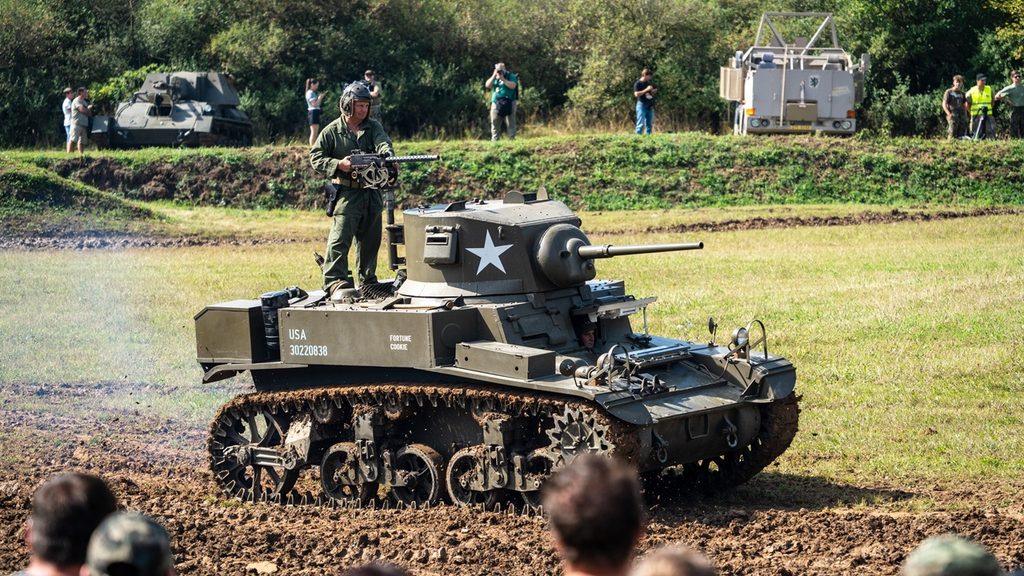
5. M3/M5 Stuart – United States​

  • Year Introduced: 1941
  • Number Built: ~23,000
An M3 Stuart light tank drives during a historical reenactment.
An M3 Stuart light tank participates in a historical reenactment event in Lesany, Czech Republic, in August 2025. (Shutterstock/JeP)
The Stuart tank was an American light tank family developed during World War II. The M3, which entered service in early 1941, was later followed by the improved M5, on either side of the more famous M4 Sherman. Interestingly, the first army in the world to use it was not the US Army, but the British Army, which received the tank as part of America’s lend-lease aid. The British also gave the tank the “Stuart” name, for Civil War general J.E.B. Stuart, as the US military did not at that time give names to its tanks at the time. (British soldiers also nicknamed the tank the “Honey,” due to its excellent suspension and smooth handling.)
www.nationalinterest.org
 

Fatman17

Experienced member
Moderator
Defence News Editor
Pakistan Moderator
Messages
3,005
Reactions
23 2,396
Nation of residence
Pakistan
Nation of origin
Pakistan

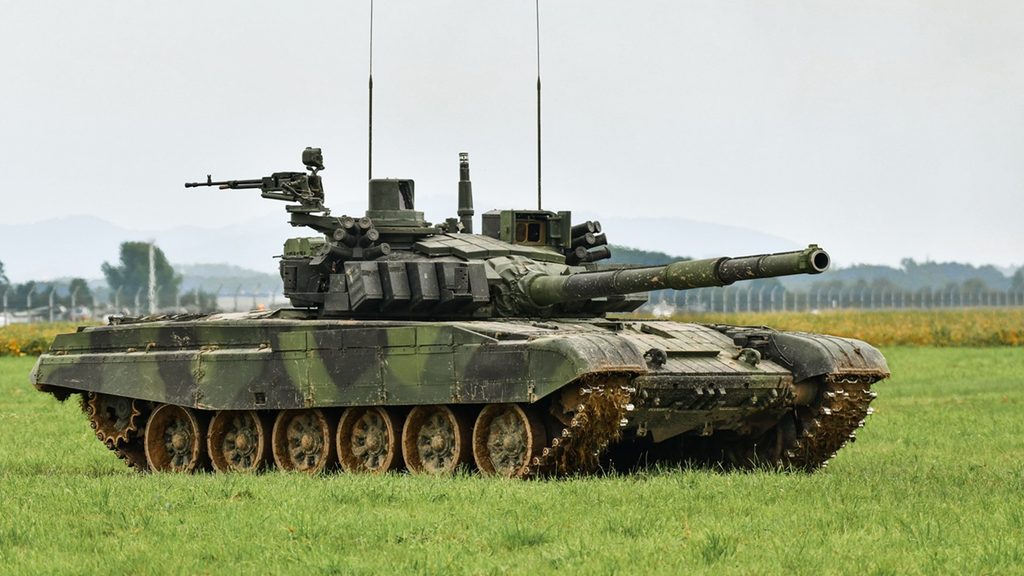
4. T-72 – Soviet Union​

  • Year Introduced: 1973
  • Number Built: 30,000+
A T-72 tank drives through a field.
A Czech Army T-72 tank seen during military exercises in Ostrava, Czech Republic, in September 2021. The T-72 is still widely used around the world. (Shutterstock/castigatio)
At an estimated 30,000 units, the T-72 is the third most produced Soviet tank—and by far the most advanced tank on this list.

Developed as a successor to the older T-64, the T-72 was developed as a relatively affordable, mass-producible MBT. Armed with a 125mm smoothbore gun, the T-72 needed only a three-person crew, rather than the traditional four; the extra work was saved by an autoloader, by that point a standard inclusion in Soviet armor. The smaller crew size in turn gave the tank smaller dimensions, saving on construction costs and allowing it to operate with a lower profile and lesser fuel and maintenance needs.

The T-72 is still in widespread use today, particularly in the developing world, and has been a mainstay of the ongoing war in Ukraine on both sides.
www.nationalinterest.org
 

Fatman17

Experienced member
Moderator
Defence News Editor
Pakistan Moderator
Messages
3,005
Reactions
23 2,396
Nation of residence
Pakistan
Nation of origin
Pakistan

3. M4 Sherman – United States​

  • Year Introduced: 1942
  • Number Built: 50,000+
A Sherman tank drives across a field, with several (reenactor) soldiers on board.
An M4 Sherman tank drives during the “Overlord Show” in Hampshire, United Kingdom, in May 2026. Note the addition of sandbags on either side of the hull, “up-armoring” the medium tank. (Shutterstock/Dave Colman)
The most widely produced American tank ever, the M4 Sherman served as the principal American medium tank during World War II. Produced by numerous American manufacturers—mostly former car companies, including GM and Ford—using standardized components and large-scale industrial methods, its main armament was initially a 75mm gun, with later versions upgrading to the 76mm.

The Sherman was not as heavily armored or armed as some late-war German tanks, and generally could not stand up to them on its own. Nevertheless, the Sherman offered excellent reliability, maintainability, and logistical flexibility. Transported overseas, the Sherman served in widely dispersed theaters, helping to turn the tide of World War II. In the postwar era, the United States widely exported it to its allies in Europe, Africa, and Asia. The final Shermans were retired from US arsenals in 1957, but they remained in service around the world until 2018, when the Presidential Escort of Paraguay retired the final three models in its inventory after nearly 50 years of service.
www.nationalinterest.org
 

Fatman17

Experienced member
Moderator
Defence News Editor
Pakistan Moderator
Messages
3,005
Reactions
23 2,396
Nation of residence
Pakistan
Nation of origin
Pakistan

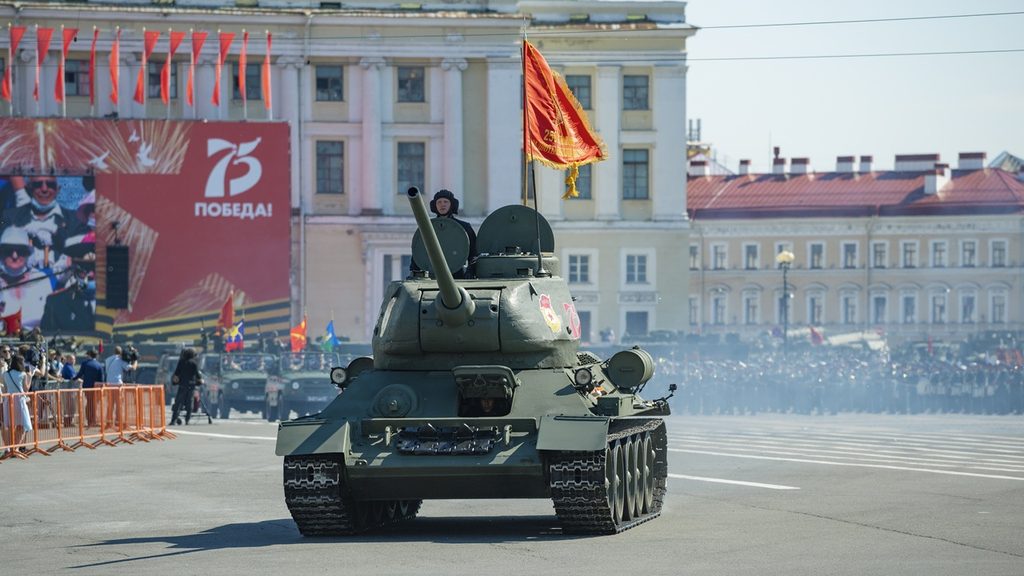
2. T-34 – Soviet Union​

  • Year Introduced: 1940
  • Number Built: ~84,000
A T-34 tank during a military parade.
A single T-34 tank on parade in Saint Petersburg, Russia, during a World War II victory parade in June 2020. (Shutterstock/Karasev Viktor)
The Soviet-made T-34 tank entered service in 1940, only months before Nazi Germany’s invasion of the Soviet Union in June 1941. In the years that followed, the Soviet Union built tens of thousands of the iconic tank, showcasing its industrial might even during a time of catastrophe. One hub for the tank’s production was the city of Stalingrad, where the tanks literally left the assembly line and found themselves on the battlefield during the 1942–1943 pivotal battle for control of that city.
www.nationalinterest.org
 

Fatman17

Experienced member
Moderator
Defence News Editor
Pakistan Moderator
Messages
3,005
Reactions
23 2,396
Nation of residence
Pakistan
Nation of origin
Pakistan

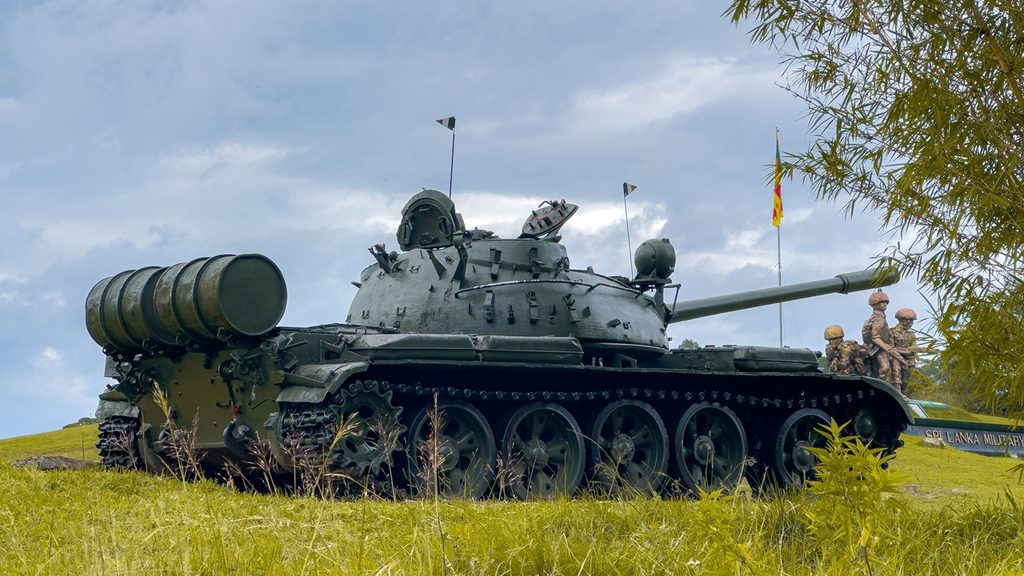
1. T-54/T-55 – Soviet Union​

  • Year Introduced: 1948
  • Number Built: 95,000–100,000+
A T-54 tank on display at a war memorial.
A T-54 tank at a war memorial in Sri Lanka, circa December 2024. The Sri Lankan Army continues to operate upgraded variants of the T-54/55. (Shutterstock/DillRo Hub)
With production estimates at roughly 100,000 units, the T-54 family holds the record for the most produced tank in human history. With compact dimensions, sloped armor, and a powerful 100mm D-10T gun, the T-54 weighed about 36 metric tons, depending on the variant.

Designed for large-scale production, straightforward maintenance, and widespread deployment, the T-54 became one of the principal armored vehicles of the Soviet Union and Warsaw Pact. Though it never saw combat against the Americans or NATO, the tank later became a mainstay of armies in the developing world, where it was sought after due to its low cost and relatively good battlefield performance. The tanks are still widely used in Africa and Asia—and have even seen a resurgence in Russia, driven by the battlefield demands of the Ukraine war and the large number of antiquated models in storage.
www.nationalinterest.org
 

Follow us on social media

Latest posts

Top Bottom